What I learned over time is that they actually are the drivers behind my success and passion. They’re what make me unique. My differences have only pushed me harder to achieve my goals and to help others who are struggling.
Wellness
Caroline Fenkel of Charlie Health: Normalcy Is Boring And Our Differences Are The True Drivers Of Success
The Chief Clinical Officer of Charlie Health explains how embracing personal differences and developing data-driven mental health care can transform adolescent outcomes.
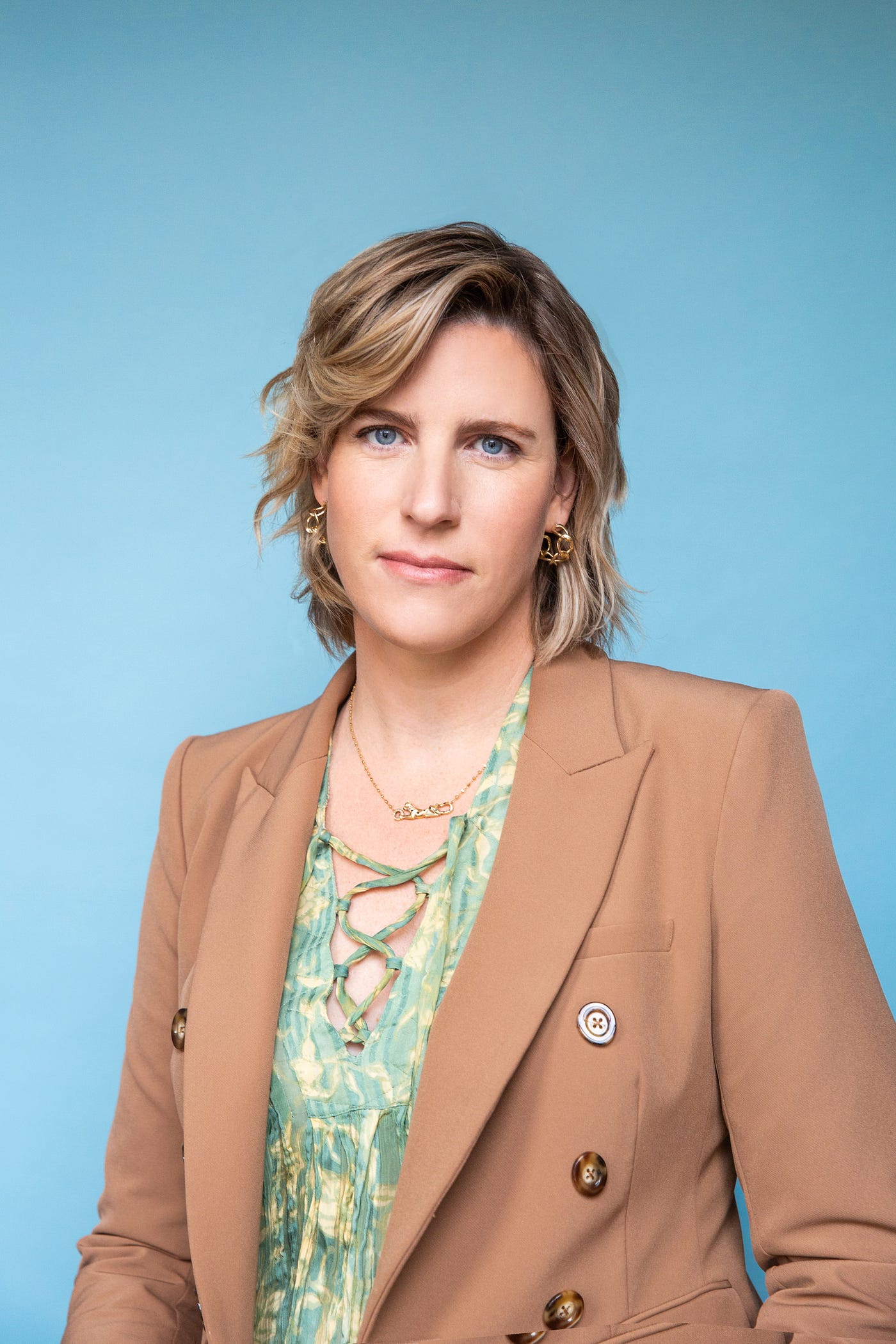
Our children are facing challenges that didn’t exist just a short while ago. They are growing up with social media, constantly being connected, and the hurried pace of life today, as well as the pandemic, and the often frightening news. In short, our children are facing unprecedented mental health challenges. Anxiety, depression, and even suicide are on the rise. As parents and educators, what can we do to raise children who are mentally healthy? In this interview series, we are talking to authors, parenting experts and mental health professionals who can share their expertise and advice on Raising Children Who Are Mentally Healthy. As a part of this series, I had the distinct pleasure of interviewing Dr. Caroline Fenkel.
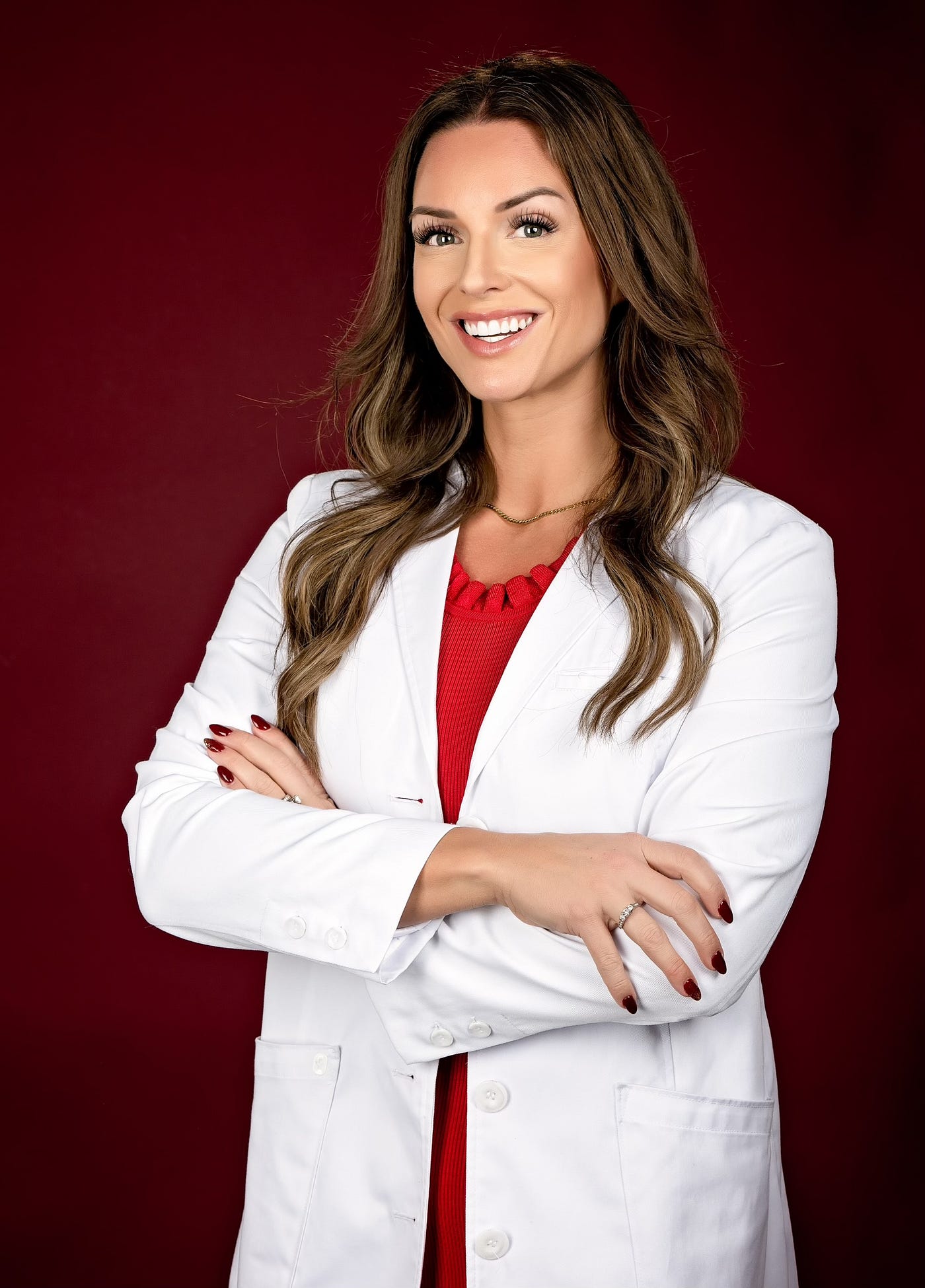
Dr. Caroline Fenkel, LCSW is a thought leader in the adolescent and young adult substance abuse treatment field. Currently, Dr. Fenkel co-founded and serves as Chief Clinical Officer of Charlie Health. Caroline began her career by combining her love for horses with her desire to help others by providing equine-assisted psychotherapy. Dr. Fenkel has worked at numerous national and local treatment programs including Mainline Health, Pyramid Health Care and Newport Healthcare. Caroline went on to earn her doctorate in clinical social work from the University of Pennsylvania, studying the use of technology in a therapeutic setting.
Thank you so much for joining us in this interview series! Before we dive in, our readers would love to hear a little about you. Inspire us with your backstory! What are some lessons you would share with your younger self if you had the opportunity?
As I struggled with dyslexia and bipolar disorder growing up, all I wanted was a sense of normalcy. I wished that I could live a normal life without these challenges. However, I have come to realize that normalcy can be mundane and uninteresting. Those who dare to be extraordinary and make a difference in the world, whether through their art, activism, or advocacy, are never truly “normal.” I wish I could have told my younger self that “normalcy” is usually pretty boring.
I also wish that I had known that my differences are actually my strengths. Growing up, I spent so much time thinking that my dyslexia and bipolar were limiting me. What I learned over time is that they actually are the drivers behind my success and passion. They’re what make me unique. My differences have only pushed me harder to achieve my goals and to help others who are struggling.
None of us are able to experience success without support along the way. Is there a particular person for whom you are grateful because of the support he/ she gave you to get where you are today? Can you share that story and why you are grateful for that person?
My middle school English teacher.
She really saw me. Up until that point, I felt very unseen and misunderstood. It didn’t feel like anyone recognized my strengths. That changed from the moment I stepped into her classroom though. For the first time, someone who I respected and looked up to really saw my potential. She advocated for me even when I didn’t believe in myself. Every kid deserves that.
She was also the first person to teach me what co-regulation looks like (which is the ability to consciously be with someone else in a moment of crisis and trusting them to help you calm down). I had never experienced that before and for the first time, I was really able to grasp the idea that another person could help when I was feeling overly emotional or overwhelmed or dysregulated. For the first time, I discovered that I didn’t have to do it alone and that asking for help is brave and strong. This eventually became an important tool in my recovery from substance use disorder, which is a journey I began when I was just a teenager.
Are you working on any exciting new projects now? How do you think it might help people?
Yes!
We’re currently working on a measurement-based care research project in partnership with Yale.
Measurement-based care for mental health is essentially the development of vital signs for mental health. In the broader medical world, vital signs are a critical part of data collection in order to optimize treatment–without vital signs, how do you know how to measure how a patient is doing? Short answer: you don’t. At least not as well as you could if you had a baseline to measure them against.
We don’t have that in the mental health field, and we need it. Once we’re able to implement a more standardized and data-driven measurement-based care model for mental health treatment, we’ll be able to better adjust and tailor our clients’ treatment programs. People will be able to get better faster and with the proper modalities for their needs. It will make clinicians’ jobs smoother and will give clients more agency over their mental health. If, as a client, you are able to measure your progress against a standardized baseline, you’re better able to decide whether or not your provider is working for you.
Ok, thank you. Let’s talk about raising emotionally and mentally healthy children. In the Western world, humans typically have their physical needs met. But what has led to the tremendous downgrade in emotional and mental health that we are seeing today, especially for children? What is lacking in the mental health arena? Why are so many of our children struggling today?
This is a tough question because there is no single, straightforward answer. Ultimately though, I think the downgrade in kids’ emotional and mental health boils down to a lack of accessible and affordable, quality treatment options. We see it every day when parents–and even young adults–come to us after searching for months for a treatment option that doesn’t have an exorbitantly long waitlist, is in their budget, and is workable within their schedule. Those three things–timeliness, affordability, and flexibility–are critical pillars when creating treatment options. But they have been historically unconsidered by much of the mental healthcare industry. It’s why way too many people end up going to the emergency room for a mental health crisis (which is obviously not what an emergency department is designed for and often ends up re-traumatizing patients in the process).
We’re also seriously lacking research. It’s why I’m so excited to be developing new ways to apply measurement-based care to mental health with our Research and Outcomes team. If you’re treating any other chronic illness, there’s a gold standard that’s based on millions of client data points. With mental health though, too many people view it as a moral issue or even “illness,” not a medical one. We’re going to change that with data.
Simultaneously, more teens and young people than ever are seeking help because societal pressures have never been greater. We know the list: social media, political upheaval, economic precarity, mass violence, climate change…it goes on. Unfortunately, we live in a society with very little social safety net or community resources, which only increases this general sense of desperation, isolation, and hopelessness that we see in clients every day.
How does technology play into the equation of mental and emotional well-being? What about social media?
A big issue is that kids only post the good things on social media–the highlight reels. This not only sets kids up with unrealistic expectations of what their lives should be like or what they should have or how their body should look, but it also distorts “normalizing theories.” For example, if kids see a feed full of other kids smoking pot, they then think it’s normal to smoke pot and then start doing it themselves. But the algorithms on social media feed you what you engage with so that distortion can be really harmful. To use the pot example, only 10% of teens are actually smoking pot, no matter what your feed seems to suggest.
Obviously, this is a huge issue, and it seems to be growing. What are some small, practical tips, or tweaks, that parents and educators can easily implement to help their children who are struggling?
First and foremost, listen. Sit on your hands if you have to in order to stop yourself from interrupting. If your kid is talking to you–especially if they’re a teenager– you’re winning. At that moment, your goal is just to sit and listen.
Once they’ve finished sharing, remember: no shaming. Shaming your kid is the quickest and easiest way to deter them from coming to you again. Same goes for lecturing. No one likes to be lectured. Respect that and talk calmly and fairly.
In your professional opinion, what are certain triggers or signs that the state of a child’s mental and emotional health is not at its best? What is the best way to be proactive and address these signs from the get-go?
Two big indicators: one, isolation and two, sudden changes in personality or behavior.
If you notice that your kid is spending more time than usual in their room or refusing to socialize, that could be a sign that there are deeper mental health issues going on. Human beings don’t do well in isolation, so spending too much time alone can exacerbate symptoms associated with everything from major depression to agoraphobia.
Another red flag is any extreme flip in disposition or hobbies. If you observe that your kid is finding less joy in the things they used to love, ask them about it. At the same time, if they’ve always been on the quiet or more reserved side and are suddenly a social butterfly, pay attention. The best way to be proactive in any of these scenarios is to talk to them about what you’ve noticed. Ask questions. Be curious, remain open-minded, and reserve judgment. It really is that simple.
Do you think we can do a better job of educating our children about their emotional and mental health? What would that look like?
We do a good job at educating kids about their physical health. We teach kids from a very young age that, “An apple a day keeps the doctor away,” and that flossing is super important for dental health. But what about mental health? Similar colloquialisms don’t exist for mental health. But it doesn’t have to be complicated. The earlier we start teaching kids about their mental health, the better; the more frequently we remind them to check in on it, the better. We should be teaching classes about how the brain works–like anatomy, but for the mind.
It can be as simple as using the “dental health” framework–just substitute in “mental health.” Remind young people that mental health should be a daily routine. In addition to “did you use dental floss today?,” ask, “Did you do your mental flossing today?” That’s a simple and clear reminder to check in with yourself: how are you feeling? What’s going well? Do you need extra support with anything? Beyond that, teach kids and parents to remember to schedule mental health” check ups, just like they do with the dentist.
Mental health is health.
Okay, fantastic. Here is the main question of our interview: Can you share with our readers your “5 things parents can do to raise children who are emotionally and mentally healthy”? Please share a story or example for each.
- Practice self-care and your own mental health maintenance.
You shouldn’t be getting drunk every day or flying off the handle or even avoiding confrontation through passive aggression. It’s parents’ job to model health, both mentally and physically. You should share healthy eating habits; emphasize work/life balance; demonstrate loving, supportive friendships; teach the importance of mental health care and “hygiene.” All kids’ behaviors start with their parents. It’s a big responsibility that needs to be taken seriously. - Provide a safe home environment.
That means no yelling, no screaming, no door-slamming. The home should feel like your child’s refuge. They should never dread coming home. It can be helpful to focus on family activities as well, because it makes home feel not only safe but also warm. - Create and practice traditions.
Think Friday night pizza night or movie night on Sunday. Simple things like these are really important for teenagers in particular because they thrive with consistency. - Establish clear routines.
This is typically guidance parents receive for young children, but it’s still important even for teenagers. There should be clear frameworks and boundaries around bed time, food time, quiet time, family time…all of this is tied to mental health. When kids and teens understand that all of these areas are connected and contribute to their overall health, it’s easier to enforce routines and boundaries. You’re eating to make yourself strong and then you’re going to see a friend who you love (we clearly tie back to physical health but need to tie things back to mental health more) - Model healthy communication.
The way you speak to your child becomes their inner voice. The way you speak to your partner or your siblings or your parents or your friends will eventually be mimicked in some sort of way. Be mindful and intentional about this at all times.
Do you have any favorite books, podcasts, or resources you recommend to our audience reading this interview?
Any and everything by Brené Brown and by Dan Siegel!
You are a person of great influence. If you could start a movement that would bring the most amount of good to the most amount of people, what would that be? You never know what your idea can trigger. :-)
I truly believe that if we educated kids about the importance of mental health from as early on as possible during their development, we could avoid so much of the suffering we’re now dealing with in the youth mental health and suicide epidemic.
The even broader movement I would start though is, gratefully, what I’m currently doing every day. We’ve created a mental healthcare option that’s virtual and therefore accessible; that’s evidence-based, data-driven, and effective. We’re proud to accept both commercial insurance and Medicaid so that finances aren’t a barrier to care. This didn’t exist before we started it at Charlie Health.
There is no way to end the youth mental health crisis without bold solutions. We won’t be able to drastically reduce youth suicide rates without thinking big–even if that means creating new systems from scratch (like measurement-based care for mental health). Democratizing access to care also requires empathy, and my own experience as a high acuity patient informs my dedication and passion for this cause every day.
What is the best way for our readers to continue to follow your work online?
Keep an eye on our Research & Outcomes page for our latest work: http://www.charliehealth.com/intensive-outpatient-iop/outcomes
Follow Charlie Health on Instagram and TikTok (@charliehealth)
And follow me on Instagram @dr.c.lcsw
Thank you for these fantastic insights. We wish you only continued success in your great work!
About The Interviewer: Maria Angelova, MBA is a disruptor, author, motivational speaker, body-mind expert, Pilates teacher, and founder and CEO of Rebellious Intl. As a disruptor, Maria is on a mission to change the face of the wellness industry by shifting the self-care mindset for consumers and providers alike. As a mind-body coach, Maria’s superpower is alignment which helps clients create a strong body and a calm mind so they can live a life of freedom, happiness, and fulfillment. Prior to founding Rebellious Intl, Maria was a Finance Director and a professional with 17+ years of progressive corporate experience in the Telecommunications, Finance, and Insurance industries. Born in Bulgaria, Maria moved to the United States in 1992. She graduated summa cum laude from both Georgia State University (MBA, Finance) and the University of Georgia (BBA, Finance). Maria’s favorite job is being a mom. Maria enjoys learning, coaching, creating authentic connections, working out, Latin dancing, traveling, and spending time with her tribe. To contact Maria, email her at angelova@rebellious-intl.com. To schedule a free consultation, click here.
MA
Written by
Maria Angelova
CEO of Rebellious Intl. · Authority Magazine ColumnistMaria Angelova, CEO of Rebellious Intl. is an executive interviewer and contributor covering leadership, culture, and business for Authority Magazine.

Published inAuthority MagazineTop Lessons, Top Authorities · 42K Followers
Exclusive, curated interviews with the leaders and changemakers shaping tomorrow. Leadership lessons, industry deep dives, and executive profiles.