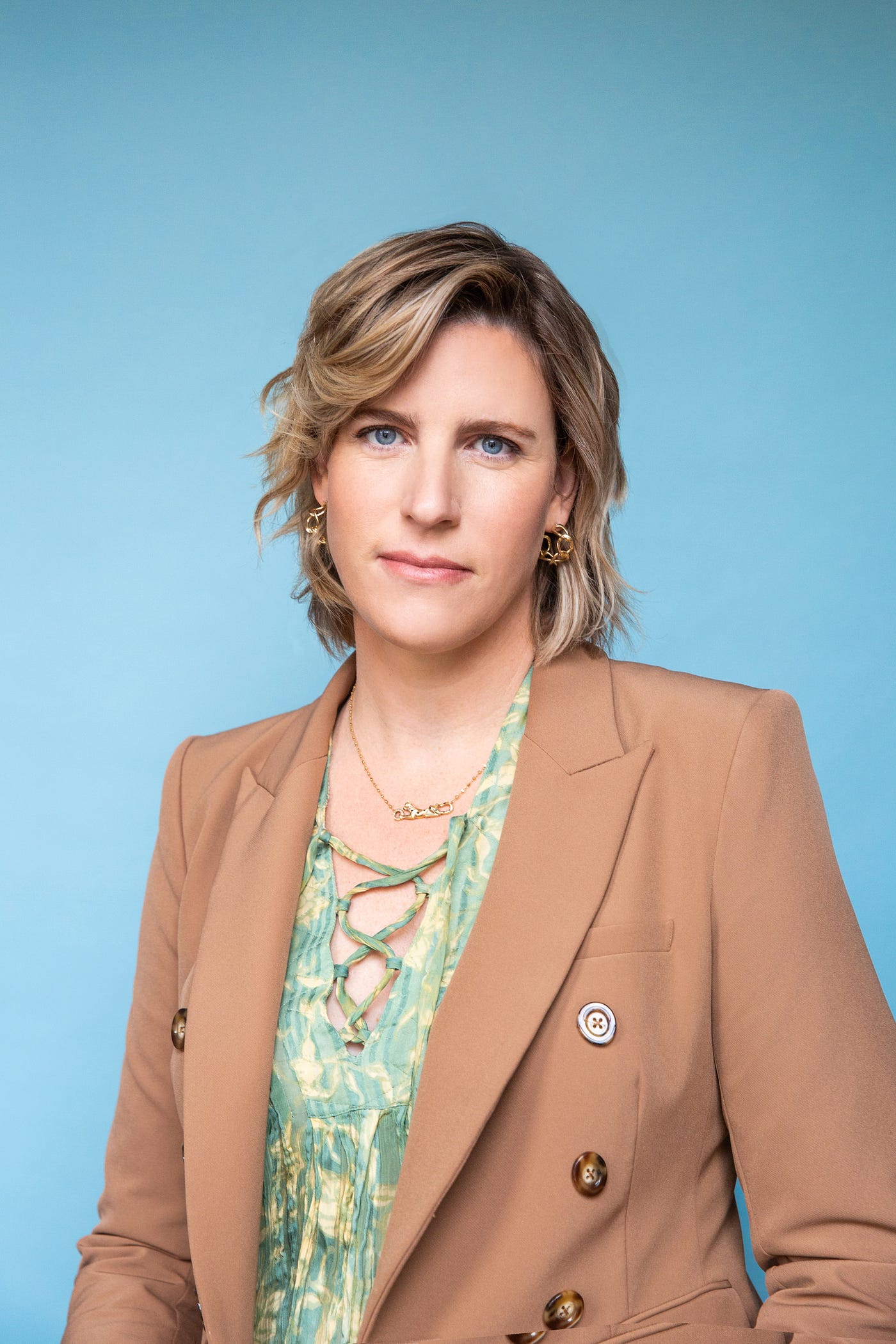
The most important lesson I’ve learned as an adult that I would share with my younger self is the idea of “getting more comfortable being uncomfortable”. There is so much that goes into being able to do this and it is a game changer.
Wellness
Denise Egan Stack: The Practice of Getting More Comfortable Being Uncomfortable That Drives Lasting Childhood Resilience
The licensed mental health counselor and childhood anxiety specialist shares her journey from McLean Hospital to establishing groundbreaking resources for youth mental health.

Our children are facing challenges that didn’t exist just a short while ago. They are growing up with social media, constantly being connected, and the hurried pace of life today, as well as the pandemic, and the often frightening news. In short, our children are facing unprecedented mental health challenges. Anxiety, depression, and even suicide are on the rise. As parents and educators, what can we do to raise children who are mentally healthy? In this interview series, we are talking to authors, parenting experts and mental health professionals who can share their expertise and advice on Raising Children Who Are Mentally Healthy. As a part of this series, I had the distinct pleasure of interviewing Denise Egan Stack.
Denise Egan Stack is a licensed mental health counselor based in Massachusetts and specializes in childhood anxiety and OCD. She has been in practice for over twenty-five years and has treated hundreds of children and their families. Ms. Stack has lectured nationally and internationally on evidence-based treatment for OCD and Related Disorders, trained many postgraduate students in CBT and ACT for OCD and anxiety, and is a member of the IOCDF board of directors (past President) and Scientific and Clinical Advisory Board.
Thank you so much for joining us in this interview series! Before we dive in, our readers would love to hear a little about you. Inspire us with your backstory!
I went to graduate school at Assumption College (now University), which at the time was the only masters program offering a concentration in cognitive behavioral therapy. In my second year, I did my practicum and internship at McLean Hospital under Dr. Steve Willis, who supervised me treating people diagnosed with Obsessive Compulsive Disorder and anxiety in their homes and in the community. At the time, this was a novel approach and the combination of this client population, the challenge of the work, and effectiveness of this new approach was a perfect fit for me.
Shortly after my internship ended, Dr. Willis invited me to be on a team of expert clinicians opening the first residential treatment program for people with OCD in the country — the McLean Hospital/Massachusetts General Hospital OCD Institute. It was an enormous opportunity because I was working with all of my professional heroes — Drs. Michael Jenike, Lee Baer, and Minichiello. It was then that I abandoned my plans of applying to doctoral programs in order to stay involved in the exciting research, program development, and clinical work we were doing. It’s been over 25 years and I’ve never looked back!
What are some lessons you would share with your younger self if you had the opportunity?
The most important lesson I’ve learned as an adult that I would share with my younger self is the idea of “getting more comfortable being uncomfortable”. There is so much that goes into being able to do this and it is a game changer.
None of us are able to experience success without support along the way. Is there a particular person for whom you are grateful because of the support he/ she gave you to get where you are today? Can you share that story and why you are grateful for that person?
I’m lucky enough to have had several wonderful mentors in my professional life, but the one that I am most grateful for and to is Dr. Jeff Szymanski. We worked together at the McLean Hospital/MGH OCD Institute in the aughts, and he quickly became a peer mentor and very good friend. Through innumerable case consultations, dinner conversations, informal supervision, book suggestions, and role modeling, he helped sharpen my clinical and leadership skills, introduced me to Acceptance and Commitment Therapy, championed my model of clinical care, and instilled confidence which advanced my professional growth. Over twenty years later, Jeff and I still work together at the International OCD Foundation, on clinical cases, and as training faculty. It is without question that I am where I am today in part because of Jeff’s generosity of time and spirit. He took an interest in my professional development when I was first starting out, and I’ve been trying to pay that forward ever since.
Are you working on any exciting new projects now? How do you think it might help people?
At the IOCDF, we recently launched our Anxiety in the Classroom resource, a new online destination focused on anxiety and OCD in the school setting. We established this project recognizing that OCD and anxiety are very common in children and can take a tremendous toll on the child’s school performance and social functioning.
Too often, the professionals who interact with youth the most (such as school personnel and pediatricians) are not trained to recognize anxiety/OCD in children. This means that the average child with a mental health condition will wait years after displaying symptoms to receive an accurate diagnosis and treatment.
The goal of Anxiety in the Classroom is to reduce the negative impact of anxiety/OCD on youth by providing resources to the professionals who interact with children most often. Our hope is that by educating these professionals they’ll be better prepared to help and empower our youth.
A neat part of this program is that it’s written in 3 sections: for educators, for parents, and for students. The information in each part is tailored for the specific audience based on the results of a nationwide poll with about 1000 respondents in each category.
Ok, thank you. Let’s talk about raising emotionally and mentally healthy children. In the Western world, humans typically have their physical needs met. But what has led to the tremendous downgrade in emotional and mental health that we are seeing today, especially for children? What is lacking in the mental health arena? Why are so many of our children struggling today?
According to research, anxiety, depression, and behavioral problems in children have been on the rise even before the pandemic. Since then, things have gotten even worse which makes the demand for mental health services higher than ever. There are many factors at play, including access to healthcare, care-giver well-being, and exposure to traumatic experiences. For example, we know that early diagnosis and mental health treatment are important, but many children aren’t receiving the help they need. Also, a child’s well-being is linked to the well-being of their caregivers. If a parent is struggling their child will struggle. For example, children who live in poverty, or are neglected, or exposed to caregiver substance abuse, untreated mental illness or domestic violence will have higher likelihood of mental health issues themselves. In order to combat this crisis, we need timely intervention, expansion of pediatric mental health services, training of more pediatric mental health professionals, treatment delivered in the context of the family, and to make mental health a key part of primary care and school.
How does technology play into the equation of mental and emotional well-being? What about social media?
There is no doubt that technology and social media play an important role in children’s lives. It has been widely accepted that both have a negative impact on children’s mental health. However, new research calls into question the idea that technology and social media cause poor mental health. Over the last few years, studies have shown that who children are and how children use technology and social media plays a large role in determining its effects. Children’s personality traits and family relationships are important predictors of the impact. For example, children who use social media actively by creating content, commenting, and posting, and have parental oversight are less likely to experience negative impacts from technology and social media use. It strengthens their social connections and is a vehicle for learning. However, children with low self-esteem and in the absence of parental oversight and involvement are more likely to passively scroll. This can compound low self-esteem because they engage in comparing themselves socially to others. So, it seems that some children are more at risk than others and their pre-existing mental health impacts how they use social media and not vice versa. One study I read put it succinctly — offline life issues are greatest predictors of online difficulty.
For parents, I think this means not only engaging in a positive way with your kids’ use of technology, it also means that you will want to pay attention to your screen usage. Are you distracted by your phone at the expense of connection and time with your family? If so, you might consider modifying your phone use to provide a healthy model for your children. You may also consider discussing with your children how and why they use technology and social media and set reasonable limits that allow your children to do homework undisturbed and get to bed on time.
Obviously, this is a huge issue, and it seems to be growing. What are some small, practical tips, or tweaks, that parents and educators can easily implement to help their children who are struggling?
When a child is struggling, they may have angry outbursts, isolate themselves, fail to turn in assignments, lie, shut down, or talk about not wanting to live. This can be overwhelming for parents and/or teachers who may be hurt, confused, embarrassed or angry about what is happening. This tends to put distance between the struggling child and the adults in their lives they need the most. There are practical ways that adults can help.
- First and foremost, it is important to remember that even though a child may be acting out, the behavior is rooted in struggle. They are having a hard time, but that doesn’t mean they are a bad kid. Centering in this understanding will help you empathize, manage your emotional response to their behavior, and guide interventions that will be more effective and appropriate.
- Remembering this will also help you maintain a connection with your child, even when it’s difficult. They may not show it, but the connection matters to them. You can do this by sharing meals, asking about their day, engaging in a shared activity, or taking an interest in their friendships, what they are learning about in school, or their favorite music.
- If a child is struggling in school then it is imperative to have good parent/teacher communication. This helps their teacher get a fuller picture of what is happening with your child and the teacher can feed back information to you about how to support your child’s academics at home. In my experience, kids appreciate this supportive team-based approach.
- If your child’s school performance is suffering then you may consider requesting educational testing or, more timely, a team meeting to discuss a 504 Plan that will provide academic accommodations until your child stabilizes.
- Find opportunities to catch your child doing well and praise them (one on one and publicly!) for things like being honest, expressing feelings appropriately, managing emotions effectively, opening up, asking for help, pitching in at home, being kind, or sticking with something difficult.
- Make space for your child’s feelings. Ask, “how are you?” and then listen without judgment or shutting down their emotions. This will show your child that their feelings and thoughts matter to you, are normal, and don’t overwhelm you.
- Find a therapist for your child and/or ask that your child work with their school counselor.
- Celebrate small steps towards a goal. This will help maintain motivation. After all, forward is forward!
- When correcting your child’s actions, describe the problematic behavior and then be clear about what you would like them to do instead. This helps a child understand expectations and organize their behavior in the midst of strong emotions, which may be a confusing and overwhelming time.
- Help your child find a hobby or sport that they are good at and can excel in so as to provide them with opportunities to interact socially with their peers and develop self-esteem and self-confidence.
- Set up your child for success. Prepare them in advance of something that may be emotionally difficult. You might say, “Let’s talk about the plan for when you want to leave school early today because you start to get anxious.”
- Use metaphors for explaining complex emotion based concepts to kids. One popular metaphor is “Ride the Wave”, in which emotions are like waves that we ride until they subside like a wave on the shore.
- Refer to the Anxiety in the Classroom website for more school specific advice for educators and parents.
In your professional opinion, what are certain triggers or signs that the state of a child’s mental and emotional health is not at its best? What is the best way to be proactive and address these signs from the get-go?
Often, a child will not be forthcoming when they are struggling because they may be embarrassed, ashamed, or anxious. Because of this, it is important that parents learn to recognize signs that their child is experiencing difficulty. Things to look for include a pattern of change in a child’s social, behavioral, or academic functioning that causes distress or prevents them from being able to meet expectations at home or school or in friendships.
More specifically:
- Has your child stopped seeing their friends?
- Are they socially isolating?
- Is there a dip in their hygiene? (Showering, brushing teeth, changing clothes, etc)
- Has there been a drop in grades? Is your child not turning in assignments or refusing school?
- Is there sleep disruption? Is your child sleeping too much or too little?
- Have your child’s eating habits changed? Are they eating too little or too much? Are they over-exercising?
- Is your child lying?
- Is there a dramatic change in their emotional state? Are they more irritable or angry? Are they crying more than usual? Do they seem zoned out?
- Is your child worrying more than usual about everyday responsibilities or stressors?
- Is your child talking about not wanting to live, being overwhelmed, or giving away possessions?
- Are they complaining of physical pain or illness more consistently? Do they have more headaches, stomachaches, dizziness, or shortness of breath?
If so, these may be signs that your child is struggling.
It is important that parents address concerns with their child early on and in a calm, clear, and concise way. I suggest broaching the subject when emotions aren’t running high and there is enough time for the conversation. Parents should be prepared to listen non-judgmentally and have enough bandwidth to manage their own feelings during the exchange. If your child opens up, then ask if they would like your help problem-solving the issue. If so, help them identify all options and weigh the pros and cons of each and then decide on a course of action. If they are old enough and want to solve the issue themselves then remind them that you are there for help and support. You might speak to your child’s teacher, pediatrician, or therapist for advice on how to proceed if they refuse help and continue to struggle.
Do you think we can do a better job of educating our children about their emotional and mental health? What would that look like?
Absolutely! There are many ways we can do better with this, but one that I think is super important is to help children develop a healthy relationship with their emotions. For example, we can teach them:
- what different emotions are and where they are felt in the body
- the value of emotions and the important role they play in our lives
- how to recognize what they are feeling in the moment
- language for how to express their feelings
- how to figure out what their emotions are making them want to do (e.g., avoid, hit, lie, yell)
- to pause and give thought to whether or not those actions are going to work/get them what they want/build a life they desire
- alternative strategies for coping if their “go to” behaviors aren’t consistent with what they want for their life
Okay, fantastic. Here is the main question of our interview: Can you share with our readers your “5 things parents can do to raise children who are emotionally and mentally healthy”?
In addition to my answer above, five things parents can do to raise emotionally healthy children are:
- Take care of your own mental health. Research shows us that stable, nurturing relationships with parents are vital to healthy emotional development in children. If parent mental health is on track then it is more likely that children will be able to express their feelings at home and parents will be engaged in their children’s lives, able to stand by them during difficult times, create a sense of safety within the family, and serve as a positive role model for emotion regulation.
- Help your child build a sense of community. Children having a sense of belonging and connection is also very important to their emotional development. In addition to creating this at home, parents can help their children feel a sense of community in their neighborhood, schools, religious affiliations, and hometown. Participating in sports, dance, school clubs, religious traditions, and/or community events are a few ways children experience a sense of belonging and connection.
- Teach the value of mistakes. Its important that children understand that mistakes are a valuable part of the learning process and not failures. If they don’t fear mistakes then they are more likely to try new things, challenge themselves, improve their skills, and solve problems.
- Coach willingness to feel discomfort. Parents often ask me how they can help develop self confidence in their children. My answer is always the same: help them learn how to do hard things. This isn’t always intuitive as a parent. We often want to help our child avoid or escape hard things. However, that robs children of the ability to learn that the hard thing is not as bad as they feared, they can manage better than they think they can, it doesn’t last as long as they think it will, and it feels good to tackle a problem. We want our children to get more comfortable being uncomfortable. I’m not suggesting that children should learn how to endure things such as physical pain, bullying, or terror. I am suggesting that (with our coaching and cheerleading) they learn how to do things like ask a teacher for help, order their own dinner at a restaurant, check themselves into a doctor’s appointment, persevere through a difficult math problem, join a sports team or school club even though they don’t know anyone, or go to school when they are tired.
- Help your child develop perspective taking. The ability to understand someone else’s point of view is incredibly important. It helps build empathy and patience and reduce judgment and conflict.
Do you have any favorite books, podcasts, or resources you recommend to our audience reading this interview?
I follow Dr. Hina Talib and Kristen Cobabe on Instagram and I really love their posts. I also recommend the podcast Good Inside with Dr. Becky. She gives excellent, clear, and practical advice that is very much in line with how I think and practice.
You are a person of great influence. If you could start a movement that would bring the most amount of good to the most amount of people, what would that be? You never know what your idea can trigger. :-)
Instead of starting a new movement, I would throw my weight behind the new-ish idea of fully funding mental health initiatives in schools. This is a long-term investment in schools’ mental health infrastructure and curriculum, not a year-long grant or a one off in-service. Teachers would be trained on evidence-based social and emotional skills and trauma based practices to effectively manage mental health issues in the classroom. They would also be compensated fairly and given the tools, staff, and support they need to effectively do their job and manage their own mental health. Beyond a doubt, this is an excellent way to bring the most good to the most people.
What is the best way for our readers to continue to follow your work online?
As a member of the International OCD Foundation board of directors and scientific and clinical advisory board, much of my conference planning, program development work, and writing can be followed at www.IOCDF.org.
Thank you for these fantastic insights. We wish you only continued success in your great work!
About The Interviewer: Maria Angelova, MBA is a disruptor, author, motivational speaker, body-mind expert, Pilates teacher, and founder and CEO of Rebellious Intl. As a disruptor, Maria is on a mission to change the face of the wellness industry by shifting the self-care mindset for consumers and providers alike. As a mind-body coach, Maria’s superpower is alignment which helps clients create a strong body and a calm mind so they can live a life of freedom, happiness, and fulfillment. Prior to founding Rebellious Intl, Maria was a Finance Director and a professional with 17+ years of progressive corporate experience in the Telecommunications, Finance, and Insurance industries. Born in Bulgaria, Maria moved to the United States in 1992. She graduated summa cum laude from both Georgia State University (MBA, Finance) and the University of Georgia (BBA, Finance). Maria’s favorite job is being a mom. Maria enjoys learning, coaching, creating authentic connections, working out, Latin dancing, traveling, and spending time with her tribe. To contact Maria, email her at angelova@rebellious-intl.com. To schedule a free consultation, click here.
MA
Written by
Maria Angelova
CEO of Rebellious Intl. · Authority Magazine ColumnistMaria Angelova, CEO of Rebellious Intl. is an executive interviewer and contributor covering leadership, culture, and business for Authority Magazine.

Published inAuthority MagazineTop Lessons, Top Authorities · 42K Followers
Exclusive, curated interviews with the leaders and changemakers shaping tomorrow. Leadership lessons, industry deep dives, and executive profiles.