When that voice creeps into my head and tells me that I can’t do something, then I know I have to try. It is never to prove anything to anyone else.
Wellness
Allie Michelle of the NFT school for mental health and well: How Creative Expression and Mindfulness Prevent Mental Illness
Poet and wellness leader Allie Michelle shares how transmuting emotional pain into art and building digital mindfulness communities can revolutionize preventive mental healthcare.

As a part of our series about Mental Health Champions helping to promote mental wellness, I had the pleasure to interview Allie Michelle.
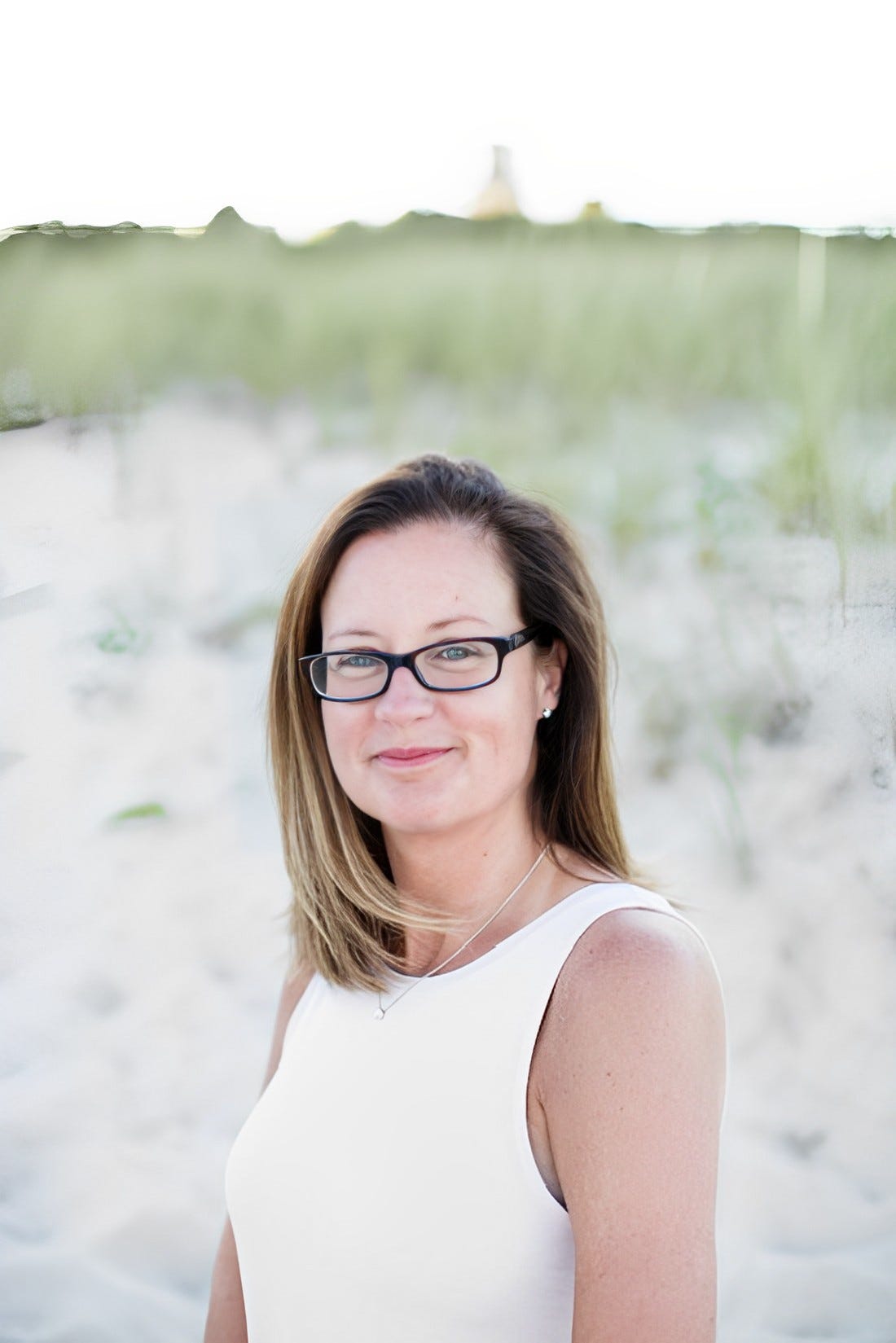
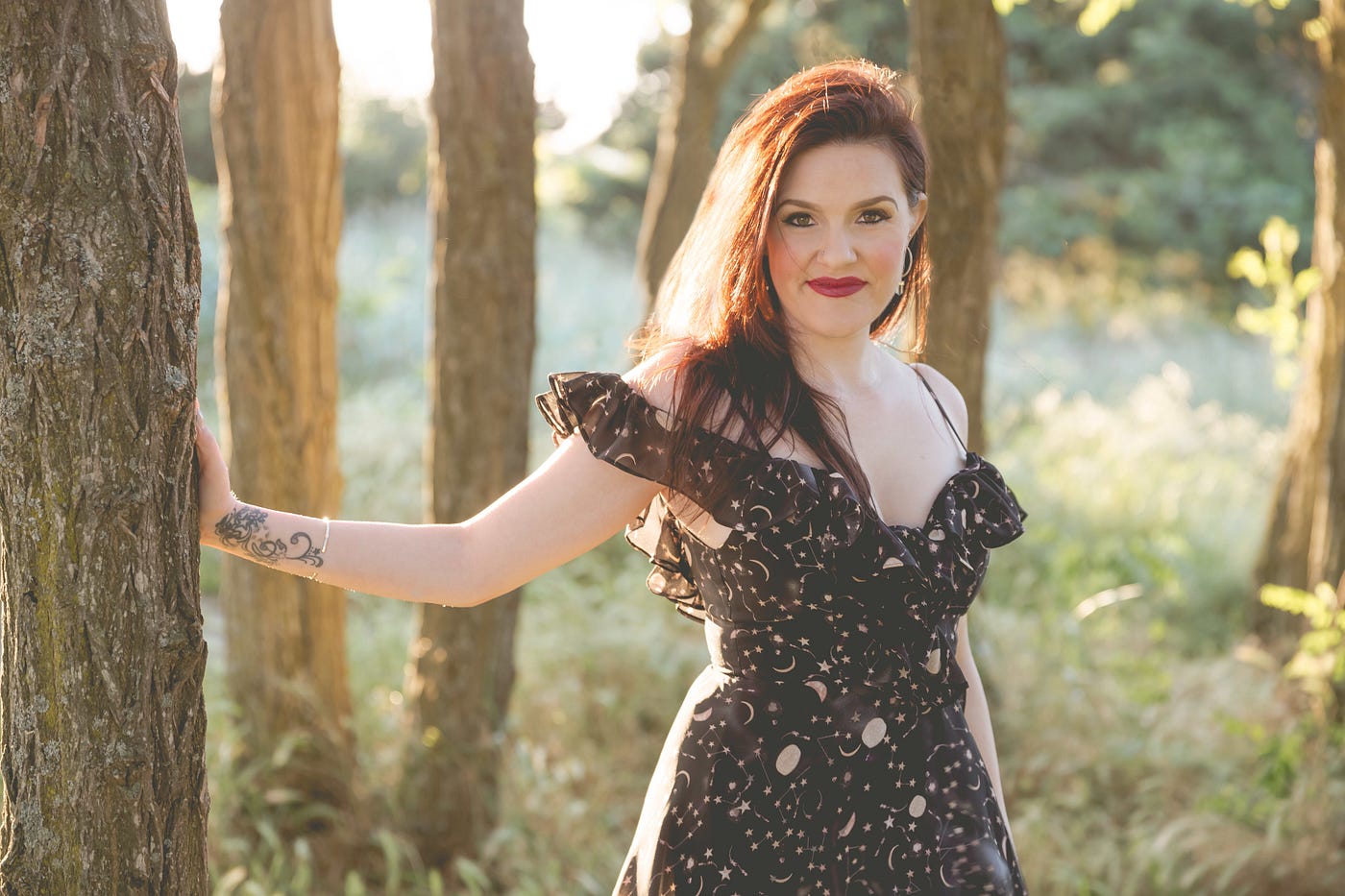
Allie Michelle is a poet, writer, and co-founder of the NFT school for mental health and wellness, We Are Warriors. She is a certified meditation, breathwork, and yoga teacher, which has heavily influenced her work. She has performed spoken word poetry across the globe, continuing to share her work and inspire people to live vulnerably, love deeply, and create often.
Thank you so much for doing this with us! Before we dig in, our readers would like to get to know you a bit. Can you tell us a bit about how you grew up?
I grew up in Los Angeles, California. My mother is an artist — she let us paint all over the walls of the house. The first thing she taught me was to paint upside down. “Your mind will always try to control the result, so you have to keep changing your perspective, so your imagination has room to breathe,” she said. One day, when I was about nine years old, I felt really angry. I had just gotten into a huge fight with my sister. My mom took me into her studio, handed me a tube of paint, and said, “Channel it.” I didn’t realize just how special that was at the time, but she showed me how to transmute any strong emotional charge into my art rather than the people around me. I grew up in this very chaotic household, but my family always valued creativity. I feel very lucky for that. It helps me alchemize every experience I go through and turn it into poetry or art that hopefully everyone can find some value in or relate to.
You are currently leading an initiative that is helping to promote mental wellness. Can you tell us a bit more specifically about what you are trying to address?
In psychology, we’ve gone deeper than Maslow’s Hierarchy of needs. It’s not just food, water, and shelter. We also need community and a sense of belonging. During the pandemic, my god sister and I watched the world shut down. We were disconnected from each other; we were isolated from nature. We both knew the toll that it would take on mental health.
The two of us started We Are Warriors, an online wellness community. We hoped that it would counteract some of the fear and loneliness that was sweeping the world and that it would help people feel strong inside despite everything crumbling around them. There were weekly sharing circles so that people would know they aren’t alone. Mindfulness isn’t an industry or a hobby, in my opinion. It is a lifeline back to our humanity. They have estimated that by 2050, one out of three people in the world will be mentally ill. This is why I think the word isn’t just in mental health, but also prevention. How are we supposed to create a better world for ourselves, and our children, if we’re disconnected?
Can you tell us the backstory about what inspired you to originally feel passionate about this cause?
There is a lot of mental illness in my family, so it has always been very close to my heart. When I was thirteen, I volunteered at a teen-to-teen suicide hotline. They trained us in psychology, and I worked there until I was eighteen. I wanted to understand mental health more, and if I could play even the smallest of roles in bringing compassion to what was once a very shunned subject. This launched me on my path of wellness — I studied craniosacral therapy, breathwork, yoga, reiki, and meditation. I found that these tools not only helped people feel better but also get better at feeling, which is essential with how easy it is to numb out nowadays.
Many of us have ideas, dreams, and passions, but never manifest them. They don’t get up and just do it. But you did. Was there an “Aha Moment” that made you decide that you were actually going to step up and do it? What was that final trigger?
I thought about death from a very young age. Not in a sad or morbid way — I was just keenly aware that my time on earth was limited. Most people avoid death or don’t talk about it. Yet, to avoid death is to avoid life. I fear regret more than I fear rejection or failure. When that voice creeps into my head and tells me that I can’t do something, then I know I have to try. It is never to prove anything to anyone else. I treat my life like it is a chess match, of me versus me with God playing referee. My only task is to overcome myself again and again — my resistance, my fear, my self-imposed limitations. Maya Angelou once said, “There is no greater agony than bearing an untold story inside of you.” I really try to live by that and encourage others to do the same.
Can you share the most interesting story that happened to you since you began leading your company or organization?
My god sister was my best friend growing up, and our moms were best friends. When we turned fifteen, her mom passed away from cancer. She moved in with my family and we adopted her. Alexis was homeschooled her whole life. She has literally never been in a classroom. I took the very traditional schooling route, so the two of us come from extremely different backgrounds of learning, and that is part of what makes Warriors so diverse.
When she asked me to be a part of Warriors, I felt this odd sense of déjà vu. There was this moment one evening when we talked until 3 a.m. on her kitchen counter. We discussed mental health, our community, and the impact we wanted to make. She turned to me and said, “Oh my god. Mom brought us together for this.” We both had chills and just got really silent for a while. Sometimes, the things that are the most impactful are not necessarily the things we imagine for ourselves. It felt like our whole lives were preparing us for this. I think the community feels like a family because it is run by a family. I cannot stress enough how important it is, when you’re doing this kind of work, to have a “why” that is so much bigger than the challenges that inevitably arise when running a business.
None of us can be successful without some help along the way. Did you have mentors or cheerleaders who helped you to succeed? Can you tell us a story about their influence?
My mentors have come in all shapes and sizes. My mother was my first mentor, particularly with creativity and the arts. I feel fortunate to have attracted really powerful women in my life with a strong sense of self because for a long time I didn’t have that.
I did my craniosacral training when I was eighteen with this woman named Angelia Singh. She has this way of looking through you instead of at you. I walked into her house, and the other trainees were in their fifties and sixties. When she saw how young I was, she almost didn’t let me into the training. “Do you have any idea how deep this work is? This isn’t yoga training. We’re doing very deep trauma work,” she said. I just looked her square in the eyes and replied, “I’ll be your best student.” And that was that. She took a chance on me, and I have found that it’s okay to get 500 no’s in life. All you need is one yes. One person, who sees who you are and all you can be. I have always kept people around that are brutally honest from a place of love. They call me out and bring me back to my center, which showed me that both success and failure are very disorienting. That center point is when I feel the most myself, not chasing anything because I am simply embracing the moment for what it is.
Yet, it’s not just people who have influenced me. I lived on the island of Kauai for five years. I was in a very remote location, and some of my greatest teachings have come from nature. Watching the constant flow of the river, the swaying trees, the proud mountains. Being a steward of the land, instead of just taking from it. My definition of success is very different than most people’s because of this. The ability to be me in any given situation, to be fully alive and present — that’s what I feel the proudest of.
According to Mental Health America’s report, over 44 million Americans have a mental health condition. Yet there’s still a stigma about mental illness. Can you share a few reasons you think this is so?
Vulnerability hasn’t been very encouraged in our society. For so many years, there has been this hush-hush mentality — to present this front that everything is fine. I think this is a huge contributing factor for mental illness. When we have no one to talk to, and we internalize our pain, it only grows. I have so much hope, though. There is a lot more support for mental health than there once was. I think the pandemic actually created a lot of compassion and empathy. Many of us felt depression and anxiety to varying degrees. The irony of that loneliness is that we felt it at the same time. To be transparent, I think a lot of the treatments for mental illness are a Band-Aid or even make it worse. Instead of dealing with the root cause, or looking at the whole body as one organism, we sort of slap a short-term solution on it to alleviate the symptoms. We have to look at so many more factors than just the symptoms. What is their environment like? Do they have a lot of support? What is their mindset? Their diet? Their lifestyle? Do they have mindfulness tools and practices that help daily?
In your experience, what should a) individuals b) society, and c) the government do to better support people suffering from mental illness?
For individuals, I think awareness is the first step. We tend to fear what we don’t understand. It’s easy to write someone off as crazy, but it’s not easy to maintain compassion for an invisible wound — to look beyond someone’s pain. The more we can learn about mental illness, the less people with mental illness will be treated like pariahs. As far as the government goes, I would say the same. Our healthcare system takes care of us for a steep price. Especially in the wellness industry, health has become a widely unattainable premium in many ways. The more we understand and care about everyone’s well-being, then perhaps the government will create more supportive, healing spaces for its people.
What are your 5 strategies you use to promote your own well-being and mental wellness? Can you please give a story or example for each?
I believe in having a personal toolkit of healing and grounding practices. We are an incredibly cerebral culture, spending most of our days on our phones or computers. The more embodied we are, the more we can make clearer decisions that impact each other for the better. The wellness industry has a lot of pseudo-gurus right now, so I am very careful about putting a three-dimensional person on a pedestal or allowing other people to do that to me. I more so believe in teaching people practices that they can do on their own, so they are empowered to handle their inner turmoil.
The practice that is right for you is the one that you will actually do. Whether that’s journaling, meditation, yoga, going for walks, or being in nature — it’s important to find the strategy that is right for you. For me, those practices are breathwork, flow journaling, dance, cooking, and meditation.
- Breathwork
- There is nothing in life we cannot breathe through except death, yet most of us only breathe enough to survive. On average, we use 10% of our lung capacity. We’re already seeing these incredible results with breathwork — how it can be used for trauma release, immune boosting, depression, and anxiety. Some of the most profound experiences of my life have been practicing breathwork on the floor in my room. It is simple, powerful, and perhaps the one tool we always have with us.
I was first introduced to breathwork when I was in Kauai. I met a group of surfers, and one of them guided me through the Wim Hoff method. I found it very difficult. “What’s the point of this?” I asked him. He shrugged and said, “You’re in training. You may not know what for, but you’ll use this at some point, I promise.” Later that day we went into the ocean. It was a calm day with small waves. I was talking to him in the water, and we were getting to know each other. I was facing toward the shore, and he was facing toward the horizon. Mid-conversation, his eyes got enormously wide. I felt that magnetic pull of being sucked back. By the time I turned around, I saw a ten-foot wave that looked like a liquid mountain. It pummeled me into the reef. I came up for air, gasping, and another one smacked me down. I panicked and tried to swim back to shore. He grabbed my arm and said, “use your breath retention like I taught you. Stay calm and surrender. You can’t swim back, it’s too powerful. You have to wait for the set to end.” I focused on my breath, and relaxed my body, letting the waves take me. He was right. After a few minutes, the set ended, and the waves were small again. I crawled onto the sand, coughing up water. He half-laughed and said, “See? You’re in training.”
I took that as a symbol for my life. Sometimes, big waves come our way — heartbreak, the death of a loved one, the loss of a job. Other times, they are smaller. Having a mindfulness practice is like having a surfboard. We can ride life’s waves instead of being overwhelmed or crippled by them.
2. Flow Journaling
- I love flow journaling. I always set a timer for about ten minutes, and it’s the one space where I have full permission to just share every honest thought, emotion, whatever it may be without any sort of judgement. Because if I can get that out on the page, then I won’t project it to the people around me or become resentful by internalizing how I truly feel about things.
So, with flow journaling, you just set a timer and the only rule is that you can’t stop moving your pen — even if you’re just say, “I don’t know what to write.” Because that’s when you’re going to start getting access to your subconscious.
3. Dance
- Having an embodiment practice is essential now because we’re a very cerebral culture. A lot of us spend most of our days on our phones or computers. For me, dance is kind of like listening to my body. It’s a silent language that I have. However, it can look very different for everyone. It could look like Pilates or going for a walk or basketball — something that’s not a punishment for aesthetic purposes, but instead the intention is to reconnect and give to your body.
4. Cooking
- At the end of the day, cooking is what unwinds me because I have to be fully present in what I am doing and put loving energy into the food. One of my favorite things to do is to go to the farmers market and pick up vegetables. I imagine how the vegetables were once a seed in the soil and really connect with how much it takes, the energy and effort of the farmers, until it gets to my table and into my body. It’s a pretty intimate experience. So, cooking is a very powerful way to slow down and connect back — being grateful for what we are given.
5. Meditation
- Meditation can look different for everyone. For me personally, I love doing yoga nidra, which is also known as yogic sleep. So, you’re laying down, and you essentially got through different parts of the body, rotating your consciousness to fully mental, emotionally, and physically relax.
What are your favorite books, podcasts, or resources that inspire you to be a mental health champion?
Some of my favorite books are The Forty Rules of Love by Elif Shafak, The Gift by Hafiz, Letters to a Young Poet by Rainer Maria Rilke, Women Who Run with the Wolves by Clarissa Pinkola, Consolations by David Whyte, and The Prophet by Khalil Gibran. Many of these blend poetry or storytelling with psychology, but I feel like all of them touch on the trials and triumphs of being human.
If you could tell other people one thing about why they should consider making a positive impact on our environment or society, like you, what would you tell them?
In many ways, we are hardwired to help each other. I am optimistic that most people have good intentions. Yet, it is paralyzing when you don’t know where to start. When I was in high school, we had a 200+ hour community service requirement. I could have picked up trash or done an ocean cleanup. These are worthy causes. Yet, mental health was what felt organic to me. It’s what I am passionate about. So, I picked one thing that I knew I could show up for, and still do to this day. I would say start with the cause that resonates with you, rather than trying to do it all.
How can our readers follow you online?
You can follow me at @alliemichellel on Instagram, @alliemichellepoetry on TikTok, or go to my website alliemichelle.com to stay updated on events, retreats, and my new poetry collection The Words Left Unspoken.
This was very meaningful, thank you so much. We wish you only continued success on your great work!
About the Interviewer: Inspired by the father of PR, Edward Bernays (who was also Sigmund Freud’s nephew), Michelle Tennant Nicholson researches marketing, mental injury, and what it takes for optimal human development. An award-winning writer and publicist, she’s seen PR transition from typewriters to Twitter. Michelle co-founded WasabiPublicity.com.
MT
Written by
Michelle Tennant Nicholson
Columnist & ContributorAuthority Magazine Columnist & Contributor

Published inAuthority MagazineTop Lessons, Top Authorities · 42K Followers
Exclusive, curated interviews with the leaders and changemakers shaping tomorrow. Leadership lessons, industry deep dives, and executive profiles.