When we first raised money, we had three employees, and I had absolutely no experience running a company or managing a team. Looking back, it’s pretty funny because I was technically the CEO, but my employees were essentially telling me what to do.
As a part of this series, we had the pleasure to interview Hannah Feminella and Joe Feminella.
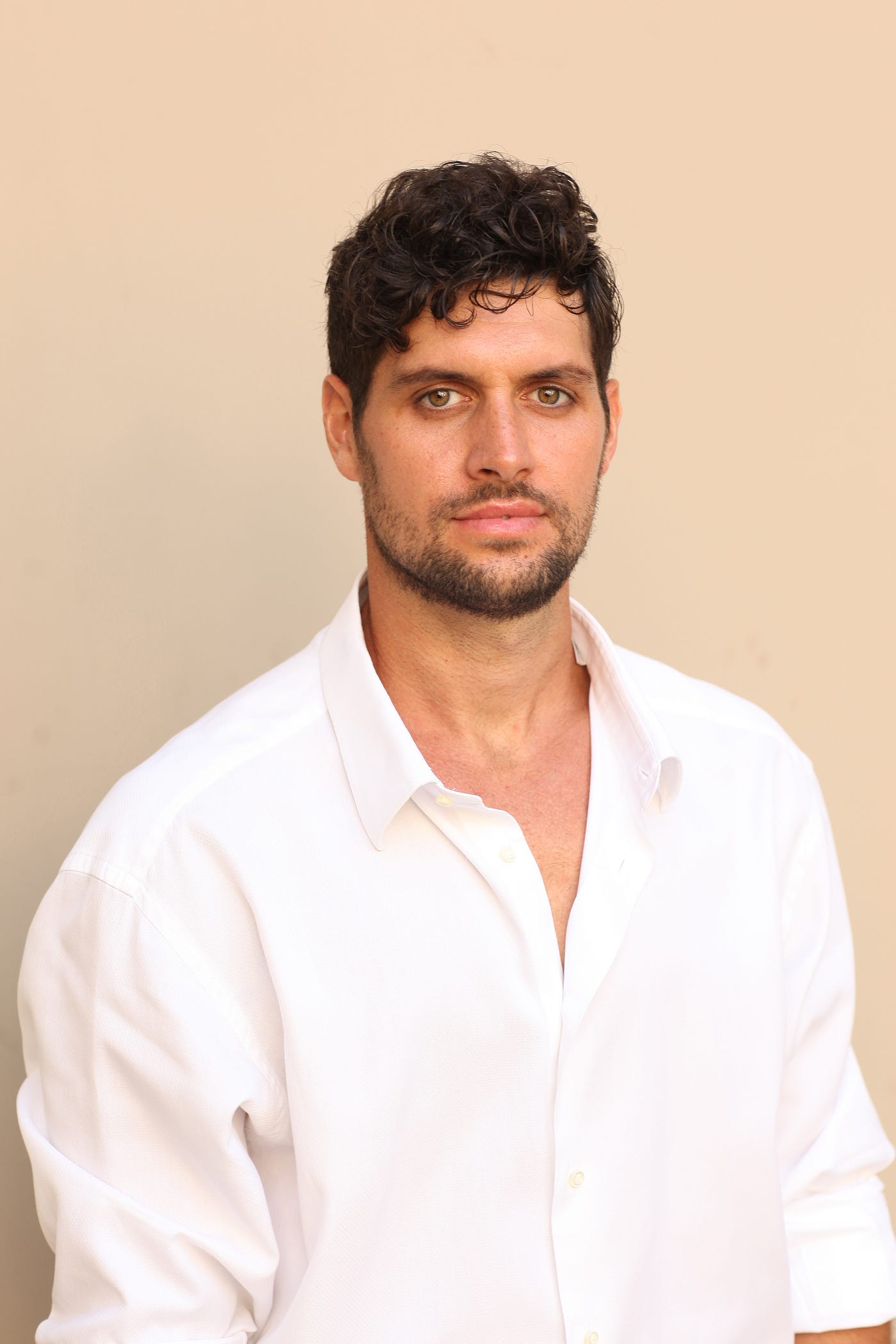
Hannah Feminella and Joe Feminella are New York-based entrepreneurs and the founders of The Brownstone Social, NYLA Vodka Seltzer, Lettuce, and hosts of the First Round’s on Me podcast. Hannah, an Australian-born founder, CMO, and creative director with more than 15 years of experience in branding, storytelling, and culture, previously worked as an international model represented by agencies including Wilhelmina, Ford, and IMG, while Joe brings a background in finance to his work building businesses across technology, hospitality, media, and culture. Together, they are building a portfolio of brands and experiences rooted in one shared belief: people need more reasons to put their phones down and connect in real life.
Thank you so much for joining us in this interview series! Can you tell us a story about what brought you to this specific career path?
Hannah: I definitely didn’t take the conventional route into entrepreneurship. My background is in fashion and modeling, and if you’d told me back then that I’d eventually be co-founding multiple companies with my husband, including a tech company, I probably would’ve laughed. But the further I’ve gotten into entrepreneurship, the more I’ve realized how much those worlds have in common. Modeling is essentially the business of marketing. You’re constantly learning about branding, storytelling, consumer behavior, and how to create desire around a product. You’re also effectively running your own small business. Networking, negotiating, building relationships, adapting to different markets, and dealing with rejection. A lot of rejection. You develop a thick skin pretty quickly, and honestly, pitching investors or building partnerships isn’t all that different from walking into your tenth casting after hearing nine no’s. Of course, there were huge gaps in my knowledge when I started building Lettuce with Joe. But I think there’s a misconception that entrepreneurship requires a particular background. Sometimes coming from an entirely different industry gives you a perspective others might not have. And I think that’s been one of my greatest advantages.
Joe: I had just moved to Los Angeles and was working on what was, at the time, more of an idea than an actual company. I had a background in finance, but instead of telling people I worked in finance, I started introducing myself as a tech founder. Technically, I wasn’t lying! What was fascinating was how differently people responded. Suddenly, doors started opening, conversations changed, and I was meeting people I never would have met otherwise. It taught me something really important early on: where you went to school, what your résumé looked like, or even how much you knew didn’t necessarily determine what you could accomplish. So much of it came down to how you carried yourself, how you communicated your vision, and whether you genuinely believed in what you were building. That experience completely changed my perspective. I started to feel like I could do anything, and I’ve carried that mentality with me ever since.
Can you tell us a story about the hard times that you faced when you first started your journey?
Hannah: I think one of the hardest parts of entrepreneurship is realizing just how much you don’t know. The learning curve is enormous. You’re constantly making decisions about things you’re still learning to understand, without necessarily having someone to tell you whether you’re making the right call. And then there’s another layer to my experience: my business partner is also my life partner. The lines between personal and professional life can become almost nonexistent, and because we’re both passionate and opinionated, we don’t always agree. We’ve had to become much more intentional about communication, respecting each other’s areas of expertise, and making sure business disagreements don’t become personal ones.
Joe: When we first raised money, we had three employees, and I had absolutely no experience running a company or managing a team. Looking back, it’s pretty funny because I was technically the CEO, but my employees were essentially telling me what to do. I didn’t know any better, so I just went along with it. About four months in, I finally started asking questions. I sat them down and asked what they actually did every day and what they were contributing to the business. Neither could give me a clear answer. So I fired both of them. Suddenly, I was essentially on my own, figuring out how to build and run a company from scratch. It was one of my first real lessons in leadership. Just because you’re the founder doesn’t automatically make you a leader. You have to become one, and sometimes that means making uncomfortable decisions before you feel ready.
Where did you get the drive to continue even though things were so hard?
Hannah: I think a lot of that drive is innate. I’ve always been incredibly ambitious, determined, and someone who tends to thrive under pressure. Entrepreneurship demands that, because there’s always another problem. You solve one thing, and five more appear. But I also think there’s a difference between being driven by ambition and being driven by purpose. Ambition gets you started, but purpose is what carries you through the really difficult periods. Ultimately, I’ve never wanted to look back and wonder what would’ve happened if I’d been brave enough to try. It’s not that I believe everything will always work out. It’s that I believe whatever happens, I’ll figure out a way forward.
Joe: I think most successful founders have a certain level of resilience and competitiveness that’s almost impossible to teach. For me, there’s just this internal fire that never really goes away. No matter how difficult things get, there’s always something inside me telling me to keep going, figure it out, and find another way. I’m incredibly competitive, especially with myself. I constantly feel like there’s another level I can reach, another problem I can solve, or something I can do better. I don’t necessarily think that’s always healthy, but I do think it’s a big part of what makes entrepreneurs who they are. I’ve always had the mentality that I’ll keep going until I literally can’t anymore.
So, how are things going today? How did grit and resilience lead to your eventual success?
Hannah: Things are good! Busy, chaotic, exciting, overwhelming at times, but really good. Between building Lettuce, running The Brownstone Social, pushing NYLA out, doing the podcast, and raising our little boy, there’s certainly never a dull moment. Re: the success part, I think the funny thing about entrepreneurship is that you’re constantly moving the goalposts on yourself. Something you would’ve dreamed of achieving two years ago becomes your normal, and suddenly you’re chasing the next thing. I’m trying to get better at actually stopping to appreciate how far we’ve come. And I think resilience has played a huge role in that. We’ve had plenty of moments where things haven’t gone to plan, and I’ve learned that you can’t get too attached to how you thought something would work out. Sometimes you just have to pick yourself up, have a little cry or a glass of wine, and figure out what comes next.
Joe: What’s funny is that things don’t necessarily get easier as you become more successful. The problems just get bigger. Today, there are more moving parts, more people depending on us, more money at stake, and significantly more fires to put out. But something interesting happens over time. You develop an incredible tolerance for uncertainty. Things that would have kept me awake for a week five years ago are now just another Tuesday. You almost become numb to the chaos, but in the best possible way. You learn to stay calm, make decisions, and keep moving regardless of what’s happening around you. I think one of the most valuable skills I’ve developed as a founder is becoming genuinely comfortable being uncomfortable. I’m not sure there’s ever a point where you’ve completely made it. The goalposts keep moving, and I actually think that’s part of the fun.
Can you share a story about the funniest mistake you made when you were first starting? Can you tell us what lesson you learned from that?
We once threw a massive launch party in Los Angeles that cost us around $70,000. We invited some of the coolest people in LA, put together an incredible event, and had this whole strategy around introducing everyone to our new app. The objective was pretty straightforward: throw an amazing party, get everyone excited about the product, and have them download the app when they arrived. There was just one small problem. The app didn’t work. We had spent $70,000 throwing a party to promote an app that nobody could actually download. Looking back, it’s hilarious. At the time, not so much. The lesson was that while speed is incredibly important in startups, there’s a difference between moving quickly and rushing. Sometimes slowing down just enough to make sure the fundamentals work can save you a tremendous amount of time, money, and embarrassment. For what it’s worth, the party itself was incredible.
What do you think makes your company stand out? Can you share a story?
Hannah: I think what’s interesting is that, on paper, our businesses are all quite different, but at their core, they’re really built around the same thing: bringing people together IRL. With The Brownstone Social, we wanted to create something that felt more like a second home than a traditional coworking space. With Lettuce, we’re taking that same philosophy into the digital world, building a social app that actually encourages people to get off their phones and spend more time together in real life. With NYLA, we’re bringing a fresh perspective to the beverage industry, challenging some of the conventions around how premium products are positioned, experienced, and enjoyed. And the podcast, well, that is all about connecting with new people. I think the common thread is that we’ve never been particularly interested in doing things just because that’s how they’ve always been done. We like questioning what’s missing, what could be better, and how we can make something feel a little more human.
Joe: I think what makes our company different is why we’re building it in the first place. At our core, we’ve always been passionate about bringing people together and creating meaningful connections in real life. What’s interesting is that we actually spent three and a half years building a dating app called First Round’s On Me. We eventually recognized that the bigger opportunity wasn’t just helping people find romantic connections. It was helping people connect, make plans, discover experiences, and actually spend time together. So we made a pretty dramatic decision: we changed the name, the product, and the entire direction of the company to build Lettuce, a social app designed to make it easier to make plans with your friends. That’s a massive pivot after spending years building something, but we were never afraid to make that change because our underlying mission never changed. I think great founders need to be stubborn about their purpose but flexible about how they accomplish it. For us, the purpose has always been human connection. Everything else is just how we get there.
Which tips would you recommend to your colleagues in your industry to help them to thrive and not “burn out”?
Hannah: I think when you’re building something you really believe in, it’s incredibly difficult to switch off. There’s always something that needs your attention, and because Joe and I work together, it’s very easy for a conversation about our day to turn into a full-blown business meeting over dinner. But having our son has really changed my relationship with time. I’m much more conscious of the fact that these years are fleeting, and I don’t want to spend them physically present but mentally somewhere else. So I’m learning to be a little more protective of my time, to delegate, and to accept that not everything needs to be done immediately. I think the biggest thing is remembering why you’re working so hard in the first place. There’s not much point building this wonderful life if you’re too exhausted or distracted to actually enjoy it.
Joe: I think one of the biggest misconceptions about entrepreneurship is that being successful means working every waking hour. The reality is that running a company requires an enormous amount of mental and physical energy. If you want to operate at 100%, you need to give yourself opportunities to recharge. For me, working out is incredibly important. When my body feels good, my mind feels good. I also think everyone needs a hobby or an outlet that allows them to completely turn their brain off. And honestly, I think it’s okay to have a small vice. For me, sometimes that means sitting on the couch, watching sports, and doing absolutely nothing productive. As founders, we spend so much time optimizing our businesses that we forget to optimize ourselves. You can’t continuously give everything you have if you’re running on empty.
None of us are able to achieve success without some help along the way. Is there a particular person who you are grateful towards who helped get you to where you are? Can you share a story?
Hannah: Without a doubt, my husband, Joe. Which probably sounds like the obvious answer, but it’s true. He’s one of the most driven people I’ve ever met, and I think his belief in what we’re capable of has encouraged me to do things I might never have considered on my own. We have very different personalities, and I think that’s part of why we work so well together. Although, ask me that on a particularly stressful Tuesday and I might have a slightly different answer. But in all seriousness, there’s something really special about sharing all of those experiences with the same person. He challenges me, pushes me, believes in me, and I hope I do the same for him. I’m incredibly grateful that we get to build this life together, even on the days when we’re driving each other absolutely mad.
Joe: Without question, my parents and my wife. When my app was still in its infancy, my parents helped fund the original idea. There wasn’t some incredible business model, proven traction, or a sophisticated pitch deck. They essentially wrote me a check because they believed in me. That belief meant more than the money itself. Knowing that I had people in my corner who supported me unconditionally gave me the confidence to take enormous risks. Having that foundation, that safety net, is something I’ve never taken for granted. And then there’s my wife, Hannah. Building a company is difficult enough on its own, but we’re building businesses, raising a family, and navigating life together all at the same time. We’re constantly pushing each other to become better versions of ourselves, both personally and professionally. We challenge each other, support each other, and share a vision for what we’re trying to create for our family. I genuinely believe that when two people are equally invested in building their dreams together, it creates a pretty incredible force.
How have you used your success to bring goodness to the world?
Hannah: I think I’m still very much in the process of building the things I hope will have a positive impact, but community has become such an important part of everything we do. With The Brownstone Social, I love that we’ve created somewhere people genuinely want to spend their time, somewhere that feels warm, welcoming, and a little like a second home. With Lettuce, I think we’ve become so accustomed to living through our phones that sometimes we forget how wonderful the ordinary, real-life moments are. Dinner with your friends, meeting someone new, discovering a little neighborhood spot, or just making the effort to show up for someone. If the things we’re building can help people feel a little more connected, a little more present, and give them more of those moments, then I think that’s a pretty lovely thing to contribute to the world.
Joe: I think the most meaningful thing we’re trying to do is remind people how important real human connection is. We live in a world where we’re more digitally connected than ever, but somehow people are also experiencing tremendous levels of loneliness and isolation. We’ve become incredibly good at communicating through screens and, in some ways, forgotten how important it is to simply be present with one another. That’s what drives me. Whether it was through First Round’s On Me, what we’re now building with Lettuce, or the physical communities we’re creating through The Brownstone Social, the goal has always been the same: get people off their phones and into the real world. I believe so much of what makes life meaningful happens when we’re physically together, sharing experiences, having conversations, and building relationships. If the businesses we create can make even a small difference in helping people feel more connected, that’s something I’m incredibly proud of.
What are your “5 things I wish someone told me when I first launched my business,” and why? Please share a story or example for each.
Hannah:
1. Nobody is coming to tell you that you’re qualified.
I think people waste an extraordinary amount of time waiting until they feel sufficiently experienced, knowledgeable, or prepared to pursue something. But I’ve met incredibly accomplished people who still have no idea what they’re doing half the time. The difference is that they’ve become comfortable figuring things out as they go. Coming from modeling, I didn’t have the conventional résumé someone might expect from a tech founder or CMO. I could have spent years viewing that as a disadvantage. Instead, I’ve realized that coming from outside an industry can be incredibly valuable. You haven’t spent ten years learning why things supposedly can’t be done differently.
2. Being liked and being respected are two entirely different things.
This was a particularly important lesson for me as a woman entering industries where I didn’t necessarily have a traditional background. Early on, it’s tempting to believe that being a good leader means keeping everyone happy, being endlessly accommodating, and avoiding uncomfortable conversations. But leadership requires making decisions people don’t agree with. And I’ve learned that clarity is kinder than ambiguity. That avoiding a difficult conversation rarely makes it disappear. It usually just makes it more expensive and more time consuming. You can be warm, generous, approachable, and genuinely care about the people you work with while still holding incredibly high standards. In fact, I think the best leaders do exactly that. Being respected shouldn’t require you to become less kind. But being kind shouldn’t automatically make you less of a leader.
3. Your customer doesn’t care nearly as much about your business as you do.
This sounds obvious, but I think it’s one of the hardest things for founders to truly accept. When you’ve spent months obsessing over a product, or a campaign, or a particular feature, it’s very easy to assume everyone else will recognize its brilliance. They won’t. Your customer has their own life, priorities, frustrations, and approximately a thousand other things competing for their attention. So while a company or a feature might feel revolutionary internally, if it doesn’t solve a problem someone actually cares about, its sophistication is irrelevant. At the end of the day, the market doesn’t reward how hard you worked on something. It rewards how valuable people find it. The best marketing isn’t about convincing people to care about what you’ve built. It’s about understanding what they already care about and showing them why your business matters within that context.
4. The things that make you a great founder can eventually make you a terrible leader.
The skill set required to build a business isn’t necessarily the skill set required to lead one. In the early stages of a business, being obsessive, highly involved, and unwilling to accept anything less than your vision can be enormously valuable. You’re the people pushing everything forward. You’re across every decision, every detail, every potential problem. But as the business grows, those same instincts can become liabilities. If every decision requires your approval, you’ve stopped being the driving force behind the business and started becoming its biggest bottleneck. Empowering people doesn’t mean lowering your standards. It means communicating those standards clearly enough that other people can uphold them without you there.
5. The people you build with matter just as much as what you’re building.
I don’t think I fully appreciated this when we first started. You can have the most incredible idea in the world, but if you’re surrounded by the wrong people, even the smallest challenge can become exhausting. We have the most amazing team. Truly. And I’ve seen firsthand how much difference it makes when people genuinely care about what they’re creating.
Joe:
1. This might be the hardest thing you’ll ever do.
I don’t think anyone can fully prepare you for the mental weight of being a founder. You’re constantly thinking about the business. You wake up in the middle of the night with ideas, problems, or things you could be doing better. And eventually, you have employees, partners, investors, and other people depending on you. It’s an enormous responsibility, and unlike most jobs, there’s no real moment when you get to clock out. I wish someone had told me that entrepreneurship isn’t just a career. It’s a completely different way of living.
2. The journey is significantly longer than you think.
I remember how exciting it was when we first raised money. You get that first check and think, “Wow, we actually made it.” In reality, you haven’t made it at all. You’ve just bought yourself a ticket to the starting line. Building a meaningful business takes years. There are pivots, setbacks, moments of momentum, and plenty of periods where it feels like nothing is working. I wish I had understood earlier that success is usually much more about endurance than speed.
3. Your business will become a huge part of your identity.
Nobody warns you how completely consumed you can become by what you’re building. It becomes the first thing you think about in the morning, the last thing you think about at night, and unfortunately, the only thing you want to talk about at dinner. Your friends will find it incredibly annoying. But when you’re building something you genuinely believe in, it’s difficult not to become obsessed with it. The challenge is learning how to love what you’re building without allowing it to become the only thing that defines you.
4. The hunger never really goes away.
I used to think there would be a specific milestone where I’d finally feel satisfied. Maybe raising our first round, launching the product, signing a major partnership, or reaching a certain number of users. But what I’ve learned is that every milestone just creates a new one. You accomplish something you once dreamed about, celebrate for about five minutes, and then immediately start thinking about what’s next. That ambition is a gift, but it can also make it difficult to appreciate how far you’ve come. I wish someone had told me to enjoy the wins a little more along the way.
5. You’re going to question yourself more times than you can count.
There are days when you genuinely wonder whether you’re doing the right thing. You’ll question the business, your decisions, your ability to lead, and sometimes whether you should just walk away from all of it. I’ve had plenty of those moments. But I’ve learned that doubt is part of the process. You can acknowledge those thoughts without letting them dictate your decisions. For me, it’s about having those internal battles, reminding myself why I started, and finding a way to keep moving forward. Sometimes the difference between founders who make it and those who don’t is simply who can push through one more difficult day.
Can you share a few ideas or stories from your experience about how to successfully ride the emotional highs & lows of being a founder?
Hannah: I think the first thing is accepting that the highs and lows are just part of the experience. You can have the most incredible meeting in the morning, feel like everything is finally falling into place, and by lunchtime something has gone completely sideways. Sometimes I genuinely think entrepreneurship is just learning how to experience every human emotion before 1pm. Something I’ve gotten better at is not allowing one bad day to convince me everything is falling apart, or one brilliant day to convince me we’ve suddenly figured it all out. Neither is usually true. I’ve also learned the importance of having people around you who can offer perspective, especially when you’re so close to something that it’s difficult to see clearly. Lastly, I think having a life outside of work is incredibly grounding. Coming home to my son, spending time with friends, or doing something completely unrelated to business reminds me that, as much as I love what I do, it’s not my entire identity. Your business can be an enormous part of your life without becoming the measure of your worth.
Joe: Being a founder is an emotional roller coaster, and I don’t think that ever really changes. You can wake up to incredible news about a partnership or a major opportunity, and by lunchtime, you’re dealing with a financial issue, an operational disaster, or something completely unexpected. What makes entrepreneurship so fascinating is that you’re constantly living between two very different realities. On one hand, you genuinely believe that if you keep going, your entire life could change and everything you’ve been building toward could finally come together. On the other hand, you’re painfully aware of just how fragile a startup can be. Something you’ve spent years building can unravel incredibly quickly. I think the key is learning not to get too high on the highs or too low on the lows. Celebrate the wins, learn from the setbacks, and understand that neither one defines you. Over time, you realize that the ability to stay emotionally steady in an incredibly unpredictable environment might be one of the most important skills a founder can develop.
You are a person of great influence. If you could start a movement that would bring the most amount of good to the most amount of people, what would that be? You never know what your idea can trigger. :-)
Hannah: Mandating that people become participants in their own lives again, rather than spectators. We’ve reached this strange point in society where we’re constantly watching other people live. We’re saving restaurants we’ll never visit, watching people travel to places we’ll never go, following friendships and relationships through screens, and somehow convincing ourselves that consuming all of this is a substitute for experiencing it. I’d love to see a movement that encourages people to start showing up again. For themselves. For their people. For their families. For strangers. For the world at large. I also think so much good could come from people being a little less concerned with how their lives look and a little more interested in how their lives actually feel. And in many ways, that’s exactly what we’re trying to encourage through the businesses we’re building.
Joe: I think everyone should be required to have one standing reservation every single week with a group of people they haven’t seen in a while. Two hours. Phones away. Good food, good conversation, and absolutely no distractions. Honestly, I think it should be a law. We’ve made it so easy to cancel plans, postpone seeing friends, and tell ourselves we’ll get together next week. Before you know it, months or even years have gone by. I genuinely believe the world would be a happier, healthier, and more connected place if we simply prioritized spending time together. And that’s really the philosophy behind everything we’re building with Lettuce. Technology should make it easier for us to experience real life, not replace it.
How can our readers further follow your work online?
Hannah: You can follow me on Instagram, where I share a mix of life, motherhood, entrepreneurship, and everything happening behind the scenes of the businesses Joe and I are building. That’s @hannah_glasby. You can also follow Lettuce at @lettuce.social for all things social planning, The Brownstone Social (@thebrownstonesocial) for a little look into our Chelsea space and community, NYLA (@nyladrinks) for what we’re building in the beverage world and First Round’s On Me on Youtube for a look at the podcast. And of course, there’s plenty more to come. We’re always working on something, much to the amusement of our friends and family, who I’m sure would love for us to sit still for five minutes!
Joe: You can follow what we’re building through Lettuce, our social app designed to help people make plans, discover places, and connect in real life. Check out our website lettucesocial.co follow us on Instagram at @lettuce.social, or download Lettuce on the App Store. You can also follow @thebrownstonesocia, our social club and community space in New York City, and First Round’s On Me, our podcast where we have conversations with some incredibly interesting people. And of course, you can follow me personally at @firstroundsonjoe, where I share more about entrepreneurship, building businesses, and the occasional chaos that comes with it.
Thank you so much for the time, for sharing these insights, and for the work you do!
About The Interviewer: Tavares Beverly ( www.tavaresbeverly.com ) is the Founder and CEO of Beverly Boy Productions, a national video production company that has helped organizations tell their stories through video for more than two decades. Over the course of his career, he has worked with everyone from Fortune 500 executives and healthcare professionals to politicians, nonprofit leaders, educators, and artists, gaining a unique perspective on the role communication plays in leadership, business, and human connection. A frequent contributor on topics including communication, entrepreneurship, leadership, and personal development, Tavares believes that the ability to communicate effectively is one of the most valuable skills a person can develop. His work is driven by a passion for helping organizations connect with their audiences and helping individuals unlock their potential through mentorship, perseverance, and meaningful relationships. To learn more, connect with Tavares on LinkedIn or visit www.BeverlyBoy.com . If you’re interested in using the power of storytelling and communication to grow your organization, strengthen your brand, or inspire your audience, he welcomes the opportunity to connect.