Early in my career, I took on a very difficult contingency fee case. I didn’t yet have the experience during the case selection phase to recognize that I probably should have rejected the case.
As a part of this series, we had the pleasure to interview Chris Hamilton.
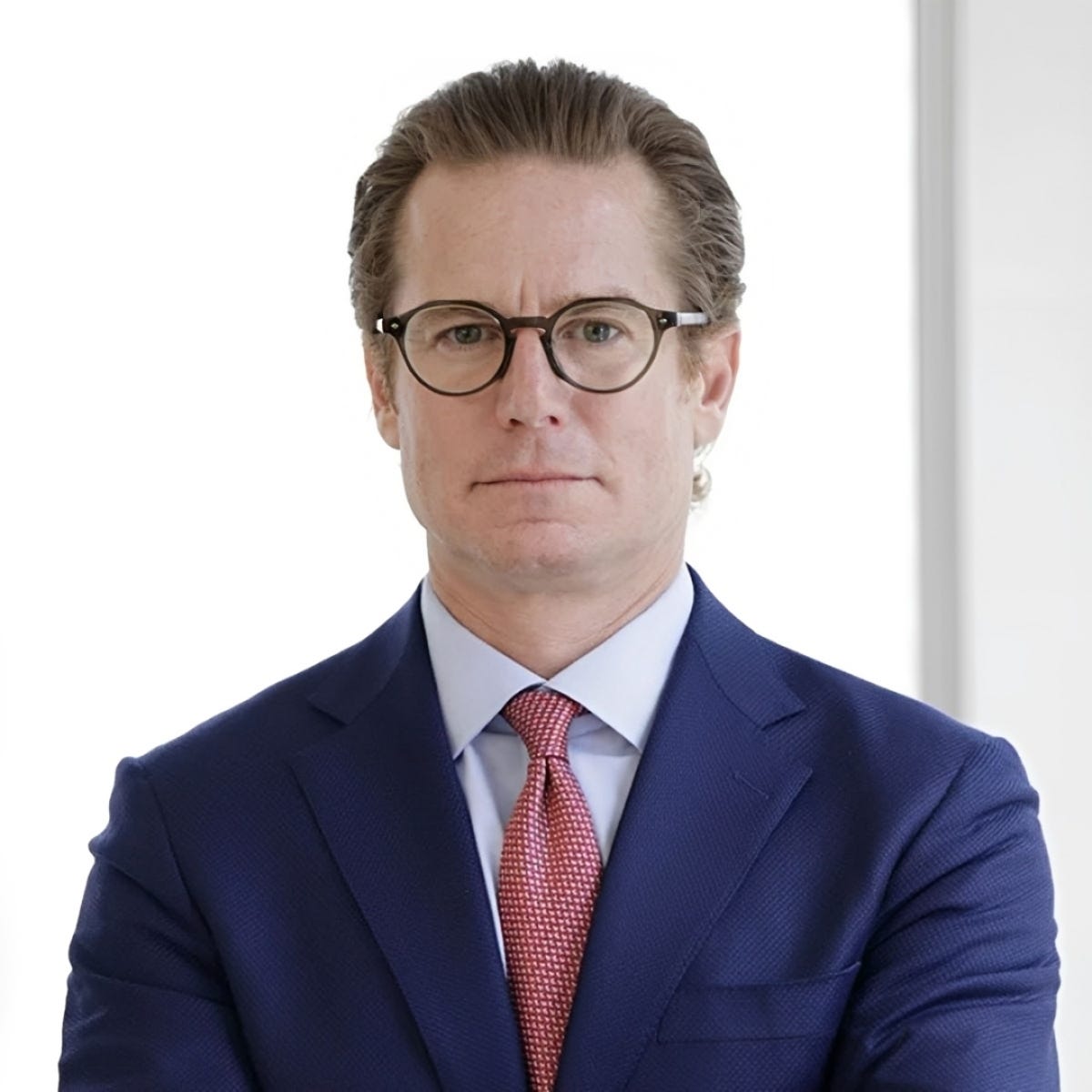
Chris Hamilton is a partner at Hamilton Wingo, where he has spent over two decades winning record-setting verdicts and settlements in catastrophic personal injury, wrongful death, and complex business disputes. Chris has won over $8 billion in verdicts and settlements as lead counsel, including a historic $7.3 billion jury verdict in 2022 — the fourth largest personal injury verdict against a corporation in U.S. history. Chris is recognized among the Best Lawyers in America, Lawdragon 500 Leading Lawyers, and Texas Super Lawyers, and is a member of the American Board of Trial Advocates (ABOTA).
Thank you so much for joining us in this interview series! Before we dive in, our readers would love to “get to know you” a bit better. Can you tell us a bit about your ‘backstory’ and how you ended up where you are? Specifically we’d love to hear the story of how you began to lead your practice.
My path began in law school at the University of Texas, where I discovered a genuine passion for jury trials. In my second year, I had the opportunity to represent indigent defendants through the criminal defense clinic, actually trying jury cases under a student bar card. That early, real-world experience was formative.
After graduating in 2004, I went to work at Legal Aid in downtown Dallas. I was handling an enormous variety of cases from evictions, car repossessions, to consumer issues, and I was in court almost every single day, trying small cases every week. But after about a year, I realized I was going to be limited in the types of cases I could handle there. So, I made the decision to start my own practice, only a year out of law school.
I’m a huge fan of mentorship throughout one’s career. None of us are able to achieve success without some help along the way. Who has been your biggest mentor? What was the most valuable lesson you learned from them?
My biggest mentor has been Lisa Blue. I met her about five years into my law practice, and it was a transformative experience. Up until that point, I really didn’t know what I was doing. Lisa was the first exposure I had to direct training from a world-class trial lawyer. She also introduced me to other people who became mentors, including one of my current law partners, Mike Kaeske. The most valuable lesson Lisa taught me was also the simplest: for a trial lawyer, there’s no substitute for hard work and preparation.
From completing your degree to opening a practice and becoming a business owner, your path was most likely challenging. Can you share a story about one of your greatest struggles? Can you share what you did to overcome it?
Early in my career, I took on a very difficult contingency fee case. I didn’t yet have the experience during the case selection phase to recognize that I probably should have rejected the case. The case was extraordinarily expensive to prosecute — by the time it went to trial, I had more than a million dollars in expenses invested. I could not afford to lose that case. If I did, I would go out of business. Fortunately, I have not lost many cases in my career. That case was one of them, and it was a transformative experience for me.
For about a month afterward, I could barely sleep. But once I had time to process what had happened, I became almost obsessed with getting back into the courtroom. I tried five cases to verdict in the next twelve months, and every single one of those verdicts was a record-breaking result. Lawyers don’t like to talk about their losses. But you cannot become a great trial lawyer without hard lessons. When I analyzed the loss, I realized the reason I lost had nothing to do with courtroom skills — not cross-examination, not jury selection. It was about understanding how to frame the issues in a case in a way that is psychologically and emotionally compelling to jurors. That realization turned me into a self-taught expert in decision-making psychology, and that skill set became one of the most important tools in my practice.
Can you please give us your favorite “Life Lesson Quote”? Can you share a story about how that was relevant in your own life?
I’m also a musician, and one of my favorite musicians is John Coltrane, who said: “You can play a shoestring if you’re sincere.” One of the early breakthroughs I had as a trial lawyer was understanding that the most important thing in the courtroom was not my oratory, not my knowledge of the rules of civil procedure or rules of evidence, not even my trial skills and techniques. The most powerful tool any trial lawyer has in front of a jury is their sincere, genuine belief in their client’s cause.
This is not easy work. What is your primary motivation and drive behind the work that you do?
At the core, it comes down to three things. First, I want to help people who are not in a position to help themselves. My clients have often suffered catastrophic, life-altering losses. They are going up against some of the most powerful corporations and insurance companies in the world, and without the right lawyer fighting hard for them, they simply would not have a fair chance. At this point, I am aware that I have a unique and rare skill set — and I feel obligated to use it to help others. Second, I get tremendous satisfaction in helping to make something good or positive happen in someone’s life following a tragedy. The civil justice system is one of the few places where ordinary people can hold powerful corporations accountable, and there is something profound about being able to use that system to change the course of someone’s life. And third — I like to win. I feel better about the world and our childrens’ futures every time I see justice prevail. It is a reminder that despite life’s challenges and tragedies, people are good and the concept of justice is essential to our identities as human beings.
What are some of the most interesting or exciting projects you are working on now?
I am constantly focused on improving the quality of service we provide to every client in the firm. Over time, our docket has grown larger, our cases have become more complex, and a higher proportion involve very serious, life-altering injuries. As a result, that growth creates a constant obligation to train lawyers better, improve our staffing, and refine our processes to make sure that our representation of our clients continues to improve every day.
But regardless of how large the firm grows, the basic concept doesn’t change: it is critical to me that every client must be represented like I would want a family member to be represented. Part of that commitment has meant to continue to add industry-leading talents to the firm. We have multiple lawyers whose exceptional skills are at the very top of our field, and we have multiple younger lawyers who are on the trajectory to reach the top of the profession as well.
Fantastic. Let’s now shift to discussing the business of law. Can you tell us a bit about the nature of your practice and what you focus on?
I have a personal injury practice representing people who have been catastrophically injured and families who have lost a loved one as the result of corporate negligence. My focus is singular: making sure that every client in the firm is represented the way I would want one of my own family members to be represented. I have always believed that if we do the best possible job for every client we have, everything else will take care of itself. Where we are today is not the result of a business plan or a financial aspiration. It’s all beyond my wildest imagination. Instead, brick-by-brick we built the business that was necessary to fulfill our mission to do the best anyone could possibly do for every single client. The financial success of the business was a collateral result of that mission and that purpose.
You are a successful attorney. Which three character traits do you think were most instrumental to your success? What unique qualities do you have that others may not? Can you please share a story or example for each?
The first is understanding the social nature of the work that we do — believing in the role that the justice system has in promoting a good society. The civil justice system is one of the primary mechanisms through which ordinary people can hold powerful corporations accountable. When you truly believe that, it changes how you approach every case. It stops being transactional and becomes something more meaningful.
The second is being a cause fighter — being motivated by something larger than financial reward. If the short-term fee is your primary concern, you will settle cases too cheaply. You will avoid the risks that sometimes need to be taken. Real success in this field comes from fighting for a cause, and then allowing the results to drive the economics.
The third is being a critical thinker, an outside-the-box thinker, and a student of psychology. I didn’t receive traditional training as a lawyer in the conventional sense, and while that was harder early on, I believe it ultimately benefited me. It allowed me to see things differently than many lawyers do. One of the most powerful tools I have developed is the ability to use my own fear and anxiety not as a paralytic, but as a superpower. Early in my career, I would sometimes get so nervous in court that I would lose my breath and feel like I could barely speak. Over time, I learned to control my breathing and transform that nervous energy into fuel — to convert the feeling of anxiety into the feeling of excitement. To transform the energy of a negative emotion into a positive emotion. I eventually realized it was not a coincidence that I was both more nervous before trial and a better courtroom performer than my adversaries. I’ve since learned that many of the artists and performers I most admire share this common trait and common experience.
Do you think where you went to school has any bearing on your success? How important is it for a lawyer to go to a top-tier school?
I met my wife in law school, and no one has been more important to my success than she has — both as my law partner and life partner. As for the broader question, honestly, I don’t think the name of the law school is particularly important. Some of the best trial lawyers I have ever worked with did not attend a top-tier school. Some great trial lawyers did of course attend top law schools. But it’s not a requirement, and not a particularly good predictor of success as a trial lawyer. Work ethic, intrinsic motivation, resilience, grit, courage, emotional intelligence, and a strong sense of fairness and justice are all much better predictors than law school pedigree.
Managing being a law practitioner and a business owner is a constant balancing act. How do you manage both roles?
I have never really viewed my role as a business owner as something separate from my role as a fiduciary for our clients. The way I balance both is to focus entirely on doing the right thing for our clients, and to let the business side take care of itself. That said, I eventually recognized that I needed partners who had better abilities than me to focus specifically on the operational side of the firm. That’s in part what led me to partner with Paul Wingo. And critically, my wife Anne — who is also a lawyer — manages our practice as our Managing Partner and COO. Her focus and talents running the business operation gives me the ability to remain focused on our clients’ cases. We have a unique balance of talents among our partners, and, speaking particularly for myself, the whole is much greater than the sum of the parts.
Can you help articulate the entrepreneurial skills a lawyer needs to run and lead a successful law firm?
The most important thing is to have a vision that takes precedence over crunching numbers. A law firm must have a purpose — a reason to exist that goes beyond the profits. Our firm has become successful not because we set out to build a successful business, but because we built a culture around putting our clients first. It turns out that a client-focused business model is usually the most successful one anyway. When we face a choice between a business decision and the best interest of our client, we always choose the best interest of our client — even when that decision is financially detrimental to us.
As a business owner you spend most of your time working IN your practice, seeing clients. When and how do you shift to working ON your practice? (Marketing, upgrading systems, growing your practice, etc.) How much time do you spend on the business elements?
Over the last several years, as our practice has grown, I have had to transition from spending all of my time working deeply on a handful of cases to spreading my time across a much larger docket — helping our clients by helping our lawyers do the best work possible on every case. But I don’t separate the two. Giving our clients the best possible service is to develop and grow our business. My role in working on the firm always comes back to the same thing: how do we do better for our clients? My wife Anne manages the operational side of the firm with complete focus, which gives me the luxury of doing the same on the client side.
Can you share some specific, non intuitive insights from your personal experience about how a leader of a law firm should manage personnel, hire and fire, generate leads, advertise, and manage finances?
Manage personnel: Hire and fire: Generate leads: Advertise: Manage finances:
I am not deeply involved in the day-to-day of these aspects. That is by design. The key insight is that I have built a team with expertise in each of those areas that far exceeds what I could provide on my own. The important thing for me is to set the vision and make sure everyone is aligned around the firm’s goals and core purpose: clients come first.
On personnel, one thing Anne consistently emphasizes is that the most important thing is finding the best people — and then finding the right roles for those people. She describes it as finding the right people for the bus, and then finding the right seats. A nimble law firm cannot afford to be rigidly wedded to an organizational structure that fails to maximize the individual talents of the people it has.
On finances, the most non-intuitive position I hold — and one that runs counter to common practice — is that I do not believe it is a good practice for a law firm to utilize debt to cover case expenses, much less operations. There are financial advisors who will argue it makes sense from a tax or accounting standpoint. But that analysis ignores something more important: owing money on a case creates a near-conflict of interest between the lawyer and the client. When I am in trial fighting to maximize the outcome for my client, I don’t want to be in a position where I’m worried about how much I’m going to owe a bank or a third party if we don’t win the trial. I believe that dynamic is one of the primary reasons many lawyers settle cases far too cheaply — they simply cannot afford to go to trial, regardless of what is actually in the client’s best interest. I strongly believe it is in the best interest of our clients for their case expenses to be advanced with cash and not debt. That way, there is no daylight between the client’s interests and our interests.

What are your “5 Things An Attorney Needs To Know In Order To Create A Successful And Thriving Law Practice”? (Please share a story or example for each.)
1. The first thing you need to have a law practice is clients — and when you’re starting out, you can’t be too picky.
I began by taking every case that walked in the door, even ones I probably shouldn’t have. But it turned out that when I did a good job — even if I didn’t make any money on the case — that client might send me another client down the road. I built the practice early on by handling a substantial amount of work that did not make the firm any money.
2. One dissatisfied client will undo the work of one hundred satisfied ones.
If you have 100 satisfied clients, they will each tell one person. If you have one dissatisfied client, they will tell 100 people. Every client must be treated like family, regardless of the size of their case.
3. Vision is more important than business planning.
Treat every case as a moral cause, not a business asset. We have waived our fees entirely in cases where a client needed every dollar of the recovery for their medical care. We once represented a quadriplegic client where the available insurance was wholly inadequate for the severity of his injuries. We pursued the case anyway, recovered substantially in excess of the insurance, and then waived our attorney fees entirely so the client would have every dollar he needed for his medical care. We have also repeatedly taken on serious injury cases where, at the outset, it did not appear we would be able to make any money. No adequate insurance, no obvious path to a fee. We took those cases anyway and prosecuted them. Many times, we did recover many millions in excess of the policy limits — and we did earn a fee. But if the fee had been our concern from the beginning, we never would have taken those cases. And in fact, many of them had already been rejected by other firms.
4. You cannot do it all yourself.
A successful law firm is a collection of talents. For the first six or seven years, I was essentially a solo practitioner. I could only help as many clients as I could personally handle. The moment I began building a real team — partnering with Paul Wingo, bringing Anne in to manage the firm — we were able to help far more clients and achieve substantially better results.
5. Never stop improving. A business is either growing or dying.
Complacency is the enemy of excellence. If you get comfortable, someone else is already working to take your place. The standard we set today has to be exceeded tomorrow. That starts at the top. Always keep learning and never stop getting better.
You are a person of enormous influence. If you could inspire a movement that would bring the most amount of good to the most amount of people, what would that be? You never know what your idea can trigger. :-)
I would remove unlimited political donations and undue corporate influence from our political system. I don’t believe PACs should be legal. I don’t believe that corporations should be allowed to interfere with elections. I believe that gross inequality of political power is fundamentally incompatible with democracy where each person has an equal vote. There need to be strict campaign donation limits for every elected office, and there need to be aggregate limits on how much an individual person can donate in a campaign cycle. And corporations and other non-human entities should not be allowed to spend money to influence our elections. One person equals one vote is the foundation of democracy.
How can our readers further follow your work online?
You can learn more about our work at our firm’s website. https://www.hamiltonwingo.com/attorneys/chris-hamilton/ You can also view some of Chris’s trial work at CVN: https://cvn.com/proceedings/browse/lawyer/hamilton-chris
This was very inspiring. Thank you so much for the time you spent with this. We wish you continued success and good health!
About The Interviewer: Eric L. Pines is a nationally recognized federal employment lawyer, mediator, and attorney business coach. A former federal employee himself, he represents federal employees nationwide and serves as in-house counsel for more than fifty thousand federal employees through his work with federal employee labor unions. He formerly served as Chief Counsel for AFGE Local 1923 and serves as counsel for FEMA bargaining unit employees and numerous Department of Defense and Department of Veterans Affairs unions. His firm represents federal employees in a wide range of employment matters, with particular experience in reasonable accommodations, Federal Employee Disability Retirement through OPM, and representation of Department of Veterans Affairs doctors and nurses. Mr. Pines and his firm also handle Social Security Disability matters for employees. He has served as a mediator for numerous federal agencies, including as the Library of Congress’ in-house EEO Mediator, and has served as an expert witness in federal court. Learn more at www.pinesfederal.com or contact him at eric@pinesfederal.com.