When you are young, ambitious and visionary, nothing stings more than someone labeling you as less than what you know you can become. His arrogance that day changed the course of my life.
Artificial Intelligence is transforming industries at a breakneck pace, and the entrepreneurs driving this innovation are at the forefront of this revolution. From groundbreaking applications to ethical considerations, these visionaries are shaping the future of AI. What does it take to innovate in such a rapidly evolving field, and how are these entrepreneurs using AI to solve real-world problems? As a part of this series, I had the pleasure of interviewing Brian Weiner.
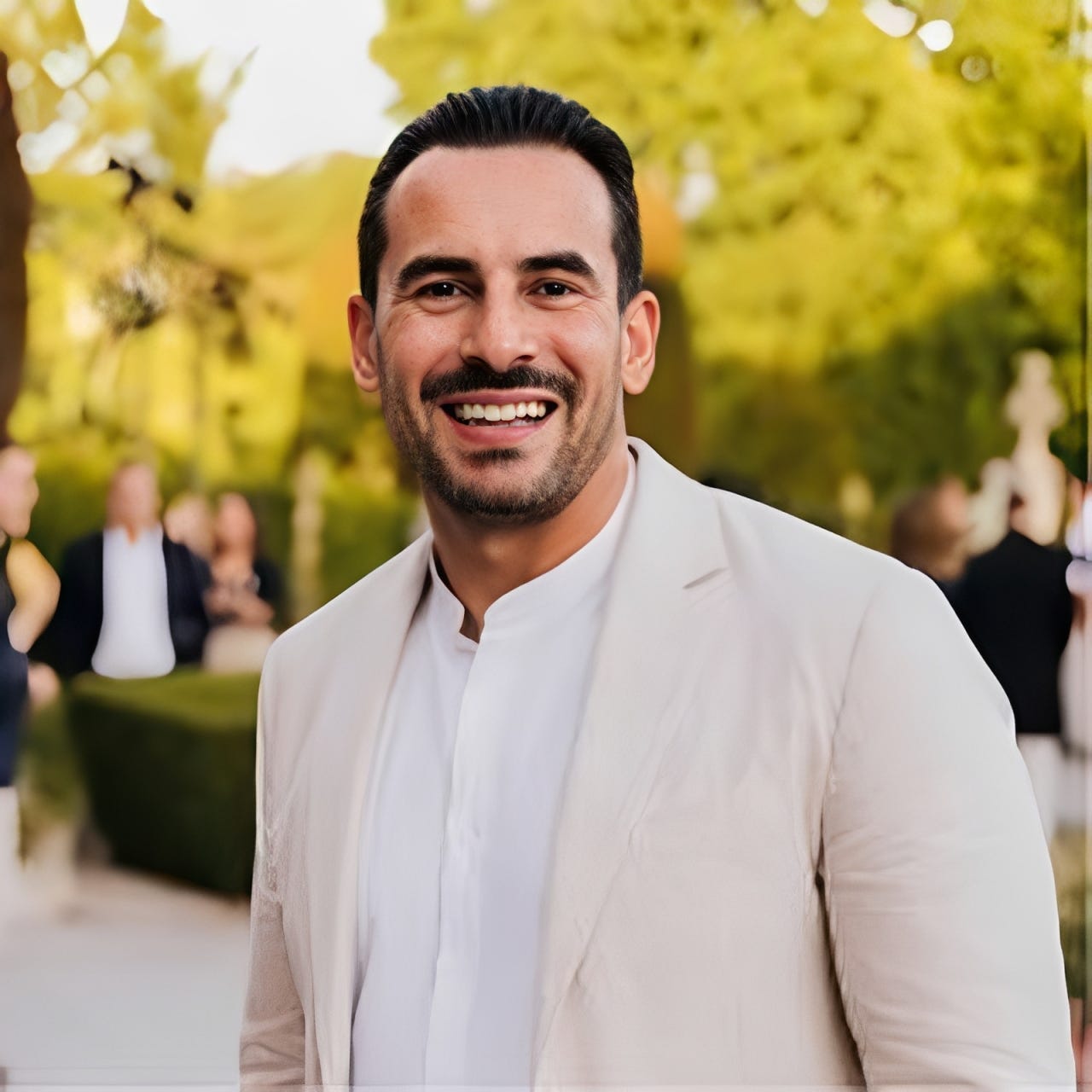
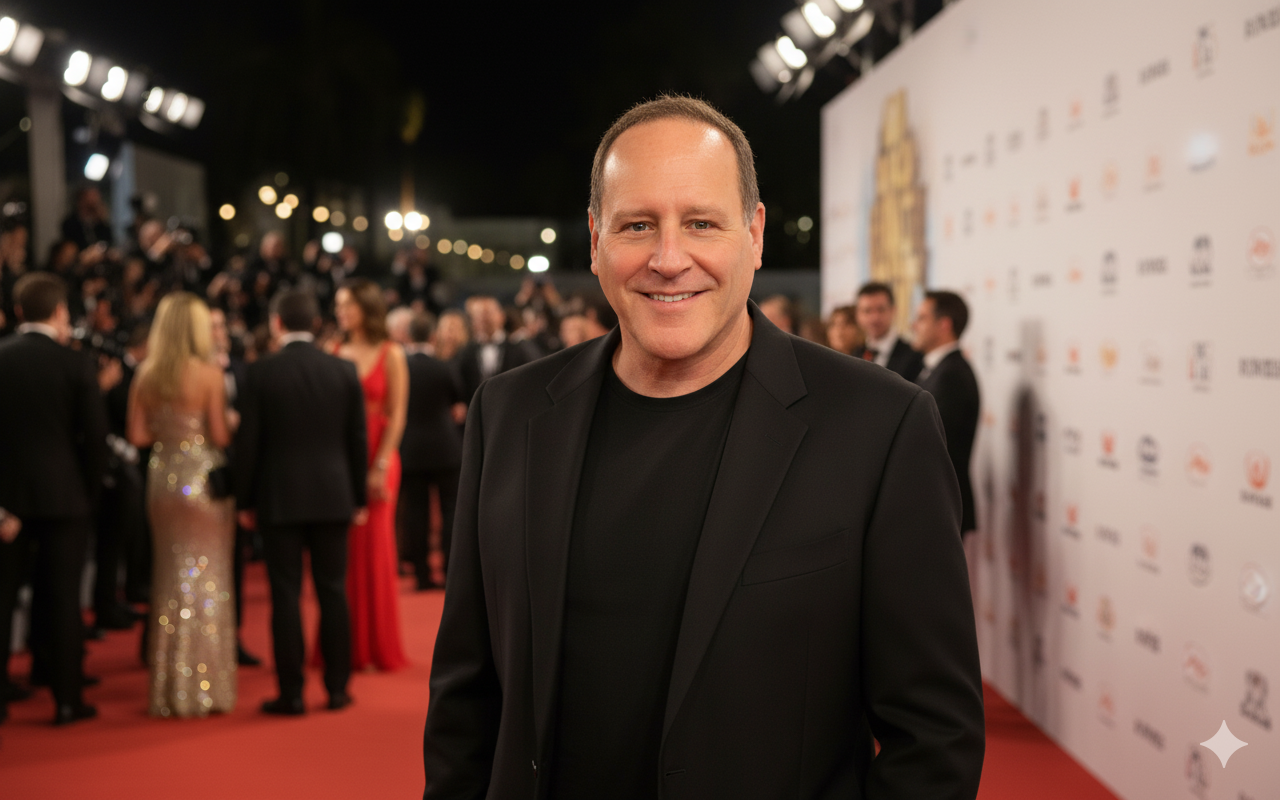
Brian Weiner is an award-winning entrepreneur, visionary producer, and CEO and Founder of Sizzle Studios, with more than 45 years of experience at the intersection of entertainment, technology, and innovation. As Founder and CEO of The Illusion Factory, he has pioneered groundbreaking projects spanning interactive media, gaming, virtual and augmented reality, and emerging technologies, collaborating with some of the world’s biggest entertainment brands and studios while earning more than 265 creative and technology awards. Driven by a passion for pushing boundaries and challenging conventional thinking, Brian continues to explore the transformative potential of AI and its ability to reshape creativity, entertainment, business, and the way people engage with the world.
Thank you so much for joining us in this interview series. Before we dive in, our readers would love to learn a bit more about you. Can you tell us a bit about your childhood backstory and how you grew up?
I founded The Illusion Factory at 19, while I was a film student at UCLA, by inventing a line of blank photographic greeting cards. UCLA carried them, and before long we were the top-selling greeting card line at colleges and universities nationwide. That success led me to open a photo studio, and I became one of the top photographers in Los Angeles. From there we added an advertising agency, a production company, a distribution company and an entertainment marketing company. By the time I was 21, we were producing campaigns for IMAX, Universal Studios and Paramount, and we were one of the leading advertising and marketing firms in entertainment. In the years that followed, our client roster grew to include Warner Bros., World International Network, ABC, NBC, CBS, HBO, FOX, CNBC, E! Entertainment, TNT, TBS and many more. The Illusion Factory went on to become the top advertising and marketing studio in the United States, winning 265 of the industry’s top creative and technical awards and generating more than $100 billion for our clients.
Can you share the most interesting story that happened to you since you began your career?
At 20, convinced I was a great photographer, I took my portfolio to the top ad agency in Los Angeles, hoping they would hire me. The creative director across the desk flipped quickly through my book and asked, “What kind of photographer are you?” Sensing a trick question, I answered, “A creative one.”
He didn’t like that answer. “No,” he said. “Are you a car guy? A food guy? A model expert? What are you?” I looked at him, trying to figure out which answer was the right one. So I said, “I would be so proud to shoot a gig for you. Please just pick a category from my portfolio that you like, and I would love to produce that for you.”
He slammed my book shut and said, “So you’re a jack of all trades, master of none.” My ego was bruised and I was caught off guard, so I pushed back: “Isn’t it possible that I’m a master of all? Please, give me a chance.” He shoved the portfolio back across the desk. “We only hire specialists here.” Then he stood up and showed me the door.
I was crestfallen. But at the door, with all the bravado of a 20-year-old who knows nothing, I turned, looked him in the eye and said, “I think it’s smarter to hire polymaths like me than one-trick specialists like you. Tomorrow I’m turning The Illusion Factory into an advertising agency, and I’m going to take all of your clients.” He looked at me with pure disdain, probably thinking, “Don’t let the door hit you in the ass on the way out.”
The next day, with zero experience, I turned my photo studio into an advertising agency. Within five months, IMAX, Universal and Paramount were my clients. That was 47 years ago.
Why is this the most interesting story? Because when you are young, ambitious and visionary, nothing stings more than someone labeling you as less than what you know you can become. His arrogance that day changed the course of my life. If I could remember his name (I can’t), I would send him a giant gift basket.
None of us are able to achieve success without some help along the way. Is there a particular person who you are grateful towards who helped get you to where you are? Can you share a story about that?
Larry Gershman and his wife, Anita Gershman. Larry was the former president of MGM Television and, before that, an executive vice president at Viacom. When Larry set out to create World International Network, the first global television network built for collective bargaining on the financing of television films and miniseries, I was fortunate to meet him at the very start. He trusted me, at a very young age, with all of the marketing and promotion for this new venture. Within the first five years, our work together had brought home three Emmy Awards, for Day One, Drug Wars: The Camarena Story and A Woman Named Jackie.
That work led me to Lisa Gregorian, EVP and Chief Marketing Officer of the Television Group at Warner Bros. Entertainment, and to a multi-decade relationship promoting Warner Bros. television, film, animation and games around the world. Lisa was truly the most courageous, innovative and forward-thinking client with whom we ever had the chance to collaborate. She once told me I was a “black hole of stress.” The truth is, my team and I loved the sheer challenge. Warner Bros. had the world’s largest media library, and I had assembled the greatest team of creative and technical talent. We loved diving headfirst into the unknown. That is truly the safest place to operate.
Can you please give us your favorite “Life Lesson Quote”? Can you share how that was relevant to you in your life?
“Freedom comes from being at ease with the certainty of uncertainty.”
Once you accept that you have no idea what tomorrow will bring, and you know you have what it takes to prevail whatever happens, you are free to blaze new trails without fear.
You are a successful business leader. Which three character traits do you think were most instrumental to your success? Can you please share a story or example for each?
In 1977, Peter Gabriel released “Solsbury Hill,” his song about leaving the comfort of fronting Genesis to strike out on his own, trusting imagination over the information in front of him. It came out just as I was deciding whether to start The Illusion Factory, and his choice stayed with me while I wondered whether I could find my own path as an entrepreneur.
Entrepreneurship is a white-knuckle ride if ever there was one. The courage to board that roller coaster and take each turn as it comes may be the most important trait of all. I already knew I was highly imaginative; I had a great deal of practice at it as a child. Finding the courage to go out into the world and discover myself was, and still is, the cornerstone of everything. Alongside courage, three traits have carried me:
Honesty and integrity. Mean what you say and say what you mean, no matter what. Never give anyone a reason to question your character; conduct yourself with honor in every circumstance.
Intelligence. I was never formally trained in any of the fields I built my career on. Instead, I take on new disciplines, mediums and challenges constantly, certain that by the end of each project I will have built real expertise in it. That certainty is what lets me keep venturing into new and unsafe territory.
Imagination. I have built a lifetime on imagination, and it is what I admire most in other creatives, whatever their medium. People say AI will eliminate imagination. My theory is that the people saying so are already short on it, so when they use AI, they accept whatever it hands them. In our world, AI is an extraordinary suite of tools that lets our imagination expand exponentially.
Ok super. Let’s now shift to the main part of our discussion. Share the story of what inspired you to start working with AI. Was there a particular problem or opportunity that motivated you?
I wanted to build operational intelligence, personified. It was the missing anchor tenant of the Sizzle platform: an AI that would become your ultimate concierge in life, helping you reach the goals, experiences and opportunities that make your life better. I tried building it on Siri and Alexa, and it quickly became clear that wasn’t going to work.
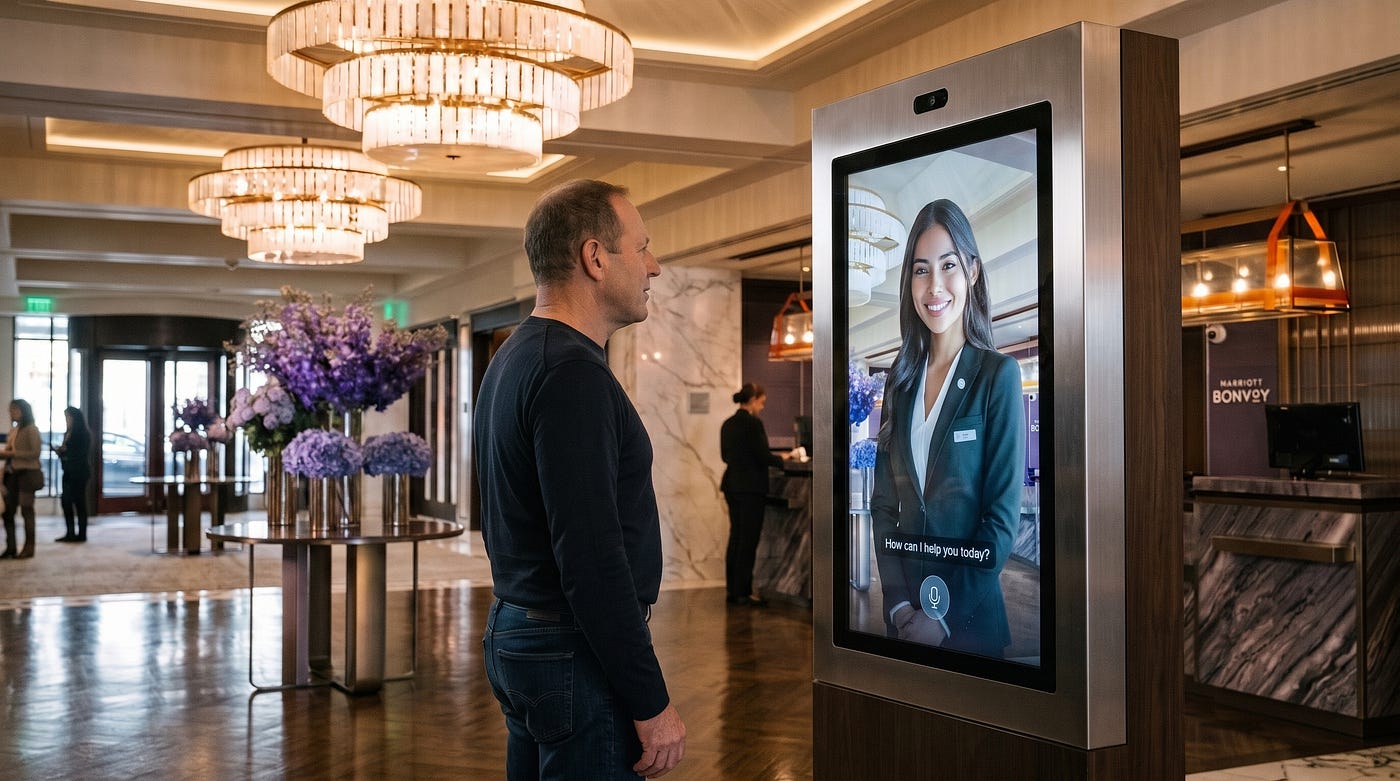
So, when I had the chance in 2024 to build a Synth Human for the United Nations at COP16, I jumped at it. From there, I partnered with Sean and Kathleen McRae of Reliance to form Areia Synthetics, built to disrupt the real estate market. Then I opened a full-spectrum division at Sizzle that serves every industry, with Synth Humans that teach, train, entertain, inform, guide and interact.
Can you describe a moment when AI achieved something you once thought impossible. What was the breakthrough, and how did it impact your approach going forward?
We gathered the best advice of 20 top golf professionals, combined it with everything else we could access, and built our first Synth Humans for golf. The depth of their understanding, and how well they could teach, was the lightbulb moment. It lit the path for every Synth Human we have produced since. We have now built more than 525 Synth Humans™, and our production knowledge is organized as a vertical stack: every new insight we gain in creating one Synth Human flows back to improve all of the ones that came before.
Please talk about a challenge you faced when working with AI. How did you overcome it, and what was the outcome?
I didn’t know how to program. I have led teams of programmers throughout my career, but my role has always been the dreamer and visionary, and I relied on others for implementation. AI changed that. It let me take the skills I have always had and extend them into building, so I could bring the entire collection of Synth Humans™ to life myself. I made mistakes along the way, but with AI as my implementation team, my personal output has grown tenfold.
Can you share an example of how your work with AI has had a meaningful impact (on others, on business results, etc)? What was the situation, and what difference did it make?
For the United Nations, we created Mohammad, the Synth Human host of COP16, the UN Convention to Combat Desertification conference held in Riyadh in December 2024. Mohammad served more than 75,000 visitors from over 100 countries in more than 70 languages, giving each of them an experience they had never had before. The audience response was tremendous, and the client was deeply appreciative. Visitors learned about plans to replant the desert, how mangrove forests can hold back desertification, and how slowing the spread of desert regions can reduce the devastation of sandstorms.
Based on your experience and success, can you please share “Five Things You Need To Know To Help Shape The Future of AI”?
1. Operational intelligence is tremendously convenient. When a platform behaves properly, even a “no” is delivered in a way that feels sincere, clear and appropriate. Speaking with a Synth Human should remove the frustration of dealing with a business, a system or a government agency. Programmed well, a Synth Human gives you genuine conversation, the right responses and real opportunities for meaningful experiences. That might be travel ideas for a city you are visiting, advice on your wardrobe, help with math homework, a chat with Leonardo da Vinci, companionship for a lonely senior, training for an employee too intimidated to ask a person questions, quick-service ordering, coaching in every sport, or guidance on financial planning, nutrition or navigating a disease. Our Synth Humans are built to deliver every one of those experiences to the people who value them.
2. Human motion is the next frontier of sports intelligence. Building our Human Motion Intelligence Format (HMIF) for predictive sports analysis, and bringing it into our Sizzle Sports platform, has been one of our most fascinating journeys to date. Tracking very specific muscles and movements during play, then analyzing how particular choices of body and equipment position affect the result, is vital to the future of sports. Our proprietary HMIF system chronicles, analyzes and reports on all of those variables. We started with Sizzle Golf: your entire swing is recorded, your body positions are closely examined, and comparisons with famous golfers show you the gap between what you are doing and what you want to be doing. That data then flows to Justin and Christina, our golf Synth Humans, who apply a sophisticated understanding of human motion and the game to give golfers of every level specific, practical instruction. What this makes possible beyond golf is a dissertation of its own; we are only scratching the surface here. We have already built it for many sports, and we are meeting with teams to help them improve with technology that did not exist at the start of this year.
3. Not all AI is created equal. Think of these tools the way you think of Adobe Creative Suite, Microsoft Office or a carpenter’s toolbox. You don’t hammer nails with a circular saw or cut a board with a wrench. AI tools have clear differences and plenty of overlap, and the overlaps are where you learn their strengths. Gemini is much better than GPT at some tasks. Midjourney is the only place to get certain styles and creative explorations, but don’t ask it to handle graphics and type; for that, you need GPT. Learn which tool does which job.
4. Whatever you know today will be obsolete next month. If you aren’t prepared to keep learning every week, if not every day, you are in the wrong field. I started with Midjourney and GPT, which led me to Veo for filmmaking, then to Runway, and to Higgsfield for Seedance. Those led to ten more platforms, and now I work to stay on top of every one of their updates and capabilities. You have to be willing to invest the time to try new platforms, explore what they do and learn which jobs each one is best suited for.
5. Stop being afraid that AI will exterminate humanity. I worked on many of the Terminator franchise properties, so I understand the fear. Whenever something drives a major evolution, some people hold back. I was the one bringing new ideas to my studio clients and being told that “no one will ever trust the internet with a credit card,” and that “our DVD business will hold until 2020; we will never stream content directly into the consumer’s home.” I worked on both of those initiatives, and both grew to stratospheric proportions, despite my clients’ predictions at the time. Use common sense. If something genuinely makes a consumer’s life easier, reduces frustration and confusion, and solves a problem in a promising way, investigate it. Use AI to poke holes in the idea (GPT and Claude are best for that), then use it to help you build. What you learn along the way is worth its weight in gold. If AI is going to end us, nothing you or I do will stop it. In the meantime, AI has extraordinary upside, and scorning it is for those who are afraid to embrace the new.
When you think about the future of AI, what excites you the most, and how do you see your work contributing to that future?
I hope the Pantheon of History becomes my legacy. I have programmed more than 150 Synth Humans drawn from the annals of history, among them Shakespeare, da Vinci, Newton, Einstein, the Buddha, Franklin D. Roosevelt, Dr. Martin Luther King Jr., John F. Kennedy, Laozi, Sun Tzu, Marcus Aurelius, Beethoven, Mozart, Elizabeth I, Queen Victoria, Cleopatra, George Washington, Lafayette, Emmett Till, Marie Curie and Harriet Tubman. Speaking with each of these luminaries has been a genuine joy. I am now looking for a partner, whether a family office, a foundation or a global brand, to help bring PantheonOfHistory.com to a worldwide audience.
Memorizing that George Washington crossed the Delaware, or repeating the legend of the cherry tree, teaches very little. Asking him why he risked everything to rise up against British rule while still owning enslaved people teaches a great deal. When you speak with these remarkable minds, you are drawn into how each of them saw the world and why they made the choices they did at that moment in history. When Kennedy explains what he learned from the Bay of Pigs, or Franklin Roosevelt explains why he green-lit the Manhattan Project, you walk away practicing critical thinking, a skill too many people are no longer taught.
What advice would you give to other entrepreneurs who want to innovate in AI? Can you share a story from your experience that illustrates your advice?
Check your fear at the door. You will make mistakes. Fall down seven times, get up eight. Fail forward. If it were easy, everyone would do it. Don’t waste your time chasing what someone else is already doing; invent something completely fresh and make it unmistakably your own. Above all, believe in yourself. If you don’t believe with everything you’ve got, you will never convince collaborators, partners, investors, customers or clients to believe in you. Belief has to start with you, and it has to radiate.
That said, the smartest strategy you can adopt in business is to be the weakest person on your own team. I have had thousands of employees at The Illusion Factory, and I never hired anyone whose job I could do better myself. When someone exceeds my abilities at what they do, I know I have found a true team player. Embrace your team. Celebrate their successes, and be gentle and understanding when things go wrong. Keep cool. Never, ever scream at anyone; there is always a calm solution.
Read the wisdom of the Buddha, Laozi and Thich Nhat Hanh; there is real power in it. Study a martial art. I am a third-degree black belt, and the journey to black belt is a great teacher. Everyone in the room wants you to pass your test, but it is you against yourself, with a thousand things to remember and no room to miss even one. You learn to control your mind under stress and execute flawlessly. Then read Sun Tzu’s The Art of War and apply its principles to how you run your business and your life.
Is there a person in the world, or in the US with whom you would like to have a private breakfast or lunch, and why? He or she might just see this, especially if we tag them. :-)
Christopher Nolan. IMAX was my client in the ’80s and ’90s, and I used to dream that someday the right filmmaker would truly understand the medium and bring it to life as theatrical cinema. Seeing The Odyssey reignited every one of my filmmaking passions; it was breathtaking to witness that first true theatrical IMAX movie. I also worked on the promotion of his Dark Knight films at Warner Bros., and I have been fascinated by his work ever since Memento.
How can our readers further follow your work online?
LINKEDIN: https://www.linkedin.com/in/illusionfactory/ SIZZLE ON LINKEDIN: https://www.linkedin.com/company/sizzle-studios/
Thank you so much for joining us. This was very inspirational, and we wish you continued success in your important work.
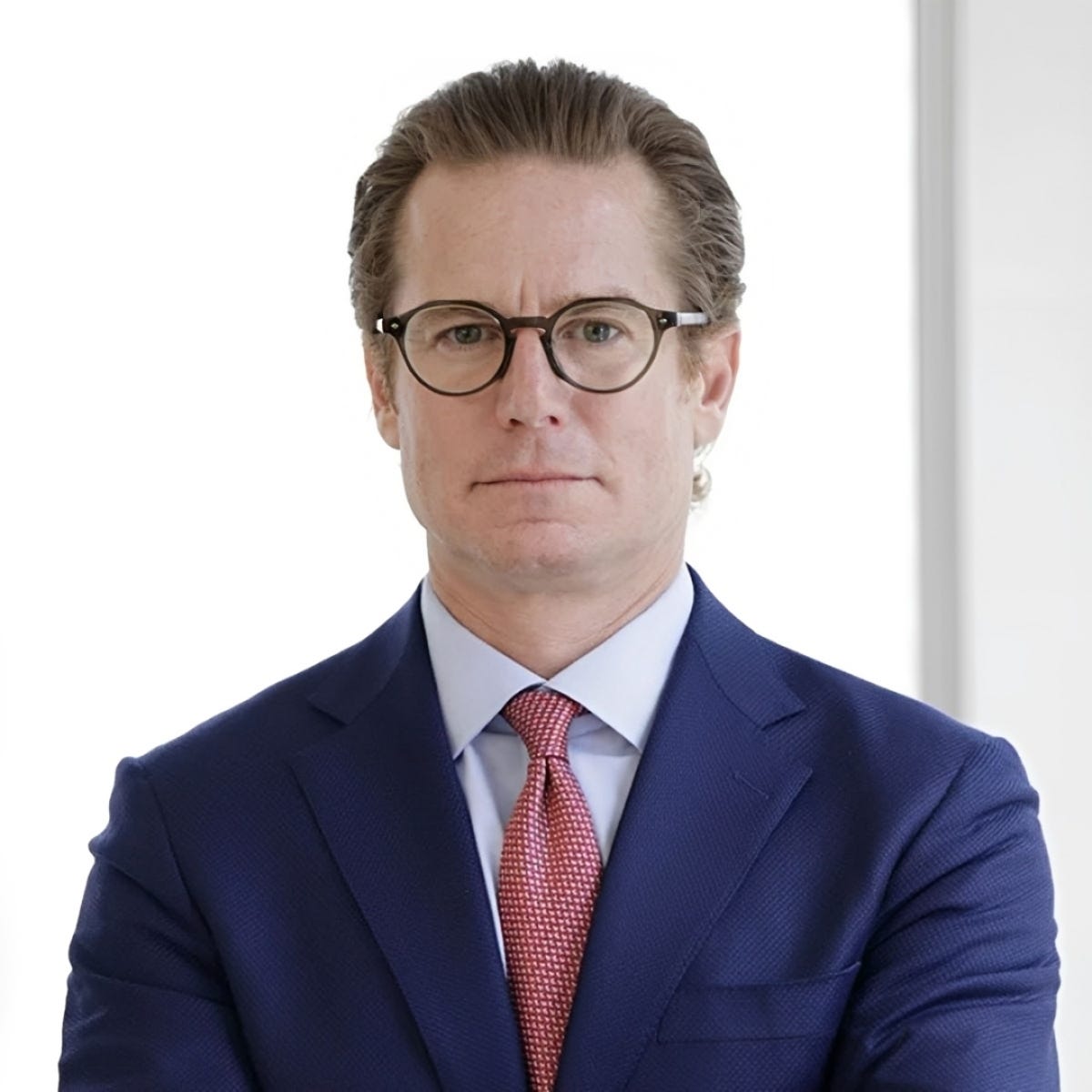
About The Interviewer: Gabriel Borden is an American investor, advisor, and entrepreneur. He is the managing partner of Arrow Fund, a private investment firm with publicly reported assets under management of about $150 million. In that role, he has overseen investments spanning technology companies, private markets, media, and special-situations opportunities. Borden attended Loyola Marymount University from 2012 to 2016, where he studied business. At Arrow Fund, Borden leads a firm focused on technology, private markets, and event-driven opportunities. The fund has invested in a number of private companies tied to innovation and growth sectors. Publicly reported investments have included Polymarket, the prediction market platform; SpaceX, the aerospace company founded by Elon Musk; and Valar Atomics, among other private technology businesses. The firm has also expanded beyond minority investments into direct ownership of operating companies. In a recent transaction, Arrow Fund acquired a majority interest in LeVecke, a California-based bottling and beverage manufacturing company. LeVecke has been reported to generate roughly $220 million in annual revenue and operates across beverage production, bottling, and distribution. The deal signaled a broader strategy that combines financial investing with hands-on ownership in established industrial businesses. Before launching Arrow Fund, Borden held senior roles managing capital for prominent entrepreneurs and private investors. He previously served as managing director of the family office of Brock Pierce, where he worked on investment management and portfolio strategy across technology, media, and real assets. Family offices, which manage wealth for individuals or families, often invest with longer time horizons than traditional funds and can move across industries with greater flexibility. In that setting, Borden’s responsibilities included evaluating opportunities and overseeing portfolio decisions in multiple sectors. Borden comes from a family involved in creative and design fields. He is the son of filmmaker Bill Borden, a producer known for commercially successful films including the High School Musical series, La Bamba, Desperado, and Kung Fu Hustle. His mother, Melinda Gray, is an architect and the founder of Gray Matter Architecture, a firm focused on modern design. That background placed him in an environment shaped by both entertainment and entrepreneurship, industries that often rely on risk-taking, financing, and long-term project development. While Borden’s own career has centered on investing rather than film or architecture, those influences connect his professional path to a broader family history of business and creative work. He is married to Sydney Borden, and the couple live in Santa Monica, California. As private markets continue to attract more capital and expand their reach into sectors once dominated by public companies or strategic buyers, investors like Borden represent a model of finance that blends traditional portfolio management with direct ownership and operational involvement.