
Gathering information isn’t the same as understanding it, and being able to execute quickly doesn’t mean we have chosen the right thing to do.
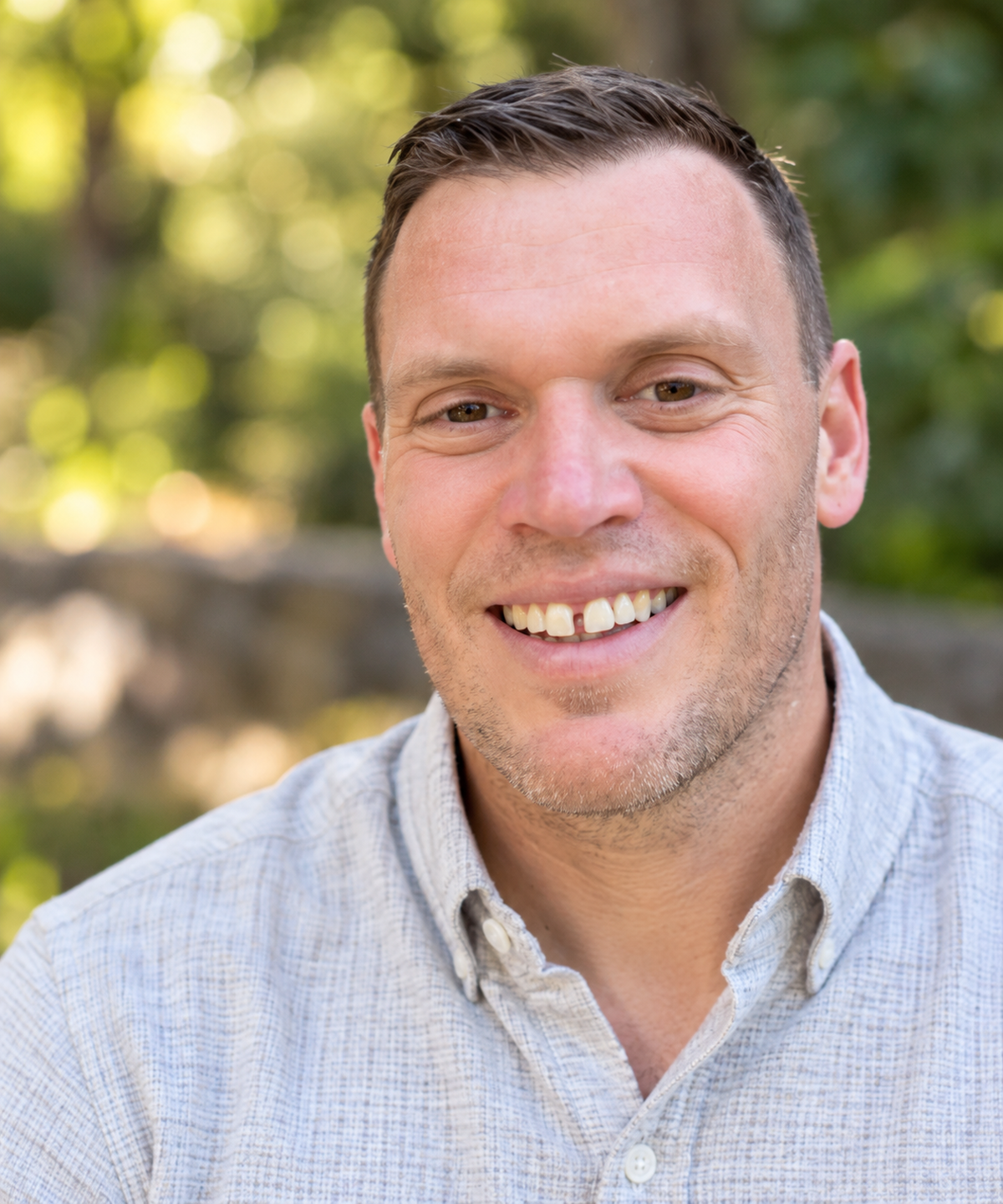
As a part of our series about the “Five Things You Need To Be A Highly Effective Leader During Turbulent Times”, we had the pleasure of interviewing Anthony Power.
Anthony Power is the founder of The Feel Company, author of the forthcoming book FEEL, and Vice President of Technical Support at a technology services company. Originally from Waterford, Ireland, he served 13 years in the Irish Defence Forces before moving into leadership development and technology operations. He holds an MSc in Management Coaching and a professional diploma in Strategic Leadership. Anthony now leads approximately 130 people across a 24/7 support operation whose work earned HDI’s Best Customer Experience award in 2026. Drawing on these experiences, he developed FEEL to help leaders strengthen human judgement as AI and automation reshape work.
Thank you so much for joining us in this interview series! I know that you are a very busy person. Our readers would love to “get to know you” a bit better. Can you tell us a bit about your ‘backstory’ and how you got started?
I grew up in Waterford, Ireland. I was diagnosed with dyslexia at 15, so school wasn’t always straightforward. For a long time, I associated learning with being told I wasn’t trying hard enough.
I went to college but dropped out after the first year. Looking back, I probably wasn’t ready for that much independence. I joined the Irish Defence Forces and spent 13 years in uniform. That experience shaped how I approach leadership: prepare properly, take responsibility and be ready to adapt when reality differs from the plan.
After leaving the army, I moved into leadership development, delivering programmes across Ireland and the UK. I also returned to education. Once learning became something I chose and paid for, my relationship with it changed completely. I went on to complete an MSc in Management Coaching and a professional diploma in Strategic Leadership.
In 2020, I joined a technology services company to help build its technical support operation in Ireland, eventually becoming Vice President of Technical Support. It was a different environment, but familiar questions kept coming up. Why did people looking at the same information reach different conclusions? Why could we follow a process correctly and still leave someone disappointed?
Those questions became the starting point for FEEL. I wanted to understand how we turn the information around us into better judgement, and how we help others do the same.
It has been said that our mistakes can be our greatest teachers. Can you share a story about the funniest mistake you made when you were first starting? Can you tell us what lesson you learned from that?
Oh, I have made many! Early in my leadership consultancy work, I developed a training programme for a group of graduates. One exercise involved teams building pen-launching devices using rubber bands and other stationery. The idea was to explore teamwork and communication.
What I hadn’t fully accounted for was what happens when you give eager graduates a competitive challenge and the materials to launch things across a room.
It quickly became a miniature arms race. The teams were determined to see who could burst balloons from the greatest distance, and my attempts to bring the discussion back to communication were losing ground.
Naturally, that was the moment the L&D manager and CEO walked in.
I got some very funny looks. I tried to explain the learning outcomes, but all they could see was an arms race involving their newest employees.
I learned that if you give a room full of eager graduates rubber bands, pens, and balloons, you need a better plan for getting their attention back. And ideally, check when the CEO is likely to drop in.
None of us are able to achieve success without some help along the way. Is there a particular person who you are grateful towards who helped get you to where you are? Can you share a story?
My father comes to mind. My parents owned a flooring shop in Waterford, and I learned a lot from watching how he approached problems.
One story that stayed with me was when he was preparing a bid for a large hotel contract. He was competing against much bigger suppliers with more resources. He had our kitchen table, a scale ruler, scraps of paper, and a determination to work it out.
Rather than accepting the usual waste allowances, he studied the plans and contacted the manufacturer to ask whether they could adjust the production run to fit the job more efficiently. They agreed, which reduced the planned waste dramatically and helped him win the contract.
At the time, I was probably more interested in getting our kitchen table back. Looking back, I appreciate what he was showing me: take the time to understand the problem, question what seems fixed and don’t assume the bigger organisation has already found the best answer.
I’m grateful for that example. It has stayed with me through some very different jobs, and it found its way into FEEL.
Extensive research suggests that “purpose-driven businesses” are more successful in many areas. When your organization started, what was its vision, what was its purpose?
My vision is that FEEL becomes a common language and practice for teams finding better ways of working in our AI-enabled world. I’d love to walk into an organisation one day and hear people using it without having any idea who I am. I’d consider that a very good outcome!
It started with a frustration I kept encountering in leadership: people could work hard, follow the process and hit their targets, yet the outcome still wasn’t right for the customer or the organisation.
I wanted to help teams understand that gap. Gathering information isn’t the same as understanding it, and being able to execute quickly doesn’t mean we have chosen the right thing to do.
FEEL gives teams a shared way to question assumptions, make sense of what is happening, and turn that understanding into better ways of working. As AI takes on more of the execution, I want people to feel better equipped to exercise their judgement.
The purpose is to help organisations accelerate the right outcomes before AI scales the wrong ones.
Can you share with our readers a story from your own experience about how you lead your team during uncertain or difficult times?
One experience that stayed with me was leading a technical support operation where the team was working hard, but customers weren’t experiencing the service we intended to provide. People cared about doing a good job, and it was frustrating for them to receive feedback that didn’t seem to reflect their effort. As their leader, I needed to understand what we were missing.
I started by studying the data. We had plenty of information, but it wasn’t immediately clear what it was telling us. I remember sitting in my garden office feeling stuck, knowing I needed to find a way forward.
As I developed hypotheses, I brought them to the team to test against their experiences. They were much closer to the customer interactions, and I needed their help to establish whether my interpretation made sense.
What emerged was a need to look at our service from the outside in. We were often starting with our process: what we had done, what the next step was and whether we had followed it correctly. I wanted us to start with the customer’s expectation and then examine how our actions looked from their position.
That took about a year of sustained attention. I had a strong group of leaders who got behind it early, and we had lots of conversations along the lines of, “Stop for a moment and think about it this way.” We kept bringing that perspective into how we reviewed and discussed customer interactions.
The leadership challenge was to acknowledge the effort people were already making while helping them see why the experience still needed to change. Asking them to work harder would have missed the point. We needed to help them direct that effort towards what mattered to the customer.
Over time, the customer feedback improved. For me, the important lesson was how much patience it takes to change a team’s perspective. Studying the data helped me form an explanation, but testing it with the team and having those repeated conversations helped turn it into a different way of working.
Did you ever consider giving up? Where did you get the motivation to continue through your challenges? What sustains your drive?
Of course I have. I’ve had some serious moments of imposter syndrome along the way. Talking about book contracts, recording an audiobook, building a methodology, and putting it in front of people to test. It was all new to me. There have been plenty of moments when I’ve thought, “Who am I to be doing this?”
It’s hard to put something you care about out there. You’ve spent so much time thinking about it, but then you have to let other people question it and find the gaps. That can be uncomfortable, even when you know it’s necessary.
Something that keeps me going is thinking about the advice I would give my children. If they cared about something but were afraid to try because they might get it wrong, I’d encourage them to give it a go, ask for help, and learn along the way. I have to be willing to take that advice myself. I want them to see me trying things I’m not already good at.
Motivation only lasts so long, though. Building a disciplined routine helps me keep going on the days when I don’t particularly feel like it. I often only have short windows to work on this, so I need to use them rather than wait until I’m in the right mood. Small wins compound, but so do the things you keep putting off.
When the whole thing feels a bit much, I bring it back to something manageable: work through the next edit, record the next section, test an idea and learn from the feedback.
I’m still learning as I go, and for me that is okay.
What would you say is the most critical role of a leader during challenging times?
For me, the most critical role is ensuring that sound judgement guides execution. During challenging times, there is enormous pressure to act. People want decisions, reassurance and visible progress. A leader has to make sure the action we take is based on a sound understanding of the situation.
That responsibility becomes even more important with AI. We can analyse information, generate recommendations and carry out work faster than ever. But if our starting assumption is flawed, we can put extraordinary effort and capability behind the wrong response. Errors can spread further before we recognise them, leaving less time to correct course.
In the support operation I described earlier, assuming the team simply needed to work harder would have led me towards the wrong response. Automating that response could have amplified the mistake. I needed to test my explanation before asking others to execute it.
This is central to FEEL. A leader needs to ask: what outcome are we trying to achieve? What are we assuming about the problem? Whose experience have we considered? What evidence would make us change our minds?
Those questions need to remain present as the work progresses. People need the confidence and authority to say, “We’re delivering the plan, but I don’t think it’s producing the outcome we intended.”
As AI takes on more work, leaders also need to be clear about where human judgement is required, who can challenge a recommendation and who owns the consequences. Having a person approve something means little if they lack the context, time or confidence to question it.
The leader remains responsible for creating those conditions. We have to ensure we are accelerating the right outcomes before AI scales the wrong ones.
When the future seems so uncertain, what is the best way to boost morale? What can a leader do to inspire, motivate and engage their team?
For me, a big part of it is helping people see that we are making progress. When things are uncertain, it’s easy to get caught up in everything that is still difficult. You have to notice the wins, big and small, and celebrate them with the team.
We have monthly awards that we’ve gamified with a mascot and trading cards linked to our behaviours. People nominate their colleagues, and I send a personal ‘thank you’ with the cards. It’s good fun, and it gives us a way to recognise the everyday things people do that might otherwise go unnoticed. Appreciation needs to happen at every level, though, rather than waiting for the monthly awards.
You also have to be willing to lead from the front. We run a 24/7 operation, so some people are working while the rest of us are enjoying Christmas with our families. We pop in to thank them for covering for us. It’s a small thing to do, but I think it matters that we show up and acknowledge what they are giving up.
Then there’s what I call the pressure vent. I have a monthly skip-level session with the team where they can tell me about the difficult or stupid tasks I’ve given them. There are usually a few!
It’s a non-judgemental conversation. I need them to be able to explain what is frustrating them without worrying about how I’ll react. Something that looked sensible when I asked for it might be a pain to carry out, or create work I hadn’t considered. I often make changes based on what they tell me.
That’s a pressure release for the team, and it helps me lead better. We make room to celebrate what’s going well and to have an honest conversation about what isn’t. Both help people keep going through a difficult period.
What is the best way to communicate difficult news to one’s team and customers?
Be honest, get to the point, and think about the person receiving the news. It’s an uncomfortable conversation, and it’s easy to spend so long explaining the background that they are left wondering what you’re trying to tell them.
I try to put myself on the other side of it. What does this mean for their job, their workload or their business? What will they need to do? Start there, explain what you know, and be clear about what you don’t know yet.
You also have to remember that you’ve probably had more time to process the news than they have. You may have discussed it in several meetings before they hear a word of it. Give them time to react and ask questions. Someone being upset or challenging the decision doesn’t mean you’ve communicated badly. It may simply be difficult news.
With a team, I think it’s important to give managers enough context to support the conversations that follow. People often think of their questions afterwards, or feel more comfortable asking their direct manager. One announcement is rarely the end of the communication.
With customers, the practical details matter enormously: what is affected, what are we doing, who owns the next action, and when will they hear from us again? If we don’t have a resolution time, we should say so and commit to an update we can deliver. Silence leaves the customer chasing us while trying to manage the impact on their own business.
Where possible, pick up the phone or speak directly. Email has its place, but difficult conversations can become much harder when everyone is interpreting tone from a screen.
And if we got something wrong, own it. Explain what happened without making the customer or team sit through a tour of our internal departments and why each one thinks it wasn’t their fault.
You can’t always make the news easier to hear. You can make sure people understand it, have a chance to respond, and know what happens next.
How can a leader make plans when the future is so unpredictable?
You still have to make a plan. People need direction, resources need to be allocated, and customers still need a service. Uncertainty doesn’t remove those responsibilities. It does mean being honest about the assumptions your plan depends on.
I start with the outcome. What are we trying to achieve, and what constraints do we have? Then I look at what we know, what we are assuming, and what could change our approach. If those assumptions stay in my head, the team can keep following a plan long after the reasons behind it have stopped making sense.
My military experience reinforced the importance of preparation and being able to adapt. You need people to understand the intent well enough to make sensible decisions when circumstances change. They can’t do that if all they have been given is a list of instructions.
Practically, I think about a few plausible scenarios. If demand rises, where will we feel the pressure first? If we lose capacity, what do we protect? What can we commit to now, and which decisions can wait until we know more? That helps us prepare without pretending we can predict everything.
I also want to agree on what would cause us to revisit the plan. Having those review points makes it easier to change course because we have already acknowledged that adjustment may be necessary.
There is a judgement call here, too. You can change direction so often that nobody gets enough time to make progress. One difficult day doesn’t necessarily invalidate the plan. We need to understand whether we are seeing normal variation or evidence that something important has changed.
For me, a useful plan gives people enough clarity to act today and enough understanding to recognise when it needs to change. I want the team committed to the outcome and willing to question the route we are taking to get there.
Is there a “number one principle” that can help guide a company through the ups and downs of turbulent times?
Stay accountable to the outcome.
When things get difficult, it’s easy to become attached to the plan, the process, or the target. They give us something tangible to manage. But we need to keep asking whether the work is producing the result we intended.
“We followed the process” might be true. So might “the customer still couldn’t run their business.” We have to be willing to hold both of those facts together and work out what needs to change.
That applies to leadership decisions too. If I introduce something and the team tells me it is creating more difficulty than value, I need to examine that. I can’t ask people to challenge assumptions and then treat my own decisions as exempt.
During turbulent times, this principle gives people a way to judge competing demands. What are we trying to achieve? Is this helping? Are we creating a problem somewhere else to make our own numbers look better?
It also permits us to change an approach without losing our sense of direction. We can acknowledge that something isn’t working and use what we’ve learned to make a better decision.
For me, accountability includes being willing to say, “We delivered what we planned, but we haven’t achieved what we needed.” That is a much more useful starting point than declaring success because all the tasks are complete.
Can you share 3 or 4 of the most common mistakes you have seen other businesses make during difficult times? What should one keep in mind to avoid that?
I’d highlight four, and they are closely connected.
First, losing orientation as circumstances change. You can become so focused on delivering the plan that you stop checking whether your understanding of the situation still holds. The team is busy, decisions are being made, and work is moving, but it may all be based on conditions that have changed. Keep checking what is happening around you and whether it changes what you need to do.
Second, moving into execution before taking time to understand. During difficult times, there’s pressure to be seen doing something. A quick decision feels reassuring. But if we haven’t understood the problem, we can commit a lot of effort to the wrong response. Taking time to test an explanation with the people closest to the issue can save considerable time later. With AI accelerating execution, that judgement becomes even more important.
Third, neglecting the fundamentals. It’s easy to become absorbed in a major change or the latest tool while overlooking basic questions. Do people understand what is expected of them? Do they have the skills, information, and capacity to do it? Are we keeping our commitments to customers? You can build an ambitious plan, but those everyday things still determine whether it works.
Fourth, collecting information without making time to understand it. We can produce reports, survey results, and dashboards endlessly. But what are they telling us? Why is a pattern emerging? What are we missing? Gathering information isn’t the same as listening, and listening isn’t the same as understanding. We need to make time to interpret it with the people closest to the work, bring different perspectives together, and decide what it means for the next action.
Across all four, the danger is becoming very busy without recognising that our understanding has fallen behind our activity.
Here is the primary question of our discussion. Based on your experience and success, what are the five most important things a business leader should do to lead effectively during uncertain and turbulent times? Please share a story or an example for each.
1. Set a clear direction. Give people a compass.
When things are uncertain, people need to understand where you’re trying to go and why. A compass gives you a bearing. You may have to adjust your route, but you have something to guide your decisions when the path becomes difficult.
For me, that meant making a counterintuitive decision in a support organisation that was racing to resolve problems: we needed to slow down enough to understand them.
Speed matters in technical support. But I wanted us to become human-led technical experts who partnered with customers. That meant taking time to understand what the customer was trying to achieve, what the issue meant for their business, and whether our response actually met their needs.
It went against the instinct to keep moving faster. We had to give people a clear direction and help them see what it meant in everyday interactions. Resolving the technical issue remained important, but we also needed the customer to feel that someone understood their situation and was working with them.
Did it have challenges? For sure. We lost some really good people along the way, and I wouldn’t gloss over that. The core team who stayed invested their time and credibility in the direction we were taking. They challenged it, helped shape it, and did the work to turn it into something real and fundamentally better. Something that instils confidence in customers and pride in the teams.
That is why setting direction matters. You need people to understand it well enough to help build it, especially when the change is difficult, and the results take time.
2. Cultivate active listening for signals.
We understand active listening in a conversation: slow down, pay attention, acknowledge what you’ve heard and paraphrase it to check your understanding. Give it a moment to settle before responding. I think we need to bring that same discipline to the signals around our businesses.
A change in customer behaviour, repeated feedback from a team or a wider shift in how people work deserves that attention. What are we hearing? What do we think it means? Have we checked that understanding, or are we already preparing our response?
Building FEEL taught me this. It started as a thought about customer experience. But as I researched and began writing, I kept drawing on lessons from my military service, leadership development, and technology operations. Experiences I had previously treated as separate began to connect.
One connection was particularly important: a team can follow instructions correctly and still miss the intended outcome. I had seen that problem in service delivery, but it also applied to how leaders set direction and how people adapt when circumstances change. As I considered AI and automation, the implications became much wider. A system could carry out exactly what we asked, repeatedly and at scale, while the assumption behind the instruction remained untested.
That helped me recognise that customer experience was one expression of a broader judgement problem. We needed to examine how we decided what to do, how we interpreted the information available and how we recognised when our approach needed to change.
Listening to those signals allowed the focus of FEEL to shift. Customer experience remained an important application, but the methodology needed to address that wider challenge.
If I had stayed fixed on my original idea, I would have missed it. I had to give what I was learning enough attention to let it change my thinking.
3. Build intentionally.
As leaders, it’s always attractive to start building, to start doing. I’m no saint here. My default is to attack a problem head-on, and I’ve worked hard to train myself to pause long enough to decide what outcome I actually want. Then I can engineer a process or workflow that gives us a way to achieve it.
Building the FEEL ecosystem, how the assessments, development programmes and partner model would fit together, brought that home to me with a bang. There were a million decisions to make, and my tendency is to build out the big picture. I could easily have kept adding ideas without properly working through how someone would experience the whole thing.
So I went old school and took out the whiteboard. I started with a list of intended outcomes, mapped the dependencies and then overlaid the experience at each point. What would someone need here? What would they understand? What were we expecting them to do next?
That was probably one of the most impactful half-days of the FEEL journey to date. It forced me to put myself on the other side of the table and ask the hard questions: “So what?” “Why did they do it this way?” “Explain the logic to me again.”
Something can make perfect sense in your head because you know how all the pieces connect. The person using it doesn’t have that advantage. Working through it from their position made me examine whether the logic held together and whether each step served the intended outcome.
That half-day gave me a much clearer basis for the decisions that followed. When there’s pressure to get moving, taking time to design the work properly can be one of the most useful things a leader does.
4. Broaden your horizons. Become a student of thought.
I believe leaders have a lot to learn from other industries, psychology, philosophy and sport. We need to break out of our own echo chambers and deliberately make ourselves look at problems differently.
I’m not too proud to admit I’ve borrowed ideas from Roman emperors, Greek philosophers, psychologists, sports teams, other business leaders, and anywhere else I could find something useful. Would I go for a beer with all of them? Probably not. Some, for sure!
One example changed how I approached FEEL’s organisational assessment. My preferred route was to assess each executive individually, work with them on their judgement and then bring the leadership team together to connect the findings. It made sense to me.
Then, while running and listening to an audiobook, I heard an idea about organisations having a personality of their own. What struck me was how shared beliefs, assumptions and fears could persist beyond individual leaders and continue to influence how the organisation behaves.
That made me question my starting point. Assessing the leaders individually wouldn’t necessarily tell me how the organisation exercised judgement. The organisation needed to be assessed as a whole.
Instead of asking each executive about their own decision habits, I could ask leaders to assess the same organisational practices: how outcomes are defined, how information travels, whether assumptions get challenged, and whether learning changes how work is done. Their responses could form a collective profile, while differences between them would reveal where they experienced the organisation differently. Those findings could then be explored together and tested against evidence.
I ran home sweaty, tired and very happy that I’d widened my net. I documented the idea and spent the next few days building it.
That is what I mean by becoming a student of thought. An idea from outside your immediate field can expose a limitation in an approach you were perfectly happy with. During difficult times, that fresh perspective may be exactly what helps you find a way forward.
5. Stay grounded.
Difficult times are difficult. Accept that. Sometimes you won’t be able to fix everything. Fix what you can, be honest about what you can’t, and pay attention to whether you’re losing yourself in the problem.
You are a leader, yes, but before you were a leader, you were a human. Humans are flawed. We get tired, make mistakes, and occasionally take ourselves far too seriously.
Stay connected to the things that keep you grounded and give you perspective. For me, that’s often my family. We have two young children, and they are very good at reminding me that there is a world beyond whatever problem is occupying my head.
Recently, we were on a trip and, when everyone inevitably drifted off, I put on some recordings of my audiobook. I was listening for edits and taking myself very seriously.
After about 40 minutes, my six-year-old daughter opened her eyes and said, “Dad, can you put on music? This book is so boring I can’t even sleep.”
With that, I lost both my ego and my emerging market of six-year-olds!
Those moments help lighten the load. Whatever keeps you grounded — family, friends, sport, music — make room for it. It gives you space to think more clearly and reminds you that the problem in front of you isn’t the whole of your life.
Can you please give us your favorite “Life Lesson Quote”? Can you share how that was relevant to you in your life?
My mother used to tell me, once I was old enough to listen, “Can’t means won’t.”
For me, that is a challenge to pause before saying I can’t do something. Have I actually tried? Do I need to learn something, ask for help, or approach it differently? Building FEEL has given me plenty of reasons to take that advice myself.
Alongside that, I love the principle of marginal gains from cycling. You look for small improvements in your training, position on the bike, equipment, fuelling and recovery. Each might seem minor, but together they can make a meaningful difference.
I apply that thinking to leadership too. One coaching conversation, one improvement to a process or one useful piece of feedback might seem small. Keep working at those things consistently and the difference grows. It helps me stay patient when the effort is there but the results aren’t obvious yet.
Together, they give me something practical: question the “can’t”, then find the next small step.
How can our readers further follow your work?
You can find more about my book, FEEL, and our executive and organisational assessments at thefeelcompany.org. The book brings together many of the stories and ideas we’ve discussed here, with a practical approach to strengthening judgement in an AI-enabled world.
I also share ideas and lessons on leadership, human judgement and AI on LinkedIn.
If any of this resonates with something you’re experiencing, feel free to get in touch. I’m always interested in hearing how these challenges show up in other organisations. Those conversations help me keep learning too.
Thank you so much for sharing these important insights. We wish you continued success and good health!
About The Interviewer: Tavares Beverly ( www.tavaresbeverly.com ) is the Founder and CEO of Beverly Boy Productions, a national video production company that has helped organizations tell their stories through video for more than two decades. Over the course of his career, he has worked with everyone from Fortune 500 executives and healthcare professionals to politicians, nonprofit leaders, educators, and artists, gaining a unique perspective on the role communication plays in leadership, business, and human connection. A frequent contributor on topics including communication, entrepreneurship, leadership, and personal development, Tavares believes that the ability to communicate effectively is one of the most valuable skills a person can develop. His work is driven by a passion for helping organizations connect with their audiences and helping individuals unlock their potential through mentorship, perseverance, and meaningful relationships. To learn more, connect with Tavares on LinkedIn or visit www.BeverlyBoy.com . If you’re interested in using the power of storytelling and communication to grow your organization, strengthen your brand, or inspire your audience, he welcomes the opportunity to connect.