An entrepreneurial spirit helps you see opportunities fast, use whatever is available and usable in that moment, and move ahead quickly rather than waiting for perfect conditions.
Business
Harleen Sindhu of Power Dime: How Bringing Inside Expertise to Data Center Procurement Modernizes Energy Strategies
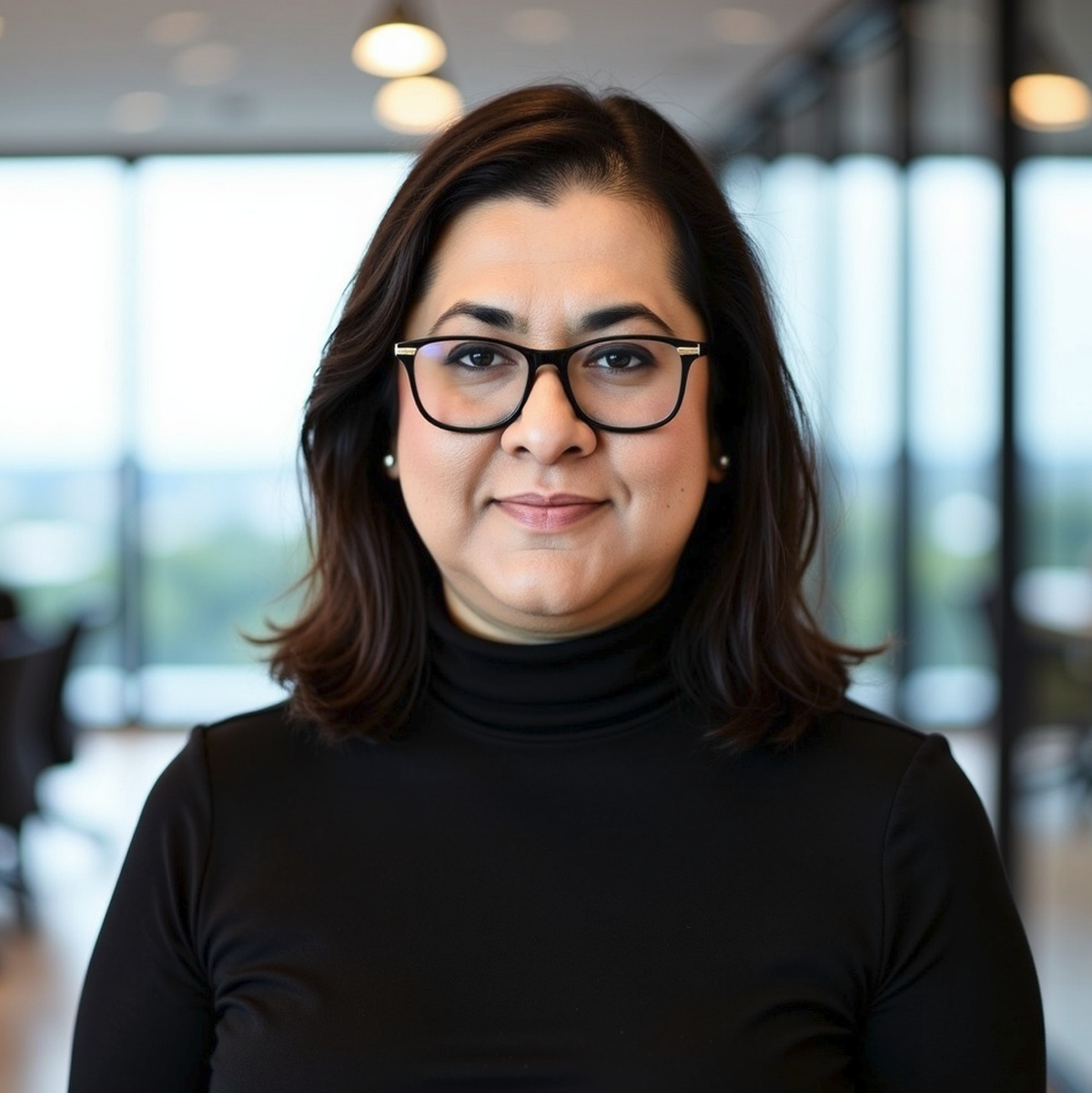
As a part of this series, we had the pleasure to interview Harleen Sindhu.
Harleen Sindhu is the Founder and CEO of Power Dime. With a career spanning global energy giants and major tech infrastructure, she has led multi-billion dollar energy procurement deals and navigated complex regulatory landscapes in the Middle East and Kazakhstan. An expert in data center power strategy and renewable investments, Harleen founded Power Dime to modernize energy procurement for the digital infrastructure age, leveraging AI to help operators secure power faster and at lower costs.
Thank you so much for joining us in this interview series! Before we dive into our discussion, our readers would love to “get to know you” a bit better. Can you share the most interesting story that happened to you since you started your career?
I started my career as a graduate at Shell back in 2006 with zero knowledge of the energy sector. What I did have was an eagerness to learn, and that turned out to matter more than anything else. Over the years, first at Shell and then at AWS, my career took me to some of the most interesting countries in the world and put me on assignments I could never have imagined as a graduate.
At Shell, I started out leading oil and gas investments. My last assignment there was with Shell Kazakhstan, where I led Shell’s investments in both small and large scale solar across the country. Those projects helped Kazakhstan promote itself as an emerging destination for corporate participation in its renewables sector, and as a result, I was invited by the United Nations to serve as a panelist, advising on the regulatory changes countries can adopt to grow corporate participation in renewables. For someone who had walked into Shell knowing nothing about energy, being asked to advise governments was a moment I will never forget.
At AWS, I led energy procurement for the Middle East, which meant leading policy interactions with the energy authority in the UAE and negotiating a bilateral deal with the Government of the UAE and Masdar.
When I look back, what strikes me most is the distance between that graduate who knew nothing about energy and the person sitting across the table from governments, negotiating deals worth billions of dollars. My eagerness to learn got me into the room, and learning fast kept me there. My whole career has been phenomenal, and it is the reason I felt ready to build Power Dime.
What do you think makes your company stand out? Can you share a story?
Energy has become the gating constraint for data centers. Operators can secure land, chips and capital, but the buyer is facing significant bottlenecks when it comes to securing power, and the way that power gets bought hasn’t changed in decades. It still runs on consultants, spreadsheets and bilateral negotiation, spread across several advisors who each see only one piece of the puzzle.
What makes Power Dime stand out is that it was built by people who have sat on the buyer’s side of the table. I ran that desk at AWS, and Power Dime productizes it. Our platform takes a data center operator through the entire procurement journey in one place: planning (site selection, grid availability, load profiling and the right energy mix), contracting (running RFPs, selecting projects and preparing contracts), and monitoring how those contracts perform once they are signed. Instead of stitching together advice from multiple firms, operators get one AI-enabled platform that helps them get energized faster and at lower cost.
Earlier this year, while we were in the Techstars NYC accelerator, we spoke with a large number of potential customers as part of our traction assessment. Almost every one of them, around 99%, showed huge interest in what we were building, and many asked for immediate access to the product. We genuinely had not anticipated that level of interest. It was deeply satisfying, because it told us we were solving a real and urgent problem, and that we were on the right track.
That response is why we now have 17 pilot customers lined up across data center operators, energy developers and consultants, representing more than 1 GW of energy under management.
You are a successful business leader. Which three character traits do you think were most instrumental to your success? Can you please share a story or example for each?
1. Willingness to learn When I joined Shell as a graduate, I knew nothing about oil and gas exploration and production or energy trading. What I had was genuine interest and a willingness to take on challenging assignments. I made a point of going to the depths of the concepts, observing my colleagues closely and learning from them. That same approach carried me from oil and gas investments to leading Shell’s solar investments in Kazakhstan, and later into data center power procurement at AWS, each a completely new field when I started. I truly believe there is nothing in this world that people cannot work on if they have the willingness to learn.
2. Perseverance Building a startup needs perseverance in big doses. Not all days are equal. Some days the code fails; other days an investor you were hoping to work with is no longer able to invest. What gets you through those days is remembering why you started in the first place and keeping that end goal in view. For me, that goal is making it faster and simpler for data centers to secure the power they need. When I hold onto that, a setback becomes one bad day rather than a reason to stop.
3. Entrepreneurial spirit An entrepreneurial spirit helps you see opportunities fast, use whatever is available and usable in that moment, and move ahead quickly rather than waiting for perfect conditions. When we started Power Dime, we did not have a ready-made network inside the data center industry. My career had been spent on the buyer’s side at a hyperscaler, not inside the operators we now wanted to serve. Rather than wait to build those relationships slowly, we worked with what we had: our procurement expertise, our accelerator network and a product we believed in. We reached out directly to operators, offered a 90-day pilot with key services free so they could see the value for themselves, and kept refining our pitch with every conversation. That approach is how we now have 17 pilot customers lined up across data center operators, energy developers and consultants.
Ok, thank you for that. Let’s now jump to the primary focus of our interview.
What emerging technologies do you believe will have the most significant impact on your industry in the next five years, and how are you preparing for them?
Bring-your-own-power and behind-the-meter generation. For decades, data centers bought power from the grid. Today, long interconnection queues mean many operators are building their own power instead, starting with on-site natural gas and, later in the decade, small modular nuclear reactors. Roughly one-third of new data center projects now intend to rely on behind-the-meter energy. This changes the buying decision completely. It is no longer just “which grid contract or PPA should I sign,” but “should I build, buy or do both.” At Power Dime, our platform is designed to be supply-agnostic, so operators can compare grid supply, PPAs and on-site generation side by side and choose the mix that gets them energized fastest.
Flexible load and battery storage. Data centers are learning that being flexible about when they draw power can get them connected sooner and at lower cost. That flexibility comes from shifting computing workloads and, increasingly, from batteries that store power when it is cheap and release it when the grid is under strain. The potential is enormous: a Duke University study estimates that curtailing data center loads for just 0.25% of their uptime would free up enough capacity for 76 GW of new load. We are building a battery planning module that helps operators decide how much storage they need, which technology suits them, and when to charge and discharge it, and we are focusing first on PJM, the market where these flexible models are being tested most actively.
AI-driven procurement, and eventually tokenized energy contracts. With so many options now on the table, from grid power and PPAs to on-site gas, nuclear, storage and flexibility programs, the decision has become too complex for spreadsheets and a patchwork of consultants. AI can analyze grid availability, forecast demand and optimize the energy mix in hours rather than months, and that is the core of what Power Dime does. Looking further ahead, I believe tokenization will change how energy contracts are bought, sold and financed, by making them easier to divide and transfer. We have been developing this concept for some time and plan to pilot it in the first half of 2027.
How we are preparing comes down to one principle: build the platform so that new technologies plug into it rather than sit beside it. Our customers should not need a separate tool for every new development; they should find it inside the same workflow they already use to plan, buy and monitor their power.
How do you balance the need for rapid innovation with the risk of potential disruptions in your organization?
For a startup, the bigger risk is usually moving too slowly rather than too fast. But in energy, mistakes are expensive. A poorly structured power contract can lock a customer into costs for ten or fifteen years. So the way I balance speed with risk is by innovating in sequence rather than all at once.
We built Power Dime as three modules: Planning, Contracting and Monitoring. Rather than launching everything together, we are rolling them out one at a time. Our Planning module goes into customer pilots first, Contracting follows in early 2027, and Monitoring after that. Each module is tested with real customers before the next one goes live, so what we learn in one stage shapes the next, and a problem in one area never puts the whole platform at risk. We apply the same discipline to newer ideas. Tokenizing energy contracts is something I am genuinely excited about, but we deliberately scheduled that pilot for 2027, after our data center pilots conclude. That way our core product gets our full attention, while the more experimental work has a clear place on the roadmap.
At the same time, we constantly keep an ear to the ground on the technology, commercial and regulatory changes happening across the digital infrastructure sector globally. Take underwater data centers, which are now being discussed as a way to reduce cooling requirements. If cooling needs fall, a data center’s energy demand and load profile change too, and so does where it can be located and how it connects to power, perhaps near the coast or alongside offshore wind. We are already asking what role Power Dime can play in planning and buying energy for customers like that. We don’t just watch these changes and wait for their impact; we use what we observe to plan how to turn them into opportunities for ourselves and our customers.
The other half of the balance is staying close to customers. Running pilots means our users tell us early when something isn’t working, long before it becomes a disruption. Moving fast is much less risky when the people you are building for are in the room with you.
Can you share an example of a strategy you’ve implemented to future-proof your business against upcoming technological changes?
One of the most deliberate decisions we made early on was not to build Power Dime for a single type of customer. Technology moves fast, and I don’t want our future to depend on any one way of consuming power.
That starts within the data center industry itself. Power Dime is not just a system for hyperscalers. It is designed to serve every type of data center: tech hyperscalers, neoclouds, colocation providers, enterprise data centers and bitcoin mining data centers. Each has a very different relationship with energy. Bitcoin miners, for example, can shift their computing workload far more easily than most, which means they can step back from the grid when power is scarce or expensive. We specifically developed a battery optimizer that helps them make the most of this, telling them when to discharge their batteries and sell power back to the market. That turns their flexibility into a source of revenue and makes them a valuable asset to the grid rather than just another large load on it.
Beyond serving all types of data centers, we are future-proofing Power Dime by making sure it can help any large-load buyer five years from now. Alongside data center operators, our pilots include other large energy users, and we are in conversations with EV supercharging operators, whose energy needs look very different from a data center’s. A supercharging network has sharp peaks, many locations and a load that grows with every new car on the road. If our platform can plan and buy power for both, it can adapt to whatever new large energy consumers technology creates next.
In practice, this means we build our models around the fundamentals that every large buyer shares: how much power they need, when they need it, where they are located and what supply options are available to them. The specifics of any one industry sit on top of that foundation rather than being baked into it.
The way I think about it, data centers themselves will keep changing. They may become more flexible, run more of their own generation, or even move underwater. If we had built a tool that only worked for today’s version of a data center, every one of those shifts would be a threat. Because we built for large-load buyers as a whole, each shift becomes a chance to serve a new kind of customer.
What skills or mindsets do you believe are essential for leaders to thrive in a time of rapid technological advancement?
Many of the mindsets I rely on today, I learned at AWS. Amazon’s leadership principles are not just words on a wall; they shape how decisions get made every day. Three of them have stayed with me, and I think they are essential for any leader in a time of rapid technological change.
Customer Obsession. At AWS, every conversation started with the customer and worked backward. In energy procurement, that meant my job was never simply to buy power at the lowest price; it was to make sure the data centers, and ultimately the customers relying on them, had reliable power when and where they needed it. When technology is changing fast, it is easy to get distracted by what is new and exciting. Starting from the customer’s problem keeps you focused on what actually matters. It is the reason Power Dime exists: I saw firsthand how hard it is for data center operators to secure power, and I built the company around solving that.
Bias for Action. Amazon taught me that speed matters in business, and that many decisions are reversible, so you shouldn’t wait for perfect information before acting. In energy markets, opportunities can close quickly, and hesitation can mean losing a site, a grid connection or a good contract. The key is knowing which decisions can be undone and moving fast on those, while taking more time over the ones that can’t. In a world of rapid technological change, leaders who wait for certainty will always be a step behind.
Think Big. At AWS, I worked on deals that shaped how entire regions source their power, including negotiating with governments. That experience taught me not to limit my ambitions to what seems possible today. When I started Power Dime, I didn’t want to build a tool for one type of data center; I wanted to build a platform that could serve every large energy buyer in the years ahead. Thinking big gives you a direction that holds steady even when the technology underneath keeps shifting.
Ok super. Here is the main question of our interview. What are your “Five Things You Need to Prepare For The Disruptive Future”? If you can, please share a story or an example for each.
- Treat energy as strategy, not a utility bill. For most of the last few decades, companies treated electricity as an operating cost that someone in facilities took care of. That era is over. At AWS, I saw firsthand that power availability increasingly decided where data centers could be built and how quickly they could come online. Today, a data center operator can secure land, chips and capital, and still be stuck waiting years for a grid connection. Any business that will depend on large amounts of power in the future, whether for AI, manufacturing or electric vehicles, needs to put energy at the center of its strategy, with the same seriousness it gives to finance or technology.
2. Don’t bet everything on a single technology. I started my career at Shell leading oil and gas investments, and I finished it leading solar investments in Kazakhstan. Within one career at one company, I watched the energy mix shift beneath my feet. The same thing is happening now, only faster. Data centers are turning to grid power, renewable PPAs, on-site gas, batteries and, before long, small modular nuclear reactors. Nobody knows exactly which mix will win in each market. The leaders who will do best are the ones who keep their options open and build the ability to compare and switch between technologies, rather than locking themselves into one.
3. Engage with policy early, because regulation shapes markets. My solar work in Kazakhstan helped the country position itself as a destination for corporate investment in renewables, and that led to an invitation from the United Nations to advise on the regulatory changes countries can make to attract that participation. Later at AWS, I led policy interactions with the energy authority in the UAE. Both experiences taught me that the rules of the game are not fixed; they are shaped by the people who show up to the conversation. With regulators now rewriting how large loads like data centers connect to the grid, businesses that engage early will help shape the future instead of simply reacting to it.
4. Look for ways to turn your constraints into assets. Disruption often looks like a problem before it looks like an opportunity. A data center’s huge power demand is usually seen as a burden on the grid. But a data center with batteries and flexible workloads can store power when it is cheap, release it when the grid is under strain, and earn revenue in the process. That is why we built a battery optimizer at Power Dime that helps operators decide when to charge, when to discharge and when to sell power back to the market. The question every leader should ask is: what is the thing that worries us most, and how could it become a source of value?
5. You can’t navigate disruption alone, so build partnerships. The changes ahead are too big for any one company to handle by itself. At Power Dime, partnerships have shaped almost every step of our journey, from accelerators like Techstars and Antler that helped us find our first customers, to the letter of intent we signed with a tokenization platform to explore how energy contracts can be traded in new ways, to being invited to apply for Shell’s accelerator on tokenizing energy assets. Each of these opened doors we could never have opened on our own. In a fast-changing world, the right partners help you see what’s coming sooner and move faster when it arrives.
How do you develop a culture within your team that is both adaptable and resilient in the face of fast-paced innovation?
It starts with who we hire. At Power Dime, we place great importance on bringing in people who are top-quartile performers, and just as importantly, people who have the ability to learn from what they have observed and experienced across different sectors. Someone who has worked in energy, software, finance or consulting brings lessons that can be applied in entirely new ways to the problems we are solving. When a new technology or market shift comes along, these are the people who can quickly connect it to something they have seen before and work out what it means for us. Hiring this way has helped us build a performance-driven culture, where high standards are simply the norm.
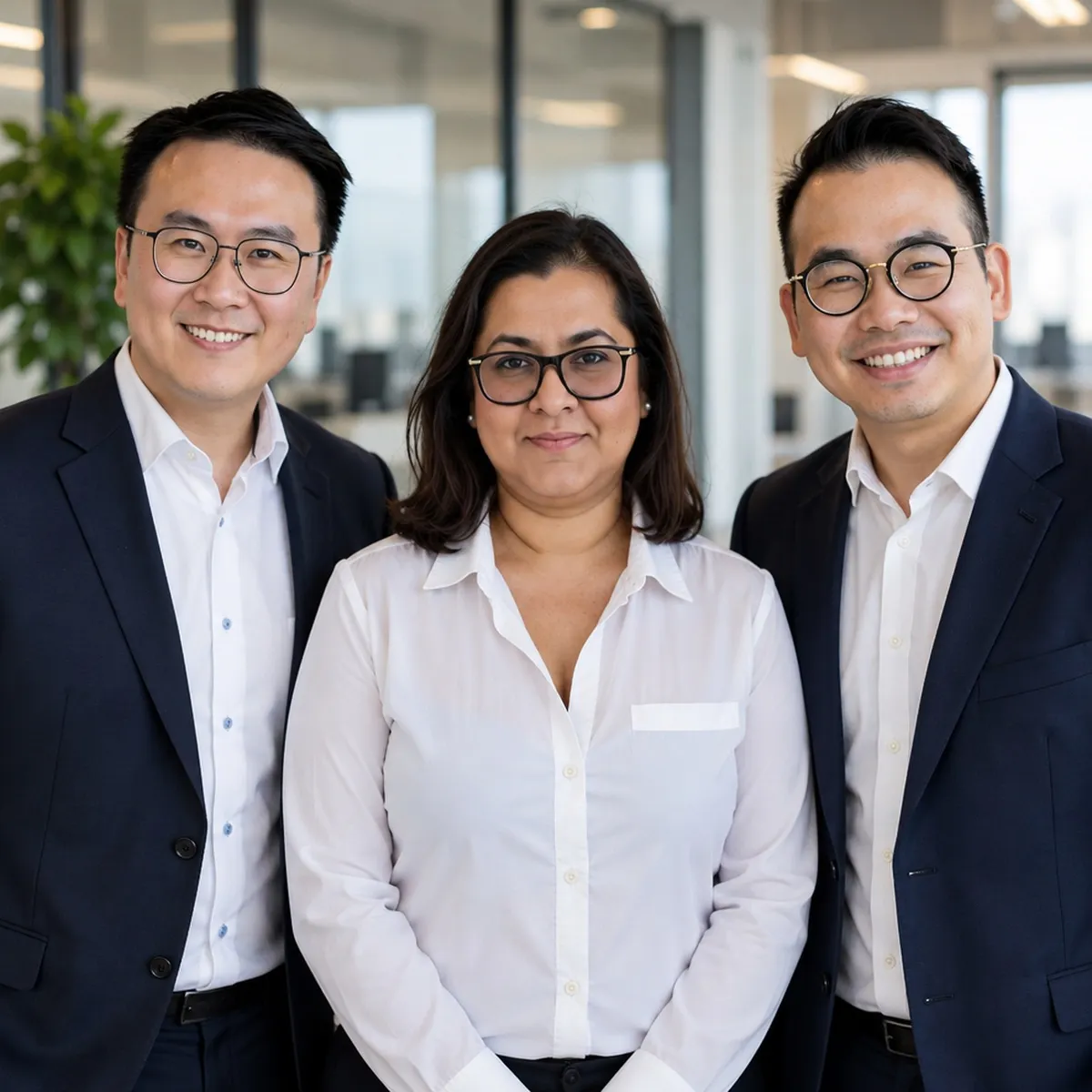
We also give a lot of importance to diversity of opinion and experience, and that is reflected in our hiring decisions. Our team works across India and the United States and comes from different industries and backgrounds. That diversity means we rarely look at a problem from just one angle. When we debate a decision, someone will usually raise a risk or an opportunity the rest of us hadn’t considered. In a fast-changing environment, that range of perspectives is one of our biggest strengths, because it helps us see change coming from more directions.
Finally, we have built a team that has no fear of learning and moving quickly. Every person takes ownership of their work, not just their tasks but the outcomes. Ownership was one of the principles I valued most at AWS, and I have tried to carry it into Power Dime. When people feel genuine ownership, they don’t wait to be told what to do when something changes; they adapt, solve the problem and keep moving. That combination of high performance, diverse thinking and personal ownership is what makes our team both adaptable and resilient.
How do you ensure that ethical considerations and social impact remain a priority as you navigate rapid advancements in technology?
The growth of AI and data centers is one of the biggest technological shifts of our time, and it comes with real social consequences. Data centers are now among the largest drivers of new electricity demand, and there is a growing public concern that their growth could push up power bills for households, strain local grids and slow progress on climate goals. As a company that helps data centers buy power, we can’t treat those concerns as someone else’s problem. They are part of our job.
Helping data centers become good neighbors on the grid. One of the things I am proudest of at Power Dime is our work on flexibility. When a data center uses batteries and flexible workloads to reduce its demand at peak times, it eases pressure on the grid that homes and businesses depend on. Our tools help operators do exactly that, so that their growth supports the grid rather than competing with the communities around them.
Making clean energy the practical choice. My career has taken me from oil and gas to solar, and I have seen how much the right procurement decisions can accelerate the energy transition. Our platform shows operators the full picture of their options, including renewables, storage and long-term clean energy contracts, so that choosing cleaner power becomes a well-informed business decision rather than an afterthought.
Using AI responsibly. We use AI to analyze data and recommend options, but decisions about multi-year energy contracts that can affect thousands of jobs and communities stay with people. Our role is to give decision-makers better information, not to replace their judgment. We are also careful with the sensitive commercial data our customers trust us with, protecting it as seriously as we would our own.
Building a team that reflects the world it serves. As a female Indian origin founder in an industry that has not always been diverse, I know how much different perspectives improve decisions. Diversity in our team is not just a value; it helps us notice the social impact of our work that a more uniform team might miss.
Ultimately, I believe the companies that will lead the next decade are the ones that grow in a way that earns public trust. In energy, that trust is everything.
You are a person of great influence. If you could start a movement that would bring the most amount of good to the most amount of people, what would that be? You never know what your idea can trigger. :-)
We are now entering a new information age, one shaped by AI and rapid technological change. For years, many of us paid lip service to the importance of quality STEM education. We spoke about it at conferences and in policy papers, but too often it remained a nice-to-have. That is no longer an option. Quality STEM education must now become non-negotiable.
If it doesn’t, vast sections of our population will no longer be equipped to engage with the technological advances that could make a huge difference to their lives. These technologies can transform healthcare, energy, agriculture and work itself, but only for people who understand them well enough to use them. Without that foundation, many people risk being left behind, not just in their ability to benefit from these advances, but in their ability to participate in the economies of the future.
I have seen how much the willingness and opportunity to learn can change a life. I joined Shell as a graduate with no knowledge of the energy sector, and the chance to learn opened doors that took me across the world. Every child, and every adult looking to reskill, deserves that same chance, wherever they are born and whatever their background.
So the movement I would start is a call for quality STEM education for all, and I would call on leaders from the tech industry, and from every other industry too, to spearhead it. Business leaders understand better than anyone which skills the future will demand. We have the resources, the platforms and the responsibility to help close that gap, through funding schools and programs, offering mentorship and apprenticeships, and opening our doors to people from every background. If we act now, this new information age can lift far more people up than it leaves behind.
How can our readers further follow your work online?
Follow our social media handles:
Linkedin: https://www.linkedin.com/company/power-dime/?viewAsMember=true
https://powerdime.io
we often publish leadership series interviews and articles both on our corporate page on linkedin and on our website were we often discuss upcoming trends/changes that have implications for the energy and data center industries.
Thank you for the time you spent sharing these fantastic insights. We wish you only continued success in your great work!
AM
Written by
Authority Magazine Editorial Staff
Editorial Desk · Authority MagazineThe Authority Magazine Editorial Desk produces, verifies, and edits long-form primary-source interviews with executives, innovators, clinicians, creators, and social impact leaders across Business, Tech, Pop Culture, Wellness, and Social Impact.

Published inAuthority MagazineTop Lessons, Top Authorities · 42K Followers
Exclusive, curated interviews with the leaders and changemakers shaping tomorrow. Leadership lessons, industry deep dives, and executive profiles.