When I started writing HAPPYSAD, I was genuinely convinced I could tell the story of the woman I’d never gotten over and somehow preserve my relationship with the woman I’d been dating for eight years. That’s laughably naive.
As a part of this series, we had the pleasure to interview Brendan Donovan.
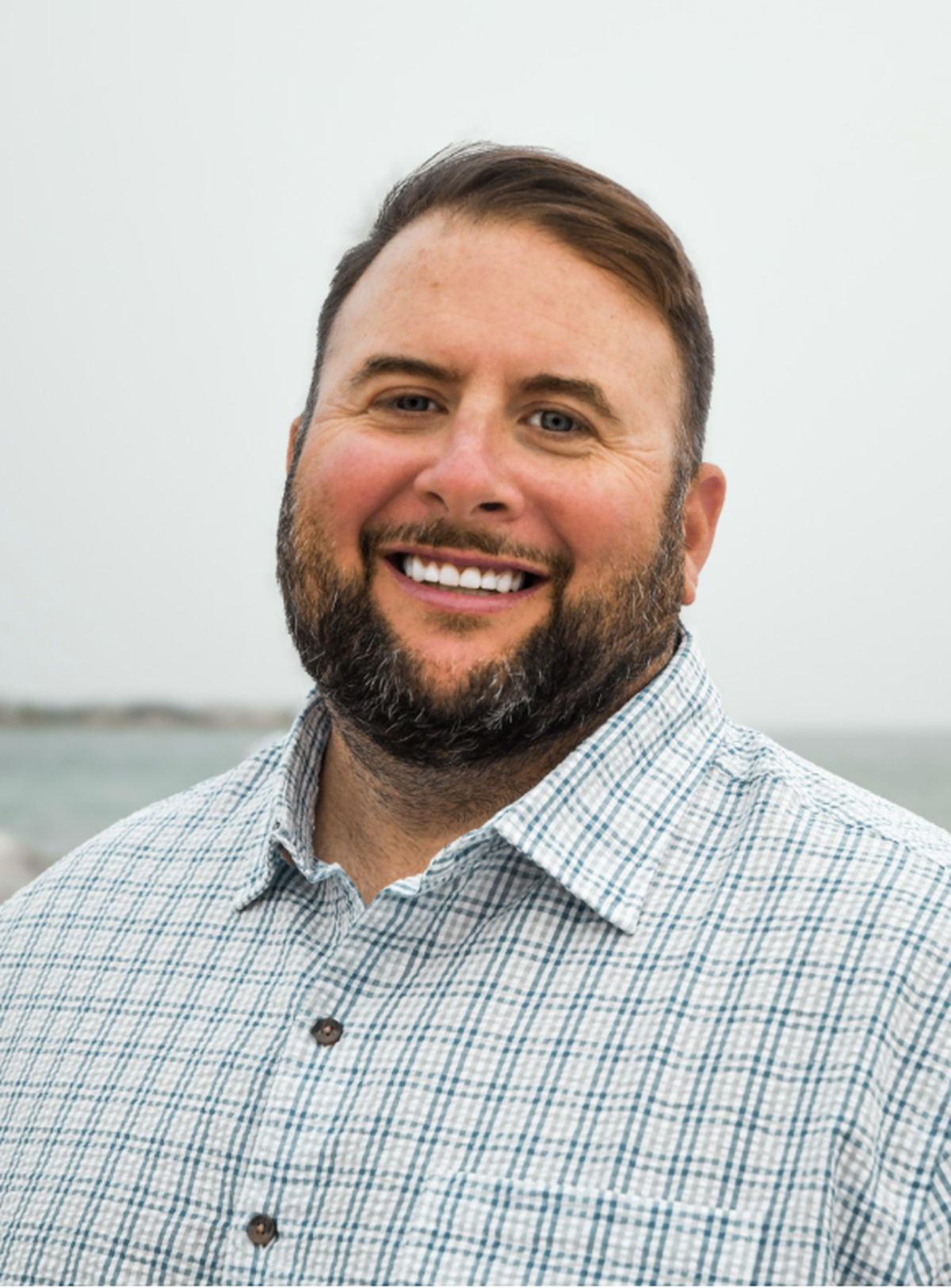
Brendan Donovan is the epitome of a Bostonian: A West Roxbury native, the son of a retired Boston Police Officer, and a graduate of the Boston Public Schools who returned to the district as a special educator. He wrote his debut memoir, HAPPYSAD: Getting Over the One That Got Away, after years navigating heartbreak, depression, and addiction.
Thank you so much for joining us in this interview series! Can you tell us a bit about your backstory and how you got started?
Never in a million years did I think I would become a published author. I’ve dedicated my life to working with students with special abilities and watching reality television. Writing was never part of my career plan, but it was always part of my life. Whether it was my dinosaur journal in fifth grade or my Biggest Loser diary, I’ve always written behind the scenes. Writing has always helped me process some of the bigger feelings that until recently, I rarely talked about.
After years of working through my depression in my diaries, my pain became too heavy for me to carry. On my own I needed to do something different, something bigger. I decided to take my writing public, so I guess that’s what makes me an author.
Can you share the most interesting story that occurred to you in the course of your career?
Well, I’ve had a short writing career. This question should be easy. It’s learning about what the people who read my book connect to. When I started writing this book, I was convinced readers would become enamored with me and Andie, our love story. I just knew they were going to see this book as on par with The Notebook — the greatest love story of all time.
I’ve done some readings, book signings, interviews and a ton of social media self-promotion. I’m learning that people are not just focused on the love story. Don’t get me wrong — they react to it; they recognize it as important. But what people really want to talk to me about is addiction, depression, and being vulnerable. I’m so interested in what every single reader connects to. I want to know the chapter, the page, the event that spoke to them. By understanding how my readers connect to my story, I’m able to understand myself even better.
What is the biggest challenge you faced in your journey to becoming a writer? How did you overcome it? Can you share a story about that that other aspiring writers can learn from?
The biggest challenge I faced in becoming a memoir writer was telling the truth. As I told my personal story, I had to tell other people’s “Truths” too. When you write a memoir it’s not just you being examined. You’re opening the lives of people you love.
I wrote about my parent’s divorce. I offered up my perspective on relationships that fell apart — but I could only offer one perspective. It was difficult to write while simultaneously understanding that the other people involved might remember it differently.
I knew there was a good chance that my girlfriend of eight years would most likely leave me. I even thought there was a chance I could lose my job. And I knew telling those stories, putting my perspective in a published book, could damage relationships that mean the world to me.
The hardest experience was discussing my parents’ divorce with my mother. Certain events from my childhood, and the demise of their marriage, shaped how I viewed relationships and experienced love in my early adult years. The last thing I wanted to do was ask my mom to revisit that chapter in her life.
It was hard for both of us. There were lots of tears. But through those tears those conversations gave me a perspective I hadn’t considered. That was an important lesson for me.
I hired an excellent attorney who guided me through the legal risks and changing identifying details so I wouldn’t lose my job or get sued into oblivion. But there was no lawyer who could protect me from the emotional consequences.
I found the courage to have important conversations I was never brave enough to have. They took place over months. A lot of them strengthened existing relationships in ways I never expected. Other relationships ended.
In the end, I realized that I have every right to tell my truth. But I know my story doesn’t exclusively belong to me.
It has been said that mistakes can be our greatest teachers. Can you share a story about the funniest mistake you made when you were first starting? Can you tell us what lesson you learned from that?
One of my favorite quotes is “Wisdom is earned, not learned.” Let’s just say that I have a hell of a lot more wisdom after writing HAPPYSAD. When I first started writing, I made one enormous mistake. I thought I could control how the audience would receive my story.
I’m a storyteller. I thought I’d be able to write the same way I told a story in person. But you can’t read the room while writing. You don’t have the luxury of seeing someone’s facial expression or body language while writing. You can’t change your tone of voice, add humor, or clarify something when you notice people in the room look puzzled.
Once those words are published, they’re no longer yours to explain. Readers’ experiences, relationships, insecurities, and trauma will shape their interpretations and connections.
When I started writing HAPPYSAD, I was genuinely convinced I could tell the story of the woman I’d never gotten over and somehow preserve my relationship with the woman I’d been dating for eight years. That’s laughably naive.
I remember thinking to myself — if I just say it like this or give it this context — she’ll understand.
I could have written that version of HAPPYSAD, but it would have been one big lie. Plus, no one would have read that version of the book.
The lesson I learned is twofold. Writing a good memoir is hard. Being vulnerable, and accepting the consequences of that vulnerability, is even harder. And no matter how precise you are with your words, you cannot control how another human being will interpret them.
In your opinion, were you a “natural born writer” or did you develop that aptitude later? Can you explain what you mean?
The answer to this question is unequivocally…no. Have I always written? Yes. Have I always been a great storyteller in a social setting? Absolutely. Unfortunately, that doesn’t translate to writing a 100,000-word memoir with structure, grammatical prowess, and fancy writing “moves.” My writing consultant, Susan Robinson Field, taught me that last term.
I can tell a hell of a story. I can make a crowd full of strangers laugh when they are supposed to cry, and cry when they are supposed to laugh. However, if I transcribed that same story on paper, it wouldn’t be near as funny, as emotional, or as entertaining.
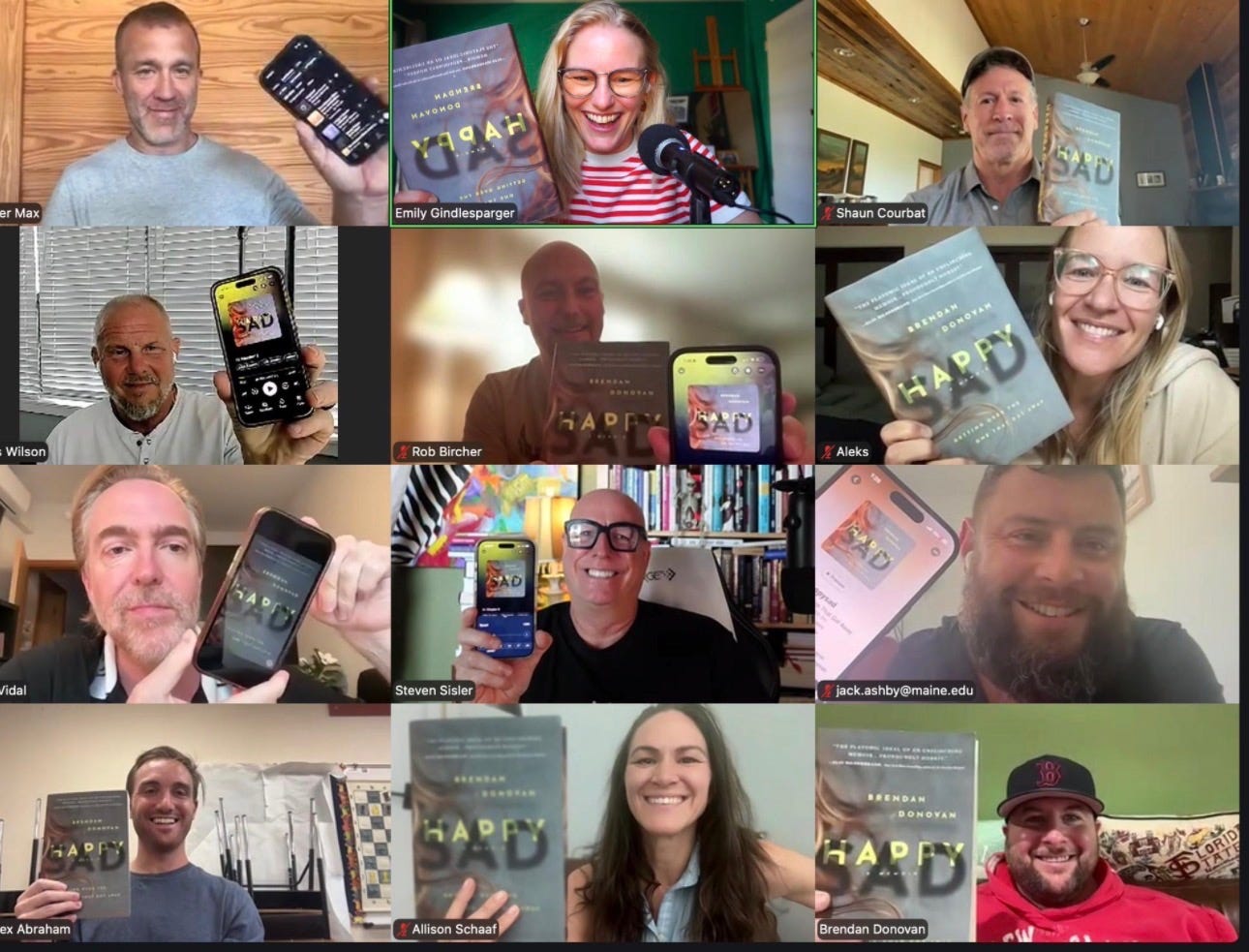
Thank God for Susan. Susan, along with my memoir consultants Tucker Max and Emily Gindlesparger, taught me that writing isn’t just about having a great story. It’s about knowing how to tell it.
Over time, those three helped me understand when to let a moment breathe, or when to slow it down or speed it up. If I had a dollar for every time one of them said, “Brendan, you’ve said these five different ways,” I’d be a rich man. They helped me understand that I couldn’t include everything I wanted to and that I had to stick to the arc of my narrative.
I had the story and the voice. Thank God I had them to teach me how to translate those things onto the page. Newsflash — I still don’t consider myself a great writer. I’m a storyteller who worked hard and took feedback. Honestly, without Susan, Tucker, and Emily, HAPPYSAD would have just been a book about a Boston guy complaining about losing his ex-fiancé for 300 pages.
What are some of the most interesting or exciting projects you are working on now?
My book just came out in July. I didn’t think I’d ever be in this position. So, I’m just trying to ride the wave as long as it’ll take me.
I have been exploring what I want to write next. I wrote a piece over the last couple of weeks attempting to explain how I feel. The title is “I’ve Been Thinking About Suicide.” Before you check on me, I want you to know I’m okay. The piece is about expectation. I expected the success of this book to heal me. People expect I won’t be depressed because I’ve gotten it all out and the book is a success. That’s not how depression works though. I ‘ve still got work to do and I’m doing it.
Here is the main question of our interview. Based on your experience, what are the “5 Things You Need to Be a Successful Author or Writer”? Please share a story or example for each.
I want to establish the obvious. I’m a forty-nine-year-old special education teacher that just moved back in with his father. I wrote a book about a woman who I broke up with twenty years ago. If you asked me this five months ago, I would’ve told you I’m the last person on planet Earth that should be giving advice on how to become a successful author.
I was a C Student in the Boston Public Schools. I went to Bunker Hill Community College prior to graduating from Florida State University. I didn’t study writing. I don’t have an agent. I self-published my book. I didn’t have a massive social media following. I didn’t even know if I was a good writer.
What I did have is a story. A hilarious, tragic, heartbreaking, crazy story that has been eating me alive for two decades. I turned that heaviness into HAPPYSAD: Getting Over the One That Got Away. Now, people are buying it, reading it, reviewing it, and doors I didn’t even know existed are opening for me.
Here are my five things. These five are strictly for memoirs.
1. Tell the Truth…Especially When it Makes You Look Bad
Tell. The. Truth. There, I said it again. This is the biggest one. When I started to write HAPPYSAD I could have done it the easy way. I could have blamed my ex. I could have told you that it was her fault and she was the cause for my depression and addiction. That would’ve been simple. It also would have been complete bullshit.
Instead, I did the hard thing. I told the truth. I told the world that I destroyed the most important relationship of my life. I told everyone reading that I was emotionally immature, selfish, insecure, and that I made mistakes I’m still trying to forgive myself for.
I wrote about my battle with depression, addiction, suicidal thoughts, and some incredibly embarrassing sexual experiences. There’s literally a chapter about a woman pooping on me.
I thank God every day I did. I learned that readers don’t need me to be the hero. They just want honesty. The most meaningful messages I’ve received have come from strangers who saw themselves in my worst moments.
2. Be Willing to Make Yourself Devastatingly Uncomfortable
Writing HAPPYSAD was uncomfortable. I often joke that by the time I published the book; I had no tears left to cry. I wrote about some of the darkest moments of my life: moments I spent years pushing away the pain with Zoloft, cheeseburgers, poker, and Oxycodone.
Writing this memoir didn’t just open Pandora’s Box. It took a sledgehammer to it. And Pandora was not happy. My relationship of eight years ended. People I love were hurt. I’m not going to romanticize it. It was devastating. It still is.
But something extraordinary happened on the other side of that discomfort. Complete strangers started to trust me with their deepest, darkest secrets. People have told me about their battles with addiction, depression, and their lost love. People have shared stories about loved ones they lost in their battles with addiction and depression.
In those conversations, I’ve felt a level of human connection that has been absent from my life for a very long time.
Vulnerability doesn’t guarantee success or healing. But it can create connections in a way that pretending everything is fine never will. Get uncomfortable.
3. Find Your People and Listen to Them
Lots of people look at writing as a solitary activity. Edgar Allen Poe in a dark room writing like a madman. Trust me. I did that. I was Edgar, just a way shittier writer.
There are so many valuable lessons I’ve learned during my writing journey. One of the most important ones is that you write alone, but if you want your book to be great, you need to rely on others.
Luckily, when I started HAPPYSAD I didn’t exactly have great self-esteem when it came to my writing abilities. When I was first asked what my narrative arc would be I had to Google it during the Zoom call while I pretended my computer froze. True story.
Three things I did have were a willingness to share my writing, take constructive feedback, and learn. And I learned how to take criticism…from everyone. When I say everyone, I mean everyone. I wasn’t just sharing my writing with my editor. I posted raw excerpts on Facebook and Instagram. I shared with friends, family, and people I had no business sharing with.
Some people told me I was nuts. Some asked if I took my medication that day. But most people were supportive. I found “my people.” I took what they had to say to heart. Did my feelings get hurt sometimes? Of course. I was baring my soul. But I tried not to get defensive.
I listened. I rewrote chapters. I cut chapters that I was in love with. I went back to the drawing board repeatedly. My goal was never to become John Steinbeck. My goal was to give my story a chance to mean something. I wanted it to mean something to the person I wrote it for.
My advice to aspiring memoirists is to find your people. To you that might mean a writing group, a mentor, or your crazy cousin Larry. Surround yourself with people who will tell you the truth. And try this crazy thing. Listen to them.
My name is on the cover of HAPPYSAD, but without my people, there’s not a chance you would be reading this right now.
4. Don’t Wait for Permission
On July 1st, 2026, I self-published HAPPYSAD. I thought I’d sell one-hundred copies. I’m serious. One hundred copies.
I spent years writing a memoir that I knew could me my relationship with someone I love, my career as a special educator, and possibly being sued into oblivion. That’s how much this apology, this story, meant to me.
Along the way, I explored traditional publishing. A few literary agents expressed interest and requested my manuscript. They both came to the same conclusion. Hilarious, great writing, but no thanks. Memoirs are hard to sell. Especially when you are a nobody teacher from Boston.
I did some reflecting on what that meant. I wasn’t going to spend a year sending query letters to fifty agents, praying one of them would decide my story deserved to exist. I realized that I didn’t take years of my life writing HAPPYSAD because I wanted to become an author. I wrote it because I needed to. Selling a hundred or a million copies was never going to change that.
You want my advice? If there’s a story inside of you that won’t shut up, stop trying to silence it and start writing. You are worth it.
Don’t let fear stop you. Don’t let rejection stop you.
And just so we’re clear, I’m not advising you to self-publish. Traditional publishing is an amazing opportunity. I still hope to be traditionally published one day.
I’m simply saying you don’t need anyone else’s permission. The only person you need permission from is you.
5. Know Why You Are Writing (But Understand That Your Purpose May Change)
Pay attention. This is the most important of the five pieces of “advice.”
You can dream about the New York Times bestseller list. You can fantasize about Matt Damon, or in my case, Kevin James, playing you on the big screen. If you give me truth serum, I’d admit that those things crossed my mind. But that’s not why I wrote HAPPYSAD.
I wasn’t trying to become famous or hit the New York Times Bestsellers list. I was trying to save my own life.
I couldn’t carry around the thousands of pounds of shame, guilt, and unanswered questions about the woman I wish was sitting next to me right now. I wanted people I love to understand me. And most importantly, I wanted Andie, the woman I wrote this book about; to know how much she will always matter to me.
I believed that if I organized everything on paper, told the entire story, and admitted the ugly truth, that I’d find some peace. I’d forgive myself. I’d finally move forward. I thought HAPPYSAD would fix me.
Newsflash. It didn’t.
I’ve sold thousands of books. I’ve received hundreds of beautiful reviews. I’ve had strangers tell me my words changed their lives. Yet, I wake up almost every day with the same questions and regrets that made me start writing in the first place.
That has been the hardest lesson I’ve learned. You can accomplish everything you dreamed of as a writer but still feel empty inside because you didn’t get the ending you wanted as a human being.
It’s funny, the one piece of consistent criticism of HAPPYSAD is that the ending is not wrapped up in a neat, little bow. That criticism of one of my proudest victories. I didn’t do what everyone else does. I told the truth. The messy, human truth. Welcome to memoir. Human stories don’t all have storybook endings. My ending is me trying to accept my life as it is today. My ending is me still trying to figure it all out.
Even though I didn’t get my fairytale ending, something is happening that I never anticipated. People are writing to me, telling me that HAPPYSAD is making them feel less alone. That might be the lesson I ultimately take from all of this. I started writing hoping it would help me understand my own life. I never imagined it would help people understand theirs.
Here is my final piece of advice. Know why you are writing. Have a purpose. But be open to the possibility that your purpose may change with time.
I didn’t write HAPPYSAD because I had all the answers. Instead, I wrote it because I was searching for them. And now, thousands of you are searching with me. To me, that is what being a successful writer looks like.
What is one habit you believe contributed the most to you becoming a great writer? (i.e. perseverance, discipline, play, craft study). Can you share a story or example?
This is easy for me. Read your writing out loud. Record yourself and listen to it again. And again. And again. Then, have other people read it out loud.
Early in my career as a special educator, I taught English to struggling readers. Many of my students had audio books written into their Individualized Education Programs. I’ll never forget listening to Elie Wiesel narrate his story, Night.
It blew me away. The inflection and emotion in his voice. The sincerity and long breaths. The connection I felt to Elie. It was the same book I’d read three times, but hearing it gave me a whole new understanding of it.
I want people to feel the same emotional connection when they listen to HAPPYSAD. I learned that one of the best ways to make that happen was to listen to my own writing.
Reading aloud revealed things I couldn’t see on the page. Our brain doesn’t always work the way we think it does. I found blatant grammatical errors in chapters I’d already read and edited several times. I discovered places where I said the same thing three different ways.
Listening forced me to slow down and dissect the words on the page. When I silently read HAPPYSAD my brain would fill in words I meant to say. Hearing it made me realize I in fact did not make perfect sense.
Having other people read your work to you is also beneficial. Most importantly, it removes your internal bias. Listening helped me gauge whether my intended humor or emotional weight landed in the way I thought it would. I got to hear someone else’s experience with my words.
One of the major flaws I discovered was with the dialogue consistency. I noticed that anytime I quoted myself it seemed natural. I use sarcasm. I swear. I make inappropriate jokes. But I also noticed that the other characters all sounded too formal.
Some of the dialogue was laugh out loud “unnatural.” Anytime my friends, my family, my girlfriends, or my therapist spoke, the dialogue started with my name.
“Brendan, I think you have depression.”
“Brendan, have you considered…”
“Brendan, what you’re describing is…”
That did not stick out to me until someone else read my book to me. I went back through the entire manuscript and made sure everyone sounded authentic.
That exercise made HAPPYSAD a better book.
Which literature do you draw inspiration from? Why?
One book I drew inspiration from while writing HAPPYSAD was Open by Andre Agassi. When I decided to write HAPPYSAD the first thing I was advised to do was find books that were similar to mine. That was nearly impossible. I wanted to find a memoir where a man exposed himself in a way that was uncomfortable. I struggled to find one at first.
I loved Andre Agassi growing up. So, when someone suggested his book, I was excited. I loved tennis. When I read about out how much he hated tennis during parts of his life I almost fell over. But then, I learned about his insecurities and his mistakes. I couldn’t stop reading. I was addicted to his vulnerability.
I remember finishing that book and respecting him more as a person than as a tennis player. He didn’t try to make himself look good. That’s what I want people to feel after reading HAPPYSAD. I want them to finish that last word and think, holy shit that guy was honest.
I’m not Andre Agassi. I’m not a hero. But one thing I am…is honest.
You are a person of enormous influence. If you could start a movement that would bring the most amount of good to the most amount of people, what would that be? You never know what your idea can trigger.
I must make a joke. I appreciate the compliment, but I’m not exactly Gandhi. I’m a regular guy from Boston with unresolved emotional issues and a decent Goodreads rating.
But, if I did ever become that guy, I know exactly what I’d want to do with it.
I would want to be a leader when it came to encouraging men to open up about their mental health. One of my high school best friends took his life earlier this year. I think about him every day. I wish I had shared my struggles with him sooner or was able to help him because it might have saved his life.
I want men like him that are suffering in silence to feel comfortable enough to be able to look at their wife, their friend, or their colleague and tell them the truth.
If HAPPYSAD gets a few men to pick up the phone, call someone, and say, “I’m not doing good. I’m scared and need to talk” then I have accomplished a feat far more important than selling books.
How can our readers further follow your work online?
You can follow me on Instagram. @BrendanDfromBoston
Thank you for sharing these insights!