When I turned five, there was a revolution in Peru, and my dad came home one day and said, “This is how they change governments in Latin America.” So, we were getting kicked out.
Business
Chris Hessler: The Smartest CEO Strategy Is Outsourcing Problem-Solving To Experienced Veterans
Serial entrepreneur and founder of The Advisory Bench, Chris Hessler, explains why the most effective leaders accelerate growth by recruiting specialized advisory boards to solve their most complex business challenges.
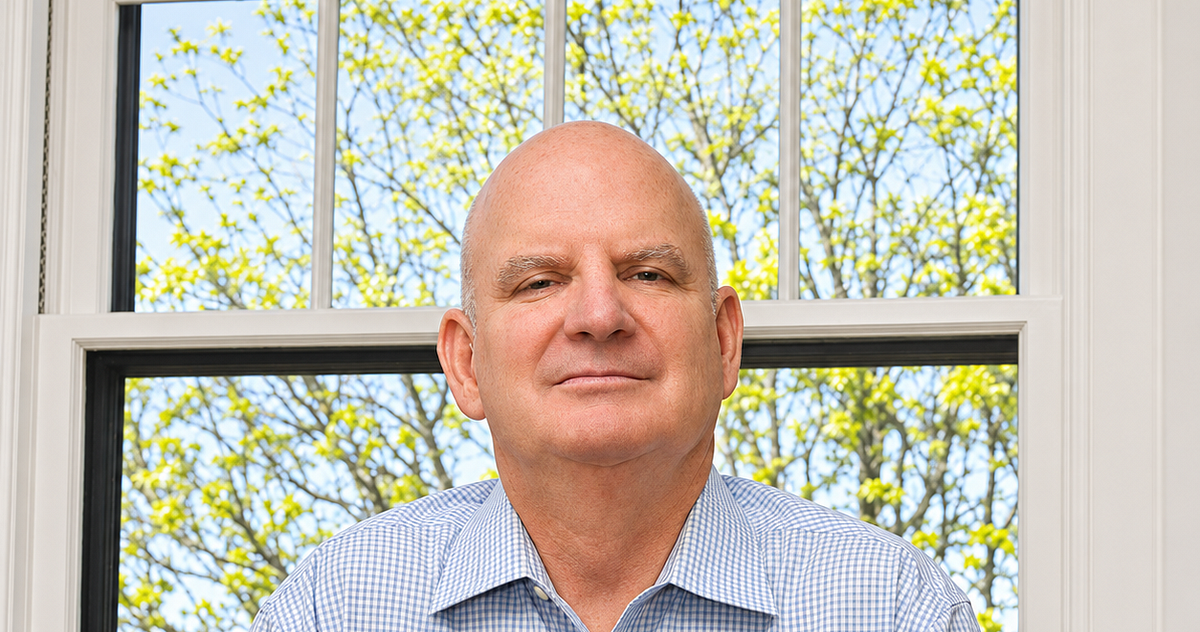
I had the pleasure of talking with Chris Hessler, a serial entrepreneur who has spent much of his career building companies, raising capital, and negotiating deals, but whose most consequential business lesson came from admitting he didn’t know how to solve a problem.
It was 1992, and Hessler’s company had just landed an extraordinary contract with the United States Postal Service. The plan was to replace the familiar change-of-address form with an advertising-supported Mover’s Guide, distributed through 29,000 post offices. There was one rather significant obstacle: the company needed to print 84 million copies, and Hessler knew little about printing on that scale.
The solution arrived at a cocktail party. A college friend introduced him to Dick Holliday, a veteran salesman of Heidelberg printing presses who had spent decades working with major commercial printers. Over gin and tonics, Hessler explained his predicament. Holliday understood the problem immediately. Hessler recognized something else: here was a man whose experience could spare his company from expensive mistakes.
“How about if you join the advisory board I’m building?” he asked.
There was just one complication. The advisory board didn’t exist yet.
Holliday agreed anyway. He eventually helped Hessler’s company negotiate with RR Donnelley, which became its printer. The business, Imagitas, grew into a substantial enterprise and was ultimately acquired by Pitney Bowes. Hessler had stumbled onto a principle that would eventually become the foundation of his fourth company: sometimes the smartest thing a CEO can do is find someone who has already solved the problem.
It is an interesting philosophy coming from someone whose career has been defined by an unusual appetite for independence.
Born in Lima, Peru, Hessler grew up moving between countries as his father’s corporate career took the family from South America to Minnesota, Ontario, Germany, and Switzerland. He spent eight years in Geneva, attending an American international school before returning to the United States for Dartmouth College. By then, he was already experimenting with entrepreneurship.
One of his college businesses involved selling irreverent Dartmouth hats at football games. During a game against Harvard in Cambridge, an elderly Dartmouth alumnus approached Hessler and his partner, declared their merchandise “despicable,” and questioned their conduct as Dartmouth men. Moments later, the man’s wife bought two hats. The couple walked away wearing them.
The incident captures something of Hessler’s personality: an appreciation for the absurdities of selling, and a willingness to approach customers who may not initially appreciate the pitch.
After Dartmouth, Hessler secured a coveted position at Procter & Gamble. He lasted 11 months.
“I was a very little cog in a very big machine,” he recalls. He admired the company’s people, products, and values, but the corporate structure was not for him. He regarded the experience as a compressed MBA program, one in which his employer had paid him to learn.
He soon became a venture-backed CEO in his early twenties. Over roughly two decades, he helped build and sell three companies in marketing services, working across industries including healthcare, retail, and telecommunications. His career included raising more than $80 million in venture capital, according to his professional biography, and working with investors ranging from Bain Capital to Spark Capital.
He subsequently spent seven years as an operating partner at Alpine Investors, serving on company boards and helping oversee investments. The work offered a different perspective on businesses he had previously experienced from the founder’s chair. Eventually, however, Hessler recognized an uncomfortable truth about his professional preferences.
“I want to be the guy selling the business,” he says, rather than the employee of a private equity firm buying someone else’s.
That realization helped bring him back to entrepreneurship. Together with Cathy Fischer, a former Procter & Gamble colleague who went on to senior marketing positions at major consumer companies, he founded The Advisory Bench.
The company builds advisory boards for CEOs, typically recruiting five experienced executives with expertise tailored to the company’s specific challenges. The advisors receive equity rather than cash compensation, giving younger or growing businesses access to people they might otherwise struggle to afford.
For one recent client, Momento3d, which creates jewelry incorporating impressions of pets’ paw prints, the challenge was finding expertise across three distinct fields: jewelry, pets, and consumer marketing. Hessler’s team recruited specialists from those industries, including former senior executives from Signet Jewelers and Petco. At the time of the interview, the advisory board had only recently begun meeting, making it an example of the model’s potential rather than a proven turnaround.
Hessler is equally particular about the CEOs he works with. He believes they must be intelligent, possess a growth mindset, and, perhaps most importantly, be “humble and coachable.” It is a revealing requirement from someone who has spent decades selling his own ideas. He believes confidence matters, but recognizes that a leader’s willingness to listen can determine whether outside expertise accomplishes anything.
And for all his emphasis on expert advisors, Hessler remains an unabashed salesman. He argues that raising capital, recruiting employees, acquiring customers, and even fundraising for nonprofits depend on the same fundamental ability to persuade people. His advice to aspiring entrepreneurs is characteristically concise: “If you get good at selling, you can do anything.”
There is a productive tension running through Hessler’s career. He has repeatedly left established institutions to regain control of his own work, yet the company he is building now rests on the conviction that even accomplished leaders cannot succeed entirely on their own.
The entrepreneur who once found his printing expert over a gin and tonic is still making connections. Only now, connecting people who have problems with people who know how to solve them is the business itself.
Yitzi Weiner: Okay, Chris, such a delight to meet you. Before we dive in and talk about your amazing work, our readers would love to learn about Chris Hessler’s personal origin story. Can you share with us the story of your childhood and how you grew up, and particularly the seeds of all the amazing creativity that has come since then?
Chris Hessler: Okay. I was raised all over the world. My dad worked for a US corporation that had operations everywhere. I was born in Lima, Peru, and lived there for five years. When I turned five, there was a revolution in Peru, and my dad came home one day and said, “This is how they change governments in Latin America.”
So, we were getting kicked out. We went to Minneapolis, lived there for two years, went to Ontario for a year, went to Düsseldorf, Germany, for a year, and then spent eight years in Geneva, Switzerland. So I was in Switzerland from grade five to grade 12. I went to an American international school and then came to the US to go to college.
Yitzi Weiner: So, let’s hear the next part. You’ve done so many amazing things. Let’s hear the next chapter.
Chris Hessler: I went to Dartmouth College in New Hampshire, and I was one of those students who had little businesses in the dorm. The two best businesses I had — actually, I had three good businesses. One was a hat business. My buddy and I sold hats at football games, and Dartmouth’s big rival was Harvard. So we would make a thousand “Go Dartmouth, Harvard Sucks” hats, and we sold them outside of the football stadium.
My best story is one time we were in Cambridge selling because the game was in Cambridge, and this old alum came up to us wearing this little green jacket — a Dartmouth alum. And he says, “Are you Dartmouth men?” We were selling them for three bucks, two for five. We said, “Yes, we’re Dartmouth men.” And he says, “I think what you’re doing is despicable.” And then his wife comes up to us and says, “We’ll take two.” And they walked off with their “Harvard Sucks” hats on.
Anyway, that was a lot of fun. That’s how I got through college: little businesses. And then I went from college — well, actually, I applied to five MBA programs as a senior. I got into two, and I was rejected at three. Then I got a job at Procter & Gamble, which was a great job and was highly coveted. Out of our class of a thousand students, they took two. So myself and my friend Mimi Riley had the two jobs.
I did not go to business school; I went to Procter & Gamble. What I figured out was: great company, great values, great products, great people, but not for me. I was a very little cog in a very big machine. So I lasted 11 months. I left after 11 months, but I viewed it like an MBA program where they paid me, and I was in the accelerated cohort of only 11 months. I could learn it all. Some people stay 10 years, 20 years. I thought, “I don’t need that. This is enough. I’ve learned a lot.”
So I then went off to be a venture-backed CEO in my early 20s, and I built and sold three companies, all in the marketing services space, selling new marketing solutions to big Fortune 500 buyers. I did that for about 20 years, raised a bunch of venture capital, hired a lot of people, and got a lot of customers. In the first company, our customer base was in pharma. In the second one, our customers were in retail and telecom primarily. The third one was in healthcare. That was the first two-thirds of my career.
In the last third of my career, I worked in private equity. I got recruited by a middle-market private equity firm to be an operating partner. I sat on multiple boards and was a steward of their money. That was a lot of fun, too. But what I realized at the end of seven years in private equity was that I really liked being the founder whom the private equity firm buys from. I don’t want to be an employee of private equity allocating capital to buy somebody else’s business. I want to be the guy selling the business.
So I left. One of the things I did along the way was build advisory boards. I built 12 advisory boards in my venture and PE careers because I found it was an excellent way to get talent and experience I often couldn’t afford to hire. I would go out and find five advisors who met the criteria I had and put them on a board. I gave them stock in the company, and it was a light lift. I was on the phone with them one or two hours a month, and then two hours a quarter, and maybe once a year in person. Advisors loved doing it, and we got great value out of it.
When I left private equity, I started another company, my fourth company, called The Advisory Bench. I teamed up with a friend of mine from the Procter & Gamble days. Her name is Cathy Fischer, and she had been at P&G for 14 years, and then she became a super CMO at Newell Rubbermaid, Goodyear, and Signet Jewelers. What we do now is build advisory boards for CEOs.
It’s a super interesting business because the advisory board model works regardless of vertical or regardless of the age and stage of the company. It really comes down to three attributes that the CEO needs to have: they need to be super smart, they need to have a growth mindset, and they need to be humble and coachable. If the CEO checks those three boxes, an advisory board can really help them.
Yitzi Weiner: That’s actually a brilliant idea. I love how you phrased it: you have access to talent that you couldn’t afford to hire, but they will join a board in exchange for equity. It’s really a brilliant idea. So please tell us more. Can you tell us a story about a company that took on a board of advisors and, because of that, went to the next level and really shot off?
Chris Hessler: The best example I can give is from my own experience of how I invented the advisory board model. In my second company, I was building it with my partner, and we got a contract with the US Postal Service. This was around ’92, so it was pre-internet, pre-everything. It was a very low-tech world.
We got a contract to commercialize the change-of-address form that sits in 29,000 post office lobbies. In 1992, 42 million people a year would go into a post office, pick up a change-of-address form — actually, they’d pick up two — fill it out, and bring it back. That’s how your first-class mail got forwarded, and that’s how the little yellow stickers followed you around. Remember those?
We got that contract, and our idea was super low-tech. It was: we’re going to replace your change-of-address form with a Mover’s Guide. The Mover’s Guide will have advertising related to the move and content related to the move, and it will have the change form in it. So any consumer who wants to move has to pick up our Mover’s Guide from a post office lobby.
Then we had the challenge of having to print 84 million Mover’s Guides and get them into 29,000 post offices. What I’ve learned today is that CEOs don’t wake up and say, “I want to build an advisory board.” They wake up and say, “I’ve got this problem,” or they were up all night thinking about the problem.
I was thinking about this problem day and night: “How do we print 84 million of this thing?” I was invited to a cocktail party, and as we know, a lot of good things start at cocktail parties. At the cocktail party, my college buddy introduced me to his father-in-law, Dick Holliday. Wonderful man. Dick had spent a career selling Heidelberg printing presses to big printers like RR Donnelley and Quad/Graphics.
Dick and I were at the bar having a gin and tonic, and I was telling him about the post office and 84 million Mover’s Guides and all that. He started analyzing the problem because he understood it. He’d done this his whole life; he’d done this for 30 years.
I looked at him and said, “How about if you join the advisory board I’m building?” I had the idea right there at the bar. And he said, “I’d love to.” The next week, Dick and I went to lunch, and I explained this whole fledgling advisory board idea. Then we got more advisors to complement his skills. He really became central to our success because he trained us on how to buy print in large quantities, and he went with us to negotiate with RR Donnelley. They became our printer. He was great. He was a wonderful guy.
Yitzi Weiner: That’s an amazing story. And he got equity in the company?
Chris Hessler: Exactly. Yep. And then eventually we sold the company, so he made money.
Yitzi Weiner: Can you tell us another story, aside from yours — let’s say one of your clients — about how they got an advisory board and were then able to grow?
Chris Hessler: Yeah. There’s one example right now where we just built and launched an advisory board for a company called Memento 3D. What they have developed is a technology that lets you take a pet’s paw print and turn it into a piece of jewelry. So whether your pet is living or deceased, you can commemorate the pet. You can turn it into a necklace if you want.
The founder is really an inventor, and he needed marketers, he needed pet people, and he needed jewelry people. So we got a senior VP from Signet Jewelers. We got a former merchandising chief from Petco, the big pet company. And we got several marketers who understand marketing to pet owners. We kicked off two weeks ago, and the amount of knowledge in the room was incredible. This is really the intersection of pets and jewelry, and the amount of knowledge we had in the room was amazing. It really comes down to one simple thing, which is getting the right voices in the room and bridging experience gaps for the CEO or the C-team. That’s one example.
I’ll give you another example. We have a client called BP Logix that is a software company, and they have developed software to automate the regulatory process for new drugs. The FDA process is very complicated. When you introduce a new drug, you have to follow a lot of steps and fill out a lot of forms. They developed software to automate this process and speed it up, and they wanted to pivot into a new space, but they didn’t have the knowledge. So they hired us to go find them five advisors from the new space who could really decode it. The advisors are also thought leaders, so they’re content creators who can build credibility for the software solution in the industry.
I think the real theme here is that every advisory board is different in the vertical it’s in because, as you know, every business is a niche of a niche. It’s super specialized, so we have to go out and get thought leaders from that niche. They’re all out there; you just have to do the work and find them.
The model also works regardless of the age and stage of the company. Our ideal customer profile is the CEO of a company in the $5 million to $100 million revenue space, but we have built an advisory board for a billion-dollar company and for a million-dollar company. Again, it really comes down to three attributes that the CEO has to have: they have to be super smart, they have to have a growth mindset, and they have to be humble and coachable. They have to listen to the advisors.
Yitzi Weiner: Unbelievable. So, what’s your business model? Do people pay you a fee or a retainer, or does your business also get equity?
Chris Hessler: Good question. Our business model is that we charge $75,000 to build an advisory board, and we’re paid over three years. It’s not all at once or all in year one. It’s front-loaded, and it’s in three payments over three years. And then the advisors get equity in the company.
Yitzi Weiner: And they don’t get paid cash at all? They just get equity?
Chris Hessler: They just get equity. Correct.
Yitzi Weiner: Wow. And where do you get advisors from? Do people apply to be advisors on your bench?
Chris Hessler: Yes. There are three ways we get advisors. Way number one is Cathy and I may know them from our own networks. Way number two is we have a database. People apply to be advisors all the time, so we have hundreds and hundreds of advisors in a database. And way number three is, after we check our own network and our own database, if we don’t find the advisors or the keywords in the spec, we then go to places like LinkedIn and just find people and reach out to them.
The thing about advisors is that people generally want to be advisors. They are at the tail end of their careers; they’re recently retired or “failed retirees.” We actually get a lot of failed retirees. They’re tired of playing golf, they’re tired of cocktails at four, and they want things to do. They want to stay involved, and they have things to give back. So generally, advisors get involved because, number one, they want to give back; number two, they want to network with the other advisors; and number three is comp. So comp isn’t really number one.
Yitzi Weiner: Okay, so this is our signature question. Chris, you’ve been blessed with a lot of success, and you must have learned a lot from your experience. Looking back all the way to the beginning when you first started selling hats, can you share five things that you’ve learned over the years as a business leader that someone starting out today can really benefit from?
Chris Hessler: Okay. I’m going to take your question and boil it down to one thing. Because as a rule in life, there’s one thing that we can do that will generally make everything else easier or make problems go away.
Early in my career, I figured out that most people don’t like doing biz dev. So I said to myself, “I’m going to get really good at biz dev,” because there seems to be a big void there. As I went into these companies to build them, the other partners generally either didn’t like biz dev or weren’t that good at biz dev.
Later on, I built two nonprofits, and what I learned is that nonprofit fundraising is just a brutal thing. I would get 10 people on my board of directors, and they would all hate fundraising. One of the 10 was good at fundraising, so she and I became the fundraisers, and the other nine did nothing.
So, my advice to somebody starting out is: go into biz dev and get good at sales. Because if you think about what it takes to build a company, you have to raise money, you have to hire people, and you have to get customers. Three things. They all involve selling, right? So you have to get good at selling. If you get good at selling, you can do anything.
Yitzi Weiner: Chris, because of your amazing work, the platform that you’ve built, and the businesses that you’ve built, you’re honestly a person of great influence. If you could spread an idea or inspire a movement that would bring the most amount of good to the most amount of people, what would that be? Because you never know what your idea can inspire.
Chris Hessler: I’m working on it right now. What Cathy and I have done is build a webinar that encapsulates everything I’ve learned about business development so we can share it with people. It’s called “Did I Offend You?”
The reason it’s called that is because one of the things that happens in business development is you go in, you have a good meeting, and the prospect is excited. They tell you they want a proposal, and they’re going to get more people involved. They have the budget, they’re the right person, and they have the need. And then they go dark — they disappear. You email and call them, and nothing happens.
Two months later, you’re wondering what happened. What I’ve learned is you have to send them an email, and the subject line is, “Did I offend you?” And in the email, you have to apologize. You say, “Hey, we had a great meeting. You wanted to buy what we’re selling. I have not heard from you in two months, so I have to believe you’re either very sick, you’ve left your job, or I offended you. And if I offended you, I’m really sorry; that was not the intention.”
That email will get a response, and invariably the response is, “Oh, no, no, you didn’t offend me. My boss gave me a project, and I’m working 24/7 on this thing. I have no time. But please call me in a month and we will get going again.” The whole point is you have to unstick this situation. And the best way I’ve learned over time is to send a “Did I offend you?” email. Now you learned something today, right?
Yitzi Weiner: Amazing. Chris, how can our readers continue to follow your work? How can they reach out to you to engage your services? How can our readers support your work in any possible way?
Chris Hessler: The best way is just to email me. It’s chessler@advisorybench.us — one word, C-H-E-S-S-L-E-R at advisorybench.us.
Yitzi Weiner: Chris, it’s been an honor to meet you. I wish you continued success and good health and blessings, and I’d love to stay in touch and do this again next year.
Chris Hessler: Well, thank you so much for having me. I really appreciate it.
Written by
Yitzi Weiner
Editor & Journalist · 49K FollowersEditor and journalist at Authority Magazine, sharing in-depth executive interviews, leadership insights, and empowering stories from world-class founders and creators.

Published inAuthority MagazineTop Lessons, Top Authorities · 42K Followers
Exclusive, curated interviews with the leaders and changemakers shaping tomorrow. Leadership lessons, industry deep dives, and executive profiles.
More from Authority Magazine
See all stories →
Y
Yitzi WeinerClaire Swadling on Visual Reasoning, Academic Frustration, and the Future of Expert Intuition
Business30 min read

T
Tavares BeverlyOliver Silverstein of SoaR: How Shifting From Exclusive Rosters to Talent-Agnostic Creative Strategy Scaled Our Media Business
Business8 min read

T
Tavares BeverlyKevin Gaspar of Yirl: The Principle of Manual Iteration That Drives Authentic Human Connection
Business16 min read

T
Tavares BeverlySkylar Caldwell: Why Making Mistakes Can Actually Be Your Greatest Viral Asset
Business8 min read