I don’t naturally put a ceiling on what I could do with my life. When I see someone doing something extraordinary, I think, “Why couldn’t that be possible for me too?” I don’t need to know how to get there before allowing myself to imagine it.
Business
Kevin Gaspar of Yirl: The Principle of Manual Iteration That Drives Authentic Human Connection
The Yirl co-founder explains why he abandoned his initial app concept to manually facilitate real-world meetings, proving that deep user empathy must precede any attempt at AI-driven automation.

In today’s social media filled, fast-paced world, authenticity in our personal lives has become more difficult to come by. That fosters innovation, creativity and a level of success that few companies dream of. Yet, fostering an environment where individuals feel secure enough to express their true selves remains a challenge. The importance of authenticity cannot be overstated — it is the foundation of trust, innovation, and strong relationships. However, creating such a culture requires intention, understanding, and actionable strategies.
As a part of this series, we had the pleasure to interview Kevin Gaspar.
Kevin Gaspar is the co-founder and Chief Hangout Officer at Yirl. A self-described “zillennial,” somewhere between a millennial and Gen Z, he spent the first half of his life in an analog world, growing up in France. He spent the second half in a digital one, studying and living in Switzerland. While pursuing his master’s degree, he launched Smatch, a “Tinder for sports” that helped people find others to play sports with. The community grew to more than 100,000 users. During COVID, he stepped down and moved into fintech. There, he led the development of a structured-products trading platform serving Switzerland and Asia, which grew from zero to more than $5 billion in assets under management. In late 2024, he decided to return to the mission that had never left him: bringing people together. That journey led to Yirl, an autonomous operating system for real-world connection, using AI to help people meet in person. Every Saturday, Yirl brings small groups of students together to make friends in real life. Kevin is now based in San Francisco.
Thank you so much for joining us in this interview series! Before we dive into our discussion our readers would love to “get to know you” a bit better. Can you share with us the backstory about what brought you to your specific career path?
I remember being around 16 or 17 when I discovered iBeer, the app that made your phone look like a glass of beer. It was such a simple idea, but it fascinated me. Someone had imagined something, built it, and put it into people’s hands around the world. I wanted to do that.
A few years later, while studying for my master’s degree in Switzerland, I was surrounded by friends launching their own projects, from clothing labels to drinks brands. That encouraged me to start building my first mobile app.
It became Smatch, an app that helped people find others to play sports with. We reached more than 100,000 users. During COVID, I stepped down and seized an opportunity to lead a new project born out of a joint venture between a fintech and three of Switzerland’s largest private banks. Together, we developed a trading platform for structured products that quickly grew from zero to more than $5 billion in assets under management.
I spent almost four years there, learning a completely different industry and working with a team that trusted me enormously. But the idea of helping people meet never really left me. Eventually, I decided to return to it. That is what led me to start Yirl.
Can you share the most interesting story that happened to you since you started your career?
One of the most courageous decisions I’ve made was letting go of an app concept that had never really left my mind.
When I returned to entrepreneurship, I picked up that idea again. By early 2025, we had more than a thousand users in Paris who had downloaded our app to meet people and play sports together. They would connect, exchange a few messages, and then the conversation would disappear. The intention was there, but the actual meetings weren’t happening.
That was incredibly frustrating. We had borrowed familiar mechanics from popular apps. You could describe it as “Tinder for sports.” I had spent years thinking about that concept, and revisiting it felt like a second chance to bring it to life. Looking back, part of me was building the product I wanted to build rather than the service people actually needed.
Eventually, I had to ask myself a simple question: “These people want to meet. What can I do to get them together tomorrow?”
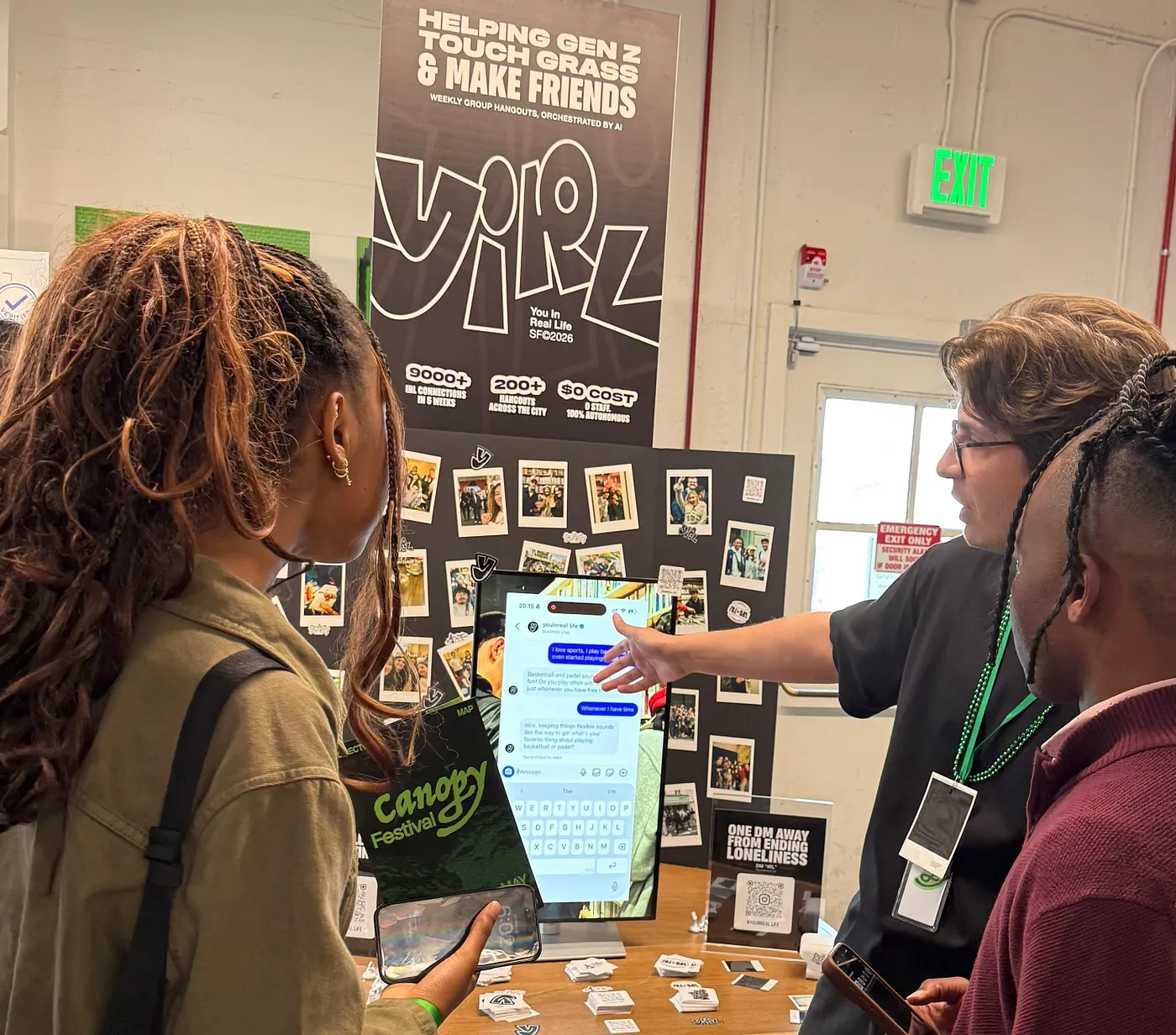
So I stopped developing the app and started everything from scratch. I began by simply talking to students on WhatsApp who were interested in meeting other people. I eventually used sports as a way to bring them together again, but this time I did everything myself. I organized the sessions, formed the groups, handled the details, and sent reminders. They had nothing to organize. They just needed to show up.
Out of ten people, five or six would come. Within a week, users who had never met through the app were finally meeting in person.
I went on to organize more than thirty sessions, bringing around forty to fifty people together each week. It took an enormous amount of time, but it worked. For the first time, I could see exactly what was needed to turn someone’s intention into an actual meeting.
That became the starting point for exploring how AI could help. What I was doing involved a repeatable sequence, but it also required adapting to people’s questions, cancellations, and changing plans. We began building around that real experience.
That is where today’s Yirl began. Letting go of the app I had imagined gave me the freedom to discover what people actually needed.
You are a successful individual. Which three character traits do you think were most instrumental to your success? Can you please share a story or example for each?
Audacity.
I allow myself to dream big. I don’t naturally put a ceiling on what I could do with my life. When I see someone doing something extraordinary, I think, “Why couldn’t that be possible for me too?” I don’t need to know how to get there before allowing myself to imagine it.
When I decided to build my first app, Smatch, I had no idea how to get an app onto the App Store. But that didn’t make the ambition feel out of reach. I simply started looking for a technical co-founder, which is how I met my first co-founder at a polytechnic school.
I think giving yourself that permission is powerful. There are plenty of obstacles you’ll encounter along the way. I don’t want to limit what I let myself dream about before I’ve even started.
Obsession.
When I care about something, it takes up a lot of space in my head. I keep thinking about it, asking questions, and trying different approaches. I find it difficult to switch off when something remains unresolved.
The thirty-plus sessions I organized by hand are a good example. Long after it stopped being efficient, I kept handling everything myself, down to the reminders, because I needed to understand what would help people actually meet. Once I saw them showing up, I wanted to understand how to make that happen again.
I’m still trying to understand that side of myself. I think some of it comes from how much I value freedom. Being able to choose what I spend my days doing matters enormously to me, and when I find something meaningful, I become very invested in it.
Optimism.
I believe more in the future than in the past. When someone brings me a problem, my mind immediately starts looking for possibilities. I’m usually the person saying, “There must be a way.”
When organizing those meetings became too time-consuming, I believed AI could eventually help us do it. We didn’t know exactly how yet, and building everything has been difficult. But a year later, much of what we imagined is working.
That’s how optimism shows up in my life. I can be frustrated with where things are today and still feel excited about where they could go.
Ok, thank you for that. Let’s now jump to the primary focus of our interview. Can you share a pivotal moment in your personal life when being authentic made a significant impact on your success or well-being?
Toward the end of my time in fintech, I found myself in an uncomfortable position: I had so many reasons to stay, but I increasingly wanted to leave.
I had loved the project for almost four years. I had real responsibility, we were successful, our partners trusted us, and we had built a platform I was proud of. Before imagining myself as an entrepreneur, I had pictured a career in finance. In many ways, I was living a version of the life I had wanted.
But during the last six months, I kept feeling that something was missing. The idea of bringing people together hadn’t left me. I wanted to explore it again, and admitting that was difficult because it meant walking away from an opportunity I genuinely valued.
I’ve always told friends that if you regularly wake up thinking, “Oh no, I don’t want to go to the office,” you should pay attention. Everyone can have difficult mornings. But when that feeling keeps coming back, it deserves an honest conversation with yourself. Eventually, I had to take my own advice.
I decided to leave and start Yirl. That took courage, but also a certain amount of innocence about what lay ahead. It has been much harder than I imagined. But I definitely don’t regret it. It has been the most enriching journey of my life so far.
For me, that was a lesson in being authentic with myself. I could be grateful for the opportunity I had and still want something different. I didn’t need to find something wrong with it to justify leaving. I needed to take what I wanted seriously, even without knowing where it would lead.
How do you navigate the challenges that come with encouraging authenticity in a diverse setting, where different backgrounds and perspectives may sometimes lead to conflict?
I’m naturally very direct. My co-founder sometimes jokes that it’s my “French side.” I’m honest about what I think, and I often find that it encourages the other person to be more open too. There’s less guessing and more room for a real conversation.
But spending time in the United States has made me more aware that people express themselves differently. What feels straightforward to me might feel abrupt to someone else. I have to pay attention to that too. I want people to feel comfortable being themselves, including when their way of communicating is different from mine.
When disagreements happen, I think the first step is understanding what’s behind them. Are we disagreeing about the idea, or reacting to how it was expressed? Sometimes asking, “What did you mean by that?” can change the whole conversation.
In a team, having a shared purpose also helps. We can have different opinions while understanding what we’re trying to achieve together. That gives us something to come back to when a discussion gets tense.
For me, mutual respect is essential. I want people around me who can challenge my ideas, explain their own, and listen. That applies equally to me. If respect is repeatedly missing, we need to address it. But disagreement itself doesn’t mean something is wrong. I want us to be able to disagree honestly and still feel comfortable working together the next morning.
Ok super. Here is the main question of our interview. Based on your experience and research, can you please share “5 Ways to Create a Culture Where People Feel Safe to be Authentic?” What strategies have you found most effective in fostering an environment where individuals feel safe to express their true selves, including their ideas, concerns, and friendship aspirations?
- Be honest about yourself first.
I think it’s difficult to ask people to be authentic if you only show them a version of yourself that has everything figured out. You have to be willing to acknowledge uncertainty, mistakes, and changes of mind.
Sometimes that starts with something as simple as saying, “I don’t know,” or “I got that wrong.” For me, it meant admitting that I had built the wrong product first. If you expect people to be honest with you, they need to see that you hold yourself to the same standard.
2. Make disagreement feel safe.
People learn how honest they can be from your reaction when they tell you something you don’t like. If you invite feedback and immediately become defensive, they will remember that the next time.
I’m direct, and I want people to feel they can be direct with me too. A useful starting point is to ask them to explain their reasoning before defending your own. You don’t have to agree with every opinion, but someone should be able to leave the conversation feeling that you took it seriously.
3. Give people room to open up in their own way.
Being authentic doesn’t mean being the loudest person in the room or sharing everything about your personal life. Some people speak easily in a group. Others need time or prefer a private conversation.
That also matters when it comes to friendship. Someone should be able to say they want to meet new people without having to explain their whole personal situation. I would make the invitation simple and let people decide how much they want to share. Trust needs room to develop.
4. Create opportunities to connect without having to impress.
I think the environment makes a big difference. It’s easier to relax when you have something to do together and don’t feel that everyone is evaluating you.
We saw this in our early sports sessions. The activity gave people a reason to show up and a natural way to interact. They didn’t have to carry an entire conversation from the first minute.
The same idea can apply to a team. A walk, a shared lunch, or doing something together outside a formal meeting can give people space to get to know each other more naturally.
5. Show that listening leads to action.
People become more comfortable expressing themselves when they see that what they say matters.
Our users helped us understand that matching people and exchanging messages weren’t enough. We had to take responsibility for making the meeting happen. Acting on that feedback changed our entire approach.
You can’t act on every suggestion, but you can come back and explain what you heard and what you’re doing about it. Otherwise, asking people to be open can start to feel like an empty exercise.
In your opinion, what role does authenticity play in building a company that people genuinely trust and want to connect with?
I think it matters more than ever, both outside and inside a company.
Externally, authenticity gives people a sense of who is behind the brand, what they believe, and why they’re building it. There is so much noise competing for our attention, and AI makes it easier to produce more of it. I think seeing real people, with their own personalities and stories, becomes even more valuable. Especially with younger generations, I believe that helps build a connection that a polished message alone can’t create.
At Yirl, trust is particularly important because we’re asking people to show up and meet a group of strangers. They haven’t browsed everyone’s photos or spent days getting to know each other online. They’re trusting us to bring them together with people they could connect with. That’s a meaningful leap of faith.
We understood quite quickly that people should also be able to see who is behind that invitation. That’s why we’re putting more faces to the company and sharing more of the journey. I want people to understand who we are and feel comfortable asking us questions. Then, of course, the experience has to live up to what we’ve told them.
Internally, I think people want to feel they can be themselves around the people they work with. They want to say when they don’t understand something, disagree with an idea, or admit they’re struggling without worrying that it will change how everyone sees them.
That starts with how we behave as founders. If I expect honesty from others, I have to be willing to acknowledge my own mistakes and listen when someone tells me something I might not want to hear. For me, authenticity builds trust when people experience that consistency over time, whether they’re joining our team or showing up to a Saturday hangout.
You are a person of great influence. If you could start a movement that would bring the most amount of good to the most amount of people, what would that be? You never know what your idea can trigger. :-)
That’s exactly what I’m working on with Yirl. I believe helping people meet and feel comfortable being themselves is one of the most worthwhile movements we could build.
The invitation is simple: turn off your screen, come touch grass, meet like-minded people, and come as you are. You get this beautiful mix of personalities, with a shared interest or activity to break the ice. For many of them, it’s their first time showing up to a social experience like this.
My favorite moment is the first hello. You can sometimes feel how nervous people are beforehand, and then watch that tension begin to disappear when someone greets them in person. A conversation starts, someone laughs, and suddenly meeting strangers feels a little less intimidating.
We’re human, after all. We’re social creatures, including the youngest generation. Bring people together, away from their screens, and that human magic has room to happen again. I think many people simply need help taking that first step, because we’re so connected online while living in our own little bubbles.
There’s a paradox in what we’re doing that I love: using new technology to help a new generation break free from the habits created by older technology. We’re building a company around that mission, but I believe the movement, and the industry growing around it, can become much bigger than us.
How can our readers further follow you online?
I’m honestly not very active on social media. I really dislike what it has become and how it encourages people to behave, so you won’t see me posting constantly. I encourage my co-founders to share their journeys if they feel comfortable doing so, but it doesn’t come as naturally to me.
Since I moved to San Francisco, people have started calling me “camera shy.” It makes me laugh because it’s also quite true.
The best way to reach me is to send me a message on X or LinkedIn. If we’re in the same city, perhaps we can arrange a coffee. In real life, of course.
Thank you for the time you spent sharing these fantastic insights. We wish you only continued success in your great work!
About The Interviewer: Tavares Beverly ( www.tavaresbeverly.com ) is the Founder and CEO of Beverly Boy Productions, a national video production company that has helped organizations tell their stories through video for more than two decades. Over the course of his career, he has worked with everyone from Fortune 500 executives and healthcare professionals to politicians, nonprofit leaders, educators, and artists, gaining a unique perspective on the role communication plays in leadership, business, and human connection. A frequent contributor on topics including communication, entrepreneurship, leadership, and personal development, Tavares believes that the ability to communicate effectively is one of the most valuable skills a person can develop. His work is driven by a passion for helping organizations connect with their audiences and helping individuals unlock their potential through mentorship, perseverance, and meaningful relationships. To learn more, connect with Tavares on LinkedIn or visit www.BeverlyBoy.com . If you’re interested in using the power of storytelling and communication to grow your organization, strengthen your brand, or inspire your audience, he welcomes the opportunity to connect.
TB
Written by
Tavares Beverly
Executive Contributor · Authority MagazineTavares Beverly is an executive interviewer and contributor covering leadership, culture, and business for Authority Magazine.

Published inAuthority MagazineTop Lessons, Top Authorities · 42K Followers
Exclusive, curated interviews with the leaders and changemakers shaping tomorrow. Leadership lessons, industry deep dives, and executive profiles.
More from Authority Magazine
See all stories →
T
Tavares BeverlyOliver Silverstein of SoaR: How Shifting From Exclusive Rosters to Talent-Agnostic Creative Strategy Scaled Our Media Business
Business8 min read

T
Tavares BeverlySkylar Caldwell: Why Making Mistakes Can Actually Be Your Greatest Viral Asset
Business8 min read

T
Tavares BeverlyJustin Escajeda of Escajeda Holdings: Reputation and Human Capital Are the Only Assets Worth Acquiring
Business28 min read
T
Tavares BeverlyCynthia Newman of Success Strategists: How Decades of Financial Leadership Experience Built a Scalable Coaching Practice
Business13 min read