I am not really buying trucks and equipment. I am buying the people and decades of reputation, and both of those can walk out the door the day after closing if the team in place for those decades does not trust you.
Business
Justin Escajeda of Escajeda Holdings: Reputation and Human Capital Are the Only Assets Worth Acquiring
The president of Escajeda Holdings shares his contrarian strategy for scaling construction enterprises by acquiring legacy businesses and prioritizing the preservation of existing company culture over rapid, ground-up expansion.
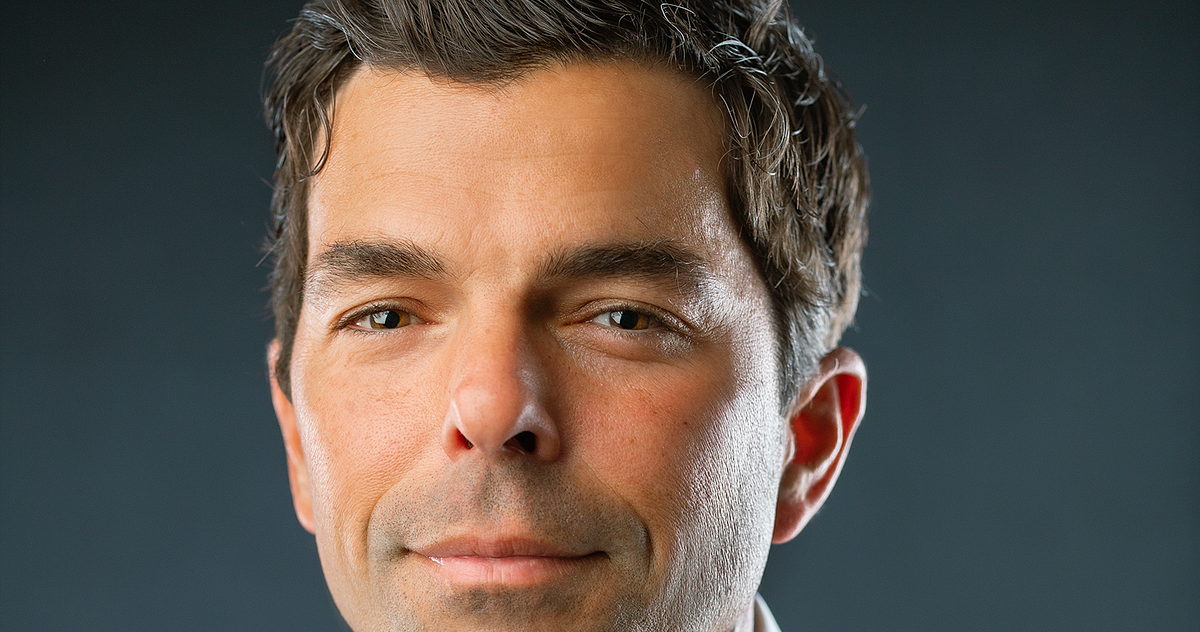
As a part of this series, we had the pleasure to interview Justin Escajeda.
Justin Escajeda is the owner and president of Escajeda Holdings, a Pittsburgh, PA holding company of eleven construction and trades businesses with more than 250 employees across roofing, masonry, restoration, remodeling, building supply, and insurance. He started his career as a union bricklayer, founded Escajeda Masonry, and made his first acquisition in 2018 when a roofing company owner who had been hiring Escajeda Masonry for chimney work offered to sell him the company. Most of the companies he has bought since came from owners who had no one to hand them to, and he buys to hold, never to flip. Justin has been a guest on Acquiring Minds, Roofing Insights, Buyers and Builders, the Building PA Podcast, the Real Estate Pros Show, The Strategic Pursuit Podcast, Business Blueprints, Real Returns, and the BiggerPockets Real Estate Podcast, and is a graduate of Penn State University.
Thank you so much for joining us in this interview series! Before we dig in, our readers would like to get to know you a bit more. Can you tell us a bit about your “backstory”? What led you to this particular career path?
I have always had a knack for making money, even as a kid, and not always the right way. In high school I ran every side hustle I could think of. What I took from those years was that I could find a dollar where other people did not see one, and that I had no fear of work.
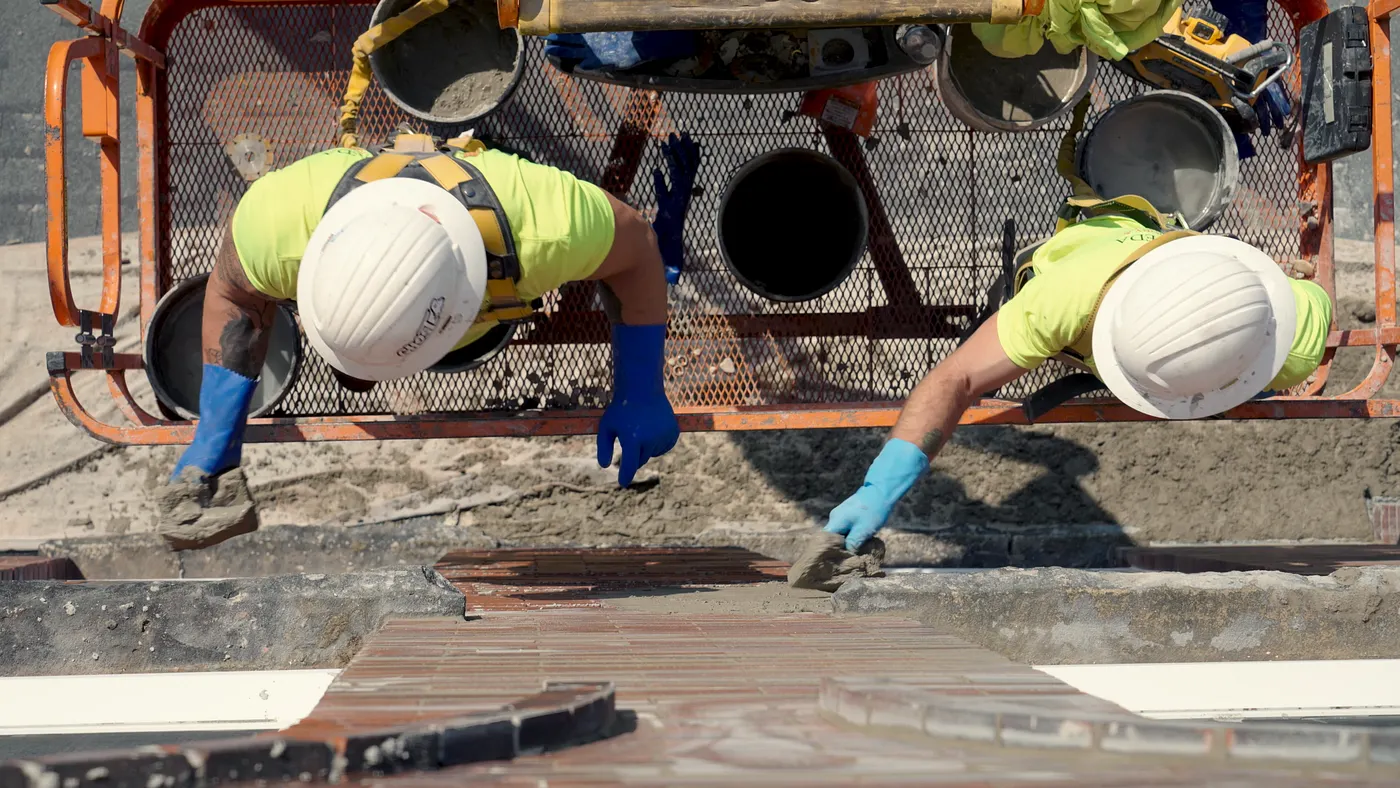
Out of high school I went into construction, masonry specifically, and I have never really left it. I worked for a union masonry contractor for about ten years, and then I broke off and started my own masonry company. Along the way I also built a real estate portfolio, owned a couple of self-storage facilities, and a couple of mobile home parks. One business led to the next, and each one taught me something about what I was good at and what I was not.
The whole time I was doing that, I was also running my masonry company, and I kept noticing something. I was making far more money in masonry than in all of my other ventures, and it was the trade I knew inside and out. So I sold everything, the rentals, the storage, the parks, and put all of my energy into the masonry company. It took off. Within a few years we were one of the bigger masonry players in Western Pennsylvania.
Not long after, the owner of a local roofing company, a guy who had been hiring us to do his chimneys over and over, offered to sell me his company. I bought it. And that was the aha moment. I had spent so many years building things from the ground up. Those ground-up companies took so much time and so much energy. Then I stroked a check for a roofing company that somebody else had already spent his life building, and the return was there the second we closed. About a year in I realized that this was what I wanted to do for the rest of my life: buy good companies from people who are ready to move on, keep the people, and never sell.
Can you share the most interesting story that happened to you since you began leading your company?
The first acquisition, because I had aspirations to acquire other companies but I did not go looking for it. I had no plan to buy anything. A roofing company owner we had worked with on multiple occasions previously was getting ready to retire and had nobody to take over. He was doing about three million a year in revenue and clearing roughly six hundred thousand, and he sold it to me for eight hundred forty-six thousand dollars. I did not know what a multiple was at the time. I just knew that a business that pays for itself in under two years is a good deal, and I knew how to run crews.
The part people miss is that it was not a big jump at all. It was a residential roofing company, so my customer was the exact same person I had been selling residential masonry to. Masonry and roofing are practically synonymous. The reason he offered it to me in the first place was that he had asked us to do chimneys a hundred times over the years, so we already had a relationship. I thought, all right, now I will do the chimneys and the roofs. It works the same way on the commercial side. When a big flat roof has problems, the brick parapet wall usually needs fixed too. The customer only has to deal with one contractor, and I have learned that is what they love.
What made it interesting was not the math. It was walking into a building full of people who did not know me, a couple of days before closing, and telling them the truth. I told them I was spending my own money on this, not some investor’s. I told them I wanted the place to run exactly the way they had been running it, because if it did not work the way it worked, I would not have paid for it. Same name, same employees, same customers, same pricing. Almost everybody stayed. I have done that same walk ten more times since, and it is still the most important part of every deal, because I am not really buying trucks and equipment. I am buying the people and decades of reputation, and both of those can walk out the door the day after closing if the team in place for those decades does not trust you.
Can you share a story about the funniest mistake you made when you were first starting? Can you tell us what lesson you learned from that?
On that first deal, the seller told me there was another couple hundred thousand a year in cash work that never showed up on the tax returns. I believed him, at least partly. I sat there doing math in my head on money I had never seen and could never verify, and I paid for some of it in how I thought about the deal.
It is funny to me now because every seller since then has told me some version of the exact same story, and the number is always about the same. There is always a couple hundred thousand in cash floating around somewhere. The lesson is simple and I say it to every owner now on the first meeting: I do not care what your QuickBooks report or your Excel spreadsheet says. I want to see what you told the IRS you made, because there is no arguing with that. If it is not on paper, it is not part of the price. If you have been running cash through the business, that was your decision and your benefit for all those years, and I am not going to pay you for it a second time.
None of us are able to achieve success without some help along the way. Is there a particular person who you are grateful towards who helped get you to where you are? Can you share a story about that?
There have been many, and I am not sure I could pick one. I get my work ethic from my mother and father. That was the foundation for everything, and I did not appreciate it until I was well into my thirties and noticed that most people simply do not want to work as hard as I do. That came from home.
Then there are my managers, who are smarter than I am in a lot of ways. I have learned countless lessons from them. My brother Tim and our CFO Corey taught me the language of accounting. I ran businesses for years without really being able to read my own numbers. Once I could read a P&L and a balance sheet and understand what they were telling me, I started making completely different decisions about which companies to buy and which to leave alone. I have come to believe that accounting in a roofing company is just as important as the shingles laid, because one represents the other, and I have learned the hard way that there are a lot of ways to make a business look good on paper when it is really not. Accounting is a language. You have to speak it.
And then there are the owners I bought companies from. Their experience is priceless. Some of these guys were operating construction companies before I was born, and they will tell you anything you want to know if you ask. Mike Inks, who sold me Inks Installations after thirty-plus years, taught me the true value of subcontracting in one sentence: “Hey Justin, I don’t need the whole loaf of bread. I just want my slice, then I move on to the next one.” I still repeat that to people. It is the best description of a healthy business model I have ever heard.
Leadership often entails making difficult decisions or hard choices between two apparently good paths. Can you share a story with us about a hard decision or choice you had to make as a leader?
Years ago, when I was still married, my ex-wife worked in HR at my masonry company. She was making things difficult for some of my managers and for the president of that company. People were coming to me about it. I had a choice between keeping the peace at home and keeping the company running the way it needed to run.
So I let her go. As a business decision it was actually easy, because the rule is always what is best for the company. Not what is best for me, not what is comfortable, what is best for the company. It made my home life rough for a while, but it was the right call, and I would make it again.
What I did not expect was what it did for the rest of the company. It showed every employee that regardless of your last name or your relationship to me, the well-being of the business comes first. Nobody was protected. That did more for the culture than any speech I could have given, because people watch what you do when it costs you something.
Ok, thank you for that. Let’s now jump to the primary focus of our interview. Most of our readers — in fact, most people — think they have a pretty good idea of what a CEO or executive does. But in just a few words can you explain what an executive does that is different from the responsibilities of the other leaders?
The best way it was ever described to me, and I have held onto it for years: the CEO is the guy in the hot air balloon looking down at the whole circus, making sure all the games, the food stands, and the attractions are running the way they should. Everyone else is running one of the attractions. The president of my roofing company should be one hundred percent focused on his roofing company. The president of my insurance company should be one hundred percent focused on his insurance company. And so on down the line. My job is to be the only person who is looking at all of them at once, seeing where they overlap, seeing which one is about to have a problem, and deciding where the next dollar goes.
What are the “myths” that you would like to dispel about being a CEO or executive? Can you explain what you mean?
The biggest myth is that being a CEO is the top rung of the same ladder everybody else is climbing. It is not. It is a completely different skill set from any other position in the company. A good plumber does not automatically make a good guy running a plumbing company. Those are two totally different trades, and I had to learn that about myself. Being a very good mason did not make me a very good CEO. I had to learn the second trade separately.
The job is steering the ship for the future, anticipating what is coming and where the company needs to go. It has nothing to do with producing any task at the company. If there is anything I am actually good at, it is hiring the geniuses and the experts to do the work. Without them this ship sinks. I think I stole that from Andrew Carnegie, who said something like, I hired everyone smarter than me, I do not know anything about steel making. He was pretty successful, so I figured I would follow that one.
The second myth is that owning businesses is passive. People ask me about buying companies all the time and they use that word. It is not passive when you have to be able to jump in at a moment’s notice. After I talk to most of those people and gauge how much time they actually want to put in, I tell them to put their money in the S&P and save themselves the headache. Just let it sit for thirty years. They will be happier.
The third myth is that it is exciting. Managing any one business is like a diet. It is maintenance, constant maintenance, because it can get away from you faster than you would believe. Same thing as staying in shape: you go to the gym five times a week and you do not eat garbage, and you do it for years. That is who becomes the best. Everybody loves the glory reel, but the glory reel only happens because of the thousands of hours of repetitive work nobody sees, and most of the job is that work.
The last myth is that it is a job. There are no days off, and you are not a hired gun. When someone takes a CEO seat it should not be considered a job change. It is a lifestyle change. If you are not prepared for it to take over your life, do not take the seat.
What is the most striking difference between your actual job and how you thought the job would be?
Two things. The first is true labor costs. When you are the employee, you have no idea what it actually costs to run a crew annually, monthly, weekly, and what the real production rate is. In construction you have producing employees and non-producing employees. If a bricklayer wants a job, a carpenter wants a job, a roofer or a painter or a glazier wants a job, I do not care, hire him. I know exactly what he is going to produce in an hour, a day, a week. But a project manager, a lead estimator, a marketing person, a secretary, all the way up to the controller and the CFO, you cannot put a number on what they produce the same way. I know they are necessary. They are just much harder to analyze, and they will suck you down if you are not watching. Especially the marketing reports. Somebody tells me we had a hundred and five engagements today and I have no idea what I am looking at.
The second is mastering my time. I thought the job would be making tons of decisions every day. It is not. It is making a few large, correct ones throughout the year, and protecting the time it takes to get those right. Some years the right decision is to do nothing. I went an entire year without buying anything, not because nothing was for sale, but because nothing was obviously right. I would never set a target like we have to buy three companies this year. You have no idea when the right deal is going to come. There might be two in a year and there might be two in twenty years. I pray for discipline on that, because you get the angst of not having done anything for a while and you start looking at the new shiny object. My test is simple: would my kids recognize that this is a good deal?
In practice that means I do not have to worry about bidding jobs when I have found a top-notch estimator. I do not have to worry about day-to-day operations when the president of one of my companies has hired an all-star office manager. Every time I catch myself doing something that somebody else should be doing, it means I have either hired the wrong person or I have not gotten out of the right person’s way.
Do you think everyone is cut out to be an executive? In your opinion, which specific traits increase the likelihood that a person will be a successful executive, and what type of person should avoid aspiring to be an executive? Can you explain what you mean?
No. Most people just want a job. They want to be told what to do, and they do not want to live with the repercussions of making the wrong decision. The stress is not for everyone, and there is nothing wrong with that. Some of the best people in my companies are people who would be miserable running one.
The people who succeed at it treat the company like they bought it themselves, even when they did not. When I put a president in one of my companies, I am looking for someone for whom this is a lifestyle change, not a job change. This is not nine to five and turn the phone off. It is 24/7/365. Those people are terribly difficult to find. I have met a lot of people in my life and there are not many of them. One of my closest friends was a floor coverer his whole life. I knew his work ethic, I knew how intelligent he was, and we had bought an apartment building together, so I knew him on the business side. I asked him to run a general remodeling company we bought that had about fifty employees at the time. He did not know the remodeling business. He knew how to work. That company has about eighty employees now and by nearly all measures has been a success thus far.
The people who should avoid it are the ones who need to be liked, the ones who cannot make a decision without a committee, and the ones who think the title is the reward. The title is not the reward. The title is the bill. You are not winning any popularity awards among the people you work with, and your circle of friends gets a lot smaller. The other trait nobody talks about is knowing when to step back. At eleven companies I am close to the limit of what one person can watch properly. I told my girlfriend on the way home from dinner recently that if we buy more, I have to figure out where that time is going to come from. Admitting that is part of the job, as well as my continued evolution as a CEO.
What advice would you give to other business leaders to help create a fantastic work culture? Can you share a story or an example?
Put value on someone’s job. I have always noticed that when a person truly feels their position has value and is important, they will produce more than any raise or bonus could ever get out of them. Money matters, and we pay well, but money is not what makes someone show up at six in the morning in February and care about the work. Feeling like the place would not run without them is.
I constantly tell my leaders that I will have their back on whatever decision they make, even when they are wrong, because that will happen. That is why they are in that seat. I pay my presidents a flat salary and a flat bonus, and they get the bonus whether the company had a good year or a bad one. I do that on purpose. I do not want a president making a bad long-term decision in November to hit a number. I want him thinking about the next 5, 10, 15+ years.
The other half of that is staying out of their way. I meet with every company head and controller once a week, and I talk to them more than that, but on the day-to-day I cannot get involved, because I will jam up their systems. If the owner is around and easily accessed, the people under the manager will jump over the manager every time, and I would be doing the manager and the whole system a disservice. I have done that accidentally, and it caused a lot of problems. So I keep my hands out of it.
A CEO cannot do anything without a good team. A company is one machine, and it cannot run without all of the parts. It is great when a salesman sells a two-million-dollar job, but without the tradesmen, the project managers, the controller, and the scheduler, that two-million-dollar award is only worth the paper it is written on. Everyone has to play their crucial part, and everyone has to know that I know it.
How have you used your success to make the world a better place?
Most of the companies I have bought came from an owner who was retiring and had no one to hand the business to. No kids who wanted it, no manager who could afford it. Without a buyer, a lot of those businesses would have simply closed, and the crews would have scattered. Instead, the name is still on the trucks, the customers still get the same people they have had throughout the years, and there are now more than 250 families in Western Pennsylvania drawing a paycheck from companies that might not exist otherwise.
It may sound corny, but I like being able to carry a name for another generation. A lot of the guys I bought companies from are my parents’ age. Somebody spent their life building that business. It is their legacy, and it means a lot to them that it keeps going, so both parties get something out of it. I do not rebrand what I buy. After thirty plus years of a name meaning something in a community, erasing it would be devaluing the thing I paid for, and it would be taking something away from the people who built it. Keeping those businesses alive, keeping the people in them employed and paid well, and giving a retiring owner a real exit instead of a liquidation sale is the most useful thing I do.
What are your “Five Things I Wish Someone Told Me Before I Became A CEO” and why?
1. Value what the tax returns say, not what the owner says he makes. On my first acquisition the seller told me there was a couple hundred thousand a year in cash work off the books, and I gave it more credit than it deserved. Every seller since has told me a version of the same story. Now I price the company on what it told the IRS. If the number is not on the returns, it is not in the deal. Overvaluation is everywhere. An owner will hand me five years of tax returns showing a loss every single year and ask five million dollars, and half of it is goodwill and the other half is ten trucks rusting in the shop. Where does the five million come from? What bank is going to say yes to that? I keep it simple: does the company support the debt service, or if I am paying cash, how many years until I get my money back? That one rule has saved me more money than any negotiating tactic I have ever learned. I have still overpaid exactly once since then. Nobody bats a thousand, but the tax returns keep the misses small.
2. Being good at the trade does not make you good at running the business, and that includes you. A good plumber is not automatically a good guy running a plumbing company. Those are two different ‘trades.’ The moment I accepted that about myself, I started hiring people who were far better than me at estimating, at operations, at accounting, and I got out of their way. My CFO says it all the time: best use of time. The business I know best is the masonry company I started with, so that is where I still spend many working hours, and I let the experts run the rest. The best thing I ever did as a CEO was admit what I was bad at.
3. Synergy is not automatic, and neither is the second half of the deal. On paper, owning a roofing company and a masonry company and a restoration company means they all feed each other, and they do. We sub each other work all the time and share leads. But every company has to work as a standalone. If it is only profitable because it is getting work from my other companies, I am not buying it. And in reality there is a lot of fighting and a lot of bumps in the road. Every president is one hundred percent focused on his own company, which is exactly what I want, but it means the group opportunities get missed unless somebody forces them. One of my companies once subcontracted about four hundred thousand dollars of roofing on a high-rise that one of my other companies could have done for two hundred twenty-five thousand, with sixty thousand in profit. We lost it over a lack of communication. That one still sticks in my head. It is why we run weekly and monthly cohesion meetings across all the companies now, and why my supply company and my insurance brokerage exist at all. I built those two from scratch specifically to serve the other nine.
4. Productivity and cash flow are two completely different things, and cash is the one that kills you. I can have a great month of work in progress at a construction company and not see that money for sixty days. Everyone will tell you to deploy your capital. I have seen swings of hundreds of thousands of dollars in a single month that nobody predicted. So I keep a very strict schedule. I check in with every controller three times a week, Monday, Wednesday, and Friday, on the bank accounts, the receivables, and whether the billings went out right, and I talk to every president every single day. I keep cash balances high and I do not apologize for it. It starts with how I live: spend less than I earn, and take as little out of the companies as possible. On the more recent acquisitions I take nothing at all. Every dollar I have is inside the holding company. That forces a discipline that a lot of owners never develop.
5. It is a lifestyle, not a job, and it is not passive. There are no days off, and there is no clocking out. Before I buy anything, I ask myself the question I now ask everyone who wants to do this: are you content multiplying yourself, letting somebody else hold the reins, and backing their decisions even when they are wrong? Because that will happen. A couple of days before every closing I go stand in front of the employees myself and tell them it is my money on the line, not an investor’s, and that nothing about how they work is going to change. You cannot delegate that. You cannot send an email. If you want a job, get a job. If you want to run companies, understand that it is going to be your whole life, and hire presidents who feel the same way about theirs.
You are a person of great influence. If you could inspire a movement that would bring the most amount of good for the greatest number of people, what would that be? You never know what your idea can trigger.
Get every retiring tradesman a buyer. There is a wave of construction and trades business owners in this country who are in their sixties and seventies with no succession plan. When they retire, the business closes, the crews scatter, and decades of reputation disappears. Most of the guys I bought from had no idea that selling to someone in their own industry was even an option until I showed up. They thought it was hand it to a kid who did not want it, or lock the door.
I would want a movement that connects those owners with the younger people already in their trade who could buy them out and keep them running. Not private equity, not a roll-up that changes the name and cuts the crew. Someone who came up on the tools and wants to keep the place going. And on the front end of that pipeline, I would want a lot more kids to know that the trades are a real path to owning something. I am living proof that a bricklayer can end up owning eleven companies. Nobody told me that at eighteen.
The trades need those kids badly. People are not coming into the trades like they used to, and I talk to big general contractors all the time whose number one worry is finding competent subcontractors, because that is their whole business. It took about fifty years for the everybody-goes-to-college movement to pull people out of the trades, and I think it will take about that long to bring them back. It takes five or six years of laying brick every day to make a good bricklayer. We are in the middle of that fifty years right now, and every one of my companies feels it, residential and commercial alike.
Can you please give us your favorite “Life Lesson Quote”? Can you share how that was relevant to you in your life?
“Everyone is working for their own self-interest.” Some more than others. You need to accept that as a universal truth, because it will lessen a lot of mental torture. People you thought would be there forever will leave. People will seem greedy when they want more. A seller who shook your hand will try to squeeze one more dollar out of the deal at the closing table. None of that is personal, and none of it is a betrayal. It is just people being people.
Once I understood how most people actually think, I stopped being surprised by it and stopped taking it personally, and I became a better leader for it. I structure things so that the right thing for the company is also the right thing for the person doing it. When those two line up, you do not have to manage anybody. When they do not, no amount of managing will fix it.
We are very blessed that some very prominent names in Business, VC funding, Sports, and Entertainment read this column. Is there a person in the world, or in the US with whom you would love to have a private breakfast or lunch with, and why? He or she might just see this if we tag them.
If they were still alive, Milton Friedman or Charlie Munger. Of the people still with us, Greg Abel. He runs Berkshire Hathaway, and Berkshire is the model for what I am trying to build on a much smaller scale: buy good businesses from people who built them, keep the people who run them, leave them alone, and never sell. He also came up as an operator, not a banker, and I would want to know how he thinks about the day the businesses he oversees have a bad year. I suspect the answer is the same as mine: you keep the cash high, you keep the managers, and you wait.
Thank you for these fantastic insights. We greatly appreciate the time you spent on this.
About The Interviewer: Tavares Beverly ( www.tavaresbeverly.com ) is the Founder and CEO of Beverly Boy Productions, a national video production company that has helped organizations tell their stories through video for more than two decades. Over the course of his career, he has worked with everyone from Fortune 500 executives and healthcare professionals to politicians, nonprofit leaders, educators, and artists, gaining a unique perspective on the role communication plays in leadership, business, and human connection. A frequent contributor on topics including communication, entrepreneurship, leadership, and personal development, Tavares believes that the ability to communicate effectively is one of the most valuable skills a person can develop. His work is driven by a passion for helping organizations connect with their audiences and helping individuals unlock their potential through mentorship, perseverance, and meaningful relationships. To learn more, connect with Tavares on LinkedIn or visit www.BeverlyBoy.com . If you’re interested in using the power of storytelling and communication to grow your organization, strengthen your brand, or inspire your audience, he welcomes the opportunity to connect.
TB
Written by
Tavares Beverly
Executive Contributor · Authority MagazineTavares Beverly is an executive interviewer and contributor covering leadership, culture, and business for Authority Magazine.
Published inAuthority MagazineTop Lessons, Top Authorities · 42K Followers
Exclusive, curated interviews with the leaders and changemakers shaping tomorrow. Leadership lessons, industry deep dives, and executive profiles.
More from Authority Magazine
See all stories →
T
Tavares BeverlyOliver Silverstein of SoaR: How Shifting From Exclusive Rosters to Talent-Agnostic Creative Strategy Scaled Our Media Business
Business8 min read

T
Tavares BeverlyKevin Gaspar of Yirl: The Principle of Manual Iteration That Drives Authentic Human Connection
Business16 min read

T
Tavares BeverlySkylar Caldwell: Why Making Mistakes Can Actually Be Your Greatest Viral Asset
Business8 min read

T
Tavares BeverlyCynthia Newman of Success Strategists: How Decades of Financial Leadership Experience Built a Scalable Coaching Practice
Business13 min read