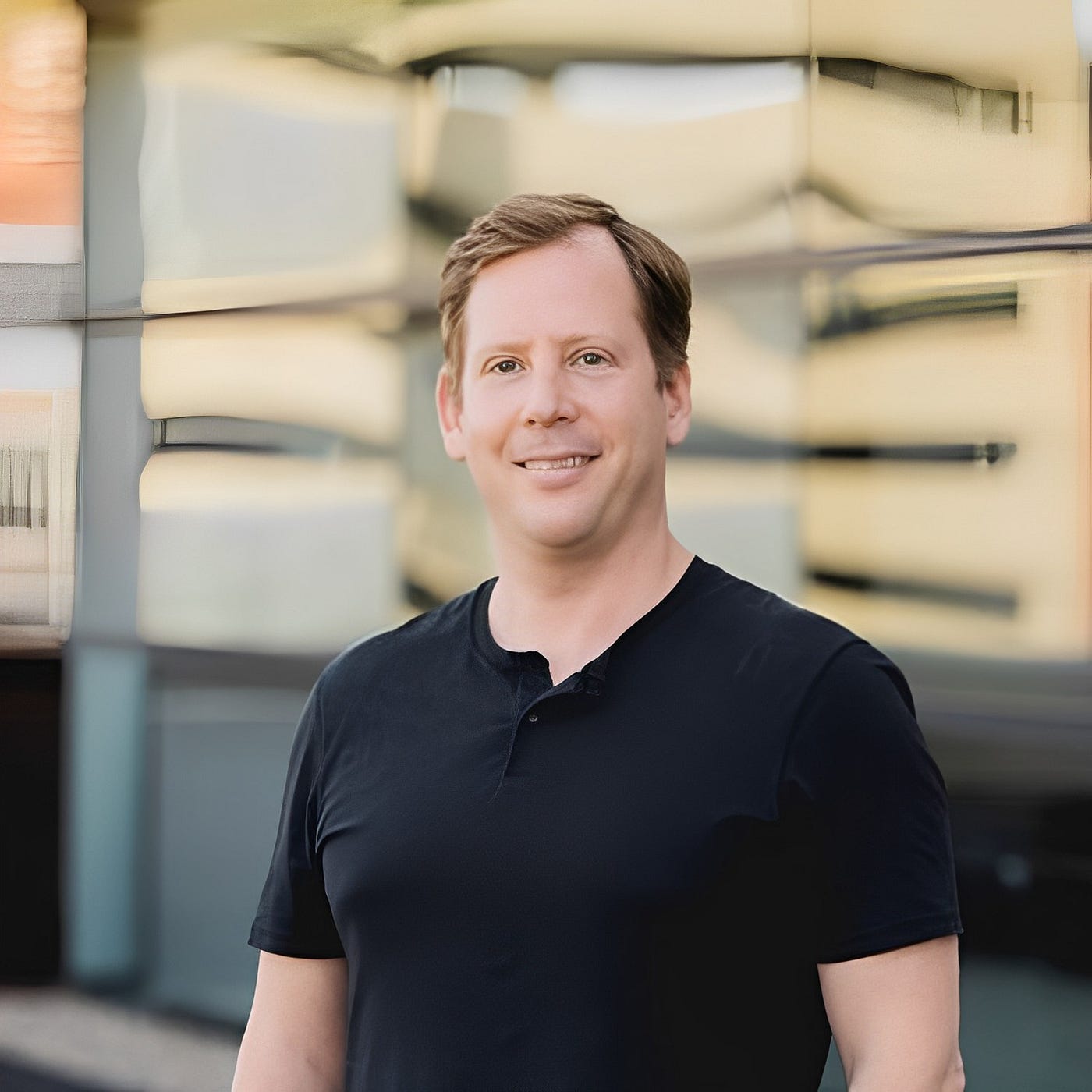
An effective communicator helps another person become a part of their story. By reading the moment and adapting to the situation they are in, a good communicator reveals their humanity and personality.
Business
Corey Rosen of Your Story Well Told: Why Effective Communication Means Inviting Others To Be Part Of Your Narrative Rather Than Merely Delivering Information
Storytelling coach and former Lucasfilm artist Corey Rosen explains how improvisation, empathy, and personal narrative can transform professional and personal communication.
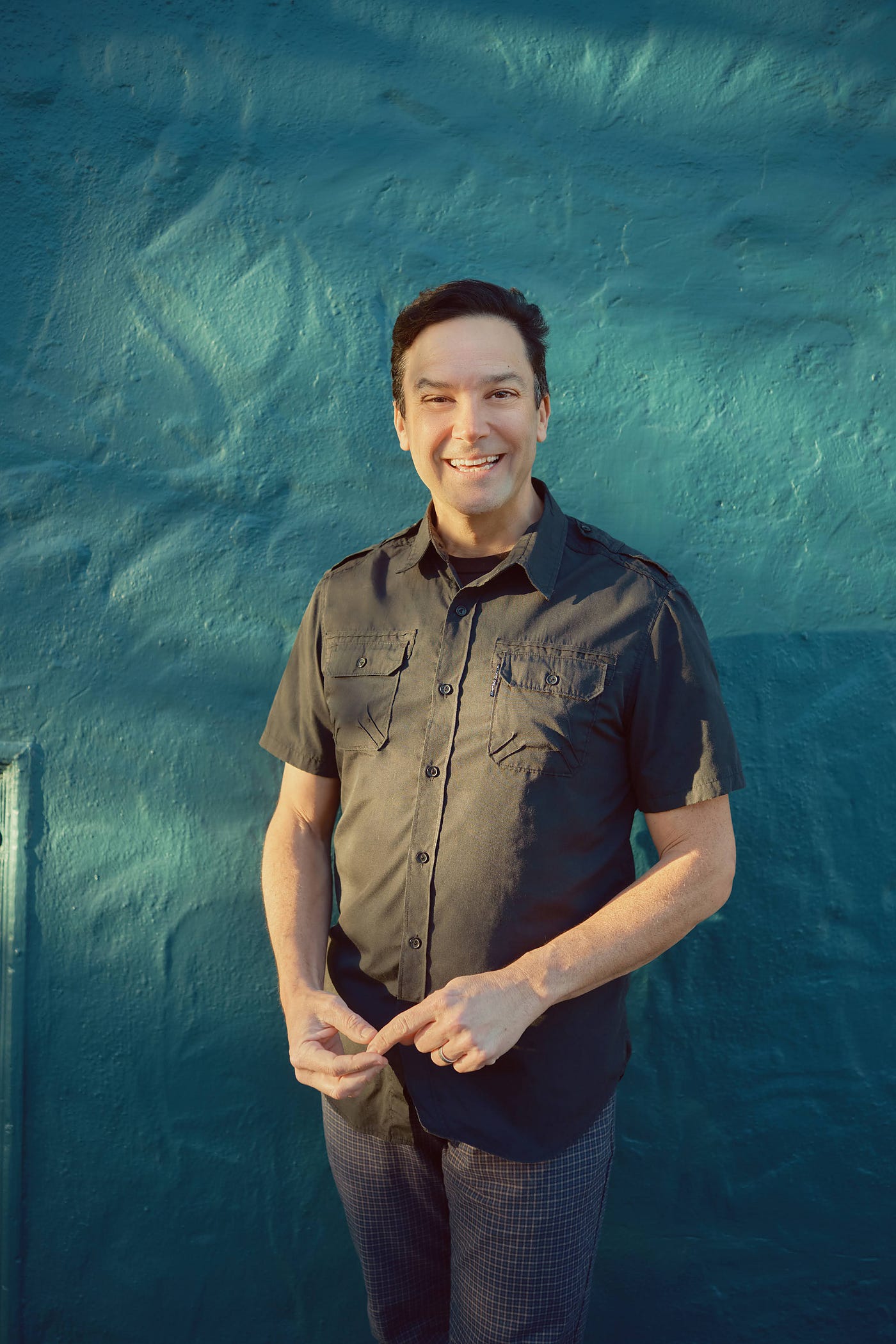
As a part of this series, we had the pleasure of interviewing Corey Rosen.
Corey Rosen is a storyteller, author, storytelling coach, and a host of The Moth. Through his company, Your Story Well Told, he helps individuals and organizations find and share stories that connect people. His work draws on a career spanning improvisational theater, live performance, and creative production, including his roles at BATS Improv, Industrial Light & Magic, and Super 78. Whether hosting a live storytelling event, coaching a speaker, or leading a workshop, Corey helps people recognise the value of their own experiences and communicate with greater confidence, clarity and humanity.
Thank you so much for joining us in this interview series! Before we dive into our discussion about communication, our readers would love to “get to know you” a bit better. Can you share with us the backstory about what brought you to your specific career path?
While studying film and television production in college near Chicago, I developed an interest in folk tales such as the work of Isaac Bashevis SInger. I later absorbed myself in comparative mythology through Joseph Campbell. At the same time, I was active in sketch comedy writing and improvisational theater, where I learned to appreciate the value of collaborative creativity — saying “yes, and” to the ideas and inventions of others. While working at Lucasfilm as a computer graphics artist and screenwriter, and moonlighting at BATS Improv, a local theater company, I started producing live theater shows that elevated individual voices — variety shows of stories, songs and sketches. All of this became the foundation for the work I now do — telling my own stories, and helping others tell theirs.
Can you share the most interesting story that happened to you since you started your career?
On a recent book tour stop in my hometown of Rochester, New York, I had planned to do an author event with my brother at a local JCC. The day before, I was speaking at the Borscht Belt Museum in the Catskill Mountains. On my way out of the Catskills, I bought a loaf of Raisin Pumpernickel bread — a local delicacy. The next morning, my brother’s dog devoured the bread — raisins and all. Since raisins are toxic to dogs and can cause acute kidney failure, my brother rushed his dog to the vet, leaving me without my conversation partner. Just as the event was about to begin, an audience member, herself an author, offered to step in. The event started with the story of what was happening NOW — the drama of the dog, and the unplanned nature of everything that was happening. Because of this, the energy in the room was charged. People were more engaged than most events I’ve done, telling stories or leading activities to help people tell theirs. It felt like a happening. An experience we were creating together. In the end, the talk was a huge hit. And the dog is doing great. The takeaway for us all is that we are surrounded by stories. We are living in a story right now.
You are a successful business leader. Which three character traits do you think were most instrumental to your success? Can you please share a story or example for each?
I feel that the traits of curiosity, adaptability, and generosity toward other people’s ideas have been most instrumental to my success. I was hired by two-time Oscar winner Phil Tippett to help grow his visual effects studio. At the time, his company had established itself as a niche player in the visual effects world, but the industry was consolidating around a few large companies that had more firepower and the ability to outsource their work to other countries to capitalize on tax incentives. As the owner of a private company, Phil didn’t want to chase tax incentives. He wanted to make movies. So instead of appealing to Hollywood studios, I leaned into what we were able to do well — make images! Tell stories! And there are lots of places that need this that are not in movie theaters. The one that clicked and took off (and opened a major new line of business) was theme parks! Teams creating immersive and experiential entertainment clicked with our company’s ability to visualize anything — realistic, fantastical, or whimsical content that could give the audience an emotional and sensory experience they couldn’t have on their phones or home TVs. Phil developed his approach in the 1970s with movies like “Star Wars” where, as he taught his team, producers and directors focused less on “what was wrong” than “what could make the shot better.” This became our guiding principle — good ideas could come from anywhere. Artists were encouraged to experiment, innovate, and suggest wild and crazy ideas. Those ideas are what made our films feel different. Unexpected. We became experts in large format films made for dome screens at parks around the world.
Ok, thank you for that. Let’s now jump to the primary focus of our interview. Let’s begin with a basic definition so that we are all on the same page. How would you define an “Effective Communicator?” What are the characteristics of an effective communicator?
An effective communicator helps another person become a part of their story. By reading the moment and adapting to the situation they are in, a good communicator reveals their humanity and personality. Here’s a recent example, involving my own family (and me).
My wife and daughter are on board a United Airlines plane, preparing to take off for our daughter’s college orientation in Eugene, Oregon. My wife is very nervous because I have not yet arrived at the airport. My day has been a mess of cancelled and rescheduled flights (originating in Knoxville, Tennessee). My flight into San Francisco (where we live) arrived 6 minutes before our flight to Oregon was due to take off.
I was almost certainly going to miss this flight.
But my wife was a bundle of anxiety. She explained the situation to the flight attendants, not just that we were taking our daughter to college but that she is our youngest child. She broke down in tears and they empathized with the situation, promising to do all they could to make sure I made the flight, since the gap was tight but not impossible.
Meanwhile, my flight came in only one gate away from the connecting flight. When I saw the door was still open I was relieved. I was going to make it! At the gate, the agents checked my ticket and then gave me an UPGRADE to first class — seat 1A! By the time I got on board, I was aware that the flight was held up so I hastily sat in my front row seat.
The flight attendants rushed over and stared at me. The person that my wife was waiting for, the center of the story that held up this flight. And one of them said, with derision in his voice, “you didn’t even WAVE to your wife?”
Oh no. She was waiting. She was STANDING UP awaiting me to get on board. And I just sat down. What a jerk!!
As soon as the flight took off, my wife (not me, in first class) was given a BOTTLE of wine, snacks, and a handwritten letter wishing my daughter (and all of us) well on our new adventure.
We are often in situations where we want (or need) something. In this case, some kindness, patience, and maybe a little empathy. As my wife shared our family’s situation with heart and feeling, the crew became a part of my her story, understanding what this flight meant to us, and their role in helping our family.
This used the traits that make the most effective communicators and communications successful: honesty, vulnerability, relatability, specificity… the tools of a storyteller. When we tell a good story, we include others in it. They were part of her story. And we all got to enjoy the outcome. Even me, from seat 1A.
How can one tailor their communication style to different audiences or situations?
I often notice when someone is reading or “performing” a memorized or pre-planned response or speech/story. They may hit all the words and “notes” they intended, but often miss the mark because they are NOT tailoring their communication to the moment they are in. My suggestion is to plan the “beats” of what you want to say, but to let the words come out in a natural (human) way. This might mean you are a little flawed or imperfect. I generally prefer this to having a script recited to me. Hearing a read-aloud speech might hit the data points, but it (often) omits the emotion and other “intangible” aspects that make a good presentation or speech memorable.
We are in the room too. So be in the room with us. Notice our energy. Are we tuned in or out? Hungry? Distracted? Skeptical? Engaged? Energetic? These are cues for how to engage.
Can you provide an example of a time when you had to adapt your communication style to reach a particular audience successfully?
I was doing a workshop at an ad agency one afternoon. The conference room was lovely. Light streamed in through the venetian blinds as I connected my laptop to their screen in preparation to showcase my visuals. The first few people came in and sat down with long faces. Something was wrong. I asked. One of their colleagues had died the night before. It was a shock. They considered cancelling the class — it felt wrong to meet while experiencing this sudden and shocking news.
Rather than doing anything I had prepared, I pivoted. I asked them if they wanted to share memories instead of what I had planned. They looked relieved. We sat down and told stories about that person. They shared anecdotes of their friend’s life, and their time together. By the end of the hour, I think I actually learned the things I was planning to teach them… about active listening and emotional authenticity… through the situation that presented itself.
Be present and open to what shows up and your communication will be more authentic.
How do you handle difficult or sensitive conversations while maintaining open and effective communication?
I try to avoid blindsiding people when we need to discuss difficult or sensitive topics. For a large presentation this could take the form of a “content note,” letting people mentally or emotionally prepare themselves for potentially upsetting or emotionally volatile content.
For something more personal, like a one-on-one employee review, I’m personally against the “sandwich” method of putting constructive criticism between two positive or complimentary statements. Roger Schwarz, writing in the Harvard Business Review, says that this approach is actually used more to calm the anxiety of the feedback giver, rather than the receiver. I would prefer to just get constructive criticism, not the sandwich.
I suggest an “active listening” approach to difficult conversations. I try to do this by restating what I think I heard and asking them to validate or correct my understanding. Discuss each person’s perspective of “what happened” or what is happening before you decide how to move forward. This includes the person in the process as a conversation.
In your experience, how does storytelling play a role in impactful speaking? Why do you think stories are effective in communication?
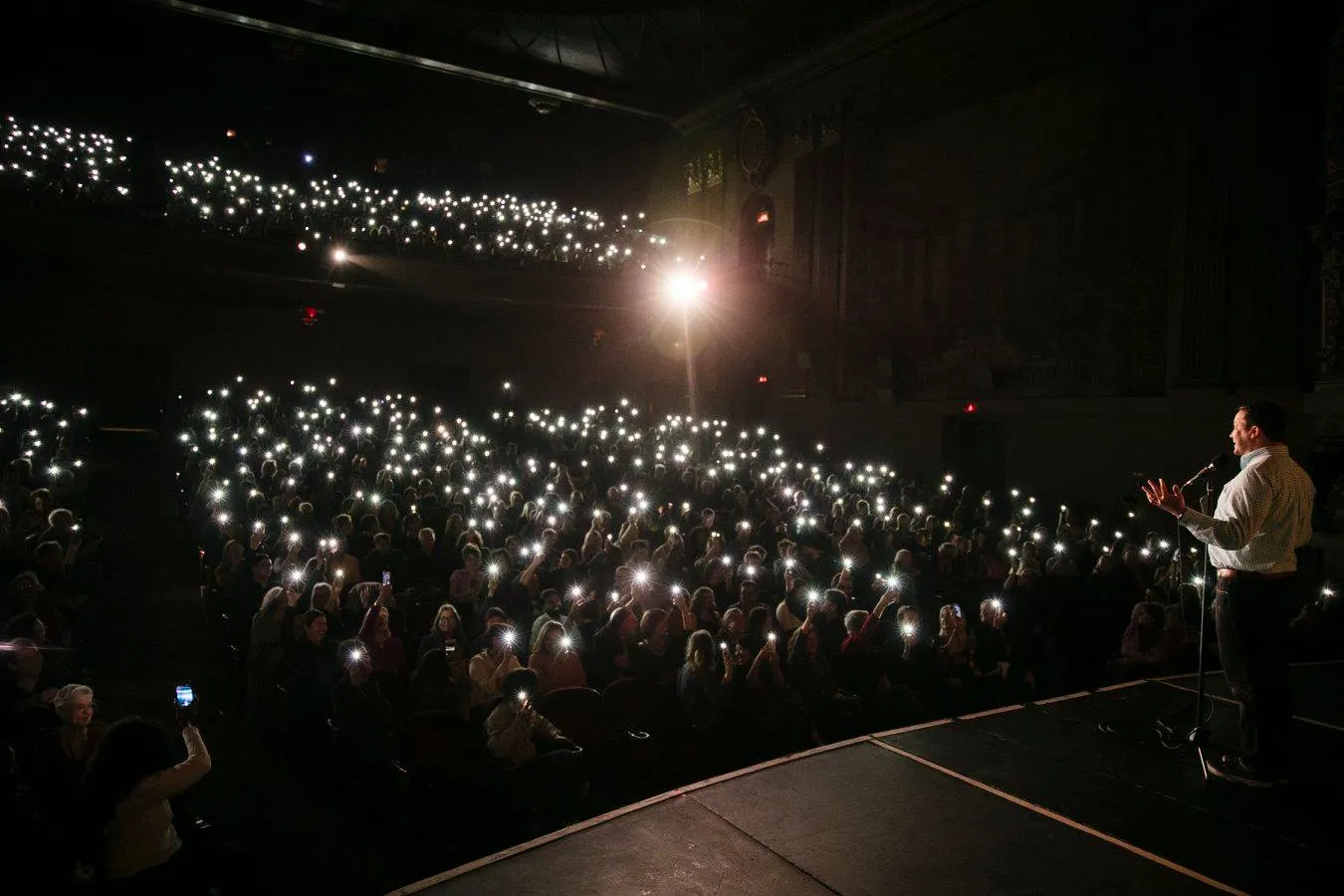
I was just a presenter at a Themed Entertainment Association conference in New Orleans. The two-day program was filled with 20–30 minute presentations from thought leaders and creative minds behind the most successful parks and brands in the world. Almost every one of them started and punctuated their presentations with personal stories and “case studies” of actual situations that happened. It’s much easier to remember a story than a bunch of data points. A story gives us a reason to care about the information. I was talking about an “adventure” I had on a trip to Vietnam with a taxi driver. When I asked him to take me someplace “normal” — meaning not a tourist restaurant, he took me to his own house where I met his family and neighbors. The number of people who came up to me after my talk asking questions about the taxi driver reinforced my belief that storytelling is the most effective way to bridge the gap between two (or more) people. If the shortest distance between two points is a straight line, the shortest distance between two people is a good story.
Here is the main question of our interview. What are your “5 Essential Techniques for Becoming an Effective Communicator”? If you can, please share a story or an example for each.
- Listen before deciding what to say.
What you are planning to say is just the beginning. When you walk into the room, take a moment to understand the mood, the vibe, and the mindset of who you are among and where they are. The more attuned you are to the space you’re in, the better your story or presentation will land. When I was presenting at the ad agency that had just experienced a loss of a colleague, allowing them space to reflect on their friend built trust and connection in a way I never could have with my prepared slides alone.
2. Be specific about why something matters.
We do not live in your head. Use clear, specific imagery and emotions to articulate to your listener not just what happened but how it felt and why it mattered. This will align your message with the meaning they will take away. When my wife shared her emotional experience, dropping her youngest child off at college orientation, she made a personal connection with the flight crew that helped in delaying the flight long enough for me to make the trip.
3. Prepare the “beats” (the spine of your story) and stay open to the moment.
Sometimes the room you walk into is exactly what you imagined it would be. Sometimes it isn’t. Meet the moment where it is and be flexible with how you communicate (while retaining the core message of what you want to say). Your message may come off even more powerfully when it feels authentically rooted in the present moment. This happened with my book event that had to pivot when my brother’s dog had to be rushed to the vet. Sharing the real-time experience with my audience put them into the story, making it memorable for all of us.
4. Build on other people’s ideas.
Great leaders are great listeners. Listen to others and give credit when you use or quote other people’s ideas and contributions. When others feel they are being included in the conversation, they are more willing to speak up and share their ideas. You never know where a great idea might come from. Solicit ideas and then explore them, try them, and build on them. This is the fundamental rule of “yes, and.” This is what Phil Tippett did when he was collaborating with other artists to make each “shot” in the movie as good as it could be.
5. Make room for others to participate.
Not everyone feels safe and comfortable sharing ideas out loud in front of their peers (or strangers). Offer different formats for group conversations including paired mini conversations, written reflections, and group share-backs for increased participation and involvement. I also try to catch myself monologuing and ask myself “W.A.I.T” (WHY AM I TALKING?) and “W.A.I.S.T.” (WHY AM I STILL TALKING?) Brevity can be your friend.
How do you integrate non-verbal cues into your communication? Can you provide an example of its importance?
The term “safe spaces” is used in many contexts. I believe people are more collaborative and authentic when they feel accepted and included. Making a conscious effort to make others in your company, team, community, or audience feel seen and included is the best way I know to welcome all voices to the conversation. Eye contact, respecting boundaries, and allowing there to be silence are ways I have made others feel seen and included. When the quietest people start speaking up, I feel I’ve succeeded in making the room welcoming.
How has digital communication changed the way you convey your messages? Are there any specific challenges or advantages you’ve encountered?
I think digital formats like Zoom meetings are opportunities to practice being better listeners and communicators. We all know that people are distracted and often have more than one window open during a meeting. This is a metaphor for what happens when you are talking to a person face to face. Their attention may be divided too. Many people are waiting their turn to talk and only half listening. The way to cut through clutter and distraction is through storytelling. And through brevity. Avoid monologues. Be engaged and engaging and your meetings can be more effective.
Public speaking is a common fear. What techniques or strategies do you recommend to manage and overcome stage fright?
Preparation: I suggest speaking your ideas out loud before writing them down. Writing feels “permanent” (even when you can edit it). Speaking feels natural and casual. Thinking ideas out loud allows you to make mistakes and capture what you are really trying to say. Once you have it, I always suggest writing the “beats” rather than the entire “speech” or presentation. Or even if you want to write it down, do that and then “distill it” back into an outline so you leave room for being in the moment.
Before Speaking: I try to be present with the people I will be speaking to before any kind of talk or performance. I don’t hide in a green room and practice. I talk to other people and “read the room” to see what the mood is as it will affect how connected I feel when it is my turn to talk. I want to be among them not apart from them so that my message lands closer to home.
During the Talk: Slow down. I often think I’m talking too slow. I’m usually talking too fast. Speak to people. Look at them while you are talking. I get energy by finding people that are listening, nodding their head, engaged. Speak to those who get you. They will give you energy.
What additional resources do you recommend for individuals looking to improve communication skills?
My books (Your Story Well Told and A Story for Everything) are filled with stories and activities you can apply immediately to understand storytelling and apply it in your life, school, and work.
I think every living human should take an improv class (or series). Improv is a mindset. It’s not just for comedians and actors. It’s a practice that helps people listen, respond, adapt, and tell better stories.
And live storytelling events like The Moth are great places to both be entertained by stories but also to study what holds your attention, what details stay with you, and how a good storyteller can hold a room.
You are a person of great influence. If you could start a movement that would bring the most amount of good to the most amount of people, what would that be? You never know what your idea can trigger. :-)
I believe that stories connect us in powerful ways. In a disconnected world, stories are the best way I know to build bridges to understanding and clear communication. Ask someone whose life situation is different from yours about their stories. Listen with curiosity and ask follow up questions.
How can our readers further follow you online?
www.YourStoryWellTold.com and my instagram (www.instagram.com/storyrosen) are the best places to find information, resources, and to get in contact with me.
Thank you for the time you spent sharing these fantastic insights. We wish you only continued success in your great work!
About The Interviewer: Tavares Beverly is the Founder and CEO of Beverly Boy Productions, a national video production company that has helped organizations tell their stories through video for more than two decades. Over the course of his career, he has worked with everyone from Fortune 500 executives and healthcare professionals to politicians, nonprofit leaders, educators, and artists, gaining a unique perspective on the role communication plays in leadership, business, and human connection. A frequent contributor on topics including communication, entrepreneurship, leadership, and personal development, Tavares believes that the ability to communicate effectively is one of the most valuable skills a person can develop. His work is driven by a passion for helping organizations connect with their audiences and helping individuals unlock their potential through mentorship, perseverance, and meaningful relationships. To learn more, connect with Tavares on LinkedIn or visit www.BeverlyBoy.com . If you’re interested in using the power of storytelling and communication to grow your organization, strengthen your brand, or inspire your audience, he welcomes the opportunity to connect.
MM
Written by
Martita Mestey
Writer & ContributorContributor at Authority Magazine covering leadership, innovation, and industry insights.

Published inAuthority MagazineTop Lessons, Top Authorities · 42K Followers
Exclusive, curated interviews with the leaders and changemakers shaping tomorrow. Leadership lessons, industry deep dives, and executive profiles.