In project management, and for most of my working life, my goal was always to be more productive, to do more, to tick more tasks off my list and end the day feeling satisfied.
Please see the samples here
Career development is the ongoing process of choosing, improving, developing, and advancing your career. This involves learning, making decisions, collaboration with others and knowing yourself well enough to be able to continually assess your strengths and weaknesses. This can be challenging enough when you work in an office, but what if you work remotely? How does remote work affect your career development? How do you nurture and advance your career when you are working from home and away from other colleagues? How can you help your employees do this? To address these questions, we started an interview series called “How To Advance and Enhance Your Career When You Are Working Remotely”. As a part of this interview series, I had the pleasure of interviewing Elizabeth Harrin.
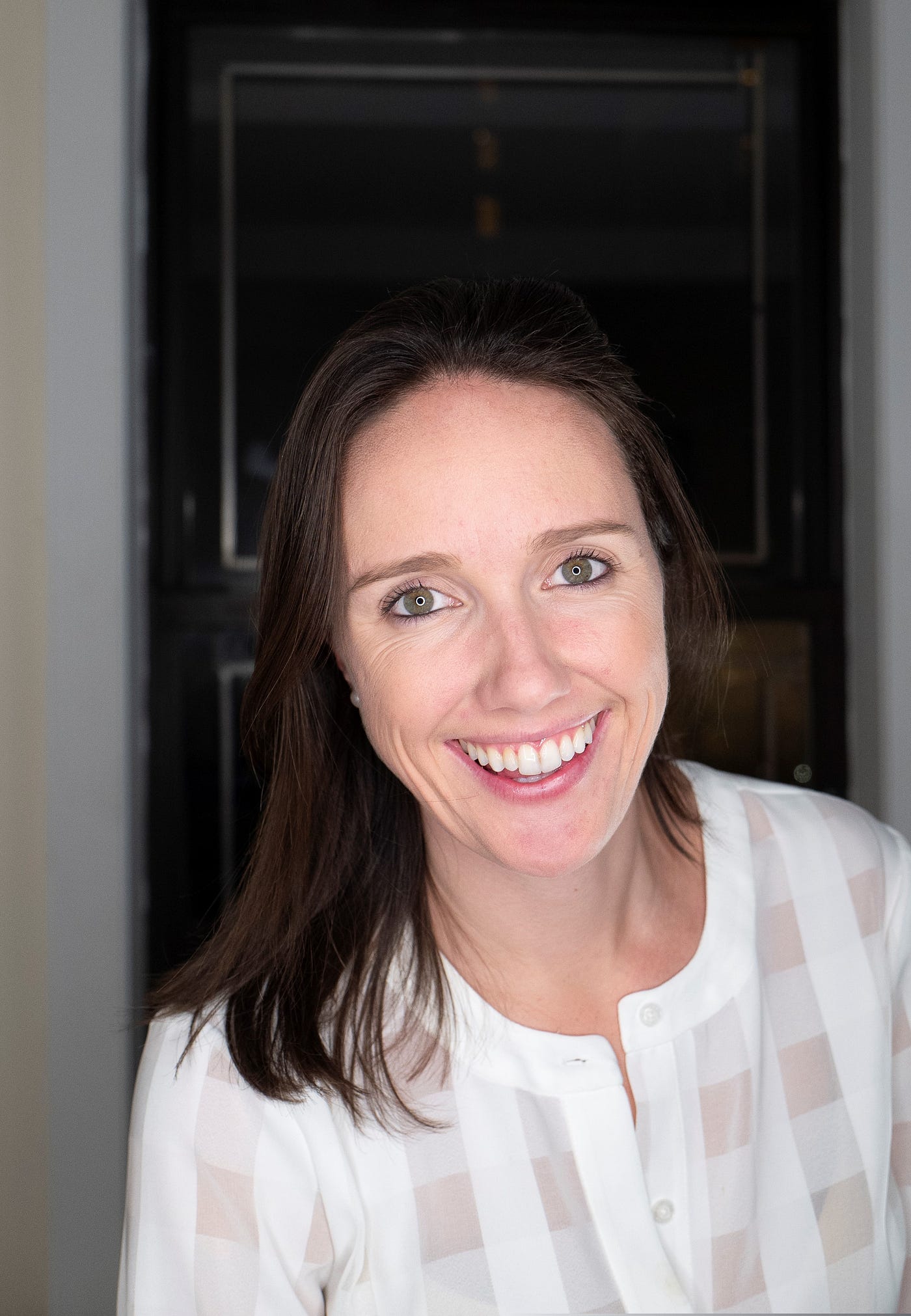
Elizabeth Harrin is the founder of Project Management Rebels, a community for people managing projects at work. Elizabeth is a Fellow of the Association for Project Management and the author of several business books. She frequently speaks at conferences online and in-person, and also mentors mid-career professionals to support them in getting their work done with more confidence and less stress.
Thank you so much for doing this with us! Before we dig in, our readers would love to get to know you a bit better. What is your "backstory"?
I didn’t know what I wanted to do after my English and Linguistics degree, so I took a job with a graduate trainee scheme to see what life was like in a big company. I got a placement in a department that delivered projects and it was like I had found my corporate home: project management was a job where I could work with others, write lists, tick off tasks as complete and put my communication skills to use and do something that resulted in tangible change. I’m lucky that I discovered it so early in my career; many people fall into project management later in life or move into a project role as a sideways career move. Not so for me, I’ve been doing this for over 20 years. Along the way I have led small projects, big projects, worked overseas, lost sleep over deadlines and celebrated successes with my team. You really do get to see all the different sides to a business when you help it deliver change.
Can you share the most interesting story that happened to you since you started your career?
I had some interesting moments when I worked in Paris. While I supported mostly English-language teams so I did most of my work in English, the office environment was French-speaking and I’m sure my colleagues found my French language skills amusing. I remember walking back to the office with my team after we’d been out for a fancy lunch and my boss asking me if I knew why we had been out. I had to confess that I didn’t know what the occasion was and he told me we had been celebrating him being promoted. Oops. By the end of my time there I did get better at following conversations in French! I’d recommend a period of working abroad to anyone – it really helps you see the world in a different way.
Can you share a story about the funniest mistake you made when you were first starting? Can you tell us what lesson you learned from that?
I was managing a small project when I first started out and the job was to insource the admin for an insurance product. Everything went smoothly and I was feeling very pleased with myself… until I got a phone call on switch-over day from the post room manager. She had been inundated with bags of post that had been redirected from the old firm that used to handle the admin. Of course, now we had insourced the admin, all the post was coming to us. Except I had forgot to inform her of that, and she didn’t have enough staff to open all the letters.
It wasn’t funny at the time, but I learned a valuable lesson about making sure you know who is going to be affected by any changes you implement at work because the people you overlook might have something to say about it! I remember feeling terrible, but she was very nice about it.
Can you please give us your favorite "Life Lesson Quote"? Can you share how that was relevant to you in your life?
On the wall in my office I have a print out of a quote from Francine Jay: “My goal is no longer to get more done but rather to have less to do.” In project management, and for most of my working life, my goal was always to be more productive, to do more, to tick more tasks off my list and end the day feeling satisfied. I counted progress as something that could be measured in the number of tasks completed and I wasn’t really paying attention to whether they were the right tasks. Today, I try to make sure I’m focusing on the right tasks. I think that’s even more important when you work remotely as it’s too easy to get distracted by non-work tasks (like emptying the washing machine) or work that is fun to do (like making tweaks to my website) but that doesn’t actually move me closer to my big goals.
What advice would you give to other business leaders to help their employees thrive and avoid burnout?
I see the impact of burnout and not thriving regularly in the people I mentor. Too many organizations don’t pay attention to creating the environment for success. I see large companies trying to manage multi-million dollar projects on spreadsheets because they want to avoid the licencing charge for software that would be 10 times more effective and costs hardly anything in relation to the overall budget. I see companies who don’t prioritize work so no one knows what’s the most important initiative to focus on at any one time.
My advice would be that employees thrive when there’s just enough structure to help them do their best work, and there is an acknowledgement that while things change – as they frequently do in business – that changes have a knock-on effect. You can’t simply change the dates that something is due to be completed by without taking into consideration the impact on other work. Otherwise people just end up working longer hours with no sense that anyone understands or appreciates their work and that’s when you risk team members getting dissatisfied and burned out.
Ok, let’s jump to the core of our interview. Working remotely can be very different than working with a team that is in front of you. This provides great opportunities but it can also create unique challenges. To begin, can you articulate for our readers a few of the main benefits and opportunities of working remotely?
I’ve worked remotely now in some capacity for many years and more recently have switched to fully remote. There are lots of benefits, not least being able to build the perfect team with the right skill set and not being limited to only those potential employees in the local area who can make it into the office to be with you. For example, we’ve just recruited a full-time member of staff based in Portugal. She’s got just the right mix of skills and certifications and if I had to recruit only from my local area she’d never have come on to my radar.
I also like the flexibility and being able to manage my work/life balance more easily. I remember one school sports day where I couldn’t stay until the end as I had to catch a train to the city. My dad stayed to watch my child because I couldn’t, and that’s sad. At least, it was sad for me, I don’t think my son minded that his grandfather was there and I wasn’t, but it highlighted for me that in-office working is often a lot less flexible than remote simply because of the commute time. My employer at the time was very flexible, but if you have a meeting you need to be in for, you need to be in. Remote working still requires you to be available at certain times but it feels more flexible because there isn’t that commute.
Can you articulate for our readers what the five main challenges are regarding working remotely?
I think the main challenges for me are:
Camera fatigue: having to look at that small spot on the computer for several hours a day.
Needing to take breaks: I’m rubbish at taking adequate breaks away from my desk.
Not switching off: there’s always the temptation to keep working as it’s just there.
Distractions: why is there always washing to do?
Tech issues: even after all this time using it daily, tech is a challenge.
It’s possible to avoid those, when I think about it, but often the day runs away with me and I’m not as good at dealing with them as I would like.
Based on your experience, what can one do to address or redress each of those challenges? Can you give a story or example for each?
I think it’s important that we maintain eye contact on calls, especially when I’m delivering training or mentoring someone, or even just going live on social media. That means looking straight into the camera. Unfortunately, online eye contact only goes one-way: you can’t be looking into the camera and seeing the other person looking at you at the same time. I think I’ve got used to it now but it is odd to focus on a tiny dot instead of the screen and after a day of online calls it’s hard to stay focused on the lens.
I tend to take breaks when my body aches, which is bad – don’t do that! I work in a converted shed in my garden which is not big so there isn’t much space for walking around: that’s one of the things I miss most about going into the office. I was always having to get up and move around then, to see people, to get a drink, to collect my printing or to go to a meeting room. In the shed it’s just me and my desk, and I have to step around boxes of stationery to get to the door. I do need to eat regularly though, so I normally end up having breaks when I’m hungry.
I am also pretty bad at switching off, and talking to other small business owners and senior managers it’s a common problem – there’s always more to do. Plus, I love my work, so why wouldn’t I want to keep doing it? I have a rule about not working after 8pm, but I do always check the day’s performance statistics and read through last minute emails at bedtime. As I have clients around the world, someone is always awake to send messages!
The biggest challenge for me is being distracted with things in the house. There is always washing to do, or a parcel being delivered, or something to clean up. I didn’t think this was a big drain on my time until I spent a day at a local coworking office and realized with literally nothing to distract me I got a lot more done! I also book myself into an Airbnb twice a year as a strategy retreat, and those are always really productive weekends.
Despite working remotely and using tech like Zoom daily for a couple of years now, there is always the risk that something goes wrong. On one training session not that long ago, I lost my second screen display and everything froze. I couldn’t see any of the Zoom controls and while they could see me and my slides, I was flying blind. I completed the meeting but at the end I couldn’t access the Zoom controls to stop the meeting and all I could do was switch my laptop off. Since then I’ve tried to have a second device on standby so I could log in to get control in a different way if I needed to.
Let’s talk about Career Development. Can you share a few ideas about how you can nurture and advance your career when you are working from home and away from other colleagues?
This is much harder when you are remote – I think we can all agree that when you are not working together we have to put more time into consciously recognizing the work of our employees and also making sure people are aware of our successes. One thing to consider is making sure those regular one-to-one meetings are booked. They tend to slip out of the diary when you are no longer face-to-face. Make sure any task management or reporting software is updated regularly so managers can visibly see your progress. And don’t be afraid to talk about what you’ve done! If you don’t have a #win channel in your chat tool, perhaps it’s time to start one so people can share their successes, big and small.
Can you share a few ideas about how employers or managers can help their team with career development?
Making time for professional development is the main thing I would suggest. In a project-led environment, things are often so busy that anything that isn’t doing the day job gets pushed to the back of the queue. Project managers are often the kind of people who want to do the most perfect job and just keep going until it’s done, which is great, but it means their personal career goals can get overlooked because of the pressures they put on themselves, and the pressures put on them by the organization to deliver. One company I work with offers all permanent employees a monthly mental health day – you could do something similar with ringfencing time for professional development activities.
You are a person of great influence. If you could inspire a movement that would bring the most amount of good to the most amount of people, what would that be? You never know what your idea can trigger. :-)
I think clear, kind, communication would make so many interactions better, at work and at home. I hate watching TV programs or movies where a plot point revolves around a misunderstanding because someone didn’t articulate what they wanted or words were misunderstood, so I’d encourage people to talk openly and honestly and to listen in the same vein.
How can our readers further follow your work online?
You can find out more about me and my work at elizabeth-harrin.com, follow me on Instagram, or read my project management blog.
Thank you for these great insights! We wish you continued success
About The Interviewer: David Liu is the founder and CEO of Deltapath, an award-winning unified communications company that liberates organizations from the barriers of effective communication. Liu is known for his visionary leadership, organic growth strategies, and future-forward technology. Liu is highly committed to achieving a greater purpose with technology. Liu’s business insights are regularly featured in Forbes, Entrepreneur Magazine, Tech Crunch, and more.