When I started my business from my bedroom, I was working from home and it was just me and a few contractors. In the early days, I had a toll-free phone number and I put on a whole bunch of different accents and pretended like there was a lot of people working at my company.
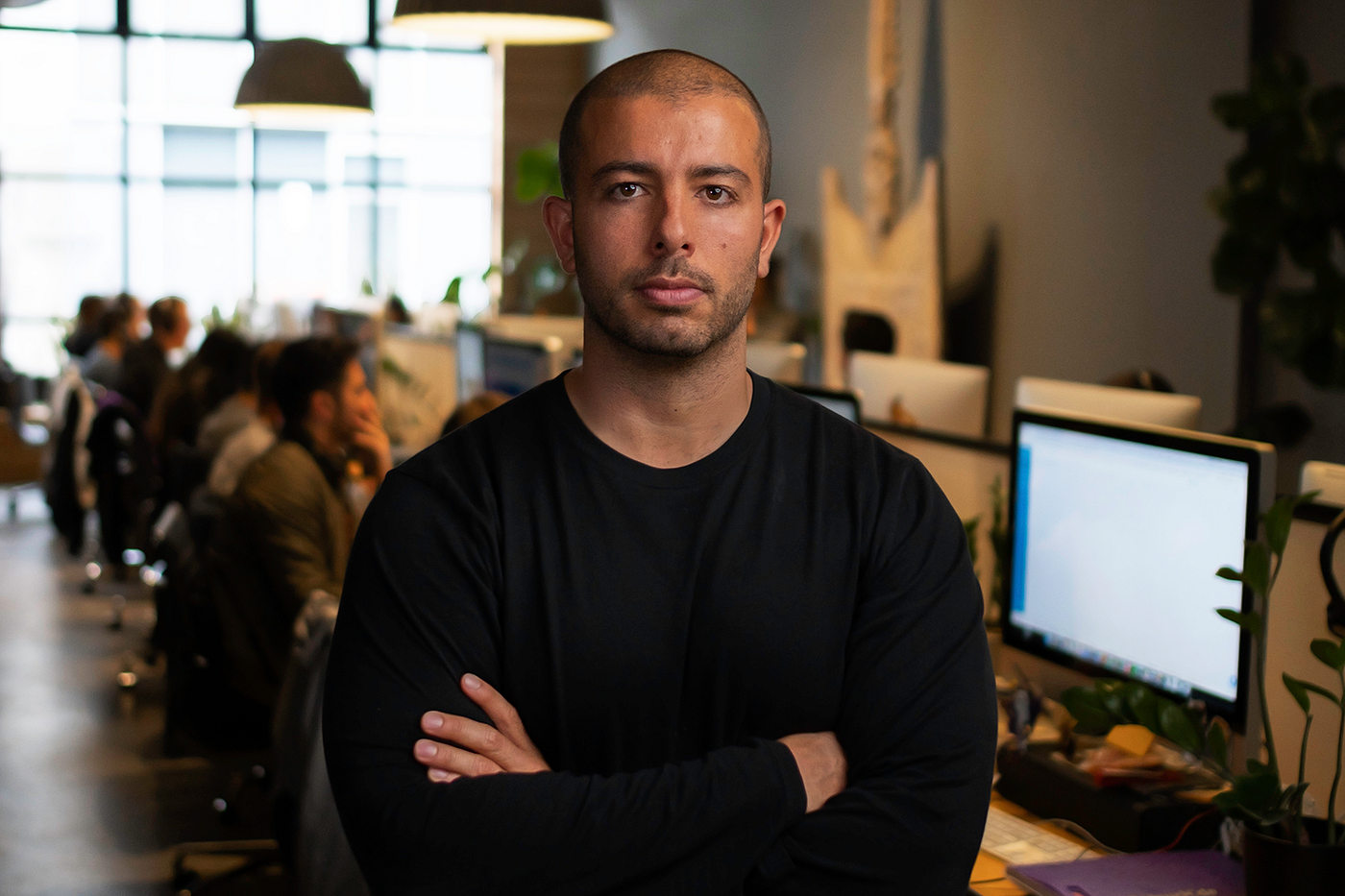
As part of our series about how to become known as a thought leader in your industry, I had the pleasure of interviewing Sabri Suby is a serial entrepreneur who runs one of Australia’s fastest-growing digital marketing agencies. Having originally founded King Kong in 2014 from his bedroom, Sabri has bootstrapped the company since day one and in under five years has successfully built a team of 61 specialists now achieving $20million+ in total revenue (year to date). As a pioneer in the digital marketing arena, his business has impacted 250,000 businesses in 42 different countries and has generated in excess of $1.33 billion in sales for him and his clients. Sabri launched his first book ‘Sell Like Crazy’ — the ultimate guide to marketing — in January 2019, quickly becoming an international bestseller.
Thank you so much for doing this with us! Our readers would love to “get to know you” a bit better. Can you share your “backstory” with us?
Igot my start in sales when I was 16 years old. I sold in many ways: face to face, one to many, door to door, over the telephone. At the start I really, really sucked, but I’ve been really dedicated to it. I eventually mastered it, and that was my first foray into the business world. I started my first business when I was 21 and since then I’ve sold a business, run a business into the ground and had a few successes along the way.
I’ve always been obsessed with getting new customers. In all those businesses, and even when I was selling, it was always about the challenge of getting new clients. That’s been the focus point of my career and led me to founding King Kong and being in the position that I am today.
King Kong is now Australia’s fastest-growing digital marketing agency and uses true ROI to measure success. Our Melbourne base helps clients across Australia and overseas with services including SEO, CRO, PPC, Facebook Advertising, web design, and landing pages.
Can you briefly share with our readers why you are an authority about the topic of thought leadership?
I’ve essentially built thought leadership into my business model by providing value through content. King Kong’s free reports, webinars, and video training have influenced more than 250,000 businesses in 216 different countries.
In under five years, King Kong has achieved $20million+ in total revenue (year to date) and has generated in excess of $1.33 billion in sales for my clients. On top of all that, my latest book — Sell Like Crazy — is now an international bestseller.
But despite this, I would never call myself a thought leader. For me, the term thought leader in itself doesn’t really mean much. I’m against people crowning themselves as a ‘thought leader’ without any real business to back it up. I run King Kong while simultaneously sharing valuable, cutting edge content that’s informed by my day-to-day work.
Can you share the most interesting story that happened to you since you started your career?
When I started my business from my bedroom, I was working from home and it was just me and a few contractors. In the early days, I had a toll-free phone number and I put on a whole bunch of different accents and pretended like there was a lot of people working at my company.
I pitched a big website project for $30,000, which was life-changing money to me at the time. I sent them out a proposal, they were all good to go and it got down to the final day and he was like: “Yeah, excellent stuff. We’re all ready to go ahead. This all sounds fantastic, everything looks really impressive. I’d love to just come down to your office now. Just shake your hand and look you in the eye before we get this deal done.”
I was at home, I had no office, and I had to come up with some nonsense answer because I couldn’t exactly say: “Hey I’m just working from my bedroom right now.” He would have turned around and said: “Well, who are all those other people that I spoke to?”
Can you share a story about the funniest mistake you made when you were first starting? Can you tell us what lesson you learned from that?
It would be the one I just mentioned because I actually lost the deal as a result of that. It was a slap in the face and a wake-up call, and I started asking myself: “What are you doing here? Are you just going to keep working out of your bedroom, or are you going to build something that’s a lot bigger than yourself?” And that was the pivotal moment that made me ask that question, pony up and get an office and really starts to build a proper business.
Ok, thank you for that. Let’s now jump to the main focus of our interview. In a nutshell, how would you define what a ‘Thought Leader’ is. How is a thought leader different than a typical leader? How is a thought leader different than an influencer?
To me, a thought leader is someone who provides value without asking them to buy. It’s about being out in the public eye, putting out your views, your opinions and helping people solve problems. They need to be people of influence — people who have been able to go out there and provide value to their marketplace.
I take the term ‘influencer’ with a grain of salt. You don’t need to be extremely knowledgeable to be an influencer: you could just be a very attractive model, for instance, and be considered an influencer. On the other hand, a true thought leader is someone who’s put a lot of thought, time and energy into becoming an expert in their chosen field.
Can you talk to our readers a bit about the benefits of becoming a thought leader. Why do you think it is worthwhile to invest resources and energy into this?
If all you do is blatantly sell your product and service, people block that out. It’s never been a harder time to get your first customer than it is right now because everyone is incredibly skeptical. The way you erode that skepticism is by investing time and energy in creating content, in creating value that you can put out there to start up a dialogue.
Let’s talk about business opportunities specifically. Can you share a few examples of how thought leadership can help a business grow or create lucrative opportunities?
These days people are doing way more research before they’re ready to buy. The companies who are investing in answering those ‘research phase’ questions are able to control the whole dialogue. The ones who are only focused on pure sales tactics and screaming about their offers won’t get a look in.
A spill on effect is that people start requesting interviews for podcasts, on stage, and on their YouTube channels. There are a lot of those second-order consequences that come about as a result of providing value. But even in terms of direct revenue, there’s a huge upside.
Ok. Now that we have that behind us, we’d love to hear your thoughts about how to eventually become a thought leader. Can you share 5 strategies that a person should implement to become known as a thought leader in their industry. Please tell us a story or example (ideally from your own experience) for each.
Content is king
The central pillar of being a thought leader is putting out content. But in order to fuel your content, you need to be able to spend enough time being inspired by your actual career. Finding that balance between doing your job and making content about your job is the real challenge.
Document, don’t create
The way that I have solved the content challenge is by documenting content instead of creating content. I document what I do every day in my meetings with my team, and turn that into meaningful content.
Split the same content across various channels
We then take that content, film it and turn it into an article. We put that article on LinkedIn, turn a video, put it on Instagram and YouTube. We basically take a core piece of content, chop it up and use it in five different ways.
Adapt for the platform
It’s essential to adapt your content to the platform. Use 60-second videos for Instagram, then more long-form content on YouTube and Instagram TV. Then take that piece of content and get it transcribed — we use a website called Rev.com — and turn that into an article.
Don’t let it become a time vampire
In order to grow your thought leadership status alongside your actual job, it’s important not to let your content turn into a time vampire. If you’re running a business with lots of employees, becoming a thought leader can easily turn into a full-time job. If you can document what you’re doing and turn that into several pieces of content, you have a better chance of keeping the vampires at bay.
In your opinion, who is an example of someone who has that has done a fantastic job as a thought leader? Which specific things have impressed you about that person? What lessons can we learn from this person’s approach.
Seth Godin. He’s got the most well-known marketing blog in the world, and the thing that he’s done well is consistency. He’s been at it for so long, consistently putting out content and remaining in front of mind.
I have seen some discussion that the term “thought leader” is trite, overused, and should be avoided. What is your feeling about this?
There are so many gurus out there in every corner of the internet claiming that they’re an expert at something. They might have done the thing that they’re talking about, but they did it 20 years ago when the climate was completely different.
I’m always looking for people who actually walk the talk, who actually have a real business — they’re not selling courses about selling courses. That’s the thing that I look at the most before I consume any information from any thought leader or from any author: Have they built the business that they’re telling other people to build?
We’re in a day and age where everybody has a voice, everybody has a LinkedIn account, everybody has a YouTube account, and you need to be very careful where you get your information from. You need to dig into the thought leader’s background to find out whether or not they’re even credible to talk about the topic they’re ‘leading’.
What advice would you give to other leaders to thrive and avoid burnout?
It really comes down to having your own personal renewal ritual, whatever that may be for you. For me, it’s having a workout and a sauna. For other people, it might belong nature walks or hanging out with their dog or meditating or doing some pranayama breathing exercises. The only thing that you need to do is carve out that time into your routine.
You are a person of enormous influence. If you could inspire a movement that would bring the most amount of good to the most amount of people, what would that be? You never know what your idea can trigger. :-)
Solving the number one problem that businesses face, ‘how do I get new customers?’, is quite a deep and meaningful endeavor for me. There isn’t really any other vehicle in the world like business to be a catalyst for change.
If you want to make a change in the world, you are going to need resources. When you change somebody’s business, it has a ripple effect. You could give back to a charity or a church or a cause, and you have the resources to actually make a change. I believe business is the best vehicle to do that. Wealthy people get a bad rap, but the wealthiest people in the world are the biggest philanthropists.
Can you please give us your favorite “Life Lesson Quote”? Can you share how that was relevant to you in your life?
“Successful people do all the things that unsuccessful people aren’t willing to do.” Everyone always wants a shortcut or a little hack or the quick and immediate solution to their pressing problem, but no one ever really wants to do the hard things.
When I made the decision to roll up my sleeves and make 150 cold calls a day to grow my business, I started to see a lot of success. Whenever I look at any activity, I never look for the easiest option, because that’s generally the wrong option. Every influential person has done something that nobody else wants to do.
We are blessed that very prominent leaders in business and entertainment read this column. Is there a person in the world with whom you would like to have a lunch or breakfast with? He or she might just see this, especially if we tag them. :-)
Elon Musk. What an outrageous thinker that guy is! He’s vibrating on a completely different frequency to most people, and he’s a polymath. He applies marketing, engineering… so many different fields, and then crossbreeds them to do what he’s doing today.
How can our readers follow you on social media?
https://www.instagram.com/sabrisuby/?hl=en
https://www.facebook.com/sabrisubyofficialpage/
https://twitter.com/sabrisuby?lang=en
https://www.linkedin.com/in/ssuby/?originalSubdomain=au
Thank you so much for your insights. This was very insightful and meaningful.