Work that is highly ineffective when humans carry it end to end can be handed to AI, with human reviewers checking the output, much like the data labeling industry did when it expanded the AI frontier.
Tech
Steven Choi of CoverPin: Data Quality Is the Only True Moat in the Age of Commodity AI Models
The CoverPin founder explains why the next wave of artificial intelligence will move beyond simple chatbots to execute complex, multi-step operational tasks that drive real-world business efficiency.
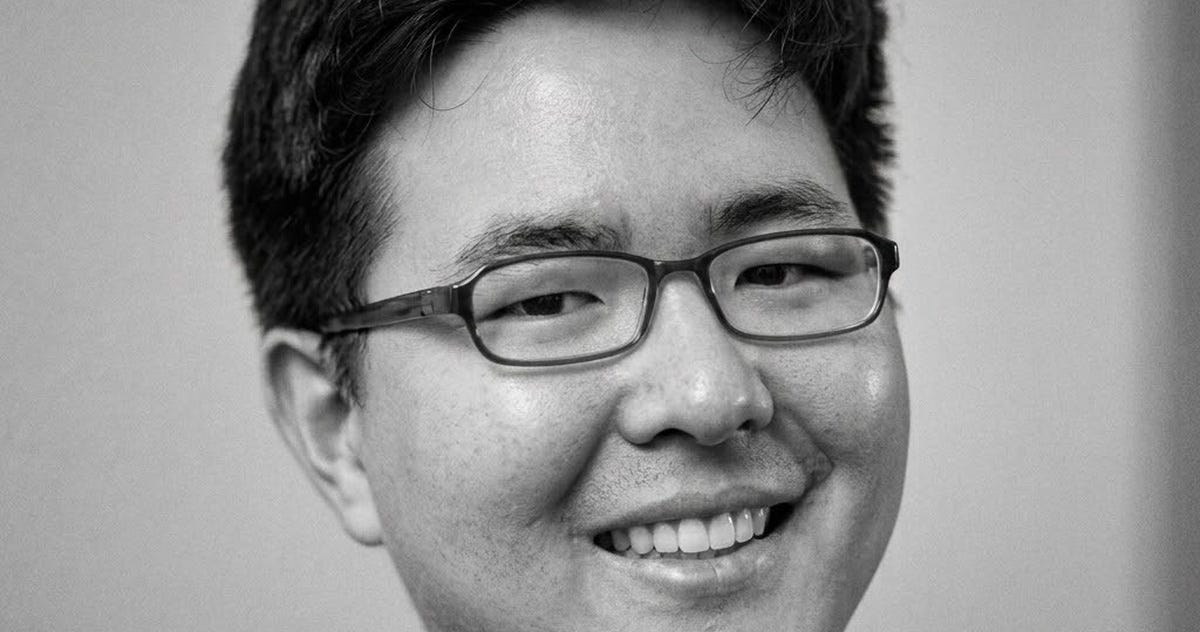
As a part of our series about the future of Artificial Intelligence, I had the pleasure of interviewing Steven Choi.
Steven Choi is an investor and builder of CoverPin, a technology company that helps businesses manage corporate entities, regulatory compliance, and international operations, and connects that data to downstream markets like commercial insurance. He believes the next wave of AI will go beyond chatbots and content generation to execute complex operational work.
Thank you so much for joining us in this interview series! Can you share with us the ‘backstory” of how you decided to pursue this career path in AI?
To be honest, I never set out to pursue “AI.” The term has been around since the 1960s, and it’s really a label the market puts on whatever is hot at the moment. A few years back everyone was an app developer, then when cloud was hot they all became cloud architects, and today AI is the banner that spans what used to be called machine learning. I started out as a perception engineer, a much smaller piece of ML where you were detecting objects and classifying them. From there the market kind of pulled me along, from cell detection to drone and satellite object detection to self-driving cars.
Over the years I kept running into the same unglamorous problem. Companies expand into new countries and the paperwork behind them turns into chaos: entity filings, registered agents, director changes, annual reports, tax and compliance deadlines. It’s tedious, high-stakes, and still runs on spreadsheets and email. That is how CoverPin came along. Work that is highly ineffective when humans carry it end to end can be handed to AI, with human reviewers checking the output, much like the data labeling industry did when it expanded the AI frontier.
What lessons can others learn from your story?
1. Pick a boring problem that is painful and universal. The unglamorous work is where AI creates the most value.
2. Speed beats consensus. Make the decision, ship, and learn.
3. Sell it yourself and use it, early. You learn more from your first 50 customer conversations than from any market report.
4. Don’t build until you’ve validated the market. Prove that people want it before you invest in building it.
5. In AI, data quality is the moat. Models are becoming commodities. Clean, well-labeled, domain-specific data is not.
Restructuring and hard decisions are part of leading. Doing them early and honestly is kinder than delaying them.
Tech first doesn’t make people pay. What makes people pay is the whole solution, and the technology needs to be built to support those functions.
Urgency helps the sale, but product value drives retention. Not every market buys out of urgency. Urgency can close the deal, but it’s the value of the product that keeps customers.
Can you tell our readers about the most interesting projects you are working on now?
We are building an Amazon for compliance. For any compliance requirement across entity, license, tax, and insurance, you can fulfill it globally in fewer than three clicks, with no emails and no phone calls. Agents can do this work more accurately than people, and by leveraging humans only on the edge cases, we can drive down both the cost and the time of compliance.
None of us are able to achieve success without some help along the way. Is there a particular person who you are grateful towards who helped get you to where you are? Can you share a story about that?
It’s hard to name just one person, because this has been a team effort with a lot of people behind it. Connie Brenton and Jeff Franke at Legalops.com who paved the way in the company’s journey. Ginger Mutoza, Retired Corporate Paralegal for Broadcom and 8x8, helped us understand the market far better than we could have on our own. Sakal Heng, the General Counsel of Golftec, has consistently given us advice as a customer throughout the journey, and of course all the staff members who are building the company day in and day out.
Most importantly, I’m grateful to all of our partners and all of our 100+ customers, who help us build a better product on a daily basis. The product we have today is a product of their feedback.
What are the 5 things that most excite you about the AI industry? Why?
1. AI that executes, not just advises. The next wave goes beyond chatbots and content generation to completing multi-step operational work.
2. Compliance and back-office work becoming automated. Small companies will get the same quality of governance that only large enterprises could afford.
3. Lower barriers to global business. A startup can operate in ten countries from day one.
4. Structured data unlocking new markets. Accurate corporate data can make insurance, lending, and due diligence faster and fairer.
5. Small teams doing outsized things. A focused team can now compete with incumbents that have thousands of employees.
What are the 5 things that concern you about the AI industry? Why?
1. Privacy and security. AI increasingly touches sensitive corporate and personal records, so the cost of getting this wrong is high.
2. Control slipping away from the creators. More and more engineers don’t actually know what is happening inside the LLM solutions they build and ship.
3. Hype outrunning reliability. It leads to bad deployments and a loss of public trust.
4. The public not knowing that most use cases don’t need the most powerful model. Many everyday problems can be solved with far smaller, cheaper models.
5. Hyperscalers over-indexing and creating bubbles. Over-investment concentrated in a few players distorts the market and puts the whole industry at risk when it corrects.
As you know, there is an ongoing debate between prominent scientists, (personified as a debate between Elon Musk and Mark Zuckerberg,) about whether advanced AI poses an existential danger to humanity. What is your position about this?
I’m somewhere in the middle, and I’d rather be useful than dramatic. I don’t think we can dismiss long-term risks, since powerful technologies deserve serious safety work. But I also see the nearer-term harms, such as misinformation, security failures, and misuse, that are already here and deserve just as much attention. I take the risk seriously without treating it as inevitable.
Historically, nearly every major technology started out without regulation and caused huge disruption: the automobile, the internet, social media, nuclear energy. It takes society recognizing that some form of regulation is needed, and AI will be no different.
What can be done to prevent such concerns from materializing? And what can be done to assure the public that there is nothing to be concerned about?
Prevention comes from keeping humans accountable in the loop for consequential decisions, independent testing and auditing, clear liability, and security standards that are verified rather than self-declared. On reassurance, I’d resist the instinct to simply tell the public there’s nothing to worry about. Trust comes from transparency about what systems can and can’t do, honest reporting of failures, and visible evidence that the people building AI are accountable for the results.
As you know, there are not that many women in your industry. Can you advise what is needed to engage more women into the AI industry?
It starts with the pipeline, through early exposure to technical education and visible role models. But retention matters as much as recruiting, so companies need fair pay and promotion practices, flexible and trusting cultures, and women in leadership and on boards. Hiring on demonstrated skill rather than pedigree opens doors too. In my own work I’ve seen that diverse teams catch blind spots that homogeneous ones miss, and that is a business advantage as well as a fairness issue.
But I also think it’s biased to segregate women from the broader AI workforce. AI is made up of engineering, ops, labeling, design, and product. If you combine these, the numbers actually match the percentage of graduates across the industry. The key question is what matters most to them. At CoverPin, our leadership has more women than men, so for us it’s not about gender but about capability.
What is your favorite “Life Lesson Quote”? Can you share a story of how that had relevance to your own life?
My favorite quote is from Nelson Mandela: “There is no passion to be found playing small — in settling for a life that is less than the one you are capable of living.”
It comes down to staying hungry and always staying in a position to learn. It also means surrounding yourself with people who are better than you. Only A-class players hire people who are better than them, because those people uplift you. And everything in business and tech comes down to talent plus timing.
How have you used your success to bring goodness to the world? Can you share a story?
One of the biggest inequalities in entrepreneurship isn’t talent or ambition. It’s access.
A founder in Silicon Valley can hire lawyers, accountants, and compliance experts to expand overseas. An equally talented founder in an emerging market often can’t, because the cost and complexity of doing business across borders are simply too high.
That’s why I started CoverPin.
I saw how fragmented and outdated legal and compliance work is. Forming a company, registering for taxes, or maintaining an entity can mean multiple providers, thousands of dollars, and weeks of back-and-forth. For a large corporation, that’s an annoyance. For a first-time founder, it can be the difference between pursuing an opportunity and giving up.
So why did we start with enterprise customers?
It sounds backwards. If the mission is to open up global business infrastructure, why begin with the biggest companies?
Because if you can solve the hardest problems for the largest enterprises, you can eventually give everyone else the same capabilities.
Enterprises operate across dozens of jurisdictions, manage hundreds of entities, and face the most demanding compliance requirements. Serving them forces us to build infrastructure that is sophisticated and scalable from day one. Once it exists, the marginal cost of serving a smaller business drops sharply. The same technology that manages hundreds of entities for a multinational can help a first-time founder set up and maintain their very first company.
We’re building for the most complex customers today so the benefits can reach the smallest businesses tomorrow.
Democratization doesn’t always start with the simplest or cheapest product. Sometimes it starts with solving the hardest problem, building the infrastructure, and then making it widely accessible.
AI accelerates this. Legal and compliance expertise has long been locked behind expensive services and fragmented systems. By structuring that knowledge and building it into software, we can offer it at a fraction of the traditional cost.
What excites me most isn’t helping a big company save on compliance. It’s the founder who will use that same technology to open their first international entity, hire their first employee overseas, or enter a market they thought was out of reach. And the impact doesn’t stop with that one founder. It means jobs, supported families, cross-border partnerships, and opportunity in communities that are often overlooked.
I don’t think making a positive impact always has to look like philanthropy. Sometimes the greatest contribution is building infrastructure that levels the playing field.
Our enterprise customers are helping us build that infrastructure. My hope is that one day, a founder starting a company with a few thousand dollars will have access to the same global capabilities as a Fortune 500 company.
That’s how I think business success becomes something meaningful for the world.
You are a person of great influence. If you could start a movement that would bring the most amount of good to the most amount of people, what would that be? You never know what your idea can trigger. :-)
Most of the benefit of AI is currently flowing to large companies with big budgets. I’d like to see tools, training, and fair access reach the shop owner, the first-time founder, and the startup in an emerging market, so AI widens opportunity instead of concentrating it.
I also believe most of the use cases we deal with every day can be handled by open source models running on-prem, without huge resources. Just as the internet brought more information to people, helping people truly understand how to use AI, not just LLMs, across their own industries can be enormously powerful. And I think the next big innovation won’t come only from engineers. It will come from the liberal arts, from people who understand human history and what people need and demand.
How can our readers further follow your work online?
Come check us out at www.coverpin.com, where we publish compliance articles as we learn more and expand our services.
This was very inspiring. Thank you so much for joining us!
AM
Written by
Authority Magazine Editorial Staff
Writer & ContributorContributor at Authority Magazine covering leadership, innovation, and industry insights.

Published inAuthority MagazineTop Lessons, Top Authorities · 42K Followers
Exclusive, curated interviews with the leaders and changemakers shaping tomorrow. Leadership lessons, industry deep dives, and executive profiles.
More from Authority Magazine
See all stories →
S
Saul W. MarquezNoam Levine of FIZE Medical on Multidisciplinary Innovation and the Shift from Periodic Measurement to Continuous Understanding
Tech8 min read

S
Saul W. MarquezBenn Bluestein-Veyra of ExaVeyra Sciences: Why Scientific Transparency Is The Only Way To Win Over Skeptical Medical Directors
Tech13 min read
S
Saul W. MarquezDanielle K. Miller of The Pivot Nurse: Why Tech Adoption Fails When You Treat Clinical Workflow as an Afterthought
Tech19 min read
S
Saul W. MarquezTito Costa of Tecto Data Centers: How Strategic Infrastructure Placement Accelerates Regional AI Adoption
Tech13 min read