I believe the next major shift will be toward continuously collecting physiological data and using AI to identify meaningful changes and patterns that humans cannot easily detect. This doesn’t necessarily mean more data for doctors; it means better signals, delivered at the right time.
Tech
Noam Levine of FIZE Medical on Multidisciplinary Innovation and the Shift from Periodic Measurement to Continuous Understanding
The Founder and CTO of FIZE Medical discusses how bridging the gap between physics, software, and clinical medicine can transform patient outcomes through real-time, data-driven physiological monitoring.
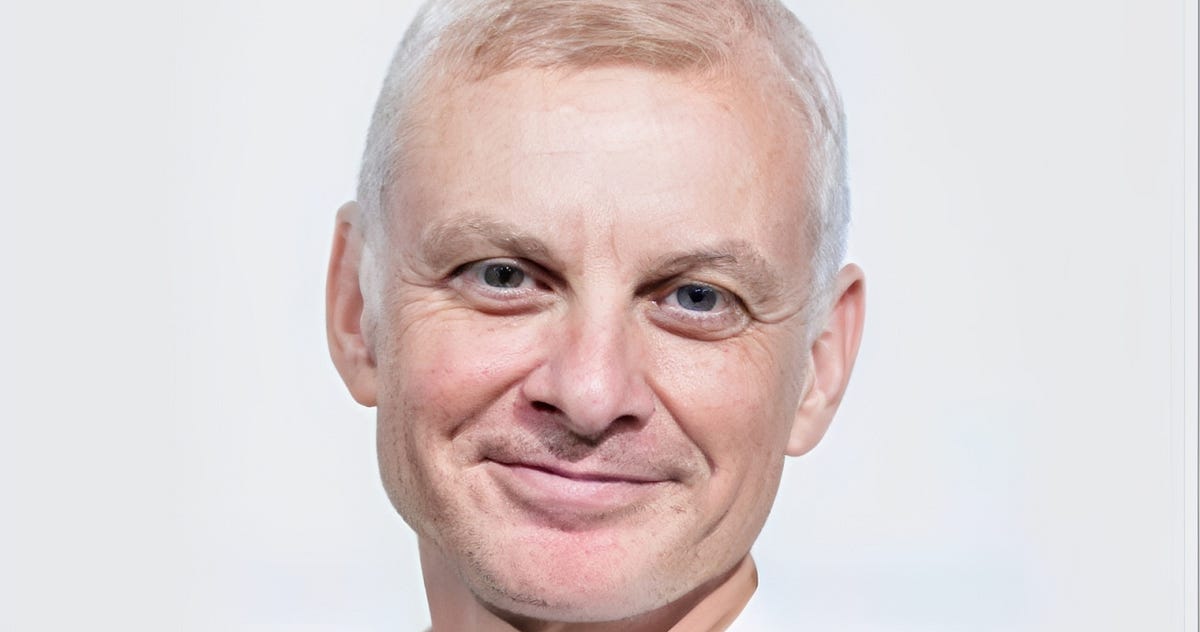
As a part of this series, we had the pleasure to interview Noam Levine.
Noam Levine is the Founder and Chief Technology Officer of FIZE Medical. With more than 30 years of experience in research and development, and executive leadership, Levine brings deep technical expertise and an entrepreneurial track record to advancing real-time clinical monitoring and data-driven patient care.
Thank you so much for joining us in this interview series. Before we dive in, our readers would love to learn a bit more about you. Can you tell us a bit about your childhood backstory and how you grew up?
You obviously need a supportive wife who’ll let you keep going after your dreams. I just have to put that on the record so it’s clear, and now we’ll move on to the professional stuff. One trait is persistence, endurance and the ability not to give up. When I started raising money, everyone told me, “You don’t stand a chance; you’ve missed the train.” I had my own judgement and didn’t listen to them. If I had, we wouldn’t be here today. I’m also very multidisciplinary, and I learn very quickly and dive deeply into new fields. I’m a technology guy, and when I entered the medical device field which I’ve never dealt with before, I was able to apply that mindset to finding a solution to a physiological challenge. At FIZE, I invented the product and became deeply involved in automation. Today, I would say I’ve become an expert in automation. I have an understanding of physics, software, electronics, algorithms, signal processing, communications, semiconductors, mechanical engineering, and other fields. I think that’s important when you set out to build a product like ours, which brings together so many different disciplines and mechanisms. This fits the new world very well, because AI can already deliver many capabilities. But to connect the dots, you really need exposure to many different fields, and I think that fits the direction technology is taking. Today, I’m using AI heavily to leverage my know-how and ultimately achieve better patient outcomes.
Ok super. Let’s now shift to the main part of our discussion about the technology or medical devices that you are helping to create that can make a positive impact on our wellness. To begin, which particular problems are you aiming to solve?
The body is constantly generating signals. The problem is that medicine doesn’t continuously see many of them. Physicians face an information gap: they often have to make decisions under uncertainty. They don’t know a patient’s true fluid balance because they know what fluids the patient is receiving, but they don’t know precisely what is coming out. And fluid balance is critical to patients’ survival. A patient can deteriorate for many reasons: sepsis, a kidney problem, a heart problem, and many others. Each of these can also have different causes. For example, a heart problem can be an electrical problem, a blockage, an infection, and so on. In short, there are many reasons why a patient can deteriorate. Part of the challenge is that the body is remarkably good at compensating. Many of these problems should cause blood pressure to fall, but the body’s compensatory mechanisms can maintain normal blood pressure. A patient can therefore be deteriorating while their blood pressure still looks normal. The kidney gives us another window into that hidden process because it responds early to any changes in fluid and hemodynamic balance. What we do is essentially latch onto that compensatory mechanism, the kidney. How does the kidney help maintain blood pressure? It retains fluid in the body and produces less urine. By monitoring the intensity of this response, we can gain insight into how severe the patient’s deterioration may be.
How do you think your technology can address this?
Because we are essentially monitoring this compensatory mechanism, we can see whether it is working and how strongly it is responding. We’re currently developing a predictive AI-based technology that will decode these urine output (UO) signals into early indications of kidney deterioration and other critical conditions, enabling physicians to intervene earlier and more effectively. I think the real-time kidney urine production data is the game changer. After talking with many doctors, I can say that it’s not about the exact measurement, it’s about trends. What matters is the ability to see changes, to see if the patient is deteriorating. The exact absolute urine output is not necessarily what matters. Whether a patient produces 60 or 65 doesn’t tell you much by itself. What matters is the change, seeing a deterioration trend, and those changes can be very small. A prerequisite for being able to observe a deterioration trend is to be able to measure kidney urine production at high resolution, not just the urine coming out of the bladder. This enables the detection of mild changes in urine production, which when measured continuously, turn into a trend.
Can you tell us the backstory about what inspired you to originally feel passionate about this cause?
I became aware of the problem through my neighbor, Professor Rott, who was an intensive care doctor. When I started looking into it, I realized there was a real need, a huge potential market, and surprisingly no good solution. I said to myself, this doesn’t add up: a huge market, a real need, and no solution. Something here isn’t right. I studied other competitive solutions and learned about their technology and challenges. Then I built a rig to measure urine output. It was about half a meter by half a meter by a meter, something huge, with a big old computer sitting on top of it. I built this setup at the hospital and started running trials with one goal: to understand why there was no such device, what are the challenges. That’s when my eyes were opened. I realized that measuring urine output is a remarkably challenging task. So I made a checklist and told myself I had to put a check mark in every box. If even one box was missing, I didn’t have a solution. I kept working at it until I had checked everything, and only then did I realize: that’s it, I’ve made it.
How do you think this might change the world?
Mortality rates in the ICU are inevitably high. By helping doctors make faster, better-informed decisions about fluid management, we have the potential to improve patient outcomes and, ultimately, change the reality behind those numbers.
In your opinion, what is the most transformative healthtech innovation you believe is still undervalued? What do you think its real-world impact will be in the next 5 years?
I think continuous, passive physiological monitoring is still significantly undervalued. We are used to healthcare being built around snapshots, a blood test, a blood pressure measurement, an imaging study, a visit to the doctor. But the human body is a dynamic system, and many important changes happen gradually between those snapshots. I believe the next major shift will be toward continuously collecting physiological data and using AI to identify meaningful changes and patterns that humans cannot easily detect. This doesn’t necessarily mean more data for doctors; it means better signals, delivered at the right time. Over the next five years, I think this could fundamentally change how we detect disease and deterioration. Instead of waiting for a patient to become symptomatic or for a conventional test to cross a threshold, we could increasingly identify subtle changes earlier and intervene before a problem becomes serious. The real transformation, in my view, will be moving healthcare from periodic measurement to continuous understanding.

What’s the biggest barrier slowing down healthtech innovation right now? Regulation, adoption, clinical validation, or something else? And what’s the smartest way to solve it?
I think one of the biggest things slowing healthtech innovation is capital. Investors are often looking for big, fast returns, and today what is perceived as big and fast is AI and cybersecurity. Money tends to follow the hype. MedTech is considered slow, so less capital flows into it, and that hurts innovation. There are other barriers as well. Fixed clinical workflows can make it very hard to introduce new technologies into hospitals, while reimbursement and regulation can also slow adoption. The smartest way to address the funding challenge is to operate lean and stay focused. I also think governments will eventually need to become more involved in developing programs that support the healthcare and healthtech sectors.
If you could tell other young people one thing about why they should consider making a positive impact on our environment or society, like you, what would you tell them?
I’ll give you an entrepreneur’s answer — do you want to leave the world knowing you left your mark on it?
How can our readers further follow your work online?
https://www.linkedin.com/company/fize-medical/
Thank you so much for sharing these insights!
About The Interviewer: Saul Marquez started out selling spine implants for Stryker and left an executive role at Medtronic to build Outcomes Rocket, a healthcare strategy and full service marketing agency. Twenty years in healthcare and 2,300+ interviews later, his conviction is simple: success in healthcare isn’t luck, it’s algorithmic, and it’s still a relationship game. Learn more at outcomesrocket.com
SW
Written by
Saul W. Marquez
CEO of Outcomes Rocket · Authority Magazine ColumnistAbout The Interviewer: Saul Marquez started out selling spine implants for Stryker and left an executive role at Medtronic to build Outcomes Rocket, a healthcare strategy and full service marketing agency. Twenty years in healthcare and 2,300+ interviews later, his conviction is simple: success in healthcare isn’t luck, it’s algorithmic, and it’s still a relationship game. Learn more at outcomesrocket.com

Published inAuthority MagazineTop Lessons, Top Authorities · 42K Followers
Exclusive, curated interviews with the leaders and changemakers shaping tomorrow. Leadership lessons, industry deep dives, and executive profiles.
More from Authority Magazine
See all stories →
S
Saul W. MarquezBenn Bluestein-Veyra of ExaVeyra Sciences: Why Scientific Transparency Is The Only Way To Win Over Skeptical Medical Directors
Tech13 min read
S
Saul W. MarquezDanielle K. Miller of The Pivot Nurse: Why Tech Adoption Fails When You Treat Clinical Workflow as an Afterthought
Tech19 min read
S
Saul W. MarquezTito Costa of Tecto Data Centers: How Strategic Infrastructure Placement Accelerates Regional AI Adoption
Tech13 min read
S
Saul W. MarquezLisa Loud of Deph Labs: How Prioritizing Usability Over Complexity Wins Over Overwhelmed Healthcare Buyers
Tech13 min read