The neurodivergent community has a nearly 40% unemployment rate. That means that there are a significant number of individuals who can contribute meaningfully to organizations that are being overlooked or underestimated by existing systems.
Business
Stephen DeStefani on Neurodiversity Programs, Corporate Inclusion, and Overcoming Legacy Mindsets
Wells Fargo executive Stephen DeStefani discusses launching successful enterprise neurodiversity programs, creating inclusive workplace cultures, and unlocking untapped talent pools.
As we all know, over the past several years there has been a great deal of discussion about inclusion and diversity in the workplace. One aspect of inclusion that is not discussed enough, is how businesses can be inclusive of people with disabilities. We know that the Americans With Disabilities Act (ADA) requires businesses to make reasonable accommodations for people with disabilities. What exactly does this look like in practice? What exactly are reasonable accommodations? Aside from what is legally required, what are some best practices that can make a business place feel more welcoming and inclusive of people with disabilities? To address these questions, we are talking to successful business leaders who can share stories and insights from their experience about the “How Businesses Make Accommodations For Customers and Employees Who Are Disabled “.
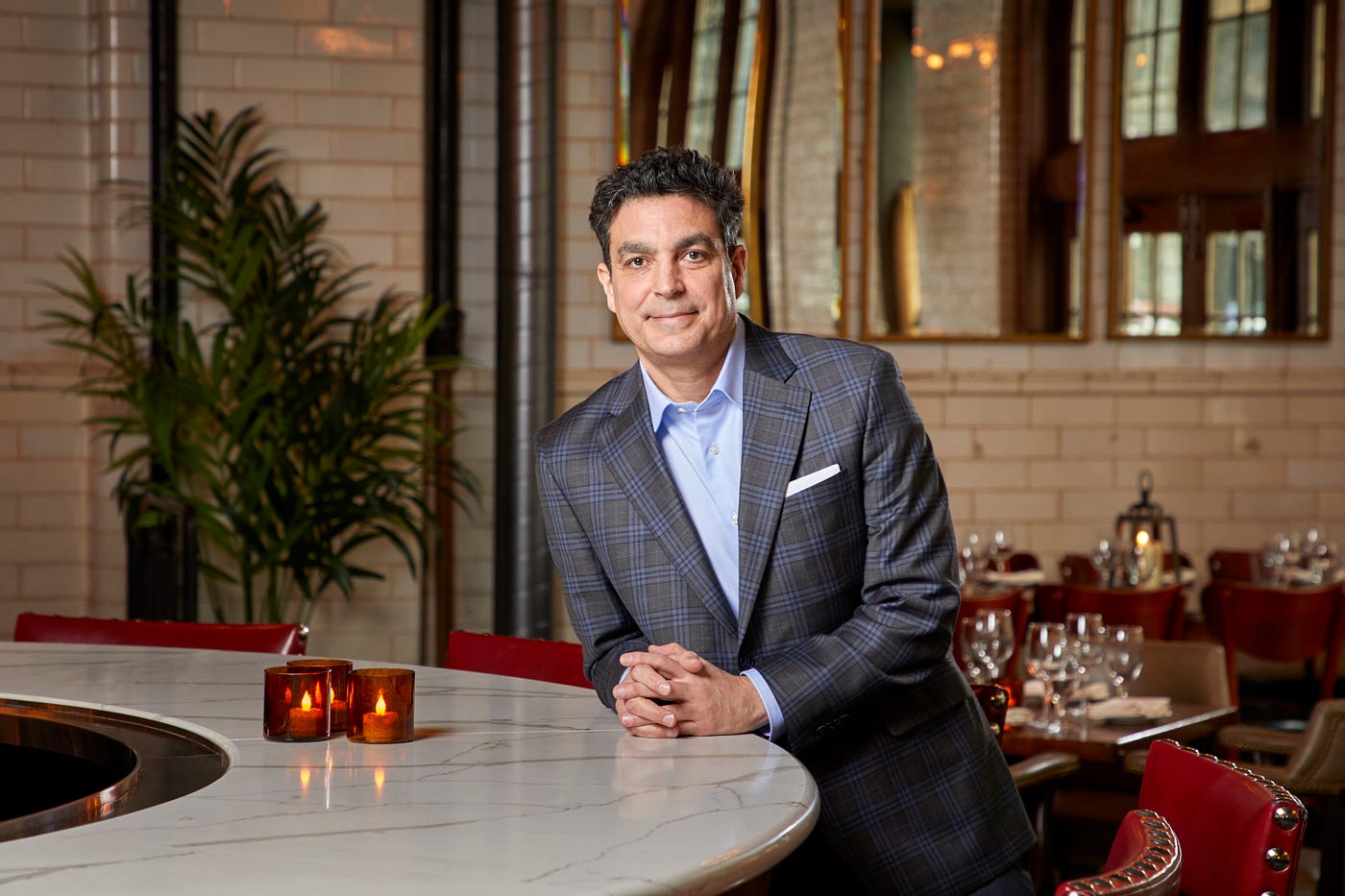
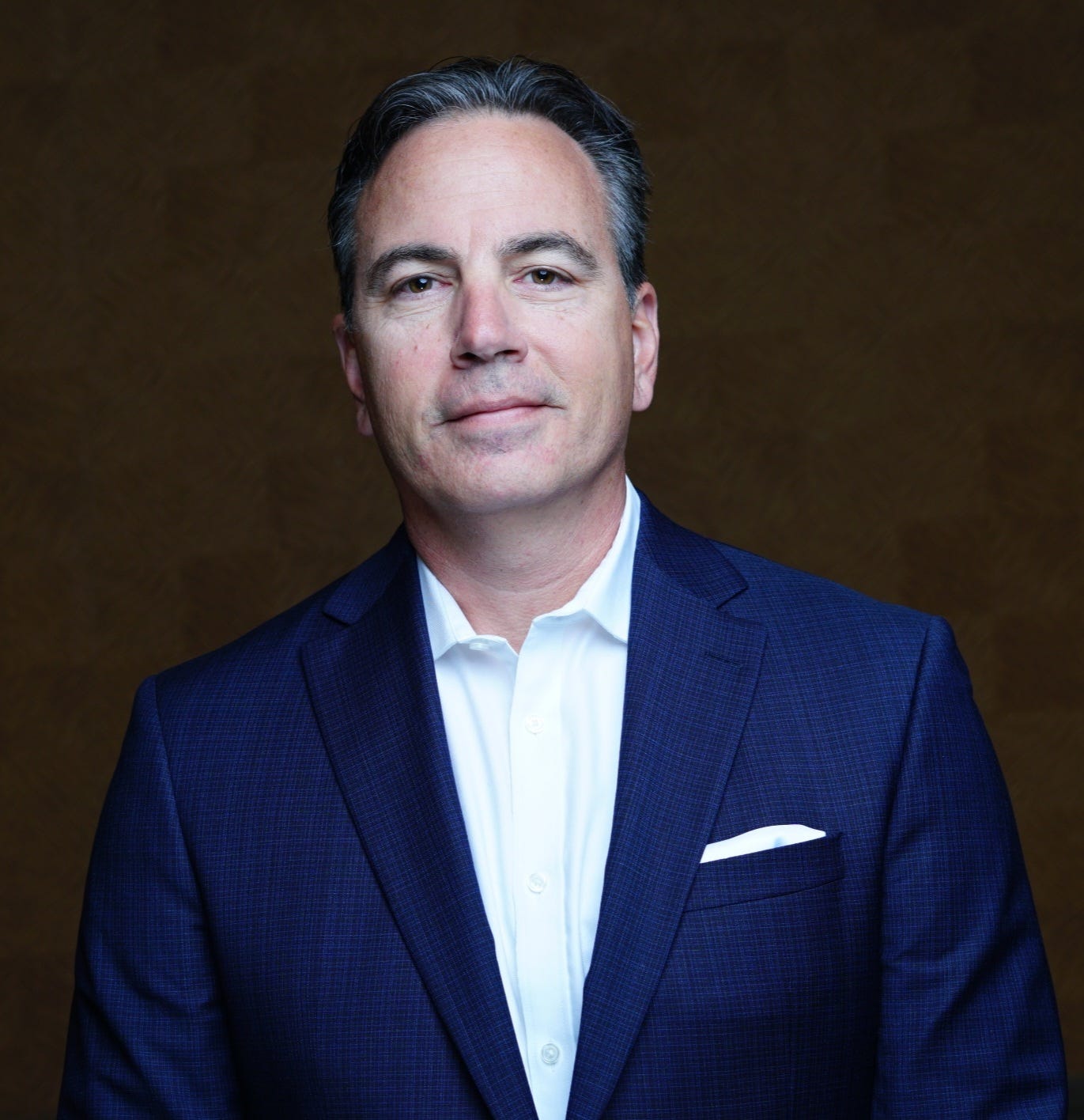
As a part of this series, we had the pleasure of interviewing Stephen DeStefani, Wells Fargo Senior Vice President, and Neurodiversity Program Executive.
Stephen DeStefani currently leads the Enterprise Neurodiversity Program across Well Fargo. Stephen recently led the development and implementation of an international award-winning technology training platform, the Wells Fargo Technology College. He also delivered strategy and implementation leadership of the firms first unified technology skills inventory platform and lead the implementation of the Technology DE&I program which included building the operating model and 3rd party partnerships to support diverse talent hiring and skills development frameworks.
Thank you so much for joining us in this interview series! Before we dive in, our readers would love to “get to know you” a bit better. Can you tell us a bit about your ‘backstory’ and how you ended up where you are?
It is my pleasure, thank you for having me. I’m a native New Yorker, born and raised in the New York City suburb of Queens with my brother and four sisters. As a kid I was very active in youth sports, went to a bunch of Yankees games and gardened my personal hero, my grandfather and I’m sure I had my fair share of the trouble that the city had to offer but I am struggling to recall . After high school, I joined the Marine Corps where I served as a Reconnaissance Marine during the Persian Gulf War. After I left the Marines, I ran a small security business for several years while I attended school at night. During that time, I met my future wife with whom I have two amazing college-age children today.
Prior to joining Wells Fargo in February of 2020, I invested 21 years with JPMorgan Chase as a technology and business executive successfully leading a broad range of technology products and services, organizational and cultural change management, and large-scale transformational programs.
Since joining Wells Fargo two years ago, I have led the development and implementation of an award-winning technology training platform, delivered strategy and implementation leadership of the firm’s first unified technology skills inventory platform and led the implementation of the Technology DE&I program to support diverse talent hiring.
I am currently the Program Executive for The Wells Fargo Neurodiversity Program and a member of the national board of directors for the Autism Society of America.
You are a successful leader. Which three character traits do you think were most instrumental to your success? Can you please share a story or example for each?
Courage: Continually doing what is right instead of what is easy, to take accountability for failures, sharing credit for successes and the relentless and often disruptive drive towards execution and targeted outcomes.
Integrity: Honesty as a persistent component in everything you say and do.
Decisiveness / Execution: Through clear and direct communication of intentions, as well as timely implementation of decisions.
While I’d say these are the top three overall from a career perspective, I must underscore the importance and impact that empathy, acceptance and inclusion have played in my personal and professional life.
Can you share a story about one of your greatest work-related struggles? Can you share what you did to overcome it?
Typical, legacy or “business as usual” mindsets often provide the greatest challenges for transformational change leaders throughout the workplace. These challenges are often overcome through credible and respectful challenge, intentional collaboration, clear articulation of alternative approaches and associated business value and derived impact.
What are some of the most interesting or exciting projects you are working on now?
My role leading the Neurodiversity Program at Wells Fargo has led to some of the most rewarding work of my career. The program celebrates the range of differences among neurodiverse individuals and provides structure and support to help them flourish. This not only includes sourcing and selection of new hires into full-time, strategic roles through more considerate and accommodating, skills-based hiring model that is accessible by design, it also includes a designated support system of coaches, mentors and training so we can support employees throughout their career journeys. I am incredibly proud of the progress we have made and our sustained commitment to build on this success.
Fantastic. Let’s now shift to our discussion about inclusion. Can you tell our readers a bit about your experience working with initiatives to promote Diversity and Inclusion? Can you share a story with us?
In 2020, we launched the Neurodiversity Program at Wells Fargo to better enable our organization to support this diverse talent pool. Since that time, we have successfully hired more than 140 fulltime employees who are neurodiverse into competitively compensated technology and finance roles globally. Team members have shown an aptitude and eagerness to learn and build the skills required to succeed on their teams — and, in some cases, have become subject matter experts in new technology. For example, some of our program participants have been able to learn new coding languages in one-to-three weeks, compared to the industry standard of six months.
Our goal is to substantially increase the number of individuals in the Neurodiversity Program through 2023, as well as expand the program across the enterprise.
This may be obvious to you, but it will be helpful to spell this out. Can you articulate to our readers a few reasons why it is so important for a business or organization to have an inclusive work culture?
The neurodivergent community has a nearly 40% unemployment rate. That means that there are a significant number of individuals who can contribute meaningfully to organizations that are being overlooked or underestimated by existing systems.
The Neurodiversity Program at Wells Fargo is about providing meaningful opportunities for people with diverse abilities while also bringing valuable skills and perspectives to our company from a rich, untapped talent pool. The benefits for individuals and our business cannot be underscored — not only in terms of drawing highly qualified talent to the organization but also in helping us come up with new programs and ideas to solve business challenges for our customers and within our business. This is not only the right thing to do but also can be a strategic advantage for the future.
The Americans With Disabilities Act (ADA) requires businesses to make reasonable accommodations for people with disabilities. For the benefit of our readers, can you help explain what this looks like in practice? What exactly are reasonable accommodations? Can you please share a few examples?
The work entry barrier can be exacerbated by differences in social norms between hiring managers and prospective job candidates. Making reasonable accommodations for people with disabilities within the hiring process is an example of how our Neurodiversity Program is designed to open up new opportunities at Wells Fargo — and it has been a tremendous success.
For example, through this program we developed a tailored interview approach that we call SuperWeek, which consists of interactive workshops and team-based problem-solving. This format allows candidates to showcase their talent in a more comfortable environment over the course of several days and leads to a more comprehensive assessment by hiring managers. We pair this with ongoing training, mentoring, and accommodations to help individuals succeed in their roles for a full-circle experience.
Aside from what is legally required, what are some best practices that can make a business place feel more welcoming and inclusive of people with disabilities? If you can, please share a few examples.
Creating more inclusive environments requires opening up established processes and practices to empower a diverse slate of candidates while also creating strong support structures that foster wellbeing, acceptance and inclusion — from recruitment and hiring to training and mentorship.
For example:
- Partnerships with organizations, academic partners, and community nonprofits to help identify candidates and provide support for participants and teams.
- More tailored, personalized recruitment process that resonates with neurodivergent individuals.
- Employee “Buddy & Career Coaching” Programs to help aid transitions into a new workplace and culture.
All of these efforts work together to create a more inclusive environment full circle and pay dividends for the individual employees, our teams and business at Wells Fargo.
Can you share a few examples of ideas that were implemented at your workplace to help promote disability inclusion? Can you share with us how the work culture was impacted as a result?
Everyone involved in this effort is so passionate about it, and what we’ve seen is remarkable. We often hear from our program participants that the personalized interview process and ongoing support they receive when hired allows them to feel seen, welcomed and valued as individuals. One program participant noted that Wells Fargo’s commitment to the neurodivergent community was almost unbelievable after several years of rejection in a traditional job search process.
Our goal is to build on this success — taking the learnings from each phase of our program to help grow and expand our ability to support this community. This includes a focus on hiring for aptitude rather than deep skills and experience, as well as the importance of being flexible when someone doesn’t fit the traditional job description. We are constantly looking at new ways that our existing and traditional processes can be adapted to support a much wider talent pool.
This is our signature question that we ask in many of our interviews. What are your “5 Things I Wish Someone Told Me When I First Started My Career”?
- Understand the importance of finding — and, in turn, being — a strong mentor and don’t be afraid to seek mentors out proactively.
- The “how” you accomplish goals is often times more important than the “what” that’s accomplished.
- Know your value and learn how to self-advocate.
- Hone your soft skills to establish and maintain relationships.
- Develop an appreciation for storytelling to leverage for influencing others.
Can you please give us your favorite “Life Lesson Quote”? Can you share a story about how that was relevant in your own life?
While it may not be a typical “life lesson quote,” I would say without question my most influential quote is from a speech by Teddy Roosevelt that would come to be known as “The Man in the Arena”. While the title and subsequent quote lacks inclusivity due to its 1910 origins, it thematically celebrates those individuals who continually display courage and tenacity while actively driving change execution and leadership versus sitting on the sidelines or just talking about what could or should be done.
How can our readers further follow your work online?
You can learn more about our work to support inclusion at www.wellsfargo.com/about/diversity.
This was very inspiring. Thank you so much for the time you spent with this. We wish you continued success and good health!
About the Interviewer: Eric L. Pines is a nationally recognized federal employment lawyer, mediator, and attorney business coach. He represents federal employees and acts as in-house counsel for over fifty thousand federal employees through his work as a federal employee labor union representative. A formal federal employee himself, Mr. Pines began his federal employment law career as in-house counsel for AFGE Local 1923 which is in Social Security Administration’s headquarters and is the largest federal union local in the world. He presently serves as AFGE 1923’s Chief Counsel as well as in-house counsel for all FEMA bargaining unit employees and numerous Department of Defense and Veteran Affairs unions.
While he and his firm specialize in representing federal employees from all federal agencies and in reference to virtually all federal employee matters, his firm has placed special attention on representing Veteran Affairs doctors and nurses hired under the authority of Title. He and his firm have a particular passion in representing disabled federal employees with their requests for medical and religious reasonable accommodations when those accommodations are warranted under the Rehabilitation Act of 1973 (ADA). He also represents them with their requests for Federal Employee Disability Retirement (OPM) when an accommodation would not be possible.
EL
Written by
Eric L. Pines
Executive Contributor · Authority MagazineEric L. Pines is an executive interviewer and contributor covering leadership, culture, and business for Authority Magazine.

Published inAuthority MagazineTop Lessons, Top Authorities · 42K Followers
Exclusive, curated interviews with the leaders and changemakers shaping tomorrow. Leadership lessons, industry deep dives, and executive profiles.