I was told from the beginning that in order to succeed I would need investment which to date I have luckily never had.
Business
Lucy Aylen of Never Fully Dressed: Why Investor-Free Scaling Proved More Powerful Than Venture Capital
The creative founder behind the global fashion label discusses building an organic enterprise without venture capital, navigating motherhood, and fostering genuine community impact.
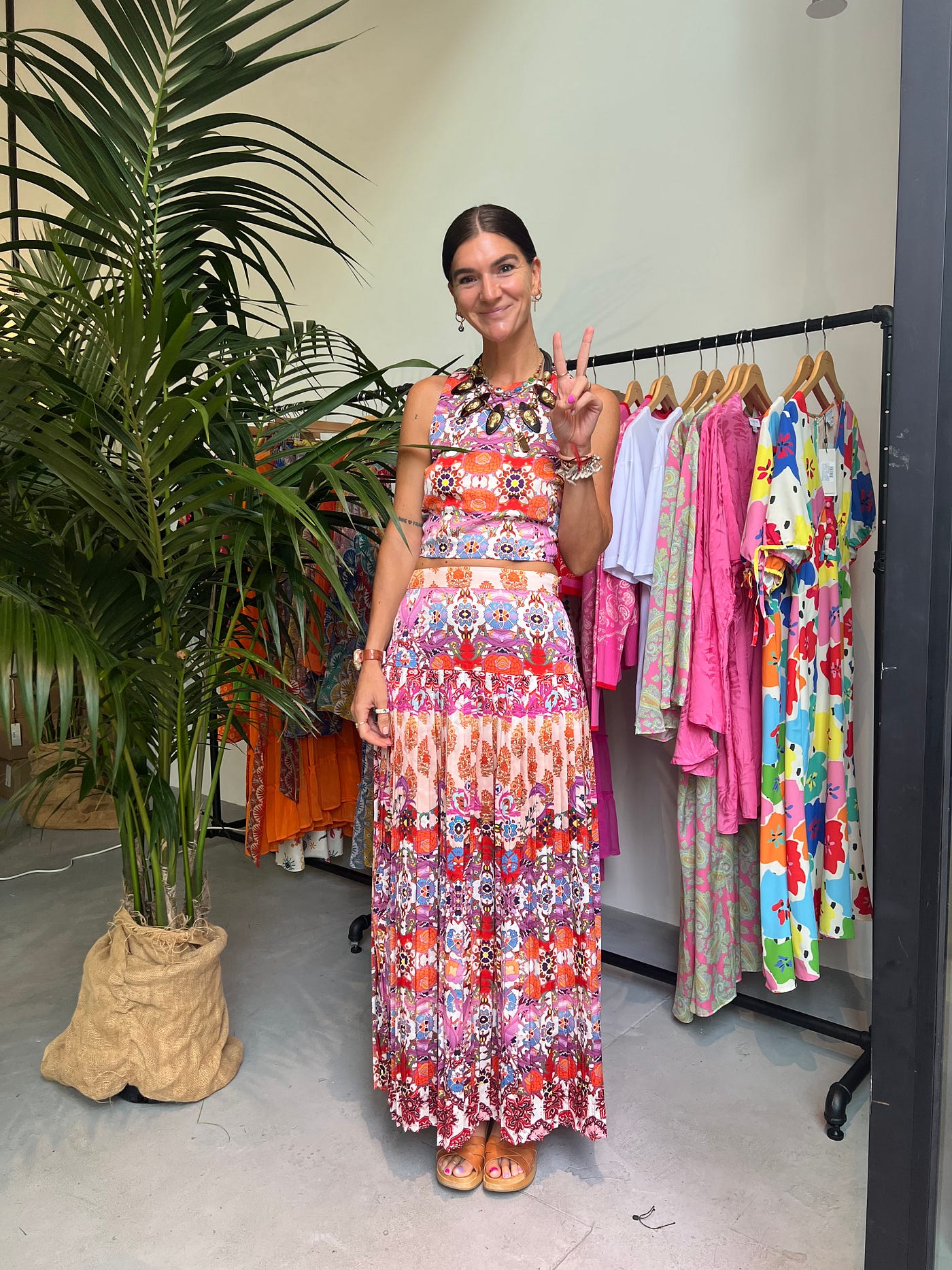
As a part of our series about “Why We Need More Women Founders”, I had the pleasure of interviewing Lucy Aylen.
Lucy Aylen, founder of global fashion brand Never Fully Dressed, the label best known for its bold prints, creative styling and multi-wear pieces in sizes UK6–24.
Thank you so much for doing this with us! Before we dig in, our readers would like to get to know you a bit more. Can you tell us a bit about your “backstory”? What led you to this particular career path?
I’ve always been extremely creative, I remember stapling myself into sari fabric for my school prom, I never conformed to fashion and wanted to have more fun with my style. That teamed with my parents being Market traders from the East End led me to selling customized pieces at London boutique markets. As the times changed with ecommerce and social media I expanded my offering across those platforms. At the heart of all of my creativity I also did a lot of charity work and now love how I can combine both into one community focus.
Can you share the most interesting story that happened to you since you began leading your company?
For me the most interesting story since beginning is the fact that I never actually set out for the business to be at the level we are at. Creativity and selling was in my blood but getting to where we are today is still a surprise to me.
Can you share a story about the funniest mistake you made when you were first starting? Can you tell us what lesson you learned from that?
One story I can remember is when we first travelled to LA for a pop up shop, taking all clothing to sell with us in our suitcases. When we checked in we were so over weight we decided to hand out clothes to people at the airport — a lovely treat for them and a funny mistake for us.
None of us are able to achieve success without some help along the way. Is there a particular person who you are grateful towards who helped get you to where you are? Can you share a story about that?
Pretty cliché but my parents. When I started the business I was living at their house and running our office from their loft. They installed the most amazing work ethic into all of us, being one of 5 this was important for us growing up.
My parents have always worked hard which is something I looked up to and wanted for my own family. My Mum is still very instrumental in the design and selling side of our business, working one day in our head office and two in our shop.
Ok, thank you for that. Let’s now jump to the primary focus of our interview. According to this EY report, only about 20 percent of funded companies have women founders. This reflects great historical progress, but it also shows that more work still has to be done to empower women to create companies. In your opinion and experience what is currently holding back women from founding companies?
I think confidence in women is what holds them back. Often if you are a successful woman with confidence in business you are seen as harder than is expected of that serotype. Even up until a couple of years ago I didn’t feel confident enough to think I deserved my seat at the table.
Another factor is women building families and having children, the need to take time away from work from maternity can be seen as a strain on business. I took a max 2 weeks off with my first child and was still emailing in labor — it falls on the woman to do this. I think women are amazing and so tough in everything they do.
Can you help articulate a few things that can be done as individuals, as a society, or by the government, to help overcome those obstacles?
I think there needs to be intervention from the Government when it comes to childcare, especially from a young age with women receiving more support as soon as pregnancy. Women should feel empowered to build their families whilst also being able to return to work, having both mental and financial support to do so.
Women supporting women with no agenda is great, having an understanding on how tough things can be, giving encouragement is vital in business. Education on practicalities of life, emotional and mental health linked to business should start at school, education is key.
This might be intuitive to you as a woman founder but I think it will be helpful to spell this out. Can you share a few reasons why more women should become founders?
Women have an empathy, a way of delivering business in such a strong, empowered way. Again we need to see more women in higher roles, in male led positions shown in the media making it acceptable in society. Our female England football team winning the finals this year is a great example for the younger female generation to know they can live out their dreams and should go for their goals, nothing is impossible.
What are the “myths” that you would like to dispel about being a founder? Can you explain what you mean?
I was told from the beginning that in order to succeed I would need investment which to date I have luckily never had. I have tried so hard in recent years to build my talent internally showcasing how strong we are as a business, our team is made up of so much passion and creativity that we can grow on.
Is everyone cut out to be a founder? In your opinion, which specific traits increase the likelihood that a person will be a successful founder and what type of person should perhaps seek a “regular job” as an employee? Can you explain what you mean?
Being a founder definitely isn’t for everyone. You’ve got to have resilience, if you think something is going wrong, it could get worse, if something is a tough decision there will be tougher ones. The journey is rocky, it’s up and down, there is no stability of a monthly pay packet, every penny is your investment. You are there to encourage everyone else and need to recognize when you’ve done well yourself. The positives outweigh it all, it’s something you can be so proud of.
Ok super. Here is the main question of our interview. What are your “5 Things I Wish Someone Told Me Before I Started” and why? (Please share a story or example for each.)
As I started from scratch without really trying to build a business but the drive to work hard I learnt along the way, made mistakes, grew from them and made myself stronger. There isn’t anything I would say I wish I knew before.
How have you used your success to make the world a better place?
The success we see from our charity involvement is crucial to the business and brings in my passion around community support. We currently champion 3 main charities whom we sell individually designed t-shirts on behalf of, with all profits going directly to the charity.
We are on a journey ensuring our business is as stainable as possible, researching new materials, packaging and delivery methods. We are constantly learning and look to factor the education around sustainability into everything we do.
We are very blessed that some very prominent names in Business, VC funding, Sports, and Entertainment read this column. Is there a person in the world, or in the US with whom you would love to have a private breakfast or lunch with, and why? He or she might just see this if we tag them.
I would have to say Sara Blakely, the founder of Spanx, she is a fantastic business women who started herself and strove to get to where she is today. I love listening to her founder story, she inspires me as a female founder every day.
Thank you for these fantastic insights. We greatly appreciate the time you spent on this.
CG
Written by
Candice Georgiadis
Editor & Journalist · Authority MagazineCandice Georgiadis is a senior columnist at Authority Magazine covering Business and Tech, conducting primary-source Q&A interviews with founders, executives, and industry leaders.

Published inAuthority MagazineTop Lessons, Top Authorities · 42K Followers
Exclusive, curated interviews with the leaders and changemakers shaping tomorrow. Leadership lessons, industry deep dives, and executive profiles.