Well, I think it’s a crowning achievement for President Obama in the sense that he wanted to fundamentally change the nation. If you look at the writings of Alinsky, Lenin, and others like them, they talk about how, when you’re trying to move toward their so-called utopian society, the key is to make the population dependent on the government.
Business
Dr. Ben Carson: Why The Affordable Care Act Was Never About Healthcare And Always About Control
The renowned neurosurgeon and former HUD Secretary explains why government overreach in medicine threatens individual freedom and how free-market health savings accounts offer a superior alternative.
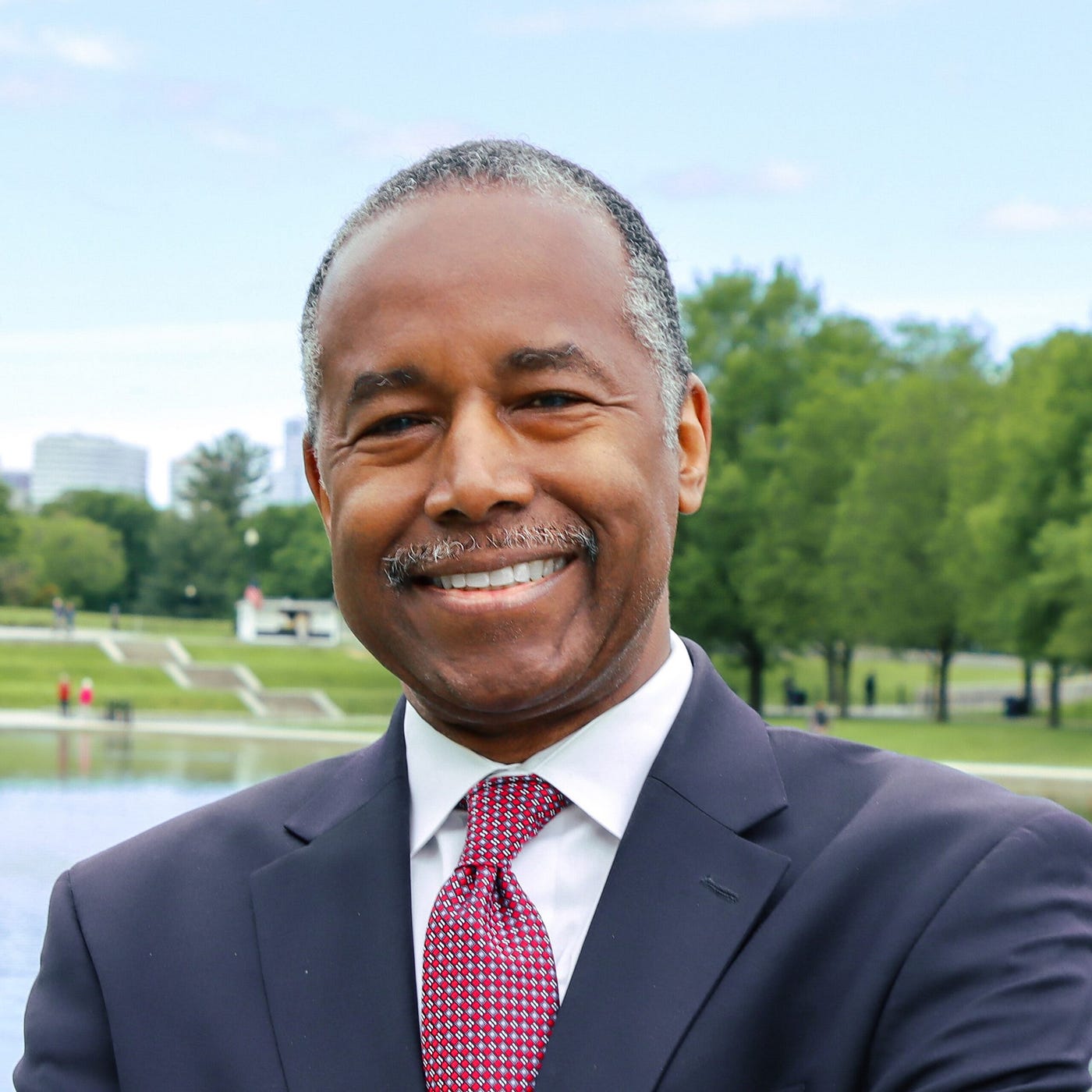
We had the pleasure of Interviewing Dr. Ben Carson. Benjamin Solomon Carson Sr., is a prominent American figure known for his contributions to medicine, literature, and politics. Carson gained national recognition as a pioneering neurosurgeon, eventually transitioning into public service as the 17th United States Secretary of Housing and Urban Development (HUD) under President Donald Trump from 2017 to 2021.
Carson’s early life was marked by significant challenges. Born in Detroit, Michigan, to Sonya and Robert Carson, he experienced a turbulent childhood, particularly after his parents separated when he was eight years old. Raised by his mother, who worked as a domestic worker, Carson faced economic hardships and academic difficulties. However, his mother instilled in him the importance of education, leading to a dramatic turnaround in his academic performance during his youth. By high school, Carson was an exemplary student, graduating third in his class from Southwestern High School in Detroit.
Carson’s academic journey continued at Yale University, where he earned a Bachelor of Arts degree in psychology. He then attended the University of Michigan Medical School, where he pursued a career in neurosurgery. Despite initial academic struggles in medical school, Carson graduated and completed his residency in neurosurgery at Johns Hopkins University. In 1984, at the age of 33, he became the director of pediatric neurosurgery at the Johns Hopkins Children’s Center, making him the youngest person to hold such a position in the United States at that time.
Carson’s medical career is highlighted by several groundbreaking surgical achievements. In 1987, he led a team in the first successful separation of conjoined twins joined at the back of the head, a complex and risky procedure that brought him international fame. He also performed the first successful neurosurgical procedure on a fetus inside the womb and developed innovative techniques for treating brain-stem tumors and controlling seizures. Over his career, Carson authored over 100 neurosurgical publications and was a professor of neurosurgery, oncology, plastic surgery, and pediatrics at Johns Hopkins School of Medicine until his retirement in 2013.
Carson’s transition from medicine to politics began with a speech at the 2013 National Prayer Breakfast, where his remarks, critical of then-President Barack Obama’s policies, garnered significant attention from political conservatives. This speech elevated his profile within the Republican Party, leading to widespread speculation about a potential presidential run. Carson formally announced his candidacy for the Republican nomination in the 2016 presidential election. Although his campaign gained early momentum, he eventually withdrew after Super Tuesday and endorsed Donald Trump.
Following Trump’s victory in the 2016 election, Carson was nominated and confirmed as Secretary of Housing and Urban Development. Carson remained a key figure in the Trump administration, serving until the end of Trump’s term in January 2021.
Throughout his life, Carson has been honored with numerous awards, including the Presidential Medal of Freedom in 2008, and he has received over 60 honorary doctorate degrees. He has also authored several books, many of which discuss his personal philosophies on success, faith, and social issues. Carson remains an influential voice in conservative circles, continuing to engage in public discourse through his writing and speeches.
This interview was conducted in 2015 by Jason Hartman.
Jason: It’s my pleasure to welcome Dr. Ben Carson. He is a renowned conservative neurosurgeon and author of the book One Nation: What We Can All Do to Save America’s Future. Very timely title, Ben. Welcome. So, are you considering a run for the presidency?
Ben: A lot of people think I should, but it wasn’t something on my bucket list when I retired. I was actually thinking more about learning to play the organ and improving my golf game. I could probably play more, but I’m definitely listening to all the voices. I was on a 29-city bus tour the week before last — eight days, by the way — and the crowds were just overwhelming everywhere we went. So many people were saying, “Oh, you gotta do it, you gotta do it.”
What I’m going to do is wait and see what happens in November, because that will give me a good sense of the nation’s temperament. Are people content with big government being involved in every aspect of their lives, or are they ready to move back toward a more traditional America? That will help me decide.
Jason: You have an impressive background in medicine, so I thought I’d ask you about the Affordable Care Act. What do you think about it?
Ben: Well, I think it’s a crowning achievement for President Obama in the sense that he wanted to fundamentally change the nation. If you look at the writings of Alinsky, Lenin, and others like them, they talk about how, when you’re trying to move toward their so-called utopian society, the key is to make the population dependent on the government. And the best way to do that is by taking control of the most important thing people have — their healthcare.
It surprises me that more people don’t read this literature and recognize what’s really going on. This healthcare act wasn’t about healthcare — it was about control. There are much better and simpler ways to provide quality healthcare.
First of all, only about 15% of people didn’t have coverage, so why turn the entire system upside down for that? That doesn’t make any sense. That alone should have raised red flags. In my book, I talk about excellent alternatives, like savings accounts that can be funded in a variety of ways and made available to virtually every American. That would put people in charge of their own healthcare — just them and their doctors — bringing the medical system into the free market. And that’s what controls quality and price. It would have been a much simpler solution, putting everyone on equal footing.
What we’re moving toward now is a two-tiered system — those with money will have concierge-style medicine, while everyone else waits in long lines. That’s not going to work in the long run.
Private practice is becoming a thing of the past because it’s just too expensive. I talk to so many colleagues who are frustrated, saying, “Gosh, you’re so lucky you’ve retired. I can’t wait until I can do the same. I just want medicine to be fun again.” That’s why I’m working with people in Congress to make sure there’s a strong alternative in place — because this system will collapse. There’s no question about it.
Some argue that we should just switch to a single-payer system, thinking that would be a simple solution. But we need to have a system in place that’s well understood and actually desirable.
Jason: So, talk to us about some of the other areas of your book. You cover quite a bit in here. You talk a lot about the future, about what’s going to happen to America, and about this growing disunity.
Ben: One of the reasons it’s titled One Nation is to emphasize that our unity is our strength. Historically, that’s what made America great and exceptional. But those who want to fundamentally change America know that in order to do so, they first have to divide us. That’s why we see them driving a wedge into every little crack, creating conflict — whether it’s a war on women, racial divisions, income inequality, generational gaps, religious disputes — there’s always some kind of “war” being pushed. It’s become exhausting. We are as divided as a nation can be while still managing to function.
Take issues that shouldn’t even be partisan, like the IRS scandal. That affects everyone — it threatens the very freedoms we have as Americans. But somehow, even that gets split along party lines. It’s unbelievable, and if we keep going down this path, it will destroy America.
I want people to understand that it’s okay to disagree with someone. In fact, you can learn a lot more from someone you disagree with than from someone who always shares your views. Have a conversation. Talk to each other. If you look at the radical activist Saul Alinsky and his Rules for Radicals, one of the things he said was, “Never, ever have a conversation with your adversary, because that humanizes him, and your job is to dehumanize him.” That’s exactly why there’s so much effort to keep people from talking.
It’s like a marriage — before a couple divorces, what happens? They stop talking. Then, suddenly, their spouse becomes the devil incarnate. That’s what we’re doing to each other as a nation instead of having meaningful conversations. Because if we did, most Americans would realize we actually have a lot in common — similar hopes, aspirations, and values. But we’ve been manipulated, stirred up, turned against each other. It’s like being on a playground as a kid when the troublemaker runs back and forth saying, “Hey, he’s talking about your mama,” just to start a fight. Meanwhile, that troublemaker sits back and enjoys the chaos. That’s exactly what’s happening to our country right now.
We, the people, have to be smart enough to see through it and stop allowing it. What concerns me even more is that people have been beaten into submission. They’re afraid. Afraid to speak up, afraid they’ll be called names, afraid they’ll lose their jobs, afraid they’ll be targeted by the IRS. That’s not the free America I grew up in. That’s not the country we inherited from those who came before us — people who were brave, who stood up for what was right.
Think about someone like Nathan Hale. A teenage rebel, a spy. When he was caught and about to be executed by the British, he didn’t whine or beg for his life. He said, “My only regret is that I have but one life to give for my country.” That’s courage.
Think about the soldiers who stormed the beaches of Normandy. They stepped over the bodies of their fallen comrades, thousands being mowed down around them, but they didn’t turn back. They kept fighting, knowing they’d probably die, so that we could live in freedom. That kind of courage has always defined America.
And at the very least, we should have the courage to think about the generations coming after us. I think about Detroit, where I grew up. It was once the most prosperous city in the nation, and now it’s the biggest municipal bankruptcy in history. That’s what happens when we don’t pay attention.
Jason: I like to say that Detroit is the poster child for big government disaster. I mean, it’s one of the saddest stories ever. Detroit wasn’t just one of the most amazing cities in the country — it was a flagship city for the entire world. Look at what came out of Detroit; it was incredible. But then, big bureaucracy and corrupt politicians drove businesses out.
Ben: You’re absolutely right. The destruction of an entire city like that serves as a warning for what could happen to our entire nation if we continue down this path.
I’m especially alarmed because I’ve spent most of my life working with children, many from disadvantaged backgrounds. And when I look at our reckless spending, I can’t help but think about what we’re doing to their future. Our national debt is at $17.5 trillion and climbing rapidly toward $18 trillion. That’s a number so huge most people can’t even comprehend it. If we tried to pay it back at a rate of a billion dollars a day, it would still take nearly 50 years. It’s just an absurd amount of debt.
The only reason we’ve been able to sustain it is because we’re the world’s reserve currency. But as you probably know, China, Russia, and others are making noise about that right now. They’re saying we don’t deserve to be the world’s reserve currency because of our reckless fiscal policies — and honestly, they may have a point.
If we lose that status, it means we can’t just print money anymore. And if we can’t print money with the level of debt we have, then we’re looking at a financial crisis on the scale of Greece — or worse. Occupy Wall Street would look like a walk in the park compared to what we’d see happen then. And we’re dangerously close to that reality.
Jason: I think the only thing that really keeps — and probably will keep — the U.S. in the reserve currency position is our military. We’re the dominant force on the global stage. I’m not saying it’s right or fair, but it is what it is. We will defend the dollar with our battleships and our incredible military.
Ben: Although, our military is being rapidly weakened. Over 100 generals have been fired or forced out, budget cuts have taken a toll, and morale is at an all-time low. I have a lot of inside information from people in the military, and it’s not a good situation. It feels like everything is moving in the wrong direction for our nation, and that deeply concerns me.
But here’s the good news — I’ve traveled all over the country, through red states, blue states, north, south, east, and west, and I’ve seen huge, enthusiastic crowds. Many of them are elderly people who had completely given up on America and were just waiting out their final years. Now, they’re starting to feel like maybe there’s some hope.
We have to keep talking about the things that matter. We have to stop just “going along to get along,” because when we do that, progressives win by default. That’s the whole point of political correctness — shut people up, make them afraid to even talk about certain issues. Meanwhile, they’re completely changing the fabric of the nation. That’s exactly what’s happening in America right now.
Another thing I talk about in the book is the importance of knowledge — knowing our history, staying informed about current events. I was watching a news show not too long ago where they were interviewing young people on the street. They asked, “Who sings the song Happy?” Everyone knew the answer. Then they asked, “What can you tell me about Benghazi?” Almost no one had a clue. Some thought Benghazi was a singer. I mean, that’s how bad it is.
Our Founding Fathers were very aware of this danger. They made it clear that our system — our freedom — depends on having an informed and educated populace. They warned that if we ever lost that, the nature of the country would change rapidly.
Why? Because when people aren’t informed, they lose the ability to critically evaluate what they’re being told. A slick, dishonest politician — or a biased media — can easily lead them in whatever direction they want.
Jason: What can we do to change the mindset? The problem is, as Romney famously said, we’ve got 47% of the population getting something from the government, and no amount of logic or reason seems to overcome someone’s desire to get something for free. It’s just a bad situation.
Ben: That’s a good point. Ever since Mitt Romney made that 47% comment, I’ve always thought he missed a golden opportunity. He could have followed up by saying, “But when I become president, my top priority will be to provide a ladder for those people to climb out of the 47% and claim the American Dream. We’re going to do everything we can to make this economy what it needs to be so those dreams can become a reality.” Because that is the key.
Right now, we have the heavy foot of government regulations pressing down on businesses and industries. Dozens of new regulations come out every single week, tightening the grip on businesses. And if someone doesn’t comply, the government pulls the noose even tighter. This is exactly how communist and socialist governments have traditionally maintained control — through regulation and restriction. The problem is, most people don’t even realize this is happening.
On top of that, we have excessive taxation. We have the highest corporate tax rate in the world, and then we sit around wondering why companies are moving overseas. That shows a fundamental misunderstanding of business and capitalism. People don’t start businesses to support the government — they start businesses to make money. If we want a thriving economy, we have to recognize that and create an environment that encourages growth and innovation.
Look at Canada. A few years ago, they realized they needed to slash their corporate tax rate to less than half of ours. And what happened? Business started booming up north. Why do we have to be the last ones to figure this out?
Jason: Well, any messages of hope or big ideas? We’d love to hear them as we wrap up.
Ben: My parting words would be this — think back to the pre-Revolutionary days of this nation. The patriots were fed up with King George III and his tyrannical rule. So, they started calling town meetings. They met in barns, in homes, wherever they could. They even invited the loyalists to join the discussions. They talked about the America they dreamed of, the country they wanted to build, what they were willing to fight for, and what they wanted to pass down to their children. By doing that, they gained courage, and that’s how a ragtag militia defeated the most powerful empire on earth.
We need to do that again today. We need to start gathering — talking with our neighbors, colleagues, friends, and extended family about the America we want to leave for our children and what we’re willing to do to preserve it. Talk to that uncle who hasn’t voted in 20 years. Make sure he understands what’s at stake. If he’s not into it, help him get an absentee ballot. If he’s partially blind, help him fill it out. But we have to get involved.
In the last presidential election, more people didn’t vote than voted for either candidate. We need to re-engage those people and get them moving again.
I truly believe we can turn things around, and when I say we, I’m talking about people with common sense. When we take control of the government, we can’t just say, “Well, this is what they did to us, so now we’ll do it to them.” No. We have to put the Constitution front and center. We can’t pick and choose which laws we enforce or play favorites with certain groups. This is supposed to be an egalitarian nation.
If we do that — if we cut out all the unnecessary regulations, develop our natural resources wisely, and use the EPA to work with academia and industry to find the safest ways to utilize those resources — we can lower energy prices. And that directly helps the poor, not just the wealthy. These are the things clogging up our economy, and they’re what we need to address.
If we do that, we can quickly restore this country to one that is fair and just for everyone.
Jason: Great points. Well, Dr. Ben Carson, thank you so much for joining us today. Tell us where people can find you and buy your book.
Ben: You can find me at RealBenCarson.com, and the book should be available pretty much everywhere — except maybe in a few tiny bookstores. It was number one on the New York Times bestseller list until last week when Hillary’s book knocked it to number two.
Jason: Keep up the good work. Thank you so much for joining us, Ben.
Ben: Thank you. It’s been a pleasure talking to you, Jason.
AM
Written by
Authority Magazine Editorial Staff
Editorial Desk · Authority MagazineThe Authority Magazine Editorial Desk produces, verifies, and edits long-form primary-source interviews with executives, innovators, clinicians, creators, and social impact leaders across Business, Tech, Pop Culture, Wellness, and Social Impact.

Published inAuthority MagazineTop Lessons, Top Authorities · 42K Followers
Exclusive, curated interviews with the leaders and changemakers shaping tomorrow. Leadership lessons, industry deep dives, and executive profiles.