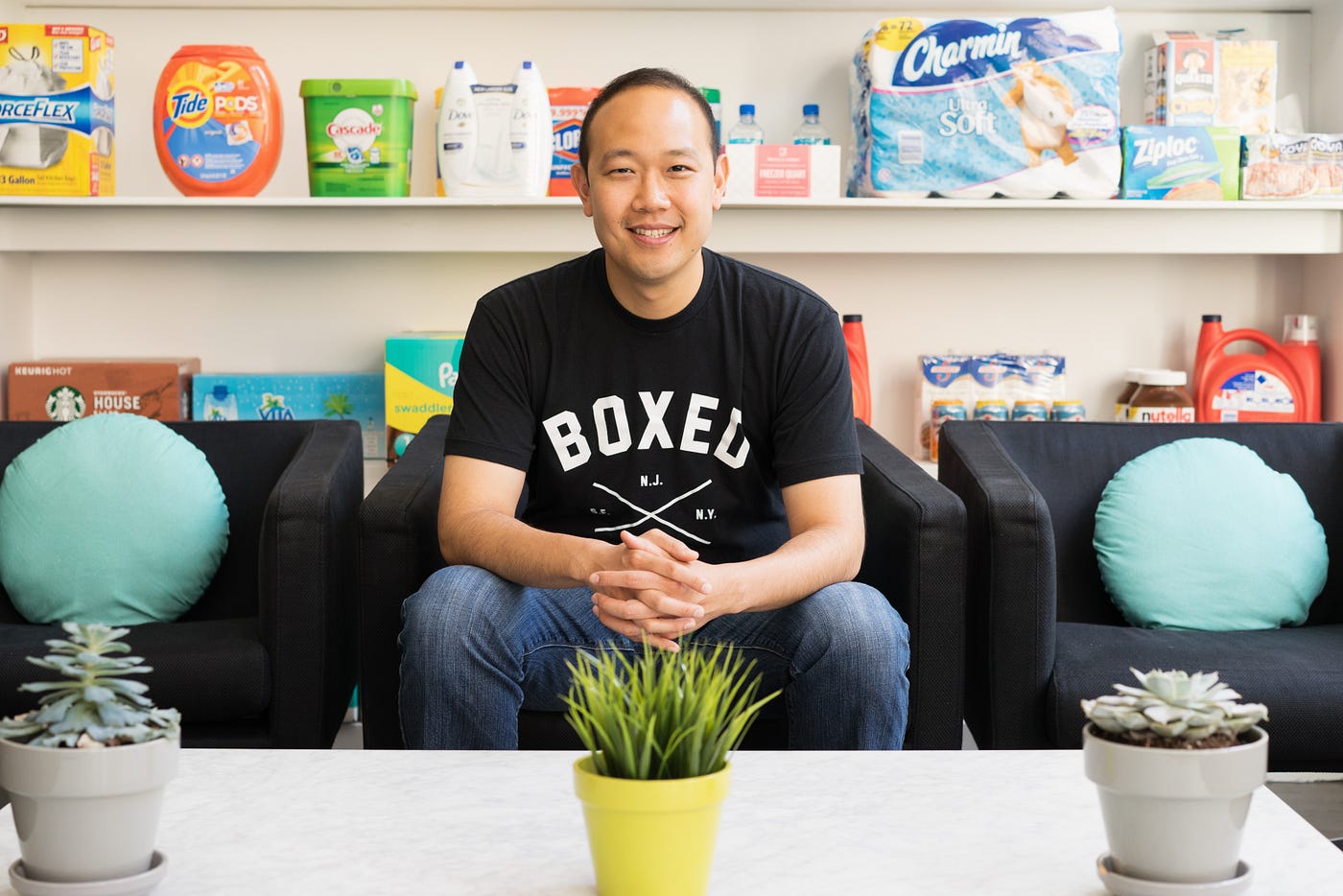
Early on, I learned that you’re never alone; no matter how novel your idea may be in starting a business, there are plenty of other individuals who have the exact same idea. So, you need something else that sets you apart — you need the guts and strength to go after your dream.
Thank you so much for joining us! Can you tell us a story about what brought you to this specific career path?
It was a long, difficult road to becoming the toilet paper salesman I am today. In all seriousness, my story is no different than a lot of other entrepreneurs or startup founders: I saw an opportunity to solve a problem and bet on what we thought was an obvious change coming to a very big industry. The thing that is different, though, is that we got very lucky, and the bet on mobile commerce and online grocery becoming a trend was actually right.
Can you share the most interesting story that happened to you since you started your career?
I started my professional career as a corporate attorney in Times Square on September 15th, 2008, so I actually just passed my 10-year mark. Right before I started, about 12 hours to be exact, Lehman Brothers collapsed one block away from my office. There I was — brand new shoes, a new briefcase, and a new suit walking past thousands of former employees streaming onto the street without a job. That whole time I’m just thinking, ‘Man, did I time this career thing wrong?’
Can you share a story about the funniest mistake you made when you were first starting? Can you tell us what lesson you learned from that?
Back in the garage days, we established certain policies that still hold true to this day. For example, we are quite conservative in how we spend money on work outings or trips. Let me tell you, there have been a few long, 12-hour flights where myself and other executives are crammed in the middle seats of a plane, and I’m wondering, ‘Why did we make this rule?’ But, just because we’re bigger now doesn’t mean we should forget who we are and where we came from.
What do you think makes your company stand out? Can you share a story?
I think our culture makes us unique. It’s something consumers can feel. When I hear about an employee’s struggles to pay for his wedding while covering his mother’s medical bills, or seeing a fulfillment center parking lot nearly empty because our team members don’t have the means to buy a car, I feel inspired to do right by them, since they are truly the backbone of this company.
That’s why we offer unlimited maternity and paternity leave, subsidiaries for our employees’ weddings, and we pay for their children’s college tuition. This all goes back to the idea that if you have a choice, we believe people will choose to shop with the brand that does well by both its customers and employees.
Which tips would you recommend to your colleagues in your industry to help them to thrive and not “burn out”?
Grit is the most important skill that I recommend other entrepreneurs practice. Early on, I learned that you’re never alone; no matter how novel your idea may be in starting a business, there are plenty of other individuals who have the exact same idea. So, you need something else that sets you apart — you need the guts and strength to go after your dream. It’s important to prepare yourself to take the ups and downs as they come and to have the grit to work harder than all the other people who are attempting to do the same thing you are.
You also have to constantly evaluate and remember the reason that you’re doing what you’re doing. This insight can evolve over time, which is the case with my own motivation. I didn’t always get up every morning bearing the responsibility for hundreds of hard-working people around the country. But, this is precisely the reason I do it now.
None of us are able to achieve success without some help along the way. Is there a particular person who you are grateful towards who helped get you to where you are? Can you share a story?
In my first meeting with an early investor, he told me that he’s seen a-holes like me all his career and to not believe my own bullsh*t and to not fall into the trap of thinking that I’m better than anyone else. It was powerful advice that I remind myself of every day.
Are you working on any exciting projects now?
We recently raised $111 million in our latest funding round. We’ll ramp up automation in our facilities with new hardware that has been developed by our in-house robotics team. We’ll also continue deploying autonomous guided vehicles (AGVs), which roam Boxed fulfillment centers, moving order items throughout the warehouses after picking them up from our workers.
How have you used your success to bring goodness to the world?
We want to create a better all-around experience for all shoppers and improve the retail landscape, both in the work that we do and how we do it. A great example is our Rethink Pink initiative, where we’re working to illuminate the unnecessary price hikes of feminine products and lower the cost of these everyday items. This year alone, we’ve saved female shoppers on Boxed hundreds of thousands of dollars.
Can you share 5 examples of how retail companies will be adjusting over the next five years to the new ways that consumers like to shop?
1) Grocery: When Amazon announced its partnership with Whole Foods last year, it sent ripples through the retail industry and set a precedence for grocery delivery. The ultimate goal for retailers is to be able to offer a complete omnichannel experience, so consumers throughout the entire country can do all their shopping in one place. With giants like Kroger and Walmart announcing grocery delivery in 2018, online shopping for food will continue to be a core part of our industry moving forward, and brands will be forced to adapt.
2) Automation: Technology has also become increasingly crucial in the retail industry. Again, this trend has been evident this year with Amazon, Kroger, Target, and Walmart partnering with third-party technology companies. Retail brands must continue to transition into this new era because automation makes the entire process more efficient and provides an advantage in improving the overall experience for consumers.
3) Delivery: The Amazon effect has been to make two-day shipping standard across the industry. More and more, customers are expecting their goods to be delivered faster. Just recently, Walmart announced its goal of providing same-day delivery to 90% of the U.S. within five years. Although this may seem like a bold claim, it is possible that same-day delivery will become a norm for retail in the near future.
4) Product Selection: Retailers must put more thought into the products and brands they carry because consumer demand is rapidly changing. One way Boxed is able to differentiate itself from Amazon and other industry leaders is through its selection, which is carefully curated to meet demand. We listen to our customers and even create our own items through our private label, Prince & Spring, in order to cater to their desires. For example, we stocked Planters Cheez Balls in their highly-anticipated return, we offer Momofuku Ssam sauce (a cult-favorite among foodies), and we developed P&S Fruitmojis — emoji-shaped fruit gummies that offer Boxed consumers a fun new twist on a beloved snack. Other companies will need to pay closer attention to their stock in the future.
5) Payment: How customers pay is also evolving, so it has become more important for companies to adapt. Last year, we introduced group-payment capabilities, allowing customers to buy items in bulk and automatically charge others in the order with Venmo. Similarly, Costco recently announced the ability for shoppers to use Apple Pay, Google Wallet, and Samsung Pay to buy products in its U.S. stores. Retailers are constantly fighting to win over the support of a new generation in a race to keep up with technology.
You are a person of great influence. If you could start a movement that would bring the most amount of good to the most amount of people, what would that be?
I would make sure that all CEOs remember that the bottom of the totem pole matters just as much as the top. At the end of the day, companies can be compared to a big Jenga tower, where each layer represents a group of people. If you start removing layers, the entire structure falls — no matter how big it is.
How can our readers follow you on social media?
Twitter: @Astrochieh
Thank you so much for joining us!