The so-called meritocratic competition to get into college is not a good predictor for how good an entrepreneur someone will be.
Business
Michael Gibson of 1517 Fund: Inside the Quest to Back Uncredentialed Founders and Reshape Venture Capital
The co-founder of 1517 Fund explains why backing college dropouts and renegade scientists proves there is no single path to professional success.
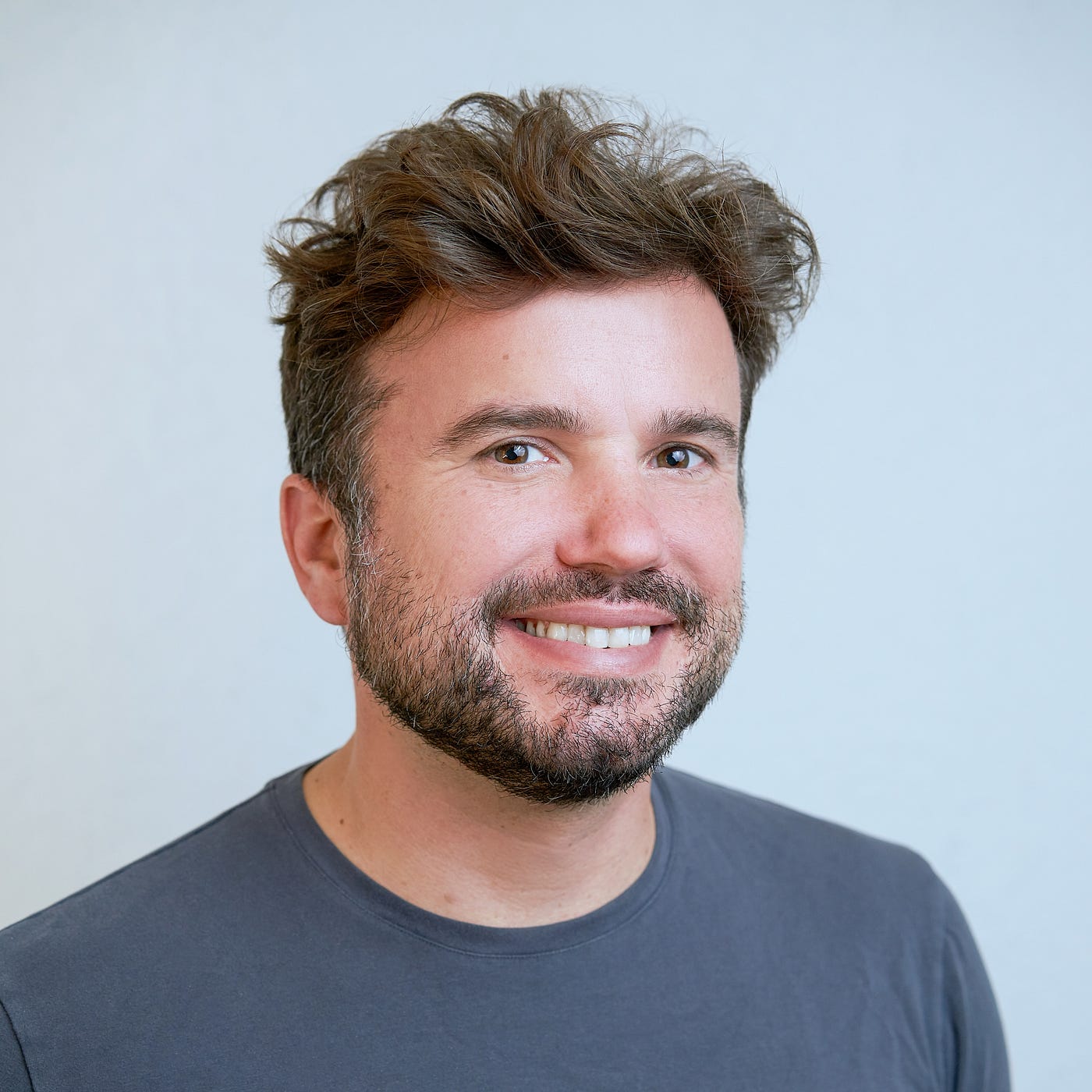
As a part of our series about business leaders who are shaking things up in their industry, I had the pleasure of interviewing Michael Gibson.
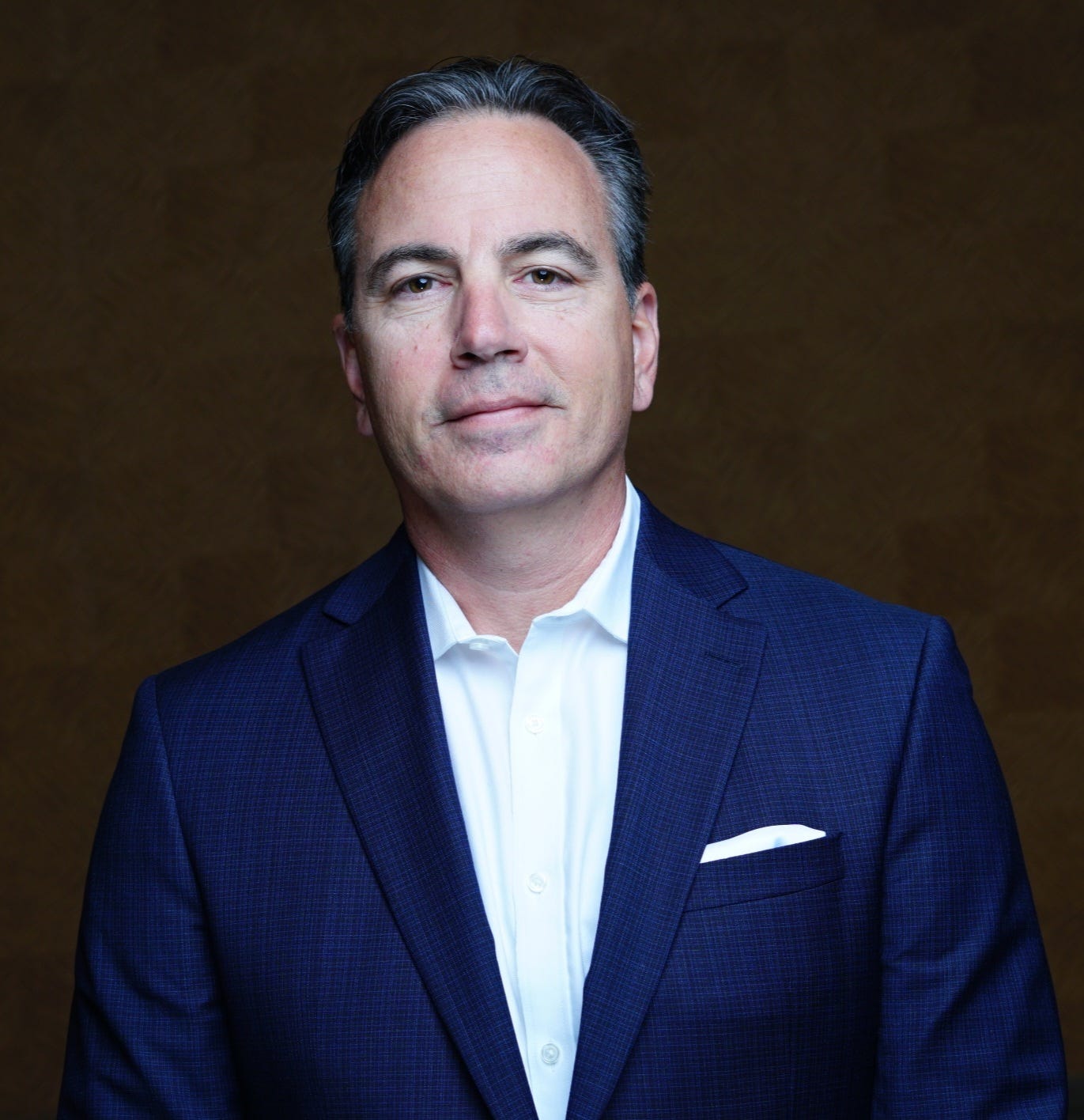
Michael Gibson is co-founder of the 1517 Fund, a venture capital fund investing in teams led by dropouts, the uncredentialed, and renegade scientists. Previously he was vice president for grants at the Thiel Foundation and a principal at Thiel Capital, where he helped launch and run the Thiel Fellowship. He has written on innovation and technology for MIT’s Technology Review, the Atlantic, National Review, and City Journal. His book, Paper Belt on Fire, will be published in November 2022.
Thank you so much for doing this with us! Before we dig in, our readers would like to get to know you a bit more. Can you tell us a bit about your “backstory”? What led you to this particular career path?
I have no business doing what I’m doing. I thought I was going to be a professor of philosophy. Through a series of unlikely events, I found myself interviewing for a job with Peter Thiel. He hired me to help him teach a class at Stanford Law School on philosophy and technology and to be an analyst at his hedge fund. But I showed up the first day of work and the night before Peter had decided to launch the Thiel Fellowship. I got pulled into that and co-ran that program for five years, from 2010 to 2015. Because we saw so many great things come out of that program–Figma, Ethereum–my cofounder, Danielle Strachman, and I decided to launch a VC fund to back these eccentric young entrepreneurs who didn’t have college degrees.
Can you tell our readers what it is about the work you’re doing that’s disruptive?
We hope that by backing people without credentials we’re showing that there is not one path to success in America. You don’t need a college diploma to have a fulfilling and rewarding career.
Can you share a story about the funniest mistake you made when you were first starting? Can you tell us what lesson you learned from that?
When we started the Thiel Fellowship, we had an application. Our big mistake was that we were too imitative of college applications. We asked for things like GPAs and what colleges people went to. We learned even after that first year that applications are like fruit: starts off fresh but rots fast. Many applicants would want to update their application in real time because they started a new company or their current idea took off. So the information in the application was old even after a month. And then we came to see that the most important factor that contributes to the success of a startup is the character of the founding team. We met all sorts of people who were successful on paper. They had perfect test scores, science fair prizes, and an Ivy League pedigree. But, when it came to creating something new in the wild they were lost. The so-called meritocratic competition to get into college is not a good predictor for how good an entrepreneur someone will be.
We all need a little help along the journey. Who have been some of your mentors? Can you share a story about how they made an impact?
An entrepreneur named Bill Hunt volunteered early to help out in the Thiel Fellowship. Bill has launched many companies. Five of them were acquired for $600m in total by Oracle, Avaya, Alcatel and other big names. Bill would come to the quarterly update meetings we had with a handful of Thiel fellows. It was in those meetings that I learned how to be a great sounding board for founders. Bill never gave me direct advice. It was more like an apprenticeship. I would hear how he thought as a founder and how he asked questions to our fellows. I’ve carried Bill’s spirit of helpful inquiry with me to this day whenever I work with founders. If there was one takeaway, it’s “get out of the building.” Your customers are the best accelerator for learning and growing. Go talk to them. Often.
In today’s parlance, being disruptive is usually a positive adjective. But is disrupting always good? When do we say the converse, that a system or structure has ‘withstood the test of time’? Can you articulate to our readers when disrupting an industry is positive, and when disrupting an industry is ‘not so positive’? Can you share some examples of what you mean?
I believe it was Clayton Christensen who coined the term disruptive innovation. In that original sense, it was meant to describe the way a new product can enter a market on the low cost, low quality side, but then over time, come to dominate a sector or an industry. A good example might be Honda motorcycles, which started out as cheap scooters or mo-ped like bikes in Japan in the 1950s. It then expanded over the decades to take a big chunk of the global motorcycle market. A more recent disruptive example would be Napster, which destroyed the music industry’s business model completely. Another would be Craigslist, which destroyed every newspaper’s ability to make revenue through classified ads. These disruptions are good insofar as consumers benefit, but something is also lost when the album disappears as an art form or newspapers have polarized and become more biased in order to pander to their subscription base. Even worse socially might be the invention of fentanyl, which is 50 to 100 times more powerful than morphine. If there was ever a socially destructive disruptive innovation, this is it. Just over 80,000 overdose deaths due to opiods in the U.S. last year. That rate is up 60,000 per year from the 21,000 deaths in 2010.
The key to evaluating the consequences of any innovation is some judgment on the benefits versus the costs to all stakeholders. That can be tough to assess, since some things resist quantification, but we have to start somewhere.
Can you share five of the best words of advice you’ve gotten along your journey? Please give a story or example for each.
“Workmanlike.” Not a piece of advice, but a description of my writing from one of my grad school professors. It’s a mild compliment, but I found it insulting. I want my writing to be punk rock.
“Courage is in shorter supply than genius.” There are a lot of smart people out there, but they tend to be conformists or risk-averse. Many of the great problems we face–whether it’s clean energy creation or curing cancer–are all solvable. My sense is that too few people have the courage to attack them.
“There is no formula.” Beginners need to master rules and recipes, the foundational techniques. But we only become masters of a craft by moving beyond the rules to situational knowledge. The expert answer to any question is, “It depends.” Greatness can only be attained by gaining a deeper understanding of an art or craft than can ever be expressed in rules. This is as true of chess and flower arrangement as it is of startups and investing.
“We all walk the long road.” Life is a marathon with periodic sprints. Also with rain and meteors.
“The truth is always revolutionary.” At some point in the last fifty years, our culture flipped. Dedication to the truth became the counterculture. The establishment became denial. For us as a venture capital fund, the truth became profitable. We’re the only fund out there that believes the college degree is mostly a signal and not a validation of someone’s talent or skills.
We are sure you aren’t done. How are you going to shake things up next?
Scientists start their careers too late nowadays. The average age at which scientists get started has increased by about six years over the last century. All the main grant-giving institutions are dramatically biased toward awarding grants to scientists in their late 30s and into their 40s. This might sound like no big deal, but it means we are missing out on the creative discoveries of younger minds. It’s important to remember that Newton discovered calculus when he was 22 or 23. There are many lost discoveries because young people are trapped in degree programs that take too long to finish. So we want to find a way to get young brilliant scientists out to the frontiers of knowledge faster. We’re starting what we call the Invisible College, after the precursor to the Royal Society in England. It was one of the early institutions to kick start the scientific revolution. Through the Invisible College, we’re going to back independent research and unorthodox scientists who are young and want to try to solve any of the great unsolved scientific mysteries out there.
Do you have a book, podcast, or talk that’s had a deep impact on your thinking? Can you share a story with us? Can you explain why it was so resonant with you?
Zen in the Art of Archery by Eugen Herrigel. Life is full of paradoxes. One of the things I appreciate most about Herrigel’s book is that he shows we are at our best when we try to live in paradox, rather than trying to dissolve it one way or another. In the world of startups, I find the best founders are possessed by the paradox of “egoless ambition.” They are operating in an arena of ambition that could be global in scale. Billions of dollars are at stake. There is great pressure from investors and customers and employees to deliver miracles. But even though these founders have that grand ambition, they are nevertheless egoless in its pursuit. They don’t get wrapped up in the narcissism of identifying their whole life with the company or with outcomes. Herrigel describes masterful archers much in the same way. These archers believe that archery is important. They compete against each other in contests. They don’t say, “Oh, well, to be wise is to detach myself from worldly things, so I’m going to live as a meditating hermit in a cave up on some impossibly remote mountain.” No, the best archers compete. But when they pull the bow back and are ready to release the arrow–it is then that they are totally detached from the outcome.
Can you please give us your favorite “Life Lesson Quote”? Can you share how that was relevant to you in your life?
“What doesn’t kill you makes you stranger.” Not stronger. The German philosopher Nietzsche said stronger. I like stranger better. The great challenges of life may not make us stronger, but they do color us, push us out of our complacency, make us different. When I was about 20 years old, I discovered the man I thought was my dad wasn’t actually my dad. My biological father died when I was about a year-and-a-half old. Discovering that certainly made me stranger. A single fact can turn your whole world upside down.
You are a person of great influence. If you could inspire a movement that would bring the most amount of good to the most amount of people, what would that be? You never know what your idea can trigger. :-)
That everyone should go to college is a discredited ideal. I hope my book shows that. But, I’ll go further. Schools are not education. By far, my most heretical idea is that we should do away with compulsory K-12 schooling. I believe all children should have the opportunity to realize their fullest potential, and everyone agrees that our schools are failing us. But I go a step further than incremental reform. Compulsory schooling, where children sit at desks in rows for six hours a day, has got to go. The only lesson this imparts is a joyless obedience and it brings death to curiosity.
How can our readers follow you online?
If they have ideas, they can reach out over our contact form at 1517fund.com or they can follow me on twitter @william_blake (I took the poet’s handle when I signed up in 2007, because I thought it was a site for haikus!)
This was very inspiring. Thank you so much for joining us!
FG
Written by
Fotis Georgiadis
Editor & Journalist · Authority MagazineFotis Georgiadis is a senior columnist at Authority Magazine covering Tech and Business, conducting primary-source Q&A interviews with founders, executives, and industry leaders.

Published inAuthority MagazineTop Lessons, Top Authorities · 42K Followers
Exclusive, curated interviews with the leaders and changemakers shaping tomorrow. Leadership lessons, industry deep dives, and executive profiles.