Iterate whenever you are stuck. I have a personal mantra: “Iterators Never Fail”. If you iterate to improve your next version or effort, then failure will remain what it truly is — an illusion.
Tech
Self-Care & Mental Wellness: Dr. Kyra Bobinet Of Fresh Tri On The Top Five Self-Care Practices That Improve Mental Wellness

Let’s face it. It seems that everyone is under a great deal of stress these days. This takes a toll on our mental wellness. What are some of the best self-care practices that we can use to help improve our mental wellness and mental well-being? In this interview series, we are talking to medical doctors, mental health professionals, health and wellness professionals, and experts about self-care or mental health who can share insights from their experience about How Each Of Us Can Use Self Care To Improve Our Mental Wellness. As a part of this series, I had the distinct pleasure of interviewing Kyra Bobinet.
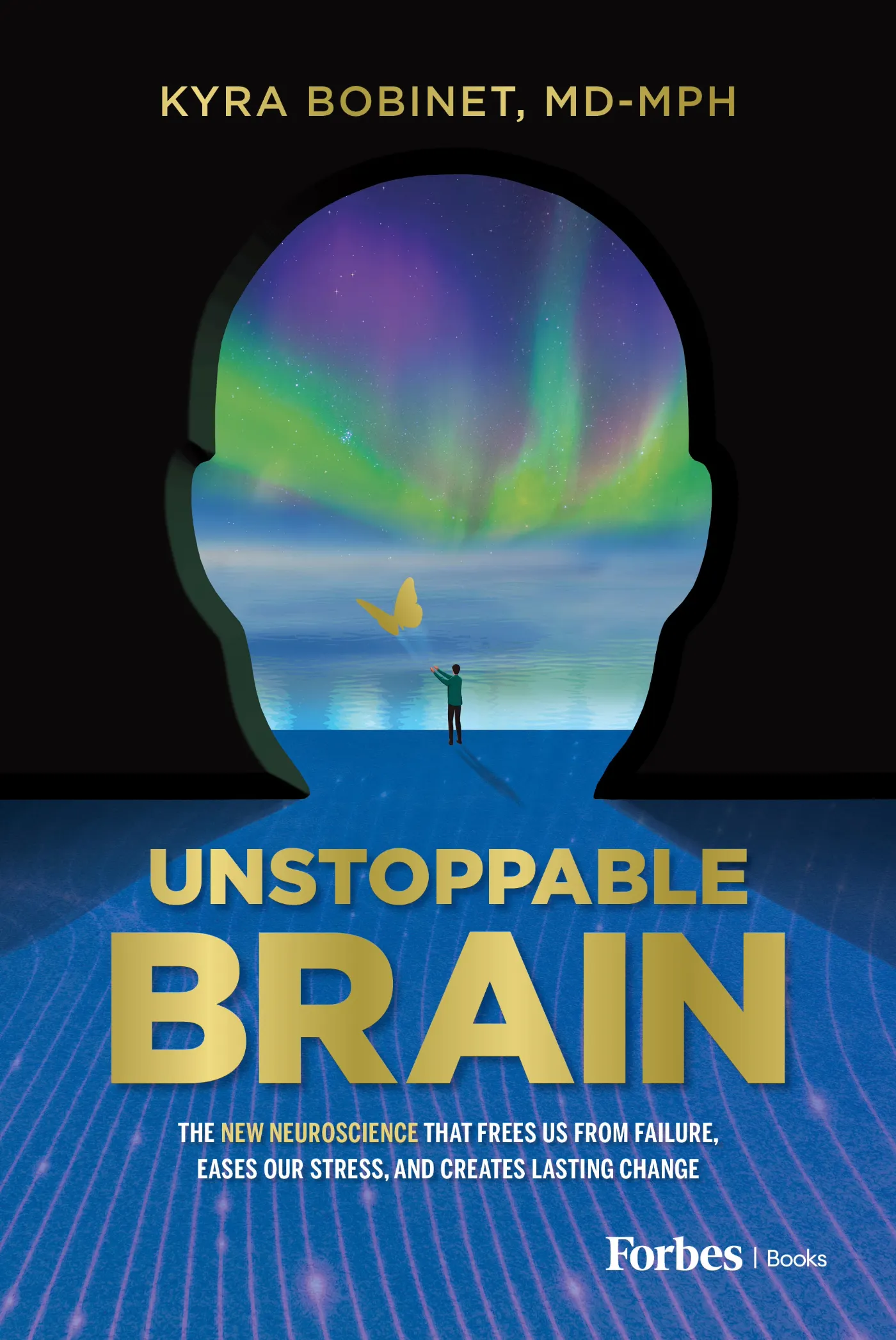
Kyra Bobinet (https://drkyrabobinet.com) is a physician, public health leader, and behavior change designer focusing on tranquility, transformation, and healing to build optimal health and fulfilling, meaningful lives. She is the author of Unstoppable Brain: The New Neuroscience That Frees Us From Failure, Eases Our Stress, and Creates Lasting Change. A keynote speaker, live presenter, and podcast guest, Dr. Bobinet addresses topics such as behavior change, self-care, and personal growth for high-influence leaders, and what long-term neuroscience research reveals about habits and lifestyle change.
Thank you so much for doing this interview with us. It is a great honor. Our readers would love to learn more about you and your personal background. Can you please share your personal story? What has brought you to this point in your life?
I am biracial, Native American (Ojibwe citizen), and White, born in Iowa, and raised all over the United States as we moved around for my dad’s career. Our moving ended in Oklahoma when my parents divorced. This traumatic event involved death threats, food insecurity, emotional abuse, and child neglect in our family. Although looking back, I was likely clinically depressed and anxious, my primary joy (and source of mental health) in those days was bareback riding my horse through the vast rural cow fields.
I left for college in Boulder, Colorado where I studied molecular biology. In my sophomore year, my father pled guilty to embezzlement and was imprisoned so I had to fund the rest of my college with scholarships and part-time jobs. From my teen years onward, I volunteered to serve numerous disadvantaged populations; including pregnant teens, ASD adults, indigenous youth, and minority STEM students. Later, as a medical student at the University of California, San Francisco, I started a community-based non-profit for formerly incarcerated youth which I led for eight years before going back for my Masters in Public Health at Harvard.
After graduate school, I was recruited to one of the largest health insurance companies as the Medical Director of Health and Wellness Innovation in a billion-dollar business unit with over five thousand nurses and coaches. I crafted and studied health interventions for thirty million plan members. During one of my research studies in this role in partnership with Duke University, one of our study participants, Lisa, changed my life. I was interviewing her about her progress, and she suddenly paused and said, “I know what I should do…I just don’t do it”. This idea, I came to know later, is what psychology calls the “know-do gap” and it was what I had been unwittingly pursuing my whole career. Trying to solve this gap led me to dive deeply into neuroscience and behavioral science and, ultimately, the discovery of a special mindset, the Iterative Mindset, which research is proving appears to be the most predictive psychological factor for long-term success.
Today, I am eternally grateful for my personal history of struggles because they have driven me to pursue the unvarnished truths about behavior change, healing, and well-being–and led me to new scientific discoveries and effective solutions.
What is your “WHY” behind what you do? What fuels you?
I feel I was born to reduce suffering, for myself and hopefully for others.
Sometimes our mistakes can be our greatest teachers. Can you share a story about a mistake or failure which you now appreciate has taught you a valuable lesson?
Where do I start? I think I could write a series of books just on my mistakes. I guess the most relevant recent mistake was my being codependent with someone in my world whereby I martyred myself to make them happy and prevent them from leaving. While this is a classic thing to do as a woman, I actually didn’t feel weak or desperate while it was happening, I felt I was strong enough to take it on. But therein was the problem–I was sacrificing my own mental well-being to help someone else. In the end, I didn’t make the other person happy, rather, I dragged out an unhealthy dynamic for us both. This lesson ran deep in me as I later realized that I was projecting my fear of my father’s rage onto the other person and trying to people-please instead of being courageous. I am happy to report that all is healthier now for all parties involved and I am hopeful that this was the last remnant of that pattern from my past. I learned a valuable lesson to sometimes stay in my lane and allow the natural course of things to happen, even if it means someone else is struggling and I feel helpless to do anything about it.
You are a successful leader. Which three character traits do you think were most instrumental to your success? Can you please share a story or example for each?
The most helpful character trait I have is that I am iterative. Iteration, aka tweaking and adjusting what one tries to improve and keep going, is the panacea to both overcoming my past adversities and also achieving my greater vision for helping others. For example, I healed my mental well-being through numerous iterations of everything from wilderness camping to meditation retreats to talk therapy and more recently, psychedelic-assisted therapies. Two other complementary and strong character traits, passion and compassion, sit alongside iteration to drive my search for solutions and care for others, respectively. For example, my passion for the truth and solving the know-do gap led me to discover the Iterative Mindset in Walmart associates who had uniquely changed their health long-term and then start a software company, Fresh Tri, based on this discovery. My compassion for all people, in turn, has driven me to study and prove this mindset as especially effective in disenfranchised populations and to seek to scale its benefits for everyone.
What are some of the most interesting or exciting new projects you are working on now? How do you think that will help people?
At Fresh Tri, we have launched an Institute of Iterative Thinking as a wholly-owned subsidiary to study and teach the Iterative Mindset as a uniquely predictive and essential driver of lasting behavior change and the groundbreaking new brain science that underpins it. It is my hope that this vital information can spread far and wide to empower people to work with, instead of against, their brains so they can achieve the lifestyle and behavior change they want.
OK, thank you for all of that. Let’s now shift to the main focus of our interview, about the interface between self-care and mental health. From where you stand personally or professionally, why are you so passionate about mental well-being?
The evidence for the critical importance of mental well-being has been clear for a long time. It is approximated that seventy percent of our health conditions are caused by our behaviors. We also know that mental well-being is the primary driver of our behaviors and likewise, our behaviors are most often determinate of our physical health and quality of life. And now, after the pandemic laid bare the consequences of poor mental well-being, it seems that the public is having an unprecedented and shared understanding of just how important mental well-being is for all of us.
Based on your research or experience, how exactly does self-care impact our mental wellness?
In my research, the strongest positive impact that any self-care can have on mental wellness comes from neutralizing one’s notions of failure. This answer surprises most people because we have been conditioned to believe that self-care is soothing or relaxing, like taking a nap or eating a good meal. While those forms of self-care are helpful, they tend to be short-acting, leaving us to feel stressed after the nap or hungry after the meal is digested.
The reason it is of utmost importance to neutralize failure with self-care is grounded in some powerful new neuroscience.
The habenula, a small but mighty structure deep within the brain, has emerged as a key player in the complex orchestration of our mental health and well-being. This tiny conductor, no larger than a grain of rice, acts as a central switchboard, regulating a vast array of functions from mood and motivation to sleep and appetite. But perhaps its most profound influence lies in its role as a “failure detector” and “motivation killer.”
When we experience setbacks, disappointments, or perceived failures, the habenula lights up like a stern taskmaster, flooding our brains with signals of discouragement and defeat. This activation can be so powerful that it effectively shuts down our drive to keep trying, leading to a cascade of negative mental health outcomes such as depression, anxiety, and even addiction. In essence, the habenula becomes a tyrannical gatekeeper, deciding which behaviors and pursuits are worth our effort and which ones should be abandoned in the face of adversity.
But the habenula’s reach extends far beyond the realm of motivation. Recent studies have implicated this tiny brain region in a host of mental health conditions, from maternal depression and bonding difficulties to chronic pain and PTSD. It’s as if the habenula holds the keys to our emotional resilience, and when it malfunctions, our entire mental landscape can be thrown into disarray.
The good news is that by understanding the habenula’s powerful influence, we can begin to develop targeted strategies to reprogram its response to failure and setbacks. Through the lens of iteration and the cultivation of a growth mindset, we can learn to reframe our habenula’s signals as valuable feedback rather than indictments of our worth. By consciously choosing to view challenges as opportunities for learning and growth, we can gradually rewire our brains to be more resilient, adaptable, and primed for success.
In the end, the story of the habenula is one of both caution and hope. It’s a reminder of the incredible complexity and delicate balance of our brains and how even the tiniest of structures can exert an outsized influence on our mental health. But it’s also a testament to the power of awareness, compassion, and the unshakeable human capacity for change. By befriending our habenulas and harnessing the power of iteration, we can ultimately become the architects of our own emotional well-being.
Can you please share your “Top Five Self-care Practices That Each Of Us Can Use To Improve Our Mental Wellness”?
- Neutralize all notions of failure. Think of failure as a fire burning in your house and treat it with that level of urgency. Your brain’s habenula will burn out your mental well-being if you let it.
- When you want to achieve or change something, start with what you think you can get yourself to do and treat it like an experiment. Think “Let me see if I can get myself to do this.” instead of using self-judgment to flog yourself.
- Make sure you have support. No one changes alone. Self-care means finding and connecting with others, even if it is just one person who cares about your success.
- Iterate whenever you are stuck. I have a personal mantra: “Iterators Never Fail”. If you iterate to improve your next version or effort, then failure will remain what it truly is — an illusion.
- When in doubt, practice self-compassion. Compassion is a very specific attitude, one of deeply desiring to help because of sincere empathy for the other’s suffering. In this case, you are the one suffering, and you are the one coming to the aid of the part of you that is suffering.
Can you please share a few of the main roadblocks that prevent people from making better self-care choices? What would you suggest can be done to overcome those roadblocks?
One of the main roadblocks that prevents people from making better self-care choices is the “know-do gap.” This gap arises when we cognitively understand what we should be doing to take care of ourselves, but struggle to actually put that knowledge into action. The root cause of this disconnect often lies in the brain’s habenula. When we experience setbacks or perceived failures in our self-care efforts, the habenula activates, flooding us with feelings of disappointment, discouragement, and demoralization. This activation can be so strong that it effectively shuts down our drive to keep trying, leaving us stuck in a cycle of self-neglect.
In essence, all roadblocks to self-care can be traced back to some form of failure, whether it’s failing to stick to a new habit, failing to see results as quickly as we’d like, or failing to live up to our own expectations.
These failures trigger the habenula, which saps our motivation and makes it feel nearly impossible to keep going. The key to overcoming these roadblocks is to find ways to turn off the habenula and rekindle our drive.
One powerful strategy is to reframe our failures as learning opportunities, viewing setbacks as valuable feedback rather than indictments of our worth. Another approach is to practice self-compassion and letting go of past missteps, recognizing that every moment is a fresh chance to start anew.
But perhaps the most effective way to neutralize the habenula is through iteration — consistently making small, manageable tweaks to our self-care routines and celebrating each tiny victory along the way. By focusing on progress over perfection and embracing the power of “yet,” we can gradually rewire our brains to be more resilient in the face of setbacks and more motivated to keep nurturing ourselves, one step at a time.
In one sentence, what would you say to someone who doesn’t prioritize their mental well-being?
If you keep going like you are, one day, you won’t be able to get out of bed.
Thank you for all that great insight! Let’s start wrapping up. Can you share your favorite “Life Lesson Quote”? Why does this quote resonate with you so much?
Those who say don’t know, and those who know don’t say (Lao Tzu)
We are very blessed that some of the biggest names in Business, VC funding, Sports, and Entertainment read this column. Is there a person in the world or in the US whom you would love to have a private breakfast or lunch with, and why? They might just see this, especially if we both tag them :-)
I do not have an exact person but rather a type of person with whom I would want to have a conversation. First, they want to change the world in a truly helpful, rather than merely impactful, way. Second, they are interested in helping this groundbreaking information reach more people and can help us to further spread in some way using their circumstances.
I truly appreciate your time and valuable contribution. One last question. How can our readers best reach or follow you?
Please find me on my personal website, www.drkyrabobinet.com, or go to www.freshtri.com, our behavior change software company.
This was very inspiring. Thank you so much for the time you spent on this. We wish you only continued success.
AM
Written by
Authority Magazine Editorial Staff
Writer & ContributorContributor at Authority Magazine covering leadership, innovation, and industry insights.

Published inAuthority MagazineTop Lessons, Top Authorities · 42K Followers
Exclusive, curated interviews with the leaders and changemakers shaping tomorrow. Leadership lessons, industry deep dives, and executive profiles.
More from Authority Magazine
See all stories →A
Authority Magazine Editorial StaffBrandon Wade & Dana Rosewall on Why ‘Yes’ People are a Liability and the “Painful” 180-Degree Redemption Story
Tech27 min read

Y
Yitzi WeinerAmazon’s Lauren Stovall Talks AWS Nonprofit Programs, Enterprise AI and the Push for Unrestricted Funding
Tech22 min read
G
Gabriel Borden, Managing Partner at Arrow FundGuardians of AI: Kerstin Woods of Toshiba America Business Solutions On How AI Leaders Are Keeping AI Safe, Ethical, Responsible, and True
Tech17 min read
A
Authority Magazine Editorial StaffFrom New York Wild Child to Bali Wellness Queen: Inside Meghan Pappenheim’s Spiritual Empire
Tech20 min read