Water your brain. Your brain is 80% water and 20% fat. Multiple research shows when you drink enough water according to your weight, you also boost blood flow to your prefrontal cortex — which is your executive brain.
Tech
Self-Care & Mental Wellness: Barbara Gustavson Of Discover Next Step On The Top Five Self-Care Practices That Improve Mental Wellness
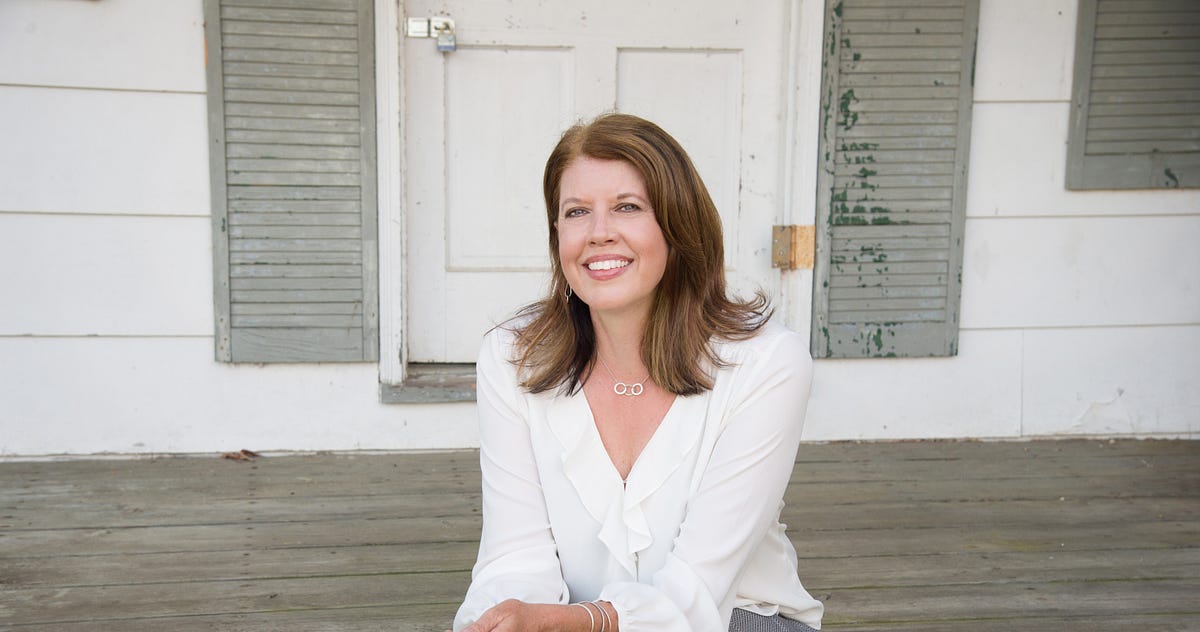
Let’s face it. It seems that everyone is under a great deal of stress these days. This takes a toll on our mental wellness. What are some of the best self-care practices that we can use to help improve our mental wellness and mental well-being? In this interview series, we are talking to medical doctors, mental health professionals, health and wellness professionals, and experts about self-care or mental health who can share insights from their experience about How Each Of Us Can Use Self Care To Improve Our Mental Wellness. As a part of this series, I had the distinct pleasure of interviewing Barbara Gustavson.
Barbara Gustavson is a mental health and brain health advocate and leadership facilitator. She specializes in coaching medical and community-minded professionals world-wide on dealing with burnout. Her goal is to bring brain health into more conversations to help people get to the root cause of their mental health challenges and build greater resiliency and wellness. Learn more about her at www.discovernextstep.com.
Thank you so much for doing this interview with us. It is a great honor. Our readers would love to learn more about you and your personal background. Can you please share your personal story? What has brought you to this point in your life?
From kindergarten through 10th grade, I was known as the “the tall, quiet girl”. I was a head or two taller than everyone in my class including the boys. On top of that, I didn’t like standing out. I can remember slouching in class pictures so I would be the same height as my peers. I also was withdrawn and had lots of anxiety. Some of this stemmed from having a parent and sibling with mental health challenges and things were rocky at home.
After I graduated from high school, I remember feeling the freedom from being away from home. Like other teens, I welcomed any ounce of independence. During the summer after my freshmen year at college, I was in a horseback riding accident. I landed on my back and hit my head. The x-ray revealed a broken back, but since I was never knocked unconscious, they weren’t concerned about my head.
I was able to return to college in the fall, but something was different. I couldn’t concentrate, I had ringing in my ears, I struggled with memory. I ended up dropping out of college because I couldn’t keep up with the demands of school.
Over the next three decades — I continued to struggle with ringing in my ears, anxiety, bouts of depression, brain fog, and at times dizziness. It got to a point where I was desperate. My symptoms worsened, it was affecting my career, my social life, and my confidence.
I went to several doctors, but couldn’t get answers, so I started doing my own research. I read a book called Change Your Brain, Change Your Life by Dr. Daniel Amen. He talked about anxiety and mental health in a way I’ve never heard before. I started to get answers. For the first time in a long time, I didn’t feel alone. I felt understood, and I had hope that I could get better.
I also learned about a scan that Dr. Amen uses that looks at the brain differently than other scans. It’s called SPECT imaging, which stands for Single-Photon Emission Computerized Tomography. It allows physicians to look deep inside the brain to observe areas of the brain that work well, work too hard, or don’t work hard enough. In 2017, I decided to have my brain scanned.
It revealed I had several mild injuries, including one that likely happened in my riding accident. They could also see where anxiety, stress and trauma were impacting my brain. They had multiple recommendations including support for trauma and head injury, supplementation, and chiropractic adjustments to fully restore blood flow to my brain.
Overtime, I experienced dramatic improvement in my focus, energy, mood, memory, relationships, and business. It’s led me to the work I do today with community workers, and by taking a holistic approach to leadership and wellness, we’re able to address many of the root causes of their personal and business challenges.
What is your “WHY” behind what you do? What fuels you?
One day I asked myself why I was so passionate about brain health, other than the fact I had a head injury. I decided to journal my thoughts, and I ended up writing 17 reasons why brain health was important to me. All 17 were the names of people in my family or life that struggled with mental and brain health issues. In that moment, I decided I could no longer stand back and watch people I care about slipping away because of these issues. I want to do my part and educate others to take care of the very organ that drives their thinking, behavior, relationships, goals, and dreams.
Sometimes our mistakes can be our greatest teachers. Can you share a story about a mistake or failure which you now appreciate has taught you a valuable lesson?
I used to have the grandiose idea that I can ‘do it all’. Meaning, I can be a wife, mom, fulltime career woman, a caregiver, volunteer, not to mention taking both my sons (with mild special needs) to weekly doctor visits, and teach piano on Saturdays, so that meant having a sparkly, clean house. Exhausted yet? I think I quietly wore this lifestyle like a badge of honor, almost as if it was the ‘noble’ thing to do. And yes, I drove my family crazy.
Don’t get me wrong, I fully believe in family responsibility and helping others, I took this overboard. I had what I’ve heard some call the Human Giver Syndrome. I over-helped and over-gave to my own detriment. It impacted my health, well-being, my relationships. One day on a phone call with one of my mentors, they said, “Did you know a strength can become your Achilles heel?”
I knew she was referring to how my helping turned into hurting. It never occurred to me that my lack of self-care and over-helping could potentially lead to burnout and possible health risks. This became a turning point for me. It shifted my thinking about self-care, and I started paying attention. I made little yet important adjustments, starting with creating a support system of people who hold me accountable to my self-care, which I have to this day.
You are a successful leader. Which three character traits do you think were most instrumental to your success? Can you please share a story or example for each?
The first trait is kindness but for years I thought was a weakness because I remember at times people saying to me “You’re too kind.” or “You’re too nice.” Looking back, I recognize there were times I allowed people to take advantage of me and my kindness was out of balance. But kindness itself, is a strength, and we act by showing people that we care.
In 2018, I nominated Dr. Amen for a national leadership award because of the life-changing work he and his team have done. Surprisingly, he won, and I was invited to spend a day with he and his wife, Tana. As we spent the day getting to know each other, Dr. Amen realized I too had a strong desire to impact communities through brain health education. He asked if I would help him.
This led to me now being the facilitator for Dr. Amen’s brain health coaching programs. While I did not nominate him to get this opportunity, had I not nominated him, I would have missed out on one of the most exciting opportunities in my career.
The second trait is centeredness. Bain & Company did a research study where participants identified 33 attributes that inspired employees. The number one attribute chosen was centeredness. It turns out that employees trust a centered leader more when they are likely to remain calm during a crisis. In essence, they felt safe about decisions they make and that they would be taken care of.
During the pandemic, I focused on helping my clients make difficult decisions in their business from a place of centeredness. It was not easy for them, including myself, as I had my own difficult decisions to make. However, when decisions were made from a place of calmness, it made a difference on the actions I and my clients took.
The last trait I found has been key is curiosity. Like many children, I’ve always loved the question “Why?” I never outgrew that question because I still ask “Why?” Curiosity has helped me learn about myself especially in times of fear. I strive to remain in a spirit of curiosity, it keeps me from becoming stagnant in my life.
What are some of the most interesting or exciting new projects you are working on now? How do you think that will help people?
As I mentioned, I get to work with amazing students who are taking Dr. Amen’s courses and impacting communities. In my own community, I’m focused on supporting the ones who are in the trenches and doing the hard work of taking care of others. Whether they are medical and health workers, teachers, caregivers, counselors, they are dealing with high levels of stress. Many are burnout and leaving their profession early. I recently hosted a half day for community helpers to take an intentional pause and focus on their self-care and wellness. I’m on a personal mission to bring brain health to mental health conversations, and I hope that other cities will create events like these to support their community helpers.
OK, thank you for all of that. Let’s now shift to the main focus of our interview, about the interface between self-care and mental health. From where you stand personally or professionally, why are you so passionate about mental well-being?
Two of those 17 names that I shared about earlier was my sister and dad, who have been affected by Huntington’s Disease (HD), a genetic disorder that runs in my family and deteriorates the brain. My dad is in advanced stages of HD, my sister passed away last year. She had more symptoms of HD but was undiagnosed. There were times I felt guilty they suffered, and I didn’t. I could easily focus on how unfair life is, but I know that will change nothing. What I can change is how I view the experience. While my passion comes from pain of seeing them suffer, I choose to be proactive and building resilience to ward off mental and brain health challenges that run in my family.
Based on your research or experience, how exactly does self-care impact our mental wellness?
While I was studying to become a certified brain health coach, I was taught Dr. Amen’s 4-circle approach to brain health — the physical, social, psychological, and spiritual circle. In my experience, self-care falls into these categories. When we care for our needs in all 4 areas, we can become healthier.
While we don’t have control over everything, we have more control than we think. If we don’t practice regular self-care, we may be putting our health at risk, including our mental health.

Here is our primary question. Can you please share your “Top Five Selfcare Practices That Each Of Us Can Use To Improve Our Mental Wellness”?
- Write your perspective and beliefs about self-care. Do you view self-care as important for others but optional for you? Have a heart-to-heart conversation with yourself, write out what self-care means to you in your current season. Ask a close friend or a family member if they believe you are taking care of yourself, they may notice something that you’re not yet seeing.
- Question your ANTs (Automatic Negative Thoughts). Our thoughts are convincing, but they often lie. Are you believing everything you think? “I don’t deserve this promotion.” “I never get any peace and quiet.” “I can’t take much more of this.” Learn to question your thoughts. Byron Katie share 4 questions to challenge negative thoughts. 1) Is the thought true? 2) Is it absolutely true? 3) How do you feel when you think the thought? 4) How would you feel without the thought? Then she recommends creating a more positive thought to counteract the negative one. Examples could be: “I take control of my thoughts.” or “I work hard for opportunities that come my way.”
- Water your brain. Your brain is 80% water and 20% fat. Multiple research shows when you drink enough water according to your weight, you also boost blood flow to your prefrontal cortex — which is your executive brain.
- Fork-in-the-Road Exercise. Dr. Amen taught me this exercise helps you visualize how your life will be in the future, based on the choices you make today with your self-care. You simply imagine a fork in the road with two paths. By taking one path, envision a future of health that comes from taking care of yourself. Imagine what your life will be like in the coming days, months and years.
For the other path, imagine what your life will be like if you choose to continue to not take care of yourself and continue with unhealthy habits. If you take this path, what will your future be like?
This exercise alone is a motivator for many people to prioritize their self-care.
The value of small steps. Most of the time we want to take giant steps. After all, they’re enticing, make us feel like we’re accomplishing more. Yet it can feel defeating if we miss a step or two, and that’s went we’re tempted to quit. Tiny steps with small, steady progress can create a stronger foundation of healthier self-care habits. And remember…small steps add up over time!
Can you please share a few of the main roadblocks that prevent people from making better self-care choices? What would you suggest can be done to overcome those roadblocks?
First, I would say our energy capacity. When we’re feeling tired, have brain fog, or little stamina, it’s much harder to follow through on our choices. This has been my greatest challenge at times. And more the reason to make self-care a priority, just for the mere reason when we’re mentally and physically stronger, our energy is stronger. This is type to quality sleep too, and if this is an issue for you, make sleep your number one priority. It will help your thinking, decision-making and overall health.
Another roadblock is getting overwhelmed. I have daily conversations with people who are feeling overwhelmed and not following through with self-care. I love the way Mel Robbins looks at overwhelm. She says there is legitimate overwhelm when you have external events and stressors that are out of your control. Then there’s lifestyle overwhelm, where you’ve created a life that is hard to manage. It’s an opportunity to take inventory and find where you can simplify.
Lastly, old thinking patterns can impact our choices without us even realizing it. Even if we consciously make the decision to take better care of ourselves, our mind can easily talk us out of it. I still sometimes fall into old thinking and if I don’t challenge those thoughts, I will revert to old habits.
In one sentence, what would you say to someone who doesn’t prioritize their mental well-being?
When you practice self-care, it’s not just about you, you are modeling well-being for others.
Thank you for all that great insight! Let’s start wrapping up. Can you share your favorite “Life Lesson Quote”? Why does this quote resonate with you so much?
A recent quote that has become a new favorite is “A wise man once said…nothing”. Before you roll your eyes and yawn, let me explain. With good intentions, sometimes we think giving advice is what people need most. But what if one of the best gifts we can give them is listening. Sometimes they need to hear their own voice and discover their own answers. We can help by creating a space where they feel heard and valued.
We are very blessed that some of the biggest names in Business, VC funding, Sports, and Entertainment read this column. Is there a person in the world or in the US whom you would love to have a private breakfast or lunch with, and why? They might just see this, especially if we both tag them :-)
Without a doubt I would love to spend time with Jamie Kern Lima, the first female CEO of L’Oréal. I recently heard her on a podcast where she talked about self-worth in a way I’ve never heard before, and how rejection can sometimes protect us distractions that keep us from our true calling. I wish I had a friend like Jamie in the painful years of my youth. She has such a calm and powerful presence and has influenced my thinking profoundly.
I truly appreciate your time and valuable contribution. One last question. How can our readers best reach or follow you?
Thank you so much for inviting me, it has been a true joy to share with you and your readers. I am mostly on LinkedIn these days. You can also check out some resources at 4-helpers.com/.
This was very inspiring. Thank you so much for the time you spent on this. We wish you only continued success.
About The Interviewer: Maria Angelova, MBA is a disruptor, author, motivational speaker, body-mind expert, Pilates teacher and founder and CEO of Rebellious Intl. As a disruptor, Maria is on a mission to change the face of the wellness industry by shifting the self-care mindset for consumers and providers alike. As a mind-body coach, Maria’s superpower is alignment which helps clients create a strong body and a calm mind so they can live a life of freedom, happiness and fulfillment. Prior to founding Rebellious Intl, Maria was a Finance Director and a professional with 17+ years of progressive corporate experience in the Telecommunications, Finance, and Insurance industries. Born in Bulgaria, Maria moved to the United States in 1992. She graduated summa cum laude from both Georgia State University (MBA, Finance) and the University of Georgia (BBA, Finance). Maria’s favorite job is being a mom. Maria enjoys learning, coaching, creating authentic connections, working out, Latin dancing, traveling, and spending time with her tribe. To contact Maria, email her at angelova@rebellious-intl.com. To schedule a free consultation, click here.
MA
Written by
Maria Angelova, CEO of Rebellious Intl.
Executive Contributor · Authority MagazineMaria Angelova, CEO of Rebellious Intl. is an executive interviewer and contributor covering leadership, culture, and business for Authority Magazine.

Published inAuthority MagazineTop Lessons, Top Authorities · 42K Followers
Exclusive, curated interviews with the leaders and changemakers shaping tomorrow. Leadership lessons, industry deep dives, and executive profiles.
More from Authority Magazine
See all stories →A
Authority Magazine Editorial StaffBrandon Wade & Dana Rosewall on Why ‘Yes’ People are a Liability and the “Painful” 180-Degree Redemption Story
Tech27 min read

Y
Yitzi WeinerAmazon’s Lauren Stovall Talks AWS Nonprofit Programs, Enterprise AI and the Push for Unrestricted Funding
Tech22 min read
G
Gabriel Borden, Managing Partner at Arrow FundGuardians of AI: Kerstin Woods of Toshiba America Business Solutions On How AI Leaders Are Keeping AI Safe, Ethical, Responsible, and True
Tech17 min read
A
Authority Magazine Editorial StaffFrom New York Wild Child to Bali Wellness Queen: Inside Meghan Pappenheim’s Spiritual Empire
Tech20 min read