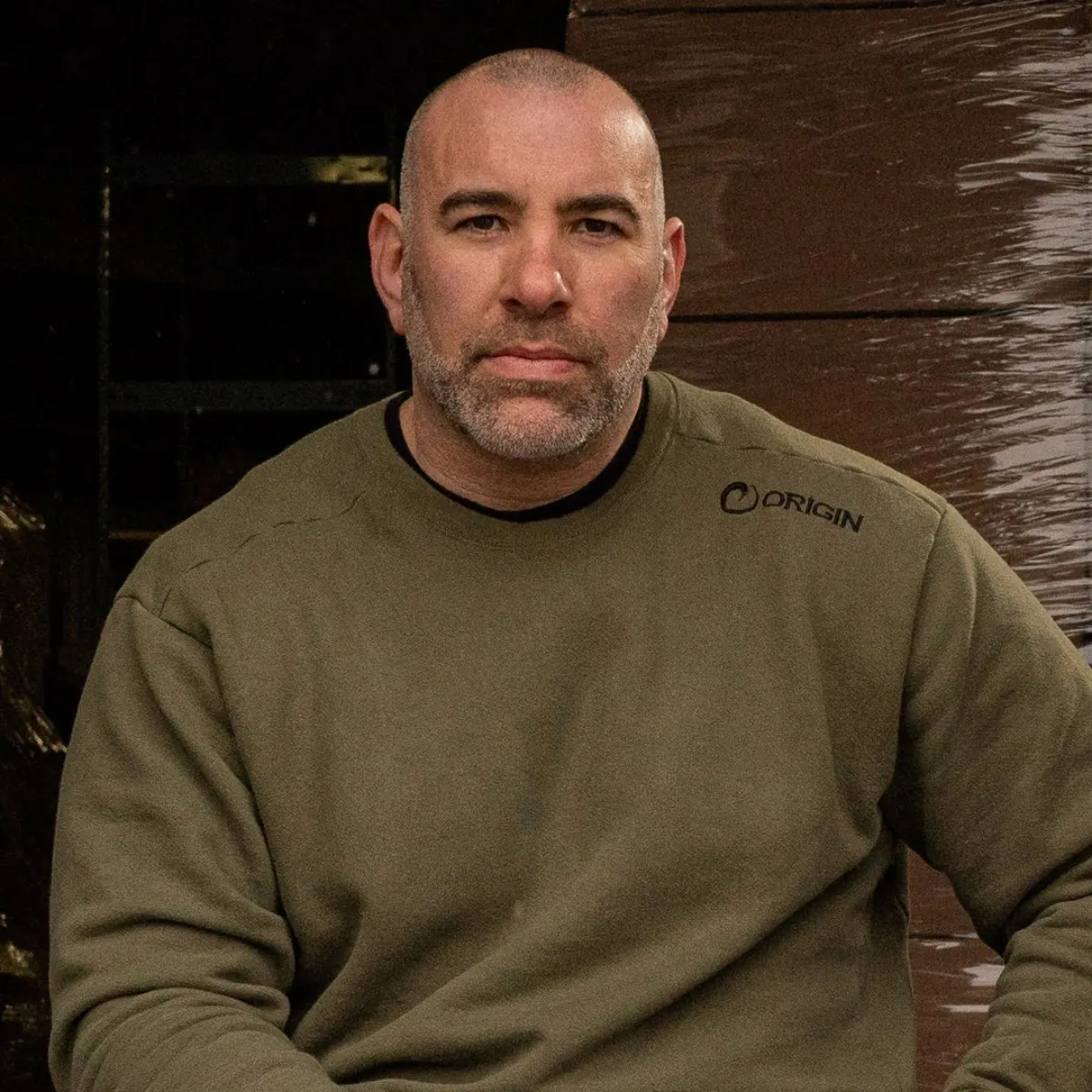
The biggest myth about being a CEO is that it is glamorous. It is not. It is often lonely and full of pressure.
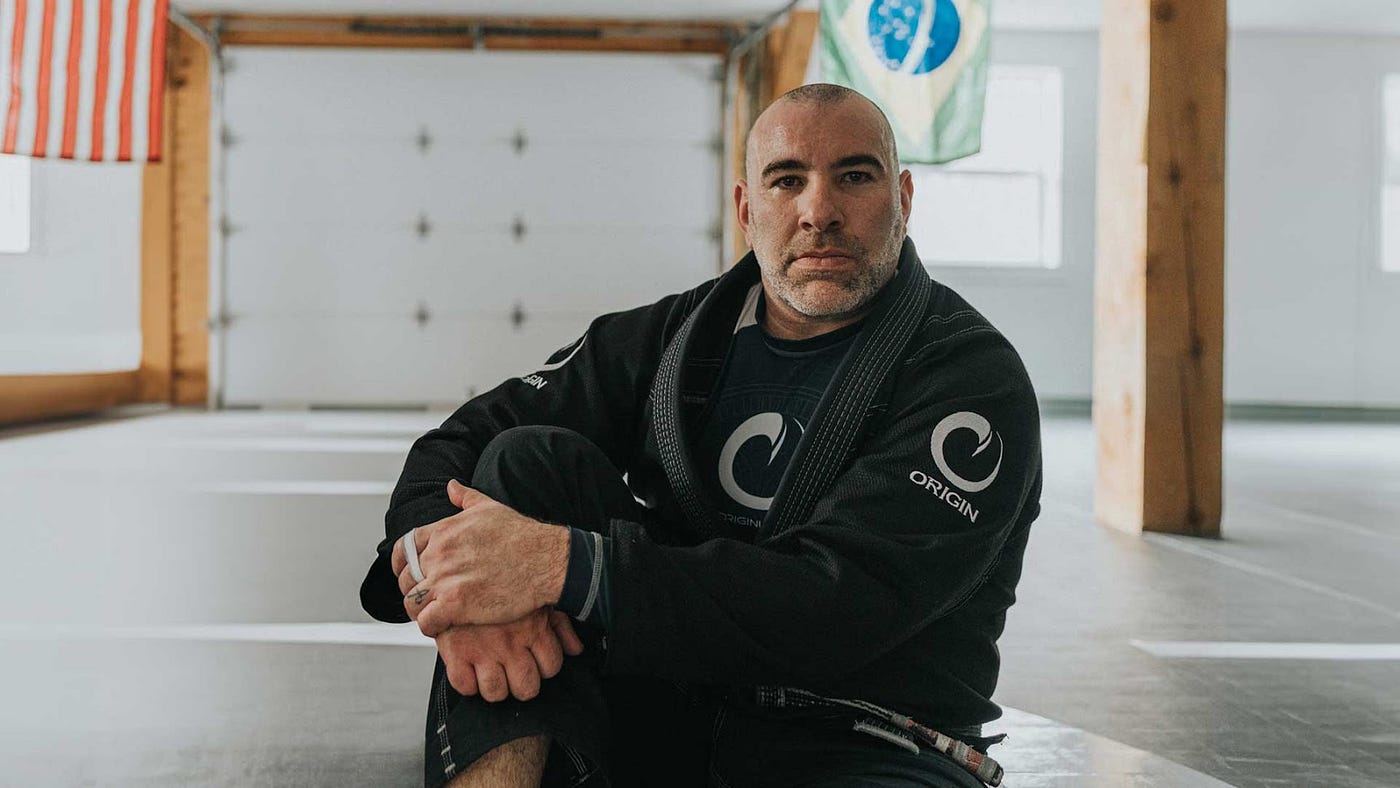
The biggest myth about being a CEO is that it is glamorous. It is not. It is often lonely and full of pressure.
As a part of our series called ‘Five Things I Wish Someone Told Me Before I Became A CEO’ we had the pleasure of interviewing Pete Roberts.
Pete Roberts is the founder of ORIGIN and JOCKO FUEL, two pioneering American companies focused on rebuilding domestic manufacturing and redefining modern performance. A lifelong maker who started in the woods of Maine with nothing, Pete has been compared to a real-life John Galt from Atlas Shrugged, restarting the motor of New England. He believes American industry can once again compete globally, and his mission is rooted in grit, gratitude, and an unshakable belief in the American Dream.
Thank you so much for joining us in this interview series! Before we dig in, our readers would like to get to know you a bit more. Can you tell us a bit about your “backstory”? What led you to this particular career path?
I grew up in the woods of Maine, a small-town kid in a single-parent home with four siblings and a mom who did whatever it took to keep us afloat. There were times we lived on welfare, and I remember feeling like I didn’t quite fit into the world. I had ADHD before anyone really understood it, and back then it felt more like a curse than a superpower.
Creativity was always my outlet. I loved making things with my hands, sculpting, drawing, and sewing. By the time I was twelve, I was making my own fleece socks that worked better with snowboard boots. I was sketching designs for sneaker innovations. I gravitated towards product, footwear and apparel.
In Maine, we call it dickering, which means bartering, trading, and figuring things out when resources are scarce. That is how I learned resourcefulness, independence, and how to turn imagination into something tangible.
At some point I realized I wasn’t built to fit into someone else’s system. So instead of trying to plug into the world as it was, I decided to build one of my own, a world where I fit. For me, that world became business.
Can you share the most interesting story that happened to you since you began leading your company?
In 2012 I was competing in jiu-jitsu in Abu Dhabi. For me, that was like making it to the Olympics of submission grappling. I had started ORIGIN about a year earlier, making jiu-jitsu uniforms that I was importing from Pakistan.
Before one of my matches, I saw a competitor walk by wearing one of my products, but when he turned around, the logo on the back was different. That was the moment I realized my manufacturer was ripping me off.
When I got back home to Maine, I called a few friends and told them to bring their chainsaws. We started cutting timber and built a small factory in the woods. It was the only way I knew how to fight back. That little timber-frame building, running on a generator and two old World War II Singer sewing machines, was the true beginning of ORIGIN.
Can you share a story about the funniest mistake you made when you were first starting? Can you tell us what lesson you learned from that?
I was completely naive. No one had manufactured products in Maine in decades. The knowledge, the skills, the infrastructure were all gone. And there I was, thinking I could just figure it out as I went. It was a crime of passion more than a business plan.
We made a lot of tuition payments along the way, and one of the first was painful. Our first batch of fabric was dyed black. We cut and sewed the garments, packed them up, and shipped them out. A few days later, the calls and emails started rolling in. The dye was running right out of the garments.
It should have sunk us before we even started, but instead I explained the situation to every customer. There were about 200 of them. I told them the truth, replaced what I could, and they stuck with us. That early mistake taught me the value of honesty and communication. People don’t expect perfection, but they respect authenticity and effort.
None of us are able to achieve success without some help along the way. Is there a particular person who you are grateful towards who helped get you to where you are? Can you share a story about that?
After we built our little timber-frame factory and started collecting old sewing machines, we began teaching ourselves how to sew. I have the scars to prove it. We were also trying to find a specific fabric for a jiu-jitsu jacket. I called every mill left in America, and none of them had it or could weave it. I felt hopeless.
Then I mentioned the problem to an old timer. He led me to an abandoned mill where there was one old loom frame left behind. I made a cash deal, loaded it up, and dragged it back to the woods. The only person in Maine who knew how to fix it was a man named Lenny Davis. He had a full-time job, so I begged him just to come take a look.
When he finally came, I asked him how many people in New England still knew what he knew. He said, “A whole bunch… at least five.” Lenny was the lynchpin, one of the last of his generation. We rebuilt the loom together over a very cold winter. He passed away a few years ago. I sat in my truck and cried like a baby. It was the first time I had shed a tear in a decade. Without him, none of this would have been possible.
Leadership often entails making difficult decisions or hard choices between two apparently good paths. Can you share a story with us about a hard decision or choice you had to make as a leader?
Leadership for me is something you practice. You never truly achieve it, and every day you have to keep practicing. It is also about humility and taking ownership.
I live by one code in business called Philotimo. As a Greek kid, this word has always been central to my life. It means “love of honor” or “friend of honor,” but it goes much deeper than that. It represents a sense of duty, responsibility, generosity, and the desire to act virtuously without expecting anything in return. It is about doing what is right and honorable in a way that reflects positively on yourself, your family, and your community.
Last year I was running two companies, ORIGIN, which makes footwear and apparel, and JOCKO FUEL, a nutritional company I started with Jocko Willink. I had been the CEO of both since founding them. That year, ORIGIN lost money. I had to look in the mirror and ask myself why. The root cause was staring back at me.
I made the decision to fire myself as CEO of Jocko Fuel and replace myself with a stronger CPG leader. Leadership is about doing what it takes to win, even when the cost is you. That is where leadership truly begins.
What are the “myths” that you would like to dispel about being a CEO or executive? Can you explain what you mean?
A CEO carries the weight of vision, risk, and accountability. Everyone else can focus on their part of the mission, but the CEO has to see the entire field at once. You have to predict the future, cast the long-term strategic vision, build the culture, and shape the team. You are the keeper of the long game while making hard decisions in real time. It means balancing the emotional with the practical, the ideal with the possible.
The biggest myth about being a CEO is that it is glamorous. It is not. It is often lonely and full of pressure. You spend your nights thinking about how to grow, where to place bets, how to protect your people and your market share, and how to steer through chaos without losing sight of the mission. People see the headlines and the wins, but they rarely see the sacrifices, the failures, or the personal toll it takes to build something from nothing. I turned gray early. I earned that.
Another myth is that a CEO’s job is to have all the answers. It is not. A good CEO creates the environment where truth can surface and the best ideas can win. My role has always been to remove obstacles so my team can do their best work, to protect the mission and culture at all costs, and to keep the vision alive when things get hard.
What is the most striking difference between your actual job and how you thought the job would be?
I never wanted to be a CEO. I thought I could build a business to five million dollars, and after that my skill set would no longer be valuable. I was wrong. This year my enterprise will do over two hundred million in revenue. It is just more zeros. The problems are the same: vision, culture, teams, lawyers, bankers.
I am not a boss. I am a peer. But I am also accountable for everything, all the time. Every day you make decisions that affect families, livelihoods, and futures. You have to stay calm when everything around you is shaking. You have to project confidence when you are not sure how the next chapter will unfold. That takes emotional endurance more than tactical skill. I call it emotional calluses, earned over time.
No one tells you that the higher you climb, the less applause there is. Every peak is false. The most striking difference is that being a CEO is not about control, it is about service. The job is to keep showing up for the mission.
Do you think everyone is cut out to be an executive? In your opinion, which specific traits increase the likelihood that a person will be a successful executive, and what type of person should avoid aspiring to be an executive? Can you explain what you mean?
Not everyone is built to be an executive, and that is perfectly fine. The job demands a high tolerance for pain, risk, stress, and paying that tuition. You have to crave discomfort and make it your home. You have to take complete ownership when things go wrong. There is no one else to point to.
The people who thrive in this role are self-aware, emotionally grounded, and obsessed with learning. They have vision but also discipline. They can see ten years ahead while solving today’s problems. Most of all, they have grit. Grit is what carries you through the times when logic says you should quit.
The type of person who should avoid it is someone who needs constant validation or stability. If you are motivated by comfort, you will suffer. Being an executive means living with pressure every day, and it never really goes away.
It is not about ego or authority. It is about responsibility. You are in service to the mission and to the people who trust you with their livelihoods. Executives are wired differently. We are overachievers who refuse to lose.
What advice would you give to other business leaders to help create a fantastic work culture? Can you share a story or an example?
Culture is everything. It is the soil that every decision, product, and relationship grows from. If you get the culture right, everything else follows.
At ORIGIN, we built our culture on one simple belief: We get to do this. No one else deserves to, and no one else is willing to pay the price. That mindset removes entitlement and replaces it with gratitude. It keeps people grounded in purpose.
Every morning I walk through the back door of the factory and say good morning to the team — the people on the floor, doing the work. I don’t have an office in the factory, nowhere to hide. I try to make myself available and approachable, like a peer, not a boss.
Culture is not about slogans or perks. It is about shared suffering and shared belief. It is built in the hard moments, not the easy ones. When people understand the mission and see you living it beside them, they do not just work for you, they fight for it with you.
How have you used your success to make the world a better place?
I never set out to build companies just to make money. I set out to build something that mattered. When I started ORIGIN, it was about proving that we could still make things in America, that we could rebuild what was lost. Every factory we open, every job we create, every young person who learns a trade — that is the impact.
We are showing that you can take pride in what you make again. That communities can thrive around industry instead of watching it leave. That the American Dream is still alive if you are willing to work for it.
I also try to use my platform to challenge how people think about leadership and the power of purpose. Success is not about accumulation, it is about contribution. It is about what you leave, not what you take. The more we grow, the more I want to invest in people — in jobs, in skills, in pride.
If I have made my community or the world a better place, it is by helping others believe they can build something real, right where they stand.
What are your “Five Things I Wish Someone Told Me Before I Became A CEO” and why?
1. No one is coming to save you.
In the beginning, I thought help would come — investors, experts, partners, someone who had the answers. But no one did. When our first supplier ripped us off, I realized that ownership means everything. I went back to Maine, picked up a chainsaw, and built a factory from the ground up. That lesson still drives me: if you want something to exist, you have to build it yourself.
2. Vision is lonely.
No one will see it like you do. That is not arrogance, it is reality. When you are building something new, you are living in the future while everyone else is standing in the present. It can feel isolating, but you have to protect that vision. The hardest part of leadership is believing when no one else can yet see.
3. Culture beats strategy.
You can write the best business plan in the world, but if your culture is weak, it will fail. At ORIGIN, we built our culture on gratitude, humility, and discipline. When times get hard — and they always do — culture is what keeps the team together. You cannot fake it. You have to live it every day, in the way you show up, talk to people, and handle the smallest problems.
4. Find an advisor early.
Find someone who has already achieved what you are chasing. The right advisor can save you years of pain and millions in mistakes. I wish I had done that earlier. When you are building something from scratch, it is easy to think no one understands your struggle. But the truth is, someone has already walked that road. Seek them out, listen to them, and have the humility to apply what they teach you.
5. The job is service, not status.
I never wanted to be a CEO. I wanted to build something that mattered. What I’ve learned is that leadership is about service — to your people, to your customers, to your mission. Every decision you make ripples through hundreds of lives. You do not get applause for that. You get responsibility. The reward is knowing you built something real, with integrity, that will outlast you.
You are a person of great influence. If you could inspire a movement that would bring the most amount of good for the greatest number of people, what would that be? You never know what your idea can trigger.
If I could inspire a movement, it would be to bring back the dignity of making things. For decades we have been taught to consume, not create. We have been told that manufacturing, craft, and hard skills are outdated. They are not. They are the backbone of strong communities and strong people.
I want to see a generation of makers rise again — not just in factories, but in every walk of life. People who take pride in building, repairing, and improving the world around them. People who believe their hands, their ideas, and their courage matter.
If enough of us choose to build instead of just buy, we can rebuild whole communities, restore pride in work, and prove that the American Dream is not dead. It is waiting for people willing to get their hands dirty.
Can you please give us your favorite “Life Lesson Quote”? Can you share how that was relevant to you in your life?
My favorite life lesson quote is: “No plan B. Head first, arms tucked.”
Anything great in life takes a decade. From zero to twenty, you are learning. From twenty to sixty, you are doing. And by sixty, hopefully you are enjoying the fruits of your labor. That’s forty years — four decades of opportunity.
If you fail once or twice, you still have two more decades left to build something great. My advisor told me this when I didn’t know what to do. It opened my eyes. I had time. I just had to keep going.
We are very blessed that some very prominent names in Business, VC funding, Sports, and Entertainment read this column. Is there a person in the world, or in the US with whom you would love to have a private breakfast or lunch with, and why? He or she might just see this if we tag them.
If I could choose a private breakfast or lunch, it would be with Jim Davis, owner and chairman of New Balance. Jim has done something few have ever achieved. Not just the scale of his brand, but the fact that he kept it private and still makes product in the USA.
His long-term vision to build an iconic, family-owned business while staying true to his values is something I deeply respect. I’d love to talk with him about legacy, leadership, and the future of American manufacturing — and of course, about our shared Greek roots.
Thank you for these fantastic insights. We greatly appreciate the time you spent on this.
The Authority Magazine Editorial Desk produces, verifies, and edits long-form primary-source interviews with executives, innovators, clinicians, creators, and social impact leaders across Business, Tech, Pop Culture, Wellness, and Social Impact.

Exclusive, curated interviews with the leaders and changemakers shaping tomorrow. Leadership lessons, industry deep dives, and executive profiles.
The founder of StoneSystems.io shares how treating entrepreneurship like esports, embracing cringe, and ruthlessly eliminating bottlenecks can drive rapid growth.
The CEO and co-founder of Tactacam shares how his team navigated supply chain challenges, product recalls, and scaling a purpose-driven outdoor technology brand.
The accomplished litigator and premier coach shares how transitioning from the courtroom to television taught him resilience, self-acceptance, and the power of true personal reinvention.

The founder and sales expert shares how she transitioned from teaching to building a multi-million-dollar recruitment and education company through radical honesty and grit.
The CEO of TOV explains how disrupting a male-dominated industry through female-focused design and global expansion is transforming the home decor market.
The founder and CEO of Leon Capital Group shares how his upbringing along the US-Mexico border and unconventional business strategies shaped his journey to building a multi-division holding company.
The Vice Chair of US Trust Solutions shares how her history background led her to accounting and how embracing discomfort fuels career longevity.
The renowned cosmetic dentist and creator of diamond dental art shares his journey from the Mayo Clinic to crafting bespoke smiles for elite athletes and entertainers.