When we first started talking with Datavant, I remember reading about the Datavant Way, including hiring smart, nice people who get things done. I loved the idea of it but didn’t expect to see it translate to anything unique about how things worked within the company.
Business
Pete McCabe on Velocity, Merging Company Cultures, and Scaling Healthcare Data
The Datavant CEO shares his philosophy on operational velocity, navigating high-stakes industry pivots, and the vital importance of learning from every manager along your professional journey.
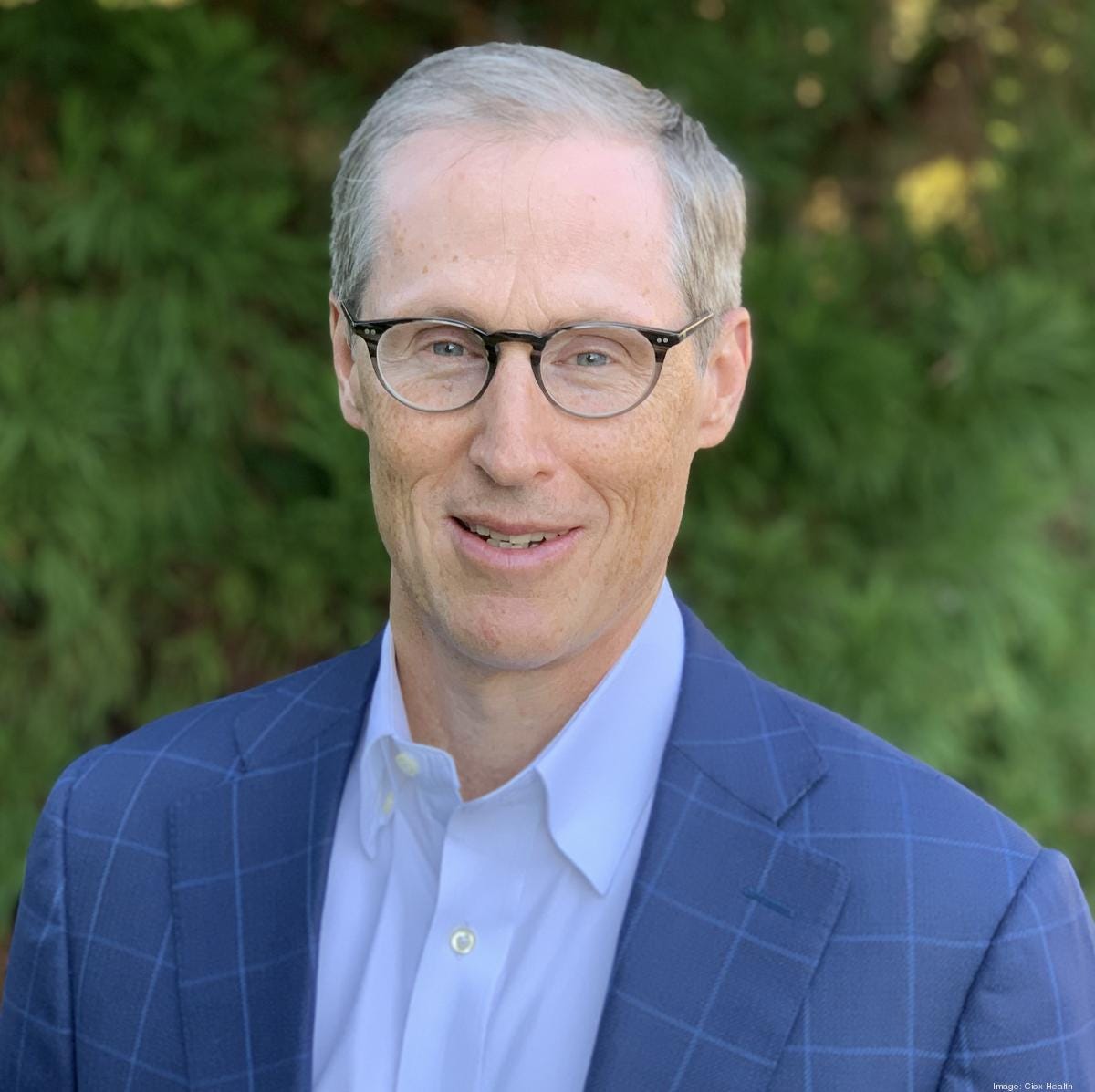
As a part of our series called ‘Five Things I Wish Someone Told Me Before I Became A CEO’ we had the pleasure of interviewing Pete McCabe.
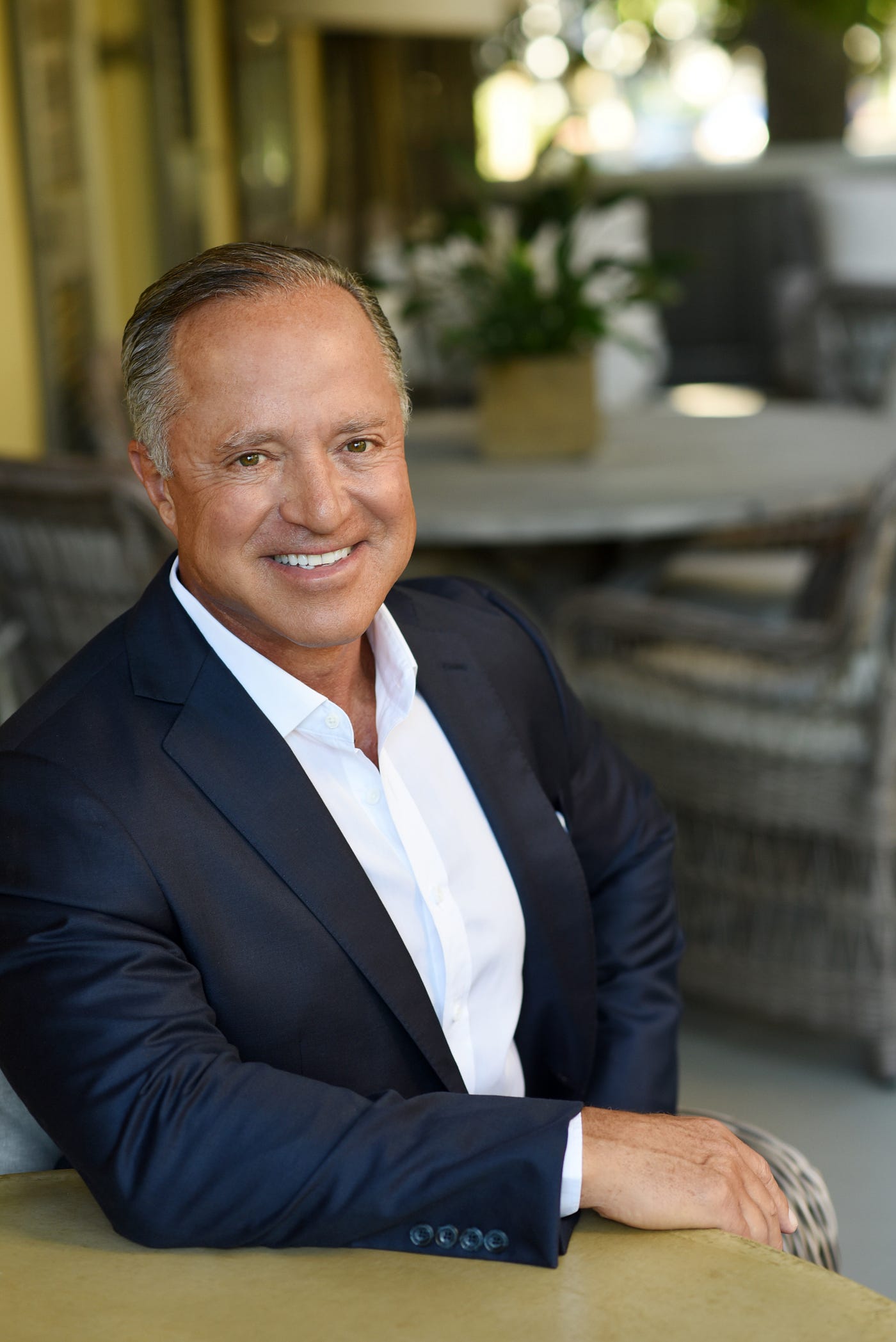
Pete McCabe has a track record of delivering growth and outstanding client results while achieving operational transformation. He spent the last 19 years at The General Electric Company, working in renewable energy, healthcare, and more. Pete earned a Bachelor of Science degree in Mechanical Engineering in 1988 from Northeastern University. He and his wife have three daughters.
Thank you so much for joining us in this interview series! Before we dig in, our readers would like to get to know you a bit more. Can you tell us a bit about your “backstory”? What led you to this particular career path?
I love to solve systems problems encompassing people, processes, and technology; the bigger and more impactful, the better. I spent the majority of my career at a large conglomerate in leadership roles across aerospace, plastics, corporate functions, healthcare, transportation, and even wind. The common denominators across all of these were driving change, creating differentiation through products, services, and technology, building teams, and shaping culture. Somewhere along the way, I had the opportunity to lead a Surgery business that was an outlier in terms of its impact on the world, its market share, its culture, its profitability, and its customer satisfaction. I decided I wanted to be part of a team where exceptional was the standard and thought that Ciox, which ultimately became Datavant, was the perfect place for that. We have the opportunity to influence one of the biggest advancements in healthcare of our generation by powering every health decision with data. Our amazing team, distinctive culture, incredible ownership, and irreplicable assets have us in the pole position to make a huge impact on the world, build a once-in-a-career culture and team, and deliver outsized returns for our shareholders. I am really lucky to be a part of this team and mission. I haven’t had a bad day in the four years I have been with the company.
Can you share the most interesting story that happened to you since you began leading your company?
The most interesting thing for me was merging Ciox and Datavant and getting to work with Travis May, the founder of Datavant, and the culture he and the team built. I had participated in numerous value and culture change efforts throughout my career and had become a bit skeptical. At best, they are incremental but mostly a necessary evil (not a differentiator). When we first started talking with Datavant, I remember reading about the Datavant Way, including hiring “smart, nice people who get things done.” I loved the idea of it but didn’t expect to see it translate to anything unique about how things worked within the company. Boy was I surprised! The team was smart (smart sales people, smart coders, smart finance people, etc.), nice (collaborative, kind, respectful, bringing out the best in each other), and all had the amazing capacity to get work done.It was like nothing I had seen in my prior 25 years. What is exciting now is that we are taking the best of Datavant’s culture and adding to it the best of Ciox’s culture — a patient-focused, customer obsessed, team-first spirit. This is the kind of team and culture I had only read about and here we are, living it and making it even better. How cool is that?
Can you share a story about the funniest mistake you made when you were first starting? Can you tell us what lesson you learned from that?
This is not so much a mistake as it is embarrassing. When I was a year out of college, I worked at a large plastics facility in Southern Indiana whereI led the sourcing of our indirect materials. Back then, you wore a suit, tie, and white shirt to work every day. Every year we had a free physical at the health center on-site. I was lined up wearing my navy blue pinstripe suit with about 30 operators who had their overalls, hard hats, and steel-toed shoes on having just come off their third shift. It was my turn to get my blood drawn. I am a bit of a wimp when it comes to having my blood drawn — I had even passed out years before. The doctor asked me if I had any issues, but being too proud to look weak in front of the team, I said no. They drew my blood and asked if I was ok. I said yes, took three steps off the table, and dropped to the floor in front of all 30 people. The next thing I remembered was the doctor (he was wearing a bow tie) hovering over me. “Are you OK?! Are you ok?” I said yes, got up, and walked another three steps only to pass out again! Needless to say, I spent a lot of time recuperating on a bed, and the team had a lot of stories to tell in the lunchroom the next day.
The big learning here is to know your limits. Our job as a CEO is to stretch the limits of what is possible but if we go too far we can lose our team’s respect and credibility (much like I did at the health center). There is no perfect way to know the limits of a team, technology or idea, but knowing that there is a limit has been helpful to me over the years, especially when we are chasing big ambitions.
None of us are able to achieve success without some help along the way. Is there a particular person who you are grateful towards who helped get you to where you are? Can you share a story about that?
First, it is my wife and family. Your professional journey is very much grounded in your personal one. Having someone to support you through the moves (11 and counting), through the lows, celebrating the highs and that will call your BS is invaluable (my kids have a PhD in keeping me humble). I would be nowhere without it.
Secondly, I have been lucky to work for some amazing people who truly bet on me, and I learned something unique and valuable from each one. My first manager out of college was amazing; she thought I was 100x more capable than I was, and through her infectious energy and can-do spirit — she never took no for an answer — I learned the power of optimism. My second manager had an incredible way of being tough but fair, which I try to emulate today. My third manager was an excellent communicator, and my next manager was the best customer person I had ever been around. The one after that was the smartest, most efficient leader I ever met; his signature 10-minute meetings left you feeling empowered. The list goes on. There is nothing more valuable to me than the opportunity to learn (probably from growing up with a house full of teachers), and these leaders have given me so much.
Leadership often entails making difficult decisions or hard choices between two apparently good paths. Can you share a story with us about a hard decision or choice you had to make as a leader?
I was asked to lead a business that got in trouble with the FDA. On day one, we shut down the business, let go of the staff, and flew to DC to negotiate what is called a consent decree, the terms you had to meet before you could restart engineering, producing, and shipping products. There was no precedent for this in the company (thankfully), so we engaged some consultants. They said it would take two to three years to get the business back and running. There was no tolerance for that kind of timeline. Instead, we built plans to get back up and running in three months, but three months came and went. At some point, I had to make the decision to continue to run this like a sprint or pivot and run it like a marathon. I decided to run it like a marathon and not, against the council of just about everyone, lay people off. We burned about a million dollars a day for 14 months. It was hell, but we had the highest employee satisfaction score of the entire company, and within three months of restarting shipping, we had gained almost 80% market share. Customers actually waited for us. This was because we said “we will ship when we get it right,” built the plans to win for the long term, and engaged the team in the solutions. All people remember today is how well the business recovered — nobody talks about the millions we could have saved opening before we were ready.
Ok, thank you for that. Let’s now jump to the primary focus of our interview. Most of our readers — in fact, most people — think they have a pretty good idea of what a CEO or executive does. But in just a few words can you explain what an executive does that is different from the responsibilities of the other leaders?
I think the role of a CEO is pretty simple; you drive change, develop other leaders, and shape culture. Driving change can be both proactive (strategy) and reactive. Building leaders is amazingly important; you are no better than the team you build; it really is job one. The statement that culture eats strategy for breakfast is reinforced to me every day. If you don’t get it right, all the talent and strategy in the world isn’t enough. Every leader does some of this (drive change, develop other leaders, shape culture), but as a CEO, the buck stops with you. The wins are yours, and the misses are yours. Although this sounds like a lonely existence, you are around people every day, collaborating and problem solving. But ultimately, you alone are responsible for the outcome, which can feel lonely during critical moments.
What are the “myths” that you would like to dispel about being a CEO or executive? Can you explain what you mean?
Despite my answer above, one myth is that we have all the answers. We do not. And it can be scary.
Another myth is that you only need to know the business at a “high level” — a great leader really needs to know how things work to know when they are not working and how to improve them. Getting into the weeds and diving as deep as possible is crucial in my role.
Another myth is that there is a specific way to be an executive. The value of more diversity in leadership is that we learn how to be a great executive by learning from others that think about things in different ways and have different backgrounds and experiences.
A final myth is that you are funny. When you become a CEO your jokes seem to get funnier; they are not!
What is the most striking difference between your actual job and how you thought the job would be?
I have been lucky enough to be around a lot of CEOs, so I was not surprised by a lot. The biggest surprise, although you hear it all the time, is that the job is lonely. You really need to build a support group outside the company and have a terrific family unit.
Do you think everyone is cut out to be an executive? In your opinion, which specific traits increase the likelihood that a person will be a successful executive and what type of person should avoid aspiring to be an executive? Can you explain what you mean?
No one should let me or any other executive tell them they shouldn’t aspire to be an executive because an executive is just a leader. And almost everyone can lead — drive change, develop other leaders, and shape culture — under the right circumstances.
The new economy is showing us how there are new models of executive leadership, from people who went the traditional Harvard MBA route to people who never went to college to people who still wouldn’t use the word executive to describe themselves.
The key trait for me is the desire to lead something that is bigger than myself, to strive for exceptionalism, and to want to take others with me.
How have you used your success to make the world a better place?
We are in the early days of connecting the world’s data so that every health decision can be informed by data — complete, longitudinal, ethically, and compliantly sourced — when and where it is needed. Enabling this will have one of the biggest impacts on the health of the world of our generation, saving hundreds of billions of dollars, significantly elevating the quality of care, and 100xing the pace of innovation. This is the impact on the world I spend most of my time trying to influence.
Beyond this, I work with several charitable efforts around supporting disabled young adults and the environment.
What are your “Five Things I Wish Someone Told Me Before I Became A CEO” and why? (Please share a story or example for each.)
Drive for exceptional velocity. Velocity (speed with direction) is a formidable moat in and of itself, arguably the most formidable moat. You have to hire for it, design your operating mechanisms and norms for it, shape your culture to support it, sweat the little things to accelerate it, and set the pace for it.
Ask more questions. It’s easy to feel that as a CEO, you are supposed to have all the answers. People are often afraid to share their thoughts or do not have enough confidence to offer up their views. I spent too many meetings with people waiting for me to make a decision, and that scares me.Nobody has all the right answers, especially me. The best ideas and insights came because I asked the right questions.
3 . Your job is to shape culture. Culture eats strategy for breakfast; you have to be extremely purposeful about what you want it to be and how you grow it. I spend much more of my time on culture than I ever expected and have found it to be 100x more powerful a successful factor than I ever expected.Seeing it in action at Datavant made it crystal clear.
4 . Overcommunicate, and then do it again. The problem with communication is the assumption it happened. There is no such thing as too much communication. Communicate. Rinse. Repeat. I do a weekly “ask-me-anything-Pete” because I realized the importance of people hearing the most critical messages directly from me.
5 . There is nothing more powerful in business than clarity, alignment, and simplicity. Every day you will have something that wants to erode this, don’t let it.ou have to be the champion of this;no one else will.
You are a person of great influence. If you could inspire a movement that would bring the most amount of good for the greatest number of people, what would that be? You never know what your idea can trigger.
Let’s be clear, I am here today at Datavant because I believe we are working on the world’s most important problem and opportunity — healthcare.
The movement we are trying to inspire is to break through the silos where data sits today and work to take all this valuable information and actually make choices that save lives. Improve lives. Make lives that help other lives.
If we are successful here, it will be the greatest movement of my life.
Can you please give us your favorite “Life Lesson Quote”? Can you share how that was relevant to you in your life?
It is simple, but I like “Be present.” Too much multitasking. Too much thinking about what is next.
A meeting will be 1000 times more effective if we put down our phones, close our laptops, roll up our sleeves, and make a decision.
It is especially true when I meet people at the front lines of our business or early in their careers. Remember that meeting with an executive is a huge deal for them. Being present in that moment with them gives them back the respect they deserve. And you always learn from listening.
It is even more true personally. Time goes by more quickly than any of us ever realize. Being with the people we care about is a gift. We should never squander it.
We are very blessed that some very prominent names in Business, VC funding, Sports, and Entertainment read this column. Is there a person in the world, or in the US with whom you would love to have a private breakfast or lunch with, and why? He or she might just see this if we tag them
Luckily because of where we are and the ecosystem we operate in, I am fortunate to have access to inspiring healthcare and finance leaders. So I will go in a different direction here.Mine would be Neil deGrasse Tyson. Man, honestly, he makes something so massive and hard to comprehend incredibly interesting and accessible. He connects millions of people to knowledge. If- if he talks to you, you have to get his autograph for me.
Thank you for these fantastic insights. We greatly appreciate the time you spent on this.
About the Interviewer: Douglas E. Noll, JD, MA was born nearly blind, crippled with club feet, partially deaf, and left-handed. He overcame all of these obstacles to become a successful civil trial lawyer. In 2000, he abandoned his law practice to become a peacemaker. His calling is to serve humanity, and he executes his calling at many levels. He is an award-winning author, teacher, and trainer. He is a highly experienced mediator. Doug’s work carries him from international work to helping people resolve deep interpersonal and ideological conflicts. Doug teaches his innovative de-escalation skill that calms any angry person in 90 seconds or less. With Laurel Kaufer, Doug founded Prison of Peace in 2009. The Prison of Peace project trains life and long terms incarcerated people to be powerful peacemakers and mediators. He has been deeply moved by inmates who have learned and applied deep, empathic listening skills, leadership skills, and problem-solving skills to reduce violence in their prison communities. Their dedication to learning, improving, and serving their communities motivates him to expand the principles of Prison of Peace so that every human wanting to learn the skills of peace may do so. Doug’s awards include California Lawyer Magazine Lawyer of the Year, Best Lawyers in America Lawyer of the Year, Purpose Prize Fellow, International Academy of Mediators Syd Leezak Award of Excellence, National Academy of Distinguished Neutrals Neutral of the Year. His four books have won a number of awards and commendations. Doug’s podcast, Listen With Leaders, is now accepting guests. Click on this link to learn more and apply.

Published inAuthority MagazineTop Lessons, Top Authorities · 42K Followers
Exclusive, curated interviews with the leaders and changemakers shaping tomorrow. Leadership lessons, industry deep dives, and executive profiles.