As a leader, I make probably 10 micro decisions on any given day. You’re constantly choosing between apples and oranges, and there isn’t a clear better path.
Business
Andre Esteva: The Lean Hypothesis Test That Saved My Startup Millions
The CEO of ArteraAI shares how transitioning from academic research to medical AI entrepreneurship taught him the critical importance of customer feedback and rapid validation.
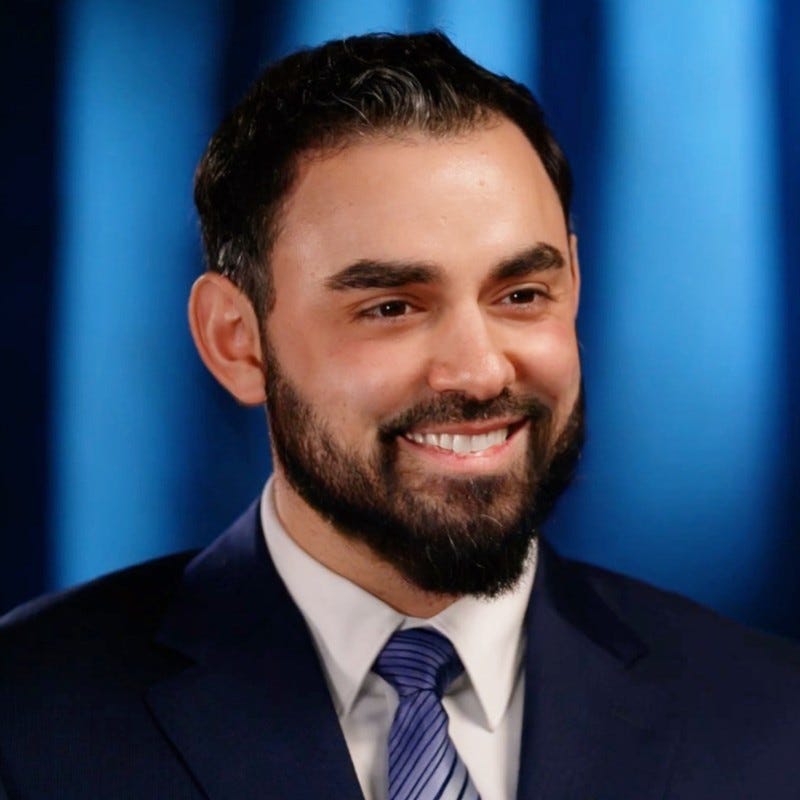
As a part of our series called ‘Five Things I Wish Someone Told Me Before I Became A CEO’ we had the pleasure of interviewing Andre Esteva.
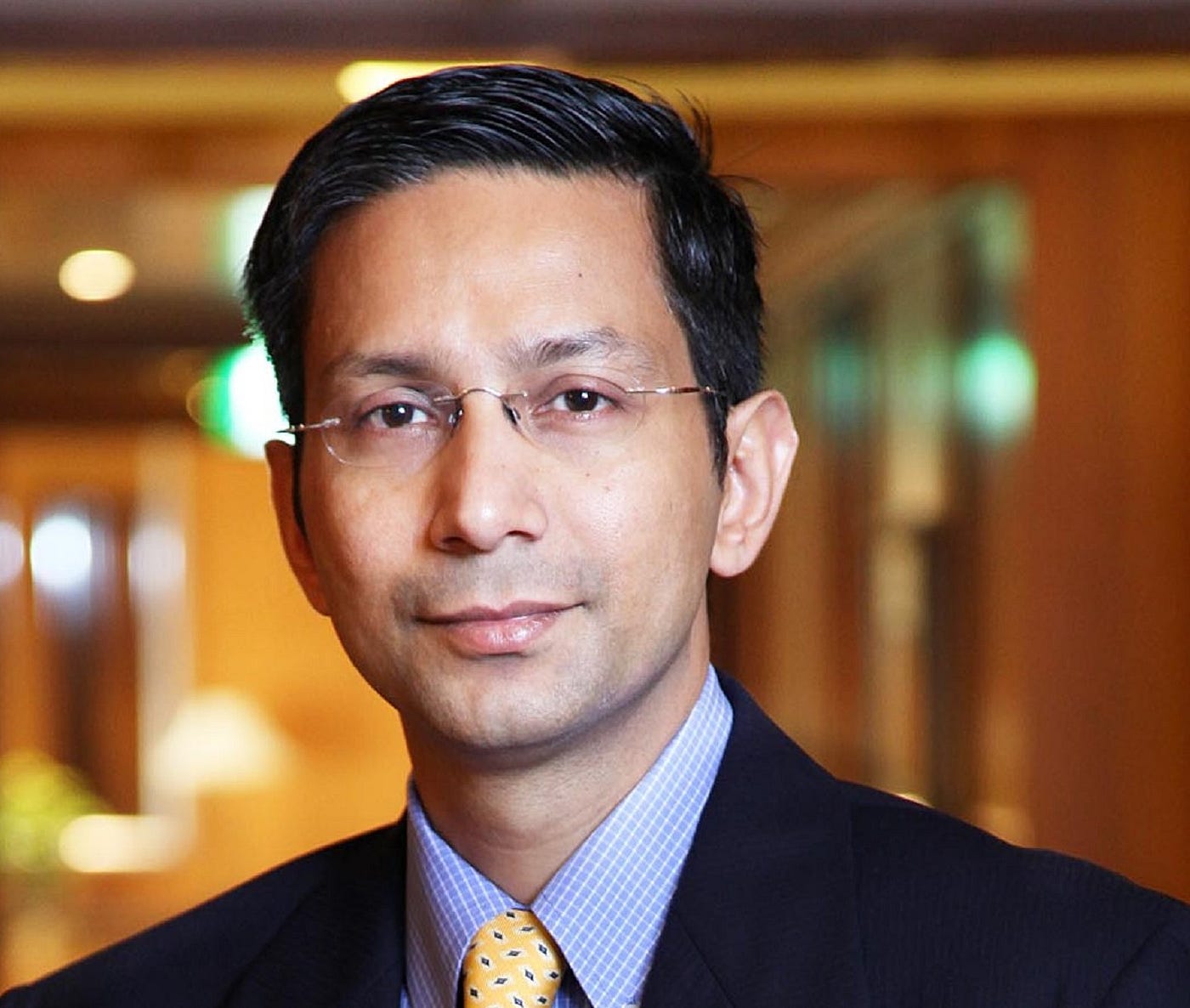
Andre Esteva is a researcher and entrepreneur in medical artificial intelligence. He currently serves as CEO of ArteraAI, and was previously Head of Medical AI at Salesforce Research. He has worked at Google Research, Sandia National Labs, GE Healthcare, and has founded four companies.
His research efforts have largely focused on medical AI diagnostics and precision medicine. His publications have made the covers of Nature and Nature Medicine, and have been featured in Cell, The Lancet, NeurIPS, and similar venues. These works have been widely covered by the WSJ, Fortune, BBC, The Economist, and hundreds of other news outlets.
He obtained his PhD in Artificial Intelligence at Stanford, where his research was in deep learning and computer vision, with applications built for dermatology, drug screening, neuroscience, and psychiatry. He finished undergraduate degrees with highest honors in Electrical Engineering and Pure Math from UT-Austin and was awarded Engineering Valedictorian (formally, the Outstanding Scholar-Leader Award).
Thank you so much for joining us in this interview series! Before we dig in, our readers would like to get to know you a bit more. Can you tell us a bit about your “backstory”? What led you to this particular career path?
I’ve always been interested in problems of large-scale societal impact. I definitely took a non-linear approach in getting to where I am today.
In my undergrad I studied electrical engineering and math. I also spent a year after that working on nuclear fusion at Sandia National Laboratories, before ultimately ending up at Stanford.
At Stanford, I started my PhD in applied physics, and about halfway through, I realized that my career prospects were going to be more theoretical and academic than I hoped for. Around this time, I discovered machine learning and fell in love with it. I realized that this field, which is the core of AI today, was essentially going to revolutionize any industry that utilizes digital data. So, halfway through my PhD, I switched fields into artificial intelligence.
I also made the decision to focus my PhD research not just on core algorithmic developments, but on applications of AI. Healthcare seemed so meaningful, and computer vision was rapidly maturing, so at the time, I started working on developing deep learning algorithms to diagnose ailments from images. We developed specialized AI that could run on mobile apps and diagnose patients for skin cancers (e.g. melanoma). We even proved it was as accurate as dermatologists, and were the first AI of our kind to demonstrate clinician-level performance at a critical diagnostic task, through a scientific publication that made the cover of Nature.
I’ll never forget the time that we tested the app in-clinic at the Stanford Hospital. It found an early stage melanoma on a patient that their clinician missed! A top clinician, no less — one of the world’s leading thinkers in pigmented lesions and melanoma. We may have saved that patient’s life. It was probably the single most profound moment in my entire PhD. I even got to meet the patient afterwards, who was so grateful that we found their melanoma early, when it was stage 1 cancer. It could have easily progressed to stage 4 by his next checkup the following year. This experience essentially kick-started a career in medical AI.
Prior to ArteraAI, I was Head of Medical AI for Salesforce. It was during this time that my research began to evolve from medical diagnostics to precision medicine. Specifically, I worked on therapy personalization, in which we developed AIs that could help select the right treatment for individual patients.
Physicians often struggle with therapy personalization, since they’re being asked to predict the future for a patient. Doing this well usually includes synthesizing all sorts of information about patients. Whereas it’s tough for humans, algorithms can do this exceedingly well. So, we started innovating and developing tools. From that, sprung the work that became ArteraAI.
Can you share the most interesting story that happened to you since you began leading companies?
As CEO of my first company, I led the development of a melanoma app that became the centerpiece of my thesis at Stanford and was later published in Nature. As we sought to bring the app to market, I engaged with hundreds of potential customers to gain valuable insights into the business idea.
Through this process, I realized that our initial assumption that there was a clear market for a melanoma app was misguided. This experience taught me a lesson about the importance of understanding the customer’s perspective and thinking beyond just the technological aspect of our solution. I recognized that successful innovation at the intersection of healthcare and technology requires a comprehensive understanding of both industries.
Drawing from this lesson, I was able to save my company millions in funding and years of development time. I used this newfound knowledge as a foundation for my work at ArteraAI, a successful company I now lead, that leverages AI-based technology in healthcare.
As CEO, I have come to appreciate the vital role that customer feedback and comprehensive research play in ensuring successful innovation. Through my leadership, I am committed to a culture that prioritizes listening to our customers and deeply understanding their needs, ensuring that our solutions are grounded in real-world demands.
None of us are able to achieve success without some help along the way. Is there a particular person who you are grateful towards who helped get you to where you are? Can you share a story about that?
One of the most impactful experiences I had while at Stanford was taking a course with Steve Blank, the inventor of the lean methodology for entrepreneurship. Steve had built around eight startups at that time and was widely credited with inventing the hypothesis-driven approach for entrepreneurship.
Steve’s class taught me the importance of hypothesis-driven entrepreneurship, which involves iterative testing with customers to determine product-market fit. This method has stayed with me throughout my career and was crucial in founding ArteraAI. By hypothesizing what the customer wants and then speaking to them for feedback, I was able to evaluate the viability of my idea for a melanoma app and realize that it was not going to work. This saved me potentially years of my life and millions of dollars of investor funding.
Since then, Steve has been a close mentor of mine. He’s an advisor of and investor in ArteraAI, and I’ve sought his guidance with every company I’ve built and every role I’ve had. His expertise and mentorship have been invaluable, and I’m deeply grateful for his support. The toolkit that I learned in his class has been instrumental to my success, and I continue to use it in my work today.
Leadership often entails making difficult decisions or hard choices between two apparently good paths. Can you share a story with us about a hard decision or choice you had to make as a leader?
As a leader, I make probably 10 micro decisions on any given day. You’re constantly choosing between apples and oranges, and there isn’t a clear better path. There’s a TED talk that I really like that talks about the nature of hard decisions, and why they’re hard. It basically says that easy decisions are those that somehow sit on a metric. For example, an apple for a dollar or an apple for two dollars is an easy decision. If it’s the same apple, take the cheaper one. It’s a metric decision. However, apples versus oranges is not a metric decision. It’s actually a question of personal taste. And so, when it comes to making hard decisions, there isn’t a clear reason why one is better than the other. What you end up having to do is create a reason why one is better, for you, than the other. That’s the fundamental nature of easy versus hard decisions.
As a startup founder you’re constantly faced with such decisions. And as a leader, you have to create a reason, if there isn’t an obvious one already, why one choice is better for your business than the other choice. In doing so you end up shaping your company.
In our particular case at ArteraAI, we sit at the intersection of tech (AI) and healthcare — two worlds which are very different in culture and workstyle. The constant set of decisions to make sure that the whole company is actually one unified culture has been an exciting challenge of building a company like ours.
Most of our readers — in fact, most people — think they have a pretty good idea of what a CEO or executive does. But in just a few words can you explain what an executive does that is different from the responsibilities of the other leaders?
While all leaders have unique responsibilities, executives typically have higher-level decision-making responsibilities that impact the overall strategy and direction of an organization. Executives are responsible for setting and achieving the long-term goals of the company, making decisions that affect the entire organization, and managing the resources necessary to achieve those goals. Additionally, executives often have a broader external focus, representing the company to external stakeholders such as investors, customers, and partners.
One book that I think nicely summarizes the (many) areas of responsibility of CEOs is “CEO Excellence”, written by partners of McKinsey. They interview about 200 executives and synthesize their many roles into six key areas: setting the organization’s direction, aligning the organization, mobilizing the business through its leaders, engaging the board, connecting with stakeholders, and managing personal effectiveness.
What are the “myths” that you would like to dispel about being a CEO or executive? Can you explain what you mean?
Being a CEO is not an upgraded version of being an executive. I’ve been an executive before and when you’re a normal executive, there are playbooks. There are established ways of doing things that you can very clearly learn from others in your industry
If executives walk paths that others have paved before, CEOs, and in particular startup CEOs, have to trailblaze through the jungle down paths that few, if any, have walked. It can be difficult to qualify what you do on a day-to-day basis.
Unlike other executives, there aren’t standard playbooks for being a CEO. It’s hard to come prepared for the job, even if you’re inheriting a large corporate CEO position that you’ve been trained for. But there’s certainly no preparation for being a startup CEO other than being a startup CEO. All of the greatest challenges roll up to you every day. You can’t think like conventional, corporate executives and CEOs, because startups are not big companies, and you can’t operate them that way.
What is the most striking difference between your actual job and how you thought the job would be?
I’ll preface this by saying, this is actually my fourth company! So, drawing from my experiences I’d say that being a CEO, especially a startup founder, is far more multi-dimensional then you can imagine. You end up learning a bit about all the many areas of running a business, and you have to learn to judge progress and success in those areas. You then have to hire leaders for those areas, and in the early days, work in those areas yourself!
They say that the founders of a startup need to have the full set of skills to do all the functions of a company in the early days of a startup. You need to learn a lot of different talents. And if you haven’t learned them before, you’re going to be drinking from a fire hose in the first months or years. Before I jumped into this space, I thought it would look like what I saw in big corporate CEOs. They focus a lot on external relationships, fundraising, the media, setting the strategy and so forth. I found that you do all that, however, before you’re a big company with a ton of support, you’re doing everything else as well. On top of that, you’ve got to get all of it right because the company is counting on you in the early days.
You also need to learn how to triage. You have to say no to almost everything when you’re running a company in order to be laser focused on what actually matters. There’s this balance of being incredibly multi-dimensional, but also remarkably selective about what you decide to do. That was not obvious to me until I became a startup founder.
Do you think everyone is cut out to be an executive? In your opinion, which specific traits increase the likelihood that a person will be a successful executive and what type of person should avoid aspiring to be an executive? Can you explain what you mean?
I find it helpful to think about it in 2 different buckets.
One bucket is the set of skills that you need to be an effective leader. Anyone who is reasonably talented and motivated can go learn those skills.
On the other hand, there is the emotional and mental endurance that is required. As a startup CEO, you are put into an environment of constant chaos. All the toughest challenges of the company will trickle up to you. You have to solve very difficult challenges whether it’s in the market, with your customers, or with your team.
Yes, anyone can learn the basic skills needed to lead, but the question is, “can you stay calm and focused under the most extreme pressure?”
I realized when I was reading a book written by a navy seal, that seals actually undergo specific training to hone their mental fortitude. There are technical skills they must learn, but a lot of their training is about enduring days, hours and weeks of intense physical and mental stress and putting their bodies through the most intense rigor. They focus on training their minds to continue through it. As a CEO, I see an analogy there. It’s not physical, it’s actually very mental.
It’s a question of, “can you handle the chaos, the stress and the intensity of executive leadership?”
What advice would you give to other business leaders to help create a fantastic work culture? Can you share a story or an example?
Define your company’s core values. Do it by asking yourself two questions, “(1) what are the key values that have made me successful in my career that I should imbue into the company? (2) What key values will the company need in order to be successful in its current market?” Then, go hire leaders that embody those values, manage them well and turn them into a team. You can’t just drop 10 random athletes on a field and expect them to win a sports game — they must learn to work like a team. The same is true about leaders. You need to work with them, listen to them, and make sure that they are a heterogeneous team that covers a broad range of skills. Empower them to go build the rest of the company.
Next, take those values and embed them into the company to the point where they are guiding decision-making and actions. During your interview process, ask potential candidates to tell you stories of times that they embodied your company’s values, and look for a match. If you’re stuck on a tough decision, point to your values and ask yourself which decision better serves your values.
For example, at ArteraAI, our whole team is focused on putting the patient first and using innovative technology to create a more personalized approach to treating localized prostate cancer. Any decision at Artrea that attempts to put a different stakeholder ahead of the patient is unlikely to proceed. I learned about the importance of shared and embodied values from my time at Salesforce, where all objectives that you set for yourself and your team(s) must serve the Salesforce values. Credit to Marc Benioff’s wisdom here.
How have you used your success to make the world a better place?
ArteraAI has the potential to become a massively impactful company across the globe. We’ve developed the first ever test that can personalize therapy by predicting therapeutic benefit in localized prostate cancer. What we have built can scale very nicely and replicate very quickly into other disease sites. It is more accurate, has fast turnaround times, and is more globally accessible than the conventional testing that’s currently available. By the end of the year, ArteraAI will be an international company.
I hope to be able to solve the problem of lack of therapy personalization for cancer and the fact that the current set of treatment guidelines are designed to treat the cohort, not the individual patient. Many patients are overtreated with therapies that produce harmful side effects, and physicians are understandably concerned about undertreating disease and having cancers progress. ArteraAI can predict whether a patient would benefit from a certain treatment. The long term mission is to globally personalize all medical decisions, including therapy personalization beyond oncology.
Here is the primary question of our interview. What are your “Five Things I Wish Someone Told Me Before I Became A CEO” and why? (Please share a story or example for each.)
- You have to learn to stay calm and think clearly in the most intense situations. You have to be your best and bring your absolute best skills in those situations.
- You have to build a world-class team, which is composed of two pieces: hiring world-class individuals and getting them to work together.
- You are constantly outsourcing yourself. That’s how you grow the company. Whatever you’re doing, you need to figure out a way to get somebody else to come in and do it so that you can move on and do something else. From this process, you end up building a company from the bottom up.
- Being a CEO is remarkably multi-dimensional. Early on, you need to adopt a growth mindset and be humble with yourself. You’re learning for the sake of your own growth, and for the sake of the business. It can be particularly challenging because, when you’re the CEO, nobody else has the same complete perspective of the company and the business. So you simultaneously need to determine the way in which you need to grow. You are both your own teacher and your own student..
- You absolutely have to find the time to take care of yourself. You need to sleep, eat right, and exercise. Then, you need to encourage your team to do the same, because it’s a marathon, not a sprint. I disagree with this culture that we see in Silicon Valley of constantly working. Personally, I believe the key is to work efficiently. Rest is a form of productivity. You have to rest at the gym to be able to do your next exercise, right? Figuring out how to prioritize your health as well as the company’s health is critical.
You are a person of great influence. If you could inspire a movement that would bring the most amount of good for the greatest number of people, what would that be? You never know what your idea can trigger.
I would inspire everyone to learn more about their own health and take care of it.
Can you please give us your favorite “Life Lesson Quote”? Can you share how that was relevant to you in your life?
One life lesson quote I find relevant in my life is, “the difference between successful people and really successful people is that really successful people say no to almost everything.” I believe it is so important to say “yes” to the few things that are the most important and to go far on those. However, if you say “yes” too much, you’ll spread yourself thin.
We are very blessed that some very prominent names in Business, VC funding, Sports, and Entertainment read this column. Is there a person in the world, or in the US with whom you would love to have a private breakfast or lunch with, and why? He or she might just see this if we tag them
Bill Gates. Not only did he found and build one of the greatest companies in existence today, but his philanthropic work has done so much good across the globe. Plus, he’s a big advocate for AI and has supported many initiatives that today have heralded a lot of the incredible progress we’ve seen in the space.
Thank you for these fantastic insights. We greatly appreciate the time you spent on this.
About the Interviewer: Douglas E. Noll, JD, MA was born nearly blind, crippled with club feet, partially deaf, and left-handed. He overcame all of these obstacles to become a successful civil trial lawyer. In 2000, he abandoned his law practice to become a peacemaker. His calling is to serve humanity, and he executes his calling at many levels. He is an award-winning author, teacher, and trainer. He is a highly experienced mediator. Doug’s work carries him from international work to helping people resolve deep interpersonal and ideological conflicts. Doug teaches his innovative de-escalation skill that calms any angry person in 90 seconds or less. With Laurel Kaufer, Doug founded Prison of Peace in 2009. The Prison of Peace project trains life and long terms incarcerated people to be powerful peacemakers and mediators. He has been deeply moved by inmates who have learned and applied deep, empathic listening skills, leadership skills, and problem-solving skills to reduce violence in their prison communities. Their dedication to learning, improving, and serving their communities motivates him to expand the principles of Prison of Peace so that every human wanting to learn the skills of peace may do so. Doug’s awards include California Lawyer Magazine Lawyer of the Year, Best Lawyers in America Lawyer of the Year, Purpose Prize Fellow, International Academy of Mediators Syd Leezak Award of Excellence, National Academy of Distinguished Neutrals Neutral of the Year. His four books have won a number of awards and commendations. Doug’s podcast, Listen With Leaders, is now accepting guests. Click on this link to learn more and apply.

Published inAuthority MagazineTop Lessons, Top Authorities · 42K Followers
Exclusive, curated interviews with the leaders and changemakers shaping tomorrow. Leadership lessons, industry deep dives, and executive profiles.