The challenge of constant change makes for an entertaining ride in life that is never boring.
Business
Zack Green: Perfect Compliance and Relentless Scaling Are the Real Drivers of Cannabis Industry Survival
Gold Spectrum founder Zack Green shares how transitioning from corporate burnout to cannabis entrepreneurship requires embracing relentless change, strict compliance, and scalable retail models.

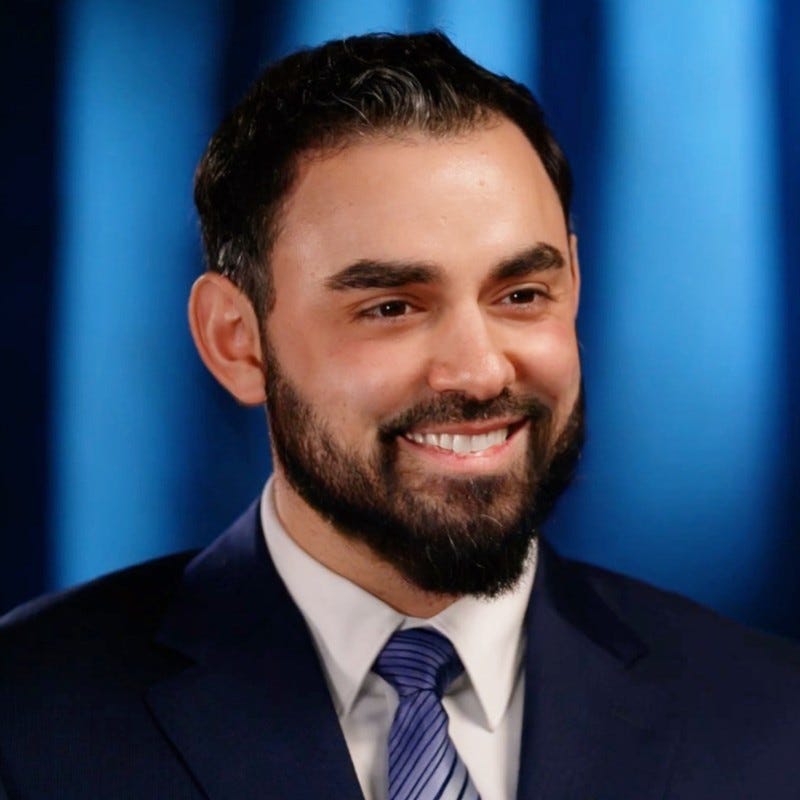
As part of my series about “5 Things I Wish Someone Told Me Before I Started Leading a Cannabis Business” I had the pleasure of interviewing Zack Green.
Zack Green is one of the top minds in the cannabis space. With more than 10 years of experience ranging from managing 10+ acre growing facilities in Colorado, to leading manufacturing for other cannabis brands, to starting Gold Spectrum nearly 4 years ago. He has done it all. His efforts were always about bringing cannabis to the masses and educating consumers about the power of cannabis. At Gold Spectrum, that purpose shines through. Zack leads all things product innovation and growth–and the growth at Gold Spectrum speaks for itself, from$0 to $10M in under 4 years.
Thank you so much for doing this with us! Can you share with us the story about what brought you to this specific career path?
After reaching a burnout phase in the corporate world as a purchaser and supply chain manager, I found pleasure in the uniqueness of every situation that occurs in the cannabis industry. There is always a new problem to solve or pivot to be made within your business. The challenge of constant change makes for an entertaining ride in life that is never boring.
Can you share the most interesting story that happened to you since you began leading your company? Can you tell us what lesson you learned from that?
I have always been an overly trusting person. I give my all with everything I do, and I expect others to have like-minded intentions if they are working with me. I assume the best in people and like to give them a shot, partly because I believe that if you want to get anywhere in life you have to take people with you, not just use them. With that mentality I have trusted people, hundreds of times, with thousands of dollars, and some of them have turned into great relationships while others have cost me thousands of dollars in a learning lesson, and I’ve learned that lesson in many different ways. Last year I learned the dangers of who you call your partners and that how fast you try to grow could be your downfall. I flew a dozen of my team members down to Florida for me to lead a sales conference with a larger company I intended to merge my LLC with. After six months of delays, they instead hired 8/10 of my sales team and started selling to all my accounts in my markets at the same price they were charging me. The CEO of this company was a friend of mine and considered me his “Legacy” customer in the industry, so I never asked for a non-compete agreement or contract exclusivity in my market. I thought a promise was good enough. I have seen it time and time again, and sometimes it costs me $1,000 and sometimes it costs $250,000, but the rats always show their true colors and no matter the cost, cutting them out is necessary for the hope of a successful future.
Can you share a story about the funniest mistake you made when you were first starting? Can you tell us what lesson you learned from that?
In the beginning I was excited and naive like many entrepreneurs jumping into the cannabis industry. I wanted to be the best at everything from growing and extracting to the products we produced. I had efficiently dialed in a grow recipe and scaled that operation to 4 rooms on a perpetual harvesting cycle, with material finishing every 3–4 weeks at 2 lbs per light. Basically, I thought that I had figured out the answers to the wonders of the world. So in my ambition I scaled this new operation to be producing 10,000 plants a month and man did it sound good on paper. In reality it is much harder to perfectly replicate a good thing on a scale of 100 times. Anyone in the industry that says they can, but hasn’t done it to that exact magnitude before, is in way over their heads. That, in my opinion, is why many of these publicly traded, billion dollar corporate cannabis companies cannot live up to their projections. The people that are the best performers in this industry were in this industry before it was cool.
Are you working on any exciting projects now? How do you think that will help people?
Yes, I am working on a franchise model for our retail stores. I entered the hemp industry with the ambition of improving my resume, so that when an opportunity arises for legal cannabis, I would be well-positioned to pursue a job or licensing opportunity related to this field that I am passionate about and which is rapidly growing. I have had to pivot my business many times to survive the ever-evolving market. I normally identify within the industry as a manufacturer and distributor, but I love retail when it is done professionally. Through my experience selling to shop owners, I started to identify gaps within the market. What started as one Headquarters storefront with hemp growing and offices in the back quickly turned into six booming retail stores. Now it’s a franchise brand. Having the retail stores helped me a lot with R&D for our product line innovations and hearing the responses from customers about what they found enticing. We now feel that we have a good recipe for filling out a storefront with all the appropriate product varieties. We produce over 400 skus and retail over 1,000 great items including our own glass brand, our nicotine brand, and three cannabis brands each with different customers in mind. I want to share our successful recipe with other like-minded entrepreneurs that want to build their resumes in the cannabis space. I believe the best path to obtain a medical or recreational marijuana license is to have experience running a similar business, adhering to all necessary procedures and banking regulations. With that said I want to offer a path into this industry to more than just the convenience store owners that are already in retail. I have dealt with more shop owners that do not use or understand cannabis products and just want to make money off my brands. While as a manufacturer we need their volume, I want more of my own people in dispensary ownership positions. For that reason, I am looking for partners to expand this industry and to work with to educate and innovate the cannabis industry before it becomes bought out by those who care nothing about it.
None of us are able to achieve success without some help along the way. Is there a particular person who you are grateful towards who helped get you to where you are? Can you share a story?
Definitely, there are tons of friends, family members, and teammates that have been crucial to the growth of Gold Spectrum. We have over 60 amazing employees on our team now and without their invaluable contributions, we wouldn’t be able to operate. Each of them fills a unique and valuable role that helps make us successful. It truly takes a village flowing in harmony to make an impact. One person can accomplish very little on their own. If you are fighting the current and trying to lead those who are not bought into the dream, you are wasting the time of everyone involved. The one person in particular that I would like to thank is my partner in all cannabis ventures, Alex Valley. The first day we met, I showed him around my facility and I could tell that he saw the potential of what we had before us. He didn’t have to fully understand every intricacy of the cannabis products as I do to believe in the vision of what we could be. My life revolves around cannabis and Gold Spectrum, which makes it difficult for me to step back and objectively evaluate the organization’s structure. To help me with this, Alex has taken on some of my roles in the organization so that I can focus on improving it from a higher level. I believe that building out the team and finding people that want to solve problems to make us better is the most important step we can take to grow to the next level. The amount of change I have seen in the last six months is unbelievable and I thank Alex for motivating that.
This industry is young, dynamic and creative. Does your company use any clever and innovative marketing strategies that you think large legacy companies should consider adopting?
I have some strategies that I enjoy using to differentiate us from the competition, but I would rather larger companies not copy my best practices for as long as possible. One strategy we have is partnering with stores as they are opening new locations, since this is such a new industry there is a lot of that, by being early adopters we can help them decorate their stores with our signage and flyers. They look nice and promote the sales of our products above any other brands in the store. With that we provide plenty of samples and silicon mouthpieces for their customers to try it before they buy it. We use traditional print media flyers, more expensive branded LED signage, large branded display towers, and even product shelving custom to fit our best-selling items.
Can you share 3 things that most excite you about the Cannabis industry? Can you share 3 things that most concern you?
Excited:
I am excited to be an industry pioneer and for the opportunity to do something that’s never been done before. This is a brand new industry, and innovations that occur every month are the first of their kind. I love the prospect of creating value and in this explosive industry there is a lot of value to be added if you are creative and able to execute properly.
In more mature industries the barrier to entry is very steep and requires large cash reserves and the willingness to run in the negative for many months or years. With a fresh new industry like ours, we can create the market share that has never existed before and grow much more organically than, say, the beverage industry where you must replace another SKU in order to add yours.
One feature of this industry that excites me is the level of uncertainty. Many businessmen would never touch a field that has the uncertainty of legal changes that we experience weekly. It is difficult to sleep at night when everything you do could become federally illegal tomorrow, but changes in legal status always present some opportunities, it just varies whether it’s in your favor or not. We are confident in ourselves as agile innovators that know this industry and how the laws work, so when legal guidelines change we are able to quickly react.
Concerns:
Big Tobacco has started making its way into the hemp and cannabis industry.
Mega companies like Hawthorne (Miracle Grow) have been buying up all the grow lighting and nutrient industry leaders.
Other pharmaceutical companies have patents on cannabis genetics and the most basic form of extracting cannabinoids. It is almost laughable that they are placing patents on living organisms and processes that are federally illegal, but once the laws change they will have a choke hold on the market.
These large companies that spend billions of dollars collectively on lobbying do not want cannabis legal until they are ready to monopolize the market. When you have the government, more money than God, and 75% of the licensing or industry leaders purchased, how do we average entrepreneurs compete?
Can you share your “5 Things I Wish Someone Told Me Before I Started Leading a Cannabis Business”? Please share a story or example for each.
- What works today will not work next year. If you aren’t innovating, you’re dying. We are in the midst of a technology revolution, and the cannabis industry has seen a major shift in recent years. With science and pharmaceuticals making new discoveries every week, cannabis is now receiving the full backing of the medical and scientific communities. With that, innovation and science has been rapidly expanding this industry comparable to a nuclear arms race. If you are not ahead of the curve, by the time you perform your market analysis, R&D, and eventually launch your product, you will be too late to the game as something newer and better emerges.
- One of the few core takeaways I remember from my entrepreneurship classes in college is that second to “solving a problem”, the next leading cause for entrepreneurship is “change in legal guidelines”. With that mentality, do not be discouraged when one door closes, because another will always open. You just have to be smart enough to realize the opportunity at hand. This industry changes quickly, but for those of us who truly live and breathe it, we will always find a place until the day we are bought out by corporate America.
- The industry is new. Not everybody is organized, detail-oriented, or efficient. This means I have to be diligent when dealing with suppliers and be the one that leads with detail. This also gives those that are efficient and organized an edge over their competitors. I attribute a large part of my success to this and the next piece.
- Resilience and perseverance are key. The industry is constantly evolving and a large part of that is due to those of us who lobbied for legalization and positive changes within the industry. Everything is harder in the cannabis space than general product/service companies. Things like banking, credit card processing, legal, compliance, public perception, and advertising are easier for most other businesses. In cannabis, as has happened to us, these items can change from one day to the next. Changes, like a bank shutting down or PayPal freezing all of your money, can be a huge pain point. You have to be resilient to overcome these seemingly constant obstacles.
- Be “by the books.” This industry is under intense scrutiny. To grow your brand, and to help move the industry as a whole forward, we have to have perfect compliance on all fronts. We can’t let any errors happen. We lead by being lawful and transparent. And this transparency has paid dividends for us and for the industry as a whole.
What advice would you give to other CEOs or founders to help their employees to thrive?
There is a careful balancing act between freedom and structure for your employees. They need both to flourish properly. Focus on fostering a positive work environment, encouraging collaboration and communication, and providing meaningful feedback and recognition.
You are a person of great influence. If you could inspire a movement that would bring the most amount of good to the most amount of people, what would that be?
There are a couple charities that work to reduce sentences for those incarcerated on non-violent cannabis charges. It’s upsetting that the number of people serving 20 years to life because of possession, growing, or selling a plant that is now legal in half the states of America. If I could make any change it would be to free everyone from jail and acquit them of all wrong doings for any non-violent cannabis offense across the U.S. All fines, probation, and jail time should be deleted with the snap of a finger by the right politicians.
What is the best way our readers can follow you on social media?
@Gold.spectrum on Instagram
@zack_green_ on Instagram
This was very inspiring. Thank you so much for joining us!
AM
Written by
Authority Magazine Editorial Staff
Editorial Desk · Authority MagazineThe Authority Magazine Editorial Desk produces, verifies, and edits long-form primary-source interviews with executives, innovators, clinicians, creators, and social impact leaders across Business, Tech, Pop Culture, Wellness, and Social Impact.

Published inAuthority MagazineTop Lessons, Top Authorities · 42K Followers
Exclusive, curated interviews with the leaders and changemakers shaping tomorrow. Leadership lessons, industry deep dives, and executive profiles.