My backstory of entering the finance industry can be summarised in one word: serendipity.
Business
Pulak Prasad of Nalanda Capital: Inside the Long-Term Strategy to Build Wealth Through Systematic Equity Indexing
The Founder and CEO of Nalanda Capital shares his accidental journey into finance and the vital lessons in patience, Darwinian evolution, and smart investing.

As a part of my series about The 5 Essentials of Smart Investing, I had the pleasure of interviewing Pulak Prasad.
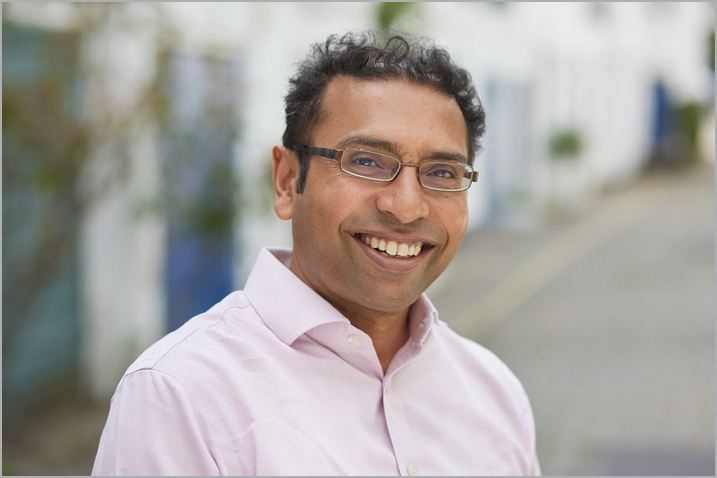
Pulak Prasad is the author of What I Learned About Investing from Darwin, and Founder and CEO of Nalanda Capital, a Singapore-based firm that invests in listed Indian equities and manages about $5 billion primarily for US endowments, and US and European family offices and foundations.
Thank you for doing this with us! Our readers would like to learn a bit more about you. Can you tell us the “backstory” about what brought you to the finance industry?
Thank you for inviting me for this discussion. My backstory of entering the finance industry can be summarised in one word: serendipity. I had been a consultant at McKinsey for six years but although I worked with exceptional colleagues and great clients, I thought something was missing. I did not know what it was and had no plans to leave.
Out of the blue, I received a call from a head-hunter asking me if I was interested in private equity at a firm called Warburg Pincus. This was 1998, and neither had I heard of the firm, nor had any idea of what private equity was. My investing knowledge was a big zero then. I told him that I had no interest and that he should not call me. But he was very persistent — thank heavens — and persuaded me to talk to the senior folks at Warburg Pincus.
I met with the head of India, Dalip Pathak, and the head of Asia, Chip Kaye — Chip is the global head of Warburg Pincus now. I loved my discussions with them and realised what I had been missing in consulting — skin in the game. I became very enamoured with the business model of private equity at Warburg since they stayed with the company for the long-term, and their success was tied to the success of the company they had invested in. The position was also very entrepreneurial because there was practically no private equity in the region. And so, I jumped ship into unchartered waters.
Can you share with our readers the most interesting or amusing story that occurred to you in your career so far? Can you share the lesson or take away you took out of that story?
I was a relatively senior person at McKinsey when I joined Warburg Pincus. I had spent six years as a consultant, and in two more years, I would have been up for partnership. On my second day at Warburg Pincus, my boss asked me to go through a deal that was sent by an investment bank. I am guessing that he wanted me to come up with key diligence issues to focus on.
Instead, my first question to him after going through the pitch book in details was, “What is this thing called EBITDA that the banker keeps mentioning in the presentation?” I remember the horrified look on my boss’s face! He had assumed he was hiring someone senior and smart, and here was I asking the most basic question of all that even a junior banker or investor would be well familiar with. I am still surprised that he didn’t fire me on the spot.
As a strategy consultant at McKinsey, it was not that I had not dealt with financial numbers, but the term “EBITDA” — that stands for earnings before interest, tax, depreciation and amortization — is a jargon from the finance industry that I had never encountered. As an aside, I still detest the term EBITDA which, in my opinion, for all practical purposes, is quite useless while assessing the financial strength of a business.
My key lesson from this episode: Never reach snap judgments. My boss, despite his initial shock, gave me the benefit of doubt, pointed me in the right direction, and allowed me time to settle in this new and unfamiliar terrain. If he had had a knee-jerk reaction, I may not have been giving this interview!
Are you working on any exciting new projects now? How do you think that will help people?
I have just finished writing a book What I Learned About Investing from Darwin that has been published by Columbia University Press. My agent reminded me that I should start thinking of the next book, but I want to take a bit of a breather first!
I have just one wisdom to impart: Investing in the equity markets can create enormous wealth, but it takes a lot of time and a lot of patience and a lot of resilience. It’s simple but not easy. One should not invest in the markets if one doesn’t have a time horizon of decades, not months or years.
Ok. Thanks for all that. Let’s now jump to the main core of our interview. According to this report in Fortune, nearly two-thirds of Americans can’t pass a basic test of financial literacy. In your opinion or experience what is the cause of these unfortunate numbers?
This is not just an America problem. I invest in India, and even among the well-educated, I think the numbers would be worse than America. We have two extremes of behaviour among a large fraction of retail investors. People either lose out on an enormous wealth creation opportunity by leaving all their money in the bank or they lose their shirt by gambling on crypto or stock markets through easily downloadable apps.
I can’t claim to be an expert about why a lay person is not financially literate, but if I were to hazard a guess, it would be this: it’s not mandatorily taught — as mathematics or history or literature is — in schools and colleges. My son went to a very good college in the US, and while he did take a course on financial literacy, it was an elective. Why should that be? One way to prepare the college graduates for life is to expose them to at least one mandatory personal finance course.
If you had the power to make a change, what 3 things would you recommend to improve these numbers?
I have two main ideas in this area. First, as I said earlier, the most important thing would be to expose high school students and college undergrads to a course in personal finance. This course must be mandatory, not elective. It should carry the same weights as any other course. Second, just as we need a license for driving a car, anyone opening a bank account or a trading account must be able to answer some basic questions on personal finance. This is not a one-hour test, but a basic 5-minute questionnaire. If they are unable to get more than 75% answers right, they must go through a brief tutorial before being allowed to open the account. They should also be given (in email as well as in physical form) personal finance handouts.
I know this may be perceived as somewhat of a “big brother” behaviour, but the long-term damage caused by lack of financial knowledge can lead to as much — if not more — harm than a car accident.
Ok, thank you! Now to the main question of our interview: You are a “finance insider”. If you had to advise your adult child about 5 non intuitive essentials for smart investing, what would you say? Can you please give a story or an example for each?
Coincidentally, my son started his first job in September last year in Chicago, and I did have this conversation with him. I asked him to ignore all the noise around investing and simply execute a “systematic investment plan” or SIP. SIP works as follows.
He invests a fixed dollar amount every month in two indices — NASDAQ and S&P 500. He ignores all the news on market movements, and whether the market is up or down, he keeps investing the same amount every month. In fact, he has already opened a Fidelity account, and every month, a fixed sum automatically gets deducted from his account to buy the two indices. This method of investing has two big advantages: it is well suited for long-term wealth creation and unlike many other types of investments, the money is available on tap.
But we need to address two issues: why should one invest in the index, and why should it take the form of SIP?
Let’s start with the rationale of investing in the equity index. There is enough empirical evidence to show that over long periods, equity investing creates the most wealth relative to other asset classes like gold or real estate or commodities. But investing in the markets by buying individual stocks is very dangerous — if 90% of highly qualified fund managers can’t beat the market, a retail investor stands no chance. However, investing in the indices allows an individual to take advantage of the equity markets’ ability to create long-term wealth without significant risk. Take S&P 500. If one invests in this index, one is betting on a diversified set of 500 best businesses in the country for almost no fee. If a particular company does not perform well, it gets removed from the index to get replaced by a better company. Thus, index investing allows an individual to always stay invested in the best companies in the US. What could be better than this free ride?
Now let me address the logic and the upside of the SIP investing method. Let’s say my son has $1,000 to invest every month and the index level is 100. He will buy 10 shares of the index (1000/100). If the market suddenly jumps to 200, he buys only 5 shares of the index (1000/200). But if the market falls to 50, he is able to buy 20 shares (1000/50). Do you see what is happening here? He is buying less shares of the market when it is “hot” and is buying more shares when the market falls. Over the long run, this would allow him to compound is wealth at a reasonable rate without taking significant risk.
The key to success here is ignore the ups and downs of the market and keep automatically investing every month. I assured my son that he would be beating most fund managers if he adopts this simple plan.
What are your thoughts about investing in cryptocurrency? Can you explain what you mean?
I don’t understand it, and so I stay away from it. Maybe some people can figure out the logic of investing in an asset with no underlying basis of value, but I can’t. However, my sense is that the blockchain technology that forms the basis of cryptocurrencies has its uses and is already being implemented by many firms like Walmart, IBM, Siemens, and P&G.
What are your thoughts about day trading, using apps like Robinhood? Can you explain what you mean?
They are very dangerous for unsophisticated users who treat it as a tool for making easy money. You must have heard of a student who committed suicide in 2020 because he saw a large negative balance in his Robinhood account. This was an extreme example, but I am sure there are thousands of users whose lives have been upended because they mistakenly thought they could get rich quickly through apps like Robinhood.
While equity investing can create enormous wealth, people must realise that it takes time and patience. Research has shown that day trading does not make money for most individual users. In fact, even sophisticated hedge funds, many of which do day trading, aren’t able to sustain for long — according to an FT article I read some time ago, the average life of hedge funds is less than 5 years. So what hope is there for individual day traders?

None of us are able to achieve success without some help along the way. Is there a particular person who you are grateful towards who helped get you to where you are? Can you share a story about that?
I consider myself very lucky. I have had more than my fair share of good fortune over the years. Many people have been supportive of my personal and professional journey, and it is very hard to pick out just one individual. However, if you insist, let me tell you the debt I owe to Mr Rathod, my history teacher in secondary school in India. I have taken a transfer to a new school and was struggling socially. Mr Rathod and his history class got me through very tough times.
He did not teach us history from textbooks, and asked us to do our own research in the library. We were then asked to make a presentation to the class and were encouraged to be rational and methodical. The rest of us were free to disagree with the presenter. I remember huge arguments on a variety of seemingly dry history subjects.
To my surprise, I found that my key strengths were the ability to do rational analysis, succinctly synthesise a lot of information from diverse source, and not be perturbed by ambiguity. The “A” received in his class is my most cherished grade in my academic career. Mr Rathod’s class built a lot of inner confidence in me, and probably for the first time, I realised that I could hold my own in almost any situation. I think I am a better investor because of the many life lessons I learnt in his class.
Can you please give us your favorite “Life Lesson Quote”? Can you share how that was relevant to you in your life?
Continuing from my previous answer, I remember Mr Rathod talking a lot about the Scottish philosopher called David Hume who said that “reason is the slave of passion.” Mr Rathod used to emphasise that we may think we have a logical and coherent point of view, but it is really based on our pre-existing desires and biases.
Thus, according to him, the history of India we were studying was not an “objective” account of what happened in India but was the result of what the author of believed themselves. Thus, the same history written from a British point of view would read very differently. I am not sure I understood it very well then but remember being astounded by the fact that even history — something that had supposedly actually happened! — wasn’t sacrosanct.
This lesson has allowed me to be less dogmatic in my views and more open to ideas and opinions of others. I can appreciate that someone with a radically different point of view is not my enemy — they have their own reasons and feel as strongly about their views as I do about my own. Even if I vehemently disagree with someone, I think I can listen to their side with an open mind. I may or may not change my mind but this adage has allowed me to treat everyone with respect.
You are a person of great influence. If you could inspire a movement that would bring the most amount of good to the greatest amount of people, what would that be? You never know what your idea can trigger. :-)
Thank you for saying that, although I am not sure I have that much influence!
As I said earlier, making financial literacy compulsory for high schoolers and college students would go a long way in addressing not only individual issues, but societal ones. Also, if schools and colleges want, this idea can be implemented relatively easily.
Thank you for the interview. We wish you continued success!
About The Interviewer: Jason Hartman is the Founder and CEO of Empowered Investor. Jason has been involved in several thousand real estate transactions and has owned income properties in 11 states and 17 cities. Empowered Investor helps people achieve The American Dream of financial freedom by purchasing income property in prudent markets nationwide. Jason’s Complete Solution for Real Estate Investors™ is a comprehensive system providing real estate investors with education, research, resources and technology to deal with all areas of their income property investment needs. Through Jason’s podcasts, educational events, referrals, mentoring and software to track your investments, investors can easily locate, finance and purchase properties in these exceptional markets with confidence and peace of mind.
Starting with very little, Jason, while still in college at the age of 19, embarked on a career in real estate. While brokering properties for clients, he was investing in his own portfolio along the way. Through creativity, persistence and hard work, he earned a number of prestigious industry awards and became a young multi-millionaire. Jason purchased a California real estate brokerage firm that was later acquired by Coldwell Banker. He combined his dedication and business talents to become a successful entrepreneur, public speaker, author, and media personality. Over the years he developed his Complete Solution for Real Estate Investors™ where his innovative firm educates and assists investors in acquiring prudent investments nationwide for their portfolio. Jason’s sought after educational events, speaking engagements, and his popular “Creating Wealth Podcast” inspire and empower hundreds of thousands of people in 189 countries worldwide.
While running his successful real estate and media businesses, Jason also believes that giving back to the community plays an important role in building strong personal relationships. He established The Jason Hartman Foundation in 2005 to provide financial literacy education to young adults providing the all-important real world skills not taught in school which are the key to the financial stability and success of future generations. We’re in a global monetary crisis caused by decades of misguided policies and the cycle of financial dependence has to be broken, literacy and self-reliance are a good start. Visit JasonHartman.com for free materials and resources.
JH
Written by
Jason Hartman
Editor & Journalist · Authority MagazineJason Hartman is a senior columnist at Authority Magazine covering Business and Tech, conducting primary-source Q&A interviews with founders, executives, and industry leaders.

Published inAuthority MagazineTop Lessons, Top Authorities · 42K Followers
Exclusive, curated interviews with the leaders and changemakers shaping tomorrow. Leadership lessons, industry deep dives, and executive profiles.