Because we are from Portland and because of my fifth grade teacher, Mr. Schroeder. Portland is a wonderfully educated city and it is also a very eco-friendly city. We recycle and we ride bikes and we take a lot of pride in doing mindful and thoughtful things to walk a little more gently in this world.
Business
Curtis Matsko of Portland Leather Goods: The Relentless Focus on Affordability and Quality That Built a Multimillion-Dollar Sustainable Brand
Portland Leather Goods founder Curtis Matsko shares how starting in a single-car garage and obsessing over value enabled his team to scale into a leading sustainable brand.

As ‘slow fashion’ grows in popularity, more fashion companies are jumping on the bandwagon. Renewable consumption has been gaining popularity for a while, as people recognize its importance, and many fashion companies want to be a part of this change. In this interview series, we are talking to business leaders in the fashion industry to discuss why they are embracing slow fashion and renewable consumption. As a part of this series, I had the distinct pleasure of interviewing Curtis Matsko.
Founded in 2015, Portland Leather Goods is the sustainable handmade leather brand known for their cult-favorite goods and fashion forward collections. The company began in a one-care garage but quickly became one of the fastest growing online retailers, with over $100 million in sales.
Thank you so much for doing this with us! Before we dig in, our readers would like to get to know you a bit more. Can you tell us a bit about your childhood “backstory”?
Absolutely not. I’m often asked in interviews about one experience and one story and dozens come rushing into my mind and it is like a parent choosing a favorite child. And I get it. It is a great way for the readers to get insight into who I am and why they should listen. However any entrepreneur, any business man or woman, anybody who’s done anything oversized, unexpected, complex and truly exciting in life knows that there are hundreds and hundreds of stories that are meshed together in an amazing tapestry of bold action, chance, luck, magic and laughter that makes something go from a crazy idea to something that is out there and part of thousands of peoples lives everyday.
Now I am not using this as an out. I’m not trying to avoid telling a story because I love stories. I am a natural storyteller. I will say this of journeys — all journeys that are worthwhile, they all start with someone taking action. Because there’s a gift that happens when you take action because you are immediately frustrated — you have problems, hurdles, obstacles that come up against doubt and you are forced to overcome those problems or fail. And when you overcome difficult things, you gain knowledge, experience and the confidence to do it again and again. And WOW does that struggle, success, and confidence loop get to be fun and addicting. That’s my backstory, I learned early on how awesome it is to succeed when no one thought I could, and I haven’t stopped.
What do you think makes your company stand out? Can you share a story?
Portland Leather Goods was started by a bunch of broke artists in Portland, Oregon. Let me explain something about our wonderful city: Portland is Seattle on minimum wage.
And if you create a product and want to sell it in or around the Portland area you’re selling to people who don’t have a lot of money. They know value and they count every dollar. And they care about materials and how things are made. So to have any chance of making local sales we were forced by circumstance to come up with something that was really good and we sold it at prices that were so insanely low that people just could not pass them up.
We started in a garage in SE Portland. A one car garage mind you, not one of those fancy to two car garages. We started going to art festivals to sell our products. So we would go and set up our tent and people would come in and say “oh I love your leather journals and love your leather bags” and then they would walk out. They wouldn’t buy.
This absolutely crushed me. It haunted me. I thought, seriously, how can I make a product so good and offer it at such a great price that everyone who walks in buys something. I became obsessed.
My goal became to have every single person who came into our booth and touched one of our products to buy something!
We started setting records. Even at the biggest and most famous art festivals in the NW we began setting records. Everyone else selling leather goods was two, three and even four times more expensive. And ours was better. Our obsession worked. We started doing $20,000, $30,000 and even $40,000 in a single weekend. It was not our charm… it was the price, the quality and experience.
We kept these concepts when we started selling online. Everyone kept pleading for us to raise our prices, to not use such amazing leather, but the die was cast. We are who we are. We make items and our friends LOVE, but can afford. Not something some fancy designer had mass produced in Asia and sells for $5,000.
Who is your fashion hero or heroine? Why?
I am the worst. I love and respect all designers. I understand if you never published this. But I have to say it. I can’t answer because I love everyone.
My sincere respect and admiration goes to anyone and everyone who loves design and then does the things in this world to make their love a reality. Even more, they must organize a team, a marketing arm, a distribution network and scale the company. Wow. If you have heard of them they have done something amazing. They took their love and passion and made a mark on the world. That’s amazing!
There are men and women who can’t pick out a new couch for years and then for some reason they believe that people who make thousands of detailed decisions and create a fashion business have an easy job. I have met many people in fashion and design and so many are talented, kind, brilliant, hard-working and some are even a bit crazy but I honestly love and respect them all.
They chose the tougher path in life and they succeeded.
Why did you decide to create and use a sustainable business model for your fashion brand?
Because we are from Portland and because of my fifth grade teacher, Mr. Schroeder. Portland is a wonderfully educated city and it is also a very eco-friendly city. We recycle and we ride bikes and we take a lot of pride in doing mindful and thoughtful things to walk a little more gently in this world.
The second part of the answer is that I had a teacher who thought it was a good idea to read J.R.R. Tolkien’s The Lord of the Rings to a bunch of fifth graders in Montana. Stay with me. Every day this amazing man would kick his feet up on his old wooden desk and read us these amazing stories. I could not wait for him to read. He would read for hours, sometimes he would read all afternoon.
In this series the main character Bilbo, and then Frodo, wrote down all of their adventures in a beautiful leather journal. I wanted to do the same. So that Christmas I asked my parents for a leather journal. Well they obviously had never read the books because what I received was a plastic diary with a little golden lock and key. I know it was a diary and not a journal because it said diary on the pink cover.
Years later my girlfriend and I had a fight. She had a job that made her miserable and made her so little money that every day she sunk further and further into debt. I begged her to quit her job.
She exclaimed, “If I quit my job then what will I do?” With more confidence than I probably felt I said, “if you quit your job I will start a company and you’ll never have to worry about money again.” She said, “what is this company going to do?” I told her I had no idea but to trust me.
A couple days later I walked into a little store that sold leather and bought some pieces of leather to make my first leather journal that was going to be the foundation of our business. I spent weeks and months focused on every detail of the design of the perfect leather refillable journal.
Now the reason I thought that real leather journals would sell is because all these years later I still could not find one. Everything seemed so fake, like it was not real leather even if the tag claimed it was. And here is how our sustainable business model began and why it is so much more powerful, yet so much harder than the other business models out there.
Leather is a natural product. Every piece is different. It has to be individually inspected and hand cut. I have often said the reason we are so successful is that no-one else is stupid enough to do all this work.
As we started to grow we were constantly told that to scale we had to change the way we did business. Don’t buy your leather from eco-friendly tanneries; they’re too expensive. Don’t use the natural leathers with the natural finishes; you can get more usability by covering bad hides with a plastic coating, and legally you can still claim that it is leather. It is what everybody else does.
But we are stubborn. We love the real stuff. Everybody does.
And guess what, it’s so much better for the environment. A great leather bag is used more and is used for a longer period of time. For every other bag purchased we are keeping 12 plastic bags out of a landfill. And that natural leather won’t turn into plastic pellets and end up in the ocean.
We didn’t create an eco-friendly business model for the press, in fact, we rarely even mention it.
But it sure makes you feel better about what you are doing. And that feeling is addicting.
What are three things we should all know about “slow fashion”?
Ouch. I take pride in my energy and working fast and just reading that you think we are “slow fashion” hurts a little bit. It is true. It is absolutely true but can we call it something like “thoughtful fashion?”
Regardless, here are three things when working with real leather, the best leathers in the world that many people may not fully appreciate.
- Any natural product is unique and varies which makes it infinitely harder to scale and grow a business. This difficulty adds time, resources, and money that you just can’t get around. Fake leather and plastics can be mass produced exactly the same over thousands and thousands of units. It takes really smart, creative people to solve those problems at scale, and a commitment to doing it your way, the right way, and not getting distracted by how everyone else is doing it.
- The benefit, the amount that thoughtful, quality fashion is better for the environment is not measured in degrees but in multiples. Don’t kid yourself that it is a little bit better, like 20 or 30 percent. When you add up everything, you add up all the costs and benefits. It is 10 and 20 TIMES better. From keeping leather out of landfills and recycling it, to the extended life of the product compared to plastics, the jobs it creates to do all this by hand, and the story your unique bag tells as you use it. You take all that into account; the environmental impact, the benefit to communities, and the end consumer — I can’t believe it’s not at least 20 times better. At least!
- Products made with care and love which have been sourced mindfully are just better. They just are. They may look somewhat similar on the shelf, on the rack or in the pictures online, but the quality and enjoyment you feel when it’s in your hands, the authentically made slow fashion item is sooo much better. I hope everyone can have that experience.
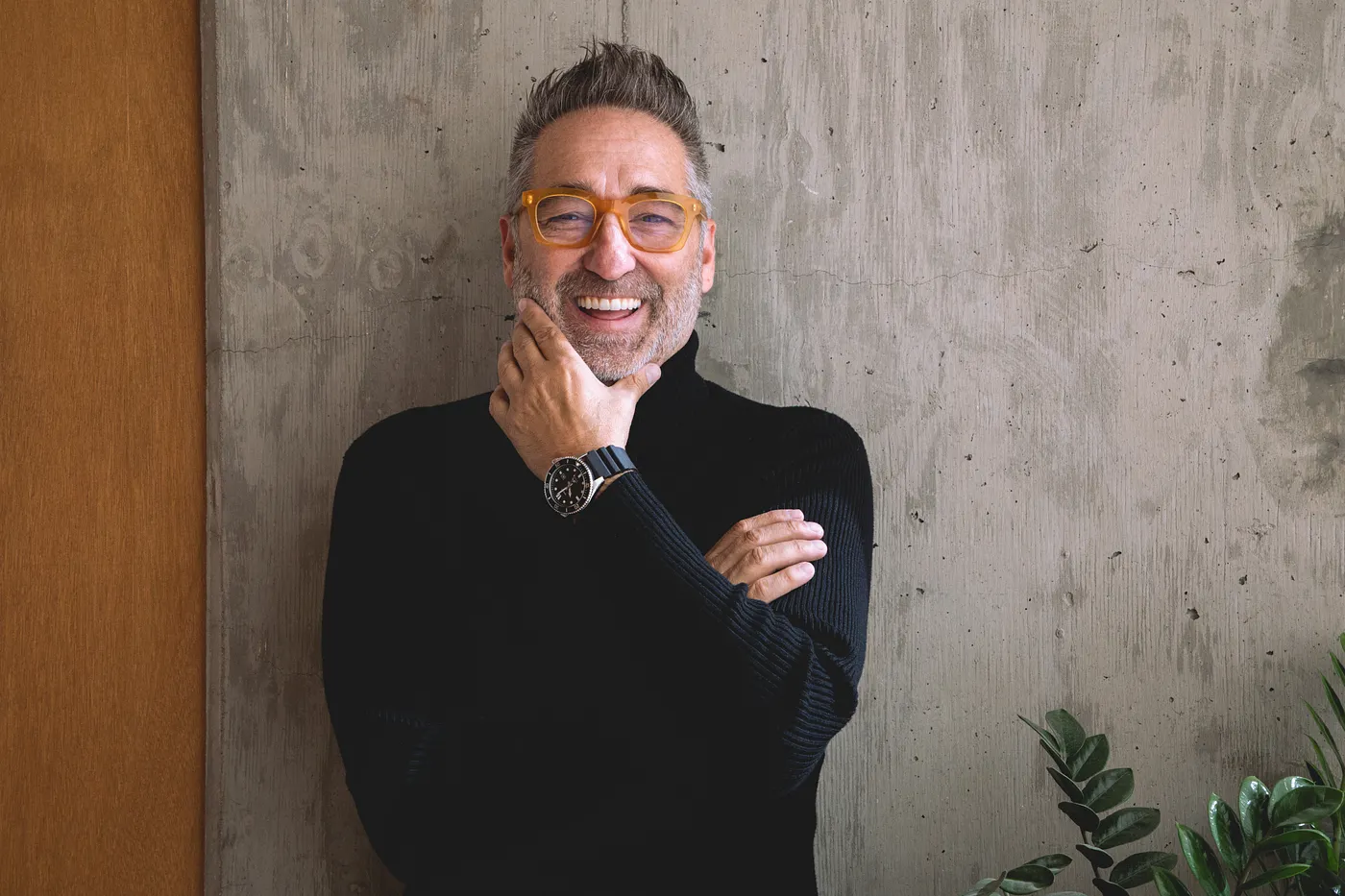
Thank you for all that. Here is the main question of our interview. What are your “5 Things You Need To Lead a Successful Slow Fashion Brand”.
Wow the longest question is last! You buried the lead! Ok, time for the heart of the matter!
1 . You must have confidence. It is not overstated, it is not cliche. If you don’t have a lot of confidence, just stay out of the game. If you want to be the CEO and the leader of a large company that does things the right way, you have to start with the inner belief that you are the right person at the right place at the right time and that you can do this. And you can not waiver in that belief. Every step of the way there is someone telling you there is an easier or cheaper way that will steer you off course.
I live a very blessed life. And I wake up every day with the sunshine. I have a cup of coffee and I take a shower and I’m going to tell you every morning I am optimistic, I am confident and I am bulletproof. Nothing’s gonna get me down.
But guess what happens? Life! A good friend of mine who runs a very large company with 1000s of employees says that being the CEO of a large company is like being a fucking firefighter. You spend all your time putting out fires every single day.
So I start my day with confidence. But all of a sudden people are telling me why things are not going to work, why they can’t be done on time, why we should do it the cheap way, why we shouldn’t use such good quality things. They are telling me why I should sacrifice what I believe in!
While all of these problems are going on, it’s easy to criticize. It’s easy to talk about problems. If you don’t carry enough confidence throughout the day you will get to the end of the day and you’ll be worn out. You will be tired, you will lack the energy to get up and do it again the next day and not waiver. You have to have enough confidence in your tank every single day that you have a bunch left over at the end of the day. And here’s another little secret. When you have confidence it will just magically transfer to people those around you. And then when you’re having a bad day, your confidence that you gave them the week before they will give back to you when you need it. Together you will keep each other on the path you set out on, and together you will succeed.
2 . You need a long timeline. We have been talking about fast fashion and slow fashion and what is going to work? They are in the names. Fast is fast and slow takes time. You have to lead from an understanding that while you must work fast the success will come more slowly.
You can start something, take every shortcut, move incredibly fast and get immediate profits and scream to the heavens you are rich, but things that are quality, that are of what you would consider slow fashion take longer to design, make and sell. Sticking to your convictions takes time. You don’t just immediately start something up like this. You have to get better and better and better, each day, each month, each year. Timeline is five to ten years, not five to ten months.
Take us for example: we started in a garage, sold at art fairs, then Etsy, then we moved into a new building, then launched our own site, and built our own manufacturing facilities. We didn’t take anyone’s money to do that, so we weren’t forced to take their advice, their shortcuts, and we grew at our own pace that allowed us to stick to the beliefs we’ve held since day one.
3 . You have to have an underdog fighting spirit. You gotta believe that the world as it operates today is against you and use that feeling to your advantage. We are an underdog, and that makes the victories even more sweet. Now take that energy, that fighting spirit, and turn it into something that’s going to be more successful.
Celebrate your wins more joyously because people are going to be trying to knock you off course. They are going to tell you easier ways and dumber ways and cheaper ways and stupid ways are the key to success. And some days, when you are tired you’re gonna think well, maybe I should just do it. This is so hard. Fight. You are the underdog and it makes success even more enjoyable.
4 . You’ve got to have quality. You have to believe in quality. You’ve got to continue to put your focus into quality before, during and after your business scales. Making a quality product can be costly but you know what is more expensive?
Getting someone’s attention, getting them to learn about your product and then take their time and money to buy your product. New customer acquisition is beyond expensive. But when you cut corners, when you spend too much money on getting customers and not enough on making an amazing product, the best case scenario is short term, often fleeting success. This goes back to my last point. It takes time to maintain that commitment to quality, but in the long run it will pay off. Quality gives a company legs and longevity.
While getting new customers is expensive you need to understand that as you scale it gets more and more expensive to get the next new customer. An example is one of our greatest selling products ever is our classic leather tote bag. When you start in business you can sell to smaller numbers of people and you can focus your money and energy toward people who are looking to buy a classic leather tote. And wow, they are looking for it, you have it, and they buy it. Congratulations.
But as your company grows you are forced to try to sell your products to someone who was never looking for them in the first place. Getting someone to learn about your product, learn about your company, believe in the value of your product, have the desire to get a product and then to purchase your product is hard. Getting someone who was never looking for it in the first place to take that same journey is brutal. These are the dynamics and reality of scaling a business.
If you stay firm in your commitment to quality, as you grow people will spread the word about your business organically. The people who bought once already will return and purchase again. Your customers will start to do your marketing for you. But that only works if you maintain a high level of quality that continues to exceed your customers expectations.
5 . Hire the best people or resign yourself to anxiety, worry and disappointment.
We live in a world of scarcity. It would be nice to think that there really are unlimited amazing qualified hard-working people that are going to make your company successful. It’s just not true.
As a leader I constantly have to remind myself that my number one job is to continue to add great people to our team. And those people shouldn’t just be great for the positions they are hired for, they should just be awesome people in and of themselves. Never stop trying to hire great people. Don’t settle. And here is one of our secrets!
The Unicorn Hire. The top people in our company did not come in the door with stacked resumes, tons of experience and egos the size of Texas. They came in and demonstrated that they were smart, kind and wanted to be part of a team. They asked how they could help.
Our COO started at 12 dollars an hour making journals on the garage floor. Our CMO, who is in charge of tens of millions of dollars in ad budgets, never went to college, had no marketing experience and had been a part-time professional photographer before applying with us. The head of our international companies, leading 500 people and absolutely killing it, is a young lady I met working in the backroom of a tannery in Mexico, working part-time and making six dollars an hour. Now she is one of the best executives in North America and a better person than 99 percent of the people I meet in this world.
And that girlfriend? The one I told to quit her job and trust me? She is a yogi, she’s brilliant, and is one of the largest buyers of U.S tanned, eco-friendly leather hides in the world. She works with Leather Working Group Gold certified companies and is on a never ending quest to better herself and the world around her.
It’s about the people. Never stop your quest to find better employees and better friends.
You are a person of great influence. If you could start a movement that would bring the most amount of good to the most amount of people, what would that be? You never know what your idea can trigger. :-)
It is infinitely true that we never know what our ideas and what our actions can trigger in other people and in this world. I am going to change this up a little bit off the topic of fast fashion versus slow fashion, of quality products versus mass produced fast fashion garbage. Let’s talk about social media.
I have been absent from social media for years. Mostly because I am so busy in my day-to-day life in building my companies and building my relationships that I just have not taken the time or discipline to go on social media on a consistent basis. I decided it was time to change that.
My company grew from a single car garage to more than $100 million a year while staying committed to our original values. In doing so I began to see patterns of what makes someone successful and what can lead someone to be much less successful. For me, the game has just slowed down. I can see things so much more clearly. I truly feel that it is my time to actually pass on some of the knowledge that I have gained to others who are just starting the journey that I have been on for so many years.
In the next year, I am going to complete a new book, I am going to consistently post on multiple media platforms and I am going to be accepting more of the offers I have to speak to people around the world who want to be entrepreneurs. I am going to teach them that life and business are the same things: challenging puzzles and games that we can play, solve and win.
The movement I want to start is for people to understand that failure is their friend. You need to celebrate failure and challenge yourself and others to do hard things each day. That kindness and understanding make all relationships possible and enjoyable and those are the ingredients of a life well-lived.
This was very meaningful, thank you so much. We wish you only continued success on your great work!
About the Interviewer: Monica Sanders JD, LL.M, is the founder of “The Undivide Project”, an organization dedicated to creating climate resilience in underserved communities using good tech and the power of the Internet. She holds faculty roles at the Georgetown University Law Center and the Tulane University Disaster Resilience Leadership Academy. Professor Sanders also serves on several UN agency working groups. As an attorney, Monica has held senior roles in all three branches of government, private industry, and nonprofits. In her previous life, she was a journalist for seven years and the recipient of several awards, including an Emmy. Now the New Orleans native spends her time in solidarity with and championing change for those on the frontlines of climate change and digital divestment. Learn more about how to join her at: www.theundivideproject.org

Published inAuthority MagazineTop Lessons, Top Authorities · 42K Followers
Exclusive, curated interviews with the leaders and changemakers shaping tomorrow. Leadership lessons, industry deep dives, and executive profiles.