As the consumption of cigarettes and carbonated beverage have been going down, we’ve realized that we needed to transition from a convenience store company that sells food service into a food service company that sells convenience.
Business
Greg Parker of Parker’s: How Transitioning From Convenience to Food Service and Leveraging Machine Learning Scaled a Retail Empire
The founder and CEO discusses how embracing operational disruption, smart kitchen technology, and hard work laid the foundation for decades of continuous retail growth.
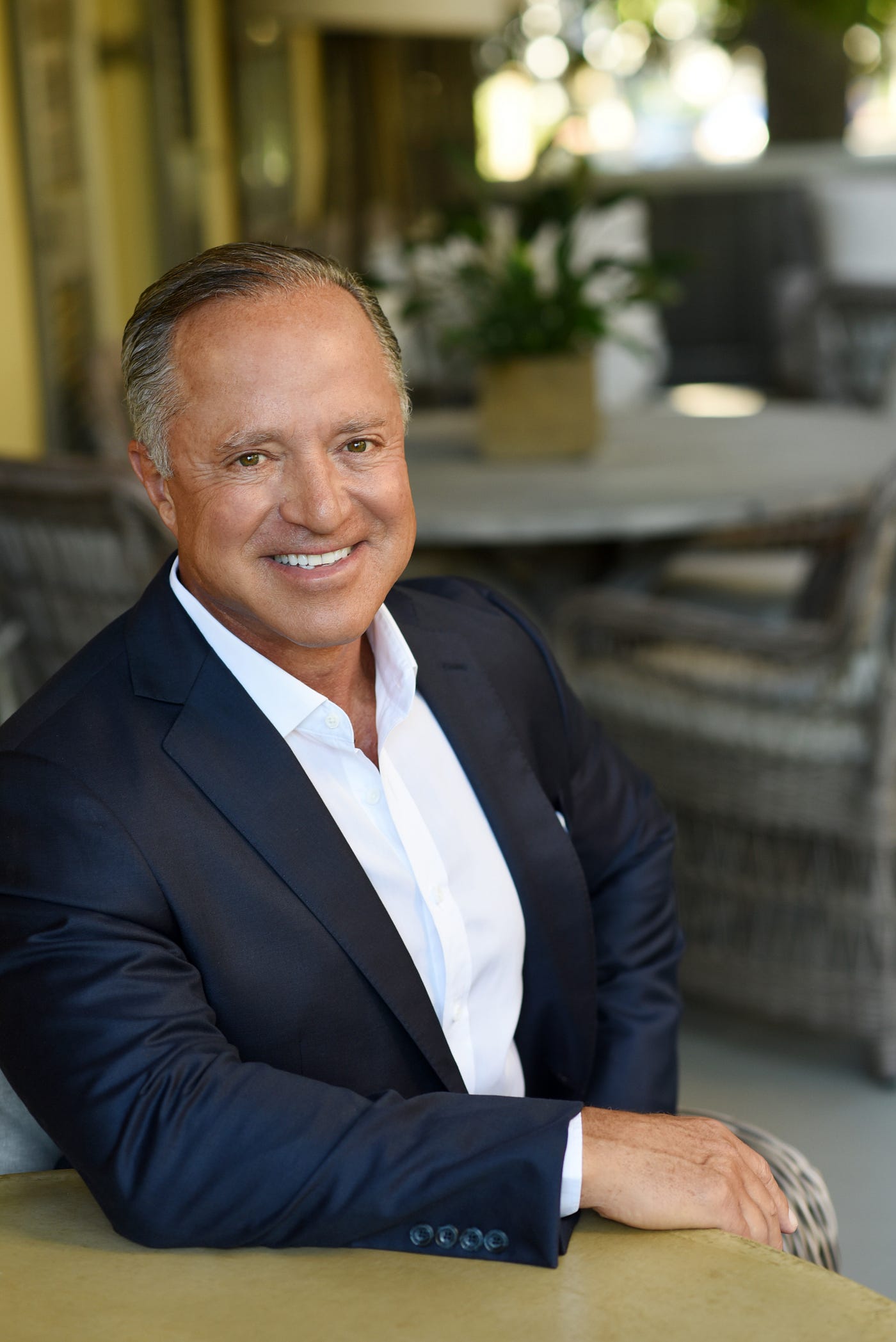
As a part of our series about business leaders who are shaking things up in their industry, I had the pleasure of interviewing Greg Parker, founder and CEO of Parker’s convenience store company.
Greg Parker, the founder and CEO of Parker’s and Parker’s Kitchen, stands apart as one of America’s leading business innovators and disruptors. He has earned acclaim for his uncompromising commitment to high-quality foodservice, dedication to operating the cleanest convenience stores in the industry and passion for cutting-edge technology.
Inducted into the Convenience Store News Hall of Fame, Parker has been recognized as the Convenience Foodservice Leader of the Year, Tech Executive of the Year, Frank Callen Boys and Girls Club Citizen of the Year, Savannah Morning News Entrepreneur of the Year and Savannah Area Chamber of Commerce Entrepreneur of the Year.
Under his leadership, Parker’s has been honored as the Convenience Store Decisions Chain of the Year, included on the Inc. 5000 list of fastest-growing companies in America for six years, voted one of the America’s Top 10 Gas Brands by USA TODAY readers and named one of America’s Best Convenience Stores by Food and Wine. The company also specializes in preparing and serving Southern-inspired food and has earned a Tripadvisor Travelers’ Choice Award, which recognizes the top 10% of restaurants around the world.
Thank you so much for doing this with us! Before we dig in, our readers would like to get to know you a bit more. Can you tell us a bit about your “backstory”? What led you to this particular career path?
I’m originally from Collins, Georgia, and I opened my first convenience store in 1976, right after I graduated from the University of Georgia. I considered going to law school, but opened my first convenience store right off I-95 in Midway, Georgia at the age of 21. In those days, I-95 had just opened and my father worked as an Amoco distributor. His territory included one exit that touched the new interstate, so this was a great opportunity.
After the store opened, I was the main employee and literally did everything. I wore a change belt, and would go out and pump the gas, clean the windshield, check the oil, check the air in the tires, cook food, make deposits and do the books. In fact, I never took a day off for three and a half years. I would get up before sunrise and work until I had to go home. I worked Christmas, I worked every day and have never regretted working hard to achieve my goals. When you’re starting your career and creating a foundation for success, you have to be willing to make sacrifices. I wasn’t a believer in work-life balance when I was younger. I just worked hard and kept my head down.
Creating a foundation of success affords you the luxury of work-life balance later in your career. It provides you the luxury of flexibility, once you have laid that foundation. Now, I pursue other interests and enjoy working hard and playing hard. I think it’s important to have balance as you progress in your career. My family, my friends and my health are all very important to me now.
Can you tell our readers what it is about the work you’re doing that’s disruptive?
At Parker’s, we have a culture of innovation that’s focused on excellence at every level. We’re doing a number of things that are disruptive and have recognized the fact that the three main profit centers that historically drove the convenience store industry — which are known as “gas, Cokes and smokes” — are diminishing. There’s going to be a seismic shift in the consumption of fossil fuels in the coming years, which means that we have to look for alternative ways to supply our customer needs and to make money.
As the consumption of cigarettes and carbonated beverage have been going down, we’ve realized that we needed to transition from a convenience store company that sells food service into a food service company that sells convenience. We want to continue to have the best products to satisfy the needs states of the consumer. Another thing we’ve done is develop technology for people to order food, turn the gas pump on and make payments from their phone. We have a loyalty program that allows the customer to get additional tiered discounts on gasoline for every 25 dollars they spend. We’ve found that the customers who use your mobile apps are much more loyal than other consumers.
We’re continuing to improve how we do food service. Using machine learning, we know in real time what the consumer demand is going before they place an order, which helps make sure our food is as fresh as possible. We also use “smart kitchens” in our stores, which use machine learning to predict how many chicken tenders or other items we’re going to sell in the next 30 minutes. We want to ensure that our hot food is freshly prepared, but we don’t want customers to have to wait on us to prepare it.
At Parker’s, we’ve created a scorecard for success, incorporating key metrics. I truly believe that in order to make success achievable, you have to make it measurable. We’ve enjoyed 20 to 24 percent growth over the past 24 years and have been included on the Inc. 500 list of the fastest growing private companies in America for six years, which is truly an incredible achievement.
Can you share a story about the funniest mistake you made when you were first starting? Can you tell us what lesson you learned from that?
Warren Buffett says that you need to know exactly what you’re investing in and you also need to know more about it than anybody else. I got the lamebrained idea that I needed to have a tow truck when I was first in business because I opened a convenience store on I-95. I borrowed $5,000 from the bank to purchase a wrecker and didn’t really think it through.
The only time that I actually used the wrecker was when somebody from the Sheriff’s Department called to tell me that a vehicle had broken down on I-95. I was the only game in town, and there was nothing else around. However, in order to go get the person whose car had broken down, I had to lock the store up and close everything down. Also, there weren’t any mechanics around to fix anything, so it just made no sense and was a big waste of time and money. I should have played to my strengths. Lesson learned.
We all need a little help along the journey. Who have been some of your mentors?
Absolutely. I’m a big believer in the power of mentors. My key mentors over the years include Bill Martin, a dairy farmer in Midway, Georgia who taught me the nuances of real estate, which includes understanding the nuisance value of property. John Cay, a Savannah business leader, was another mentor who dared me to think big and inspired me to create a board of advisors. I’ve also learned so much from former BP Amoco Marketers Association Executive Director John Kleine, who took me under his wing and taught me about the importance of relationships, in business and in life.
In today’s parlance, being disruptive is usually a positive adjective. But is disrupting always good? When do we say the converse, that a system or structure has ‘withstood the test of time’? Can you articulate to our readers when disrupting an industry is positive, and when disrupting an industry is ‘not so positive’? Can you share some examples of what you mean?
With disruption, as with most challenges in life, there’s often a silver lining. I think that disruption often allows for greater growth and a fresh way of thinking. I’ve certainly experienced a lot of challenges and things that seemed like insurmountable hurdles at the time. Then, as time progresses, I’ve realized that those things actually gave me a competitive advantage.
I think the successful companies are the ones that are most adaptable to change and to disruption. In our company, we’re quick to respond, and we’re quick to think about what’s over the horizon. How are we going to best deal with it? How do we apply the capital? We take the human resources and the financial resources and then create a scorecard around it, so we can measure the efficacy of our efforts over time.
In our industry, there was a great disruption that occurred when everybody was scared of the hypermarkets selling gas very cheap. What ultimately happened is that convenience store owners learned that they need to build stores that are going to be able to compete with the hypermarkets, so it’s sort of forced everybody to up their game.

Can you share five of the best words of advice you’ve gotten along your journey? Please give a story or example for each.
First, remember that the first decade out of school is the most important time to build a foundation for future success. That is the time when you will develop the core habits that will help you succeed over the years. It’s the perfect time to be “all in” on your career and to be laser focused on achieving your goals.
Second, embrace curiosity and lifelong learning. Be a reader, explorer and adventurer. Keep an open mind. As I get older, I see more grey in my life and less black and white. Remember that curious people are happier and live fuller lives. There’s so much to learn in life and so many incredible resources to explore. Take a deep dive into the subjects that interest you most and find others who share those same interests.
Third, value opportunity and flexibility. As you achieve success in your career, it’s o.k. to give yourself permission to take a vacation, spend more time with family and live a life beyond work. Having the freedom to do what you enjoy is one of the richest rewards of professional success.
Fourth, remember that you only have one body and you need to take care of it. Eat right, exercise, do yoga and cardio, meditate and sleep. All of these elements are critical for physical, mental and psychological growth and to stay as healthy as possible over time. If you choose to neglect your body now, you will pay the price in the future.
And, finally, create your own personal and business board of directors to help you achieve your goals and hold you accountable. In business and in life, surround yourself with people who lift you up, challenge you and are loyal. Choose to spend time with people who embody the characteristics you aspire to have. In many ways, we are a reflection of the sum total of the people we associate with. Surround yourself with high-quality people who help you become a better person.
We are sure you aren’t done. How are you going to shake things up next?
I love growth and trying to figure out how to grow in smart, strategic ways. I’m a futurist by nature and am intensely curious. I think the future is always evolving. As an industry, convenience stores are going to have to expand the definition of fuel as our nation moves away from petroleum-based gasoline. We need to become a gathering place for commerce and a hub of innovation.
At Parker’s, we’re going to shake things up by offering a better experience for our customers, which means nicer stores, better landscaping, better architecture, cleaner stores, better service and a faster way to get in and out of the store by using technology and other means to be able to have a frictionless experience. We want to make sure that when our food is served, it’s hot, delicious and freshly prepared.
We’re also really focused on loyalty and having the technology that allows us to mine data to find out how to best satisfy our consumers. We are very focused on trip generators and the profits that they bring into our store. A major trip generator for us is gas, so we’re not going to be undersold on gas. We want to harvest the data from various transactions to find out what the other ancillary sales are that come with those trip generators, and then making it compelling for the consumer to come to you to get those things. So, we’re not looking at just the profit on a single item. We’re looking at the profit on the basket of what that item facilitates.
We want to continue to expand the technology on our phones. Now, when you come to our stores, you can turn on the pump and pay directly from your phone. We want to make the process as frictionless as possible so that it takes fewer steps to get what you want. There’s also a lot that’s happening with technology to help us better operate stores to mitigate expenses and to make sure that we have the right number of personnel on site for the demand of the transactions that we know that are going to occur. We have the business intelligence that can predict how many transactions will happen at each store for a particular period, so when we’re doing labor and budgeting, we will make sure that we have the right number of team members taking care of customers at each store.
Do you have a book, podcast, or talk that’s had a deep impact on your thinking? Can you share a story with us? Can you explain why it was so resonant with you?
Books I’ve read recently that I’ve loved include Sapiens, The Psychology of Money and The Almanack of Naval Ravikant. Those are all great reads, with lessons that apply to life as well as business. I also enjoy listening to podcasts by Joe Rogan and Tim Ferriss. They have great messages about how to live life and how to make smart decisions.
I especially like Ravikant’s perspective on short-term pain for a long-term gain. I’ve naturally always done that and have never been a procrastinator. I watch other people and marvel at the fact that they don’t want to make the tough decisions today to live their best life long-term.
Can you please give us your favorite “Life Lesson Quote”? Can you share how that was relevant to you in your life?
I love Naval Ravikant’s quote where he says, “All the benefits in life come from compound interest — relationship, money, habits — anything of importance.” I definitely agree that one of the greatest lessons of life is understanding the importance of compounding. It’s true in relationships, financial investments, how we run our business and how we treat people. Everything truly adds up and compounds over time.
You are a person of great influence. If you could inspire a movement that would bring the most amount of good to the most amount of people, what would that be? You never know what your idea can trigger. :-)
I think one movement that is taking place now is the importance of meditation. I listened to a Tony Robbins podcast recently where he said that every successful person he knows does some form of meditation. Entrepreneur, writer and innovator Naval Ravikant says the two most important things he does in his life are exercising and meditating daily. Billionaire Ray Dalio trains all his top-level executives in Transcendental Meditation, which I find fascinating.
I think another great movement would be a shift toward trying to understand other people’s point of view. We’ve become so polarized as a country, but we can’t just be a fragmented nation of single-issue voters. We need to recognize that the world is changing. Ultimately, allowing ourselves to be more accepting and more adaptive to change will make us stronger as a country and will help us create a better world.
How can our readers follow you online?
Follow Parker’s at @TheParkersKitchen on Facebook, Twitter or Instagram.
This was very inspiring. Thank you so much for joining us!
My pleasure!
FG
Written by
Fotis Georgiadis
Editor & Journalist · Authority MagazineFotis Georgiadis is a senior columnist at Authority Magazine covering Tech and Business, conducting primary-source Q&A interviews with founders, executives, and industry leaders.

Published inAuthority MagazineTop Lessons, Top Authorities · 42K Followers
Exclusive, curated interviews with the leaders and changemakers shaping tomorrow. Leadership lessons, industry deep dives, and executive profiles.