I was really proud that my team wrote a research piece that was leveraged by policy makers and was ultimately delivered to the president as evidenced that the financial crisis was likely to be resolved.
Wellness
Nick Reber of Garner Health: Inside the Strategy to Eliminate Wasteful Healthcare Practices and Lower Costs for Families

As a part of our interview series called “5 Things We Must Do To Improve the US Healthcare System”, I had the pleasure to interview Nick Reber.
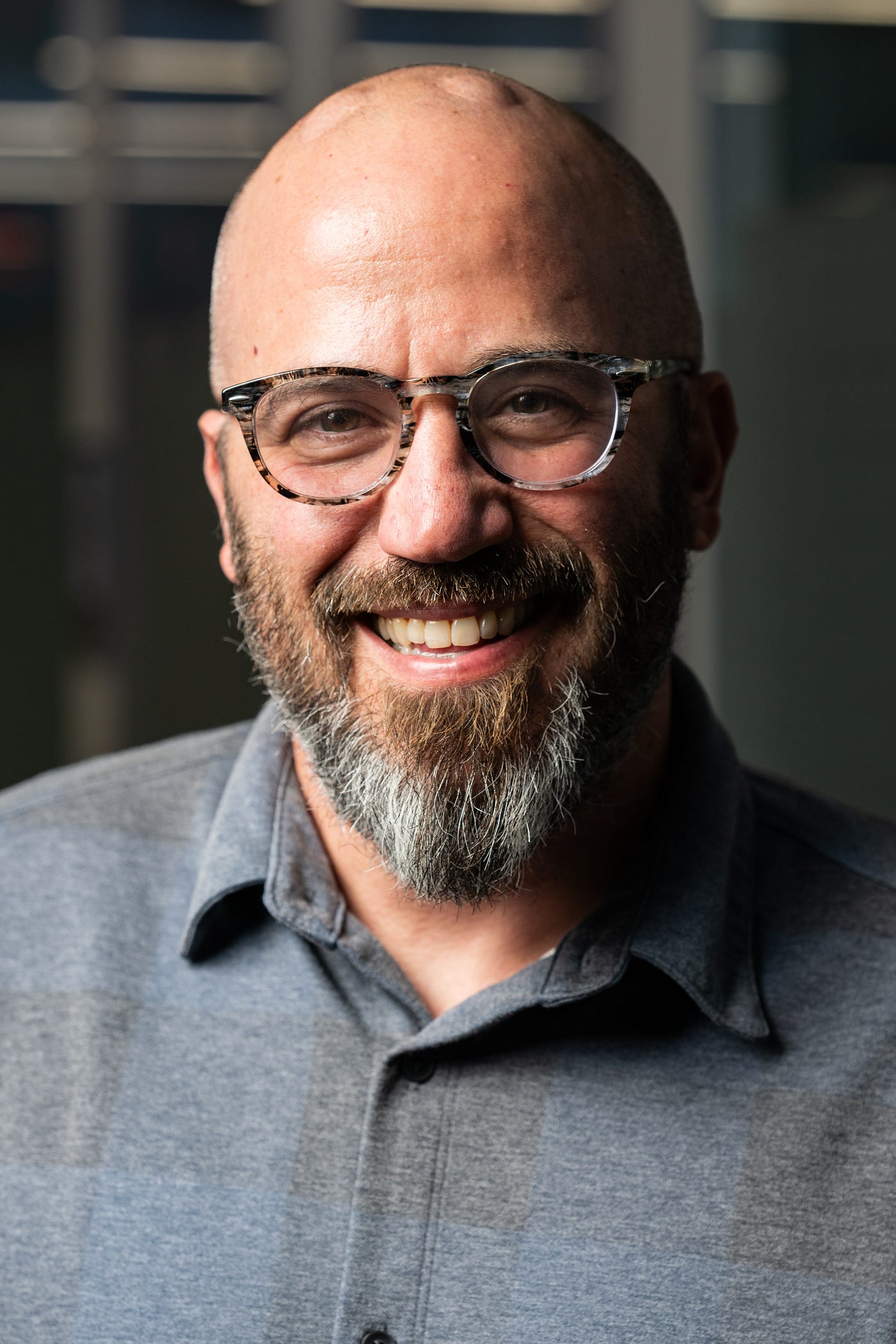
Nick is the Founder and CEO of Garner Health. Prior to founding Garner, Nick served on the leadership team at Oscar Health, where he focused on analytics and provider network development, and helped oversee the firm’s growth to over $2 billion in revenue. Prior to Oscar, Nick was a partner at Bridgewater Associates, where he served as co-head of Research Analytics.
Thank you so much for joining us in this interview series! Before we dive into our interview, our readers would like to get to know you a bit. Can you tell us a story about what brought you to this specific career path?
I have a history of back pain and I was mis-diagnosed with a thoracic spine issue. Unfortunately, I actually had a cervical spine issue. This led to an unnecessary surgery with an unnecessary complication. I’m now on my 5th surgery and I’ve really been able to see the healthcare system from the inside out. After my fourth surgery, I got rolled out in a wheelchair. I was fine, I could walk, but they said, “don’t worry, your insurance is paying for a wheelchair so you should take it.” I said no, I don’t need the wheelchair, but they said it’s covered. So I took the wheelchair. They billed $800 for the wheelchair. I was curious. I dug in further and wondered, who’s really paying that $800? It’s my insurer. It turned out my company was like most self-funded employers, which means the check was coming from our corporate bank account and I was an equity holder in the company, so it literally meant it was coming from my bank account. That really set me off. I then traced the money all the way through and started to realize how much money was being deducted from the paycheck of every employee in this country as a result of wasteful healthcare practices. I found myself getting fascinated with a question that really pulled me into healthcare: “how do we not only improve health outcomes but solve healthcare efficiency so we can put much more money back in the pockets of the individual people and families who are the backbone of this country.”
Can you share the most interesting story that happened to you since you began your career?
Early on in my career, I was working at Bridgewater Associates, which is a large alternative asset management firm founded by Ray Dalio. I had either the fortune (or misfortune) of running our credit research and trading operation while we were heading straight into the financial crisis. I quickly found myself to be something of an expert in all of these structured assets that were blowing up the banks and the entire financial system. Bridgewater would do a daily research piece describing its point of view on the world.
And at this time, Bridgewater actually was one of the few entities that were accurately predicting the financial crisis and what would happen next. This meant the team I ran was really thrust into the spotlight as we would write these research pieces that were getting more and more traction throughout the industry, including with government officials.
Eventually, the entire Federal Reserve and Treasury were reading our daily research pieces, and around March or April of 2009, the government put out a new plan that took some of the bailout funds that were previously allocated to buy bad assets and decided to repurpose them to bail out the banks by buying equity in them instead. This would give the government more bang for their buck and we wrote a piece that said we agreed with the move. There’s a New Yorker article that shows that the head of the Treasury at that point, Tim Geithner, actually took the research report that my team had generated and put it right on President Obama’s desk as evidence that this was the end of the financial crisis and that they had really solved the problem. I was really proud that my team wrote a research piece that was leveraged by policy makers and was ultimately delivered to the president as evidenced that the financial crisis was likely to be resolved. It was a fun and wild time for sure.
Can you share a story about the funniest mistake you made when you were first starting? Can you tell us what lesson you learned from that?
Early in my career at Bridgwater, when I was 22, one of my colleagues forwarded an article to an internal news group list server. I thought the article was pretty dumb and I made a bunch of negative comments to a friend who forwarded my comment to the entire company, saying, “it seems Nick thought this article was pretty dumb, sorry for sending this out.” Ray Dalio, the founder, who was also on the list, then replied to the entire company with: “Nick, how can someone who doesn’t know (expletive) possibly be as arrogant as you are?” And this precipitated a long conversation between me and Ray about my level of overconfidence. I learned pretty quickly how important it is to be humble, to be thoughtful, and to ask questions rather than make assertions. A lesson I keep with me to this day.
Can you please give us your favorite “Life Lesson Quote”? Can you share how that was relevant to you in your life?
One of my best friends keeps a little white sheet of paper in his wallet that has written, “track record of excellence.” Whenever he’s doubting himself, whenever he’s going through a tough time, or isn’t sure what to do, he pulls that piece of paper out. He just looks at it, puts it back in his wallet and remembers to trust his instincts. I found this very useful. For me, starting a company is a tremendous exercise in regularly staring into the abyss and conquering self-doubt. I try to emulate that and remind myself at times that we’ll figure it out and sometimes you have to trust yourself. If you work hard, put in all the effort and energy, eventually it will pay off over the long term.
How would you define an “excellent healthcare provider”?
An excellent healthcare provider is one that delivers high-quality care at an efficient cost. Ultimately that boils down to three things:
1. Following all the evidence-based literature when it comes to what tests you do, what procedures you do, what drugs you put patients on, and what the literature shows is the most effective way to treat a specific disease. There is shocking variation; some doctors are still based in the 90s in terms of their read of the academic literature, while some folks are really up on the latest best practices.
2. Generating amazing health outcomes. That means low complication rates, low disease progression, low mortality rates, low revision surgery rates, and high pain relief rates. Those are all things that are really critical measures.
3. Doing it efficiently. If you can meet the bar of high quality, both following the right medical practice and generating strong outcomes, we want providers who also do things efficiently: they don’t hospitalize someone for five days when they can be outpatient, or don’t essentially defraud the system and make patients do two separate surgeries when they can be done on the same day; that’s worse for the patient and it costs a lot more. All of these sorts of gimmicks and cost structures have added immense costs to the healthcare world. We want to make sure that as long as you’re delivering high quality, you are also doing it efficiently.
What are your favorite books, podcasts, or resources that inspire you to be a better healthcare leader? Can you explain why you like them?
I like to read historical biographies. I find it really motivational to hear how different people from different times in history took on big challenges, faced them, and accomplished great things. I enjoyed Andrew Roberts’ books on Napolean and Churchill and Walter Isaacson’s books on Einstein and Franklin. Those are books I look to for inspiration, guidance, and motivation.
Are you working on any exciting new projects now? How do you think that will help people?
At Garner we are obsessed with always making our product better and we’ll be rolling out many new features over the next year or two. There are a couple that I’m particularly excited about:
For employers and the employees they support, we’re taking a major step forward to deeply understand the clinical history of our members and to be able to meet them where they are, whether that’s digitally, telephonically, or via email, and customize their experience to address their unique healthcare needs and give employers the tools to better support them as well.
I’m also really excited that Garner is now large enough that we’re supporting significant patient volume in a lot of markets and we’re starting to change the economic equation for the nation’s top performing providers. We’re seeing much greater interest in providers doing what we call practice transformation, which is buying our data and getting patient-level data and physician-level reporting on everything they do from a quality and efficiency standpoint — from how well they’re performing on their CMS bundled payment deals and their star ratings for Medicare Advantage plans, but also how are they managing the total cost of care, what are their complication rates, disease progression rates at doctor-by-doctor level and patient-by-patient level, so we can really help improve healthcare at its core with the physicians that are treating patients.
Ok, thank you for that. Let’s now jump to the main focus of our interview. According to this study cited by Newsweek, the US healthcare system is ranked as the worst among high-income nations. This seems shocking. Can you share with us a few reasons why you think the US is ranked so poorly?
It’s clear that we have one of the worst-performing healthcare systems in the world. We spend about three times more on healthcare than other developed countries and yet we live almost three years less. Clearly, something is very wrong here. My view is this: the core issue is a failure of the market, and the solution needs to be a market solution. Let me explain why. We are very unique in that we have a privatized supply and socialized demand: our healthcare providers are paid like every other market in this country. Take t-shirts or cars, for example; the more you sell at the higher the price, the better you do, and candidly, if you don’t sell enough or make enough revenue, you go out of business. So that means, naturally, that the suppliers would love to increase prices as much as they can, and candidly, it’s in their best interest to lower healthcare quality so patients are sicker and need more procedures, more tests, more care, and that’s ultimately what a privatized supply means. Normally, in most markets, that is held in check by a well-informed and highly incentivized consumer. For example, it’s very hard to sell a t-shirt on Amazon that easily tears for an inflated cost of $500, because you know people are never going to buy a low-quality, high-cost good. So that accountability creates tremendous incentive on the supply side to deliver results that are in the consumer’s best interest.
Unfortunately, given the way we pay for healthcare, and the natural lack of information in the system, you have really bad outcomes without a consumer that is able to hold suppliers accountable. If you think about how people find healthcare these days, ultimately they don’t have the information to understand the quality they’re getting. It’s really opaque. The information has not been shared with consumers about provider quality, complication rates, disease progression rates, and because we pay for healthcare via an insurance model, either via companies or the government, why should people care what the cost is? The combination of those two things means there is no consumer that is actually holding the suppliers accountable the way there is in almost every other market — and that creates a situation of ballooning costs and tremendously low-quality bad health outcomes. That’s why I believe the solution is better informing and incentivizing how patients (the demand side of the equation) find healthcare.
As a “healthcare insider”, if you had the power to make a change, can you share 5 changes that need to be made to improve the overall US healthcare system? Please share a story or example for each.
Fundamentally, I believe it’s important that the buyers of healthcare, most notably employers, start to think about healthcare spending the same way they think about spending on all other expenses. Take employee per diems. When employees travel for business, companies usually only cover a fixed amount. For example, you can’t go to the most expensive restaurant in town and then have the company pay for your whole meal when you’re traveling for business. It’s time to start thinking about healthcare the same way. It’s important employers start to think about covering a reasonable cost for a procedure or for treatment, while ensuring high quality care. For this to happen, we need a centralized standard on what it means to deliver high-quality care and give patients access to that information.
Once that’s in place, there are a bunch of things that really should be evolved to make it easier for all the information to move through the system. Things like having open electronic medical record (EMR) data, where you can access appointment booking, clinical information, things of that nature easily across the system. I think moves in that direction would be very helpful for the country, where there’s a sort of mandated API, if you will, for data exchange, the same way we’re starting to mandate USB-C on iPhones so they can use the same chargers other devices do. Relatedly, I think the transparency in coverage data that recently became available was a really good step toward helping people understand how much healthcare costs. But I think that could be made even richer by mandating more specific data from the hospitals and from the health plans about the costs of all procedures. I also believe we should give businesses a little more flexibility to decide how they want to manage the finances of healthcare. Can they self-insure? Do they have to be fully insured? We need a little more flexibility to allow them to become either self-funded, level funded or allowing them to remain fully insured regardless of the size. This will all help employers relieve the burden of this and start to create a more informed healthcare consumer at the same time.
What concrete steps would have to be done to actually manifest these changes? What can a) individuals, b) corporations, c) communities and d) leaders do to help?
Ultimately, companies are going to have to spearhead this. It’s on them to shift how they think about spending. I think the government can start to mandate that some of this information is readily available so market participants can action it. Then it’s up to businesses to build products that help take advantage of this information and the companies’ willingness to change their financial incentives. Then, finally, it’s up to consumers to be better informed.
The COVID-19 pandemic has put intense pressure on the American healthcare system, leaving some hospital systems at a complete loss as to how to handle this crisis. Can you share with us examples of where we’ve seen the U.S. healthcare system struggle? How do you think we can correct these issues moving forward?
Medical trend (how we measure increases in medical costs year over year) in the U.S. is scheduled to be the highest it has ever been. Here’s what happened: for the last 25 years healthcare inflation has been above general economy inflation. That changed during the pandemic because nobody went to the doctor while inflation in the general economy was quite high. Now, the bounce back effect is intense. The reason is that hospital margins are incredibly squeezed due to rising nurse salaries, rising infrastructure costs, and all of that inflation from the pandemic. These hospitals were unable to increase their negotiated rates with insurance plans to match these increased costs.
This is happening all at once and we’re seeing this very sudden catch up in our medical trend. We’re seeing 8–12% medical trend for the average employer, with many employers seeing 20% or more. Ultimately, how can we correct those issues? I think if the buyers of healthcare — most notably employers — become more sensitized and more informed about how they shift their purchasing decisions and start to adopt the best practices that they have had in place in many other cost centers — employee travel, how they manage vendors — they’ll start to say, ok, this is as much as I’m going to pay” and they’ll start to manage it as cost center with real focus, data and intensity. I think that will help drive the right incentives through the entire rest of the ecosystem because employer based insurance is what drives most of the profits in the health care system.
How do you think we can address the problem of physician shortages?
Sadly, it’s rough to be a doctor in America right now. As currently constructed, the healthcare system incentivizes spending very little time with patients and to give them tests that they may not need so you can bill more, and not necessarily to do everything that is in the patient’s clinical best interest. I don’t believe that’s why people go into this profession. That is a recipe for burnout and physician shortages. Basically, doing the right thing isn’t being properly rewarded. But if we can change how companies and patients decide to buy healthcare and find providers by focusing them on providers who support higher quality care with improved efficiency, then it will naturally create the right incentives for the physicians to do what they really want to do: care for their patients. There’s already enough money in the system, we just need to structure it so that physicians only get business volume if they do the right things. That’s what we’ve been designing at Garner. We believe you can correct the market issue and if people purchase and find healthcare based on quality, then the doctors that are delivering quality will naturally rise to the top and get more demand from patients. If we can fix these core market incentives then I think everything else, including physician quality of life and physician shortages, will come together.
How do you think we can address the issue of physician and nurse burnout?
Note to editor: the answer to this question is wrapped into the above answer
You are a person of great influence. If you could inspire a movement that would bring the most amount of good to the most amount of people, what would that be? You never know what your idea can trigger. :-)
It’s time for everyone, whether you’re a patient, employer, physician, or government official, to start to demand greater information on quality and greater accountability on the total cost of care from the system. If that happens, it’s going to create a much better ecosystem for everyone and stave off the healthcare crisis that threatens our country’s safety.
How can our readers further follow your work online?
You can learn more about Garner and how we are taking steps to transform the health care economy at getgarner.com. Visit us on LinkedIn at getgarner, or on my LinkedIn page at nickreber
Thank you so much for these insights! This was very inspirational and we wish you continued success in your great work.
AM
Written by
Authority Magazine Editorial Staff
Editorial Desk · Authority MagazineThe Authority Magazine Editorial Desk produces, verifies, and edits long-form primary-source interviews with executives, innovators, clinicians, creators, and social impact leaders across Business, Tech, Pop Culture, Wellness, and Social Impact.

Published inAuthority MagazineTop Lessons, Top Authorities · 42K Followers
Exclusive, curated interviews with the leaders and changemakers shaping tomorrow. Leadership lessons, industry deep dives, and executive profiles.