The lesson we’ve learned is not to surprise each other with an expense after the fact. Explaining the value upfront and making sure we’re on the same page has helped us avoid disagreements and miscommunication. Whether it’s a business expense or a personal purchase, when both partners understand the value, it’s much easier to feel good about the cost.
Wellness
Nathan & Kaycee Miller: How Aligning Financial Values and Operational Roles Built a 100% Independent Software Powerhouse
The founders of Rentec Direct share their tactical approach to balancing a high-growth tech company with a healthy marriage by mastering communication, role division, and shared long-term goals.

As a part of our series about lessons from Thriving Power Couples, I had the pleasure of interviewing Nathan & Kaycee Miller.
Nathan and Kaycee Miller own and operate Rentec Direct, a property management software company headquartered in Grants Pass, Oregon. Nathan founded the company in 2007 with a vision to make property management more efficient for landlords and property managers. Kaycee joined the business in 2014 and now leads operations and marketing. Together, they have grown Rentec Direct into a nationally recognized software company that remains 100% independently owned and free of outside investment. The company is a ten-time honoree on the Inc. 5000 list of fastest-growing private businesses and was named one of the top 100 small businesses in the U.S. by the Chamber of Commerce. Outside of work, Nathan and Kaycee are dedicated to supporting the Southern Oregon community they call home. They support local nonprofits, workforce development, affordable housing and educational opportunities, and contribute their time and expertise to a variety of business and economic development organizations.
Thank you so much for joining us in this interview series! Can you tell us a story about what brought you two to your respective career paths?
Nathan: I’ve worked my way through nearly every tech job, from hardware to software, throughout my career. I started as an internet installer after graduating high school and eventually moved up to managing the servers that distributed the internet service across our region. From there, I taught myself how to program so I could troubleshoot the servers myself. That curiosity and drive to learn everything I could about technology eventually led me to become CTO of the company. These experiences built the foundation for Rentec Direct, the software company we own and operate today.
Kaycee: I’ve always loved reading and writing, and that passion for storytelling naturally led me to marketing. My role today has expanded to include more operations responsibilities in addition to marketing, but my favorite parts of the job will always be educating our clients and driving new business to Rentec Direct.
We share a desire to come to work every day and genuinely love what we do. Rentec Direct has been the outlet that has allowed us to build careers around our passions: I want to write and create every day, and Nathan wants to use technology to innovate and solve problems. This shared goal has shaped not only the careers we’ve built, but the kind of company we want to grow together.
Can you share the most interesting story that occurred since you two got married?
Our business operates in the real estate industry, and outside of running our software company, we invest in real estate and manage properties together. About three years after getting married, we purchased a dilapidated building that had once been a historic church in the downtown district where we live and work. Over 50 years, the church had been converted into a commercial building that housed several businesses before eventually becoming someone’s primary residence.
The building was no longer structurally sound, so we worked with the city and the local Historic Building and Sites Commission to get approval for a demolition. It took many city meetings and even a public hearing to eventually get the go-ahead. We had to preserve certain parts of the building and even installed a monument with the church’s original steeple. We ended up building townhouses on the site to help support our community’s workforce housing needs.
It was quite the development project to tackle only a couple of years into our marriage, on top of running our business full-time. But it gave us the opportunity to interact with and learn from so many people we may have never otherwise crossed paths with to find the best way to honor the property’s history and make the best decisions for our community.
What inspired you to work together?
We met at the office and worked together for almost a year before there was a spark of romance. Even after we started dating, we kept our personal relationship out of the office and maintained a professional working relationship within the office walls. We already knew we worked well together when it came to managing projects and navigating challenges in the workplace, so we’ve never been afraid of our relationship impacting how we do business together.
Now, we’ve worked together for more than a decade, and we’re both committed to continuing to move the business forward. Plus, we love the extra time we get to spend together because we work in the same office, like having lunch together or going on afternoon walks.
Have there been any disasters caused by miscommunication? Can you tell us what lesson you learned from that?
We’ve had surprisingly few major disagreements after over a decade together. We could probably count them on one hand. One difference that stands out is how we view the cost of things.
Nathan grew up in rural Oregon, with more limited access to resources, education, and major metro areas. That shaped his perspective on spending, and he tends to think everything is overpriced today. As he puts it, he grew up as a farm kid, where the most expensive thing he bought was animal feed, which had an obvious return on investment. Kaycee grew up in California, where things were always expensive. When Nathan cringes at the cost of something, Kaycee often thinks it’s entirely normal or that Nathan is just being frugal.
The lesson we’ve learned is not to surprise each other with an expense after the fact. Explaining the value upfront and making sure we’re on the same page has helped us avoid disagreements and miscommunication. Whether it’s a business expense or a personal purchase, when both partners understand the value, it’s much easier to feel good about the cost.
How do you divide the responsibilities in your company? Can you give examples?
As a software company, our purpose is to develop software that helps our clients and inform everyone we can about our value to the industry. When you boil it down to software development and marketing, our roles naturally fall into place based on what we each like to do and do best. Nathan is a programmer by trade, and Kaycee is a marketer.
But there is so much more to running a company than the product we sell. We manage employees, clients, vendors, partners, and finances. We talk through everything together to determine who should tackle which task. For example, if our customer service team shares a client pain point, we talk through the problem together to brainstorm possible solutions. What can we build into the software to help make things easier for this customer? Based on the approach and through ongoing conversations like this, we divide and conquer.
Once, we were driving home from a ski trip and were discussing the frustrations clients might have when setting up their accounts. Our customers can always call our support team for help, but we wondered how we could make the process easier for the DIYers. The conversation turned into a full feature brainstorm that sparked the idea for an AI-powered account setup assistant. Kaycee was focused on what the experience should look like from the user’s perspective, while Nathan started figuring out how the system could work behind the scenes. Six months later, that feature is now live!
We’ve also built an incredible and reliable team that helps us bring ideas like this to life. That gives us the confidence to keep thinking about what’s possible.
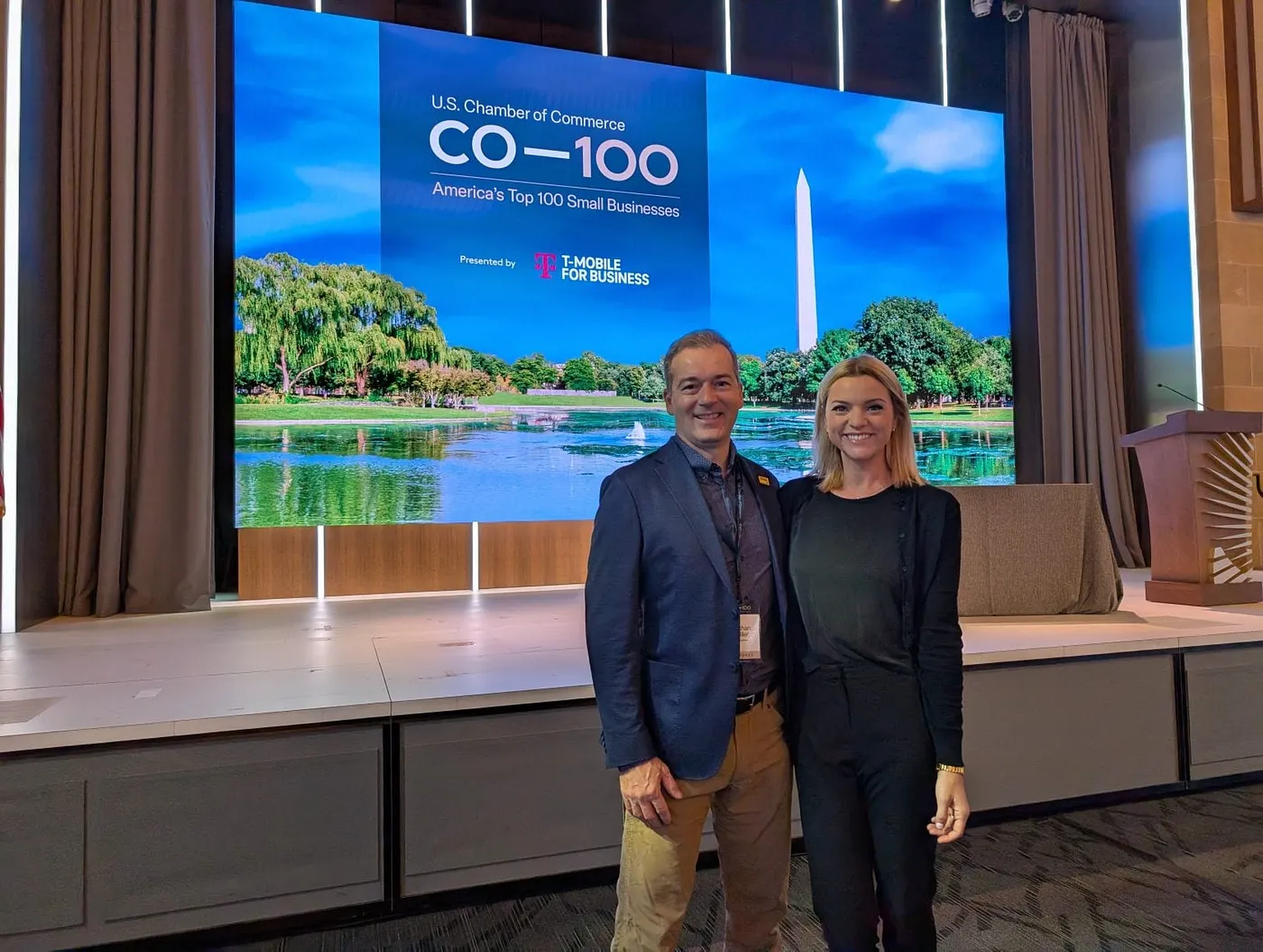
What are the “5 Things You Do To Thrive As A Couple”? Please share a story or example for each.
1. We have fun together. We’re both very playful and competitive, and we love finding ways to have fun together. We love playing ping pong, Catan, golf, and all kinds of other games and sports. We’ve even brought our ping pong paddles with us to places like Italy, Nashville, Mexico, and Chicago, and you’ll find us playing cribbage at the airport during long layovers. No matter where we are, we make sure to make time to have fun together.
2. We keep work and romance separate. Our romantic relationship pauses at the office door. Once we cross the threshold of our office building, we treat each other strictly as colleagues. This separation of romance and business helps us maintain a clear professional boundary for our staff and ourselves when it comes to workplace decisions.
3. We balance togetherness with independence. We support each other’s hobbies and interests and encourage each other to take personal time away from one another. Because we spend so much time together between work and home, having that personal space is important. Nathan has a weekly guys’ coffee meetup and takes golf trips, and Kaycee meets up with girlfriends for workout classes, brunches, and dinners.
4. We eat dinner as a family every day. Kaycee loves a structured schedule, and it has lent itself to a consistent family dinnertime. You can always find us around the dinner table, screen-free, talking about the day and enjoying a meal together. With picky toddlers, sometimes there are more complaints about the food than vibrant conversation, but we’re committed to building the routine as a Miller family value. It’s a simple way to make sure we connect as a family every day.
5. We bring the party wherever we go! Just this morning, our local Chamber of Commerce events coordinator told us, “Rentec is always the fun group at any event.” Five years ago, neither of us had ever been to a fundraiser or networking event in our community. One year we were invited by friends to join them, and we brought our enthusiasm with us and had a great time. That spiraled into another fundraiser, and then another, and now I think we show up to just about everything. We’ve discovered how much fun it is to get involved in our community, meet new people, and bring our energy wherever we go.
Are you working on any exciting new projects now? How do you share the responsibilities?
We’re currently rolling out some major updates to our software platform. One of them, which our clients are really excited about, connects Rentec Direct with a third-party insurance provider to bridge the liability gap when renters forget to purchase renters insurance. The other feature is the AI-powered onboarding tool we mentioned earlier, which helps new users organize, clean, and import data in different formats into the Rentec Direct platform.
We have two distinct passions when it comes to our business. Nathan loves programming and coding, creating new features and tools to solve problems for our clients. As a software developer at heart, Nathan will quietly work on a project for months, release it, and might not tell a soul it exists. He’s just excited it’s done and ready to go! Kaycee, on the other hand, has a background in marketing and communications and likes to ensure all that hard work gets seen by our clients. We make a great team because we have the doer and the announcer. If either one of us isn’t part of the equation, either the product doesn’t get made, or nobody would know about it.
What advice would you give to other couples who work together?
Set boundaries between your professional relationship and your personal relationship. You don’t have to leave your relationship at the door, but you should decide how and when to bring personal matters into the workplace in front of colleagues. Be intentional about how you communicate and handle differences of opinion, so your team feels comfortable, and your professional relationship stays strong. Find a balance that works for both of you.
At the same time, it’s impossible for every single moment to be strictly business or strictly personal. Sometimes, when the two overlap naturally, it’s one of the best parts of being in business together. Our offices are downtown, with some great restaurants within walking distance, so we often have lunch together and support these local businesses. We don’t talk shop every lunch, but sometimes work naturally comes up if we have something on our minds. We don’t force personal or professional conversation, but some of our best ideas come from these casual lunch conversations where we talk through a challenge or brainstorm a solution and return to the office that afternoon with a plan. We’ve found that being intentional about boundaries doesn’t mean we have to draw a hard line between the two parts of our lives.
None of us are able to achieve success without some help along the way. Is there a particular person or couple who you are grateful towards who helped get you to where you are? Can you share a story about that?
Nathan: At my first job at the age of 18, the owner of the company where I was working on computers became an invaluable asset who helped me gain exposure to both business and real estate. What started as an employer-employee relationship evolved into a friendship and eventually became one of the most powerful relationships I’ve ever had.
At 20, Todd encouraged me to consider buying property instead of renting. I didn’t make much money at the time and had always assumed homeownership was out of reach, but he mentored me through the process, and I owned my first home less than a year later. That led to another property, then another, which put me on my path to becoming a real estate investor and landlord. That path ultimately inspired me to create Rentec Direct, our property management software company, which was a pivotal turning point in my life.
Although we no longer work together, Todd and I remain friends and regularly check in on each other’s lives and businesses. During our quarterly calls, we bounce ideas off one another that often lead to new ideas we can apply to our businesses or personal lives. I’m grateful that a relationship that began with my first job has continued to influence me decades later.
Is there any particular book or concept that helped you overcome a turning point in your marriage?
I love the philosophy that a successful relationship isn’t 50/50. It’s 100/100. The idea is that when two people enter a relationship, each person should be committed to giving 100% of themselves rather than expecting the other person to meet them halfway.
When you give 50%, you’re focused on whether the other person is doing their half. When you give 100%, you’re focused on being the best partner you can be. And when both people do that, you create a relationship rooted in trust and generosity instead of keeping score.
That doesn’t mean one person should constantly sacrifice while the other takes advantage. A healthy 100/100 relationship requires both people to show up and contribute to the relationship’s success. It also recognizes that giving 100% looks different depending on what someone is capable of on any given day.
Can you please give us your favorite “Life Lesson Quotes”? Can you share how that was relevant to you in your lives?
I always come back to the Platinum Rule: Treat people how they want to be treated, not the way you’d want to be treated. While the Golden Rule assumes everyone wants what you want, in reality, that is not always the case.
People take in information differently. We’ve learned that no two people think the same way, so you can’t communicate with everyone the same way either. Some people want the bottom line, and some need the whole story first. We’ve seen it with our team, with friends, customers, and even with our three kids. The best leaders don’t expect people to adapt to them. They learn how each person hears things and meet them there.
How have you used your success to bring goodness to the world?
We make a real effort to show up in our community and give back to the individuals, organizations, and businesses that have helped us get to where we are and supported us along the way. We try to lead by example by serving on local boards, participating in community events like golf tournaments and galas, fundraising and volunteering, and we run a scholarship program for college students through our business for college students in our state.
This culture of giving back is a big part of how we run our company, too, where employees are encouraged to get involved with organizations and causes that are important to them and share those opportunities with the rest of the team. We’ve hosted an annual Toys for Tots toy drive during the holidays for years now because one of our longtime employees was a regional coordinator for the organization. Last year, we partnered with a local brewery to host our annual holiday party and toy drive, bringing people together while supporting other businesses in our area.
For us, part of our success is how we can use the relationships, resources, and opportunities we’ve gained to help others in our community thrive, too.
You are people of great influence. If you could inspire a movement that would bring the most amount of good to the most amount of people, what would that be? You never know what your idea can trigger. :-)
We always joke about starting “The Cookie Foundation.” On a cross-country trip, we were lucky enough to fly first class, where our favorite perk was the warm, freshly baked chocolate chip cookies the flight attendants passed out. And we couldn’t help but think how unfair it was that all of the other passengers on the plane had to smell those delicious cookies wafting through the air without getting one!
When the flight attendant came by with our cookies, we asked if she would give them to the first two children she could find in the economy cabin. She went along with it, and we got to hear some very excited kids. On our second flight, we planned to do the same thing, but we got to talking about the fact that more kids were likely sitting nearby watching some kids get cookies while they went without. So we started daydreaming about The Cookie Foundation so every kid on every plane could enjoy a warm, freshly baked cookie.
It won’t solve the hunger crisis or bring on world peace, but it might bring a little bit of joy to a child’s day!
We are very blessed that some of the biggest names in Business, VC funding, Sports, and Entertainment read this column. Is there a person in the world, or in the US with whom you would love to have a private breakfast or lunch with, and why? He or she might just see this if we tag them :-)
Kaycee: I love the comedian Heather McDonald. I have followed her for years, listening to her Juicy Scoop and Juicy Crimes podcasts. She has incredible interviews and comedic conversations about family dynamics, true crime, relationships and pop culture. A lot of her interviews have been the jumping-off point for me to learn more about the people and stories she shares. I think a cute lunch or dinner with Heather would be the most entertaining conversation from start to finish!
How can our readers follow your work online?
Visit us at RentecDirect.com or follow along on social media @rentecdirect!
Thank you so much for joining us. This was very inspirational.
AM
Written by
Authority Magazine Editorial Staff
Writer & ContributorContributor at Authority Magazine covering leadership, innovation, and industry insights.

Published inAuthority MagazineTop Lessons, Top Authorities · 42K Followers
Exclusive, curated interviews with the leaders and changemakers shaping tomorrow. Leadership lessons, industry deep dives, and executive profiles.
More from Authority Magazine
See all stories →
A
Authority Magazine Editorial StaffDara Fleischer: Inside the Architecture of Breaking a Compulsive Shopping Cycle to Reclaim Financial Autonomy
Wellness30 min read

A
Authority Magazine Editorial StaffJessica Gold of Bliss Science on Molecular Bonding, Nonlinear Systems, and the Science of Human Connection
Wellness21 min read
A
Authority Magazine Editorial StaffMichael Ingber: Why We Must Stop Treating Menopause As A Disease To Be Endured
Wellness14 min read
A
Authority Magazine Editorial StaffJoel Conger of Connections Health Solutions on Crisis Intervention, Braided Funding, and the Power of Compassionate Care
Wellness6 min read