What I found is that building a molecule and building a relationship have parallels that go deeper than shared language. Both chemistry and relationships are organized around bonds, and both can be understood as nonlinear systems, where small changes in the right place can sometimes produce outsized effects.
Wellness
Jessica Gold of Bliss Science on Molecular Bonding, Nonlinear Systems, and the Science of Human Connection
A former organic chemist turned relationship coach explains how applying scientific habits of mind and high-leverage interventions can transform stagnant marriages into deeply connected, resilient partnerships.
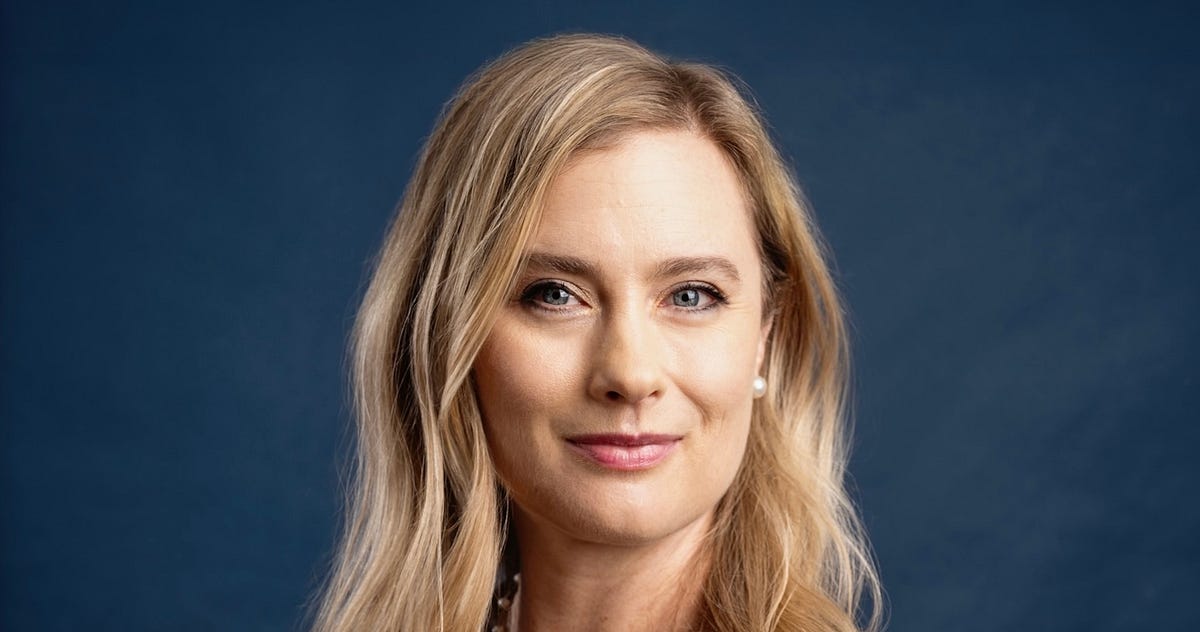
As a part of this series, we had the pleasure to interview Jessica Gold. Jessica Gold, Ph.D. spent ten years in the lab making bonds between molecules — at MIT, then a chemistry PhD at UC Berkeley and a neuroscience postdoc at UCSF — before turning to the bonds between people. Known as the Relationship Chemist, she is the founder of Bliss Science, where she coaches post-exit founders, STEM leaders, and couples using the same habits of mind a scientist uses in lab. She holds seven coaching certifications, including Gottman Leader and certification in Relational Life Therapy under Terry Real, and her TEDx talk brings chemistry to the sex-starved marriage.
Thank you so much for joining us in this interview series! Before we dig in, our readers would like to ‘get to know you’. Can you tell us a story about what brought you to this specific career path?
I’m an organic chemist who left the lab to study romantic chemistry. While I knew a lot about molecular bonding, I’d never had a single class on human bonding (aka healthy relationships). That made my own marriage challenging, and when it ended, I was also in the middle of changing careers. It was a big identity shift, and I didn’t yet know what was next.
To figure that out, I spent four years immersed in full-time personal growth work, practicing mindfulness, conscious communication, and shadow work, and studying non-dual philosophy. That experience allowed me to start my first business, studying bonding between people rather than molecules.
What I found is that building a molecule and building a relationship have parallels that go deeper than shared language. Both chemistry and relationships are organized around bonds, and both can be understood as nonlinear systems, where small changes in the right place can sometimes produce outsized effects. A decade later, I now coach high achievers with analytical minds through challenges in bonding.
Can you share the most interesting story that happened to you since you started this career?
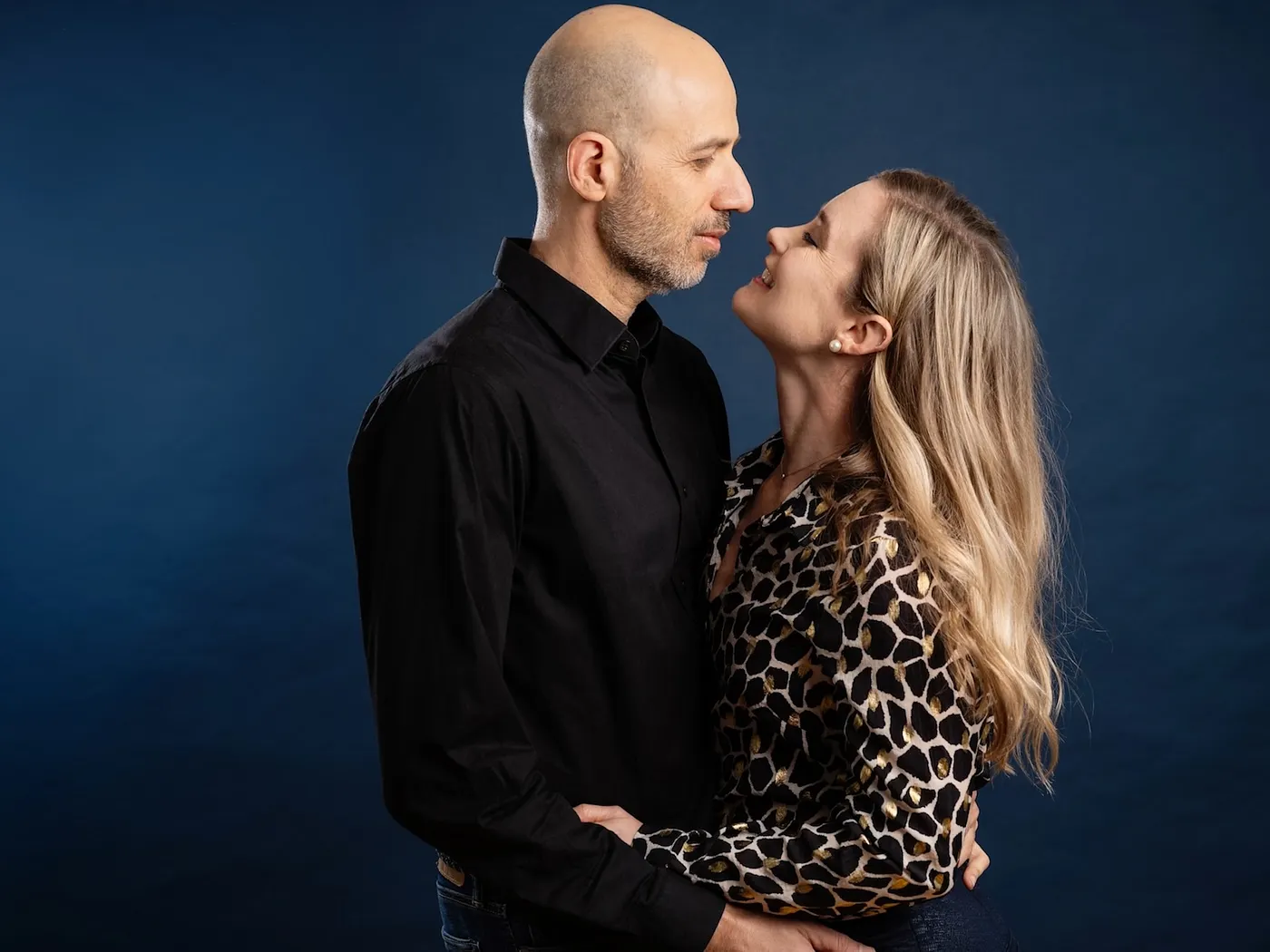
I’ve always loved technology, and my husband has a PhD in AI from MIT, so we went to the first TEDAI conference together. I happened to sit next to a young woman at lunch who was dressed unlike anyone else there. I figured she’d have a good story to tell. I struck up a playful conversation, letting my guard down and telling her about my work. It turned out that she was a producer for TEDx — and she was the one looking for good stories to tell! She loved our conversation and invited me to give a TEDx talk. I said yes.
Can you share a story about the funniest mistake you made when you were first starting? Can you tell us what lesson you learned from that?
During an outdoor walk-and-talk session, I took a client on a wide, flat path in the trail system. What I didn’t realize was that the path is full of dog walkers on weekday mornings. Turned out my client was afraid of dogs!
As we repeatedly encountered big groups of dogs and dogs that were off-leash, many emotions were stirred up. I put aside our initial plan for the session, checked if he was okay to keep going down that path, and worked with what was present for him viscerally. In fact, the dogs were a gift that brought deeper patterns to the surface that were key to the rest of our work together.
My work is guided by the principle of working with what is arising in the moment for my clients, and this was a powerful case in point: sometimes the thing that seems to be disrupting the plan is actually the plan.
And yes, I also learned to ask my walk-and-talk clients how they feel about dogs.
You are a successful leader. Which three character traits do you think were most instrumental to your success? Can you please share a story or example for each?
Curiosity that outruns comfort. I come from a straight-and-narrow background with a deep suspicion of anything unscientific. When my life fell apart, I started saying yes to things I would normally have rejected: ten days of silence at a monastery in Myanmar — not eating or sleeping enough while needing to sit up and pay attention to the monkey mind for hours a day; a contact improvisation dance retreat — a form of partner dance where the movement is improvised in real time through physical contact, a real challenge for a ballerina who thrived on choreography and didn’t like being pressed up against strangers’ bodies. A critical voice in my head that liked to say “that sounds ridiculous” had been making my decisions for years, and I was ready to be more open to new experiences. Saying yes while feeling the fear anyway is how I found the work I do now.
Taking responsibility and having the hard conversation. You can’t attract good people to work with you if you can’t do this. Being able to admit when I’m wrong and say the unspoken thing also inspires trust and respect. I had a tendency to avoid hard conversations, so this is a hard-won skill. In my work, I model this by making sure I acknowledge if I’ve made an oversight. And, one of the powerful things a coach can do is bring up an unspoken dynamic in the coaching relationship, even if it feels vulnerable.
Focusing on the solution, rather than the problem. My life changed dramatically when I stopped wasting energy in blame and instead took the reins and got creative about solutions. Instead of feeling powerless and paralyzed, I could propel a process forward. In my work, clients often arrive having spent months — sometimes years — analyzing the problem. Together, we strategize about the solution and what action to take: what do you need, and how are you going to get it?
Are you working on any exciting new projects now? How do you think that will help people?
I created the Relationship Reboot course for post-exit founders and analytical men who want better bonding in their marriage. It’s an audio course with a podcast feed that takes less than 60 minutes per week, walking you step-by-step through the shifts my 1:1 clients have made to recreate marriages with the depth of connection they’re longing for.
The program works at the level of the mind and the body, and I explain the mechanism behind the moves to satisfy curious yet skeptical minds. It’s built for men who might have tried couples therapy and now want a different approach.
I also co-founded a tech company, where we offer a nerdier way to connect: WonderCal makes no-UI and group scheduling easy without polls or endless emails.
Finally, I’m writing a book about Relationship Chemistry and how organic chemistry can help your marriage when your husband or wife has pulled away. The same habits of mind a scientist uses in lab reveal unexpected pathways for transformation in a marriage. When you put into place otherwise-hidden high-leverage moves to shift a stuck marriage, you produce outsized effects. You can change the state of things without having to keep trying harder.
For the benefit of our readers, can you briefly tell our readers why you are an authority about the topic of marriage?
I’m not sure I’d call myself an authority on marriage, but I’ve certainly studied bonding thoroughly — from the molecular to the interpersonal — and I’ve experienced plenty of bonding failures.
In organic chemistry, failing is how you succeed. Most days I would come into lab to check if my reaction had worked, only to find: Nope! No bond had formed. It’s in facing failure that you come to really know yourself and the subject matter you’re working with.
When my marriage ended, I set out to learn everything I could about relationships — from the scientific (John Gottman, Helen Fisher) to the clinical (Terry Real, Esther Perel) to the spiritual (John Wineland, Kendra Cunov). I completed seven coaching certifications, put in place what I learned in my own life to walk my talk, and created my current marriage with an incredible man.
Let’s now shift to the main part of our discussion about ‘How to Rekindle Love In A Marriage That Has Gone Cold’. Based on your experience, what is a common root cause of marriages “going cold”?
In my clinical experience, what happens in marriages that have gone cold is that each person has defaulted to pushing on the same one or two variables over and over — like arguing their case harder, getting defensive, or criticizing — and the emotions involved make it difficult to take a step back and think big-picture about what else might be needed.
As an organic chemist, when a bond I was trying to make in the lab wasn’t working, pushing harder on just one or two variables — like increasing the concentration of starting material or indiscriminately cranking up the heat — was usually not the way to go. I had to take a step back and think about the system overall. There were often half a dozen variables to consider for any given reaction: solvent, reagent, stereochemistry, pH, order of addition, and protecting groups, for example.
I can assure you that no matter how much I yelled at my chemical reactions, they did not perform better!
Most of the time, what has eroded is the foundation of psychological safety — the safety to say something real without it being held against you, and to have your partner hear and understand you without feeling threatened.
In chemistry terms, it could mean that I had the wrong solvent (the liquid the reaction takes place in), or the stereochemistry wasn’t right (molecules need to be in the right shape to get close to each other and bond).
Intimacy involves vulnerability, and if you don’t feel safe to open up, it’s hard to get close. A bond is not going to form in the solvent of criticism. You might need to add a catalyst like a repair skill.
Other times, the energy has gone out of the marriage — there’s no more fun or play, and two people are constantly together but constantly stressed and performing other roles — like parenting, working, or chores. Their identity as lovers has disappeared. In that case, they might need to give each other space to re-create mystery and also to come back home to themselves, to reconnect with their own desire — not just for sex, but what they want as an individual for their life and for the marriage.
In my experience with helping others in relationship difficulty, I most often hear “lack of communication” as the reason for the difficulty or wanting to end the relationship. I believe that lack of communication is really a symptom of the real root cause, which is “loss of connection.” What must be done to regain that connection?
I agree that communication problems are often a symptom. Underneath the loss of connection, I often find a loss of psychological safety.
Without psychological safety, it’s hard to take interpersonal risks. If you think your partner is going to criticize you or use your vulnerability against you, then you’re likely to wall off. That’s the loss of connection.
In chemistry terms, when there’s no trust or safety, you’re no longer in a state where you’re available for bonding. A protecting group is covering a reactive site where a bond might otherwise form. Protecting groups require special conditions to come off — in a molecule as well as in a human.
Regaining connection means rebuilding enough safety to replace patterns of criticism with curiosity, repair, and a willingness to disagree without attacking each other’s character.
When couples can’t interrupt those patterns themselves, a skilled third party can help.
Based on your experience, what is the foundation for a successful marriage?
I define a successful marriage not only by how long it lasts but by how satisfied the two people are in it. The foundation for this type of success is commitment to a third thing beyond you or your partner: to the health of the connection between the two of you. For that, I believe both people need to have a growth mindset.
It has been said that “a healthy, happy marriage is the union of two generous forgivers”. Can you talk about why forgiveness is so important for a relationship to thrive?
One of my teachers, Terry Real, talks about cultivating “same-as” self-esteem, meaning that you’re neither better than nor worse than your partner. Forgiveness is a way of saying: I make mistakes too, and you’re human, just like me. It’s getting on the same level, the same team, and picking each other back up when you fall. However, if you’re going to be a generous forgiver, you’ll also need to have healthy boundaries and be in a relationship with someone who is themselves capable of being a generous forgiver.
Based on your experience, why do you think couples struggle to forgive and be forgiven?
Forgiveness requires centering in a mature, wise part of ourselves that is hard to access when emotions are strong. Couples may fear letting the other partner “off the hook.” There is a strong cultural default to punishment and retribution, and forgiveness can seem like weakness. Forgiveness is something you do to be at peace within yourself — it allows you to stop making someone else responsible for making you feel better. So, it’s actually a powerful move, but it doesn’t seem that way at first, and couples sometimes need to examine layers of conditioned narrative around it before being willing to try.
Is it important for marriage partners to inspire each other to be the best version of themselves that they can be? Can you please explain what you mean?
Seeing the best and believing in each other is important. People grow and change when inspired, not when criticized. Our brains have an inherent bias to scan for threats, so it’s easy to fall into criticism.
Relationship science has a name for what happens when you inspire each other: the Michelangelo phenomenon, studied by Caryl Rusbult, Eli Finkel, and their colleagues.
It was named for the idea that the figure the sculptor will make already exists inside the marble. Their research found that when your partner sees and affirms the person you are trying to become, they actually sculpt you toward that ideal self — and that this predicts both personal growth and the health of the relationship.
Having a practice of inspiring each other brings a fun, playful energy to the relationship, and I’ve found that couples love it.
What is the difference between marriage partners being “a team” and not just “a couple”?
I coach couples for a living and I co-founded a tech company with my husband, which requires us to be a team and not “just a couple.” Being a team is more proactive. We like bringing team energy into our romantic life because then we each pull our weight.
There’s an old misunderstanding that being a committed couple means you no longer need to put energy into the marriage. But a marriage has its own version of entropy. If you don’t bring new energy, skills, or training into the connection, it tends to decay.
And modern couples don’t want to be two people running parallel lives in one house. They want to be on the same team. When you’re a team, you’re willing to step up and help out when the other drops the ball, rather than blaming them. You put in the work for your team to succeed.
One other important difference is that a team trains together — it doesn’t naturally operate at its best; everyone has to put in the reps. That’s a powerful antidote to the misconception that relationships should “just work” or “just be natural.”
Can you please share your “5 Things You Need To Rekindle Love In A Marriage That Has Gone Cold?” Can you please give a story or example for each?
1. Change the solvent first.
In lab, the solvent is the liquid that dissolves the starting materials and helps create an environment where the reaction can succeed. If I use the wrong solvent, it can prevent a bond from forming. The solvent of marriage is the water you’re swimming in. It can show up as an unconscious filter you’re wearing — a habit that you inadvertently developed. In cold marriages, that filter has become criticism and scanning for mistakes. A bond is not going to form in that solvent.
Sometimes we are looking for specific gestures — like more hugs or initiation — from our partner in order to feel loved and desired. The problem with this is that it creates a filter that blocks out other ways they might be expressing love and desire (which doesn’t mean we shouldn’t want or don’t get those specific gestures). One man complimented his wife on a gorgeous red dress she was considering taking on a trip with him: “You in that red dress…that’s an image that’s going to sit in my mind all day.” At that moment, she responded only with “hmm.” But the next morning, she came to him talking about the jewelry she was considering wearing with it. She had decided to bring it because she had heard his comment and thought wearing it would make him happy. That’s a way she was loving him. If he had kept scanning only for the number of hugs as evidence of her care, he would have missed that expression of love.
2. Get the order of addition right.
In lab, the same ingredients added in a different order can give you a different product — or an explosion. At home, when your partner brings you something they’re upset about, if you answer with logic about why they shouldn’t be upset before helping them feel understood, they are likely to feel less connected to you — or it could blow up into an argument. This is why doing what seems good-hearted — like trying hard to get your partner to feel better — doesn’t go the way you expect. Oh logic — if only marriage responded well to you.
The same principle can apply to marriage overall. In a sex-starved marriage, a helpful move can be to take sex off the table, on purpose, for a set period. There’s a lot of nuance to this practice, and I don’t recommend trying it without guidance.
Men who are the higher-desire partner find this counterintuitive. But if the foundation of psychological safety has eroded and, for example, touch has started to read as pressure for more, then the context isn’t conducive to joyful intimacy. More touch or asking harder is unlikely to work. It’s more effective to reestablish non-sexual connection and open communication first.
One man told his wife he was taking sex off the table for the month, and she started cuddling up with him on the couch again, taking his hand, and even starting a conversation about their sex life with him. After that moratorium, he told me they had more sex in the next few months than they’d had in years.
3. Show up in the right shape.
In chemistry, the same atoms with the same connections can be arranged differently in space. Using the wrong spatial arrangement has big consequences — you either get a different product from what you wanted, or a bond can’t form at all. In a relationship, this is the “shape” you’re in when you turn toward your partner. Terry Real calls the repelling shapes losing strategies: needing to be right, control, retaliation, unbridled self-expression, and withdrawal.
We unconsciously default to these strategies. You don’t realize you’re doing it, don’t realize there’s another way, or don’t believe other options are effective. However, when you use a losing strategy to get what you want, you’re in a “shape” that repels your partner. You’re shooting yourself in the foot, making it harder to get what you want.
On the other hand, when you use winning strategies, you can still want the same thing. You’re just in a different shape when you talk about it with your partner, and it’s a shape that’s more conducive to bonding.
One man noticed that when his partner was upset, he used to defend himself or minimize the problem. He learned instead to stay centered and validate what she was feeling (without needing to agree with it). In one tense moment, he responded, “That sounds really frustrating.” He didn’t change his mind about the issue; he changed the shape he was in when he turned toward her. He felt her soften — she even thanked him for understanding her — and he realized he could be with her without taking his old shapes of shrinking or fighting back.
4. Turn up the heat.
Sometimes “rekindle” is not a metaphor. A marriage can feel too safe, as in stagnant or boring, and then you need a little spark and differentiation. Esther Perel says “fire needs air.” This looks like bringing in a sense of separateness, adventure, or play. Rom-coms get many things wrong about love, but they get one thing right: the spark shows up when you’ve taken a risk together. You don’t need another logistics meeting or more processing of what’s not working — you need to get into your bodies together and do something new — like Hugh Grant and Julia Roberts jumping the fence into a private garden in Notting Hill. This can also look like taking intentional time apart so you start to miss each other.
In lab, when heat is applied skillfully, it opens a pathway that was unavailable before. However, too much, applied carelessly, can burn everything up. Adventure carries risk, but that’s part of the allure. In a marriage, turning up the heat can also look like taking the risk to have the hard conversation or to reveal what’s on your heart.
One couple I worked with felt like roommates in their marriage — two people managing work, kids, and logistics, with no charge left between them. He decided to bring back adventure: he invited her to a yoga class they had both loved years earlier, with brunch in the park afterward, and started building a rhythm of dates that got them into their bodies together — sunset hikes and sailing. He also turned up the heat by taking the risk to open a conversation with her about sex, talking about what they both liked. Their love life came back without the old playbook of pressure and performance.
5. Use a catalyst.
A catalyst lowers the barrier to a reaction without being consumed overall. In a marriage, a catalyst can be a coach, a therapist, or a relationship skill that, once learned, keeps working forever. Couples often treat outside help as evidence of failure, but in chemistry, using a catalyst is just what you do if that’s what the reaction requires.
One man I worked with was highly successful in his public life but privately struggling in his marriage, and he wanted to change that. Our work was able to catalyze changes in him that he couldn’t make himself, and 12 weeks later, he felt like he got his marriage back: “I just saw my wife like she was 20 years ago — there was a newness and innocence in relating. We lost that through the years of kids, work, and stress.”
Do you have any favorite books, podcasts, or resources related to this topic that you would recommend to our readers?
The Art of Accomplishment podcast with Joe Hudson. For the analytical, high-achieving people I work with, it’s a rare show that makes emotional work make sense to an achiever’s mind.
Come Together by Emily Nagoski. Practical, witty, and grounded in science. A fun approach to cultivating pleasure, desire, and sex in a long-term marriage.
The 80/80 Marriage by Nate and Kaley Klemp. Both mind-bending and practical, a much-needed re-examination of one of our core assumptions about modern marriage.
Fierce Intimacy, Terry Real’s audio series. Wry and trenchant. You’ll want to take notes on the whole thing.
The Masculine in Relationship by GS Youngblood. Provocative, and I don’t agree with all of it, but it’s a simple, practical read that’s had far-reaching effects for my clients.
Because of the position that you are in, you are a person of great influence. If you could inspire a movement that would bring the most amount of good to the most amount of people, what would that be? You never know what your idea can trigger. :-)
I had ten years of chemistry education and not one class on human bonding, and that created challenges in my life. The movement I would inspire: teaching relationship skills the way we teach chemistry — as a learnable science — to high school and college students, so people build these skills before their first marriage instead of after it has gone cold.
We are very blessed that very prominent leaders read this column. Is there a person in the world, or in the US with whom you would love to have a private breakfast or lunch and why? He or she might just see this if we tag them :-)
Diego Perez (Yung Pueblo). He’s a poet-venture capitalist with a deep meditation practice that informs his writings on love. As a chemist-meditator-technologist, I feel reassured by his presence in the world. He sits at startup cap tables and yet believes that human connection deserves the same level of investment as world-changing technologies. I’d want to talk to him about the meaning of life.
Thank you for these great insights and for the time you spent with this interview. We wish you only continued success!
AM
Written by
Authority Magazine Editorial Staff
Writer & ContributorContributor at Authority Magazine covering leadership, innovation, and industry insights.

Published inAuthority MagazineTop Lessons, Top Authorities · 42K Followers
Exclusive, curated interviews with the leaders and changemakers shaping tomorrow. Leadership lessons, industry deep dives, and executive profiles.
More from Authority Magazine
See all stories →
A
Authority Magazine Editorial StaffDara Fleischer: Inside the Architecture of Breaking a Compulsive Shopping Cycle to Reclaim Financial Autonomy
Wellness30 min read
A
Authority Magazine Editorial StaffMichael Ingber: Why We Must Stop Treating Menopause As A Disease To Be Endured
Wellness14 min read

A
Authority Magazine Editorial StaffJoel Conger of Connections Health Solutions on Crisis Intervention, Braided Funding, and the Power of Compassionate Care
Wellness6 min read
A
Authority Magazine Editorial StaffDain Heer on Radical Self-Acceptance, the Power of Questioning, and Reframing Personal Limitations
Wellness30 min read