The excitement came from the search itself, whether she was hunting for cowboy boots or adding another pair of sneakers to her cart. Once the purchase was complete, the pleasure evaporated. She calls the aftermath “shopping aftershocks,” a combination of anxiety, guilt, shame, and buyer’s remorse.
Wellness
Dara Fleischer: Inside the Architecture of Breaking a Compulsive Shopping Cycle to Reclaim Financial Autonomy
The former fashion editor and author of 'At My Limit' shares her journey from industry insider to recovery, offering a roadmap for shifting from consumer desire to intentional, heart-centered living.
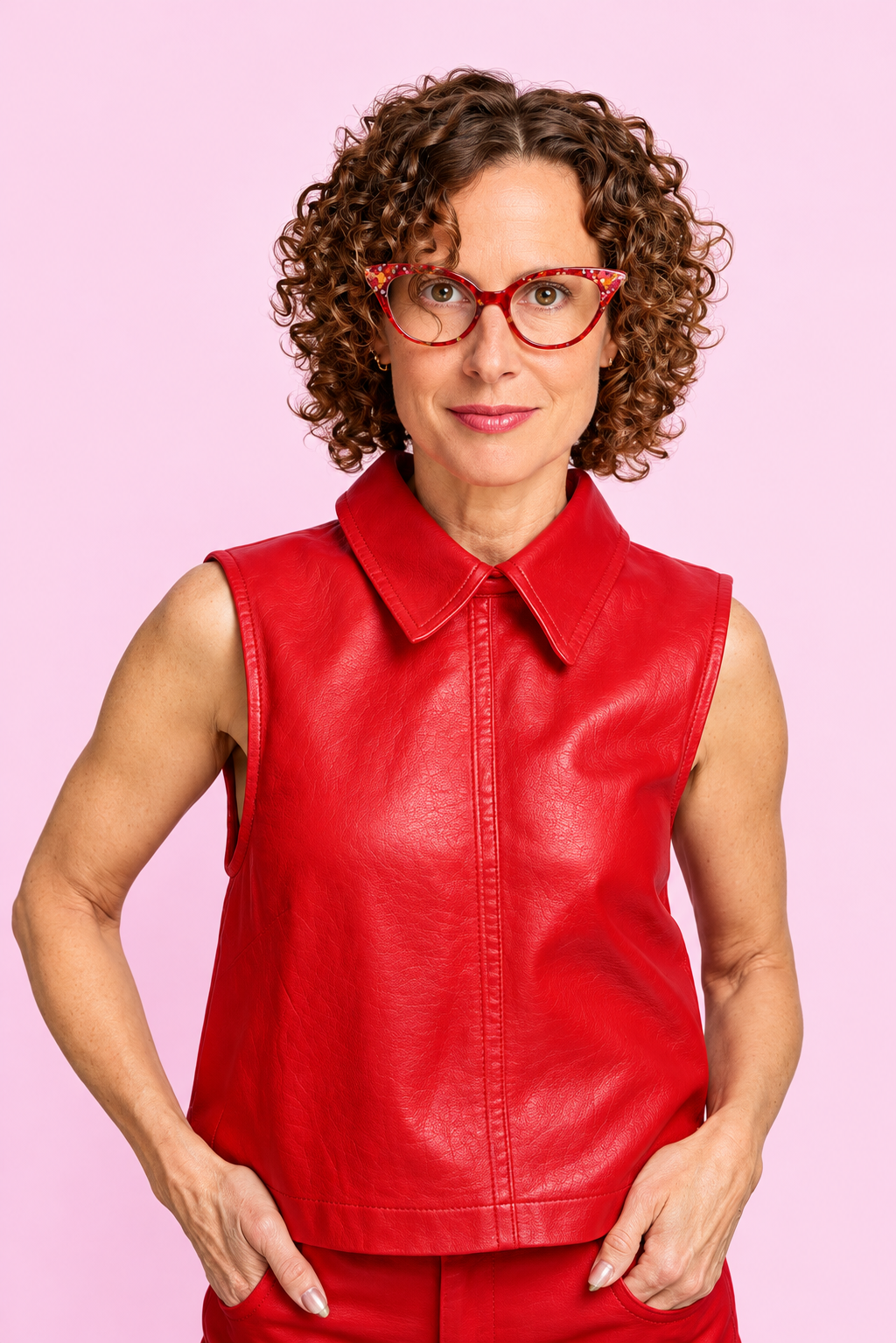
I had the pleasure of talking with Dara Fleischer while she sat in her closet (a.k.a. cloffice), surrounded by the evidence of a love affair with fashion that had nearly destroyed her financial security and sense of self. Somewhere in that collection are more than 100 pairs of Golden Goose sneakers, she estimates, almost all of them unworn. There are also roughly 40 to 50 pairs of cowboy boots. For most fashion lovers, such a collection might represent the ultimate dream. For Fleischer, it has become a reminder of years spent chasing a satisfaction that never seemed to arrive. Now, at 54, the former fashion editor is confronting an uncomfortable truth: she spent much of her professional life immersed in the business of making people want things, while privately struggling to stop buying them herself.
Her fascination with clothes began innocently enough. Born in Montreal, Fleischer spent part of her childhood in Burlington, Vermont, where her mother owned a clothing store called Just Pants. By seven or eight, she was helping customers at the register and assembling outfits on the sales floor. She kept a diary as a child, eventually studied journalism at Ryerson University in Toronto, and developed an ambition to write about fashion. To Fleischer, clothing was never merely merchandise. It was “a wearable work of art,” an expression of individuality that she found endlessly fascinating.
After moving to New York in her early twenties, she began photographing herself in outfits from boutiques around the city and asking readers to choose their favorites. The project, called Total Fashion Junkie, emerged before social media had transformed fashion blogging into an industry. Fleischer remembers the attention it attracted from publications including The New York Times and The Wall Street Journal. She went on to build a career spanning fashion journalism, personal shopping, retail marketing, e-commerce, and brand partnerships, with editorial work that included LOULOU, FASHION, and InStyle. Fashion wasn’t simply something she enjoyed. It was her profession, her expertise, and a central part of her identity.
Yet behind that professional identity, another relationship with shopping was developing. Fleischer describes years of loneliness, frequent moves, and career dissatisfaction, even while landing jobs she had once dreamed of having. Buying something new offered a brief escape from those feelings. The excitement came from the search itself, whether she was hunting for cowboy boots or adding another pair of sneakers to her cart. Once the purchase was complete, the pleasure evaporated. She calls the aftermath “shopping aftershocks,” a combination of anxiety, guilt, shame, and buyer’s remorse. The cycle became increasingly difficult to interrupt.
The financial consequences were severe. Fleischer says she accumulated significant debt five separate times, with her most recent crisis leaving her $50,000 in debt while she was also dealing with job losses. Creditors were calling. Her income had disappeared. Eventually, she liquidated her retirement savings to address the mounting obligations. Meanwhile, the packages kept arriving. During her years in a New York apartment building, she had even instructed the doorman to disable package notifications so her husband would not see how frequently she was shopping. She describes the secrecy as financial infidelity, recognizing that her purchases had become inseparable from the lies required to conceal them.
Perhaps the most revealing detail concerns her husband’s reaction to her forthcoming memoir. They have been married for 21 years, and Fleischer says he knows what happened, including the debt she had concealed early in their relationship and the retirement savings she eventually depleted. But he has no intention of reading her book. As she recounts his response: “Why do I need to read your book, Dara? I’ve lived it.” There is a weary bluntness to that remark that captures something a financial statement cannot. Shopping had affected more than her bank account. It had damaged trust within her marriage and complicated her sense of responsibility to their teenage boy/girl twins.
Two years ago, Fleischer began writing about what had happened. She would wake at three in the morning and record the purchases, the debts, the behavior she regretted, and the feelings she had long avoided examining. What started as private journaling became At My Limit: How I Lost My Savings and Sanity Due to Compulsive Shopping Addiction, her debut memoir, scheduled for publication on November 17, 2026. The decision required an unusual kind of professional reversal. A woman whose livelihood had depended on understanding and encouraging consumer desire was now publicly documenting its destructive consequences in her own life.
Fleischer has pursued recovery through psychiatric care, Debtors Anonymous, and support communities for compulsive shoppers. She now helps lead a no-buy group through The Shopping Shift, encouraging participants to interrupt their purchasing habits and recognize the feelings behind them. Her approach emphasizes accountability without pretending that recovery is complete. She still shops, but says she now does it with intention, and tells her husband whenever a package is on its way. She is also selling much of her accumulated wardrobe through her website, darafleischer.com, turning years of excessive consumption into an ongoing exercise in letting go.
Her story arrives at a moment when shopping has become almost frictionless. Influencer hauls, targeted advertisements, limited-time drops, and Buy Now, Pay Later services make it easier than ever to turn a passing desire into a purchase. Fleischer understands those mechanisms from both sides of the transaction. Yet she is careful to acknowledge her own responsibility rather than place all the blame on retailers. The larger question running through her work is what happens when ordinary consumer temptation encounters a deeply personal need for emotional relief.
These days, Fleischer speaks less about the season’s essential fashion purchases and more about her efforts to find satisfaction in writing, walking her dog, spending time outdoors, and connecting with people. Her preferred mantra is “filling my heart, not my cart.” It is a striking change for someone who once built an identity around being a Fashion Junkie. The closet is still there, along with hundreds of reminders of who she used to be. What makes her story compelling is that she is still sorting through them, trying to understand what was worth keeping and what she was hoping to find in the first place.
Such a delight to meet you. So, before we dive in and talk about your great work and your book, our readers would love to learn about Dara Fleischer’s personal origin story. Can you share with us a story of your childhood and how you grew up, and particularly the seeds of all the amazing creativity that has come since then?
Dara Fleischer: That’s a really good question. I definitely write about a lot of that in my new book, At My Limit, which we’ll get into in a bit. But first, my childhood. I’m originally from Montreal, Canada. I love Montreal. It’s the best city ever. But I’ve moved around a lot, mostly just for school, initially university, and then career.
So after Montreal, I lived in Toronto for a while. I was the shopping editor of LOULOU magazine (Rogers Media), Canada’s now defunct shopping publication. And then I moved to New York for about 25 years, and now I’m in Austin.
As for my childhood, I lived in Montreal and then my family moved to Burlington, Vermont when I was about six years old. I always forget to talk about that. My mother at the time had a clothing store called Just Pants. And I remember being seven, eight years old and I would help people at the cash register. I loved it. I was in my element at that age. I would help people on the sales floor, put together outfits, what have you. And I honestly think that’s when my obsession with fashion began.
Okay. Amazing. So, please tell us the next chapter. Tell us how you became such a fashion expert.
Dara Fleischer: Well, I think, I hate saying this, but it kind of is true that fashion is in my DNA. My mother is a shopaholic. And Mom, if you’re listening, I love you. I mean that in the best way possible. I really wanted to be a fashion reporter when I studied journalism at Ryerson University, which has since changed its name. I think I forget what it’s called now. But anyway, I wanted to be a fashion reporter. I just always loved knowing about the latest fashion. I loved meeting designers. I loved touching products, fabric, and just writing about it. To me, fashion is just the most creative expression of art, you know, a wearable work of art, if you will. And I knew from a very early age that I wanted to write. I kept a diary from around the time that I was living in Vermont when I was seven or so.
Fast forward to my early 20s after I graduated from Ryerson, I moved to New York. And my very first job, I was actually interning for a publication called Total New York. And I started writing a blog. I didn’t even know it was a blog at the time. This was way before social media. I’m aging myself, but it was called Total Fashion Junkie. And the premise of the blog was me gallivanting the city streets of New York, going to all these different boutiques, shopping, and then posing like selfies, what we call selfies now, and then asking people what outfit they liked best.
And then that just kind of blew up, and I wasn’t even getting paid, and I realized that maybe I was onto something. And honestly, that was the impetus for my fashion career. I really just wanted to continue along that trajectory, and I did in pretty much every single area. I dipped my toe in every single area of fashion from marketing to business development to sales to e-commerce and obviously writing.
Wait, so the name “Fashion Junkie,” is that like a tongue-in-cheek allusion to a shopping addiction?
Dara Fleischer: It was, and I write about it in my book. Fashion Junkie was my blog. I was one of the first fashion bloggers, and I hate saying that. People look at me like I have two heads. I really was one of the first fashion bloggers because The New York Times, The Wall Street Journal, Time Out New York wrote about my blog when I was interning at Total Fashion Junkie. This was back in 1996.
And I just turned it into a blog before I knew what a blog was. And I grabbed the Instagram handle @fashionjunkienyc. At that time I was living in New York, and I never changed it because I felt like it was a part of who I am. My identity. But I am a recovered shopper. I am a former fashion junkie.
Some people can’t appreciate high fashion. You know, there’s even a cynical saying that high fashion is so unusual that it has to go out of style in two months. So what is it about the latest fashion? What is it that makes it fashionable, when so often it seems so strange?
Dara Fleischer: You know, it’s funny because if you asked me right now, what are the top trends, I would not know how to answer that. I used to be the person that was glued to magazines like Vogue magazine, at least when physical magazines were still a “thing.”. But now I would have to say I was always heavily influenced by what people were wearing on the street. And I think a lot of high fashion comes from that.
I lived in New York for many years, so it’s a great city for people-gazing, just watching people on the street, going to a museum. Inspiration comes from so many different places. But it’s so funny because I never understood how a luxury designer dictates trends and what’s the tipping point when a fringe jacket is super cool and when does that become really tacky? I don’t know. I live in Austin, so I feel like fringe is never going away.
Western wear is never going away. But I think at the end of the day, you just have to find your own true personal style and dress for yourself because no one really cares what you wear. And I always say: your appearance is the least important thing about you.
So, aside from your book, tell us about the exciting things you’re working on now.
Dara Fleischer: The book was definitely my baby. It took a long time because it’s my life story, and I am working on a number of things right now. I’m still in book launch mode because the memoir officially releases November 17th. Today is November 5th. So, I’m still really focused on the book. I’m also focusing on my website, which was recently released. It’s called darafleischer.com. And I’ve been busy “selling my sickness”, so to speak. I’ve been posting on Instagram pretty much daily about the different things that I’m selling to atone for all my sins.
As you can see, I’m in my closet right now (a.k.a. My “cloffice”), and it still looks like this after five or so closet cleanouts where I’m rummaging through my closet deciding what to donate, what to sell. And on my website, I’m going to be selling a lot of things. For example, I have over 100 pairs of Golden Goose sneakers, which I’m ashamed to admit. Ninety-nine percent of them I’ve never worn. So, I’m selling those on my website. If anyone’s listening and wears a size 36, you are going to be in heaven. Visit darafleischer.com/closet — not that I’m encouraging anyone to shop!
I’m spending a lot of time weeding through my stuff because the reality is, most of us wear maybe 10% of what we own. So, I’m focusing on that. And my Instagram is @fashionjunkienyc. And I’m also focusing on my Substack (https://substack.com/@darafleischer) and just a lot of other fun creative projects.
So, let’s jump into the book. Tell us what the premise of the book is.
Dara Fleischer: It’s basically my life’s work: At My Limit: How I Lost My Savings and Sanity Due to Compulsive Shopping Addiction. That is literally what the book is about. I started writing it as a cautionary tale because I suffered from a horrible case of shopping addiction throughout my entire life. I didn’t know that I was an addict at the time. Denial, denial, denial! And I started writing this book two years ago when I was 52. I’m now 54, because I had to write the truth.
I had to hold myself accountable for all the horrible things that I had done. And it was unbelievably cathartic. I wrote it as a cautionary tale because I want other compulsive shoppers to know that they’re not alone. If someone out there is listening to this and you’re suffering in silence, don’t think that you’re a bad person. You’re not a bad person. You can change. There is hope and I’m here for you. There are a lot of different avenues to get better.
And that’s honestly why I write about my journey, admitting that I am powerless over this addiction, and I really had to forgive myself. I wrote every single day at 3:00 in the morning about what was going on inside my brain, how much I was spending, what I was buying, and some of the terrible things I did. And I’m not going to give it all away because I’d like for you all to read the book!. But that’s really the premise of my book.
You said the word “terrible things” a few times. Now, I imagine the terrible things are that you’re saying you maybe are buying a lot of clothes, or am I misunderstanding? Do you mean something more egregious?
Dara Fleischer: Yeah. So, as I said, I don’t want to give everything away because I write about all those things in the book, but the thing with shopping addiction, at least for me, horrible things like being in debt five times. Sadly, my last implosion, I was $50,000 in debt and I got fired from a full-time job. So, I had no income coming in and I just didn’t know what to do. I had creditors calling me. I had to liquidate my 401(k), my retirement fund, to stop the bleeding. That’s a horrible thing, no matter what age you are.
I also have 16-year-old twins. I certainly was not being a very good role model to them. And I really was tired of just treating myself like this; living in fear, anxiety, depression, and I’m married. What kind of wife was I being when there were packages coming in every single day? And a lot of the time I was hiding those packages. I call it stealth shopping or financial infidelity. So I really wasn’t being honest. I was lying not only to everyone, but I was also lying to myself, being in denial that I had a major shopping problem.
I’m not an expert. You’re the expert. But what they say is that addictions generally are trying to mask some kind of pain. That people are trying to tape over so that they can escape their pain. Do you think it was a similar thing, that the thrill of shopping was trying to mask something over?
Dara Fleischer: One hundred percent for me, and generally the case with other compulsive shoppers. We shop, and I shop, because I’m trying to numb the pain. What pain? For me, a lot of things. Because I moved so many times throughout my life, I never really felt like I had a tight-knit community of friends. I have, a number of really good friends in different cities because no one lives in one place anymore. But I really felt lonely. I felt that emptiness, that deep hole.
I also was never satisfied throughout my career. Yes, I worked in fashion throughout my entire life, as a fashion editor, even a personal shopper, a blogger. I mean, every job that I wanted I pretty much landed, but I was miserable. And the more money I made, the more I spent, the more I bought, the more in debt I became, and the more miserable I was. So, I really just kept shopping to fill that void.
And it gave me a temporary feeling of happiness. Really, when I was adding to cart or looking for the perfect pair of cowboy boots, it was the thrill, the find, you know, the hunt. But it really wasn’t actually getting that package in front of my doorstep that gave me that happiness. It was so fleeting. And I always refer to that feeling immediately after you buy, as shopping aftershocks. Those feelings of anxiety, shame, guilt, buyer’s remorse, and it’s really difficult. It’s about getting to the root of the problem and understanding what is going on inside so you can stop doing something so damaging like shopping and repair that relationship you have with yourself with something good and honorable.
So you mentioned that you wore or used 10% of the clothing. So let’s say you got those exciting cowboy boots, you would put them in the closet, and generally you’d put them in the closet and not try them on either?
Dara Fleischer: Yes, sadly that is 100% true. I have worn one or two pairs and I probably own 40, 50 pairs of cowboy boots, mostly from the same brand. And I know anyone who’s listening to this is probably like, she’s crazy, why doesn’t she wear anything? I haven’t shown a lot of things the love and attention they deserve. I think a lot of it is because of the shame. I just feel like I don’t want a reminder of all the things that I’ve purchased.
I’m also scared to wear things in front of my husband because I’m worried about that inevitable question, “Dara, where did you get that? I’ve never seen those boots before.” And another big component of this: a lot of serial shoppers are hoarders. We constantly collect things because the second I order a pair of cowboy boots or Golden Goose sneakers, I’m already onto the next thing even before the next package arrives. So that’s a very big part of it. And there was something at the time that was very comforting about having all of these things, these inanimate objects that I was surrounded by yet never wearing. It gave me a false sense of security and comfort that I never had.
I really appreciate your bravery and your candor sharing all this. You said that you’re afraid for your husband to find out, but I mean, I’m sure by now he’s found out and he’s read your book, I’m sure.
Dara Fleischer: I definitely confronted my husband. Yes, he knew what he was getting into when he married me. He knew that I was a fashion editor, that I absolutely loved fashion trends, but he didn’t know that when we first met, I was $30,000 in debt. That was the first time, credit card debt. And over the years, we’ve been married now for 21 years. He certainly knew there were endless stream of packages coming in.
When I lived in New York, it was much easier because we lived in an apartment building where there was a doorman and they had a package room. So, I always just told my doorman, you know, turn off all those package notifications. I didn’t want my husband seeing emails like, “Oh, Dara, you have a package delivery from Bergdorf’s,” or “You have a package delivery from Neiman Marcus or Holt Renfrew,” whatever it was.
But eventually, very recently, when I was in debt for my fifth time, embarrassingly so, I had to tell my husband what happened because I wiped out my retirement fund, my Vanguard fund, which he generously set up for me several years ago. I just had to tell him, and I just couldn’t live with the lies anymore. It was eating away at me like a flesh-eating disease. So, now he knows everything and he obviously knows that I’ve written a book. He will not read my book. And his answer is, “Why do I need to read your book, Dara? I’ve lived it.” And that is the truth.
So, what advice would you give for other couples on how to, like you said, how to address the quote-unquote financial infidelity, to address the lack of transparency in the relationship?
Dara Fleischer: For me, I think lying and financial infidelity is the same thing as having an affair. To me, it’s not that different. You have to tell the truth. You have to start with being honest and communicating. Right now, I still buy, but I buy intentionally and, you know, I’m not compulsively shopping like I used to. But I’ll tell my husband, I’ll say, “You know, Michael, I have a package on the way. Just so you know, I ordered a pair of sneakers from Adidas,” because I don’t want him to freak out. I don’t want to lie.
And I also talked to him about what I’m doing to try to recover. For a large amount of time when I started my recovery journey two years ago, I started Debtors Anonymous. I was going to virtual Zoom meetings and I told him what I was doing, and I really think he respected me for telling the truth and obviously just for working on my disease, if you will. And I’m also part of a group that’s called The Shopping Shift. It’s an online virtual group founded by Hannah Blass, also for overshoppers. And I think without making an effort and being honest and doing all those things, it’s really damaging to a marriage and it’s damaging to yourself.
For many addictions, people have to engage professional help. Do you think a shopping addiction is the same way, where you have to go to rehab, or how does that happen here?
Dara Fleischer: Yes. I think honestly there’s no one-size-fits-all approach. For me, I knew when I hit rock bottom, and it wasn’t just one incident, it was a culmination of things that happened over the years, I knew I had to get professional help. I knew that my husband wanted to help me, but he just didn’t know how.
So I started seeing a psychiatrist, and I was very fortunate that I was able to do so because it can be very expensive. But there are so many different avenues where you can find professional help, and I definitely urge someone to seek professional help. In my case, OCD medication was also warranted, but there’s no magic pill that cures shopping addiction or addiction of any kind.
I really think it’s a combination of things, whether it’s cognitive therapy. You have to have support. You can’t fight this alone. I always say shame and secrecy thrive in isolation. So, you need to find somebody that you trust, whether that’s a therapist or a good friend or one of these virtual communities like Debtors Anonymous or The Shopping Shift. There are so many different ways to go about it.
So when did you decide that you had to write your book?
Dara Fleischer: I always knew I wanted to write a book. I just didn’t know what that book would be about. And it was two years ago when I was in debt $50,000, the last time I was fired from two jobs within the span of two months. One I had for three years, the other one probably like nine months. I was so focused on shopping that it definitely affected productivity. And I just couldn’t take it anymore. I couldn’t live with myself. I felt my self-esteem had just plummeted. And I needed to do something to dig myself out of the hole. Obviously, pay off my debt, but I needed to do something creative and cathartic.
I’m a very creative person. As I said, I love to write. And the words really just poured out of me. So I started writing. It started off with a diary. I started journaling every day. And then I said to myself, you know what? I’m just going to turn this into a book with a goal of trying to help myself and others.
If there’s just one person out there that’s listening that’s suffering in silence or maybe in denial that I can help, then I can say it’s money well spent. So that’s really how it started.
Wonderful. Can you share your favorite story, or favorite upbeat story, that you share in your book?
Dara Fleischer: I am so glad you asked because I have a passage that I flagged and I’m going to read this: “10 Things I’ve Learned as a Compulsive Shopper.”
Number one, acceptance. Admitting I have a problem was and continues to be a huge wake-up call.
Number two, compulsive shopping is a behavioral disease. It doesn’t magically get better without work. Be kind to yourself, seek help, and take it one day at a time.
Number three, therapy and meds help, but you can’t do it alone. Support from family, friends, and an accountability buddy is just as critical as professional treatment.
Number four, cold turkey might be the only way, at least for me. Buying one thing often opens the floodgates, quickly escalating into multiple impulsive purchases. And that’s easier said than done, right? It’s like an alcoholic going into a bar and saying, “Oh, I’m just going to have one drink.” I just can’t do that with shopping.
Number five, resale sites are your new best friends. Sell or donate what no longer serves you to recoup cash, free up space, the clutter you can see around me, and clear the cobwebs, literally and figuratively.
Number six, social media is pure kryptonite. It wastes time. It triggers FOMO. It makes you want everything you can’t afford. You have to unfollow influencers, retailers, delete all the apps, Brick your phone. It’s a device that you literally attach to your phone so you’re not tempted to buy anything, so you can, you know, stop that add-to-cart impulse. It dies before it starts. You have to bury the “buy now, pay later” button for good. Any pay-in-four plan is just kryptonite. Cash is king.
Number seven, you have to unsubscribe from retailer emails and texts. I know it sounds stupid, but if something’s out of sight, it’s out of mind. It really, really, really works.
Number eight, you have to record your spending every day. Sounds terrifying, but it’s necessary. And the only way to take control of your finances is to track what you buy, return whatever you can, and note whatever the triggers are.
Number nine, you need to find a new hobby. I call that your dopamine menu or your rewire rituals. So I like to work out. I have to find things that make me happy: tapping into my creativity, writing again, taking a walk in nature, taking my dog for a walk, going out with friends, very simple things.
And the last and most important thing is that you have to forgive yourself when you slip up, because you will. Recovery is not linear.
You mentioned getting an accountability partner. How does a person do that?
Dara Fleischer: That’s a really good question. One option is through Debtors Anonymous, which is a (free) fellowship available to anybody, and you can seek a sponsor. A sponsor is basically like an accountability buddy, someone who’s there for you 24/7.
I also have a section on my site called “Retail Therapy Reimagined” where I’m actually offering to help anyone out there who needs one-on-one support, whether that’s via text, phone, Zoom, because I understand how hard it is to find someone to connect with who understands exactly what you’re going through.
And then thirdly, The Shopping Shift, which is the program that I’m currently a part of and that I’m consulting for. I lead the no-buy group, which is basically a plan where you stop shopping for a period of time, whether it’s 30 days, 60 days, 90 days. You really need to lean on somebody for that support to hold yourself accountable.
So, Debtors Anonymous, what if a person is not in debt? A person just has a shopping compulsion, but they’re not in debt.
Dara Fleischer: Debtors Anonymous, or any Twelve Step fellowship does not discriminate. In my case, I was an overspender and debtor. You will meet a wide range of people that are suffering from the same compulsion, but some people aren’t in debt. Maybe they have a good handle on their finances, but they’re still impulse spending and they can’t get that under control. They’re not saving. So, it’s incredibly helpful.
Okay. So, this is our signature question. We focus more generally now. You’ve been blessed with a lot of success in your life and you must have learned a lot from your experiences. Looking back to the beginning of your fashion career, can you share five things that you’ve learned over the years that someone starting out in fashion can really benefit from? Five things you’ve learned over the years that someone starting out today can really benefit from.
Dara Fleischer: Those are really good questions. Those are hard questions to answer.
Number one, I would say don’t let anyone ever tell you that you can’t follow your dreams. You absolutely can. For me, my dream was writing this book, and it’s been just such an amazing and transformative time in my life.
Number two, don’t let failure beat you up. You have to accept that failure is about how you get up and lift yourself up and move on. That is so important. You know, talking about all of my failures and my struggles with shopping addiction, as I said, it is not linear. I’ve, literally fallen down many, many, many times. But you have to get up.
And I would say number three, you have to believe in yourself. You 100% have to believe in yourself.
And number four, you have to work really hard. Nothing is going to land on a silver platter. Nothing did for me. I’ve worked really hard to get every job. Everything that I’ve achieved was not handed to me.
And number five; trust your gut. Trust your intuition and just do things that make you happy. Those are, I think, some of the most important things.
Can you share some of the self-care routines that you do to help your body, mind, and heart to thrive?
Dara Fleischer: Love that. So, exercise is probably the most important thing for me. I have an addictive personality, I’ve exercised for years. I used to exercise three hours a day, which was probably too much. Now I’m dealing with so many injuries. But even if it’s just going for a walk and bird-watching. That’s something I love to do. It’s so important to be outdoors and connect with nature.
A lot of people meditate, even if it’s for a few minutes. I think it’s really important to connect to your mind, body, and soul. For me, writing is so therapeutic because it takes me out of my head. It calms the crazy. You really have to tap into your creative forces and just do whatever it is that makes you feel good, whether that’s exercising, or for someone else it could be cooking, it could be sewing or knitting. So, those are things I love to do. I also love to cook. I can make a pretty mean paella. And spending time with my mini Australian Labradoodle, Poppy.
This is our final aspirational question. Because of your great work and the platform that you’ve built, it’s not an exaggeration to say that you’re a person of great influence. If you could share an idea or inspire a movement that would bring the most amount of good to the most amount of people, what would that be? Because you never know what your idea might inspire.
Dara Fleischer: Well, for me, there are so many mantras. I would say for me, one of my mantras is “filling my heart, not my cart.” And I think it’s really important to stay true to yourself. I think just being authentic and following your true passion and not doing things because you think that’s what other people expect you to do. You have to do what you want to do, what makes you happy, not because it’s the right thing to do. I was always chasing those pie-in-the-sky jobs, and the more money I made, the more money I spent, and I was just so miserable and stressed.
Dara, it’s been a joy to meet you. How can our readers purchase or pre-purchase your book? How can they continue to follow your work? How can our readers get in touch with you to engage your services? How can our readers support your work in any possible way?
Dara Fleischer: Thank you so much for having me on your show. Visit my website darafleischer.com to order my book, At My Limit: Losing My Savings and Sanity Due to Compulsive Shopping Addiction, “shop” my closet and book 1:1 “Retail Therapy Reimagined” support. You can follow me on Instagram at @fashionjunkienyc, with an I-E. I definitely need to think about changing that handle, but it’s something I’ve had for so many years. So, my Instagram, my website, those are the best places to follow me. And you can buy my book right now. It’s available for pre-order (releases on November 17) on Amazon in Canada and the US, Barnes & Noble, Indigo Books, and Kindle.
Dara, it’s so good to meet you. I wish you continued success and good health and blessings, and I’d love to do this again next year.
Dara Fleischer: Thank you so much. I really enjoyed speaking to you and it was such a pleasure to be here. Thanks for having me.
If you or someone you know is struggling or in crisis, call or text 988 to reach the 988 Suicide & Crisis Lifeline.
AM
Written by
Authority Magazine Editorial Staff
Writer & ContributorContributor at Authority Magazine covering leadership, innovation, and industry insights.

Published inAuthority MagazineTop Lessons, Top Authorities · 42K Followers
Exclusive, curated interviews with the leaders and changemakers shaping tomorrow. Leadership lessons, industry deep dives, and executive profiles.
More from Authority Magazine
See all stories →
A
Authority Magazine Editorial StaffJessica Gold of Bliss Science on Molecular Bonding, Nonlinear Systems, and the Science of Human Connection
Wellness21 min read
A
Authority Magazine Editorial StaffMichael Ingber: Why We Must Stop Treating Menopause As A Disease To Be Endured
Wellness14 min read
A
Authority Magazine Editorial StaffJoel Conger of Connections Health Solutions on Crisis Intervention, Braided Funding, and the Power of Compassionate Care
Wellness6 min read
A
Authority Magazine Editorial StaffDain Heer on Radical Self-Acceptance, the Power of Questioning, and Reframing Personal Limitations
Wellness30 min read