With all that’s going on in our country, our economy, the world, and on social media, it feels like so many of us are under a great deal of stress. Relationships, in particular, can be stress-inducing. We know chronic stress can be as unhealthy as smoking a quarter of a pack a day. What are stress management strategies that people use to become “Stress-Proof? What are some great tweaks, hacks, and tips that help reduce or even eliminate stress? In this interview series, we are talking to authors, and mental health experts, who can share their strategies for reducing or eliminating stress. As a part of this series, I had the distinct pleasure of interviewing Dr. Dain Heer.
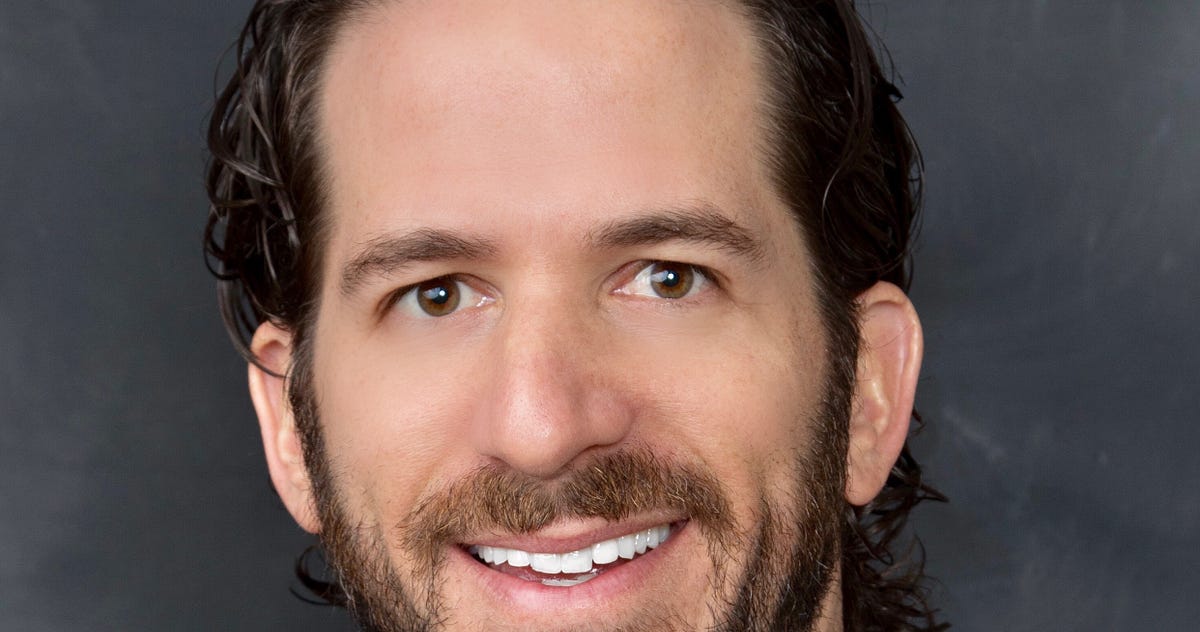
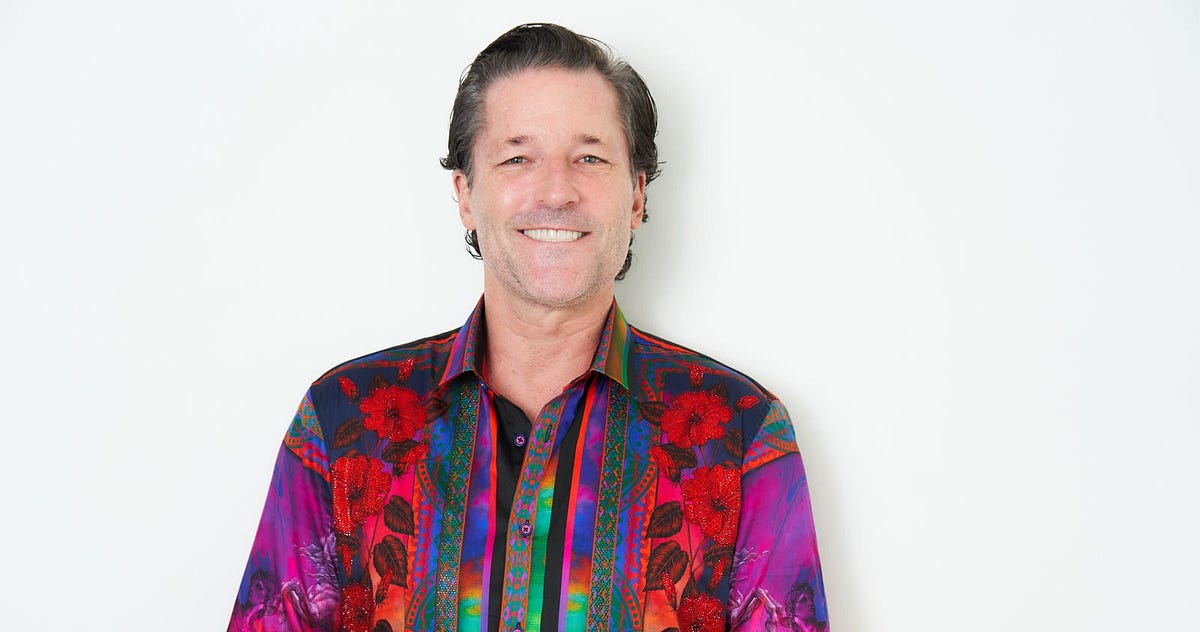
Dr. Dain Heer is an author, international speaker and explorer of possibility who invites people to discover the joy of being themselves, including the weird, wonderful parts they’ve learned to hide. The author of Being You, Changing the World, Return of the Gentleman and Body Whispering, and co-creator of Access Consciousness, he brings humor, curiosity and practical tools to challenge the belief that we need to fix ourselves before we can enjoy our lives. He founded International Being You Day to encourage people to move beyond self-judgment and explore how much more joy, ease and adventure might be possible when they dare to be themselves. www.drdainheer.com
Thank you so much for joining us in this interview series! Before we dive in, our readers would love to know how you got from “there to here.” Inspire us with your backstory!
What a beautiful question. For a long time, I thought I needed the perfect narrative — a linear story that made logical sense to everyone else. But what I’ve actually discovered is that my life hasn’t been about arriving at a neat destination; it has been an ongoing exploration of asking, “What else is truly possible here?”
More than two decades ago, I had what many would consider a picture perfect life. I was a successful chiropractor living in sunny California, engaged to be married — and from the outside looking in, I had made it. But from the inside looking out, I was entirely miserable.
I had tried every modality, practice, and technique I could find — and in California, that is quite a list! Yet, nothing seemed to create any lasting lightness or change. Finally, I reached a breaking point. I gave the universe an ultimatum: it had six months to show me something entirely different, or I was checking out. I was done.
Then, one day, a tiny advertisement in a local paper caught my eye. It simply read: “All of life comes to me with ease, joy and glory.”
I resisted it at first — it sounded much too good to be true — but somehow the ad kept showing up. Eventually, I called. I went on to receive a 90-minute Access Bars session, and when I got up from the table, the heavy depression that had consumed me for so long was just… gone. I started giggling like a little kid who had suddenly remembered the sheer joy of being alive.
I remember thinking, “If this level of peace is what is actually possible, I’m in.”
That single choice eventually led me to Gary Douglas, the founder of Access Consciousness. When he came to me for a chiropractic session, he didn’t ask me to just fix him. He asked me to talk to his body, to ask what it required, and to trust that I actually knew what to do. That invitation of trust truly changed my life and became the birth of the energy work I now facilitate all over the world, the Energetic Synthesis of Being (ESB).
Gary was the first person who invited me to trust my own knowing. I began to see how much of my energy I had spent judging myself — making myself wrong for being different, for perceiving things others didn’t, and for knowing things I couldn’t logically justify.
He would ask me questions like, “What would you be if you were not defined by your past?” and, “What if everything you’ve decided is wrong about you is actually exactly what’s right about you?”
Those questions shattered my limitations and opened doors I never even knew existed.
You see, perhaps our backstory isn’t really about how we got from ‘there to here.’ Perhaps it is the beautiful journey of discovering that we were never actually as broken as we decided we were.
It leads me to one of my favorite questions to ask people now: What if your greatest wrongness is actually your strongest strongness?
What lessons would you share with yourself if you had the opportunity to meet your younger self?
If I could sit down with that little guy today, the first thing I would do is share the exact words from a children’s book I co-authored called The Baby Unicorn Manifesto. I would look him right in the eyes and whisper:
“You are a gift. You are a beautiful contribution to the world, and we are so very grateful you are here.”
I spent so much of my early life convinced that I was fundamentally wrong because I was so different. I perceived the energies, thoughts, and feelings of everyone around me, and it confused the heck out of me. Because no one else seemed to be experiencing the world that way, I concluded I must be broken. Instead of recognizing my high level of awareness as a brilliant capacity, I spent years trying to shut it off. I tried so incredibly hard to just be “normal.”
I would tell my younger self: You are not broken. You never were. Your weirdness — in the truest, most wonderful, most unapologetic sense of the word — is exactly the difference this world requires.
I would also tell him to start asking way more questions. In this reality, we are taught to constantly seek the “right” answer. But answers act like a full stop; they close the door. A question, on the other hand, empowers. I would tell him: Don’t be so quick to lock yourself into an answer. Ask a question, receive a new awareness, and then ask again.
Finally, I would tell him that what he keeps labeling as “fear” is very often just an energetic indication that a massive new possibility is showing up. We often get what I call “exterrified” — that thrilling, intense space of being infinitely excited and terrified all at once. I would ask him: What if being you, exactly as you are, is not only enough, but more than enough to change the world?
None of us are able to experience success without support along the way. Is there a particular person for whom you are grateful because of the support they gave you to grow you from “there to here?” Can you share that story and why you are grateful for them?
Without a single hesitation: Gary Douglas. He is the founder of Access Consciousness, my business partner, and my dearest friend.
When I met Gary, I had never encountered anyone who functioned the way he did. He has this remarkable, expansive capacity to see people for who they truly are, rather than who they are pretending to be or who society has decided they should become. He looks right past the limitations and the smallness people try to sell him about themselves.
What truly changed my world is that Gary does not create followers; he creates leaders. He has never once wanted me — or anyone else — to become a clone of him. Instead, he constantly invites you to become more of you, and to trust your own choices, even when those choices ruffle a few feathers.
He is also one of the rare people who actually lives what he teaches every single day. He doesn’t spend his time making people wrong… or right, for that matter! He simply asks questions that invite you to step into a greater awareness and recognize that you always have another choice available.
I also have to express a deep, profound gratitude for my mom. Growing up, she allowed me to be as wonderfully weird, imaginative, and wildly dreamy as I truly was. She didn’t try to squash it out of me to make me fit in. That level of allowance from a parent is an extraordinary, rare gift.
That brings me to another question I love to invite people to look at. We spend so much of our lives desperately looking for someone else to validate us and see the greatness in us. What would actually change in your life today if you were finally willing to see it in yourself?
Are you working on any exciting new projects now? How do you think it might help people?
I am constantly, infinitely exploring what it truly means to be you — and the phenomenal freedom, possibility, and contribution that becomes available when you finally step into that space.
I wrote the book Being You, Changing the World back in 2011, and it has evolved into this magnificent, ongoing global journey. We now celebrate International Being You Day every year on June 22nd, and we have hundreds of incredibly dynamic Being You facilitators all around the planet. And you know what? Every single time I facilitate one of these classes, my own universe expands. And I discover something completely new about what is possible.
This conversation feels more vital right now than ever before, especially as AI becomes such a prevalent part of our daily reality. When you instantly can pull up a supposedly right “answer”, how often do you pause to acknowledge what you uniquely know? What if your brilliance isn’t about replicating other people’s lives, or finding the “right” answer, but about exploring the unique energy and awareness that only your being can bring to the world?
So much of this exploration is energetic rather than just cognitive. Yes, the mind is involved, but the deeper we dive, the more I recognize that truly choosing to be yourself is an energetic reality. It is a space of freedom that starts to unlock the moment you begin to release the conclusions and judgments you’ve bought about who you are and what is possible for you.
Speaking of expanding this journey, I am also incredibly excited to share that I am currently finalizing a brand-new book. It is a continuation of the Being You conversation, and it’s called The Awareness Revolution.
If any of this brings up a spark of curiosity — or maybe even a little bit of that “exterrified” energy — I invite you to come play. You can explore these resources and classes online; there are absolutely no prerequisites, and every single part of you is welcome. What if you being you is exactly the gift and the change this world requires?
Ok, thank you for sharing your inspired life. Let’s now talk about stress. How would you define stress?
I would start by asking a question! What if stress is simply what occurs when you function from a fixed point of view instead of from your awareness?
In this reality, we are taught to assume that stress is created by external circumstances — too much work, not enough money, a demanding relationship, or a health issue.
But consider this: What if stress has very little to do with what is actually happening, and everything to do with the significance and meaning you have assigned to it?
When you function from a fixed point of view, you have already concluded what a situation means, exactly how it should play out, and what the outcome must be. The moment life doesn’t match your neat little conclusion, you go into resistance. You start thinking, “This shouldn’t be happening. This is wrong. I cannot handle this.” And suddenly, you are stressed out of your mind.
Awareness, on the other hand, creates space. Instead of instantly locking into a judgment about what a situation means, you can step back and ask questions. Remember those four questions? What is this? What can I do with it? Can I change it? How can I change it?
By asking those questions, you immediately unlock choices and possibilities that you couldn’t even see while you were so busy defending your fixed conclusions.
So much of our stress comes from this exhausting, constant attempt to control every single outcome — or trying to control our entire lives! — instead of simply choosing to be totally present with what actually is, whether it’s good, bad, or ugly.
What I have found over the years is that the moment you stop avoiding what is, nothing can stress you out in the same way ever again. It is incredibly simple, really: you can change absolutely anything that you are willing to be totally aware of. What if you didn’t have to control anything to have the ease you actually desire?
In the Western world, humans typically have their shelter, food, and survival needs met. So what has led to this chronic stress? Why are so many of us always stressed out?
It is fascinating, isn’t it? We have extraordinary comfort and convenience in this reality, yet so many people are walking around with this constant, heavy hum of anxiety and pressure. So what is actually going on?
First, we have been trained to judge absolutely everything — especially ourselves. We are constantly evaluating: Am I succeeding or failing? Am I ahead or behind? Am I finally ‘good enough’? Living inside that constant judgment and constantly looking for the “wrongness” of you is the most exhausting thing on the planet. We have bought into the lie that our worth must be earned, that we have to justify our existence and somehow fix whatever makes us different.
Second — and this is a huge one — one of the strangest parts of this reality is that no one tells us that we are really, really, REALLY energetically aware. You, my friend, are actually like a huge radio receiver. You are aware of every single thought, feeling, and emotion of everyone around you. And again… NO ONE TELLS US! In my point of view, that is just crazy. If I ever met an alien, fresh from the spaceship, trying to make sense of this reality, this is the very first tool I would give them… Who does it belong to?
And here is the core premise of that: 99.9% of the thoughts, feelings, and emotions you experience do not actually belong to you. But because you feel it in your body, you assume it must be yours. You are walking around carrying the anxiety of your family, your city, and the world, trying to solve a problem that was never yours to begin with.
Here is how the tool works: When you feel heavy, anxious, or stressed out of your mind, just stop and ask, “Who does this belong to?” If the feeling lightens up or shifts even a little bit, it is not yours! You can simply let it go and return it to sender. Just look at it: if you had known, from the time you were born, that 9% of what goes on in your head is not yours… would you have made it all so REAL?
What if this chronic stress is simply your own awareness shouting at you that the way you have been taught to function in this world is a total lie?
If you are willing to admit that you are choosing the stress, perhaps as a way to fit in or prove you are working hard, you immediately get the power to choose something else. What would you choose right now if you didn’t have to make anyone else’s reality, world, thoughts, feelings, and emotions real for you EVER AGAIN? What if you could just be you, and that was actually more than enough?
What are some of the physical manifestations of being under a lot of stress? How does the human body react to stress?
Our bodies are absolutely amazing, and they are incredibly aware. They will always — always! — show us when something isn’t working for us or isn’t contributing to our world.
Your body might start by whispering, then talking, and eventually screaming at you. It shows up as tension, headaches, digestive issues, not being able to sleep, exhaustion, shallow breathing, skin problems, or just feeling constantly run down. But here is the thing: your body is not punishing you or betraying you. It is simply asking you to pay attention! (If you would like to explore this in more detail, I talk about it in my book Body Whispering.)
When you are stressed, your body goes into protection mode. And then what do we usually do? We add judgment! We judge ourselves for being too tired, too old, too fat, too thin, or for not handling everything “perfectly.” Every single judgment creates another layer of solid tension, locking that stress right into your cells. But what if your body is not the enemy? What if your body actually has your back way more than you do?
Remember how we just talked about being a giant radio receiver? Well, our bodies are way less self-centered than our minds are. Your body is paying intense attention to all the other bodies and energies around you. Have you ever been having a totally great day, walked into a room or a supermarket, and suddenly felt stressed, tense, or overwhelmed? We instantly assume we did something wrong or that the stress must be ours, and we start trying to fix ourselves. What if nothing is actually wrong in that moment? What if you and your body are simply aware?
This is exactly where you use that question we just talked about: “Who does this belong to?”
Since you already know that 99.9% of it isn’t yours, you don’t have to figure out the answer. You don’t need to determine whether the stress belongs to your partner, your colleague, or the person you just walked past. Simply ask the question and notice what happens. Does that heaviness in your body become lighter?
For me, that sense of lightness is a reminder from my body that I don’t own or have to take on everything I’m aware of. What if you could be totally present with someone, care about them, and still allow their stress to be theirs? What if you could listen to what your body is communicating without ever making it wrong or treating it like a broken machine that needs fixing?
There is so much phenomenal ease available when we stop treating the body as a problem to solve and begin recognizing it as a brilliant source of awareness, information, and possibility. What if you and your body could actually become best friends… forever?
Is stress necessarily a bad thing? Can stress ever be good for us?
I don’t actually believe that everything we label as “stress” is necessarily a bad thing. In fact, we often use that word to describe the sheer, vibrant intensity of stepping into the unknown — especially when it is something we have actually been asking for!
Consider that enormous rush of energy you might feel right before launching a new business, walking out onto a stage, or choosing a totally different path for your life. We are so quick to judge that sensation, immediately concluding, “I’m stressed! Something must be wrong.” But what if some of that intense energy is actually excitement?
The question I invite you to ask in those moments of high intensity is: “Is this an energy that will truly contribute to my life and my future, even though it feels unfamiliar? Or is this actually wearing me down?”
There is a profound difference between the vibrant, alive intensity of exploring a brand-new possibility and the heavy, contracting sensation of feeling continually overwhelmed, exhausted, or unable to switch off.
So, rather than immediately deciding that something is wrong with you, or wrong with the situation, what if you could open up the space? Whenever you feel that intense sensation we call stress, turn to these four questions:
- What is this?
- What can I do with it?
- Can I change it?
- How can I change it?
For me, asking these questions creates a beautiful sense of space. They empower you to step out of the heavy conclusions of stress and recognize the sheer power of your own choices — even right in the middle of a seemingly intense situation. What if you are way more capable of handling intensity than you ever gave yourself credit for?
Is there a difference between being in a short-term stressful situation versus an ongoing stress? Are there long-term ramifications to living in a constant state of stress?
For sure! Your beautiful body is brilliantly designed to handle a short burst of intensity and then effortlessly return to a space of ease. Chronic, ongoing stress is a completely different story, because your body rarely receives the memo that it is actually safe to rest.
Over time, living in that constant state of alert can take a heavy toll on your sleep, your energy, your mood, your digestion, and your overall sense of joy. But here is the thing: external circumstances are only a fraction of what is really going on. So many of us are living under the weight of constant, relentless internal judgment. You are behind. You should be doing more. You are failing. You are not enough. When that inner dialogue of judgment never stops, your body never gets a break!
Now, here is a part we don’t always want to look at: if the stress is ongoing, there is usually an element of choice involved. Often, we are actually choosing the stress without acknowledging it. I know, nobody wants to hear that! But if we were willing to be totally honest with ourselves and acknowledge that we are the ones choosing it, we would finally have the power to choose something else — and actually change it.
We have actually learned to become attached to stress in this reality. Saying, “I am just so busy and stressed!” becomes our way of saying, “Look how valuable I am!”
But what if you could create the life you truly desire without ever having to use stress as your fuel? What if you asked yourself:
- “What am I using this stress to create?”
- “What am I using this stress to avoid?”
Then, simply pause long enough to acknowledge what you actually know. You might be completely surprised by the space, freedom, and ease that opens up for you when you stop using stress to prove your worth!
Let’s now focus more on the stress of relationships. This feels intuitive, but it is helpful to spell it out in order to address it. Can you help articulate why relationships can be so stressful?
Oh, relationships! This is where it gets truly interesting.
Remember how we just talked about stress being locked in by internal judgment and the exhaustion of trying to prove our value? Well, relationships are often where we create the most intense stress by trying to maintain an image of “perfection.”
Most of us have been taught that a relationship should complete us, make us happy, and prove that we are finally lovable. Functioning from that fixed point of view, we ask another person to provide everything we are unwilling to provide for ourselves — and then we become deeply disappointed and resentful when they inevitably cannot do it!
Often, people will literally divorce themselves just to be in a relationship. They give up what they love, alter who they are, and hide the brilliant, weird, and unique parts of themselves that they believe will not fit into the other person’s world. And then they wonder why they feel so stressed!
Then, there is the incredible, exhausting stress of the image. Consider the sheer amount of energetic force it takes to constantly hold a façade in place! We exhaust our bodies trying to project the “perfect” version of who we think we need to be. We desperately try to mold the relationship to match an idealized picture in our heads, and we constantly measure what we have against this reality’s predefined, cookie-cutter idea of what a relationship is supposed to look like.
When you are busy holding all those images in place, judgment is never far behind. We judge our partner for not being who we want them to be. We judge ourselves for not being the perfect partner. We judge the relationship because it does not look the way we concluded it should. And just like we talked about earlier — every single judgment creates solid tension, locking that stress right into your world.
In all of this, we are rarely actually relating to the person in front of us. We are relating to our projection of them, or the person we hope they will become.
What if you didn’t have to hold any of those images in place anymore?
Real intimacy asks us to drop the projections and meet the actual human being in front of us — flawed, weird, surprising, and wonderful — while allowing them to meet the real, unedited us. That level of vulnerability can feel like a risk but it is also exactly where the joy, the ease, and the true magic of connection actually begins.
Can you help spell out some of the problems that come with the stress caused by relationships?
We mentioned one of the biggest ones already: we often begin to divorce ourselves in order to stay in the relationship. You stop choosing what you actually enjoy, you constantly edit what you say, and you try to morph into whoever you think the other person requires you to be. But when you do that, how much of you gets left out?
From there, a profound breakdown in communication usually follows. People shut down, avoid uncomfortable conversations, claim they are “fine” when they are absolutely not, or silently expect the other person to telepathically know what they need.
Then, resentment begins to build. You desperately want the other person to appreciate you, yet you have stopped acknowledging what you value about yourself. You start keeping score, withdrawing, and collecting evidence of everything they are doing wrong.
As we talked about earlier, judgment creates solid tension. When your relationship is built on judging what is wrong, there is very little space for gratitude, vulnerability, or the simple enjoyment of being together.
This creates a fascinating and painful Catch-22. We so deeply desire true intimacy and connection, but when the stress of the relationship mounts, our default instinct is self-protection. Intimacy requires vulnerability — the willingness to have no walls and no barriers. Yet, because we are stressed and afraid of being hurt, we put up our energetic shields, actively protecting ourselves against the exact intimacy we are desperately asking for!
Something Gary Douglas and I explore in our book, The Five Elements of Intimacy, is how intimacy must always begin with you. When you look to someone else to provide all the honor, trust, allowance, vulnerability, and gratitude you are unwilling to give yourself, you place an enormous, crushing amount of pressure on the relationship.
The effects of this stress rarely stay neatly contained between two people. They spill over into your work, your friendships, your parenting, your creativity, and your overall capacity to enjoy your life. And of course, they spill over into your body — which, as we discussed, will start screaming at you through tension, fatigue, or illness, begging you to acknowledge that something isn’t working.
Perhaps the greatest cost of all is that you slowly stop trusting your own knowing. You begin to second-guess your own awareness, eventually concluding that this diminished, heavy version of living is simply “how relationships are.”
But is it?
What if being with someone didn’t require giving you up? What would you choose to create if you actually included yourself in the relationship, too?
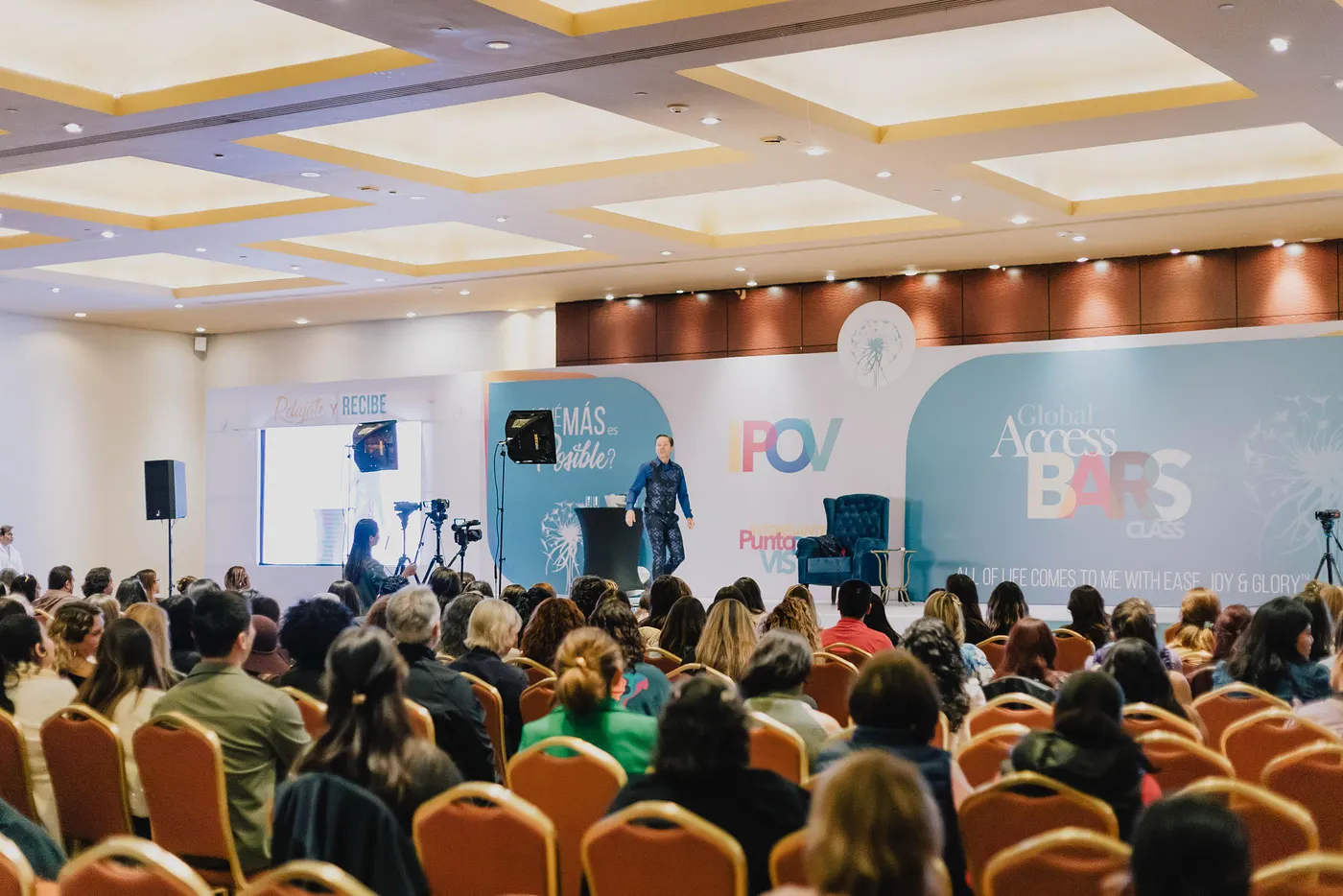
I was a successful chiropractor living in sunny California, engaged to be married — and from the outside looking in, I had made it.
Here is the main question of our interview: Can you share with our readers your “5 stress management strategies that you can use to eliminate stress from your relationships?” Please share a story or example for each.
I would love to! In The Five Elements of Intimacy, Gary Douglas and I explore what it actually takes to create a relationship that works. These are not your typical “stress management techniques” designed to fix or manipulate another person. They are an invitation to create a fundamentally different relationship with yourself first, and from there, with everyone else.
1. Honor
Honor means truly valuing yourself and the other person for who you actually are, rather than who this reality dictates either of you is supposed to be.
Imagine one person in a relationship loves traveling the world, while the other genuinely loves the peace of being at home. The person who prefers home agrees to every single trip because they have concluded that saying “no” will make them less lovable, or ruin the relationship. Eventually, exhaustion and resentment appear.
Honor might sound like: “I love that you love to travel, and I don’t always desire to go. What if you go have some amazing adventures, I enjoy creating here at home, and we both bring those entirely different energies back to the relationship?”
That conversation may feel completely foreign at first, but it gives both people permission to tell the truth.
The Question: “If I were truly honoring myself here, what would I choose?”
2. Trust
Trust is not blindly believing that another person will never disappoint you. In this reality, that expectation is often just control wearing a more attractive outfit. True trust is knowing that you can trust yourself, no matter what occurs.
Imagine someone who constantly checks their partner’s phone, interrogates them about where they are, and worries about who they are talking to. They might say, “I just don’t trust my partner.” But underneath that projection is usually a much deeper fear: “I don’t trust myself to be okay if this relationship changes.”
When you begin trusting your own awareness, you do not have to control another person in order to feel safe. You begin to trust that you have your own back. You trust that if something should happen to the relationship, you will know exactly what to do to care for yourself. That is what you are actually trusting.
3. Allowance
Allowance is the willingness to let someone be exactly who they are, without immediately making their behavior mean something about you.
Imagine your partner is incredibly messy and you are impeccably neat. Every dish left in the sink becomes a personal offense — undeniable proof that they do not respect you or care about the relationship. But what if their messiness is simply how they function? What if it is not a secret, coded message about your value?
Allowance does not mean you become a doormat or that you cannot ask for change. It simply means you stop using judgment as the starting point for the conversation.
The Question: “What if this doesn’t mean what I have decided it means?”
4. Vulnerability
Vulnerability is the willingness to be seen entirely without armor, without performance, and without the need to get it right. It is having no barriers.
Imagine someone who has spent years pretending to enjoy a certain aspect of their physical intimacy because they do not want to hurt their partner’s feelings.
Vulnerability might sound like: “I need to tell you something, and I’m a little scared it might be uncomfortable. This hasn’t been working for me, and I would love for us to discover what actually could.”
That level of absolute honesty may create an awkward moment. It can also create the first real, undefended conversation the couple has had in years.
The Question: “What am I unwilling to be vulnerable about, and what is it actually costing me?”
5. Gratitude
Gratitude is acknowledging the gift of the person in front of you, rather than focusing exclusively on what they are doing wrong. Judgment and gratitude cannot exist in the same space.
Imagine a couple whose daily conversations have devolved into a running list of disappointments. For 30 days, they each commit to acknowledging three specific qualities they appreciate about the other person. Not what the person did for them, but who they are. Their absurd sense of humor. Their brilliance. Their kindness. Their willingness to keep showing up.
The problems may not magically disappear overnight, but the relationship is no longer being viewed exclusively through the heavy lens of what is wrong.
The Question: “What am I grateful for about this person that I have not yet acknowledged?”
These five elements are beautifully intertwined. When you honor yourself, vulnerability becomes easier. Vulnerability creates the space for true trust. Trust allows more allowance. And when there is space and allowance, gratitude finally has somewhere to live.
Do you have any favorite books, podcasts, or resources that have inspired you to live with more joy in life?
Access Consciousness: I have to begin here. The tools and processes Gary Douglas created have contributed enormously to my life and work. It is all about empowering you to know that you know. You can explore classes and resources at accessconsciousness.com.
Several of my books examine different aspects of creating a life that actually works for you:
- Being You, Changing the World is an invitation to recognize that you being you might just be the gift and the change the world requires.
- The Five Elements of Intimacy explores how true connection begins with the relationship you have with yourself.
- Return of the Gentleman asks what it really means to be a man in a world that is often deeply confused about masculinity.
- Body Whispering invites you to stop treating your body as a problem to fix and start listening to what it is communicating to you.
Beyond books, I am endlessly inspired by people who are willing to question the limitations they have been handed — people who have the courage to ask, “Is something else possible here?”
You are a person of great influence. If you could start a movement that would bring the most amount of good to the most amount of people, what would that be? You never know what your idea can trigger. :-)
If I could start a movement that would bring the greatest amount of good to the greatest number of people, it would be this: Be You.
That’s it. Stop trying to fit in. Stop trying to prove that you are not wrong. Stop trying to earn your worth or mold yourself into a slightly more acceptable version of someone else. Be the actual, weird, brilliant, wonderful being you are.
Every single person has capacities, talents, and awarenesses that no one else on the planet has. Yet, so many of us are so busy trying to be like everyone else that we never discover what our unique contribution might be. This is exactly why I wrote Being You, Changing the World and why we created International Being You Day, celebrated globally every year on June 22nd.
Imagine a world where difference was honored rather than judged. Where questions were valued far more than having the “right” answers. Where people celebrated each other instead of constantly trying to fix each other.
I am not talking about a selfish, isolated version of being you that disregards everyone else. I am talking about an energetic way of being that recognizes that your choices create ripples far beyond you.
What if choosing to be you gives other people the energetic permission to finally choose for themselves?
What if being you is actually one of the most generous things you could ever do?
What if you, truly being you, is the exact gift and change this world requires?
What is the best way for our readers to continue to follow your work online?
I share questions, tools, and insights every day on Facebook and Instagram at @drdainheer, and on YouTube under Dr. Dain Heer.
In addition, you can easily find information about my classes, events, books, and current projects at drdainheer.com and accessconsciousness.com. We are also creating a beautiful eco-retreat in Costa Rica called El Lugar — a peaceful and creative space where people can reconnect with nature and ride the most extraordinary horses.
Honestly, though, one of the best ways to engage with my work is to start asking questions in your own life. Notice what feels light and what feels heavy. Question the conclusions that keep you stuck. Become curious about what you actually know.
What would it be like to wake up tomorrow and ask, “What can I create today that would be fun for me?”
Try it. See what shows up.
This was very inspiring. Thank you so much for the time you spent on this. We wish you only continued success.