It taught me that some of the most important business challenges don’t have a purely business solution. The best answer is often found by bringing very different perspectives together and being willing to take responsibility for the broader impact of the decisions you make.
As a part of our series about how technology will be changing the beauty industry over the next five years, I had the pleasure of interviewing Lori Deo.
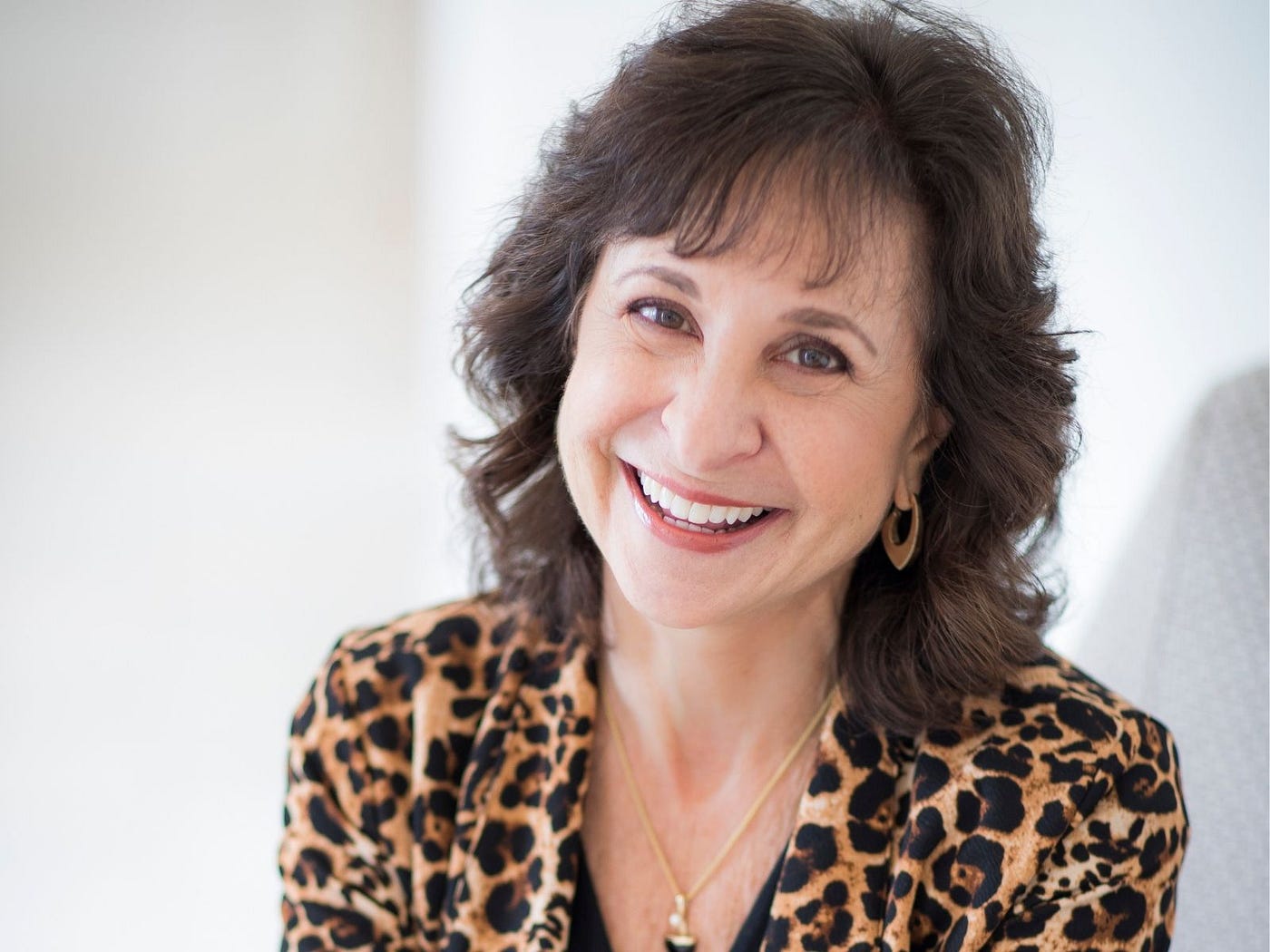
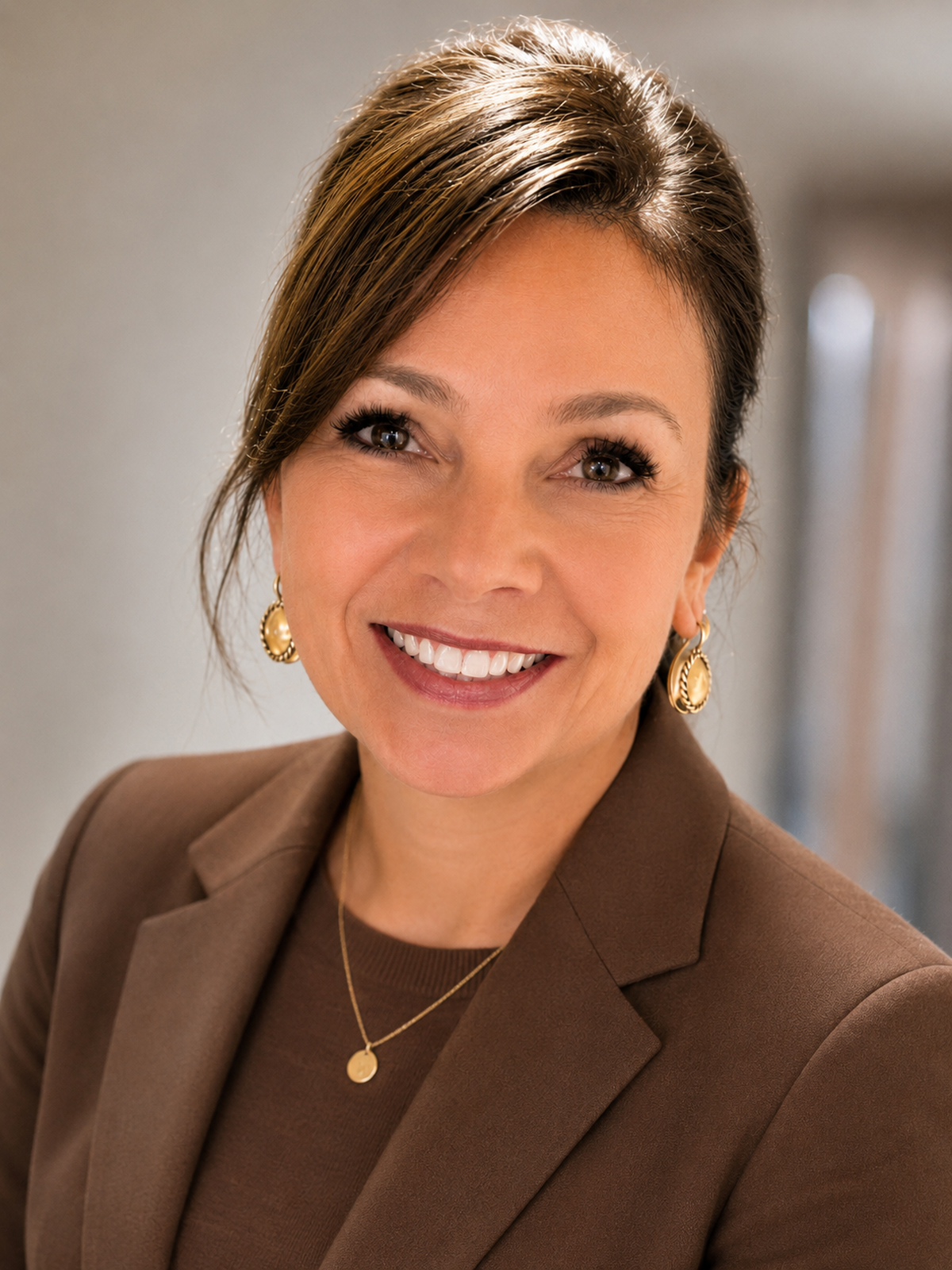
Lori Deo is a transformational Chief Executive Officer and board director with more than 35 years of leadership experience driving growth, innovation, and enterprise value across consumer healthcare, pharmaceuticals, aesthetics, beauty, and OTC markets. As CEO of RVL Pharmaceuticals, she leads the company’s strategic transformation, commercial growth, operational excellence, and value creation initiatives, positioning the business for long-term success and strategic opportunities. Prior to RVL, Lori served as Executive Chairperson of Refresh Acquisitions and spent more than two decades at Johnson & Johnson, where she held senior leadership roles across global consumer health businesses, including President of NeoStrata. Throughout her career, she has successfully led multi-billion-dollar brands, accelerated innovation pipelines, expanded businesses internationally, and delivered sustained profitable growth through consumer-centric strategies and operational excellence. Lori has served on the Board of Cosmetic Executive Woman (CEW) and was selected for the Accelerated Enterprise Leadership and LEAD Programs at Johnson & Johnson. She received the Annual Leadership Award and YWCA Annual Tribute to Woman and Industry (TWIN) Awards while at Pfizer. Lori completed her undergraduate education at Wilkes University in Pennsylvania and holds an MBA from Rutgers University.
Thank you so much for joining us in this interview series! Before we dive in, our readers would love to learn a bit more about you. Can you tell us a story about what brought you to this specific career path?
I started my career on a very different path. I loved science and was fascinated by forensic medicine, so I studied pre-med and began my career at Pfizer in Research & Development. From there, I moved through regulatory and manufacturing, eventually having the opportunity to run a manufacturing plant. That role was also where I really began developing as a leader — learning how to manage people, build teams, make difficult decisions, and recognize that business results ultimately depend on the people you lead. Along the way, I became increasingly intrigued by the demand side — understanding the consumer, identifying unmet needs, and building products and brands that could address them. When I moved into my first marketing role on the brand, Desitin, I knew I had found what I loved. It brought together science, consumer behavior, creativity, strategy, and business. From there, my career evolved from building brands to leading teams and ultimately businesses across consumer healthcare, pharmaceuticals, aesthetics, and beauty. None of it was a path I could have mapped out, but each experience gave me a different lens that ultimately shaped the CEO I became.
Can you share the most interesting story that happened to you since you began your career?
One of the most interesting and formative experiences of my career came when I was assigned as Senior Product Manager on the brand, Sudafed. At the time, pseudoephedrine, the brand’s active ingredient, was being illegally converted from legitimate OTC cold to methamphetamine. Suddenly, I wasn’t dealing with a traditional brand challenge, I was working at the intersection of business, public health & safety, law enforcement, and consumer access. Small-scale meth labs were consuming significant law-enforcement resources and creating serious health and safety risks, including for children living in homes where meth was being produced. We had to find a way to preserve access to an effective medicine for millions of legitimate consumers while recognizing that we also had a responsibility to be part of the solution. It became an incredibly complex problem that required collaboration well beyond the walls of the company. I worked with the DEA, federal, state and local law enforcement, retailers, industry associations including NACDS, and our internal scientific, manufacturing, regulatory and communications teams to explore solutions involving formulation, manufacturing, retail controls, and consumer access. The work was ultimately recognized with a YWCA TWIN Award, but what stayed with me most was the experience itself. It taught me that some of the most important business challenges don’t have a purely business solution. The best answer is often found by bringing very different perspectives together and being willing to take responsibility for the broader impact of the decisions you make.
Are you able to identify a “tipping point” in your career when you started to see success? Did you start doing anything different? Are there takeaways or lessons that others can learn from that?
I would say my experience with Sudafed was a real tipping point in my career. It required me to step well outside the traditional boundaries of my role and think beyond my brand or my function. I was working across the organization and with external stakeholders on an issue that had implications for the business, consumers, public health & safety, and our reputation. It was also when I began to recognize that one of my strengths was seeing the bigger picture, connecting the dots across functions, bringing different perspectives together, and approaching problems from an enterprise rather than a functional point of view. That enterprise mindset became a North Star for me. As your responsibilities grow, leadership becomes less about having all the answers within your function and more about seeing around corners, connecting the dots, making trade-offs, and mobilizing people around what matters most for the enterprise. My advice is simple, do your job exceptionally well, but don’t limit your thinking to your job. That’s when you begin the transition from functional leader to enterprise leader.
None of us are able to achieve success without some help along the way. Is there a particular person to whom you are grateful who helped get you to where you are? Can you share a story about that?
One person who had a profound impact on me was Peter Luther, one of my leaders at Johnson & Johnson. Peter saw potential in me and continually pushed me beyond my comfort zone. He challenged me to be a change agent, question conventional thinking, and think exponentially. One example was Men’s Rogaine. In the 2010s, we built what was then a pioneering digital commerce platform that allowed consumers to privately learn about a sensitive condition, purchase directly, and subscribe, while enabling us to build direct consumer relationships and first-party data. Despite Rogaine already being widely available across major retailers, the digital channel became our fastest-growing channel because it addressed unmet consumer needs and allowed us to build a more direct relationship with them. Peter continued to push me into bigger and less familiar challenges. Eventually, I became Worldwide President of NeoStrata, my first opportunity to run an international business. I was no longer responsible for a portfolio or function, I was accountable for an entire business end-to-end across 87 markets, from strategy and innovation to people, operations, and financial performance. That was an important step in my evolution from functional leader to general manager and ultimately CEO. Peter taught me to think bigger, challenge the status quo, execute relentlessly, and always keep the consumer and/or HCP at the center. Most importantly, he saw capabilities in me before I fully saw them in myself. I’ve tried to do the same for the people I’ve had the privilege to lead.
Ok super. Let’s now shift to the main part of our discussion. The beauty industry today has access to technology that was inconceivable only a short time ago. Can you tell us about the “cutting edge” technologies that you are working with or introducing? How do you think that will help people?
One of the things I find most exciting is the convergence of beauty, healthcare, culture, and technology. Consumers increasingly don’t see these as separate worlds. They want solutions that help them look better, feel better, land live better and they expect access to be simple and personalized. At RVL, we’re seeing that firsthand with Upneeq, a prescription treatment for acquired ptosis, or low-lying eyelids. A consumer may discover Upneeq through social media, a celebrity, digital advertising, or her eye doctor or aesthetic provider. Technology can then help educate her, connect her with an appropriately licensed healthcare professional and, if prescribed, provide convenient access to treatment. To me, some of the most disruptive innovation isn’t the product technology itself, it’s reimagining the business model around the consumer/HCP. Telemedicine expands access, digital commerce reduces friction, and first-party data helps us better understand the consumer journey. That’s what excites me! Using technology to connect culture, consumers, brands, and healthcare professionals while preserving independent clinical judgment. We’re still in the early stages of what this convergence can become.
Keeping “Black Mirror” and the “Law of Unintended Consequences” in mind, can you see any potential drawbacks about this technology that people should think more deeply about?
Absolutely. Technology can make healthcare and beauty more accessible and personalized, but convenience can never replace responsibility. In healthcare especially, we must maintain a clear distinction between consumer education and medical decision-making. Technology should make it easier for people to connect with qualified healthcare professionals, but it should never replace independent clinical judgment. I’m also very conscious of privacy. As companies become better at understanding and personalizing the consumer experience, we have an even greater responsibility for how that information is collected, protected, and used. As a mother of a daughter, I also think a lot about the impact technology is having on how women and young girls see themselves. Filters, AI, and digitally altered images can create standards of beauty that aren’t just unrealistic, they sometimes aren’t even real. I love the beauty industry and believe there is tremendous power in helping people look and feel their best, but there must be balance. Beauty should be a source of confidence and self-expression, not a measure of self-worth. That’s the responsibility I think our industry has as technology continues to evolve, to embrace innovation while maintaining trust, transparency, clinical responsibility, and a healthy sense of reality about beauty.
Can you share 3 things that most excite you about the “beauty-tech” industry?
- The convergence of science and beauty. I’ve spent my career at the intersection of science, healthcare, and consumer/HCP needs. Consumers and HCPs increasingly want science-backed products and treatments that deliver meaningful results, creating tremendous opportunity for innovation.
- Personalization and access. Technology allows us to better understand individual needs while making education, expertise, and solutions more accessible. When technology removes friction while maintaining appropriate professional oversight, that’s incredibly powerful.
- The opportunity to redefine beauty. Technology gives us extraordinary tools, but I hope we use them to build confidence rather than chase perfection. The future of beauty should help people feel like the best version of themselves, not make them feel they need to become someone else.
Can you share 3 things that most concern you about the industry? If you had the ability to implement 3 ways to reform or improve the industry, what would you suggest?
- Innovation can move faster than evidence. Consumers need to be able to distinguish meaningful innovation from great marketing. For example, we’re seeing rapid growth in AI-powered tools that can analyze a photo and recommend products, treatments, or even assess skin concerns. The technology is exciting, but consumers also need to understand what has been clinically validated, what is an algorithmic recommendation, and what still requires professional judgment. I believe strongly in scientific substantiation, transparency, and education. Innovation builds excitement; evidence builds trust.
- Technology can distort our definition of beauty. AI, filters, and digitally enhanced images can create standards that aren’t realistic, or even real. Our industry should promote greater authenticity and help people feel more confident, not less.
- Personalization creates responsibility. As technology allows us to personalize experiences, we have a responsibility to use consumer data thoughtfully and transparently. And where beauty and healthcare converge, technology should enhance, not replace appropriate professional judgment.
You are an expert about beauty. Can you share 5 ideas that anyone can use “to feel beautiful”?
After spending much of my career in beauty and healthcare, I’ve come to believe that feeling beautiful has much more to do with confidence than perfection.
1. Put your oxygen mask on first
Self-care doesn’t have to be complicated. I start every day with SPF on my face and some form of movement, whether that’s the gym or simply stretching. They’re small rituals, but they make me feel like I’ve started the day by doing something good for myself. I’ve always believed that looking your best starts with feeling your best.
2. Sometimes less is more
As I’ve gotten older, I actually wear less makeup. I prefer a softer, more natural look, but I always use a little something to make my eyes and lips pop. I’ve learned that beauty isn’t about covering yourself up or trying to look younger; it’s about finding what makes you feel confident and most like yourself.
3. Don’t be afraid to reinvent your version of beautiful
I’ve reinvented myself many times professionally and personally, and I think beauty should be allowed to evolve with us too. What makes you feel beautiful at 30 may be very different at 50 or 60, and that’s a good thing. As I’ve gotten older, I’ve stopped trying to hold onto the looks or styles that worked for a younger version of me. I experiment, I evolve, and I choose what makes me feel confident today. To me, that’s not giving something up, it’s becoming more comfortable with who you are. Beauty should evolve with you.
4. Be selective about the energy around you
More than ever, I choose to surround myself with people who have positive energy and, as I like to say, fill my glass rather than empty it. The people around us have an enormous influence on how we feel about ourselves. Spend your time with people who make you laugh, encourage you, challenge you in positive ways, and allow you to be completely yourself.
5. Practice gratitude instead of comparison
Every evening, I take a few minutes to reflect on my day, what happened, what I learned, and what I’m grateful for. I even try to find something good from the difficult moments. When I’m with my daughter, we often do this together, which makes the ritual even more meaningful to me. In a world where technology and social media make comparison almost unavoidable, gratitude brings me back to what really matters. Feeling beautiful starts with appreciating the whole person you see in the mirror.
You are a person of great influence. If you could inspire a movement that would bring the most amount of good to the most amount of people, what would that be? You never know what your idea can trigger. :-)
I would start a movement around the idea that reinvention has no age limit. We put artificial timelines on ourselves, when we should reach a certain point in our careers, how we’re supposed to look at a certain age, or when it’s supposedly too late to try something new. I don’t believe that. I’ve reinvented myself throughout my career, from scientist to manufacturing leader, marketer to general manager, running an international beauty business, moving into entrepreneurial and board roles, and ultimately becoming a CEO. I’d especially like women to know that some of their most exciting chapters may still be ahead of them. Experience shouldn’t narrow our possibilities, it should expand them.
Can you please give us your favorite “Life Lesson Quote”? Can you share how that was relevant to you in your life?
One thing I often tell my daughter and younger people I mentor is, “If you’re comfortable, you’re not growing.” Almost every meaningful period of growth in my life required me to get uncomfortable, from moving out of science and manufacturing into marketing to taking on unfamiliar businesses and larger leadership roles. I’ve learned that discomfort isn’t always a warning that you’re doing something wrong. Sometimes it’s evidence that you’re growing into something you couldn’t do before.
How can our readers follow you online?
Readers can follow me professionally on LinkedIn, and they can learn more about the work we’re doing at RVL Pharmaceuticals and Upneeq through our company and brand channels.
Thank you so much for joining us. This was very inspirational.