Giving someone information is useful. Helping them act on it is what makes that information valuable.
As a part of our series about business leaders who are shaking things up in their industry, I had the pleasure of interviewing Ronald F. Dixon.
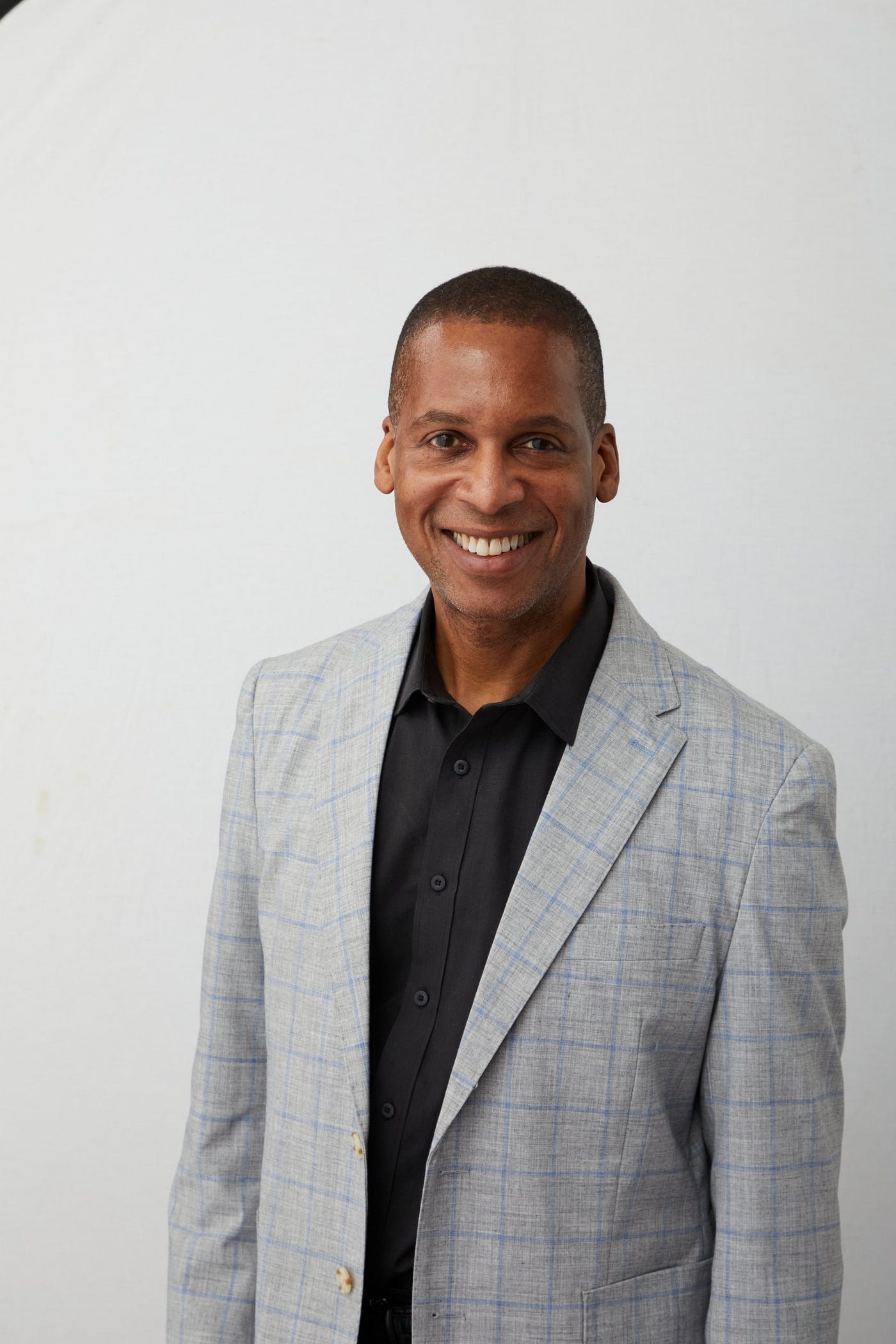
Ronald F. Dixon, MD, is an internal medicine physician, entrepreneur, and founder and CEO of CareHive Health, where he is helping transform healthcare affordability through proactive decision guidance. Throughout his career, Dr. Dixon has pioneered innovative approaches to digital health, care navigation, and virtual care, and has held leadership roles at CareHive, Onduo, Massachusetts General Hospital, and Harvard Medical School. He is passionate about making healthcare easier to navigate, more affordable, and more patient-centered.
Thank you so much for joining us in this interview series! Can you tell us a bit about your background and what brought you to where you are today?
I’m a physician by training, and I’ve always been interested in the intersection of technology, care delivery, and relationships with patients.
As a resident, I was struck by the difference between working in the intensive care unit and working in an outpatient practice. In the ICU, the nursing staff would prepare information and prioritize patients according to urgency before my shift began. I could quickly understand who needed attention and make decisions about evaluation and treatment.
Then I would go to my afternoon clinic, where patients generally had the same amount of time scheduled regardless of their needs. One person might have a cold, while another might have a heart failure exacerbation requiring hospitalization. That approach didn’t make much sense to me.
I started thinking about how we could gather information before an outpatient visit to understand what patients needed and prepare for their care. Did they need to see a physician, or could a nurse help them? Did they need to come into the office, or could we address their concerns through a message or a telehealth visit?
The goal was to make care more responsive to each patient’s needs. If we could address some concerns remotely, we could reserve more time and in-person access for patients who needed them. That goal has shaped much of my career.
What do you think makes someone a disruptor?
A disruptor recognizes a problem that people have come to accept and finds a practical way to solve it. For me, that starts with listening to patients.
When I was practicing, patients would sometimes ask me to send their laboratory or imaging orders to a particular location because it would cost them less. As a physician, I hadn’t fully appreciated those differences. I would write an order and expect the patient to get the test done. Their questions helped me understand that where they received care could influence whether they followed through at all.
That experience informs what we’re doing at CareHive. Patients have choices about where they receive care, but understanding those choices can be difficult. Even with pricing information available, it can be challenging to determine what a service will cost. I work in this field, and I still find explanations of benefits confusing.
We’re working to make those choices understandable and actionable. When comparable services are available at different prices, we help patients understand the difference and, with their permission, arrange the change. Giving someone information is useful. Helping them act on it is what makes that information valuable.
Can you share a funny or interesting mistake you made when you were first starting out?
Early in my transition into the business world, I was introduced to another company’s CMO. As a physician, I assumed that meant chief medical officer, so I prepared for a conversation about clinical collaboration.
When I arrived, I discovered that I was meeting the chief marketing officer. I had prepared thoroughly for an entirely different conversation.
It was a memorable introduction to how differently the clinical and business worlds use language. I learned to clarify someone’s role before making assumptions, especially when an acronym is involved.
Who have been some of the people who influenced your thinking along the way? Can you share a story about how they made an impact?
I’ve been fortunate to have mentors who listened to my ideas and gave me room to test them.
At Mass General, David Torchiana, a cardiac surgeon who led the physicians’ organization, was particularly influential. I was a general internist proposing changes to how we delivered outpatient care. He was willing to consider how technology could support patient relationships and allowed me to experiment within my clinic. That gave me the opportunity to demonstrate whether these ideas could produce meaningful results.
My clinic mentor and medical director, Dick Winnikoff, offered similar support. Nancy Gagliano, the chief medical officer at the Mass General Physicians Organization, also encouraged me to try new approaches. Their willingness to listen taught me an important leadership lesson. Sometimes the most valuable thing a leader can do is give someone the opportunity to explore an idea and evaluate what happens.
Lynn Eichold, who worked in finance and business operations at Partners Healthcare, helped me understand the operational side of change and innovation. Penny Ford-Carleton, a nurse and leader at CIMIT, taught me how to approach research in healthcare delivery and helped me secure a grant that moved my work forward.
Each brought a different perspective, but they shared a willingness to help me pursue something that didn’t fit neatly into the existing model. I couldn’t have made that transition alone.
Do you think disruption is always a good thing?
Disruption is beneficial when it improves the experience or outcomes of the people an industry serves. In healthcare, that assessment should begin with patients. Does the change help them get the care they need more easily, safely, and affordably?
We also have to consider the people delivering that care. An innovation that helps patients but creates excessive friction for nurses, physicians, and other care professionals may be difficult to sustain. Ideally, it should improve care while making it easier for clinicians to deliver it.
The challenge is that healthcare’s incentives don’t always align. A technology might generate substantial revenue for the company that develops it while offering little measurable clinical benefit and adding significant cost for patients.
That’s why I think we should judge disruption by its effects. Patient safety comes first. Then we should examine clinical benefit, access, affordability, and the burden on the care team. Calling something innovative doesn’t tell us whether it makes healthcare better. We have to measure that.
Can you share five things you believe are important for people who want to be disruptors?
1. Listen to the people you’re trying to help.
One of my earliest experiences with telehealth began with a patient’s request. I had been his primary care physician for years before he developed lung cancer. As his illness progressed, he became largely bedridden, but he still wanted me involved in his care.
He lived in Chelsea, and I couldn’t visit his home regularly. Around 2007, we began using Skype so we could continue seeing each other remotely. His desire to maintain that connection prompted us to find a different way to deliver care. Listening to the patient revealed the need and helped shape the solution.
2. Build allies and find a community.
You cannot change an industry alone. Within my practice, colleagues were willing to participate in early telehealth experiments even when they weren’t entirely convinced. Over time, some became champions because they had experienced the work firsthand.
Beyond the practice, I found an innovation community that connected me with people from Boston to California. Those relationships created opportunities, offered encouragement, and helped me feel less isolated. You need people who will work alongside you and people who understand the challenges you’re facing.
3. Seek expertise outside your field.
Clinical knowledge gave me a starting point, but I knew very little about software engineering, product management, or business process improvement. To move the work forward, I needed people who understood those disciplines.
One of my early partners brought software product expertise that I lacked. We learned from each other, built together, and have continued working together for roughly 15 years. Finding people with different skills makes it possible to turn an idea into something that works.
4. Establish a business case and work toward product-market fit.
An idea needs a path to financial sustainability. You have to understand the need you’re addressing, who will use the solution, and how it will create enough value to support its continued delivery.
You may not have every detail figured out at the beginning. Product-market fit often develops over time, and you may need to adjust your approach. But there must be a real need and a viable business case. The solution also has to fit into people’s lives and workflows without creating excessive friction.
5. Accept failure and learn from resistance.
When you try to change how an industry operates, you will encounter skepticism, rejection, and failed attempts. Some people will adopt an idea early. Others will need more time and evidence.
You have to be willing to hear “no” without treating it as the end of the conversation. At the same time, you need to listen carefully enough to refine your approach. Persistence matters, but so does the willingness to change what isn’t working.
How are you going to shake things up next?
I’ve long believed that healthcare can remain deeply relationship-oriented without requiring patients to come into an office for every interaction.
At CareHive, we’re currently focused on helping patients choose appropriate, affordable sites for services such as laboratory testing and imaging. The next opportunity is to extend that navigation approach to the way care itself is delivered.
I envision a hybrid model that brings together in-person visits, telehealth, and asynchronous care, such as secure messaging. Patients who need an office visit should be able to get one. Other concerns, including some aspects of ongoing chronic condition management, may be addressed remotely. Generative AI, with human supervision, may also help support those asynchronous interactions.
The opportunity is to understand what a patient needs and guide them to the most appropriate pathway while preserving their connection with the people providing care. CareHive’s navigation capabilities give us a foundation for that work.
Technology should make it easier for patients to enter the system, receive timely help, and maintain meaningful relationships with their care teams.
Is there a book, podcast, talk, or other resource that has influenced how you think about disruption?
Blue Ocean Strategy had a significant influence on me when I read it roughly 20 years ago.
The idea that stayed with me was to look beyond the areas where everyone is already competing and consider whether there is a different way to meet people’s needs. That helped me think differently about healthcare access.
I began asking what would happen if we made it easier for patients to receive care in ways that fit their lives. There were financial and technological barriers, but the underlying need was clear. Patients wanted access, convenience, and a connection with someone who could help them.
That perspective gave me a reason to keep pursuing new approaches despite the obstacles. We’ve made progress over the past two decades, but there is still considerable work to do.
Can you please give us your favorite life lesson quote?
“If at first you don’t succeed, try, try again.”
My mother used to say that to me when I was learning to play the piano. I’m an amateur pianist, and as a child, I would get frustrated, bang on the piano, and close the lid when something wasn’t going well.
She would remind me that success takes effort and repeated attempts. The second “try” mattered. You weren’t supposed to give something one more attempt and then give up.
That lesson has stayed with me. When I hit a wall, I try to understand what needs to change, adjust my approach, and try again. It has shaped how I approach both my work and my life.
If you could inspire a movement that would bring the most amount of good to the most amount of people, what would that be?
I would want to inspire a movement focused on reducing suffering, one person at a time.
Much of my work has grown out of relationships with patients and family members during difficult periods in their lives. My father’s experience with cancer influenced my career, as did the experiences of patients I cared for over many years.
As a clinician and as a person, you become aware of how much suffering people carry. If your work can ease that suffering or make it more bearable, you have an opportunity to improve someone’s life.
I would like to see more attention devoted to that goal. Sometimes it means helping someone get needed care. Sometimes it means removing an obstacle or making a difficult experience feel less overwhelming. Those individual acts can bring more comfort, hope, and connection into people’s lives.
How can our readers find you online?
You can find me on LinkedIn as Ronald Dixon, MD, and learn more about our work at carehive.com.
Thank you so much for sharing these insights! We wish you only continued success in your future endeavors.