In procurement, every order has consequences: a budget is committed, a supplier is paid, and an auditor may ask about it years later.
As artificial intelligence (AI) continues to advance and integrate into various aspects of business, decision-makers at the highest levels face the complex task of determining where AI can be most effectively utilized and where the human touch remains irreplaceable. This series seeks to explore the nuanced decisions made by C-Suite executives regarding the implementation of AI in their operations. As part of this series, we had the pleasure of interviewing Christoph Moll.
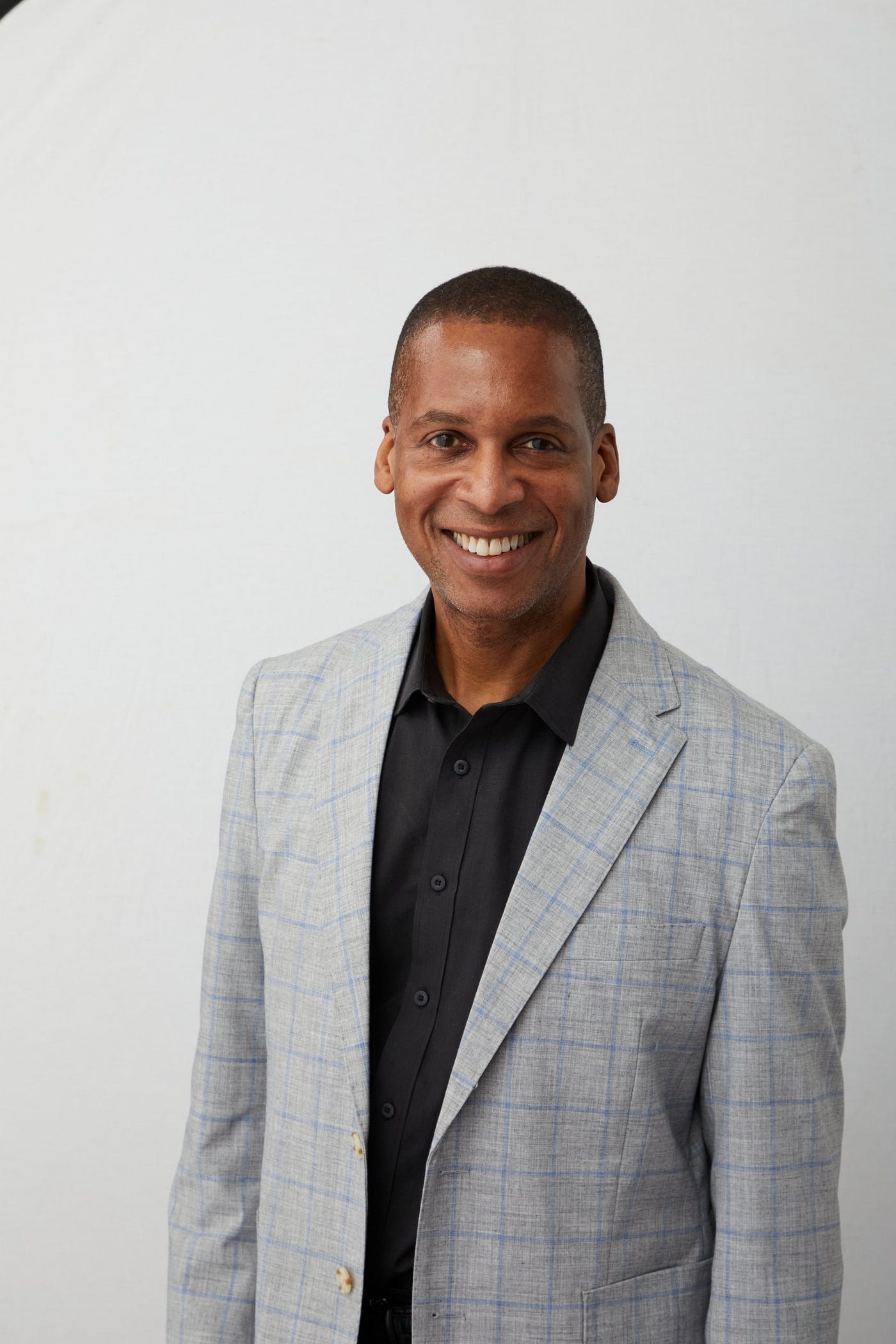
Christoph Moll is the founder and CEO of BeNeering, which provides the Procurement Execution Layer for companies running SAP as their core business system. As BeNeering’s Chief Solution Architect, he has led the development of the BeNeering Cloud, which now serves more than 400,000 users in 86 countries and includes AI-driven procurement and sourcing capabilities. Before founding BeNeering in 2007, he earned degrees in Electrical Engineering from TU Dortmund University and Information Engineering from City St George’s, University London and worked at Hewlett-Packard and SAP.
Thank you so much for joining us in this interview series! I know that you are a very busy person. Our readers would love to “get to know you” a bit better. Can you tell us a bit about your ‘backstory’ and how you got started?
I started my career in SAP Consulting, where I spent six years working on customer projects across a wide range of industries. That gave me a front-row seat to how large enterprises and mid-sized companies really operate, where their procurement processes tend to get complicated, and how technology can turn business requirements into solutions that work in practice.
In 2007, I decided to build something of my own and founded BeNeering as a one-man operation. A long-term project with an early customer gave me the stability to hire a small team and start building our own cloud solutions. A few years later, we competed in a tender for a catalog solution at one of the top 5 DAX companies. We lost that bid, but the work we had put into it led to our first cloud solution and laid the groundwork for what BeNeering would later become. Looking back, it taught me that even a lost opportunity can open the door to something bigger.
It has been said that our mistakes can be our greatest teachers. Can you share a story about the funniest mistake you made when you were first starting? Can you tell us what lesson you learned from that?
In the very early days, I built a screen I was particularly proud of: every field a user could possibly need, perfectly organized. I showed it to the first requesters, and they simply did not know where to start. One of them asked me, very politely, whether there was a version ‘for normal people’. That was the most useful feedback I ever received. Since then, our rule has been that if a requester needs training, we have not finished our job. It is still how we build BeNeering today.
Are you working on any exciting new projects now? How do you think that will help people?
There’s a lot happening with our Digital Procurement Platform right now. We’re expanding its AI capabilities with specialized agents, upgrading our user interface by leveraging cutting-edge UI technologies, and further developing our sourcing capabilities.
We develop all of this in close collaboration with our customers — we call it “co-innovation”. Their requirements and feedback from real-world procurement operations flow directly into our product and help us understand where technology can create the most value. Ultimately, the goal is to make procurement more intuitive and reduce the administrative workload across the organization. Procurement teams gain more time for engaging with internal stakeholders, talking to suppliers, doing risk assessment, and other strategic work. Employees in other departments, meanwhile, can handle occasional purchases through guided self-service without needing procurement knowledge, so they can stay focused on their actual jobs.
Thank you for that. Let’s now shift to the central focus of our discussion. In your experience, what have been the most challenging aspects of integrating AI into your business operations, and how have you balanced these with the need to preserve human-centric roles?
The hardest part has not been the technology itself. It has been trust. In procurement, every order has consequences: a budget is committed, a supplier is paid, and an auditor may ask about it years later. So the first challenge was deciding where AI should act and where it should not. Our answer is a clear principle: AI interprets and suggests, but execution stays rule-based, against the data and the rules in SAP. The AI helps a requester describe what they need, finds the right supplier, and suggests the cost centre and material group. But the order itself follows the same approval rules and compliance checks as always. That is what makes it trustworthy for procurement, and auditable for finance.
The second challenge was data. AI is only as good as the data it works with. Because BeNeering reads everything live from SAP, without copies, our AI works with the real data, not with a snapshot from last week. The third challenge is the hype. Many solutions today call themselves ‘agentic’. Our customers do not need that label; they need fewer manual steps and reliable results.
As for human-centric roles, we sometimes speak of HI, human intelligence. Automation takes over the routine, such as checking, completing, and correcting requests. That frees procurement for what only people can do: understanding what the business needs, negotiating with suppliers, anticipating demand. At our customers, up to 90% of requests normally need no procurement involvement, and that capacity goes into exactly those strategic tasks.
Can you share a specific instance where AI initially seemed like the optimal solution but ultimately proved less effective than human intervention? What did this experience teach you about the limitations of AI in your field?
A good example comes from our own development. When AI coding assistants became widely available, there was an expectation that they would speed up development considerably, and for some tasks they do: boilerplate code, tests, documentation. But for the core of our product, we found that checking AI-generated code often took longer than writing it ourselves. The code looked convincing, but it did not always reflect our approach. Finding those places in code required too much time.
So today we use AI where it genuinely helps, and our experienced SAP architects stay fully responsible for the critical logic. The lesson was the same one we apply in our product: AI is very good at suggesting, but accountability has to stay with someone who understands the consequences. That is why, in BeNeering, the AI interprets and suggests, while execution stays rule-based in SAP.
How do you navigate the ethical implications of implementing AI in your company, especially concerning potential job displacement and ensuring ethical AI usage?
Of course, we don’t just develop AI solutions for our customers but also use them in our own day-to-day work at BeNeering. Our developers, for example, increasingly rely on it to speed up certain tasks, prepare individual components, or help solve technical questions. At the same time, we are very aware of its limits. AI can support software development, but it cannot replace a real understanding of what customers need, the conversations between people, or the judgment it takes to build the right solution.
I also don’t see AI primarily as a way to replace people. Some repetitive tasks will require less manual effort, and roles will evolve, but people will remain essential. New responsibilities are already emerging around working with AI, guiding it, and giving it the knowledge and context it needs. For me, responsible AI use means applying the technology where it makes people’s work more efficient, while judgment and accountability stay with people.
Could you describe a successful instance in your company where AI and human skills were synergistically combined to achieve a result that neither could have accomplished alone?
A good example is how we prepare for industry events today. Before a large conference, there may be several hundred speakers and attendees on the list. In the past, our team could research only a small part of them properly. Today, AI helps us analyze the whole list: which companies run SAP, which procurement platform they use, whether an S/4HANA program is under way, and who is responsible for it. For a recent SAP event, that meant reviewing more than 500 speakers within hours instead of days.
But the AI does not decide who we contact or what we say. That is where human judgement comes in. Our team knows which customers we may name as references and which we may not, when a conversation is commercially sensitive, and how to speak to a CPO differently from an IT architect. In one case, the research also surfaced a compliance question about a company we were considering, which our team then checked before any contact was made.
The result is something neither could achieve alone: far more relevant conversations, each prepared individually, with the tone and discretion our customers expect. AI gives us breadth; our people provide judgement and trust.
What are the “5 Things To Keep in Mind When Deciding Where to Use AI and Where to Rely Only on Humans, and Why?” How have these 5 things impacted your work or your career? Please share a story or an example for each.
1. Start with the problem, not with AI. Use AI where it solves a real problem, not just because the technology is available. We started working with AI back in 2018, when we introduced Learning-to-Rank into our search technology. At the time, AI was far less visible than it is today, but we used it because it improved a specific function in our platform. New models and frameworks have emerged since then, and our approach has stayed the same. We adopt them where they make sense for the problem we are trying to solve. That has shaped the way I look at technology in general. The starting point should always be the business need, never the technology itself.
2. Know your data and the context behind it. AI is only as useful as the information it works with. In procurement, the challenge goes well beyond data quality. You need to understand where the data comes from, how it relates to the underlying process, and which question you are actually trying to answer. Material group classification is a good example. Sometimes the system receives only a short description or even a single word and still has to identify the right category among thousands of possibilities. Doing that reliably requires high-quality data as well as an understanding of the structure and procurement logic behind it. A strong model alone is not enough if the underlying data and process context are missing.
3. Match autonomy to risk. The more consequential the decision, the more human judgment and oversight it needs. Business tasks vary widely in their level of risk. In procurement, clearly defined, standardized transactions can often be automated to a high degree. More complex decisions, by contrast, involve trade-offs between price, quality, availability, and risk, along with long-term implications for a supplier relationship. In those situations, AI can pull together the relevant information and prepare recommendations, but people should remain responsible for weighing the options and making the final call.
4. Keep relationship-driven work human. AI can support preparation and analysis, but negotiations, supplier relationships, and trust still rely on people. Procurement is about much more than processing transactions or evaluating data. A large part of the job is building relationships with suppliers, negotiating contracts, resolving disagreements, and understanding what matters to the people on the other side of the table. AI can help prepare for those conversations, but it cannot replace the trust and personal connection they depend on. That’s why I believe relationship-driven work should stay firmly in human hands.
5. Treat AI as an iterative journey. AI is evolving extremely fast, with new models, frameworks, and capabilities emerging all the time. What works best today may no longer be the best approach a year from now. That’s why we continuously assess new technologies at BeNeering, adopt them where they make sense, and refine our solutions based on customer feedback. For me, AI is never a one-time implementation. It requires continuous evaluation, testing, and improvement as both the technology and business requirements evolve.
Looking towards the future, in which areas of your business do you foresee AI making the most significant impact, and conversely, in which areas do you believe a human touch will remain indispensable?
Looking ahead, I expect AI to have the greatest impact wherever work is repetitive, standardized, and data-rich. In procurement, we will move from AI supporting individual tasks to larger parts of standardized workflows running autonomously. That will also change the role of people. Instead of being involved in every step, they will increasingly define the objectives, rules, and boundaries of the process and step in whenever a situation falls outside the standard path. Their role will shift from executing processes to shaping and improving them. The human touch will remain indispensable wherever trust and judgment are at stake: in negotiations, in supplier relationships, and in complex decisions with long-term consequences.
You are a person of great influence. If you could start a movement that would bring the most amount of good to the most amount of people, what would that be? You never know what your idea can trigger. :-)
If I could start one movement, it would be about motivation — the kind that comes from believing in yourself and investing in yourself. Many talented people I meet never reach their full potential. Not because they lack ability, but because they simply don’t look beyond their own boundaries. They settle into what they already know and never find out what they could achieve. Real motivation starts the moment you dare to look past that line and ask: what else am I capable of?
You don’t need to start a company for that. You can do it just as well as an employee. When you are motivated, believe in what you can do, and keep developing yourself, people notice. Your colleagues start to trust you, they come to you for advice, and they treat you with respect — not because of your position, but because of who you are and how you show up. Investing in yourself doesn’t have to mean money. It means taking time to learn something new, asking for honest feedback, looking after your health, and making room for the things that give you energy. For me, that includes music — writing and recording songs has taught me as much about persistence and creativity as anything I’ve done professionally.
And motivation is contagious. It pays off not only at work but in private life too. Motivated people become better partners, friends, and colleagues. They act from confidence instead of fear, so they are more generous and more willing to lift others up. So my movement would be simple: stay motivated, believe in yourself, invest in yourself, and then inspire one other person to do the same. If everyone did that, the effect would multiply faster than any technology we could ever build, and it would make the world a better place.
How can our readers further follow your work online?
I share updates on LinkedIn, and you can also follow BeNeering through our website, beneering.com, and on LinkedIn for the latest news on our products, customer projects, company developments, and events.
This was very inspiring. Thank you so much for joining us!