Sometimes, that can mean changing the process entirely or adding steps that users may feel are redundant. These are usually where the hidden risks or challenges are identified.
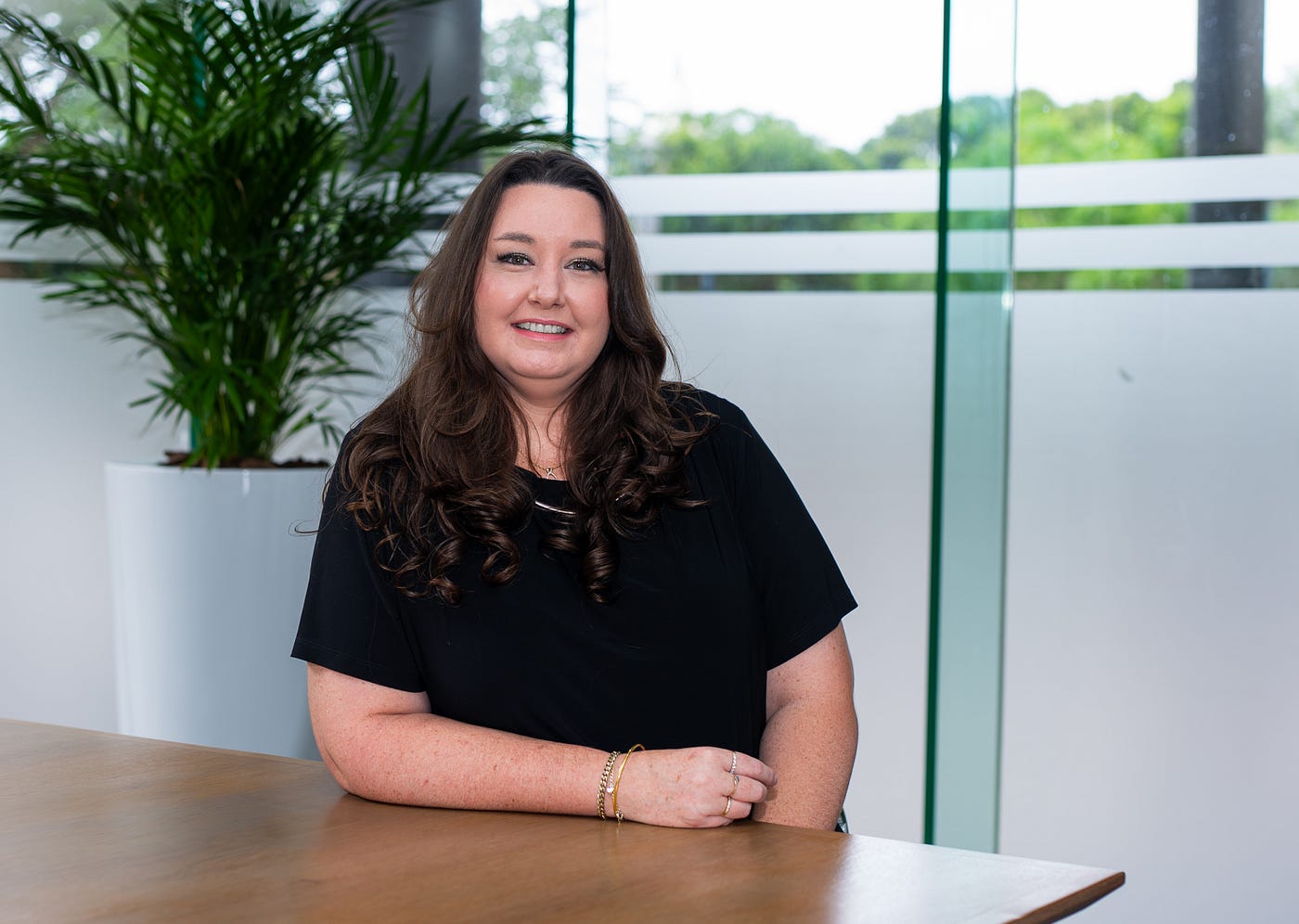
As a part of our series about women who are shaking things up in their industry, we had the pleasure of interviewing Patricia Lapage.
Patricia Lapage is an experienced BPO professional at CCI South Africa, with expertise in process improvement, operational efficiency and technology-driven transformation. Having built her career in customer experience and regulatory complaints management, she is passional about designing innovative systems that improve business performance while keeping people at the centre. She advocates continuous learning, inclusive leadership, and empowering employees to challenge conventional thinking and drive meaningful change.
Thank you so much for joining us in this interview series! Before we dig in, our readers would like to get to know you a bit more. Can you tell us a bit about your “backstory”? What led you to this particular career path?
I had originally wanted to go to Public Relations and have studied that at university, only to land in the job market in the middle of the 2008 recession. At the time, I was living in the UK, and there were very few jobs available to graduates. I eventually managed to get a job in a Contact Centre, where I started working on a Mobile Insurance campaign. It was during this time that my PR skills came into play, handling customer complaints, and I essentially worked my way into managing customer complaints for the company.
I worked on a designing the training content in order to drive improvements and efficiencies, and at the time, the company was investing in a new software solution to support call handling and complaints management so I was consulted on how to systematically support the complaints handling process more efficiently.
When I moved on to my next company, again mainly supporting with regulatory complaints handling in order to drive efficiencies, I worked closely with our technical teams to further improve how the system supported complaints handing elements more efficiently and effectively, and it was through these aspects that my passion for system design came about.
I love looking at how a system can support and improve the handling of any business processes.
Can you tell our readers what it is about the work you’re doing that’s disruptive?
It’s mainly about questioning the norm. Processes and procedures are often looked at a very high level, and usually from the simplest and most efficient viewpoint, and systems can be built to support that high-level view. It’s only when you really interrogate the process and start to understand the outlying requirements (risks and regulatory requirements) that a process, or subsequently a system, can start to grow legs.
It’s finding the balance between the most efficient process and the outlying requirements, and understanding ‘What can go wrong’, where you really create a useful product.
Sometimes, that can mean changing the process entirely or adding steps that users may feel are redundant. These are usually where the hidden risks or challenges are identified.
Can you share a story about the funniest mistake you made when you were first starting? Can you tell us what lesson you learned from that?
I think, really, the biggest mistake I made was when entering the job market from university. I was a good student, not a top student by any means, but hardworking and capable, and so I thought finding a job would be easy, reality hit me hard.
In the middle of the 2008/2009 recession, the only job I could find was packing fruit, so all the ideas I had of working for a PR firm or even waiting tables in London came crashing down.
It was only after several weeks of walking the streets of London at the weekends, handing out my CV to anyone and everyone I could this of, that I was able to apply for the Call Centre job that started my career in the BPO industry.
I still believed I would get into the world of Public Relations, and it was only as time moved on that I realised the opportunities available in the BPO industry that I decided that maybe the PR world wasn’t for me.
I’ve often referenced an article I read years ago that called out the BPO industry as an accidental career path. This has certainly been the case for me and has opened up so many avenues for development and personal growth.
A couple of things I learnt from that overall experience are ‘don’t be afraid of hard work’, as we all have to start somewhere, and ultimately, ‘the devil is in the detail’. I’ve often been told I get caught up in the detail, but this is usually where answered and opportunities can be found, so don’t be afraid to get your hands dirty, so to speak.
We all need a little help along the journey. Who have been some of your mentors? Can you share a story about how they made an impact?
I have been lucky enough to have had a few mentors in my career, and they’ve each helped me in different ways to get to where I am now.
My first mentor was a woman who was brought in to take the job that I had been doing for several weeks as a stand-in and for which I was confident, I would be offered the position permanently. Given the challenge it can be for women to progress in business, things could have ended differently for me.
She graciously came in, reviewed what I had been doing and actually took a step back in order to give me direction and support to thrive. She taught me a lot and, in many ways, has aided in the success I’ve experienced.
From there, I have encountered several people in various different roles, both in leadership and technical positions, who, rather than giving me the bare basics of information, have taken the time to help me understand their areas of expertise, which has further supported my growth.
In today’s parlance, being disruptive is usually a positive adjective. But is disrupting always good? When do we say the converse, that a system or structure has ‘withstood the test of time’? Can you articulate to our readers when disrupting an industry is positive, and when disrupting an industry is ‘not so positive’?
Can you share some examples of what you mean?
There’s a fine line between “If it ain’t broke” and innovation thinking, and this is a significant challenge in today’s society, where so much of the world is changing and wanting to adopt AI and new technologies that sometimes the rush to do so can be detrimental. Ultimately, it comes down to two questions that need to be answered:
What is trying to achieve? Is there a purpose for the change or innovation, or is it changing for change’s sake? Will it bring benefits to the company and its consumers, staff, etc.? What are the impacts of said change or innovation?
One of our leaders recently said that he never wanted to hear the phrase “that’s how it’s always been done”, and htis is true. Much of the time, change is avoided because of the tendency to rely on the way something has always been done, and this can be the death of innovation. However, change is not easy or simple, and it’s vitally important to understand both the end goal and the impacts of achieving that goal. Society is going through a significant shift in the digital world, and it’s happening at such a rate that sometimes these questions are not explored fully.
The world is operating at such a pace that everything needs to be done faster than ever before, and this is usually where digital innovation comes into play. In the Digital Coaching system we developed, the ultimate purpose of this system was to move away from manual coaching documentation and to allow the coach and coached more visibility of past discussions, whilst, as a business, having a clear view of the support being provided by staff.
We’ve since developed quicker coaching functionality within the system to allow for shorter discussions to be had, and whilst this has its place, we’ve seen that the most benefit comes from those original, longer discussions. Not only does it allow the recipient the time to question and understand areas of improvement, but it also ensures that the ‘people’ element is still in place.
It’s very easy to get stuck behind our screens and fire off quick directives and feedback to staff, but when truly needing to move the needle and engage in long-term adjustments, these longer, more personable discussions are vital in building more than just performance improvements.
It builds loyalty, stability, and growth for individuals, and helps the business understand its people and the potential within the organisation.
Simply put, whilst technological improvements have been made to speed up elements within the facilitation of the coaching activity, those original methodologies that allow for more time still have their place in driving long-term benefits.
Can you share 3 of the best words of advice you’ve gotten along your journey? Please give a story or example for each.
Challenge with Integrity. At it’s forefront, it is the main one that stands out for me. This was from a senior leader in a previous company who always encouraged staff of all levels to speak up if something being asked was difficult or potentially going along the wrong lines, but to do it with integrity — this statement has particularly shaped much of how I operate
Listening is a skill. As simple as that sounds, it is in fact a skill in itself. So often in life — whether it be professional or personal, we listen to respond and tend to jump in with a response or reaction without listening to what is being said or in some cases, the underlying message. Sometimes the greatest opportunities come from the simple act of listening — and as a leader, this is a fundamental requirement in any leadership role — give your staff the opportunity to speak (as staff remembering to challenge with integrity), and make sure you listen to what is being both said and what has been left unsaid.
Failure is inevitable. Unfortunately in life failure is a part of life, and something I personally struggle with. Recently in a leadership workshop I was told that I need to get more comfortable with failure, and whilst this is true, understanding that failure can be different for everyone, and is usually not something accepted in business. In some instances failure happens behind the scene’s unseen, however, in my working career, my failures are usually openly visible and can be difficult to overcome. So whilst Failure is inevitable and something that I do need to be more comfortable with, failure can be different for everyone and so ultimately how you show up for people who experience failure, and the learnings from it become more important than the failure itself.
We are sure you aren’t done. How are you going to shake things up next?
This is a closely guarded secret. There’s always an opportunity to be found, and while there are a few things in the pipeline, the key is determining the right path with the biggest impact. So, watch this space to see what comes next.
In your opinion, what are the biggest challenges faced by ‘women disruptors’ that aren’t typically faced by their male counterparts?
The biggest challenge is giving women a seat at the table, any table, and I really advocate this piece. Some organisations or department may employ women in certain positions, literally allowing them a seat at the table, but the point is not so much about allowing participation or inclusion; it’s about providing the space for women to be heard.
So, the question really is, do you provide an environment where women can be heart? I implore men, particular those in positions of leadership, to ask themselves: Have you provided an environment where women are freely able to speak up?
To the women, if you have been given a seat at the table, you need to get comfortable speaking up and making your ideas known.
We are seeing this happen more in professional circles, which is encouraging, but there is still room for improvement. My biggest opportunities have come from questioning the norm and proposing solutions to everyday problems, but as women, we need to be able to speak up when given the opportunity and be given the opportunity to speak up.
Do you have a book/podcast/talk that’s had a deep impact on your thinking? Can you share a story with us?
At High School I had a fairly successful career in field hockey, and one of my coaches gave me a greeting card with the below quote in it, just before national selection and as it happened the quote from a book that was one of my favourite fictional books by Bryce Courteny — “The Power of One” mainly because the book showcases how people from all walks of life can have an influence on your life, especially when it comes from a good heart: “The power of one is above all thigs the power to believe in yourself, often well beyond any latent ability you may have previously demonstrated. The mind is the athlete; the body is simply the means it uses to run faster or longer, jump higher, shoot straighter, kick better, swim harder, hit further, or box better. Hoppie’s dictum to me, “First with the head and then with the heart”, was more than simply mixing brains with guts. It meant thinking well beyond the powers of normal concentration and then daring your courage to follow your thoughts.”
It may seem a bit unorthodox of a quote, and on the surface, it seems to speak more to sport or performance elements. However, especially in today’s society where mental health can be a challenge, and something I have had my own challenges with, this quote often helps me ground myself in order to push forward.
You are a person of great influence. If you could inspire a movement that would bring the most amount of good to the most amount of people, what would that be? You never know what your idea can trigger. :-)
Many companies don’t realise the untapped talent of the staff they have, and more often than not, great ideas and opportunities are missed because of this.
A large part of my success is because I’ve been given the time and space to explore opportunities in the business, and that’s not to say it’s all been smooth sailing or hasn’t had its challenges and issues to overcome. We often see that these kinds of opportunities, though, are usually only afforded to people who make their voices known or are provided to people in position that already allow for influence.
If there is one thing I would love to see, especially in the corporate world, it is the investment in its people by supporting some of the ideas they have.
Not all ideas are viable, but if we could see more businesses creating initiatives that allow staff to put forward ideas and support the exploration and development of those ideas, I truly believe it could open up a world of possibilities.
Can you please give us your favorite “Life Lesson Quote”? Can you share how that was relevant to you in your life?
“Find your passion and feed it”
The greatest joy I’ve had in life, not just professionally, is when I’ve been able to work on something I’m passionate about. Honestly, I’ve seen it with several staff members. If they are truly passionate about what they are working on, you will never have to question their work or effort.
They may need guidance and support in directing them, as anyone does, but ultimately, the greatest thing a person can do is work on something they are passionate about. That’s when you truly see the best version of a person.
As individuals, I encourage you to explore things that interest you to see where your passion lies, and as leaders, I implore you to support and encourage your staff when you see them showing passion and drive for something.
How can our readers follow you online?
For someone with such a digital mindset, I tend to not be online as much. I can be found on LinkedIn mostly from a public perspective. I keep much of my personal life private.
This was very inspiring. Thank you so much for joining us!