Everything that looks good to you may not be good for you. I've chased shiny things in almost every aspect of my life and somehow heard my grandmother's voice whispering this reminder every single time.
Artificial Intelligence is transforming industries at a breakneck pace, and the entrepreneurs driving this innovation are at the forefront of this revolution. From groundbreaking applications to ethical considerations, these visionaries are shaping the future of AI. What does it take to innovate in such a rapidly evolving field, and how are these entrepreneurs using AI to solve real-world problems? As a part of this series, I had the pleasure of interviewing Juanika Cuthbertson.
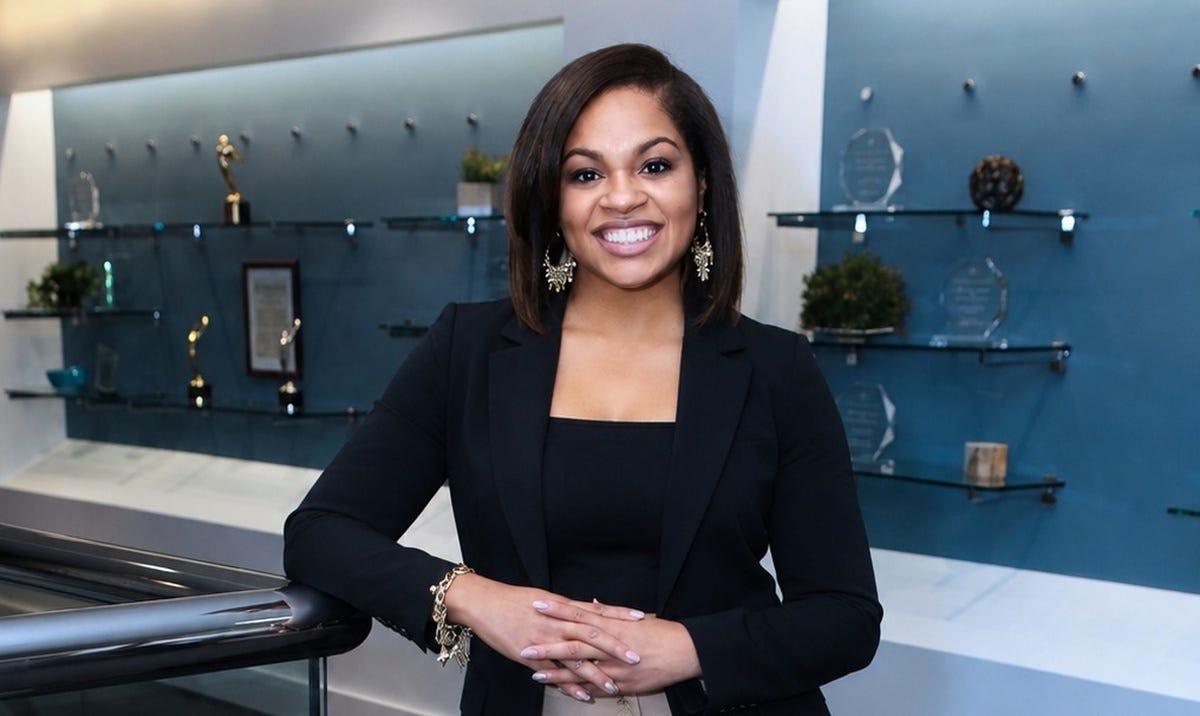
Juanika Cuthbertson is the Founder of The Ladypreneur® Agency, where she helps women build and scale online businesses with smart systems and technology. She created CLOUT AI, a Digital Client Advisor that brings the personalized experience of a luxury salesperson to entrepreneurs selling online. Beyond the titles and accolades, her favorite role is being a mom of three, and much of what she builds is rooted in creating more time for women to enjoy the lives they're working so hard to create.
Thank you so much for joining us in this interview series. Before we dive in, our readers would love to learn a bit more about you. Can you tell us a bit about your childhood backstory and how you grew up?
I'm a country girl from Suffolk, Virginia who probably questioned the rules a little more than people would’ve preferred. I grew up in a small town with my parents, my two older brothers, and an entire army of aunts, uncles, and cousins. Everybody knew everybody, which probably explains why I've always had a love for people.
I was always busy doing something from school clubs, cheer, and band to other extracurricular activities, teams and church groups. I loved being around people, but I also loved creating stuff and figuring out where I fit.
I left home to major in Computer Science at Virginia Commonwealth University, which introduced me to city life and eventually led me into corporate IT. I spent 13 years in that corporate career before I was laid off, and that experience changed the trajectory of my life. I took everything I learned, put it into my own hands, and started building a business. Then I got married, had children and somewhere along the way, I realized I wasn't just building a business anymore. I was building a life that would shape almost everything I'd create after that.
Can you share the most interesting story that happened to you since you began your career?
Having three children in five years was a complete rebrand for me, and I don't mean that in the cute, "motherhood changed my life" kind of way. I mean I genuinely didn't recognize myself for a while.
Before motherhood, my personal brand was built around independence, freedom, femininity, travel, and being able to just get up and go. Then I had three babies and all of a sudden, "go" wasn't really an option. I had to sit myself down and take care of these babies.
I went through a major identity crisis during postpartum because I didn't know how to show up for my business anymore. I was the brand, but the brand wasn’t really me anymore, or at least the me I’d known for so long. That forced me to rethink something I had never questioned before, what happens when the woman behind the brand changes?
I realized I had been treating my brand like it was supposed to be a finished product. It wasn't. It was supposed to evolve with me and honestly, that lesson has followed me into everything I do with technology now. I'm not interested in building businesses that require women to stay the same forever just because that's what worked five years ago.
We're allowed to evolve and our brands should be able to keep up.
None of us are able to achieve success without some help along the way. Is there a particular person who you are grateful towards who helped get you to where you are? Can you share a story about that?
God is my ultimate support system. He gave me the vision and I wouldn't be where I am without Him. Then there are the folks He gave me to help me actually put this vision into action.
My husband and my mom have both helped clear the path for me in ways that people don't always see. They've stepped in with the kids. They've helped with the everyday responsibilities. They've created space for me to think and build.
That really matters because sometimes the support you need isn't somebody handing you a business strategy. Sometimes it's somebody saying, "Don't worry, I've got this. Go create." I've been blessed to have that.
Can you please give us your favorite "Life Lesson Quote"? Can you share how that was relevant to you in your life?
"Everything that glitters ain’t gold."
It's simple, but I had to learn it the hard way. Everything that looks good to you may not be good for you. I’ve chased shiny things in almost every aspect of my life and somehow heard my grandmother’s voice whispering this reminder every single time. It’s true in relationships. It's true in business. It's true with opportunities.
And now, it's especially true with AI. We're in a moment where everything is shiny. There's a new tool every five minutes. Everyone is talking about the next big thing. Everything is faster, smarter, or newer. But I'm not interested in empty bling with no substance.
Alignment is key. I want to know that what's in front of me actually lines up with what's inside of me, with my values, my vision, and the kind of world I actually want to help create. Now I know that just because something looks good doesn't mean I need it in my life, my business or now my systems.
You are a successful business leader. Which three character traits do you think were most instrumental to your success? Can you please share a story or example for each?
Faith. Grit. Compassion.
Faith, because I don't need to see the entire staircase before I take the first step.
I can pray about something, get an inkling of direction, and be halfway down the staircase before I even know exactly where it's going. A lot of my success in digital marketing came from seeing a need in the marketplace and moving toward it before I had every detail figured out. I tend to jump first, believing that God will either send me a set of wings or catch me on the way down, and that’s what faith is all about.
Next up is grit, because once my mind is made up, I don't quit easily.
I’ve always understood early that most businesses don't become profitable overnight. So, my approach to entrepreneurship is for the long haul. I've answered emails in labor. I've worked directly after giving birth, even though I wouldn’t recommend either as a business strategy. But it tells you something about me. I don't quit easily.
And then there's compassion.
I've been broke. I've been broken. I've failed. I've had setbacks. That’s how I know that all rags to riches stories aren’t created equal. When someone comes to me in business, I don't assume we're all standing at the same starting line. Somebody may come to me completely overwhelmed. Someone else may show up with momentum and just need to know what's next. Wherever they’re starting, my job is meeting people where they are and helping them get to where they’re trying to go.
Ok super. Let’s now shift to the main part of our discussion. Share the story of what inspired you to start working with AI. Was there a particular problem or opportunity that motivated you?
Mommy-life. That's the short answer.
I had three children in five years while building my business, and somewhere between pregnancy, postpartum, and trying to be present for my family, I realized I had a problem. I couldn't be everywhere anymore. I didn't have the time or energy to constantly be online having conversations, answering questions, following up, and closing every sale myself. But I also didn't want to lose the personal experience that made my business mine.
That's when I realized I didn't need AI to replace me. I needed it to represent me and my brand. Then my brain did what it always does.
It went shopping
When you walk into stores like Louis Vuitton or Chanel, you're not just wandering around trying to figure out what you're supposed to buy. You have a Client Advisor. They greet you. They learn your style. They ask questions. They understand what you're looking for. Then, they help you make the decision. They make you feel taken care of. So I thought, why is that experience only for luxury brands? Why can't the woman running her business from her home office give her customers that same feeling?
That's when the CLOUT Digital Client Advisor was born. I wanted to bring the luxury buying experience to everyday entrepreneurs because I don't believe you have to be a billion-dollar brand to sell like luxury.
Can you describe a moment when AI achieved something you once thought impossible. What was the breakthrough, and how did it impact your approach going forward?
The speed really surprised me. I have a computer science background and spent 13 years in corporate IT, so I understand coding. I understand development. I understand what it takes to build technology the traditional way.
I expected building and launching my AI agent to take a significant amount of time. Instead, I used AI to help create the code, establish APIs, build connections, and automate parts of the process. It literally took weeks to create what could’ve easily taken up to a year. And yes, the speed is nice, but what’s really impressive is what that speed means for a business owner.
Resources are everything when you're building a company. If I can develop faster, I can test faster. If I can test faster, I can improve faster. That means if I can improve faster, I don't have to wait for the market to tell me what it wants. I can get ahead of it.
That's where I think things get really interesting. AI isn't just helping us work faster. It's changing how quickly we can create and improve.
Please talk about a challenge you faced when working with AI. How did you overcome it, and what was the outcome?
AI can be loud and wrong because hallucination is real.
It’ll try to use context and historical information to anticipate what you need, which can be really useful. But sometimes that turns into an assumption, which is dangerous. If AI makes the wrong assumption in an area where nobody has enough expertise to catch it, you can build an entire project on a bad foundation. I’ve had AI hallucinate information, code, and instructions. It needs supervision, period.
That's why I don't agree with this idea that we should just ship all the jobs to AI. Who’s checking the work? Who is correcting it? Who knows whether the answer is actually right?
We're moving into this era of vibe coding, and I'm actually a big fan. I think it's cool that you can describe what you want and watch AI help you build it. But here’s the issue, the finished product can't just come from vibes. It needs to be accurate. It has to come from knowledge. It has to come from somebody who understands what the right output actually looks like.
Can you share an example of how your work with AI has had a meaningful impact (on others, on business results, etc.)? What was the situation, and what difference did it make?
My relationship with AI actually started long before the current AI boom. I was intrigued with it back during my corporate IT days, long before the big LLMs were everywhere.
Before I started building my own agents, I wanted to understand what was happening under the hood. So, I started training AI models in my spare time. I figured if I could break it, I could figure out how to fix it. That gave me a completely different perspective on AI. I started thinking about ethics, integrity, and the human experience behind the technology. Then, when I eventually created my own AI agents, I didn't want to make another tool that just answered questions.
I wanted to created something that filled an actual role, something that could serve. Not another AI twin, not another chatbot, but an actual employee. Something that could actually represent a business. So, I built it from my own brand persona.
I know my customers. I know what attracts them. I know what pushes them away. I know what they need. My AI agent needed to understand those things too. It needed to speak their language and understand their needs.
My clients love luxury, and I wanted to recreate that luxury experience for them. That’s how the CLOUT Digital Client Advisor was born.
The first version acts as a closer, using interactive conversations and our sales methodology to help entrepreneurs convert customers while the business owner gets to focus on her creativity, her work, her impact, or her family.
That's the kind of AI I want to build. AI that doesn't make you less relevant, but makes your relevance scalable.
Here is the main question for our discussion. Based on your experience and success, can you please share “Five Things You Need To Know To Help Shape The Future of AI”? (Please share a story or an example, for each.)
1. Ethics
AI can be a tool, or it can be a weapon. Now if we're going to be the people shaping what's next, we need enough sense to understand the difference.
Take vibe coding for example. We're essentially using AI to help create more AI. That's exciting until you stop and think about what happens when you're giving it the ability to replicate itself without first making sure the foundation is solid. If something keeps replicating bad decisions, bad assumptions, or bad incentives, the problem can eventually explode.
Ethics can't be the pretty little disclaimer at the bottom of the page; it has to be built into the blueprint.
2. Inclusion
AI is going to reflect the information has access to. So, if certain people aren't represented in that information, their experiences may not be represented either.
I've experienced this myself. As a Black woman, I've asked AI to match my voice and sometimes watched it reach for words and phrases that apparently fit how it thinks I should sound.
I was flat-out flabbergasted. That's not me. That’s a stereotype, and that’s a problem.
Now take that beyond language. What happens when voice AI isn't trained to recognize certain speech patterns? What happens when facial recognition AI doesn't adequately account for certain skin tones or facial structures?
These aren't little details. They're the difference between technology working for you and technology working against you. So, if we're building the future for everyone, we need to make sure everyone has a voice while we're building it.
3. Stay open-minded
Everyone isn't going to use AI the same way, and that's a good thing.
My use of AI to create luxury buying experiences for women in business is going to look very different from how AI serves a blue-collar worker or the tech bros. We need all of those perspectives.
You don't have to personally live someone's experience to understand why their experience matters. And if you have a seat at the table, use it for more than just yourself.
4. Patience
We're talking about technology that touches almost every system we've built our society around. That's a lot, and we're not going to figure it all out overnight. I think sometimes we're so excited about what's possible that we forget to ask what happens next.
We need people who are willing to do their part, and do it well. You don't have to solve every problem in AI. Figure out the part that's yours, build it with integrity, ask the hard questions, and let somebody else tackle the part that's theirs. That’s why I always say the future should be a group project.
5. Accountability
If you see something, say something.
When I was building my AI agent, there were plenty of shortcuts I could have taken. I could have fed off what already existed and sacrificed my originality. I could have ignored how certain conversations or interactions might affect different people.
I don't believe we get to build powerful technology and then turn our heads when it impacts something or someone we didn't consider. I'm accountable to my clients, but I'm also accountable to everyone else my work could impact. I know this isn’t a popular topic, but that's one reason I think about the environmental impact of AI as well. When I see conversations about massive data centers and the resources required to power them, I have questions. As a mom, I care about the world we’re building for our children and that’s much bigger than a business decision.
When you think about the future of AI, what excites you the most, and how do you see your work contributing to that future?
Speed excites me.
I've been a business owner for more than a decade, and I know that there are things in business that just take a long time. AI can change that. It can help us get from idea to execution much faster.
But the part that excites me the most is what that speed means for women building businesses. There are roles I've had to outsource in the past because I didn't have the resources to handle them myself. Now AI can take on a lot of the administrative work that used to require another person. That means I can spend more time creating. My clients can spend more time creating, and that's where I see my work fitting into the future. I want women to be able to go further faster, without having to sacrifice more of themselves to get there.
What advice would you give to other entrepreneurs who want to innovate in AI? Can you share a story from your experience that illustrates your advice?
Do You.
That's actually the title of a Russell Simmons book I read years ago, and it stuck with me. I think there's a tendency right now for everyone to look around and ask, “what is everybody else doing with AI?"
We should be asking a different question, like “what do I see that everybody else isn't seeing?"
Who knew my entrance into building AI would be inspired by luxury retail? My fascination with Client Advisors. The experience of walking into a luxury store and having someone actually understand what you're looking for. The way they build relationships. The way they sell without making you feel sold. That's what caught my attention.
My husband may have thought I was just buying a bag, but I was actually doing market research.
That's so me! I'm always looking at an experience and thinking, how could this be better or where else could this work?
So that's my advice. Don't try to become another AI entrepreneur. Don’t try to compete with the tech bros. Bring you into AI. Take your weird little obsession, your industry experience, the issue that keeps you up at night, or the thing you wish somebody would build.
Then build it.
Find your lane. Then own it.
Is there a person in the world, or in the US with whom you would like to have a private breakfast or lunch, and why? He or she might just see this, especially if we tag them. :-)
Savannah James.
She's exactly the type of businesswoman my business serves, but I also really admire her evolution. For a long time, she was quietly in the background raising her family, supporting their brands, and building in her own way. We’ve seen the fruit of that labor, now we get to see her step into her own!
Don’t ever confuse being behind the scenes with not knowing what's happening out front. She has had a front-row seat to what it takes to build a billion-dollar brand. She understands business. She understands family. She understands influence. Now, it’s her turn to take everything she's learned and build something that's hers, while still creating opportunities for other women too.
I'd love to sit across the table from her and talk about that transition. I think there's something super powerful about a woman realizing she’s been building everybody else's vision and now she’s building her own. I’d gladly show up with a notebook and a pen ready to learn!
How can our readers further follow your work online?
You can find me at @ladypreneur on Instagram, YouTube, and TikTok. I'm @theladypreneur on LinkedIn and @iamladypreneur on Facebook.
I’d love to chat directly. If you have any questions, visit my website, https://createclout.co.
Thank you so much for joining us. This was very inspirational, and we wish you continued success in your important work.