Have humility. It is not about you, but about those in your team and around you. I do not take credit for work done well; I give recognition to those doing the hard work. I do this in my weekly note to the team, in my skip levels and all-hands meetings, etc.
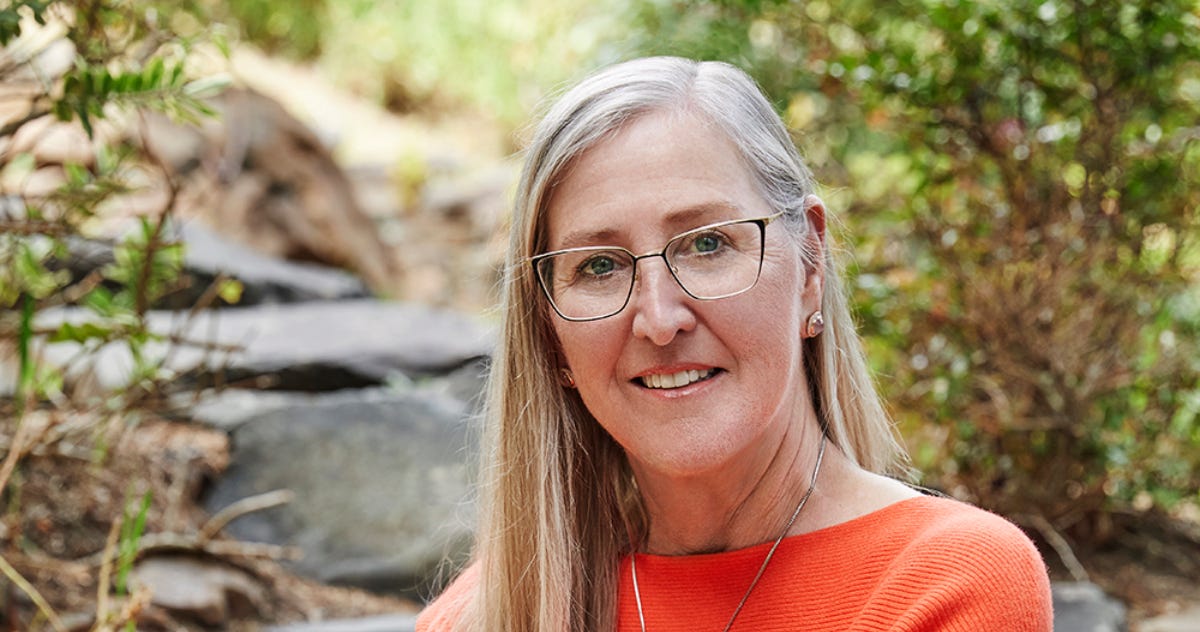
In today’s dynamic world, the concept of leadership is continuously evolving. While traditional leadership models have often been male-dominated, there is a growing recognition of the unique strengths and perspectives that women bring to these roles. This series aims to explore how women can become more effective leaders by authentically embracing their femininity and innate strengths, rather than conforming to traditional male leadership styles. In this series, we are talking to successful women leaders, coaches, authors, and experts who can provide insights and personal stories on how embracing their inherent feminine qualities has enhanced their leadership abilities. As part of this series, we had the pleasure of interviewing Mamie F. Jones
Mamie F. Jones is a speaker, consultant, and author of Lead Extraordinary Change: The Proven Playbook for Driving Successful Organizational Transformation. Her 35-year corporate journey has been defined by successful organizational transformations and outstanding achievement at notable organizations. She has received numerous honors for her leadership, including the CEO Leadership award at Intuit and the Tech Titan CTO Award for North Texas. Before Intuit, Jones held senior leadership positions at Sabre, Travelocity, and Dun & Bradstreet.
Thank you so much for joining us in this interview series. Before we dive into our discussion about authentic, feminine leadership, our readers would love to “get to know you” a bit better. Can you share the most interesting story that happened to you since you started your career?
When I was a new manager I thought I was a great manager/leader. That was until I was required to take a 360-degree anonymous review by my peers and subordinates. My results were embarrassing, and this was the catalyst that started me on my leadership improvement journey. I was fortunate and grateful to have the opportunity to attend the leadership course at the University of Virginia, Darden School of Business. This course changed my perspectives and my behaviors in how to better lead teams. It was life-changing for me.
What do you think makes you stand out in your field? Can you share a story?
My focus on people. There is a great saying in my book … ”You hire employees and people show up.” There really isn’t one story. Focusing on people costs you virtually nothing but your time, and most leaders do not make this their focus, in my humble opinion. Connecting with people and gaining their trust is powerful and inspirational for teams. I do this several ways:
1. Create a weekly note that captures and calls out individual and team wins. Communication and recognition are important.
2. Conduct Ship Level meeting. A mix of the team that can discuss challenges and potential solutions. People care that you take time to listen to what is on their minds and what is in their way.
3. Do small things that surprise your team members. Send out birthday cards or hand write a note of thanks for work done really well — this makes a big impact.
4. Have an open-door policy. Easy to talk about but difficult to do. When someone needs to speak with you, you find the time either in the moment or later in the day.
There are so many ways to connect with people. You just have to use your imagination.
Which three character traits do you think were most instrumental to your success? Can you please share a story or example for each?
1. Courage. Have the courage to ask forgiveness, not permission. I was pursuing Agile SDLC methodology and was told no by the CEO. I decided I was going to pursue this by starting small and prove this methodology would be better than Waterfall, which was the standard at the time. We conducted a pilot test using the new process and were able to prove the benefits of the new methodology through improved quality, speed and customer benefit.
2. Risk-taker. My team wanted to have time to pursue their innovation ideas, but because the development backlogs were so full, there was little time to experiment. I made the decision to implement what I called “Innovation Days,” which shut down development for two days but offered all employees the opportunity to experiment with their ideas. There was no proof this would be successful, so I was taking a risk in conducting this for the first time, against some significant pushback.
The rules were simple for the team to pursue any innovation of interest: 1) The innovation had to be for our external customers or internal customers; 2) The innovation had to be production-ready; 3) They could work individually or as a team; 4) They had to define what they planned to do, and after the two days showcase their innovation to the executive team. It was a huge success, with 50 innovations going into production at the end of two days.
3. Persistence. Transformation is hard and many times you take two steps forward and one step back. I was told on numerous occasions from peers and subordinates that my plans had been tried before and wouldn’t work. By using data and committing to outcomes, I pursued plans even in the face of a lot of resistance. The resistance can oftentimes wear you down, but this is where persistence is crucial.
Each of these characteristics work hand in hand and together help to drive extraordinary transformation.
Leadership often entails making difficult decisions or hard choices between two apparently good paths. Can you share a story with us about a hard decision or choice you had to make as a leader? I’m curious to understand how these challenges have shaped your leadership.
The hardest decision is around people and making the decision to let someone go or keep them on staff. We had an employee who was considered irreplaceable, but their behavior was toxic to the team. Through difficult conversations and documenting adverse behavior, we made the decision to let the individual go. After this person left, I had several people come up to me and thank me profusely for making this tough decision because it dramatically improved their team dynamics.
Making tough people decisions is the hardest thing to do, but it is critical to focus on this when there are issues, and seeing the results of making these hard decisions helped shape how I managed this throughout my career.
Can you share a personal experience where embracing your unique leadership style led to a significant positive impact in an organization or team you’ve led?
In one organization, we would do nighttime code deployments for our website. They would start at 10 p.m. (so as not to impact customers) and most often would go until 6 a.m. Sometimes the implementations were successful, but most of the time they were not, and this required working to get the site back to the original state.
Because there were not solid rollback code procedures, this further complicated the implementation attempt. This took a huge toll on the team, as they had to be at work the next day. We call this burnout. We made the decision to move to daytime deployments, which took a year (courage, risk-taking and persistence) to implement, which we did.
There were several significant impacts:
1. Employees no longer had to do implementations at night and could be with their families, which was huge for the team.
2. We were able to deliver higher-quality products for our customers because we created an environment to do quality testing.
3. When an implementation had issues, we could rollback in minutes, not hours.
The positive effects this had on the team were enormous. This gave them a work-life balance.
In your journey as a leader, how have you balanced demonstrating resilience, often seen as a masculine trait, with showing vulnerability, which is equally powerful, but typically feminine? Can you give an example where this balance created a meaningful difference?
I was often referred to as “the bull In the china shop,” which I think is a more acceptable masculine trait. Resilience and persistence go hand in hand. Over my career I have demonstrated a lot of persistence. At the same time, I have learned through my leadership growth journey that people respect leaders who are honest and genuine, do what they say they will do, be transparent, and to your point, show vulnerability. Through my consistent communication and interactions with teams and individuals, I was able to highlight what we were doing well against our goals, but at the same time I would share my shortcomings or concerns. I’m not sure this is just a feminine trait, but one that each leader should embrace because it engenders so much respect from teams and individuals.
As a woman in leadership, how have you navigated and challenged gender stereotypes, especially in situations where traditional male-dominated approaches are the norm? What strategies have you employed to remain authentic to your style?
I have challenged gender stereotypes by being authentic and genuine, even when it is not comfortable. When leading teams, this is what builds trust. If you are referring to the autocratic male-dominated approach, this is not received well by any team, and this approach can also be employed by women leaders.
I remain authentic by sticking to my values and not being swayed when the going gets tough.
How do you utilize emotional intelligence and active listening to create an inclusive environment in your team or organization? Could you share a specific instance where these qualities particularly enhanced team dynamics or performance?
I mentioned this a bit above, but I utilize EI and active listening to nurture my teams. There is a whole capture on this in my book. Through my communications, and team and individual meetings, I treat everyone with the same concern and respect.
The example I will use is from my skip level meetings. I invite no more than 12 people to the meeting. It is a mix of seniority, male vs. female, and a mix of disciplines. I start by having each person introduce themselves (their name, how long they have been with the company, what role they play, and something about them that no one in the room knows about them). This is what I call the icebreaker. I then ask three questions in three rounds, which each person has the chance to answer.
The questions:
1. What is going well?
2. What is your biggest challenge?
3. How would you solve your challenge?
I conclude the meeting by thanking people for being courageous to discuss tough issues. I recap what I’ve heard and tell the team what we might be able to address. As a leadership team, we decide what is possible to address, then communicate through my weekly note to the entire team what I learned in the meetings and what we’re doing because of the discussion. This improves team dynamics and builds team momentum and performance because they know you will listen and help to improve their environment.
What role has mentorship played in developing your authentic leadership style, and how do you communicate authentically to inspire and empower both your mentors and mentees?
Mentorship, both formal and informal, has played an important role for me. I’ve had some great mentors and some not so great. But from both, I have learned what motivates and inspires people. The only way I communicate is by being genuine, and I look for ways to inspire my teams and even those outside my organization. Producing exceptional results has a way of bleeding into other parts of the organization because people want to understand what has been done and create the same kind of results.
Can you please share “5 Ways Leading Authentically As A Woman Will Affect Your Leadership”? If you can, please share a story or an example for each.
1. Have humility. It is not about you, but about those in your team and around you. I do not take credit for work done well; I give recognition to those doing the hard work. I do this in my weekly note to the team, in my skip levels and all-hands meetings, etc.
2. Take calculated risks. Have the courage to take big swings — I believe in setting exceptionally high aspirational goals — BHAGS. You make a declaration by setting goals that are easy to understand but can’t be proved. We set a goal of achieving 100% uptime to our website, which was not performing well. I had people tell me it couldn’t be achieved, and I let them know up until now that might have been the case, but this is now your goal. We actually achieved 100% uptime for three months in a row. Difficult to do.
3. Listen to team members and individuals for the opportunities. Ideas and innovation come from those in the team doing the hard work. We often automatically say “no,” or “this can’t work.” Rather than judging, switch to probing for understanding. My example is when I do my skip levels. When someone explains a challenge they are facing, I don’t dismiss the feedback but ask more questions to really understand where they are coming from. I follow up with my leadership to see what might be possible just from listening to others’ perspectives.
4. Be decisive. There is nothing worse than doing nothing. Most people know the right things to do, but for various reasons they procrastinate on making decisions. This drives teams crazy. The best example I can give is I had to learn to act sooner on poor performers in the organization. When the right action is taken, it lifts the rest of the team up and they are grateful for your strong leadership.
5. Reward publicly, criticize privately. Recognition is a powerful motivator, especially when done publicly. This gives people a sense of pride and inspires them to do more. There is no place for criticizing publicly. This always needs to be done privately. I don’t have a specific example, other than when I see a behavior that is not consistent with our values, I wait until there is a moment to pull the person aside and give immediate feedback. Providing feedback in the moment is important and reinforces your expectations of the right behaviors.
Are there potential pitfalls or challenges associated with being an empathetic leader? How can these be addressed?
I would say the only pitfall of being an empathetic leader is not to take action when needed. A great saying is “Don’t mistake kindness for weakness.” Don’t be weak in the face of challenges and be prepared to address whatever it is you are facing. Be the leader who is kind but action-oriented.
How can our readers further follow you online?
You can find me at mamiefjones.com.
Thank you for the time you spent sharing these fantastic insights. We wish you only continued success in your great work!
About The Interviewer: Pirie is a TedX speaker, author and a Life Empowerment Coach. She is a co-host of Own your Throne podcast, inspiring women in the 2nd chapter of their lives. With over 20 years in front of the camera, Pirie Grossman understands the power of storytelling. After success in commercials and acting. She spent 10 years reporting for E! Entertainment Television, Entertainment Tonight, also hosted ABC’s “Every Woman”. Her work off-camera capitalizes on her strength, producing, bringing people together for unique experiences. She produced a Children’s Day of Compassion during the Dalai Lama’s visit here in 2005. 10,000 children attended, sharing ideas about compassion with His Holiness. From 2006–2009, Pirie Co-chaired the Special Olympics World Winter Games, in Idaho, welcoming 3,000 athletes from over 150 countries. She founded Destiny Productions to create Wellness Festivals and is an Advisory Board member of the Sun Valley Wellness Board.In February 2017, Pirie produced, “Love is Louder”, a Brain Health Summit, bringing in Kevin Hines, noted suicide survivor to Sun Valley who spoke to school kids about suicide. Sun Valley is in the top 5% highest suicide rate per capita in the Northwest, prompting a community initiative with St. Luke’s and other stake holders, to begin healing. She lives in Sun Valley with her two children, serves on the Board of Community School. She has her Master’s degree in Spiritual Psychology from the University of Santa Monica and is an Executive Life Empowerment Coach, where she helps people meet their dreams and goals! The difference between a dream and a goal is that a goal is a dream with a date on it!
PJ
Written by
Pirie Jones Grossman
Editor & Journalist · Authority MagazineEditor and journalist at Authority Magazine, sharing in-depth executive interviews, leadership insights, and empowering stories from world-class founders and creators.

Published inAuthority MagazineTop Lessons, Top Authorities · 42K Followers
Exclusive, curated interviews with the leaders and changemakers shaping tomorrow. Leadership lessons, industry deep dives, and executive profiles.
More from Authority Magazine
See all stories →A
Authority Magazine Editorial StaffBrandon Wade & Dana Rosewall on Why ‘Yes’ People are a Liability and the “Painful” 180-Degree Redemption Story
Tech27 min read

Y
Yitzi WeinerAmazon’s Lauren Stovall Talks AWS Nonprofit Programs, Enterprise AI and the Push for Unrestricted Funding
Tech22 min read
G
Gabriel Borden, Managing Partner at Arrow FundGuardians of AI: Kerstin Woods of Toshiba America Business Solutions On How AI Leaders Are Keeping AI Safe, Ethical, Responsible, and True
Tech17 min read
A
Authority Magazine Editorial StaffFrom New York Wild Child to Bali Wellness Queen: Inside Meghan Pappenheim’s Spiritual Empire
Tech20 min read