One of the hardest parts is accepting your adult child for who they are becoming, rather than who you imagined they would be. We carry hopes for our children. We picture how school might go, what kind of work they’ll do, and what life might make them happy.
Wellness
Kim Muench of Real Life Parent Guide: Over-Functioning Is the Primary Barrier to Sustaining Healthy Adult Parent-Child Relationships
Certified parent coach and author Kim Muench explains why parents must shift from managing their adult children’s lives to fostering mutual respect through clear boundaries and intentional, non-judgmental communication.

As children grow into adulthood, the parent-child dynamic naturally shifts. Maintaining a strong, healthy, and respectful relationship requires understanding, communication, and a willingness to adapt. How can parents and their adult children foster meaningful and lasting connections? As a part of this series, I had the pleasure of interviewing Kim Muench.
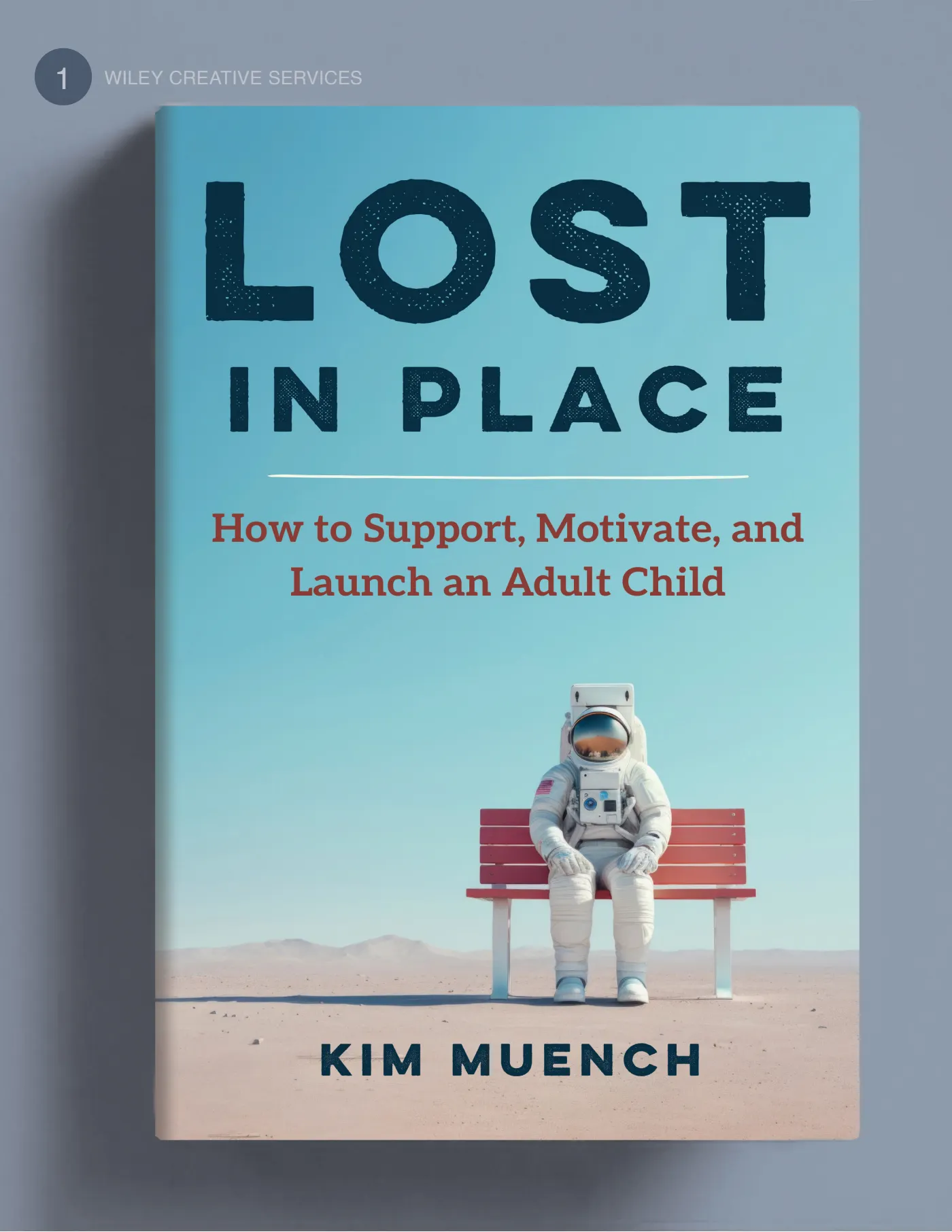
Kim Muench is a certified parent coach, founder of Real Life Parent Guide, and mother of five adult children. She works with parents of emerging adults who are navigating mental health challenges, substance use, strained relationships, and the difficult space between offering support and taking over. She is the author of Becoming Me While Raising You and Lost in Place: How to Support, Motivate, and Launch an Adult Child, forthcoming from Wiley on November 24, 2026.
Thank you so much for joining us in this interview series! Can you tell us a little about yourself?
I’m a certified parent coach, an author, and a mom to five adult children. My work with parents grew out of my own experience. One of my sons struggled with anxiety and OCD from a young age, and alcohol became a serious problem for him in his early twenties. I learned how quickly love, fear, and responsibility can become tangled when your child is struggling, even after that child is legally an adult.
Today, through Real Life Parent Guide, I work primarily with parents of 18- to 30-year-olds who are having trouble moving forward. Their adult child may be dealing with mental health challenges, substance use, ADHD, gaming, employment difficulties, or a general sense of being stuck. These parents love their children deeply. Many are also exhausted and unsure whether what they’re doing is helping.
My upcoming book, Lost in Place, is for those families. Much of my work comes back to something I had to learn myself: when our children become adults, we lose a great deal of control. We still have influence, though, especially when we’re willing to change how we show up.
Thank you for sharing that. Let’s jump into our main topic. What are the key challenges parents face when transitioning from raising a child to building a healthy relationship with an adult child?
One of the hardest parts is accepting your adult child for who they are becoming, rather than who you imagined they would be.
We carry hopes for our children. We picture how school might go, what kind of work they’ll do, and what life might make them happy. Then they begin making their own choices, and their path may look quite different.
My daughter has changed schools and majors several times. We’ve talked openly about what further changes could mean: more time in school and more money to finish. My husband and I have supported choices we wouldn’t necessarily have made ourselves. Listening to understand her perspective, while leaving my opinion out of the conversation, has been difficult at times. Ultimately, we believe in her ability to figure it out.
That’s the shift parents have to make. We can talk honestly about what a decision may involve, then allow our adult child to decide what to do with that information.
How can parents provide support and guidance to their adult children without being perceived as controlling or intrusive?
Ask what kind of support they want before you offer it. “How can I best support you in this?” is a question I encourage parents to use often.
Your adult child may want advice. They may want help thinking through their options. Or they may just need someone to listen. We don’t know until we ask.
I also help parents focus on three things they can still control: how they show up, what they choose to provide once their child is an adult, and how they respond. You can’t make a 24-year-old apply for a job or go to therapy. You can decide what you’re willing to pay for, what you’ll agree to in your home, and how you’ll speak to them about your concerns.
That gives parents somewhere useful to put their energy. It also leaves room for the adult child to take responsibility for their own life.
What communication strategies are most effective for maintaining a strong and respectful bond between parents and their adult children?
Listen to understand, especially when you feel an urge to correct or fix something.
Parents have years of practice solving problems for their children. When an adult child tells us something difficult, we can move into advice so quickly that we never learn what they were trying to tell us.
Curiosity can change the conversation. Instead of “Why would you do that?” I might ask, “Help me understand what led you to that decision.” Instead of telling them what to do next, I might ask, “What do you see your options being?” And when I do have a thought to share, I can ask if they want to hear it.
I’ve also learned to give conversations a little space. Silence can feel uncomfortable to a parent who is worried. Our adult children may simply need a moment to think.
How should parents navigate conflicts or disagreements with their adult children in a way that strengthens rather than weakens the relationship?
I would begin by remembering that disagreement is part of a healthy relationship. Your adult child will disappoint you sometimes, and you will disappoint them. You may disagree about money, relationships, school, work, or what is acceptable in your home.
The question is how you treat each other while you disagree.
A parent can say, “I understand you’re disappointed that we won’t continue paying your rent,” and still hold that limit. They can say, “We see this differently, and I respect that the decision is yours.” If something affects their home or finances, they can be clear about what they will and won’t participate in.
I often ask parents to think beyond the argument in front of them. They may have many years ahead with this adult child. A difficult season calls for honesty and boundaries, but it also calls for care in how we speak to one another. Being unhappy with a decision should not leave either person wondering whether the relationship itself is secure.
Based on your experience or research, what are the most common mistakes parents make when trying to stay connected with their adult children?
Over-functioning, both emotionally and financially, is one of the biggest patterns I see.
A parent may be making the appointments, sending the reminders, researching every option, waking an adult child for work, and trying to generate motivation for them. Financially, they may keep paying bills or stepping in whenever a choice has an uncomfortable result. It usually comes from love and fear. I understand both.
But parents can become so busy managing an adult child’s life that there is little room left for a relationship with them. They’re exhausted, and the adult child feels watched or pressured.
Unsolicited advice is another common mistake. So is walking on eggshells because you’re afraid your adult child will be upset with you. A good relationship doesn’t require them to be happy with every decision you make. It requires enough honesty and respect for both people to be themselves.
How do shared experiences, traditions, or rituals contribute to maintaining a close and positive relationship between parents and their adult children?
They give you time together that isn’t centered on a problem.
Four of my five adult children live in our area, and we have family dinner once a week. My elderly mother, who has dementia, joins us too. It’s one of the traditions I treasure most. Everyone has a full life, and I’m grateful we keep making room to sit around the same table.
Dinner isn’t a time for me to ask for updates on goals or revisit something we’re worried about. We get to enjoy one another. When an adult child is struggling, it’s easy for every interaction to become a conversation about their progress. Families need time when nobody is being evaluated.
From your experience, what are “Five Tips for A Great Relationship With Your Adult Child”? If possible, please share an example for each one.
1. Accept the person your adult child is becoming.
Your adult child may choose a path you wouldn’t have chosen for them. You can be honest about the practical realities of a decision and still respect that it belongs to them.
That’s something I’ve practiced with my daughter as her college plans have changed. We’ve talked about the additional time and cost. We’ve also supported her as she works out what she wants. I want her to know I believe she can find her way, even when the route looks different from the one I expected.
2. Replace fixing with curiosity.
When your adult child brings you a problem, pause before offering a solution. Ask, “How can I best support you in this?” or “What do you see your options being?”
A parent I coached began doing this instead of offering advice as soon as her daughter shared a concern. Her daughter had more room to think aloud because she wasn’t immediately responding to a proposed fix. It was a small change in wording, but it changed what those conversations felt like.
3. Notice when you’re doing more work on their life than they are.
Support can be generous and appropriate. It’s worth paying attention, though, when you’re the one making every call, tracking every deadline, or worrying about a problem all day while your adult child has stepped back from it.
The same applies to money. If an adult child repeatedly overspends and a parent repeatedly fills the gap, they may never get a chance to understand what their spending requires of them. Parents can decide what help they’re comfortable offering and make that help clear.
4. Allow natural consequences when it is reasonably safe to do so.
Our adult children need opportunities to see what happens when a plan works and when it doesn’t. A failed class, a missed opportunity, or a choice that costs more than expected can teach something our repeated reminders cannot.
That doesn’t mean standing back from a serious safety concern. It means asking whether stepping in is truly needed, or whether we’re trying to spare our adult child discomfort. Learning to recover from a mistake is part of building confidence.
5. Care for the relationship and for yourself.
Parents sometimes feel caught between continuing to rescue an adult child and cutting them off entirely. There is room for other choices.
You can stay connected and say no to paying a bill. You can acknowledge your adult child’s disappointment and keep a limit. You can offer help that you believe is useful without taking over a decision that belongs to them.
A strong relationship can hold honest disagreement. How you move through this season together matters.
None of us are able to achieve success without some help along the way. Who has been the inspiration or model for you? Can you share a story about that?
I admire Dr. Shefali Tsabary and her tenacity in bringing conscious parenting into a much wider conversation. Her work asks parents to look at our own expectations and fears, rather than focusing all our attention on changing our children.
I can’t point to one encounter with her as the story. What has stayed with me is that question she keeps inviting parents to ask of themselves. In my own family, I’ve had to face the gap between the life I pictured for a child and the person that child was becoming. The question “What needs to change in me?” has helped me listen more openly. It’s also a question I bring into my work with other parents.
How have you used your success to bring goodness to the world?
I try to make a lonely stage of parenting feel less lonely and more manageable.
Parents come to me worried about an adult child who may be struggling with mental health, substance use, gaming, employment, or independence. Many have spent years trying to help and no longer trust their own judgment. Through coaching, classes, my online community, media work, and writing, I give them a place to talk honestly and tools they can use in everyday conversations.
I want parents to know they can remain loving and connected while changing patterns that aren’t helping. When a parent becomes calmer and clearer about their own role, the relationship has a chance to change too.
You are a person of great influence. If you could inspire a movement that would bring the most amount of good to the most amount of people, what would that be? You never know what your idea can trigger. :-)
I’d love to see more of us Parent WITH our children.
To me, that means coming alongside them and getting curious about who they are and what matters to them. With adult children, it means respecting that their lives belong to them while being honest about our own values, limits, and concerns for their safety.
I think many parents fear that if they stop directing, they’ll lose their place in their child’s life. My experience has often been the opposite. When adult children feel heard and respected, there is more room for a real conversation. Parents may have less control than they once did, but they can still have a meaningful influence.
We are very blessed that some of the biggest names in Business, VC funding, Sports, and Entertainment read this column. Is there a person in the world, or in the US with whom you would love to have a private breakfast or lunch with, and why? He or she might just see this if we tag them :-)
Oprah Winfrey. I admire the curiosity she brings to conversations about the most important and difficult parts of being human. She has spent decades listening to people’s stories, and I would love to ask what she has learned about helping someone feel heard.
Listening is such a central part of my work with parents. I suspect I would arrive with far too many questions for one lunch.
How can our readers follow your work online?
Readers can find me at RealLifeParentGuide.com and on Instagram and TikTok at @kimmuenchparentcoach.
My new book, Lost in Place: How to Support, Motivate, and Launch an Adult Child, will be published by Wiley on November 24, 2026. It’s for parents who love an adult child who is struggling or feeling stuck, and want to find a way forward together.
Thank you so much for joining us. This was very inspirational.
AM
Written by
Authority Magazine Editorial Staff
Writer & ContributorContributor at Authority Magazine covering leadership, innovation, and industry insights.

Published inAuthority MagazineTop Lessons, Top Authorities · 42K Followers
Exclusive, curated interviews with the leaders and changemakers shaping tomorrow. Leadership lessons, industry deep dives, and executive profiles.
More from Authority Magazine
See all stories →
A
Authority Magazine Editorial StaffDara Fleischer: Inside the Architecture of Breaking a Compulsive Shopping Cycle to Reclaim Financial Autonomy
Wellness30 min read

A
Authority Magazine Editorial StaffJessica Gold of Bliss Science on Molecular Bonding, Nonlinear Systems, and the Science of Human Connection
Wellness21 min read
A
Authority Magazine Editorial StaffMichael Ingber: Why We Must Stop Treating Menopause As A Disease To Be Endured
Wellness14 min read

A
Authority Magazine Editorial StaffJoel Conger of Connections Health Solutions on Crisis Intervention, Braided Funding, and the Power of Compassionate Care
Wellness6 min read