I’ll be there next week.” I’d just bought a big house in Bournemouth with no furniture apart from a sofa and a couple of beds, and suddenly 20 people were sleeping there.
Wellness
Jyoti Jo Manuel of Special Yoga: The Paradox of Surrender That Drives Sustainable Leadership
The founder of Special Yoga shares why true organizational resilience is built by empowering your team to operate independently and prioritizing nervous system safety over rigid strategic planning.
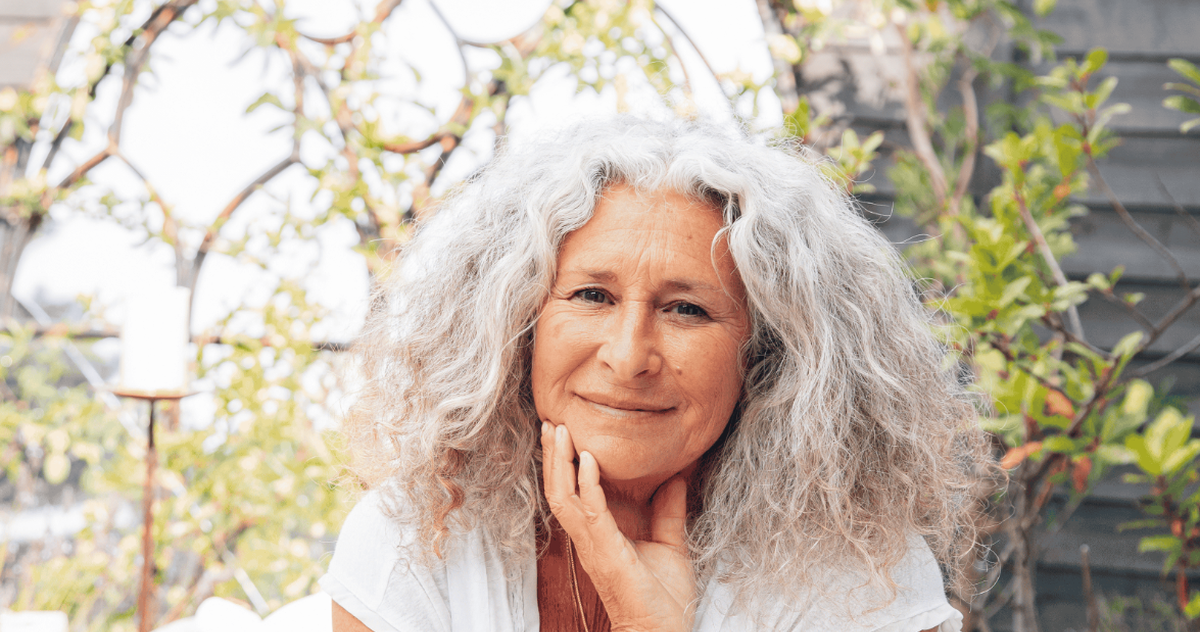
As a part of this series, we had the pleasure to interview Jyoti Jo Manuel.
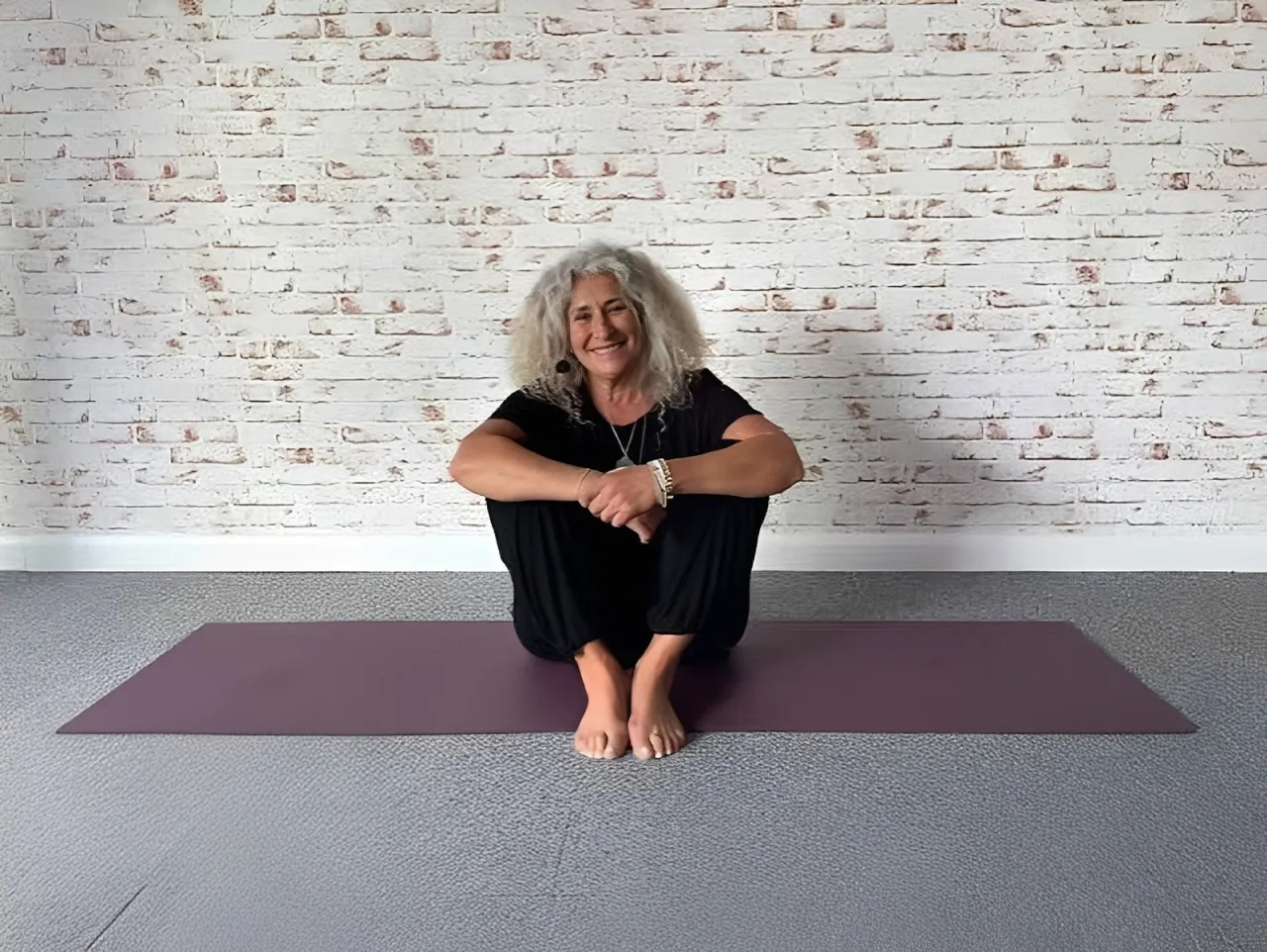
Jyoti Jo Manuel is a yoga therapist, author, mentor/coach and the founder of Special Yoga, a global training organisation supporting children with diverse needs and the adults who care for them. She has practised yoga since 1977 and for over 20 years has trained parents, teachers, NHS teams and practitioners worldwide in simple breath- and body-based practices for safety and co-regulation. Drawing on her own history of childhood trauma and burnout, she now also works one-to-one with adults ready to break old emotional “spells”; her book 52 Love Letters is out now, with a parent’s guide following from Jessica Kingsley Publishers in December 2026.
Thank you so much for doing this with us! Our readers would love to “get to know you” a bit better. Can you share with us the backstory about what brought you to your specific career path?
I’m a Londoner, and I walked into my first yoga class at 17. Even then I didn’t see it as exercise; I saw it as a spiritual path. At 20 I left for New York, where I spent ten years working in television and film. I remember landing there and thinking, “I can be me.” Alongside that wild, fabulous career, I found a yoga teacher and sat with him most days. That was the real beginning of my yoga life.
I came back to the UK at 30. My mother died before we had fully made peace, I became a mother myself, and slowly yoga moved from the edge of my life to the centre. Around then I left a class where the teacher’s ego was running the show, sat down under a tree and made a pact with God: “If you want me to step into my power, promise me that if I ever get up on a pedestal, you’ll knock me down.” That’s still my agreement, with God or probably with myself.
Then I met a woman doing yoga with children with special needs, who told me to open a centre. So I did. Special Yoga became a charity with a huge studio in London, serving around 150 children a week and reaching out into schools. When the studio closed in 2017 I moved to Bournemouth and we became a training academy, which went online during COVID. Today we have senior practitioners all over the world in places such as Canada, Turkey, Austria, Spain and Mexico.
I’m almost 70 now, and I’ve realised my work is bigger than one organisation. Sitting with people and helping them come home to themselves interests me far more than teaching someone how to forward bend.
Can you share the most interesting story that happened to you since you started your career?
Not long ago I was lying on a beach in Goa when a woman came up to me and said, “Special Yoga!” Before I knew it, I was surrounded by people who had practiced and trained at our London studio. I’ve got grey hair, I’m not famous, and I never remember names, yet they remembered me. They started telling me what had happened in their lives and their children’s lives because of that space, and honestly, it made me cry.
A few weeks later, another woman stopped me at a meditation event and said, “You really helped me be a parent.” At the time, running that studio was such hard work that I couldn’t see the magic.
It took years, and a beach, for me to see it.
Can you share a story with us about the most humorous mistake you made when you were first starting? What lesson or take-away did you learn from that?
Before COVID, my eldest daughter said to me, “Mum, you’re travelling too much. You’re burning out. Go online.” I had never done anything online in my life. She told me to hire a film crew on my next teaching trip to Mexico, so I did, with grand plans to release everything in English and Spanish at once. The Spanish version never happened. And to this day I can get videos onto TikTok, Instagram and Facebook, but YouTube remains a bit of a mystery to me.
The lesson? Stop pretending you have to be good at everything.
The moment I let people who were brilliant at the bits I didn’t take over, the work flew. I sat and made the content; they built the courses. That’s why we were ready when COVID hit.
None of us are able to achieve success without some help along the way. Is there a particular person who you are grateful towards who helped get you to where you are? Can you share a story about that?
I met a business coach several years ago who gave me her time for free. When our London studio and charity closed in 2017, I rang her in a panic. She said, “Don’t worry. Get your team down here. I’ll be there next week.” I’d just bought a big house in Bournemouth with no furniture apart from a sofa and a couple of beds, and suddenly 20 people were sleeping there.
She kept the train on the track. She helped us see that we hadn’t stopped serving people; we’d only lost a building. We were already training people, so we became a training school. Without her, Special Yoga might have ended that year.
What advice would you suggest to your colleagues in your industry to thrive and avoid burnout?
Listen to the people who love you; my daughter saw my burnout before I did. And stop telling yourself you haven’t got time to look after your nervous system. Everyone has time. You’ve got time to scroll. It isn’t about an hour on a mat. It’s noticing, many times a day, that you’re holding your breath, and letting it go. If you keep forgetting, write it on your hand.
I technically work less now than I ever have, and I do more, because I’m no longer running on survival. And be wary of “nervous system reset” as a trend. You can float in the sea and feel reset for an hour, but without real safety inside yourself, it won’t hold.
What advice would you give to other leaders about how to create a fantastic work culture?
Operate from love, and mean it. If someone on my team needs time off to care for a family member, they take it. I don’t care what hours people work, as long as the job gets done. I need them, so I need to honour them and their time. The result is a team who love what they do and give it everything.
The other piece is growing people. Over the years I’ve trained my team until they’re ready to run training courses without me. When one of my key people resigned with a month’s notice, someone I’d trained for 15 years stepped straight in, and we haven’t looked back. A leader who has to be at the centre of everything is building dependency, not a culture.
Ok thank you for all that. Now let’s move to the main focus of our interview. Mental health is often looked at in binary terms; those who are healthy and those who have mental illness. The truth, however, is that mental wellness is a huge spectrum. Even those who are “mentally healthy” can still improve their mental wellness. From your experience or research, what are five steps that each of us can take to improve or optimize our mental wellness. Can you please share a story or example for each.
- Notice when you’re holding your breath.
Every time something happened to us as children that was undesirable, whether serious abuse or simply a tired mum, we clenched our bodies and held our breath. Those holds are still in our systems, quietly running our lives, until we meet them. You can start meeting them anywhere, at any moment.
I recently ran 20 hours of training for an entire NHS psychology team in Birmingham. We never got out a yoga mat. We did “yoga snacks”: tiny practices they could use while running down corridors, firefighting and stressed beyond belief. Stop. Notice. Breathe out. Feel your body.
2. Put safety before strategy.
No amount of mindset work or biohacking holds if your body doesn’t feel safe. When people ask me what it means to “reset your nervous system”, I say it has to come under safety, and safety comes through presence.
As a child I learned that hiding kept me safe. That boundary protected the little girl, but it limited the woman. For years I was, quite simply, scared of my own light. It’s only through daily practice that I’ve stopped hiding, and people now say to me, “I want what you’ve got.”
3. Feel your feelings; don’t just think them.
Most of us ‘think’ our feelings rather than ‘feel’ them, because I don’t know anybody whose feelings were truly welcomed as a child. “Don’t be angry. Don’t be scared.” But the story doesn’t change unless you get to the feeling underneath it.
After decades of working on myself, I discovered at least a dozen spells around money I didn’t know I had. Knowing the stories didn’t shift them. Feeling what sat underneath did, and those spells no longer drive me.
4. Don’t let go. Transmute.
I don’t believe we let go of anything. The scared, angry, sad little ones inside us don’t need to be thrown away; they need to be invited to put down their swords and be nurtured. It’s reparenting. And once a spell is truly transmuted, it’s gone; you don’t have to keep managing it.
For the first time in my life I’m not trying to make myself fit or make myself strong. I’m just me. That’s what it feels like when the parts of you that were fighting finally join you. And I rather like me.
5. Remember your state matters.
Your state is the silent message everyone around you receives. A child can’t regulate around a dysregulated adult, and neither can a colleague, a partner or a client.
When a parent tells me their child can’t switch off at night and refuses to do the breathing they’ve been taught, I say: stop talking about breathing. Sit and massage their feet, and breathe slowly and deeply yourself so they can hear it. That’s co-regulation. Children don’t learn from what you tell them; they learn from who you are.
How about teens and pre teens. Are there any specific new ideas you would suggest for teens and pre teens to optimise their mental wellness?
When I first started teaching, words like “regulation” didn’t exist. Children were simply labelled good or bad. We’ve come a long way, but I believe one big reason for today’s mental health crisis isn’t only social media. It’s that we’ve forgotten how to feel our feelings, so we can’t show our children how.
For the adults around young people: stop lecturing them about breathing, because they’ll get defiant. Model it instead. Let them have their sadness, anger and fear; underneath anger there’s usually fear, and underneath fear, sadness. And the occasional mental health day is fine. I gave them to my own daughters.
For teens themselves: notice when you’re holding your breath, and know that a big feeling doesn’t mean something is wrong with you. Be curious about labels, too. A label can describe what’s happening for you, but it isn’t the whole truth of who you are.
Is there a particular book that made a significant impact on you? Can you share a story?
Writing my own book 52 Love Letters impacted me as much as those who read it. It was a profound experience putting pen to paper and I hope it is as cathartic experience for readers as it was for me writing it.
You are a person of great influence. If you could start a movement that would bring the most amount of good to the most amount of people, what would that be? You never know what your idea can trigger. :-)
We have already started a movement with Special Yoga — but if I could start another one — it would be something along the lines of “Your State Matters.”
So much energy goes into fixing children, labelling them, even medicating them. None of them need fixing. The adults around them need to sort themselves out first: oxygen mask on. Imagine a world where every parent, teacher and leader took responsibility for their own state, learned to feel safe in their own body, and modelled that for the people around them. That’s the movement. It’s also the title of my next book.
I’d also love to bring elder wisdom back into the wellness world, which so often skews young and performative. Real wisdom isn’t about transcending being human. It’s about being here, and cleaning up your own stuff.
Can you please give us your favorite “Life Lesson Quote”? Do you have a story about how that was relevant in your life?
“The future is made to feel impossible because it requires us to be willing to dream bigger than we ever imagined… That’s how we become who we’re meant to be, one uncertain step at a time.”
I’ve lived this more than once. In my twenties in New York, I was in the running for a big television job. On my third interview I was told I’d have to give up my whole life for it, so I walked out, with no money and friends who thought I was mad. Somehow I survived, and I’ve never regretted it.
Now, at almost 70, I’m doing it again. For years I was known only as “the Special Yoga lady”.
Stepping out as myself, beyond the organisation I built, feels like another uncertain step. But I’m no longer scared of my own light.
What is the best way our readers can follow you on social media?
I am on TikTok, Instagram, Youtube and Facebook — you can find me under LovefromJyoti or Special Yoga.
Thank you for these fantastic insights. We wish you only continued success in your great work!
AM
Written by
Authority Magazine Editorial Staff
Writer & ContributorContributor at Authority Magazine covering leadership, innovation, and industry insights.

Published inAuthority MagazineTop Lessons, Top Authorities · 42K Followers
Exclusive, curated interviews with the leaders and changemakers shaping tomorrow. Leadership lessons, industry deep dives, and executive profiles.
More from Authority Magazine
See all stories →
A
Authority Magazine Editorial StaffDara Fleischer: Inside the Architecture of Breaking a Compulsive Shopping Cycle to Reclaim Financial Autonomy
Wellness30 min read
A
Authority Magazine Editorial StaffJessica Gold of Bliss Science on Molecular Bonding, Nonlinear Systems, and the Science of Human Connection
Wellness21 min read
A
Authority Magazine Editorial StaffMichael Ingber: Why We Must Stop Treating Menopause As A Disease To Be Endured
Wellness14 min read
A
Authority Magazine Editorial StaffJoel Conger of Connections Health Solutions on Crisis Intervention, Braided Funding, and the Power of Compassionate Care
Wellness6 min read