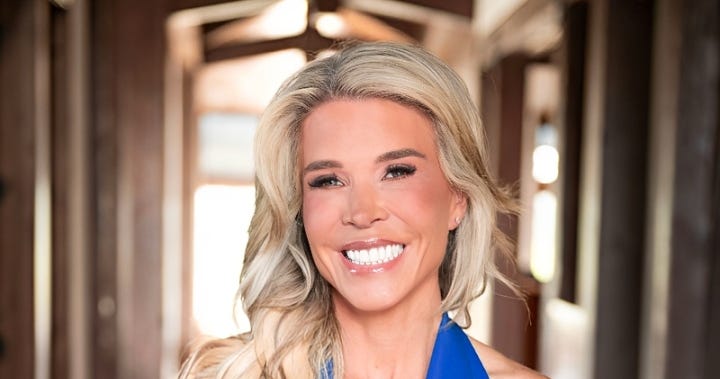
Finding and living in alignment with your true purpose can be a transformative journey. Yet, many struggle with identifying their life’s purpose and aligning their goals with it. In this series, we aim to explore how individuals discover their purpose and create a life that reflects their authentic selves, leading to greater fulfillment and success. As a part of this series, we had the pleasure of interviewing Jenn Drummond.
Jenn Drummond is a two-time Guinness World Record holder, entrepreneur and mother of seven based in Park City, Utah, who started climbing at 40 after she walked away from a 2018 crash in which a semi-truck destroyed her SUV. She became the first woman to complete the Seven Second Summits, climbing the second-highest peak on every continent including K2, and in June 2026 she set her second world record by climbing three peaks on three continents in sixty days, finishing on Denali with her son. After founding and selling a wealth management firm, she wrote BreakProof (2024) and SOMEDAY: The Art of Turning Someday into Today (January 12, 2027), and founded Somedays, a movement that helps people act on the goals they keep putting off through an app, card deck, in-person experiences and a podcast.
Thank you so much for your time! I know that you are a very busy person. Our readers would love to “get to know you” a bit better. Can you tell us a bit about your ‘backstory’ and how you got started?
In December 2018, I was getting ready for Christmas with seven kids. I had a successful business, a busy household, and a pretty full life. I’d also convinced myself that my own adventures could wait until my children were older.
On December 18, a semi-truck hit my SUV. The car was destroyed, and somehow I walked away.
A few days later, I went to see what was left of it. I remember standing there feeling angry. I could have died, and there were so many things I’d wanted to do that I hadn’t even started.
I’d been a good girl. I’d done what I was supposed to do. I’d built the business, raised the family, and checked all the boxes. Somewhere along the way, I’d decided there would be time for me later.
That accident changed things.
I started climbing at 40. I’d never even slept in a tent! A few years later, I became the first woman to climb the second-highest peak on every continent. I climbed Everest, K2, and mountains I hadn’t even heard of when I started.
I eventually sold my wealth management business, wrote BreakProof, and began speaking about what those experiences had taught me.
Now I’m working on Somedays, which is really the next chapter of that same story.
I started out wanting to see what I was capable of. These days, I’m much more interested in helping people do the things they keep putting off.
None of us can achieve success without some help along the way. Is there a particular person that you are grateful for, who helped get you to where you are? Can you share a story?
My mountain guide, Todd Passey.
Todd took me from someone who’d never slept in a tent to climbing Everest and eventually pursuing world records.
One of my favorite memories of Todd is from an early training hike. He spilled ketchup on his shirt, and I remember thinking, “Wait. This guy has climbed Everest, and he spills ketchup on himself? I spill ketchup on myself!”
It sounds ridiculous, but it was a big moment for me.
Until then, I’d put people who climbed Everest in some completely different category. They were these superhuman athletes, and I was a mom with seven kids who was trying to figure out how to use her climbing equipment.
Watching Todd spill ketchup made Everest feel a little more accessible.
He was also incredibly steady. He knew when to push me, when to encourage me, and when we needed to make a different decision.
I trusted him, and that mattered enormously.
Mountaineering is a team sport that gets photographed like an individual one. I might be the person standing in the summit photo, but there’s a whole team that made that moment possible.
Todd taught me a lot about climbing. He also taught me that you don’t have to know everything when you start. You need to find people who know more than you do and be willing to learn.
You are a successful leader. Which three character traits do you think were most instrumental to your success? Can you please share a story or example for each?
Self-awareness, courage, and adaptability.
Self-awareness is what I call being GPS honest.
Your GPS can’t take you anywhere unless it knows where you’re starting. The same is true when you’re setting goals.
When I started climbing, I was a complete rookie. I couldn’t pronounce half the equipment, and I had no idea what I was getting myself into.
I had to be honest about that. There was no benefit in pretending I knew more than I did. Once I accepted where I was starting, I could find the right people and put together a plan.
Courage is the second one, although I think people misunderstand it.
Everyone assumes courage is about pushing through and reaching the summit. Sometimes it’s about turning around.
I turned around on Broad Peak while preparing for K2. Then I went to K2 and turned around there, too.
I was devastated. I’m someone who gets things done, and suddenly I was coming home without having accomplished what I’d set out to do.
I kept thinking about what I was going to tell people.
Eventually, I had to change how I thought about it. I stopped defining myself as someone who always summits and started thinking of myself as someone who comes home.
That meant I could try again. It also meant I could be there for my children.
The third is adaptability.
I’ve had climbing equipment fail to arrive and ended up using rental gear. In Antarctica, we were on aggressive standby, which meant being ready to leave within 15 minutes whenever the weather allowed.
We’d get ready to board the planes, and then the weather would change again.
You can have the most beautiful plan in the world, but the mountain doesn’t care about your plan.
Business and parenting aren’t that different. Things change. You make adjustments and keep going.
Ok, fantastic. Let’s now turn to the crux of our interview. Was there a defining moment or experience in your life when you felt a clear sense of your purpose? How did it influence the goals you set from that point forward?
I think there were several moments. And they kept teaching me the same lesson.
The car accident was the first. I realized I was postponing my own life, and I decided to do something about it.
But then my grandmother died.
There were so many things I still wanted to ask her. How did she make certain recipes? What was her childhood like? Why did she do some of the things she did?
I had all these questions, and suddenly there was nobody to answer them.
I had assumed I had more time.
Then I lost a friend on a mountain. Another friend received a diagnosis that meant they couldn’t do high-altitude activities anymore.
It started occurring to me that we have all these little doors in our lives that silently close.
Sometimes it’s something tragic. Other times, it’s just life moving along.
I have seven children. When my son left for college, I realized that our regular Monday night family dinners were going to become a lot harder. For years, we’d just had dinner together. I hadn’t really thought about the fact that eventually everyone would have their own schedules and lives.
Or take carpool.
For years, I drove my kids everywhere. I was probably looking forward to the day when everyone could drive themselves!
Well, that day arrived. Suddenly, I wasn’t needed for carpool.
And you realize you’ve lost all those little conversations in the car. You don’t necessarily appreciate them while you’re coordinating who needs to be where at what time.
That’s the thing about these little doors. Most of them don’t announce that they’re closing.
All of those experiences changed what I wanted to do next.
I still love climbing and having adventures. But I started thinking about how many people are postponing things because they assume they’ll have another opportunity.
I wanted to do something about that.
That’s where Somedays came from. I want to help people turn the things they keep talking about doing into things they actually do.
It might be an enormous adventure. It might be making dinner with your grandmother and finally writing down her recipes.
Both matter.
What practical steps can someone take to begin uncovering their life’s purpose if they feel lost or unsure about their direction?
I’d start by taking some pressure off the whole idea of finding your purpose.
People make it sound like there’s one big answer out there, and your job is to figure it out.
I don’t think it works that way.
Start by thinking about the things you’ve always wanted to try. Go back to your childhood. What did you love doing before you started worrying about whether you were good at it or whether it was productive?
What makes you happy? What gives you energy?
Make a list. Then start trying things.
I recently made a hoop drum. I loved the experience. I met interesting people, learned something completely different, and had a great time.
I also realized I only need one drum.
My instructor could probably make drums every day and be perfectly happy. That’s their thing. I enjoyed it, but I don’t need to become a drum maker.
And that’s part of the fun.
Not everything you try needs to become your passion, a business, or some enormous commitment.
When I started climbing, I wasn’t sitting around planning to set world records. I started with a small mountain. Then I tried another one.
One experience led to another.
You learn a lot more about yourself by doing things than by sitting around wondering what you should be doing.
How do you differentiate between external pressures — like societal expectations — and the inner calling that aligns with your true self?
I ask myself a pretty simple question.
If nobody ever knew I did this, would I still want to do it?
That question has helped me enormously.
Everyone has opinions about what you should be doing. What kind of parent you should be. What success should look like. How ambitious you should be. What you should do next.
But they’re looking at your life through their own experiences. They don’t have the complete picture.
I’ve certainly pursued goals that came with public recognition. And I’m proud of those accomplishments.
But I’ve also had some of the best experiences of my life doing things nobody outside my family or friends will ever hear about.
I try to get quiet enough to figure out what I actually want.
Am I excited about doing this, or am I excited about being able to tell people I did it?
There’s a difference.
I also think it’s perfectly fine to change your mind. Something that genuinely excited you five years ago might not be right for you today.
You don’t owe everyone an explanation every time your priorities change.
Can you share an example of a time when you adjusted or abandoned a goal because it no longer aligned with your deeper sense of purpose? What did you learn from that experience?
I wanted to become a private pilot.
I had this great picture in my head of flying my family to incredible places and making travel so much easier.
Then I started pilot training.
It didn’t take long to realize that what I’d imagined and what I actually wanted were two different things.
I have seven children. Being responsible for flying all of them meant taking on a tremendous amount of responsibility. I’d need to maintain my skills, stay current, and dedicate a lot of time to flying safely.
I realized I didn’t really want to be a pilot. I wanted to be a mom who could take her family on adventures.
So I stopped training.
We fly commercially, and if we need a private flight, I hire a pilot.
Problem solved!
It sounds simple, but I think we do this all the time. We become attached to a particular goal without asking ourselves what we’re actually trying to accomplish.
I learned something similar through mountaineering.
After years of pursuing world records and experiencing a serious accident on Broad Peak, I decided to stop pursuing high-risk mountaineering records.
I still love the mountains. I’m not giving up climbing.
But I have other things I want to do with my life, and I don’t need another dangerous summit to feel successful.
The mountains gave me an incredible chapter. Now I’m excited about the next one.
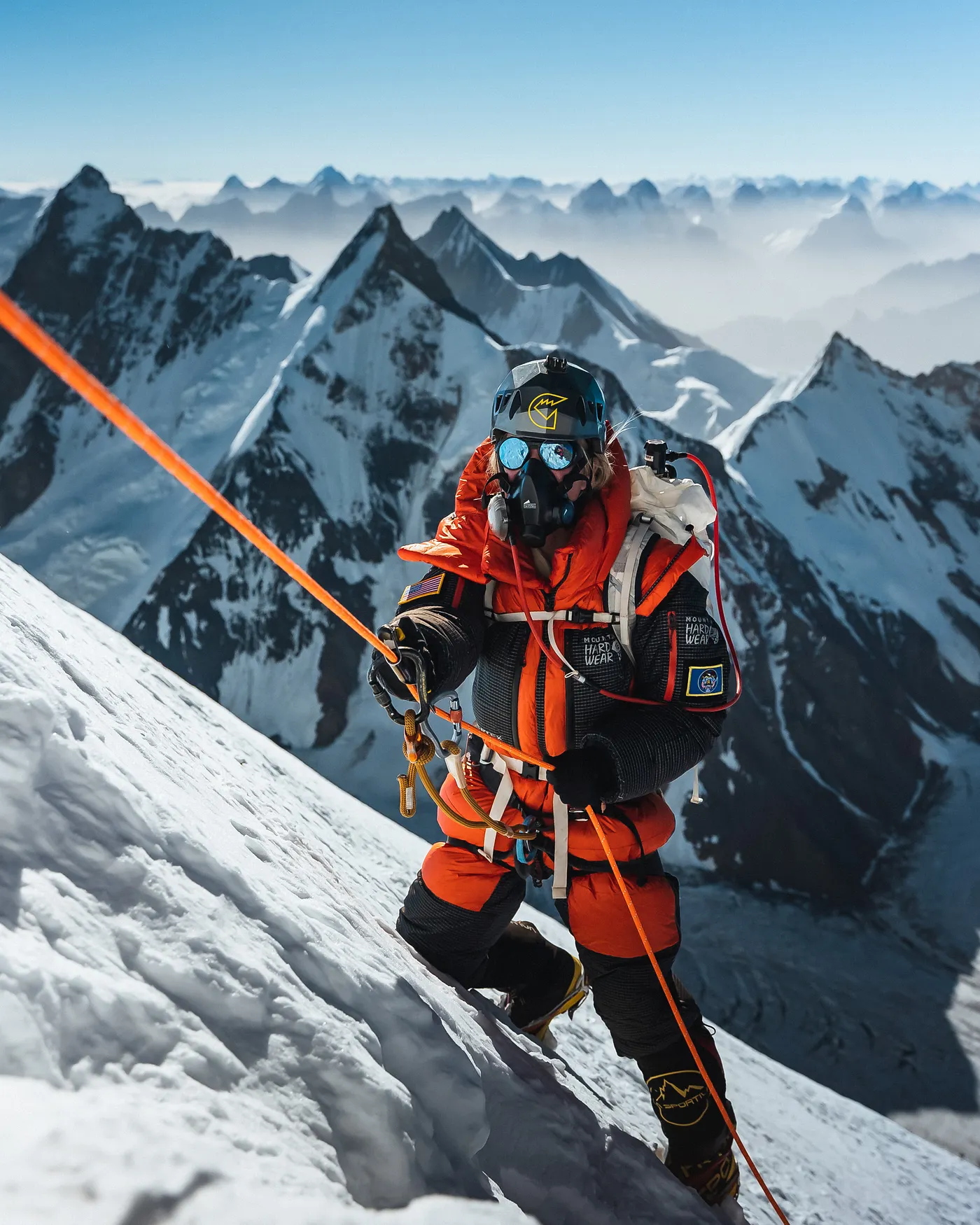
I stopped defining myself as someone who always summits and started thinking of myself as someone who comes home. That meant I could try again. It also meant I could be there for my children.
This is the main question of our interview. What are “5 Ways to Align Your Goals With Your True Self”? (please share stories or examples)
I have a framework called the PEAK method that I developed from my experiences climbing mountains. I use it in my keynotes because I’ve found that a lot of what works on a mountain also works in business and everyday life.
But before you get too far into pursuing any goal, make sure it’s actually something you want.
Here are five things that have helped me.
1. Get GPS honest.
Before you figure out where you’re going, you need to be honest about where you are.
When I started climbing, I had seven children, a business, and absolutely no mountaineering experience.
Those were my circumstances. I couldn’t pretend otherwise.
But I also needed to be honest about why I wanted to climb in the first place.
I think we sometimes pursue goals because they sound impressive or because they’re what we’ve always assumed we should want.
Take a minute to question that.
Look at your current goals and ask yourself why you want each one. Keep asking why until you get past the obvious answers.
You might discover that what you’re actually looking for is something completely different.
My pilot training is a perfect example. I thought I wanted to fly airplanes. What I really wanted was the freedom to have adventures with my family.
Once I understood that, I had a lot more options.
2. Envision your future self.
We tend to picture the exciting part of achieving a goal.
I can promise you that standing on the summit of Everest looks a lot more glamorous in photographs than some of the training required to get there!
When I was preparing for major expeditions, I had to think about the person I needed to become.
How would she train? What would she eat? How would she organize her schedule? What would she need to learn?
Then I started making decisions like that person.
But here’s something I’d encourage everyone to add to that exercise.
Don’t just picture yourself achieving the goal. Picture yourself living the life required to achieve it.
Do you actually want that life?
What are you willing to give up? What aren’t you willing to give up?
I think that second question is especially important.
There’s no point reaching a goal if you end up sacrificing everything you actually cared about along the way.
3. Make your environment work for you.
I’m a big believer in making things easier for yourself.
When I was training for Everest, I made some little rules.
I stopped taking elevators. I parked at the back of parking lots. I looked for opportunities to walk farther or take the stairs.
I even brought a 12-inch step and a backpack full of water bottles to my children’s soccer games so I could train on the sidelines.
Was it the same as hiking in the mountains? Of course not.
But it was better than doing nothing.
I also hired help with food preparation during particularly demanding training periods. That gave me back time I could use for other things.
The point is to look at your life and figure out how to make room for what matters.
I apply the same principle to Somedays.
If I want to spend time with someone, I need to put it on the calendar. If there’s something I want to learn, I need to sign up for the class.
Otherwise, I’ll probably keep talking about doing it.
One thing we say at Somedays is, “Date it. Do it. Done it.”
It’s a pretty simple way to turn an intention into an actual experience.
4. Find your Sherpas.
One of the biggest misconceptions about climbing is that it’s an individual sport.
Nobody gets to the summit alone.
You have guides, teammates, people helping with logistics, and people supporting you back home.
It’s the same with any big goal.
Find people who know things you don’t. Ask for help. Surround yourself with people who want you to succeed and aren’t afraid to tell you when you’re making a mistake.
Todd was that person for me throughout so much of my climbing career.
And remember that you can be a Sherpa for someone else, too.
You don’t have to be an expert to help somebody. Sometimes you just need to make an introduction, offer encouragement, or invite someone to join you.
I think we underestimate how much our relationships contribute to our lives.
I certainly wish I’d asked my grandmother more questions while she was here.
And I want to make sure I’m creating opportunities to spend time with my children while they’re still interested in spending time with me!
5. Keep expanding.
This is an interesting one because I used to think expanding meant setting bigger goals.
Climb a mountain. Then climb a harder mountain. Then set a world record.
And there’s nothing wrong with that.
But I’ve learned that expanding can also mean changing direction or discovering something entirely different.
When I first started climbing, I was simply trying to learn how to climb. Eventually, I became experienced enough to incorporate charitable components into expeditions and pursue bigger objectives.
Those opportunities weren’t even on my radar when I started.
Now I’m in another chapter.
I’ve accomplished things in mountaineering that I’m incredibly proud of. But I’m more interested in what I can do with those experiences to help other people.
That’s what I’m building with Somedays.
I’m also learning that a bigger life doesn’t necessarily mean bigger adventures.
Sometimes it means having the time to make sourdough bread with friends, learn something new, or create a memory with my children.
I don’t want to get to the end of my life and discover that I was so busy pursuing the next big thing that I missed everything else.
Revisit your goals occasionally. Make sure they’re still yours.
You’re allowed to want different things as you get older and experience more of life.
9. What advice would you give people trying to pursue their purpose while managing the demands of everyday life?
First, be realistic.
I have seven children. I’ve built businesses, written books, and trained for major expeditions. I know what a full calendar looks like.
I’ve also learned that you can’t do everything at the same time.
When I was training for big climbs, I got creative. I trained during soccer games, walked on the treadmill during certain Zoom calls, and hired help with meals.
I figured out what I could delegate, what I could combine, and what I needed to prioritize.
But my perspective on this has changed a little.
I used to think the challenge was figuring out how to fit my goals around my responsibilities.
Now I also think about how much of my life is actually happening inside those responsibilities.
Take carpool, for example.
I spent years driving children all over the place. Now they’re getting older and driving themselves, and suddenly I’m not needed in quite the same way.
It’s funny how something that used to take up so much of your day can become something you miss.
The same goes for our Monday night family dinners. Once my son left for college, getting everyone together became more complicated.
And then I think about my grandmother.
I can’t go back and ask her to teach me those recipes. I can’t ask her questions about her childhood.
There are opportunities we have right now that we won’t always have.
So my advice is to stop thinking that pursuing your purpose has to be some enormous, separate undertaking.
Maybe your Someday is climbing Everest.
Maybe it’s taking your children camping, learning to cook your grandmother’s favorite meal, or finally getting together with the friend you’ve been meaning to see.
Start with one thing.
Put it on the calendar and make it happen.
And don’t forget to enjoy the life you’re living while you’re working toward the life you want.
There are all these little doors in our lives that silently close. I’d love for more people to recognize them while they’re still open.
How can our readers further follow your work?
I’m building Somedays, a movement to help people stop postponing the things they keep saying they’ll do someday.
We’re creating experiences, a community, a card deck, a podcast, and an app. My new book, SOMEDAYS: The Art of Turning Someday into Today, is scheduled for release on January 12, 2027.
You can learn more and start your own Somedays List at LiveSomedays.com.
You can also follow my speaking, writing, and adventures at JennDrummond.com.
And I’d love for people to think about one question.
What’s something you’ve been meaning to do that you could actually put a date on today?
It doesn’t need to be anything enormous. In fact, some of my favorite experiences lately have been the little ones.
Pick something. Invite someone. Go do it.
Thank you so much for sharing these important insights. We wish you continued success and good health!