The reason I listed life experiences is because no matter how many times you read something, or how many times you hear something over the years, sometimes, you just have to experience it to really understand it.
With the growing complexity of marketing channels and the need for businesses to constantly adapt their strategies, managing marketing budgets effectively has become more critical than ever to ensure the highest possible return on investment. In this interview series, we are talking with marketing experts, industry professionals, and thought leaders who have significant experience in budget management and optimization, to share their “5 Ways To Manage Your Marketing Budget For Improved ROI.” As a part of this series, we had the pleasure of interviewing JD Simpkins.
JD Simpkins has an extensive background in sales and marketing. He’s always been interested in technology and he found coding was his true love. His background married with his new found passion for coding inevitably led him down the road of digital marketing and he’s never worked a day since then.
Thank you so much for doing this with us! Before we dive in, our readers would love to "get to know you" a bit better. Can you share your personal backstory with us?
Certainly. Well, starting out in life I knew that being in sales or owning my own business was the only way I could truly control my income. I knew from a young age that I didn’t want to simply trade my time for money.
After several different sales positions, I decided to start my first business. I wasn’t a tech savvy guy at all. I settled on a lawn care business. I bought all the equipment I needed and started brainstorming some ways to get some clients. I had a bit of salesmanship in me from my prior experience but the problem was actually getting in front of someone to sell.
I’d bust my butt hanging door hangers, cold calling businesses and any other methods I could think of. I was slowly filling in the schedule but it wasn’t coming as fast as I would’ve liked. How were my competitors doing it? What was I missing?
Well, this might age me a little bit, but this was when websites were first becoming the new thing. All of the serious businesses had their own professional looking website. That was it!
I was shocked, even back then at just how much it would cost me to get a site built. I’d spent all of my money on my equipment. Being the resourceful person I am, I decided I would build it myself. How hard could it be?
The answer is, very. I finally built a really ugly site, but something happened. I fell in love with coding. For the first time in my life, I knew what I wanted to do. I continued to learn more about building websites and eventually sold my lawn care business. I was now a full time freelancer.
In getting clients for myself and becoming more of an asset to my clients, I learned more and more about digital marketing. I absolutely loved that too. Now, I have my sights set on owning my own digital marketing agency. There was a lot more to learn though.
Fast forward over the next decade or so and I worked for three different digital marketing agencies. It got to the point where I felt I’d learned all I could in this environment and felt as if I’d kind of outgrown my place there. I felt like I had a lot more to offer clients than what my allotted time on projects currently permitted.
I took inventory of everything I liked and most importantly, disliked about each of the agencies I worked for and slowly started recruiting my own small team of professionals.
That brings us to where we are today. I now own my own agency and over the years have managed hundreds of thousands of dollars in ad spend each month and have built what feels like almost as many websites. I’m truly living my dream.
Can you share with us three strengths, skills, or characteristics that helped you to reach this place in your career? How can others actively build these areas within themselves?
I would say the three main things that have helped me along the way are my thirst for knowledge, open-mindedness, and just life experiences.
You’ve got to enjoy learning. With the pace at which things change these days, to stay on top of whatever it is you do in life, you have to constantly be learning and adapting to the changes.
As far as open-mindedness, you need to look at every opportunity as one to learn. I’ve been Director of Sales and Marketing and learned from interns. I’ve been a lead web developer on a project and learned from junior developers. Just because someone might have less experience than you, doesn’t mean you should discount them. Someone always has something they can teach you.
Our brains all work differently. We don’t all approach problems or situations the same way. I love seeing how others do things. There is almost always an easier, better, faster way to do something. Be open minded and you’ll eventually learn it.
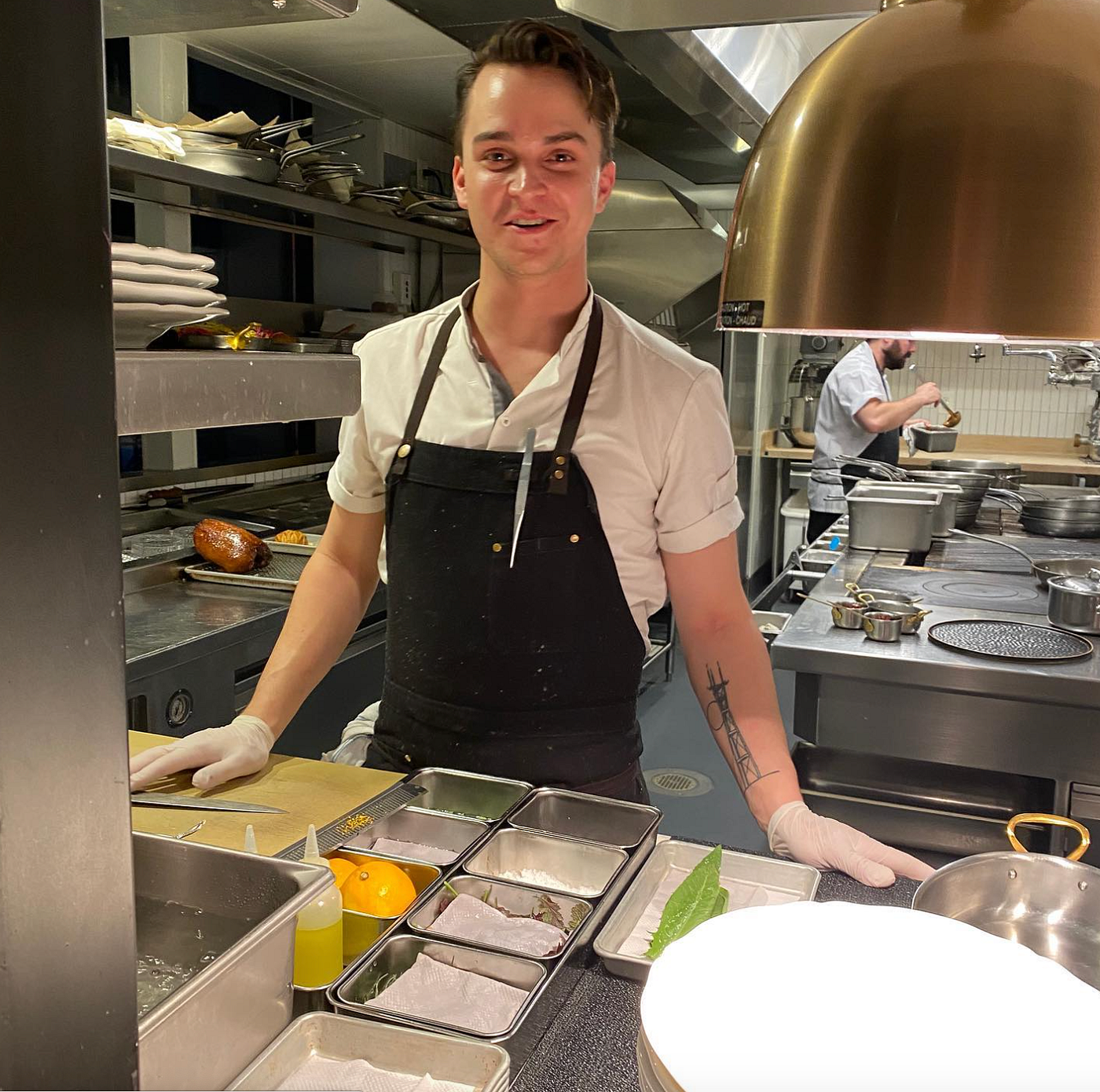
The reason I listed life experiences is because no matter how many times you read something, or how many times you hear something over the years, sometimes, you just have to experience it to really understand it.
For example, let’s take personal transformations. Certain life-changing events, such as overcoming a significant challenge, embarking on a spiritual journey, or undergoing a profound personal transformation, can be challenging to comprehend without experiencing them directly.
There was a point in my life that I weighed 323 pounds. Within a year and a half I was down to my weight now, which is 185. Journeys like this offer us a lot of room to learn many different things. It helps shape our minds in a way that gives us our unique perspective. These kinds of things can’t be taught.
Fantastic. Let’s now shift to the main part of our interview. What factors do you consider when allocating your marketing budget across different channels and tactics?
My goals for the campaign, my target audience, and what the past data shows us. Are we trying to drive more revenue? Build more brand awareness? Where are our customers in their buyer's journey? All of this matters.
For instance, if we are simply trying to drive more revenue then the potential customers we are focusing on are more toward the bottom of the funnel, ready to make a purchase. In this case it might make more sense to allocate a larger portion of your budget on a search campaign targeting keywords that show strong buying intent.
It greatly depends on our target audience though. Let’s look at those buyer personas and our typical buyer’s journey. This will help us uncover any potentially low hanging fruit. This is one of the many reasons it is so important to collect as much data as you can. It gives us great insight in situations like this.
Dig deep into the data. Look at some of your past campaigns with similar goals. Which ones performed the best? Why do you think that is? This should give us an indication of where to start with our budget allocation. Just remember to keep a constant eye on the data for this campaign and make adjustments accordingly.
In your opinion, what are some common mistakes that marketers make when managing their budgets? How can they be avoided?
There are really three things I see most often. The first is not running split tests, the second is not taking advantage of negative keywords when running search campaigns, and the third is sending all traffic to the home page.
Let’s first look at the biggest offender - no landing page. It is so common to see folks running ads and sending every bit of traffic to their home page. Your budget will go so much further if you take the time to build a landing page for each campaign you are running.
Let’s say you are a lawn care company and you are running an ad campaign for a gutter cleaning special. Wouldn’t it make more sense to send them to a page strictly about gutter cleaning with a clear call to action than to send them to your home page? Even if you do mention gutter cleaning on your home page, they are there for gutter cleaning. That’s why they clicked on the ad. Let’s give them what they want. Don’t make them click around and hope to find it.
Regarding negative keywords, I rarely see companies using any at all. I’ve taken over many ads accounts where there are no negative keywords in use at all. In fact, it’s almost always simply a bunch of broad match keywords.
Let’s stick with the same scenario. You are a lawn care company. It would make sense to have “lawn care” as a keyword, right? Do you want your ads to show up for “lawn care jobs” or “lawn care equipment”? Maybe consider adding “jobs” and “equipment” to the negative keywords. The list can go on.
Finally, not running tests. You should always have a different version of your ad running so you are constantly lowering your CPC and raising your ROAS.
When allocating your budget, how do you balance short-term marketing goals with long-term brand building initiatives?
Well, first of all, I want to point out that long-term brand building initiatives are for businesses with a larger marketing budget and not someone just starting out with digital marketing. You are going to get your most immediate ROI on the short-term goals.
Once you are in a place where you are working on brand building, you should allocate resources based on the potential return on investment for both short-term and long-term objectives. Prioritize initiatives that align with your overall brand strategy and have a balanced mix of immediate impact and long-term benefits.
You need to develop appropriate metrics to evaluate the effectiveness of your short-term marketing goals and long-term brand building initiatives. Measure and track your key performance indicators (KPIs) that align with each objective. This will help you assess the impact of your investments and make data-driven decisions in adjusting your budget allocations.
Be flexible and willing to adapt based on the evolving needs of your business, industry trends, and customer preferences. Allocate resources to initiatives that are yielding the best results and adjust or discontinue underperforming activities.
For start-ups and those with limited budgets, what tactics would you recommend to receive the highest return and the fastest initial growth?
I hinted at this in the beginning of my answer to the last question. Brand building is extremely important and should not be overlooked but when you have a limited budget it’s best to not focus on this.
When I first start working with a business, especially when they have a limited budget, I almost always begin with search campaigns - pay per click (PPC). With search ads, we can infer buyer intent according to their search and focus on those prospects that are more toward the bottom of the funnel and likely ready to make a purchase now.
This will bring us the most immediate results. Most businesses want to see results as quickly as possible. The faster we are able to show them results, the more buy-in we can get for future recommendations because we’ve gained their trust.
This isn’t to say you can’t run successful social media advertising campaigns though. Depending on your business and how well you have your buyer personas put together, you can really narrow it down with your targeting to those at the bottom of the funnel and see a great return there too. Search is always the easiest to set up in a general sense though.
How do you collaborate with other departments within your organization, such as sales or finance, to ensure alignment and maximize ROI from your marketing spend?
Communication.
First, you need to ensure that your marketing goals and objectives align with your overall business goals and objectives.
Include people from all departments to be part of the marketing planning process. Schedule regular meetings where you share updates, and encourage feedback and input from all departments. Your goal is to foster a culture of collaboration.JD Simpkins has an extensive background in sales and marketing. He’s always been interested in technology and he found coding was his true love. His background married with his new found passion for coding inevitably led him down the road of digital marketing and he’s never worked a day since then.
Encourage a collaborative culture by promoting teamwork, cross-departmental communication, and shared responsibility for business outcomes. Recognize and celebrate collaborative efforts that drive positive results.
It takes a lot of effective communication to be sure everyone is on the same page.
What tips do you have to get buy-in from the CEO and others in the C-Suite when requesting additional budget for new projects or tactics?
Have a clear plan. Be confident when presenting the plan. Focus on the key elements and don’t bog them down with the fine details but be prepared to dive into them if questions arise.
Be honest. Highlight any potential concerns or risks and show how you’ll overcome them.
Provide a well-structured financial analysis that outlines the potential return on investment. Present a realistic projection of the expected ROI, including the time frame for achieving positive results. Use metrics and benchmarks to support your projections. Use past data if it is available.
In my opinion, one of the most important things to keep in mind is seeking their input. Present this in a way where they are actively participating in the presentation and providing some ideas of their own. If they feel included and invested in the project, they’ll likely feel a sense of ownership therefore increasing the chance of gaining their buy-in.
Which marketing software in your tech stack do you feel is most worth the investment?
I’d say a robust CRM with some marketing automation built in is the best investment. I think most of the major CRMs today have at least a certain level of marketing automation built in.
With that being said, I probably have an unpopular opinion when it comes to automation. I love it and use it but it is used with caution. I think people fall in love with automation then mindlessly use it anywhere they see an opportunity. I think consumers are taking notice of that and miss that human touch. I know I do.
You’ve got to have control over your automation. You need to slow down and really examine every possible situation and account for that. I don’t know if it is where I have a background in programming that this thought process carried over from or what, but this is extremely important.
Here an automation, there an automation, everywhere an automation. Sometimes less is more. For example, it's common to trigger a certain email sequence based on a page visited on your website. If I visit your website and share my email address then find 5 emails in my inbox in the next hour, that’s obviously a situation where something was overlooked when the automations were being set up. Automation can work against you if you aren’t smart, careful, and selective about it.
Automations are great when used with care and a CRM playing the very important role it does, having some automation built in seamlessly is a great benefit.
Here is our main question: Can you please share five things marketing leaders should do to improve the ROI of their marketing efforts?
1 . Have detailed buyer personas. Take the time to set these up now and it will pay off in your marketing efforts, I promise! The more detailed you make them the better. With these in mind when you are planning your marketing campaigns, you are able to be much more targeted and guaranteed to get a higher ROI.
2 . Read the data. It is more important now than ever to be flexible in your marketing strategies and respond to what the data is telling you. With the technology and tools available to all of us today, there is no reason we can't constantly improve our ROI by making data-driven decisions. This does involve a little leg work starting out. You have to put the tools and procedures in place to collect the data, but once this is done, it's a matter of watching the data and making adjustments accordingly.
3 . Get intimate with GTM. Google Tags Manager can be a very powerful tool and work seamlessly with Google Analytics. The more familiar you are with it, the easier it will be to set tags up to fire on certain triggers. This can be pulled into analytics directly and give you a more detailed view of exactly what is happening on your site, allowing you to make the needed adjustments to improve your ROI.
4 . Regularly review and refine your buyer personas. The world we live in is always changing. Over time, you might find that the buyer personas you set up last year have changed a little. Maybe the demographic information such as age range has moved a decade forward. Perhaps some psychographic information has changed like what social platforms they frequent the most. These things can and do change every now and then so since the buyer persona plays such a huge role in our marketing efforts, you should review them periodically to make sure your targeting is still as relevant as it can be.
5 . Constantly be testing. If you ignored the four things above and ONLY followed this one, you’d still be in better shape than a lot of marketers, even some larger marketing agencies. Run A/B split tests on ad copy, creative, landing pages, CTAs, and every other aspect you can think of. This will allow us to continue to improve our ROI the entire time we are running our campaigns.
You are a person of great influence. If you could inspire a movement that would bring the most amount of good for the greatest number of people, what would that be? You never know what your idea can trigger.
I would share a time when I was once inspired as a very young man - something that has stuck with me all of my life.
My father volunteered to keep the grass at our local church mowed and trimmed so the small church didn’t have to hire a landscaping company. I was tasked with helping him.
One particular day, I had plans with some friends and my goal was to be as quick as possible with this lawn gig so I could meet up with them and do whatever it was we had planned. As we packed up, dad asked me if I’d trimmed everything that needed trimmed. I answered in the affirmative and we jumped in the vehicle.
There was parking in the back of the church (where we were) and a drive that went all the way around the property. The church sat on a large hill. We were driving around the driveway to look over the job we’d done to make sure everything looked good.
Dad noticed a spot about midway on this hill that was particularly steep and rocky - a spot the riding mower couldn’t get. It needed to be trimmed. He stopped the vehicle and pointed it out to me. The grass wasn’t super tall. It didn’t seem like a huge deal to me. Because I was in such a hurry to not miss my friends, I argued that it didn’t look that bad. We were doing this for free. Surely they wouldn’t be too upset even if they did notice it.
I remember the look of disappointment on his face as he explained to me that it didn’t matter what we were or weren’t getting paid for doing it. People knew WE were doing it. Our names were attached to it. How you do something in life reflects on your character. Did we want people to think we were ok with mediocrity? That we cut corners sometimes? Or did we want people to know that if we said we were going to do something, that we WOULD do it to the best of our abilities? That they could COUNT ON US?
If I could tell that story to enough people to inspire something in them like my dad inspired in me that day, I’d be very happy with that. I feel like in today’s fast-paced world, a lot of corners are cut and people don’t truly take pride in what they do. It’s easy to get caught up in just doing more so you can earn more money.
I think it’s much easier to do the best job you possibly can, slow down and really add value to whatever it is you are doing, and show people that they can count on you for a great job. In business, the customers you do have will appreciate you more, stay with you longer, and refer you more business because they are so pleased.
Do the math. Doesn’t THAT provide the best ROI? And, it just feels good!
How can our readers best continue to follow your work online?
I run a marketing agency called Tech Touch Marketing (https://techtouchmarketing.com). You can always reach me there or if you want a more personal look at what is going on in my life, my personal site is JD Simpkins (https://jdsimpkins.com)
Thank you for these fantastic insights. We greatly appreciate the time you spent on this.