
When I first told him that I wanted to quit my six-figure salary corporate job, we were both scared of the risk. I had a lot of wide-eyed optimism that I would just “figure it out” as I got started, but he really pushed me to make it official.
Entrepreneurship is often celebrated for its victories, but behind many successful businesses are years of struggle, setbacks, risk, rejection, uncertainty, and sacrifice. Great entrepreneurs are not only defined by their ideas, but by how they respond when things go wrong. What helps founders keep going when they face financial pressure, failed launches, difficult decisions, personal challenges, or moments when giving up seems easier? As part of this series, I had the pleasure of interviewing Rachel Erickson.
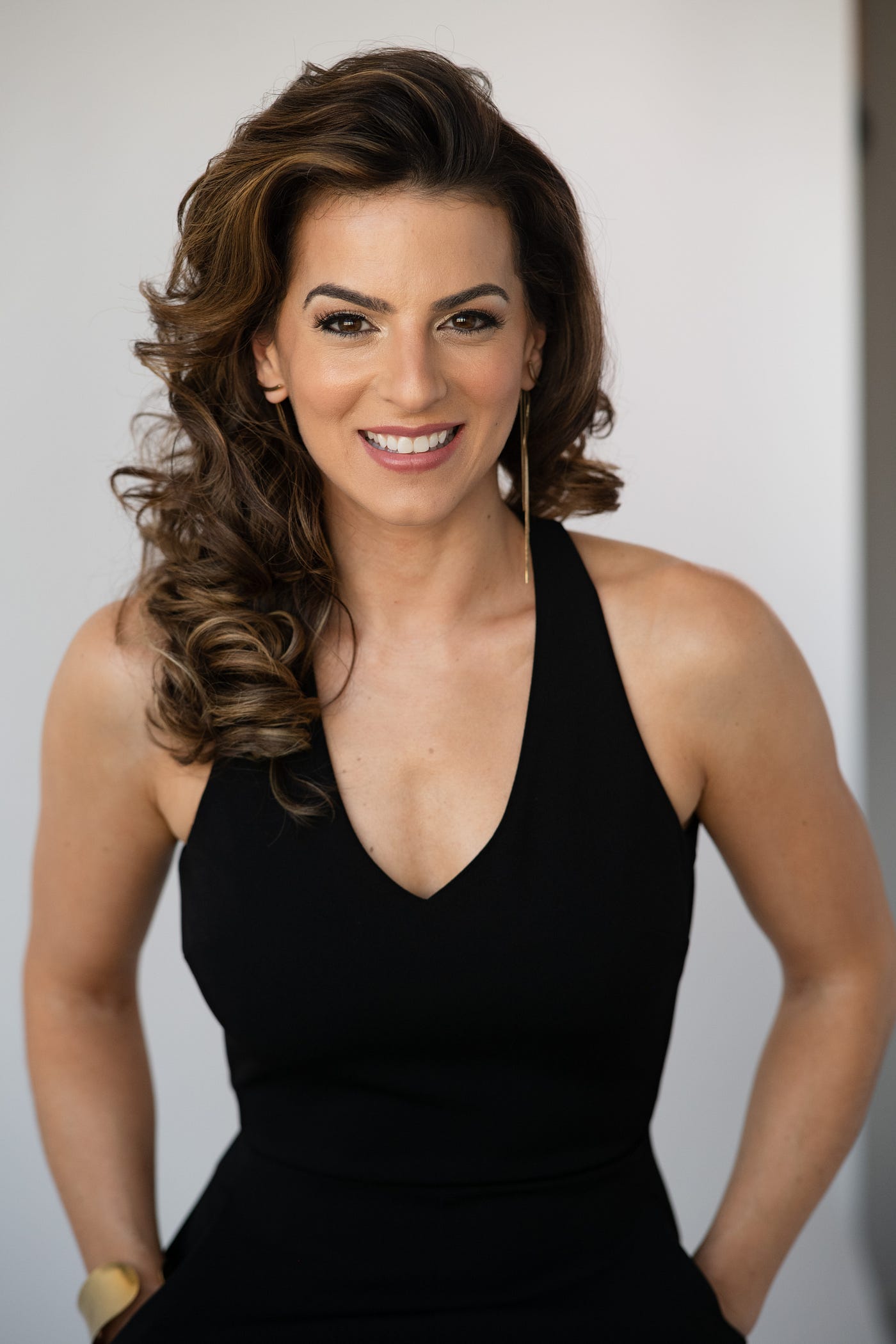
For over two decades, Rachel Erickson has been the epitome of expertise in the world of apparel development. A Certified Project Management Professional (PMP) with a distinguished career encompassing a multitude of roles, she possesses an unparalleled understanding of this intricate industry.
Rachel's journey began within the esteemed ranks of leading American apparel brands. Her keen eye for detail and unwavering dedication to quality propelled her through diverse positions, meticulously honing her skillset with each new challenge. This wealth of experience allows her to navigate the complexities of apparel production with unparalleled finesse, ensuring seamlessness even for the most intricate designs.
In 2021, Rachel embarked on a visionary quest, establishing Unmarked Street, a bespoke consultancy dedicated to empowering a select clientele of apparel brands. Here, she leverages her extensive network and industry prowess to provide a comprehensive suite of services, encompassing development, tech design, business tactics, project management, and insightful expert guidance.
Driven by a passion for mentorship, Rachel extends her knowledge beyond the walls of Unmarked Street. Through her captivating vlog, blogs, and podcast, she graciously shares invaluable insights, fostering a vibrant and empowered community within the apparel development landscape.
Thank you so much for joining us in this interview series! Before we begin, can you please introduce yourself? Our readers would love to “get to know you” a bit better. Can you tell us a bit about your ‘backstory’ and how you got started?
My story starts with a love of sewing and making my own clothes from a very young age. I’ve been sewing since I was seven years old, and making my own outfits since high school. After getting my Fashion Design degree from the University of Cincinnati’s DAAP program in 2007, I started my career as a women’s outerwear technical designer at Abercrombie & Fitch. This was during the brand’s peak and I had the opportunity to learn from some of the best in the industry while I was there. For the next 17 years, I worked my way up the corporate ladder at multiple companies, learning about all product categories and taking on a variety of roles. But in 2021, I found myself falling physically ill from stress and burnout from years at the corporate grind. That was when I decided to take a huge risk and start my consulting agency, Unmarked Street, where we love to offer our talent and expertise to lower the barrier of entry in this super competitive industry. Where most small and emerging brands never had access to people like me and my team before, we’re now bridging that gap.
None of us are able to achieve success without some help along the way. Is there a particular person who you are grateful towards who helped get you to where you are? Can you share a story?
My husband has been the driving force behind everything I’ve been able to build at Unmarked Street. He was the person who got me through physical setbacks in 2021, encouraged me to build a solid business plan and foundation before starting my company, and continues to be my biggest supporter. When I first told him that I wanted to quit my six-figure salary corporate job, we were both scared of the risk. I had a lot of wide-eyed optimism that I would just “figure it out” as I got started, but he really pushed me to make it official. I found a business plan template online at SCORE.org and he went through it with me page by page until it was clear how my business was going to succeed in its first few years. Without his foresight into how important that would be for me, I don’t know how far I really would have made it.
Ok, fantastic. Let’s now shift to the main focus of our interview. Entrepreneurship often looks very different from the outside than it feels on the inside. Can you share one of the most difficult periods you faced as an entrepreneur, and what helped you keep moving forward when giving up might have seemed easier?
As I started building out our client roster at Unmarked Street, it was becoming really apparent to me that the new brand owners in the space were at a complete loss of knowledge of how the biggest brands in our industry actually function. It had never really occurred to me before then, but corporate brands thrive and grow because they command and keep huge percentages of the industry’s market share. The processes and standards that they set inside their brands are kept so secretive to protect their growth plans. If they were out here sharing their “secret sauce” with smaller brands, it would be completely counterproductive. So I started teaching about what I knew, and it led us down a really interesting and unique path. I now have the genuine pleasure of working with, mentoring, coaching and teaching the next generation of apparel brand founders through our annual membership, The Apparel Founder’s Board. But we had to take a step back from the work we were doing at Unmarked Street to build that out. I knew this was so needed, and it’s now so rewarding! But it was incredibly scary to start a second section of our company to make it happen. What kept me moving forward was the success that we were seeing with our members. One saved over $50,000 in her first 60 days of the membership. Another had been trying to launch her brand for 3 years and did it within 6 months after joining our community. A third is ramping to her first million-dollar year with our guidance. Those are the kinds of things that make the risk and the long days so worth it.
Setbacks can shake even the most confident entrepreneur. When something you believed in fails, whether it is a launch, partnership, investment, hire, or business strategy, how do you process that disappointment and decide what to do next?
We’ve had plenty of setbacks at Unmarked Street, but we love to treat them as lessons learned. For example, when we host a week-long workshop and only 3 people attend, we don’t allow ourselves to get too frustrated. Instead, we will still host the full masterclass, record it and turn it into another resource for our Apparel Founder’s Board Members. We then also use that information to understand what our community wants (and more importantly) doesn’t want from us. So next time, we try it as an on-demand webinar. We love to test things like this until something works, and then we rinse and repeat. We also run into a lot of setbacks with our Unmarked Street clients. Sometimes, we’ll get into a contract and realize that it’s not the right fit for our team. In most cases like this, the client is disrespectful or undervalues our work. We’ve learned how to walk away from those situations to uphold our values, instead of just thinking about the money or the profits we miss out on when we cancel a contract. And almost every time this happens, something bigger and better comes along for us. Setbacks are all about perspective to me. We may allow ourselves to feel disappointed for a bit, but then we move on.
Financial pressure and uncertainty are realities for many founders. Have you ever faced a moment when the future of your business felt genuinely uncertain? What did that experience teach you about making difficult decisions under pressure?
Yes, almost every quarter since 2021 have I wondered if we should just shut it all down! Running a business is so hard, and profitability is one of the most difficult things. Earlier this year, we found ourselves in a sticky situation where we’d just hired on some more help at Unmarked Street, but then almost immediately realized that we were going to need to “break up” with our most profitable client. He was being incredibly disrespectful to me and my team, and I didn’t have cash on hand to pay the team that month. In tears, I had to tell them that I was doing everything I could to rectify the situation, but I would have to delay their paychecks for a couple of weeks. As a business owner, that is the worst feeling. But I have the greatest team, and they were all incredibly supportive and understanding. I’ve definitely learned that having the right people in the room with you is the key to getting through difficult situations under pressure. I can’t imagine what my business or my life would be like without the incredible team that I’ve built.
Entrepreneurship can take a personal toll as well as a professional one. How have you learned to protect your energy, relationships, confidence, and sense of perspective during particularly demanding seasons of building a business?
Entrepreneurship can expose a lot of painful relationships in your life. While it can also be so rewarding to meet new people, learn from other business owners who have come before you and gain their unwavering support, I’ve also found that the people you thought would be your biggest cheerleaders are often the ones who disappoint you the most. People I would have considered to be good friends and even family members have distanced themselves since I started my business, and that has definitely taken a personal toll on me. But I also see now that if people aren’t your biggest cheerleaders, then they don’t deserve a spot at your table. Your energy and your time is so precious when you’re diving into entrepreneurship. You can’t give it away to people who won’t do the same for you.
Looking back, is there an obstacle or failure that felt devastating at the time but ultimately made you, or your business, stronger? How did that experience change the way you approach challenges today?
One of the best pieces of advice that I was given when I first started Unmarked Street was to hire before I thought I was ready. And the first roles that I brought onto the team were marketing and social media roles. A few times, I thought we had found teams and people who would take us to the next level as a brand. I put a lot of faith in them, and eventually had to come to terms with the fact that they weren’t aligned with the high standards of reliability and professionalism that we uphold at Unmarked Street. It’s devastating to feel like you’re going in the wrong direction, especially when it happens multiple times. And the biggest thing that I learned from that experience was that I needed to learn how to lead these people better. I had to enforce our company values. I also had to know a bit about their roles myself, to know if they were doing a good job! So I dove into marketing and social media myself for a while before hiring the people we now have on the team. I can lead them so much better now, and set them up for real success.
Ok super. Here is the main question of our interview. Based on your experience and success, what are “Five Things Entrepreneurs Need to Fight Through Obstacles and Keep Moving Forward”? Please share a story or an example for each.
1 . Fight Through the Fear of Leaving What’s Comfortable: Walking away from a corporate career that was helping to support my family and pay our bills was a huge risk for me to take. And after 5 years of running Unmarked Street as its CEO, I’m still working toward the kind of profits, owner’s pay and lifestyle that I’d dreamed of creating by becoming an entrepreneur. Building something from scratch is not easy. It takes time, dedication and more energy than you’re expecting. But staying in the “comfortable” space of corporate life was literally making me sick. The risk is where I’m determined to find the reward, and I know it will come. It’s just a matter of time and persistence. Sometimes, moving forward means having the courage to walk away from something that’s already working. It’s also having the courage to know when you can’t keep telling yourself it’s working when it’s not.
2 . Fight Through the Feeling that You’re Not Qualified Yet: Imposter syndrome is so real! Entrepreneurship will constantly put you in situations where you feel like you don’t know enough. But the only real way to learn is to jump in and do it. If you wait to know everything before you get started, you’ll wait forever. You have to be willing to learn, to admit what you don’t know, and to ask for help when you need it. You will figure it out somehow, I promise.
3 . Fight through the Wrong Turns Without Letting them Define You: You will make mistakes. Failure is basically the entire game. When you do something incorrectly, as long as you learn from it, you now know how to do it better the next time. This will come at you in so many different ways. You’ll hire the wrong people and have to fire them. You’ll create products that nobody wants. You’ll spend money on something that returns nothing back to you. You’ll test marketing concepts, ideas and strategies that will flop. But every single one of these wrong turns will give you the map to get back on track and move forward in the right direction. If you allow these difficult moments to define you, you will continue to stand still. Keep moving.
4 . Fight Through the Seasons When the Numbers Aren’t Where You Want Them to Be: Businesses don’t become successful overnight. The kind of money and profits that you want to see at your company could take years to build up. I’ll be the first to admit that, as you’re growing and re-investing almost every dollar back into your business, cash can be incredibly tight. I believe it’s essential to know your financials inside and out while going through these phases, keeping an eye on cashflow and making tough decisions to cut costs whenever possible. But if you give up when you see numbers in the red, you probably won’t be in business for very long.
5 . Fight Through the Noise and Protect Your Belief in Yourself: Very few people are going to understand what you’re building when you step into being an entrepreneur. So many people that you’ve known and loved will question you and some might not support your new endeavor at all. But nobody knows your company and your vision the way that you do. Start to share your dream with people who are excited about it as you are. I know that my team, my husband and many friends that I’ve made along the way of growing this company remind me every day why I started Unmarked Street. The people who don’t get it or don’t respect it can have their opinions, but I don’t have to internalize it. I choose to continue believing in myself and my mission.
You are a person of great influence. If you could start a movement that would bring the most amount of good to the most amount of people, what would that be? You never know what your idea can trigger. :-)
There is a huge level of responsibility on our shoulders as apparel industry professionals in today’s world. As the second-largest industry polluting our planet with the overproduction of garments and waste, it’s up to us to push for change and new ways of working. If I could start a movement, I would somehow reach the consumers of the world and encourage them to stop buying cheap, disposable products that they can only wear a few times before they throw it away. I would ask them to consider the cost per wear of a garment so they could understand that 100 wears out of a $100 shirt is actually cheaper than 3 wears out of a $10 shirt. I would ask them to consider supporting apparel founders and brands who are putting the time and effort into creating long-lasting, sustainable solutions for their closets. And then I would ask all of those founders to do less. Create less options. Produce less units. Stop the overproduction of goods, so that we have less waste on this side of the table as well. It’s going to take all of us to make a truly sustainable change for our planet and for the next generations, but that is the movement that I would love to start.
How can our readers further follow your work online?
We hang out a lot on Instagram @unmarkedstreet and @businessofapparel. I also host a weekly podcast called, “The Business of Apparel” that you can stream from your favorite listening platform or from YouTube. Additionally, we’d love for you to come visit our websites: thebusinessofapparel.com and unmarkedstreet.com. We want to support and help every single apparel founder who is searching for a network, a community and a way to scale their company with more ease.
This was very inspiring. Thank you so much for the time you spent with this!
About The Interviewer: Tavares Beverly ( www.tavaresbeverly.com ) is the Founder and CEO of Beverly Boy Productions, a national video production company that has helped organizations tell their stories through video for more than two decades. Over the course of his career, he has worked with everyone from Fortune 500 executives and healthcare professionals to politicians, nonprofit leaders, educators, and artists, gaining a unique perspective on the role communication plays in leadership, business, and human connection.
A frequent contributor on topics including communication, entrepreneurship, leadership, and personal development, Tavares believes that the ability to communicate effectively is one of the most valuable skills a person can develop. His work is driven by a passion for helping organizations connect with their audiences and helping individuals unlock their potential through mentorship, perseverance, and meaningful relationships.
To learn more, connect with Tavares on LinkedIn or visit www.BeverlyBoy.com . If you’re interested in using the power of storytelling and communication to grow your organization, strengthen your brand, or inspire your audience, he welcomes the opportunity to connect.