I loved the energy of building something, working toward ambitious goals, and seeing firsthand how businesses grow.
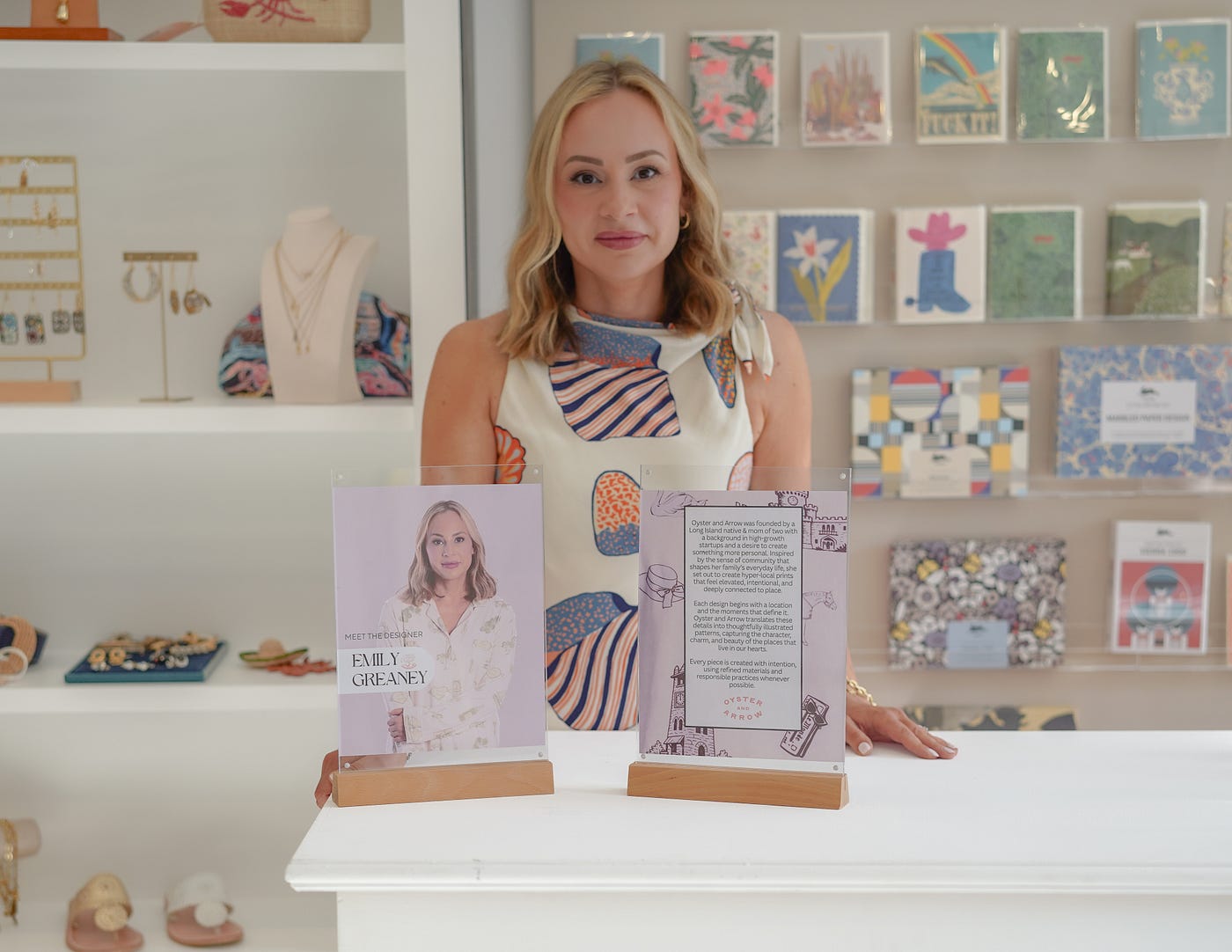
As a part of this series, we had the pleasure to interview Emily Greaney.
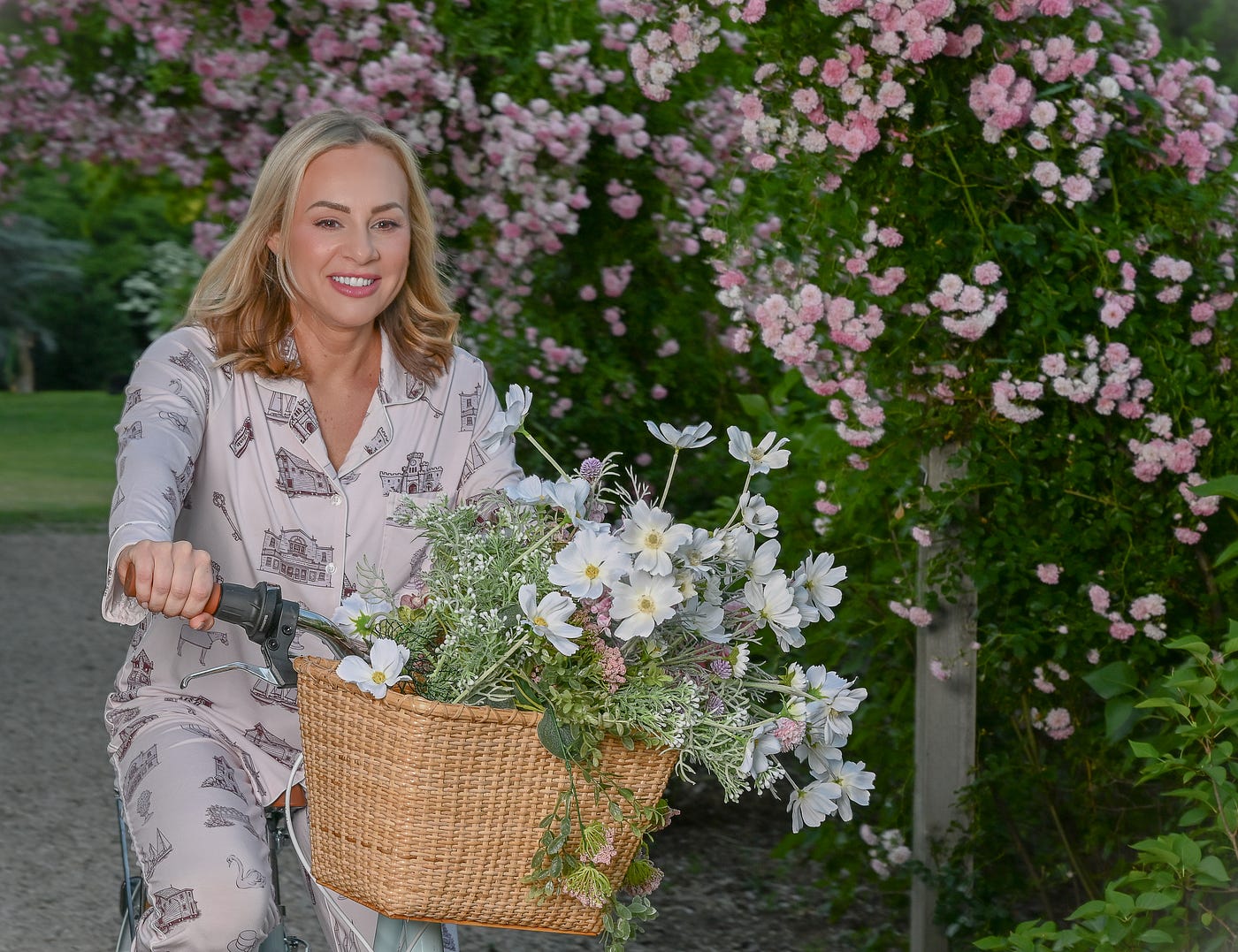
Emily Greaney is the founder and designer behind Oyster and Arrow, a lifestyle brand creating destination-inspired pajamas, home textiles, and gifts that celebrate the places people love. After a successful career in sales and customer success at high-growth startups, Emily followed her entrepreneurial passion and launched Oyster and Arrow in 2026. What began as a love letter to her own community has grown into a collection of hand-illustrated designs celebrating beloved destinations along the East Coast, transforming meaningful places and cherished memories into beautiful, everyday keepsakes.
Thank you so much for joining us in this interview series! Can you tell us a story about what brought you to this specific career path?
Thank you for having me and allowing me to share my story with you! My career started in a completely different world. Post-graduation, I began working as an account executive at fast-paced startups. I loved the energy of building something, working toward ambitious goals, and seeing firsthand how businesses grow. However, I always had a creative side that wasn’t being fulfilled, and I knew that eventually I wanted to build something of my own.
The idea for Oyster and Arrow came from my love of the places that hold special meaning in our lives. Having grown up on Long Island and eventually moving back to start my own family, I found myself appreciating the history, beauty, and nostalgia woven into our local communities in a whole new way. I wanted to capture what makes these places so special in a way that felt both beautiful and personal.
I started with a toile print celebrating my hometown of Huntington and the neighboring village of Cold Spring Harbor, featuring recognizable landmarks and little details that locals would instantly appreciate. I imagined someone opening a pair of pajamas and discovering their favorite lighthouse, a building they pass every day, or a place that brings back memories of growing up. I wanted the designs to evoke that immediate feeling of familiarity and connection.
That first design became our Three Harbors collection, and Oyster and Arrow was born. The response was almost immediate. People recognized the landmarks, connected with the memories behind them, and fell in love with the idea. What started as one creative project quickly evolved into a brand built around the simple concept of creating love letters to the places people cherish.
I never imagined my background in sales would lead me into apparel design and manufacturing, but looking back, I can see how much those years prepared me for entrepreneurship. I remember colleagues telling me, “If you can learn how to sell, you can take that skill and do just about anything.” At the time, I understood the sentiment, but I couldn’t quite picture what that would look like for me. Now, building Oyster and Arrow from the ground up, I see exactly what they meant. Entrepreneurship comes down to believing in what you’re creating, communicating that vision, building relationships, and convincing others to believe in it too. It’s been incredibly rewarding to take the skills I developed helping other companies grow and finally put them toward building something that’s mine.
Can you tell us a story about the hard times that you faced when you first started your journey?
Essentially, I’ve been learning an entirely new industry from scratch while maintaining a full-time career and raising two young children. Fabric composition, international shipping, production timelines, and quality control are all very new to me.
When you’re starting a product-based business, you quickly discover that creating something beautiful is only a small part of the equation. You also have to figure out how to manufacture it consistently, price it profitably, get it into customers’ hands on time, and actually convince people to buy it. I’ve faced production delays, manufacturing challenges, unexpected expenses, and plenty of moments when I’ve questioned whether I was making the right decisions. There have been countless nights spent communicating with factories overseas long after my children have gone to bed, trying to resolve problems I didn’t even know existed a few hours earlier.
Perhaps one of the hardest lessons has been accepting that hard work doesn’t automatically translate into immediate profitability. You can bringing in revenue, building relationships with retailers, and receiving wonderful customer feedback while still reinvesting everything back into the business. It’s a strange feeling to see something you’ve created gaining momentum while simultaneously realizing how much work lies ahead.
I’ve also had to learn to give myself some grace. When you’re balancing motherhood, a career, and a growing business, there simply aren’t enough hours in the day to do everything perfectly. I’m naturally someone who likes to move quickly and check things off my list, but this experience has taught me patience in a way nothing else has. I’m learning that building something meaningful takes time, and that progress doesn’t always look the way you imagined it would.
Where did you get the drive to continue even though things were so hard?
A lot of my drive comes from my kids and the example I want to set for them. I want them to grow up seeing that it’s possible to pursue something you’re passionate about, even when it’s difficult, the timing isn’t perfect, or the outcome isn’t guaranteed. I hope they’ll look back one day and see that their mom took a chance on herself and worked hard to build something she believed in.
I also genuinely love what I’m building. There’s something incredibly fulfilling about taking an idea that once existed only in your imagination and turning it into a physical product that someone chooses to bring into their home. Seeing people connect with something I’ve created is a feeling I don’t think I’ll ever get tired of.
And honestly, the moments that keep me going are often the smallest ones. It’s receiving a message from someone who recognizes a landmark from their hometown on our pajamas, seeing a retailer place a reorder, or hearing that someone purchased a set as a meaningful gift for a loved one.
Just recently, I received an email from a woman I had met the day before at an in-person pop-up event. She and her friend had purchased matching pajamas, and she told me she’d never worn bamboo pajamas before. After sleeping in them that night, she felt compelled to email me the very next morning. She explained that, for the first time in years, she had slept through the night without waking up because she was too hot or too cold. She went on to tell me how much she loved the comfort, the fabric, and the design, and that she couldn’t wait to purchase more and share the brand with her friends. It was such a simple gesture, but it genuinely made my day. This woman had taken time out of her morning, completely unprompted, just to tell me that something I created had made a difference in her life. When you’re spending so much time behind the scenes managing production, inventory, shipping, and everything else that comes with running a business, it’s easy to lose sight of the actual people on the other side of those orders.
Moments like that bring everything back into perspective. They remind me that I’m not just building a business or selling a product. I’m creating something that people genuinely enjoy, connect with, and want to share with others. And that makes all the difficult days worth it.
So, how are things going today? How did grit and resilience lead to your eventual success?
Oyster and Arrow officially launched in 2026, so we’re still very much in the early stages, but the response has been incredibly encouraging.
Within our first six months, we’ve grown to 26 retail partners, and expanded beyond Long Island into coastal communities along the East Coast. To see something that started as an idea in my head turn into a growing business with customers and retail partners who genuinely believe in the brand has been incredibly rewarding.
One of the most exciting parts has been watching our wholesale business evolve. What started with me personally approaching local boutiques and introducing them to Oyster and Arrow has grown into retailers reaching out to me about creating exclusive designs for their own communities. I’m particularly proud that we’ve been able to build both our direct-to-consumer business and a network of independent retail partners who connect with our vision.
But I think what has gotten me this far, more than anything, is my ability to be relentless. I’ve always been someone who, when I set my mind to something, finds a way to make it happen. If one approach doesn’t work, I’ll try another. If I don’t hear back from someone, I’ll follow up. If a door closes, I’ll find another one to knock on. I don’t take rejection personally, and I don’t let small setbacks derail me. I just keep showing up and doing the work.
Successful entrepreneurs being able to drown out the noise and stay focused on what matters. There will always be people who don’t understand your vision, opportunities that don’t work out, and unexpected challenges that make you question your next move. I’ve learned to take constructive feedback seriously without allowing negativity or outside opinions to distract me from what I’m trying to build.
I also believe deeply in the power of knowing your “why.” For me, it’s about creating something meaningful, and building a future for my family. When things get difficult, coming back to that bigger purpose helps me put the everyday frustrations into perspective.
Of course, we’re still working toward profitability, refining our operations, and figuring out how to build a business that’s sustainable for the long term. I don’t consider success a final destination, and I certainly don’t think we’ve arrived. There’s still so much I want to accomplish.
But I do believe that grit, consistency, and the willingness to keep adapting give you an enormous advantage. You have to be willing to show up on the days when you’re excited and inspired, but also on the days when you’re exhausted, discouraged, or unsure of your next step.
I may not know exactly what every stage of this journey will look like, but I know I’ll keep finding ways to move forward. For me, that’s what resilience really means.
Can you share a story about the funniest mistake you made when you were first starting? Can you tell us what lesson you learned from that?
When I first started, I imagined doing this could be relatively straightforward. You create a beautiful print, choose a comfortable fabric, send the specifications to a manufacturer, and they produce the pajamas.
I quickly learned that there are approximately a thousand decisions hiding inside that seemingly simple process. Everything from the scale of the print to the placement of the buttons, the rise of the pants, the thickness of the fabric, the piping, and even how the garment is folded can dramatically change the finished product. And if you don’t explicitly communicate every little detail, there’s a good chance it won’t turn out quite the way you imagined.
Some days I have to laugh at what my life looks like now. I spend my days on the phone for my full-time job, then transition into caring for my two young children, only to find myself on the phone with factories in China at 10:30 p.m., passionately discussing fractions of inches on pajama waistbands. Let’s just say it’s a contrast, and certainly not what I envisioned when I first started this.
But the biggest lesson has been that the smallest details often make the biggest difference, especially when you’re putting your name on a product. I’ve learned never to assume that something is obvious just because it seems obvious to me. Clear communication, detailed specifications, and confirming absolutely everything are essential.
I’ve always been someone who finds humor in just about everything, and I genuinely think it’s one of the things that gets me through the chaos. Some days all you can do is laugh at the absurdity of it all, and I’ve never been one to take myself too seriously. Life is hard enough as it is, and quite frankly, I can’t imagine getting through it without a good sense of humor.
What do you think makes your company stand out? Can you share a story?
I think what makes Oyster and Arrow different is that we’re not simply selling pajamas. We’re selling a connection to a place.
Every one of our destination-inspired prints is designed as a love letter to a particular community. Rather than relying on generic coastal imagery, we thoughtfully incorporate local landmarks, architecture, and recognizable details that make each place special. The idea is that someone can look at one of our prints and immediately recognize a little piece of home.
One of my favorite parts of building this business has been hearing the stories our customers share with me. I’ve had people tell me about growing up in the towns we feature, spending their childhood summers there, or purchasing pajamas as a meaningful gift for someone who has since moved away.
One customer shared that Caumsett State Park, which is featured in our Three Harbors print, holds an incredibly special place in her heart. Her grandfather grew up on the estate and, until his passing last December, was the last surviving employee who had worked there. To her, that little illustration isn’t simply a recognizable landmark. It’s a connection to her grandfather and her family’s history.
Another customer told me that she had gotten married at one of the landmarks featured in our print, her sister and brother-in-law work at another, and she had her engagement photos taken at a third. I couldn’t believe how many meaningful moments from one person’s life were captured in a single design! Those are the stories that make this business so special to me. What might look like a beautiful toile print to one person can represent an entire lifetime of memories to someone else. Everyone sees something a little different depending on their own experiences and connections to a place.
I love that something as simple as a pair of pajamas can tell someone’s story, remind them of the people and places they love, and make them feel connected to home. That’s really the heart of Oyster and Arrow, and it’s what I hope will always set us apart.
Which tips would you recommend to your colleagues in your industry to help them thrive and not “burn out”?
I think one of the biggest lessons I’ve learned is that just because you can do everything doesn’t mean you should. When I first started doing this, I was the designer, salesperson, customer service representative, operations manager, accountant, marketing department, and occasionally the warehouse staff, too. When you’re someone who’s used to figuring things out and getting things done, it’s easy to fall into the trap of believing you need to handle everything yourself.
But I’ve learned that being capable of doing something doesn’t necessarily mean it’s the best use of your time. One of the best decisions I’ve made recently was hiring a social media coordinator to help turn the content I create into finished videos and posts. Social media is such an important part of growing a brand, but it’s also incredibly time-consuming. I was spending hours filming, editing, writing captions, and trying to keep up with the constant demand for content. Now, I can focus on other tasks while someone else posts the necessary content to continue growing. It’s made an enormous difference, not just in my productivity, but in how much more enjoyable the process has become.
I’d also encourage other founders to learn the difference between being busy and actually moving the business forward. You can spend an entire day answering emails, solving little problems, and checking things off your to-do list, only to realize you haven’t done a single thing that will meaningfully grow your company. I’m constantly reminding myself to prioritize the activities that actually move the needle.
Setting boundaries is also probably the most important thing. Between my full-time career, Oyster and Arrow, and raising two young children, there are days when it feels like every minute is accounted for. It’s incredibly easy to convince yourself that you just need to work a little harder or stay up a little later to get everything done. But the reality is, the to-do list will never be finished.
I’ve had to remind myself that I’m building this business to create a life I love, not a life where I’m constantly working. I want to be successful, but I also want to be present for my children, spend time with my family, and actually enjoy what I’m creating along the way. I certainly haven’t mastered that balance yet, but I’m learning that protecting your time and energy is just as important as growing your business.
None of us are able to achieve success without some help along the way. Is there a particular person who you are grateful towards who helped get you to where you are? Can you share a story?
One thing entrepreneurship has taught me is that even when you’re the sole founder of a business, you’re never truly building it alone. I’ve been incredibly fortunate to have people in my life who have shaped who I am, believed in what I’m building, and supported me along the way.
I have to start with my parents, because I think so much of who I am as a person and an entrepreneur comes from them. My mom is, without a doubt, the most creative person I know. She’s an incredibly talented quilter and has always had this amazing ability to envision something beautiful and bring it to life with her own two hands. Growing up around that creativity, I think I developed an appreciation for design and making things long before I ever imagined starting this.
My late father, on the other hand, was one of the hardest-working people I’ve ever known. He started his career as a Nassau County police officer and worked his way up through the ranks, earning promotion after promotion until he became an Inspector. He passed away in 2009, but the example he set has stayed with me throughout my life. He had an incredible work ethic, but what I remember just as much was how naturally he connected with people. He could strike up a conversation with just about anyone, and he always approached people with such warmth, positivity, and genuine friendliness. I admired that so much growing up, and I like to think some of it rubbed off on me. Looking back, I can see how much of my own determination, love of connecting with people, and approach to business came from watching him.
I’m also incredibly grateful for my husband, who has been so supportive as I’ve worked to get Oyster and Arrow off the ground. Building a business while maintaining a full-time career and raising two young children requires a tremendous amount of flexibility, patience, and teamwork. There have been countless evenings and weekends spent packing orders, preparing for events, working on designs, or dealing with manufacturing issues. Having a partner who understands how much this means to me and supports me through the chaos has made all the difference.
And professionally, I’ll always be grateful to my retailers, especially the ones who worked with me early-on before I had numbers or any sort of following to back me up. Lisa Salzer, the founder of Lulu Frost, was the very first retailer to carry Oyster and Arrow. Lisa believed in my vision after seeing just one sample. At that point, I was still so new to the industry and figuring out so much as I went. Having someone with her experience and eye for design see the potential in what I had created meant more to me than she probably realized. That first retail partnership gave me a tremendous amount of confidence and helped me believe that other retailers might see the same potential in the brand.
I think when you’re building something from scratch, it’s easy to focus on all the things you’ve accomplished through your own hard work. But the truth is, so much of what I’ve been able to do is rooted in the people who shaped me and those who continue to believe in me. I feel incredibly lucky to have had both.
How have you used your success to bring goodness to the world?
I believe that business can create positive change in small, meaningful ways. I believe that business can create positive change in small, meaningful ways, and I hope that as Oyster and Arrow grows, so does our ability to make a difference.
One of my greatest joys in building this brand has been celebrating the communities that make our coastal towns so special. Our designs highlight local landmarks, history, and traditions, and I love the idea that we’re helping people feel more connected to the places that have shaped their lives. There’s something really meaningful about preserving those little pieces of local history and nostalgia in a way that people can enjoy and share with others.
I’m also incredibly passionate about supporting independent boutiques and small businesses. So many of our retail partners are locally owned shops that are deeply woven into the fabric of their communities. By creating destination-specific products, we’re able to offer these retailers something unique and personal that their customers can’t simply find at a major department store. I love knowing that as Oyster and Arrow grows, we’re also building relationships with and hopefully contributing to the success of other small businesses.
On a more personal level, I hope that sharing my journey encourages other women, especially mothers, to pursue their entrepreneurial ambitions. I think it’s easy to convince yourself that the timing isn’t right, that you don’t have enough experience, or that you need to have everything figured out before you can take the leap. I certainly didn’t have all the answers when I started, and I still don’t! I’m building this business while raising two young children and maintaining a full-time career, and although it’s far from easy, it’s shown me that you don’t necessarily need the perfect circumstances to start pursuing something you believe in. You just have to be willing to learn, make mistakes, and keep going. We have AI now. You can figure out how to do absolutely everything if you set your mind to it.
If my experience encourages even one woman to finally pursue an idea she’s been sitting on, or reminds someone that it’s never too late to try something completely new, I would consider that a pretty wonderful accomplishment.
What are your “5 things I wish someone told me before I started leading my company” and why? Please share a story or example for each.
1. Revenue and profitability are two very different things.
This has probably been one of my biggest lessons in entrepreneurship. When I first started Oyster and Arrow, I was understandably excited about every sale and new wholesale account. Watching revenue grow felt like confirmation that the business was working, and in many ways, it was! But I quickly learned that revenue only tells part of the story. Between manufacturing costs, international shipping, customs, packaging, marketing, and wholesale margins, there are so many expenses that go into getting a physical product into a customer’s hands. I’ve had orders that looked fantastic on paper until I sat down and accounted for every expense associated with fulfilling them. It’s been a huge learning experience, especially because my background is in sales, where I was always focused on growing revenue. Now, as a business owner, I’ve had to completely shift my mindset from simply generating sales to understanding what those sales actually mean for the bottom line. I wish someone had emphasized from day one that knowing your numbers is every bit as important as creating a product people love. You can have a wonderful brand and growing demand, but if you don’t understand your margins, you’re going to have a hard time building a sustainable business.
2. Finding the right manufacturing partner is one of the most important decisions you’ll make.
When you’re creating a physical product, you’re placing an enormous amount of trust in your manufacturer, and I don’t think I fully appreciated just how important that relationship would be when I started. I’ve learned firsthand how much production delays, communication challenges, and inconsistencies can impact a small business. When you’re working with factories overseas, there’s also a time difference, language barriers, and a lot of room for things to get lost in translation. I’ve had situations where something I thought was clearly communicated was interpreted differently, or a production timeline shifted and suddenly I was scrambling to manage expectations with customers and retailers. One of my biggest lessons has been to document absolutely everything, confirm every detail, and never assume that something is understood just because you’ve discussed it once. I’ve also learned how important it is to have backup options and not become completely dependent on a single supplier. At the end of the day, your manufacturing partner plays an enormous role in your brand’s reputation. You can create the most beautiful product in the world, but if you can’t deliver it consistently and on time, you’re going to have a difficult time growing.
3. You don’t need to launch every idea you have.
This one is particularly difficult for me because I genuinely love the creative side of this business. I could spend all day dreaming up new destinations, developing prints, and imagining different products to incorporate them into. Once you start building a brand, it’s incredibly tempting to keep expanding. You think of another town that would make a beautiful print, a new product category, or a different colorway, and suddenly you’ve convinced yourself that you need to do it all. But I’ve learned that every new idea comes with a cost. New products require development, inventory, marketing, and, perhaps most importantly, your time and attention. In the beginning, I was so excited about all the possibilities for Oyster and Arrow that I wanted to explore everything. Now, I’m learning to be much more intentional about where I invest my resources. Sometimes the smartest thing you can do is focus on what’s already working. If customers love a particular pajama style or destination, there’s tremendous value in building on that success rather than constantly chasing the next new thing. I’ve had to remind myself that just because an idea is good doesn’t mean it’s a good idea right now. Learning to say “not yet” has become just as important as knowing when to say yes.
4. Relationships will open doors that marketing dollars can’t.
My background in sales has undoubtedly been one of my greatest advantages as a founder, and this is something I’ve believed in since day one. I’ve always been someone who enjoys connecting with people, building relationships, and figuring out how to create opportunities. When I started Oyster and Arrow, I knew I wanted to take a personal approach to growing our wholesale business rather than simply sending out generic pitches and hoping for the best. I’ve spent time getting to know boutique owners, learning about their customers, and finding ways to create products that feel special to their communities. I follow up, I stay in touch, and I genuinely care about helping my retail partners succeed. One of the most rewarding parts of this journey has been seeing those relationships turn into opportunities I never could have anticipated. What started with me approaching local boutiques has grown into retailers reaching out to collaborate on exclusive designs for their own towns. Those relationships have helped Oyster and Arrow grow to 26 retail partners in our first six months. I think people sometimes underestimate the power of simply picking up the phone or walking in cold and introducing yourself. Not every conversation leads to an immediate opportunity, and not every email gets a response, but I’ve always believed that persistence and genuine human connection can take you incredibly far.
5. You will never feel completely ready, and that’s okay.
If I had waited until I knew everything about apparel manufacturing, logistics, marketing, and e-commerce, Oyster and Arrow would not exist. Doing this requires being comfortable figuring things out as you go. You research, ask questions, talk to people who know more than you, make the best decision you can with the information you have, and then adjust when necessary. I’ve also discovered that confidence doesn’t necessarily come before action. More often, it comes from taking action, making mistakes, solving problems, and eventually realizing that you’re capable of handling things you once found intimidating. I think so many people have wonderful ideas that never go anywhere because they’re waiting for the perfect time or until they feel completely prepared. But the reality is, there’s always going to be something you don’t know, something you’re afraid of, or a reason why starting tomorrow might feel easier than starting today. I’m still learning new things about running this business every single day, and I suspect I always will be. You don’t need to know every step of the journey before taking the first one. Sometimes you just have to trust yourself enough to begin.
Can you share a few ideas or stories from your experience about how to successfully ride the emotional highs and lows of being a founder?
The emotional roller coaster of entrepreneurship is something I don’t think you can fully understand until you experience it yourself.
You can have the most exciting day, land a dream wholesale order, receive an incredible customer review, or reach a milestone you’ve been working toward for months, and then wake up the next morning to a manufacturing delay, an unexpected expense, or some problem you never saw coming. It’s amazing how quickly you can go from feeling on top of the world to wondering what on earth you’ve gotten yourself into.
One of the biggest things I’ve learned is not to let any single day define how I feel about my business. I’ve always been pretty good at keeping my head down, focusing on the bigger picture, and not letting negativity derail me, but entrepreneurship has certainly put that ability to the test.
I try to remind myself that there’s a difference between a temporary setback and a fundamental problem with the business. Most of the challenges I’ve encountered have been solvable, even when they felt overwhelming in the moment. Sometimes you just need to walk away for a little while, get some perspective, and come back ready to figure it out. And sometimes you just have to laugh at the absurdity of whatever situation you’ve found yourself in.
I’ve also learned how important it is to celebrate the small wins. When you’re constantly thinking about the next launch, the next collection, or the next revenue goal, it’s incredibly easy to overlook how far you’ve already come. I’m definitely guilty of this because I’m naturally someone who’s always looking ahead to the next thing. Sometimes I have to remind myself that not that long ago, Oyster and Arrow was just an idea in my head. Today, there are over a thousand women wearing our pajamas, 26 retailers carry our products, and boutique owners are reaching out about creating exclusive designs for their communities. That’s pretty incredible when I actually stop to appreciate it.
Another thing that’s been invaluable is connecting with other entrepreneurs. I’ve found such a wonderful community of fellow business owners and being able to share experiences, ask questions, celebrate wins, and talk openly about challenges has made a tremendous difference. There’s something incredibly reassuring about realizing that other business owners are dealing with their own setbacks and figuring things out as they go. It’s a reminder that you’re not alone, and that the ups and downs are part of the process.
I think the key is to stay focused on your bigger purpose, keep showing up, and maintain enough perspective to enjoy the journey. I’m building something I genuinely love, and I don’t want to become so consumed by the challenges or the next milestone that I forget to appreciate the experience of creating it. At the end of the day, building a business is a marathon, not a sprint. You’re going to have incredible highs and some pretty frustrating lows but learning how to navigate both without losing sight of why you started is what allows you to keep going.
You are a person of great influence. If you could start a movement that would bring the most amount of good to the most amount of people, what would that be? You never know what your idea can trigger. :-)
I would love to encourage people to reconnect with their local communities, celebrating what makes them special, and supporting the small businesses that give those places their character. What makes a town special and not generic are the small businesses that are taking chances to open and exist there. Supporting them is important if you value this. We’re living in a world where so much of what we buy, experience, and consume has become increasingly standardized. You can walk into a shopping center almost anywhere in the country and find the same stores selling the same things. And while there’s certainly a place for that, I think we’re losing sight of how special the things that make our communities different really are.
Having grown up on Long Island and eventually moving back to raise my own family, I’ve developed an even greater appreciation for the history, traditions, and local businesses that make our towns so unique. The family-owned boutique that’s been there for generations, the historic landmarks, the little shops everyone knows by name, and the local traditions that bring people together. Those are the things that give a place its personality and make people feel connected to it. That’s really what I’m trying to celebrate through Oyster and Arrow. Our designs are love letters to these communities, and I hope they encourage people to appreciate the places they call home, learn a little more about their history, and take pride in what makes them different.
I’d love to see more people make a conscious effort to shop locally, support independent retailers, and think about the people and stories behind the businesses they’re purchasing from. When you buy something from a small business, you’re often supporting someone’s dream, their family, and the community around them. I think that’s something worth remembering. And on a broader level, I’d love to encourage more women, especially mothers, to pursue their entrepreneurial ambitions. I’ve met so many incredibly talented women who have wonderful ideas but convince themselves that the timing isn’t right or that they don’t have the experience or resources to get started. I know firsthand how intimidating it can be to take that leap, but I also know how rewarding it can be.
I would love to see a world where we celebrate people who take those chances, support the businesses they create, and recognize the value of building something that contributes to the character of a community. I think there’s something really powerful about choosing to invest in the people and places around us. If we could inspire more people to do that, even in small ways, I believe the collective impact could be extraordinary.
How can our readers further follow your work online?
I’d love for readers to follow along as we continue growing Oyster and Arrow! You can explore our destination-inspired collections and learn more about the stories behind each design at www.oysterandarrow.com.
You can also find us on Instagram, and TikTok by searching for Oyster and Arrow, where I share new collections, behind-the-scenes moments, and an honest look at what goes into building a small business.
One of my favorite parts of this journey has been connecting with people who share their own stories about the places we feature, so I always love hearing from our community.
This was very inspiring. Thank you so much for joining us!
Thank you so much for having me! I’m incredibly grateful for the opportunity to share my story and talk about Oyster and Arrow. Building this business has been one of the most challenging and rewarding experiences of my life, and I hope my journey encourages others to pursue the ideas and passions they’ve been dreaming about.
About The Interviewer: Tavares Beverly ( www.tavaresbeverly.com ) is the Founder and CEO of Beverly Boy Productions, a national video production company that has helped organizations tell their stories through video for more than two decades. Over the course of his career, he has worked with everyone from Fortune 500 executives and healthcare professionals to politicians, nonprofit leaders, educators, and artists, gaining a unique perspective on the role communication plays in leadership, business, and human connection. A frequent contributor on topics including communication, entrepreneurship, leadership, and personal development, Tavares believes that the ability to communicate effectively is one of the most valuable skills a person can develop. His work is driven by a passion for helping organizations connect with their audiences and helping individuals unlock their potential through mentorship, perseverance, and meaningful relationships. To learn more, connect with Tavares on LinkedIn or visit www.BeverlyBoy.com . If you’re interested in using the power of storytelling and communication to grow your organization, strengthen your brand, or inspire your audience, he welcomes the opportunity to connect.