The problem took so much more effort, time, and careful attention that at one point we significantly believed we may not have the capacity to solve the problem.
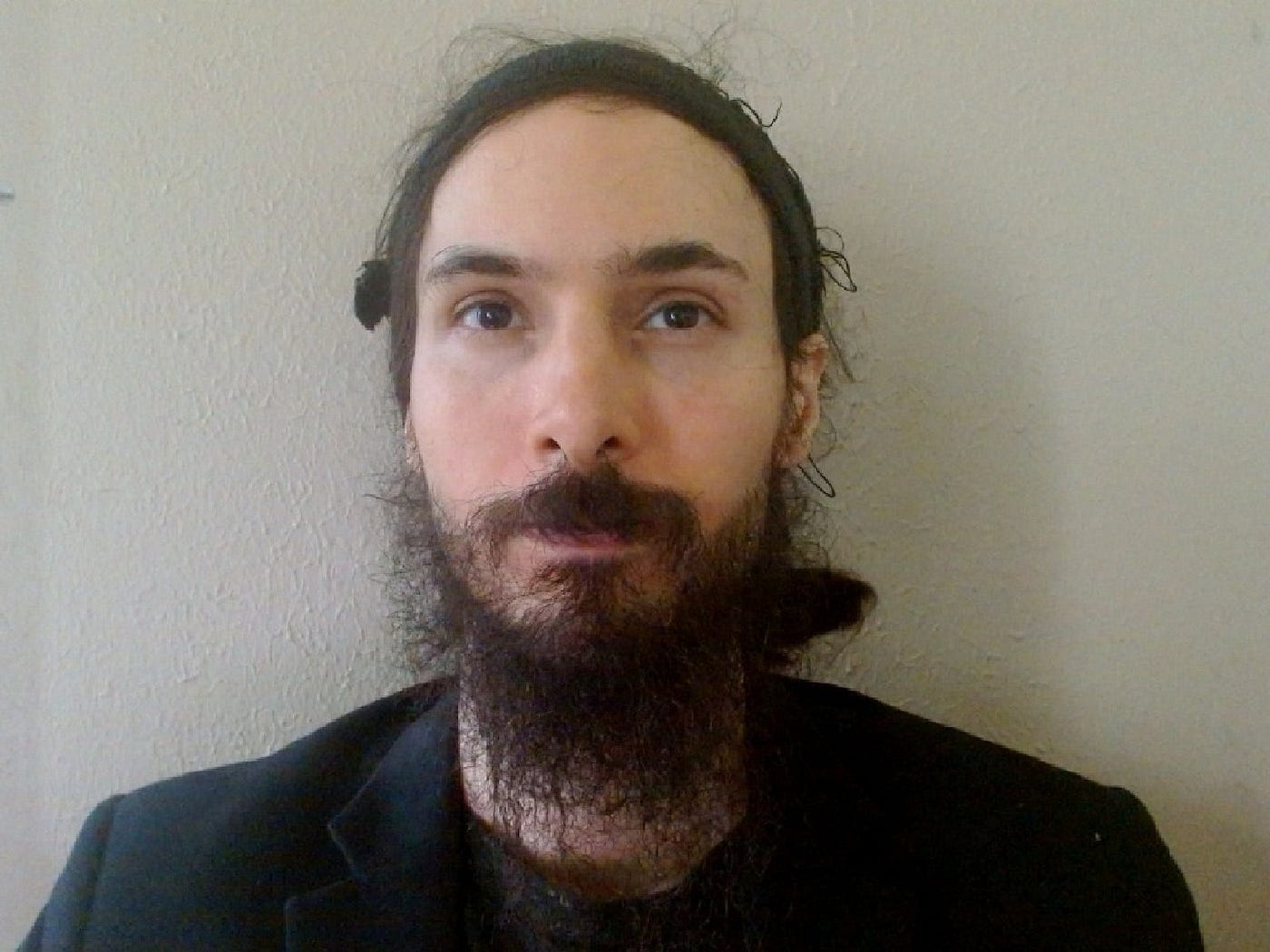
Taking the risk to start a company is a feat few are fully equipped for. Any business owner knows that the first few years in business are anything but glamorous. Building a successful business takes time, lessons learned, and most importantly, enormous growth as a business owner. What works and what doesn’t when one starts a new business? What are the valuable lessons learned from the “University of Adversity”? As part of this interview series, I had the pleasure of interviewing Carlos Tomas Grahm.
Carlos Tomas Grahm is an independent mathematician and former recipient of a prestigious National Science Foundation undergraduate research fellowship at Texas A&M University, where he conducted research in applied mathematics and biomedical engineering. Since pursuing research independently, he has become an arXiv-endorsed author and, in what is believed to be a historic first for an independent mathematician, has an original research article currently under review at one of the world’s top five mathematics journals. His current work investigates fundamental problems in real analysis, computational complexity, continuum mechanics and the mathematical analysis of field equations with further information available at acarlostomasresearch.com.
Thank you so much for joining us in this interview series! Can you tell us a story about what brought you to this specific career path?
We started doing research in undergrad in a biology laboratory, writing algorithms to help them parse large packs of data. This led to us being accepted at our fellowship with the NSF, where we moved to doing work on modeling carotid arteries. At the end of the fellowship we had gotten amazing results, and instead of pursuing graduate school — which is the usual path for individuals in these types of fellowships — we decided to go independent to work on problems that would not be a part of a typical thesis program.
In the course of going independent, we have now prepared 6 manuscripts that we plan on releasing in the next year, and since ordinarily a university gives you the tools for this process, we had to build the operation on our own — assembling a review team and a way to get work out.
Can you tell us a story about the hard times that you faced when you first started your journey?
There have been a number of times we faced hard times. To focus on the beginning, we approached at first a problem that was overwhelmingly difficult. It’s considered one of the more difficult problems in the world. We had already tackled an unusually difficult problem in undergrad, and presumed we were prepared for a problem even on a grander scale, thinking that the levers and buttons you push at even bigger problems scale linearly. They did not. The problem took so much more effort, time, and careful attention that at one point we significantly believed we may not have the capacity to solve the problem.
The idea is that when a mathematician thinks they can solve a problem, they have concrete reasons why they can do it, but there is also a sense of intuition that tells you they can solve this. It’s very much like a grandmaster in chess who looks at a board and says they think they can do a checkmate, without knowing every single move from that point to the end.
This was exactly the point we were faced with at about the 6-month marker after first embarking on the problem. We had some pieces that could work in a plausible way, but we legitimately became concerned if there was a path to checkmate for us, despite us being so confident at the start.
The feeling didn’t last particularly long, but it certainly represented a difficult choice and a hard time emotionally to process. Was all the time we were putting into the problem going to be something that would just be a waste of time? We decided to continue after taking some time to try to look at what we had with clear eyes, and we are very glad we did. We are now preparing with our team to be unveiling this work in particular in the next two months.
Where did you get the drive to continue even though things were so hard?
That’s a good question. Where do any of these emotions come from? We think that a large part of it was that we were in familiar water. This is to say that even though our project in undergrad went smoother and was easier, it was not as if we had the answer right from the start. There was uncertainty then also. We learned what parameters in the situation we should be making our choices from, and that there was enough of a pattern that said this was a similar situation.
We had faced a similar but a little less difficult situation before in our life — that’s the straightforward way to say it. We had experience with it, but because we had not chosen a project that was so far away from what we had built a lot of experience in, we calculated that we could get through the situation as long as we stayed diligent and grounded.
For a lack of better words, we were in our lane. It was one lane over from the one we were in; it was a bit faster, but since we hadn’t chosen to get onto an entirely new track, we had the confidence we would eventually succeed.
So, how are things going today? How did grit and resilience lead to your eventual success?
Things are honestly great. What is interesting is the uncertainty from before is not entirely gone, but it is significantly diminished.
It is one thing to think, “Okay, what do I need to do to make sure these things get in front of the right people? How do we make sure we have some plan in place so we keep the momentum together and are able to build an operation that replaces the resources available to researchers?”
But it’s not like, “Can I really solve this top-100 math problem in the world? Is this mathematical chessboard really going to give me a checkmate in the end?”
The resilience and grit from when those questions were “Can we get through these problems?” is the foundation for everything we have done today. The work that came to be from those times is what we now present to reviewers and publications to say, “Is this worth your time?” And it has proven to be worth many people’s time and is leading to making the world a better informed place.
Can you share a story about the funniest mistake you made when you were first starting? Can you tell us what lesson you learned from that?
Some time after that first 6-month experience of doubt, we made some pretty significant gains on the problem — enough to the point that we thought we had a solution.
That’s not the funny part, but maybe some people will think that’s humorous. We had some real structural pieces in place, so it was actually a proper time to start getting feedback. So we decided to start reaching out to people, and we reached out to one of the top experts in the world on the problem. They responded to us in less than an hour, and we were extremely excited because they were asking us to check something and see if it looked like it worked.
We were thinking, “This is the momentum. This is the moment. We have to hit him back fast so he knows we are confident and know what we are doing.” And we quickly did the calculation and sent it right over. Thirty minutes later we realized we had made a mistake in the calculation, and people who are globally recognized experts don’t tend to continue correspondence with someone who seems all over the place.
We sent the revision anyway, and as expected he dropped the correspondence.
We look forward to him seeing the newest version. We actually touched base after a few more structural gains. We have something now that is really elegant, and cannot wait to hear from them when they finally get to see it.
The lesson learned was to work for your paycheck and not try to win the lottery. Had we slowed down, done the calculations right, even taken a day to respond, maybe they don’t keep the correspondence. But it would have been much more seriously taken than someone who had to write 30 minutes later, “Erm, we didn’t factor that term in line XYZ properly.”
It’s definitely humorous to us now, retrospectively.
What do you think makes your company stand out? Can you share a story?
I take all of our team members’ perspectives as if it was their company. I do not like to look at myself as the hub for the direction we take. Instead, we like to find ways to make people’s ideas work together.
From that we have an extremely diverse and complex apparatus in place. We don’t micromanage people, and that allows people to make their own choices, which tends to let tons of perspectives be born and grow.
Because of this we have the merits of many minds making choices instead of just one.
From this type of way that we operate, we actually let people make mistakes, and even make timeline choices that we are not sure are going to work.
In one instance one of our reviewers was taking a path that looked like they would never actually be able to understand the concept of the article by the deadline. We let them choose their timelines though, and made sure to set at least the bare minimum.
We need feedback here and here, so we can at least make sure that we get something out that is presentable. Two weeks later they totally surprised us because they had completely gained the concept and were making suggestions that we would definitely not have thought of on our own, which greatly improved the situation.
The moral of it is definitely that things don’t always work out this well, and the eggs in your basket are the only ones you can count on. Sometimes though, when you allow people to carve their own paths, they will build a much bigger farm than you ever needed to start with, and as long as you set the boundaries, taking this path is not risky with people who are diligent and professional.
Which tips would you recommend to your colleagues in your industry to help them to thrive and not “burn out”?
Make sure you stay in your lane. The impulse of so many people is, “Let’s take down the most impressive, most amazing project that has ever existed.”
Instead of progressing and taking down a series of attainable projects that can be put together to build something worthwhile.
People have so much FOMO when it comes to approaching everything that has any veil of uncertainty, and think that if they are not all in, somehow they are going to miss out. If you watch the best poker players in the world, they approach the game not cavalier, but based on playing the cards they are given at the table they are playing. They avoid all-ins until a situation is appropriate, and make steady gains but not overplaying their cards.
Burnout happens often when you reach for something and you don’t quite get it. You can avoid this by building foundations before moving out. You are in a project or a company because you have skills; making sure that you use those skills and not trying to invent new ones and implement them before they are ready is the key. Everyone thinks, “If we’re not running at 99 MPH every second, that things will get away.” That’s how things like that email that I sent to the leading expert happened with the small mistake. We were trying to invent and play the momentum rather than slowing down and putting something out there that we knew would work.
None of us are able to achieve success without some help along the way. Is there a particular person who you are grateful towards who helped get you to where you are? Can you share a story?
I have had tons of people around us that have made so many different contributions. Singling one person out is difficult.
A really easy story to tell is a bit after that first mistake when writing to the global expert. We were, as many operations run into, hit with a funding issue.
We needed to do a few months of dedicated thinking, without needing to pick up a side job — research goes best that way. We knew that we were not far from a milestone, but dedicated work was going to be needed.
We had some funding opportunities that we could take but would not be available until later in the year.
So we asked if they could fund us. And they floated us for a few months’ period. At the end of those months some opportunities arose, and we have not run into any funding issues since then because in that dedicated research time, we hit the milestone that has now gotten us to where we are.
The sort of interesting part of this story: a few years before, this friend had actually needed a loan also in a very similar situation, and we were there to provide it for them. Later on we needed more money than we had lent them a few years prior, so the fun part is that good things can compound over time when given the proper foundations.
How have you used your success to bring goodness to the world?
We are engaged now, obviously, in starting to publicize work and do thought leadership. The success we have had has directly led to us being able to deliver the world more accurate answers in these avenues. The ideas about staying in your lane from before — that was not just something we gained from experience; it was a notion we developed when exploring developments in game theory for some algorithms.
This is not just wisdom that we have gained from experience. These pieces of information, we know when put into people’s operations and lives, will not only lead them to things like more profits, but improve things like mental health.
Mental health boils down to a problem in optimization. Why people find themselves in problems with mental health often happens because their system gets out of balance. In all of our thought leadership participation, we always present ideas that we know optimize and balance operations.
We would not be able to give such potent and accurate information without actually having put the pencil to the paper and solved the problems that we have. Now that we have so many different pieces of information that deliver immense results — they do not only deliver results for your Q4 earnings report — these ideas also help optimize people’s mental health and relationships, because they are often rooted in how systems in general optimize, which is a deeply mathematical question.
What are your “5 things I wish someone told me when I first launched my business,” and why? Please share a story or example for each.
1. Cold emails are an art and get better with time and practice. But do not bite off more than you can chew.
The “do not bite off more than you can chew” runs parallel with many of the different concepts we have talked about, but we can specifically point to how it works in this situation. You get better at cold emails by simply sending cold emails. But if you think you are going to get better by sending 10 in a day carelessly, without taking the time to see who you are writing, what is their background, what worked in the last one, and what did not, it’s like you have more food than you can chew and you have wasted your time.
Everyone gets cold emails. Finding ways to make your work not just sensational, but relatable takes time. But that time cannot just be used idly.
2. Get comfortable asking for advice.
As an independent researcher, or as a CEO in a business, you are on an island of sorts. You are going to have to reach out to people and ask for their input on how to solve certain problems, or even delegate tasks to them. You cannot think you are the answer to all of your own problems. Being wrong when you ask someone, or saying something that may not be the smartest, is something you have to be comfortable doing.
3. Going down a rabbit hole does not mean the “click” is going to happen fast. The universe does not owe you a fast answer just because you are asking the question.
Back to the chess player analogy, seeing a board and thinking there’s a checkmate is the same way that a new idea takes shape, and how you get the “aha” moment. You look at something, you get a feeling, and you think this might work. Often times you go down a rabbit hole to find your answer.
And people think, “Oh, I dived in — here comes the success.” Sure, sometimes you go down the rabbit hole and there’s one door at the end of a corridor that has the exact answer you’re looking for.
At other times though, you land at the bottom of the rabbit hole, and it looks like a hotel hallway when you get off the elevator. Tens to hundreds of doors, twisting hallways, other people, and you may still feel like your answer is here, but finding it is not going to be fast. You have to check rooms, ask people in the hall. And before that click that does eventually arise after being in the rabbit hole long enough, it may take a while. Finding that rabbit hole is step one; the rest of the steps are up to your diligence and searching.
4. You learn more falling off your bike.
This is classic, but people lose so much faith in themselves whenever something does not go right — often not acknowledging that this is just another learning experience. Take notes: Were you sitting on the seat wrong? Did you have too much in your backpack and did that put you off balance?
When you get to your destination smoothly you often do not learn anything. When you fall off your bike there is always something to be learned.
5. Truth is discovered by an iterative process. Errors and remodeling occur.
People often believe, and we once did also, that the answers to the big questions come from some magical experience where the universe puts the answer in front of you. That when you exert yourself, you are doing it wrong, and the truth always comes easily.
It does not. Truth is found; the answers to difficult questions are found like a chess player navigating their board. Move a piece here and see what you can see, wait for your opponent to make a turn, move another piece. Some games don’t go the way you want, but others do. The truth, or the answers to big questions, come from playing 100 chess games — not taking a seat on the right theme park ride and having it take you to the answer.
Can you share a few ideas or stories from your experience about how to successfully ride the emotional highs & lows of being a founder?
In both cases it’s the same idea. Do not let your highs take you too far away from your ground, and don’t let the lows draw you away from your center.
The key is to have your ground and place, and to work from there. The old phrase is “money comes, money goes” — and it’s the idea here. The highs and lows are like the weather. You build on the thing that stays put; that’s your ground. When you have success you don’t move too far from your ground, and it’s the same for when you have failures. The point is to learn to live in your space.
You are a person of great influence. If you could start a movement that would bring the most amount of good to the most amount of people, what would that be? You never know what your idea can trigger. :-)
If you had asked this question earlier we would have maybe had a better answer. We often think about this, and this idea might sound silly in terms of company building and finding success, but: eat healthier.
So much more of people’s problems arise from eating foods that have low nutritional quality and high processing than people realize. The science shows us over and over again ultra-processed foods and sugar-sweetened beverages being associated with higher risks of depression and anxiety, while whole grains, fiber, and certain nutrients appear protective.
The science is just the start — it keeps telling us this — but people keep on saying, “Oh, one pizza isn’t going to hurt you.” And sure, you won’t get cancer from eating a pizza, but the habit of one pizza once a month, once a week, whenever, sets your body up to expect this massive dopamine intake, and you begin to rely on it.
The massive spikes and crash afterward cause instability.
The old adage is “you are what you eat,” and in spirit it is right here. Eating well protects your health and keeps your career and mind more stable.
How can our readers further follow your work online?
If you go to our website at acarlostomasresearch.com we will be posting our articles as they are released over the next year there, and it has all of our social media links as well.
This was very inspiring. Thank you so much for joining us!
About The Interviewer: Tavares Beverly ( www.tavaresbeverly.com ) is the Founder and CEO of Beverly Boy Productions, a national video production company that has helped organizations tell their stories through video for more than two decades. Over the course of his career, he has worked with everyone from Fortune 500 executives and healthcare professionals to politicians, nonprofit leaders, educators, and artists, gaining a unique perspective on the role communication plays in leadership, business, and human connection. A frequent contributor on topics including communication, entrepreneurship, leadership, and personal development, Tavares believes that the ability to communicate effectively is one of the most valuable skills a person can develop. His work is driven by a passion for helping organizations connect with their audiences and helping individuals unlock their potential through mentorship, perseverance, and meaningful relationships. To learn more, connect with Tavares on LinkedIn or visit www.BeverlyBoy.com . If you’re interested in using the power of storytelling and communication to grow your organization, strengthen your brand, or inspire your audience, he welcomes the opportunity to connect.