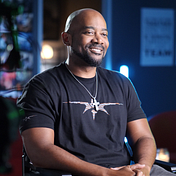

Exceptional customer service to me is when a customer feels seen and heard. We are nothing if we don’t understand the needs of our customers. They must know we are listening and we are paying attention.
As a Professional Organizer and speaker, Pam embarked on her mission in 2005, answering a call from a fellow mom in need. Little did she know that pivotal moment would ignite her passion for organization. Pam's journey led her to establish Chaos Pros, LLC, a beacon of peace in the cluttered world. Chaos Pros will celebrate its 20th anniversary in September!
With her experienced team, she's dedicated to freeing individuals and businesses from disorder. Pam's expertise isn't just about decluttering; she's a sought-after speaker, has appeared on A&E's Hoarders, and her local media presence spans from The Dallas Morning News to Fox 4's Good Day.
Born in Ohio, Pam, along with her husband of 40 years and their four dogs, has called Texas home since 2000. She and her husband just welcomed their first granddaughter Rosie in January!
Thank you so much for joining us in this interview series! Before we begin, can you please introduce yourself? Our readers would love to “get to know you” a bit better. Can you tell us a bit about your ‘backstory’ and how you got started?
My early career years in the corporate world were spent in administrative support for CPA firms. The first firm was for 13 years, and the second firm was for a little over 1 ½ years. I worked in all levels from Receptionist to Firm Administrator. Consistent through those years was the comment, “You’re very organized.” I was at a point in my life where I wasn’t sure where my career was going in 2005 when I answered a request through a website geared toward connecting Moms to support and help each other. A particular woman needed help getting her office under control in preparation for the birth of her 3rd child and for the person who would come in and help her run her photography company. I not only completed the tasks originally requested, I created a Desk Manual to help the office helper know the policies and procedures of the company. I remember telling the woman, “This is the part I like—getting everything organized and running like butter. I don’t like the part that’s routine of an office job—preparing financial statements, paying bills, etc.” She said, “You should consider being a Professional Organizer.” That day was one of the most important pivotal points in my life. In 2006, my company was born!
Can you tell us the most interesting story that happened to you since you began your career?
I think what has been most interesting to me is the revelation that this career has become my mission field. “Life happens” is part of our core belief system. On any given day, life can unravel for anyone. We’ve organized clients who have saved for months so they could get professional organizing services. We’ve organized clients who have traded in their vacation fund so they could get more organized, mainly because they hated to come home from their vacation to a cluttered house. We’ve also organized the homes of an MLB Pitcher, and an NFL linebacker. Clutter comes in all shapes, sizes, amounts, and stress levels. The freedom from clutter is a reward that has unlimited value. This is a mission field from which I will always enjoy helping people emerge.
None of us are able to achieve success without some help along the way. Is there a particular person who you are grateful towards who helped get you to where you are? Can you share a story?
I have to give credit to one of my first clients. Sally first used our services for a small closet. But that closet organization turned into her trusting us to organize her entire home. Her trust in my instincts allowed me build up experience and knowledge, and it turned into a very successful client relationship that continues to this day
Ok, fantastic. Let’s now shift to the main focus of our interview. What does exceptional customer service mean to you beyond simply responding quickly?
Exceptional customer service to me is when a customer feels seen and heard. We are nothing if we don’t understand the needs of our customers. They must know we are listening and we are paying attention. Today’s technology has created systems where you sometimes never talk to a live person. I don’t get it. A live person can always do much more than an AI-driven customer service model, because a live agent can hear when a customer is anxious or frustrated. I don’t think anyone likes calling customer service and getting the AI runaround. Why have a system that adds to that frustration?
Can you share an example of a difficult customer situation that ultimately strengthened your business?
Back before I knew what I know now, I was working my customer projects as much as possible. Unfortunately, I did not make sure I devoted time to the administrative side. I was losing leads because I didn’t have time to return calls and get back to people in time. I turned that around by devoting one day per week to “admin day” and hired an assistant to help with answering leads when they came in. This made a huge difference for us!
How do you gather and act on customer feedback in a meaningful way?
We have an intentional follow up program where we reach out to our customers often. We’re able to make sure things went well, are still going well, and potentially book future projects for them. We encourage reviews, and just recently started a campaign to collect reviews from those who may not have provided one in the past. If someone’s unhappy, we do all that we can to remedy the situation.
What systems or processes have had the greatest impact on improving your customer experience?
Our follow-up program definitely has been the strongest impact. However, I also believe our intake process contributes to the success. That is when we ask questions about family members, pets, etc. When we first go to our client’s homes, we take a few minutes to meet who is there, and if there are pets, we are sure to greet them too.
How do you empower your team to solve customer problems without unnecessary delays?
My assistant has been with me long enough that I think she knows my company better than I do sometimes! We talk about what she has the approval to do solo and when I want to be consulted. This helps us have the ability to address issues sooner than later if we are in a situation where I’m on a job.
Here is the main question of our interview. Please share your “5 Ways Leaders Can Respond Faster, Communicate Better, and Meet Customers' Real Needs”. Please share a story or an example for each.
1 . Human interaction: as much as possible have a live person respond to customers whether it’s a new lead or an existing customer with a concern. Leaving it all to AI presents opportunity for misunderstandings that can result in your customers (potential or existing) going elsewhere. Show that your customers are important to you by being attentive to their requests.
2 . Follow-up that counts: be intentional. With a new lead, try to text or call (again, live person interaction is best) within the hour, if possible, at the very least within 24 hours. For a project follow-up, text or call within a few days, then again in a few weeks, then again in a few months. Keep your business in front of your customers’ thoughts. Out of sight literally can mean out of mind for customers, and you don’t want that ever.
3 . Use automated systems sparingly: Have you ever received an email survey? Do you fill it out? Often, people delete or ignore it. But a phone call can gather quite a bit of valuable information.
4 . Team meetings that inform: We have a team chat every Monday to do a status check. We go over the past week to review what went well and what didn’t, so that we can make sure to improve where necessary, or continue doing what works. We review the current week to ensure we are prepared for the job. We review the upcoming calendar, so we are prepared going forward. We also review the status of open leads as well as the status of follow-ups. I don’t need to be in the minutia, but I also don’t want to be oblivious to what’s happening in my company.
5 . Trust your team! Micromanaging is ineffective. Trust your team to do their jobs. That doesn’t mean you never check on them, but if you end up doing a lot of handholding and babysitting, you’re inefficient and so are they. It can also stifle creativity. How will your company become a leader in your industry if you continue to encourage only the status quo?
You are a person of great influence. If you could start a movement that would bring the most amount of good to the most amount of people, what would that be? You never know what your idea can trigger. :-)
If I could start a movement that would bring the most good to the most people, it would be a global “Operational Trust” movement. In every industry and every household, people are drowning in complexity, clutter, and unclear expectations. Chaos erodes trust. When systems are clear, consistent, and humancentered, trust grows. Productivity grows. Confidence grows. Relationships grow.
My movement would teach people how to build simple, repeatable systems that reduce friction and increase trust between clients and service providers, between teams, between families, and even within ourselves.
Professional organizing isn’t about pretty bins. It’s about creating environments where people can show up as their best selves. If we could equip millions of people with the tools to eliminate chaos, communicate expectations, and operate with clarity, we’d see stronger businesses, healthier homes, and more resilient communities.
A world with more operational trust is a world with less stress, fewer misunderstandings, and more capacity for generosity, creativity, and connection. That’s the movement I’d champion.
How can our readers further follow your work online?
We are on Facebook, Instagram, LinkedIn, and of course can be found on our website chaospros.com.
This was very inspiring. Thank you so much for the time you spent with this!